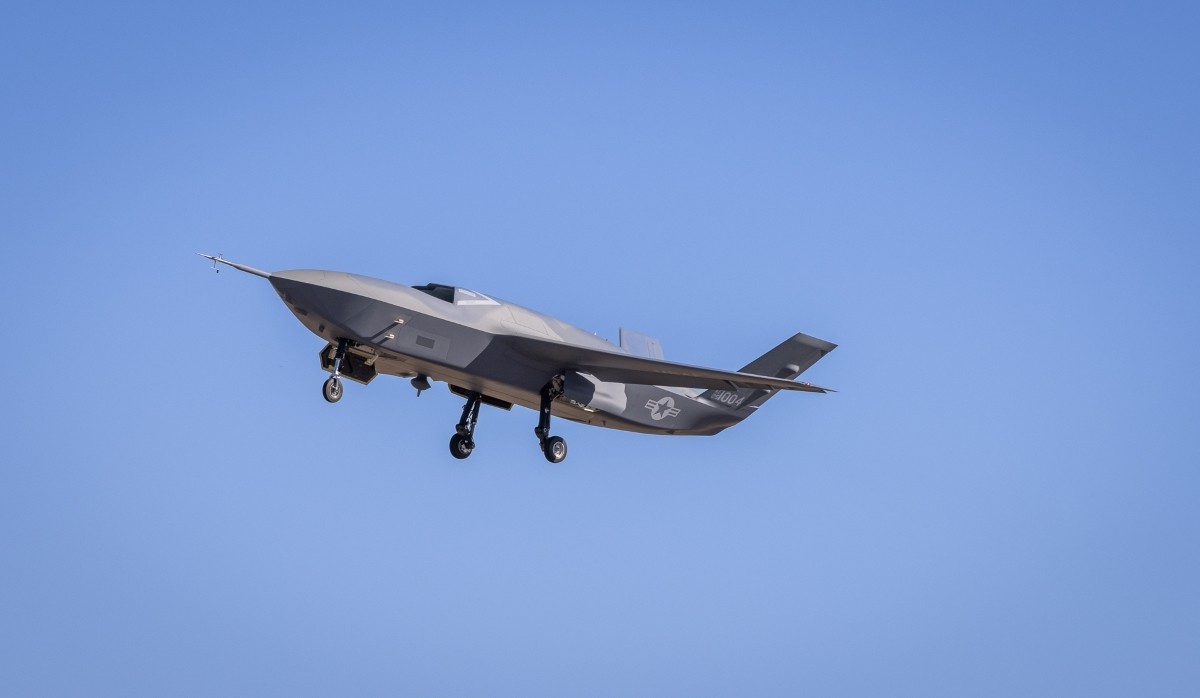
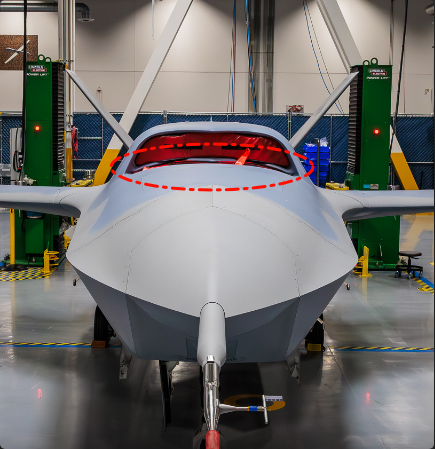
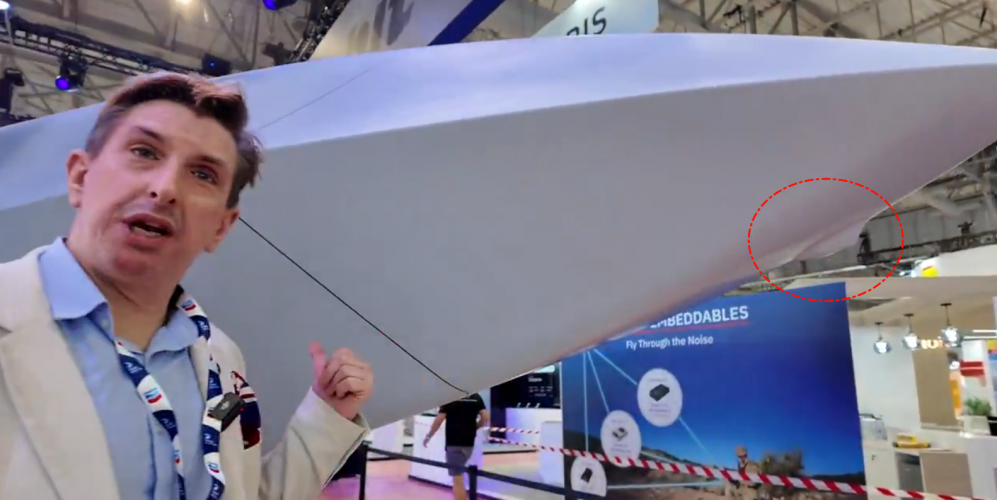
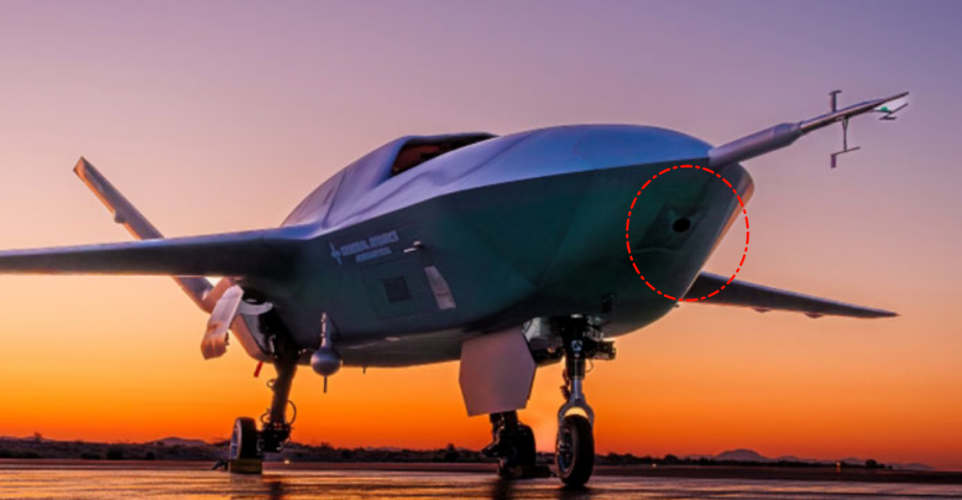
So I did a quick sectional cut of that front part of the nose. My model isn't very high poly yet, but with making the shape more high poly and making rounding and smoothing more accurate, I actually expect the area to be even smaller.
View attachment 790427View attachment 790428
View attachment 790430
View attachment 790434
It seems unlikely to me that this is a radome here for a number of reasons. Radar arrays usually sit at a slant inside the radome, but
I'm pretty sure it can't be laying as flat as the seam line (I've never seen a radar sit flat that way). At such a flat angle, it may have a lot of distortion for targets just off the nose just because it's so far off boresight of the array face. If you're curious - that flat cut along the seam yields 1.16m2 for the radome cross section, but it yields much smaller room for the radar aperture face itself - only 0.58m (0.29 * 2)
View attachment 790431
I also did a number of normal cut / slant of what I would expect a normal radome face might have, but these yielded results that would seems to be more or less useless as a fire control radar - a radome cross section area between 0.18m2 and 0.24m2. 0.24m2 is already the actual array face of what what a light fighter / trainer might have. After using the 70% area rule, your upper bound becomes 0.168m2, which to me is functionally useless for an offboard sensing node. Phantom Strike and the YFQ-44 radome both seem to be much larger in area (although I'll find out when I model the YFQ-44 next).
View attachment 790432
Other things of note: If the radar array sat deeper into this small cone, then the walls on both sides of this section would have to be of the same material the radome is made of too so as to not greatly limit the scan area, so that also seems unlikely.
I think what
@Ozair said is probably true - the nose section is for flight testing and may change depending on which sensors are used. There's an entire seamline wrapping all the way around the nose in the front view photo.