View attachment 791864

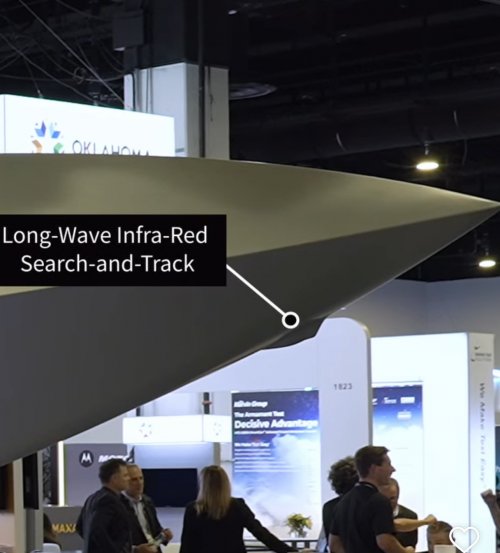
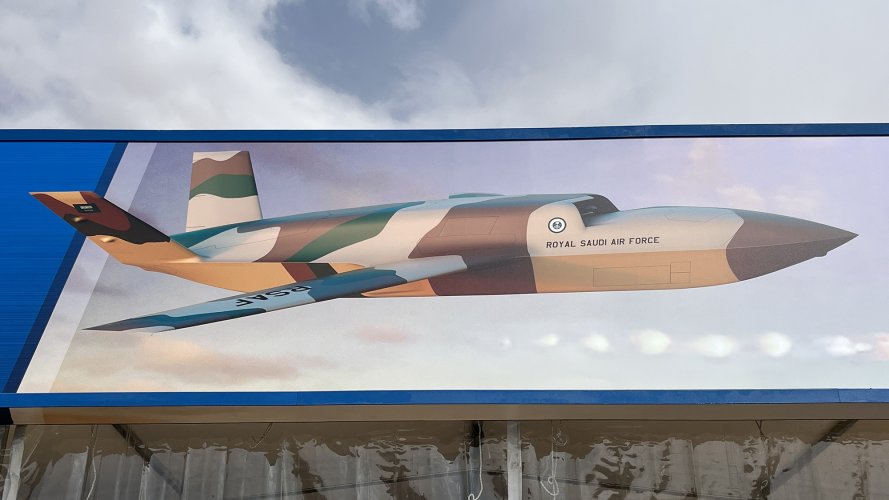
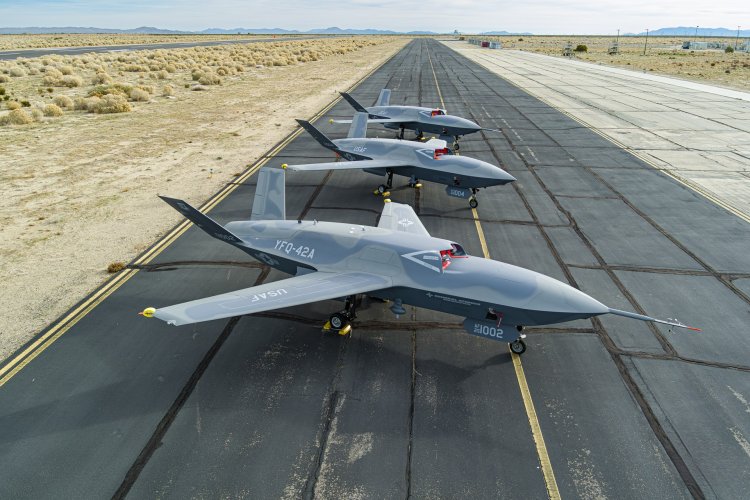
Will the YFQ-42A install EOTS? It seems the prototype doesn't have it under the nose.
View attachment 791865
Typically the first several aircraft are engineering development aircraft that are instrumented to support flight test and envelope expansion. Some of them are even purpose build to be destructively tested to find ultimate strength of structures do example. It’s also pretty common for the first few vehicles to never get mission systems installed since there are still improvements and optimizations going on with the build based on test data. The air-data system it has now (pitot probe) is probably taking up all the space that a mission system would have gone. There might also be structural changes in the nose to support that ADS probe so that volume may not be available for a mission system for this aircraft without substantial changes to the structure of this vehicle.

It’s generally not worth the cost and effort to retrofit the first few vehicles with missions systems after the flight test campaign. These vehicles are more valuable to be kept to support possible future test campaigns since they are already instrumented and there are certain sensors like strain gauges that might be difficult or impossible to add to production aircraft.

In other words you probably won’t be seeing sensors on these things until they’ve built half a dozen vehicles.
 
Last edited:

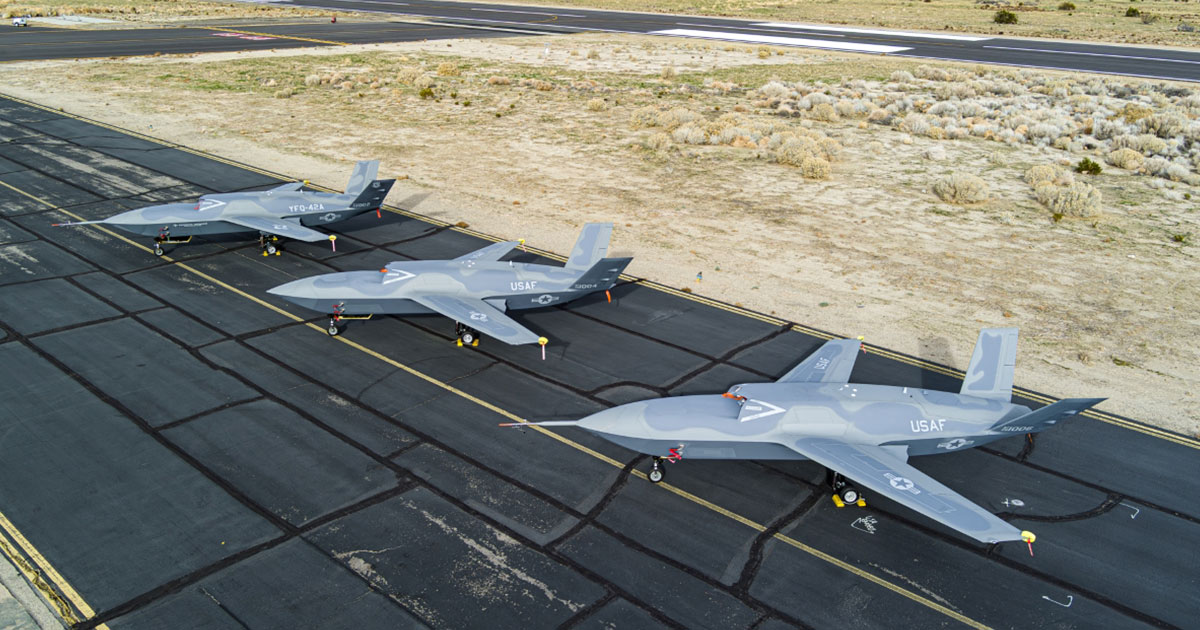
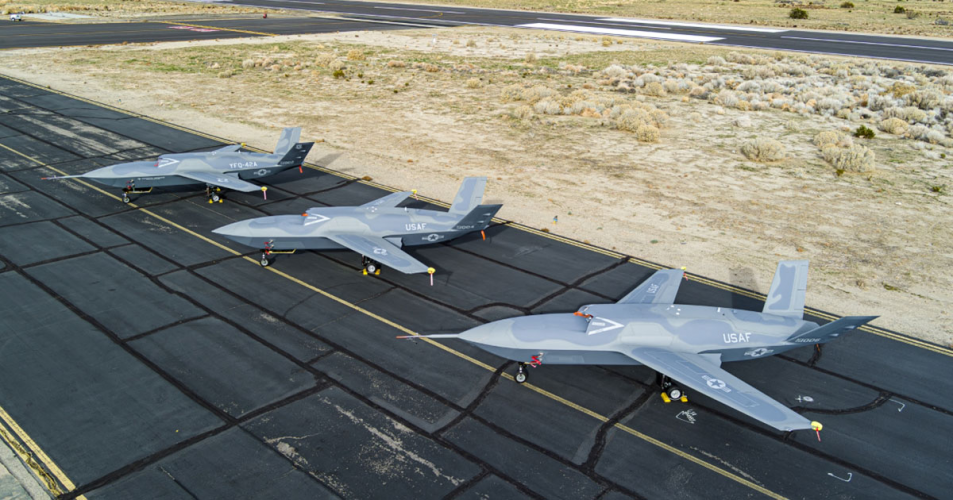
There are already three YFQ-42A. One of them has no pitot tube.
 

Attachments

  • 1770947952608.png
    1770947952608.png
    1.2 MB · Views: 224
Last edited by a moderator:

While the middle one is missing the nose boom, it still has the traditional side mounted pitot probes (it’s what those red dust covers are covering up).
 
Last edited by a moderator:

General Atomics Aeronautical Systems, Inc. (GA-ASI) is giving its U.S. Air Force Collaborative Combat Aircraft a new name: YFQ-42A Dark Merlin.​

Dark merlins, deadly falcons known for their black feathers and devouring of other falcons as prey, often collaborate in groups for maximum effect against their targets. The Cornell Lab of Ornithology describes the merlin as a “small, fierce falcon that uses surprise attacks” to bring down its prey in flight. The dark merlin is native to the Pacific Northwest of the United States, often migrating into southern California, where bird spotters routinely report seeing them near the YFQ-42A’s manufacturing home in San Diego.

 
The British equivalent CCA could be called the Dark Ridcully.
 

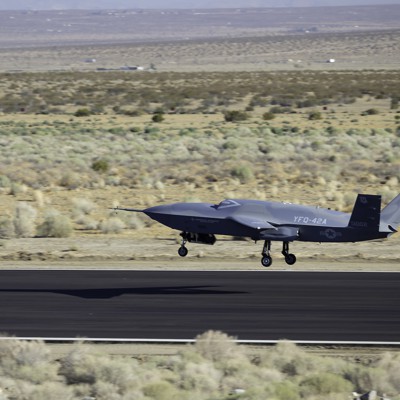
Sidekick autonomy software guides YFQ-42A test mission for CCA program​


The article highlights two AI products used to fly on the YFQ-42 and YFQ-44 respectively. Hivemind (shield AI) flew on the YFQ-44, Kratos X-58 and MQ-20 Avenger. Sidekick (Rockwell collins) flew on the YFQ-42. They also recently demonstrated sucessfully the ability to switch the AI control software mid flight on the YFQ-44.

As the names suggests (and from reading a little into both) Sidekick seems focused on manned unmanned teaming while hivemind is capable of controlling a group of autonomous drones with or without man in the loop. These AI frameworks are completely independent from the systems they control.
 

Similar threads

Back
Top Bottom