View attachment 791864

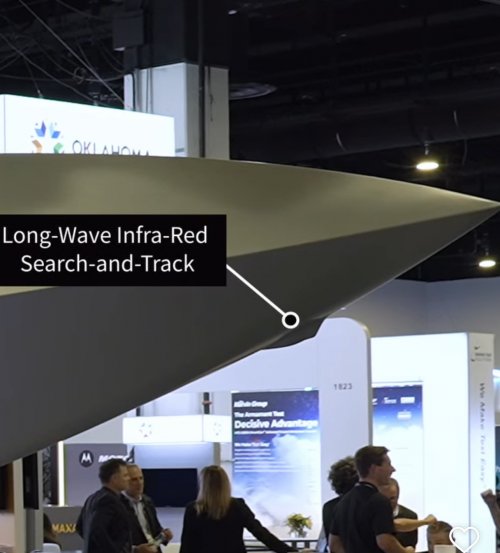
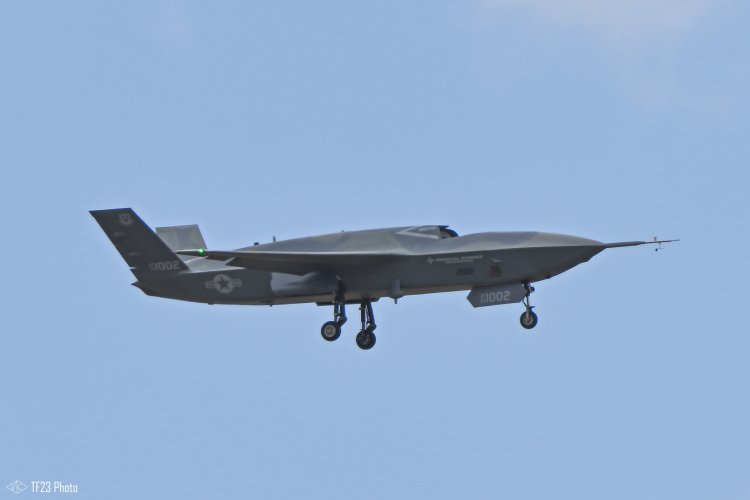
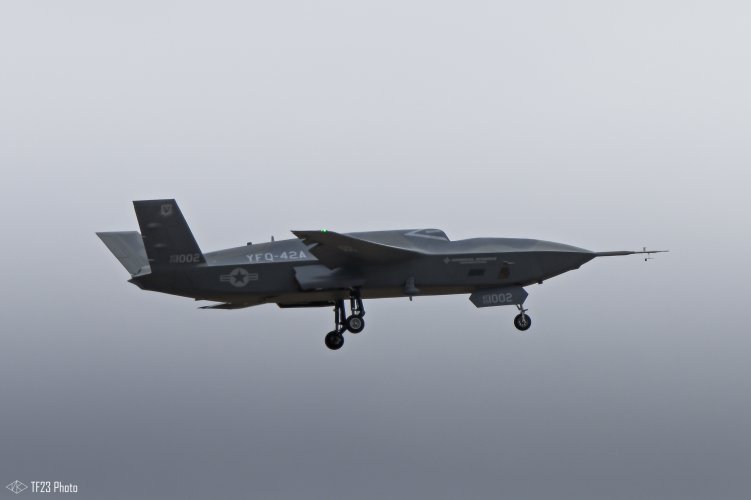
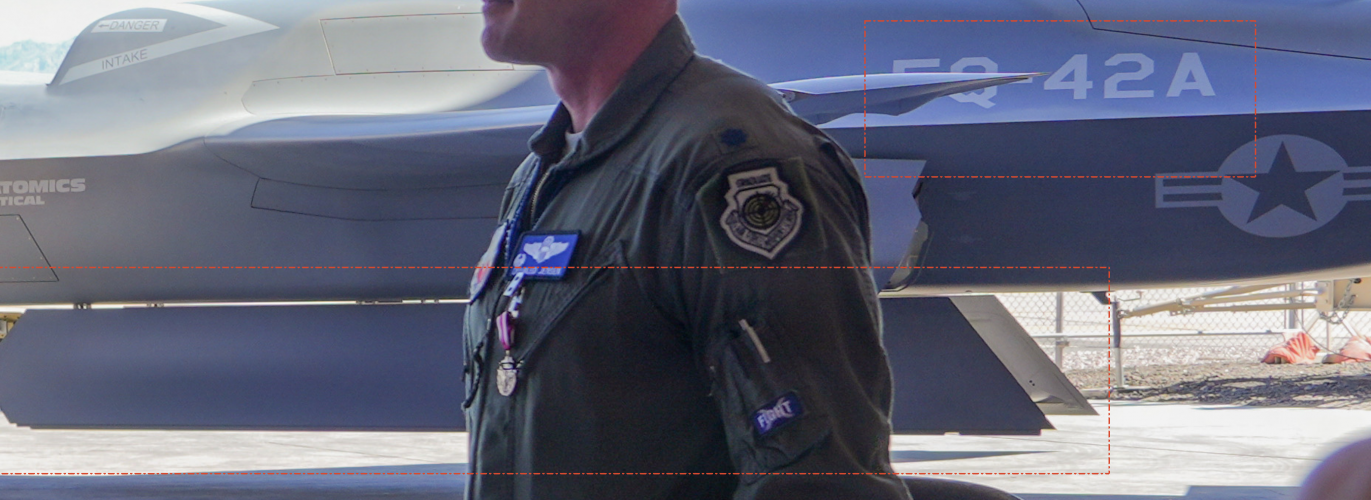
Will the YFQ-42A install EOTS? It seems the prototype doesn't have it under the nose.
View attachment 791865
Typically the first several aircraft are engineering development aircraft that are instrumented to support flight test and envelope expansion. Some of them are even purpose build to be destructively tested to find ultimate strength of structures do example. It’s also pretty common for the first few vehicles to never get mission systems installed since there are still improvements and optimizations going on with the build based on test data. The air-data system it has now (pitot probe) is probably taking up all the space that a mission system would have gone. There might also be structural changes in the nose to support that ADS probe so that volume may not be available for a mission system for this aircraft without substantial changes to the structure of this vehicle.

It’s generally not worth the cost and effort to retrofit the first few vehicles with missions systems after the flight test campaign. These vehicles are more valuable to be kept to support possible future test campaigns since they are already instrumented and there are certain sensors like strain gauges that might be difficult or impossible to add to production aircraft.

In other words you probably won’t be seeing sensors on these things until they’ve built half a dozen vehicles.
 

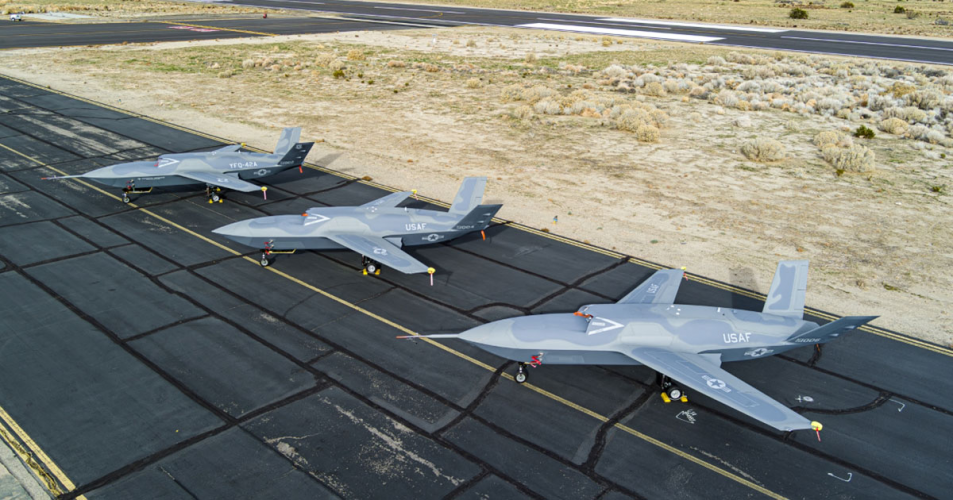
While the middle one is missing the nose boom, it still has the traditional side mounted pitot probes (it’s what those red dust covers are covering up).
 
Last edited by a moderator:
https://www.ga-asi.com/ga-asi-announces-yfq-42a-dark-merlin
General Atomics Aeronautical Systems, Inc. (GA-ASI) is giving its U.S. Air Force Collaborative Combat Aircraft a new name: YFQ-42A Dark Merlin.​

Dark merlins, deadly falcons known for their black feathers and devouring of other falcons as prey, often collaborate in groups for maximum effect against their targets. The Cornell Lab of Ornithology describes the merlin as a “small, fierce falcon that uses surprise attacks” to bring down its prey in flight. The dark merlin is native to the Pacific Northwest of the United States, often migrating into southern California, where bird spotters routinely report seeing them near the YFQ-42A’s manufacturing home in San Diego.

 
https://www.airandspaceforces.com/cca-ai-pilots-spotlight/
The article highlights two AI products used to fly on the YFQ-42 and YFQ-44 respectively. Hivemind (shield AI) flew on the YFQ-44, Kratos X-58 and MQ-20 Avenger. Sidekick (Rockwell collins) flew on the YFQ-42. They also recently demonstrated sucessfully the ability to switch the AI control software mid flight on the YFQ-44.

As the names suggests (and from reading a little into both) Sidekick seems focused on manned unmanned teaming while hivemind is capable of controlling a group of autonomous drones with or without man in the loop. These AI frameworks are completely independent from the systems they control.
 
https://www.ga-asi.com/yfq-42a-returns-to-flight-testing

The YFQ-42A Collaborative Combat Aircraft, built by General Atomics Aeronautical Systems, Inc. (GA-ASI) for the U.S. Air Force, has returned to flight testing following a round of safety reviews and software enhancements for the new uncrewed fighter jet.

The return follows a strategic pause in flight testing stemming from an April 6 mishap shortly after takeoff. Other aspects of the YFQ-42A program, including ground testing and other Technology Maturation and Risk Reduction (TMRR) activities, continued without interruption.

No one was injured in the incident, though the aircraft was a total loss. A thorough safety review isolated the cause to an autopilot miscalculation for the weight and center of gravity of the aircraft, prompting a software remediation.
 
If the autopilot cannot compensate for a CG still within aircraft design limits, you need to scrap that autopilot design.

Edit: and if your ground crew loaded an aircraft out of CG, you need to fire that ground crew!
Made a late update.
 
I suspect there is more than just a simple CG shift. Company press releases are heavily sanitized for various reasons and blaming it on incorrect mass properties is probably the most sanitize way of stating what happened without actually lying. We may never really know what actually happened.

Glad they got back to flight relatively quickly though.
 
Last edited:
Sandboxx has put out a short video about the production order for both drone fighters:


It’s official, the world’s first two operational drone fighters will be American, and there will be two different kinds of them.
Last Wednesday afternoon, the U.S. Air Force announced that it would not be deciding between the two AI-piloted drone fighters they have in testing, and instead, they’ll be putting both of these advanced jets into operational service.​
 
I couldn't find a more suitable topic, so I'll post this here. Does anyone have an idea of what a combat management system and CCA control look like? What level of autonomy are we talking about here?

I can imagine it as a 3-4 layer stack: an LLM like top layer that interprets more abstract mission orders, more traditional RL (like the X-62 Vista), plus perhaps some kind of standard autopilot underneath and finally, a standard deterministic flight control system at the bottom.

However, I know very little about actual aerial combat, standard operational procedures, and how the AF builds these systems, what they actually want and what is acceptable for them.
 
Last edited:
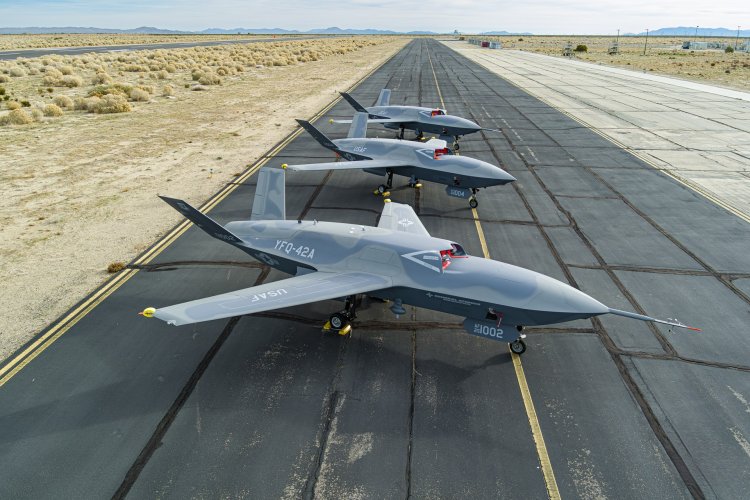
proportions as well and verifying by identifying the section of tarmac this photoshoot happened at, the YFQ-42 is:
  • 12.7m long
  • 12.6m wingspan
  • 2.09m widest nose width
  • a fuselage thickness of 1.86m
I'm not sure whether anyone else estimated the size in this thread or elsewhere, but this plane isn't actually as small as I thought it was.
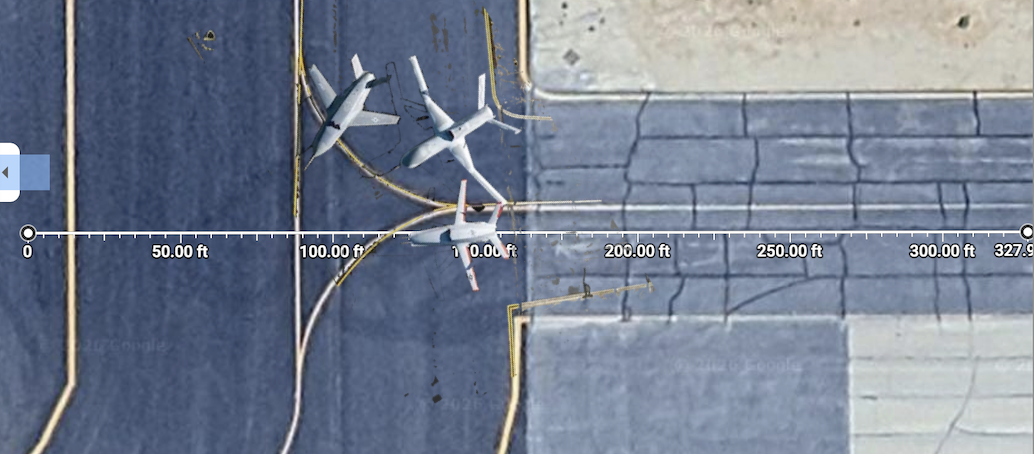
For what it's worth I measured the YFQ-42 by overlaying the overhead picture on a Google maps satellite view (scaled to 10px=1m - see attached) and got smaller dimensions:
  • The fuselage length and wingspan both appear to measure ~10.4m (which implies a 34ft box size)
  • The tailplane adds ~0.75cm (2.5ft) in length
  • Length overall ~11.15m
Looking at more recent pics of parked aircraft I also got ~10.5m fuselage length by measuring against markings on the tarmac.
 

Attachments

  • YFQ-42 10px=1m.png
    YFQ-42 10px=1m.png
    744.3 KB · Views: 55

Similar threads

Back
Top Bottom