Scott Kenny
ACCESS: USAP
- Joined
- 15 May 2023
- Messages
- 19,532
- Reaction score
- 27,985
Looks like a twin-engine version of the BAe-MDD JSF proposal.

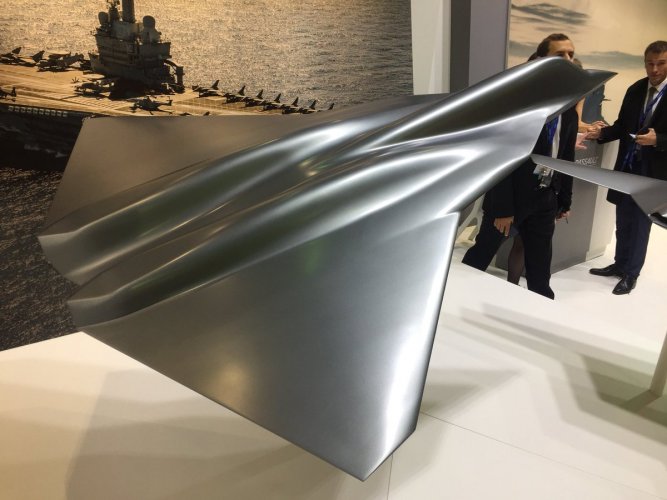

Probably.During his recent speech, Macron said that France would not go back to tactical nukes so a small yield missile seems out of question.
https://www.lemonde.fr/en/opinion/a...e-shift-for-european-security_6751053_23.html
Doesn't Germany simply want to go beyond the 32-34 tons MTOW that the carrier requirement brings? They seem to want something sized between the French vision for NGF and GCAP. Well that's the rumor that has been circulating for a few years but I don't know if we've ever heard an official statement about this.
It was the same in the 80's. Result was a jet heavier, more expansive and only marginally better in air superiority.Luftwaffe top-brass wants (or prefers) a 6th gen. jet optimized for air-superiority.
A without tail design for carrier operation is risky. I'm not sure Dassault will take such direction.If France and Germany part ways, I wonder if Dassault will go back to something closer to the early tailless design, still a looker.
View attachment 804649
Perhaps this FCAS fiasco is a blessing in disguise as it will allow Dassault to explore more airframe configurations, starting with the UCAS.A without tail design for carrier operation is risky. I'm not sure Dassault will take such direction.

Something tells me that as soon as he is out of office, the tactical nuclear plans will be openly back on the table.During his recent speech, Macron said that France would not go back to tactical nukes so a small yield missile seems out of question.

Paris is biennial, alternating with Farnborough, which this year will be 20-24 July.Surely we'll get to see something interesting at this year's Paris Air Show in June. FCAS will probably have died by then.
Edit: the next one will surely happen next year, right after the french presidential election.
French nuclear doctrine has ASMP allocated to 'pre-strategic' use, as the ultimate warning shot before unleashing M51s. You don't need a huge yield for that, or internal carriage. AS4NG's 1,000km range lets you target St Petersburg from over Bornholm, Minsk from over Berlin, or Moscow from Eastern Poland.During his recent speech, Macron said that France would not go back to tactical nukes so a small yield missile seems out of question.
Some M51 (1 or 2 per sub) are fitted with a single warhead. For pre strategic use also.French nuclear doctrine has ASMP allocated to 'pre-strategic' use, as the ultimate warning shot before unleashing M51s. You don't need a huge yield for that, or internal carriage. AS4NG's 1,000km range lets you target St Petersburg from over Bornholm, Minsk from over Berlin, or Moscow from Eastern Poland.

Maybe not the best but atleast 2 prototypes going into the direction both side want (i assume spain is inclined to atleast one but its hard to say considering how mutch they talk).… i think he means making 2 prototypes and then selecting the best ?
In theory to make both happy while giving them what they want because it seems like neither side is backing down.Otherwise why would you want both fighter to converge ?
I think I'm expecting ruddervators for SCAF (like YF-23 and the MDD-BAe JSF proposal)A without tail design for carrier operation is risky. I'm not sure Dassault will take such direction.

2 demonstrators could work in the short term to help everyone save face.The only way of FCAS to progress further hangs on the decision to build 2 demonstrators instead of 1.
I'd say go for it with:
Team A includes Dassault, Thales, Safran.
Team B includes Airbus DS, Indra, MTU.
And watch Darwinism in action.
Those ruddervators are my favorite part of Dassault's NGF mockup and CGIs shown at the Paris Air Show. That and the very sleak fuselage which hints at low drag and lots of body lift (while still retaining a decent amount of internal volume).I think I'm expecting ruddervators for SCAF (like YF-23 and the MDD-BAe JSF proposal)
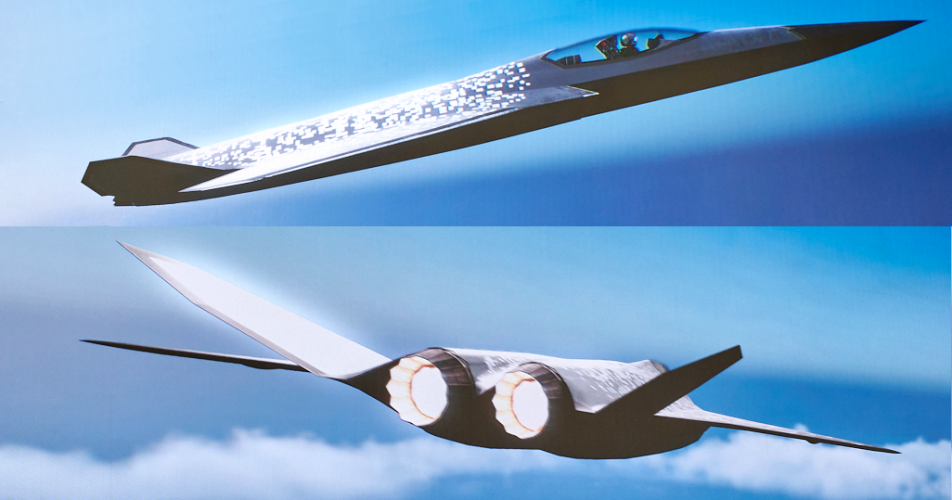
Nahhh... we ask the Swiss to do the serious independent evaluation between teams A and B for us, that way there can be more evaluations, each 2 - 3 years, again and again... All fun.2 demonstrators could work in the short term to help everyone save face.
But what happens once both demonstrators have been evaluated? Is Team B willing to accept team A's win and become mere sub-contractors with possibly a 50% production workshare? And vice versa?
Sounds like a sure way to end up with a split and 2 European fighters (Eurofighter and Rafale all over again).
Those ruddervators are my favorite part of Dassault's NGF mockup and CGIs shown at the Paris Air Show. That and the very sleak fuselage which hints at low drag and lots of body lift (while still retaining a decent amount of internal volume).
View attachment 805775
Was there ever an internal competition? I thought both companies were to agree on a common design from the get-go?Since this thread is about speculations and theories, here is one:
What if all the German talk about not wanting the nuclear requirement, and wanting to build 2 planes, is related to the awkward ending of phase 1b of FCAS?
By now, only two models are left in the design phase. Rumor says that 1 is from Dassault, compatible with nuclear and naval requirements and in the 15T class; and the other from Airbus which is not compatible with nuclear and naval requirements and is heavier (18T?).
Then Airbus got spooked when they learned that Dassault, Safran and Thales will be able to provide 80% of the components of the Dassault's demonstrator. So they do what they do best, they lobbied hard to avoid the potential loss of workshare if Dassault's design is selected.
The only way of FCAS to progress further hangs on the decision to build 2 demonstrators instead of 1.
I'd say go for it with:
Team A includes Dassault, Thales, Safran.
Team B includes Airbus DS, Indra, MTU.
And watch Darwinism in action.
I like this paint scheme2 demonstrators could work in the short term to help everyone save face.
But what happens once both demonstrators have been evaluated? Is Team B willing to accept team A's win and become mere sub-contractors with possibly a 50% production workshare? And vice versa?
Sounds like a sure way to end up with a split and 2 European fighters (Eurofighter and Rafale all over again).
Those ruddervators are my favorite part of Dassault's NGF mockup and CGIs shown at the Paris Air Show. That and the very sleak fuselage which hints at low drag and lots of body lift (while still retaining a decent amount of internal volume).
View attachment 805775
Interesting.Since this thread is about speculations and theories, here is one:
What if all the German talk about not wanting the nuclear requirement, and wanting to build 2 planes, is related to the awkward ending of phase 1b of FCAS?
By now, only two models are left in the design phase. Rumor says that 1 is from Dassault, compatible with nuclear and naval requirements and in the 15T class; and the other from Airbus which is not compatible with nuclear and naval requirements and is heavier (18T?).
Then Airbus got spooked when they learned that Dassault, Safran and Thales will be able to provide 80% of the components of the Dassault's demonstrator. So they do what they do best, they lobbied hard to avoid the potential loss of workshare if Dassault's design is selected.
The only way of FCAS to progress further hangs on the decision to build 2 demonstrators instead of 1.
I'd say go for it with:
Team A includes Dassault, Thales, Safran.
Team B includes Airbus DS, Indra, MTU.
And watch Darwinism in action.
If A product is clearly better than B, game is over for B team.But what happens once both demonstrators have been evaluated? Is Team B willing to accept team A's win and become mere sub-contractors with possibly a 50% production workshare? And vice versa?
If they're packing the same systems into a "Gripen II" as they are into SCAF, the price is going to be similar. To the tune that the total cost of a plane is going to be little more than the cost of a second engine.If the program fails, I still don’t clearly see what Germany’s options for a manned jet are.
There was a lot of talk about Sweden/Saab in the past but the Swedish requirements seem even more incompatible with the German ones than the French ones were.
Will Sweden go for a 18-ton+ jet? Their defense budget is so tiny, that may be out of reach.

Just that Airbus in particular enjoys the benefits of having conducted studies into low observability and access to German cold war studies on low observable aircraft. While Dassault can fall back on studies of...30 different variants of the Mirage family? And the multinational nEUROn (which emulates a dozen other UAV tech demos that preceeded and succeeded it over the entire world).
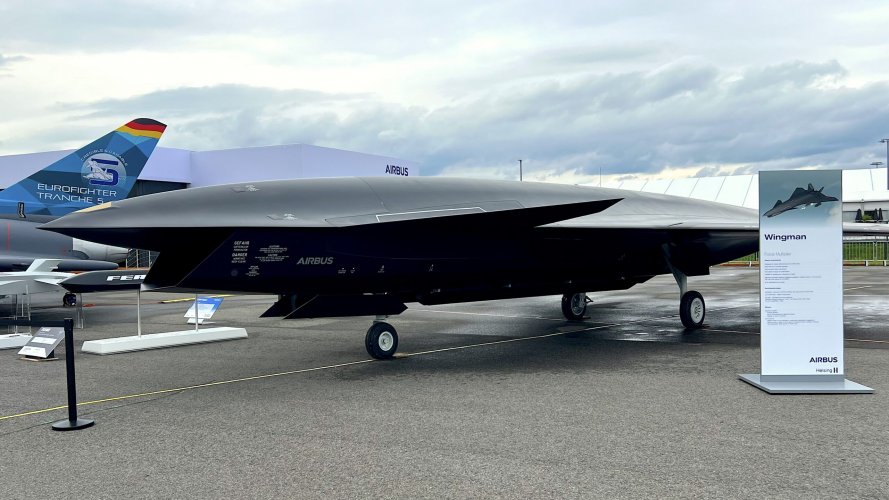
Given that Rheinmetall will partake in assembly of the F-35s fuselage and Germany operating the type soon, as well as Airbus offering to develop a wingman type drone to pair with jets, out of the three core members of the FCAS, Germany is by far the best off should this ship finally sink.
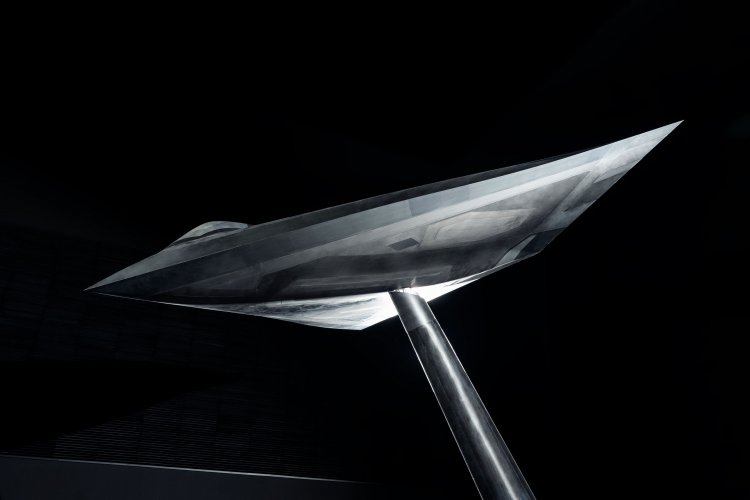
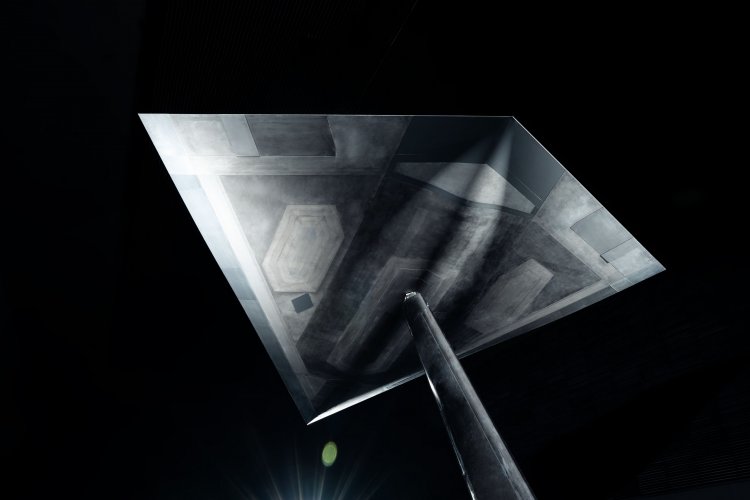
M88-2 first flight on Rafale A was made in 1990.It amuses me when people bring up lacking expertise in modern fighter jet development when everyone involved in the FCAS hasn't developed a new manned jet since the 80s.
I disagree on that but thats mostly down to personal opinion.Technically this article is not news, just commentary / industry lobbying. So it merits a quick fact check.
Words against words. Both saying something nobody is saying anything. Blurry line in many ways.I see several talking points that have been denied in official statements, such as the myth that Dassault is asking for 80% workshare.
You do know that requierments can change right? And that sometimes people choose to go with the affordable option because they only got it at that point.It also contradicts official statements that the German, French and Spanish air forces have all signed off on common requirements... so the idea that German requirements are incompatible from France's appears to be more spin than reality.

I wonder if a demonstrator is absolutely necessary? If both TAI and KAI manage to develop a prototype without building a demonstrator beforehand, why shouldn't experienced design/production organisations like Airbus and Dassault be able to do the same?Also confirmation that the NGF demonstrator is delayed and possibly cancelled completely (!).
https://www.assemblee-nationale.fr/dyn/17/textes/l17b2630_projet-loi
I imagine a demonstrator can really help with validating the aerodynamic/structural design, especially if the goal is to use a novel control arrangement (such as Pelikan-tails or LEVCONs), plus a high proportion of composites, RAM coatings etc.I wonder if a demonstrator is absolutely necessary? If both TAI and KAI manage to develop a prototype without building a demonstrator beforehand, why shouldn't experienced design/production organisations like Airbus and Dassault be able to do the same?
My prediction as a native non-resident German: Eventually Germany will roll over (again)...Interesting piece in the Guardian:
France and Germany agreed to build the fighter jet of the future. Now they can’t agree who is in charge
"A former senior French official, who asked to remain anonymous, said the project appeared to have been conceived “at a very high political level”, without wider discussions in the ministry of defence about whether the countries had the same needs. “We do not have the same way of doing war, Germany and France,” they said. “I was quite troubled by this.”"
"“Dassault is not easy,” said the former senior French official. “They have got amazing engineers … but on the political side they behave how they want. And now they don’t even need this programme, they have many export sales coming from Rafale. So they are very comfortable, and their collaborative spirit is not good. They piss me off."
"Bertrand de Cordoue, Airbus’s former head of EU and Nato public affairs, said tensions had existed between the two companies from the start, with Airbus engineering teams regarding Dassault as the competition.
“For the German part of Airbus, it was not natural to accept coming out of the existing Eurofighter scheme,” said de Cordue, who is now an adviser at the Jacques Delors Institute, a thinktank. “The teams working on Eurofighter were not spontaneously accepting the idea to totally change their mindset and work with a French company that, on the export market, was a competitor, not a partner.”
Dassault, in turn, has resisted handing over its fighter-building know-how to Airbus, fearing a competitor would acquire French expertise. De Cordoue argued that since the technology was funded by French taxpayers, it should be “more the ownership of the French authorities” – and that Dassault should cooperate."
"Germany’s more assertive approach is partly a result of a shifting power dynamic. When the FCAS programme started in 2018, its defence spending was modest. Now, after the decision to rearm following Russia’s invasion of Ukraine, Berlin expects to spend €150bn by 2029 – nearly twice France’s budget.
“France has 60 years of being the accepted leader,” said [Francis] Tusa. “Suddenly Germany is saying: ‘We don’t have to be deferential.’”
“I think they should have kept going with a single aircraft,” Tusa said. “They [Airbus and Dassault] need to go to counselling and basically be told: ‘Come on guys, play nice.’”
Dassault declined to comment."
"Macron, meanwhile, has continued to insist publicly that the project can be saved, telling the Munich Security Conference this month: “It’s hard for me to understand how we will build new common solutions if we destroy the few ones that we have.”
The former French official was more downbeat, pointing to Macron’s presidency ending in May 2027. His possible successor, Marine Le Pen’s far-right National Rally party, is softer on Russia and may abandon the project entirely.
“My feeling is that this project was born with Macron,” the official said, “and could die with Macron.”"
Apart from the comments from Francis Tusa (who is a British defence analyst), this all seems sourced from the French side, and it's the first significant criticism of Dassault's behaviour I think I've seen from French sources.

Belgium, on the way to Paris.Germany will roll over (again)...
Berlin may give up on FCAS’s flagship pillar but alternatives that will deliver the capability the Luftwaffe needs and fulfil industrial hopes will be difficult to find.
(...) a soft exit is proposed by various actors. By going separate ways on NGF but maintaining cohesion on FCAS’ remaining architecture, the political costs of a divorce are, allegedly, reduced. However, a split on NGF will likely result in further segregation. It is questionable whether divergence on NGF will ultimately permit joint development of a powerplant. Furthermore, maintaining NGF associated effort on uncrewed systems, avionics and software pillars appears unlikely in detail.
(...) Furthermore, Germany’s industrial base lacks the experience and expertise to support a sovereign combat air capability on its own, having never developed and procured a national fighter jet and associated engine outside of multinational initiatives since 1945. Even Spain’s likely inclusion in a German programme would not offset this critical issue.
(...) Participation in the Global Combat Air Programme (GCAP)... German’s defence industry is unlikely to accept anything less than an equal share and significant agency over technical requirements – and if so it must then reach much further into the existing GCAP arrangement than other potential candidates. Breaking open existing agreements for re-negotiation would threaten the programme. (...) Under what conditions Germany would want to trade one capability and workshare battleground for another, and under what conditions GCAP members might accept Germany, remains unanswered.
For the sake of completeness: this is published on the RUSI website, but...Good analysis from RUSI... the 1st sentence says it all.
https://www.rusi.org/explore-our-re...fcas-france-and-germanys-fight-future-fighter

FCAS predates the formal GCAP start date by 5 years, and all of that took place in the shadow of Brexit, so I'm sure there were a lot of political considerations that applied then that aren't as strong because of developments in the threat environment since the late 2010s and the fact that the EU basically managed to win Brexit by destroying every British government for the better part of a decade. It may be illustrative that FCAS was preceded by a Franco-British effort after the Lancaster House treaties that also fell apart right at the beginning of FCAS.The Germans should have thought about the GCAP program first before the FCAS then they would not have been in this mess up to begin with.
The RUSI article is significant because it's the first time I've seen push back against the prevailing German industry narrative (and very vocal lobbying campaign) by experts with close ties to the German establishment (including the military). That's new.I wonder what is the interest to burden the reader with yet another opinion piece that rephrase only the one preceding it (while still no words on who pays for all those).


