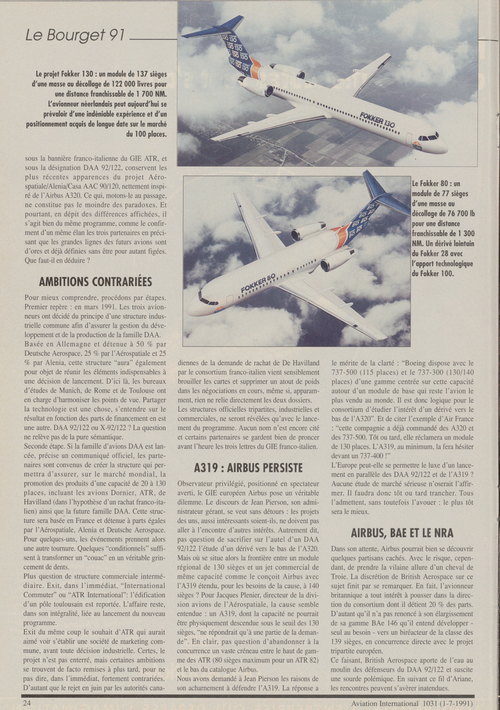
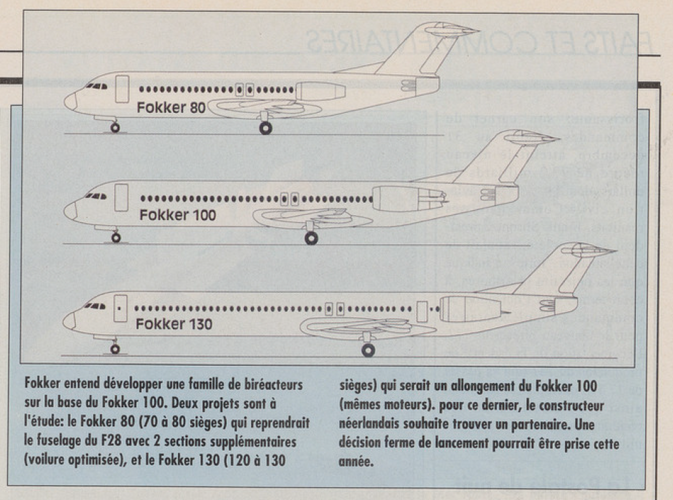
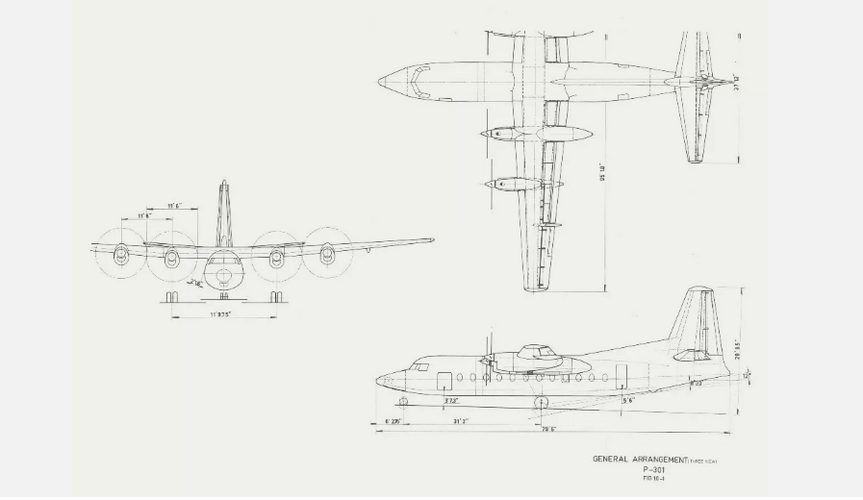
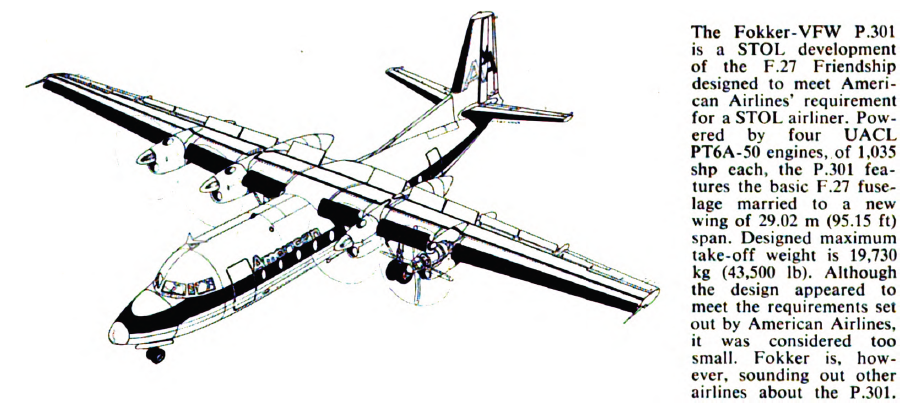
I'll upload the PDF here. I've found though that if you simply link to a PDF you get less response than by putting the pages as images etc.
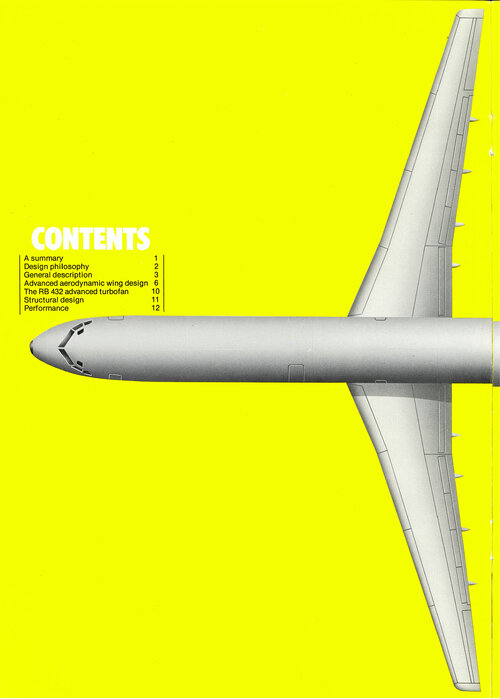
CONTENTS
A summary 1
Design philosophy 2
General description 3
Advanced aerodynamic wing design 6
The RB 432 advanced turbofan 10
Structural design 11
Performance 12
A SUMMARY
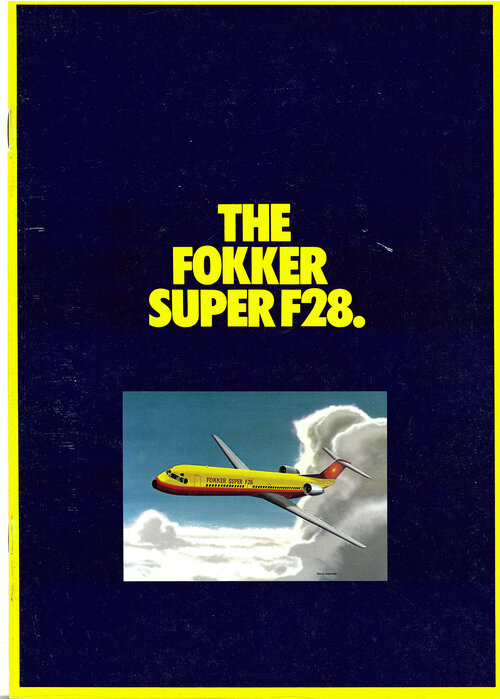
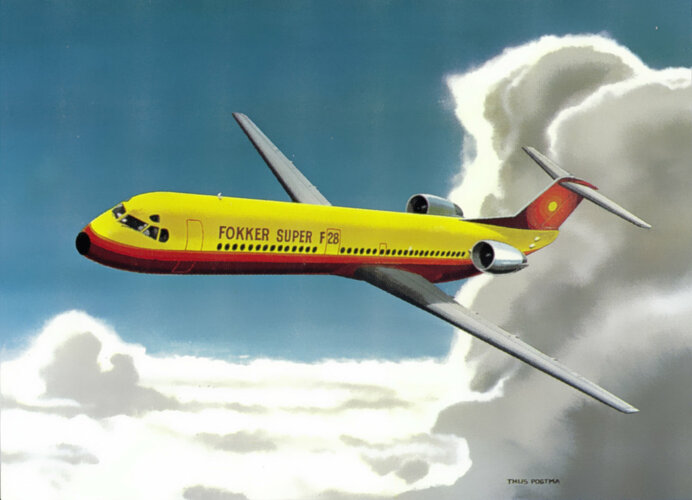
Fokker-VFW is designing an advanced technology short-haul passenger aircraft with operational economy and external noise level both showing marked improvement over current standards. The new airliner is the Super F28, first of a new generation of short-haul jet transports. It will be ready for delivery to first customers in 1984.
Capacity of the new airliner is in the 100-130 passenger range. The standard version discussed in this advance brochure has 110 seats arranged at 34 in pitch in a single class configuration, but final layout will be determined after conclusion of discussions in progress with a number of airlines.
Prime engine candidate to power the Super F28 is the Rolls-Royce RB432 second generation turbofan, developing 16,000 to 18,000 lb thrust at take-off. Application of advanced technology will be evident also in a wing employing aerodynamics of a new order and in structure embodying components designed in advanced composite materials.
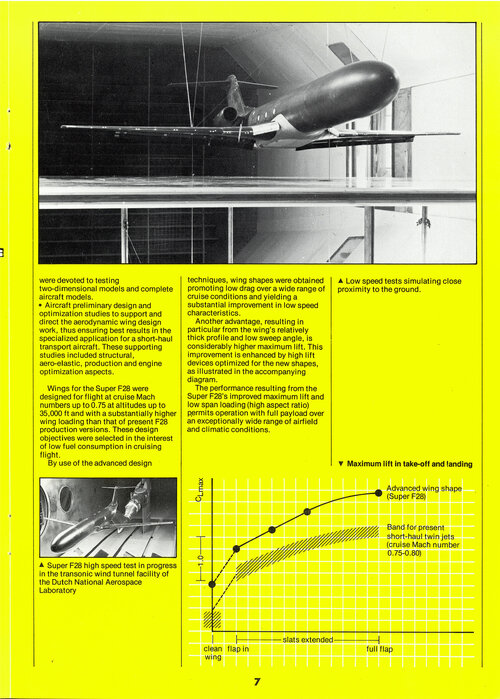
In a comprehensive advanced wing design programme, some 3700 hours have already been devoted to wind tunnel research. Five basic types of wing have been tested in the high speed wind tunnel and extensive low speed testing has also been conducted. The programme has yielded results indicating low drag at high lift in cruise, as well as high maximum lift at take-off which, in combination with a large-span wing, ensures outstanding flexibility in airfield operations.
The Super F28's main airframe structure will be of the bonded type used first in the F27 Friendship and again in the F28 Fellowship and conclusively proven in worldwide service. The continued application of this design philosophy aids economy, ensures a high degree of commonality with Fellowship components, and takes full advantage of the established excellence of systems and structure
long in service.
At the same time, Fokker-VFW is conducting long term research in the field of compound fibre type structures with a view to their innovative use in a number of readily interchangeable units such as wing flaps, lift dumpers, speed-brakes and nosewheel doors. Components of this type offer prospects of considerable weight savings.
The Super F28 is thus a product of continuous and logical development of the short-haul family founded some 20 years ago with the arrival of the F27 in service. The past two decades have brought orders for some 700 F27s in a variety of versions, while sales of the F28 also continue to climb steadily. The vast experience acquired with these two aircraft has established Fokker-VFW as the world's leading manufacturer for the short-haul field . In the Super F28 the lessons drawn from that experience are now combined with the economic and operational benefits of new technology applied to research, design and construction. The operational benefits include significant improvements in fuel consumption and operational cost. With the Rolls-Royce RB 432, in combination with the high aspect ratio, advanced technology wing, fuel consumption is substantially lower than that of current technology aircraft.
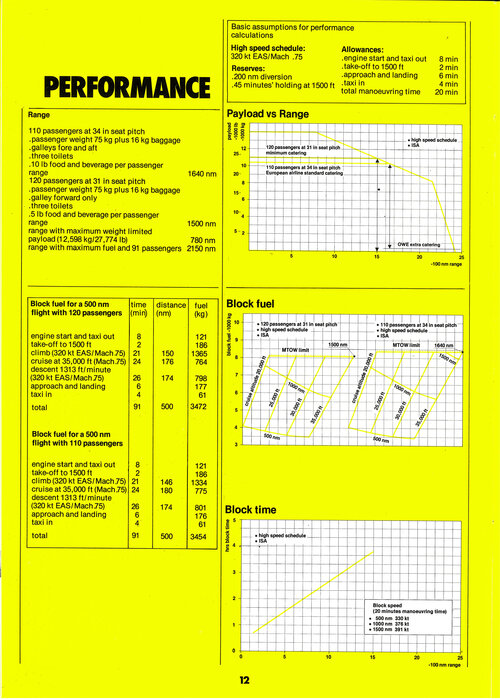
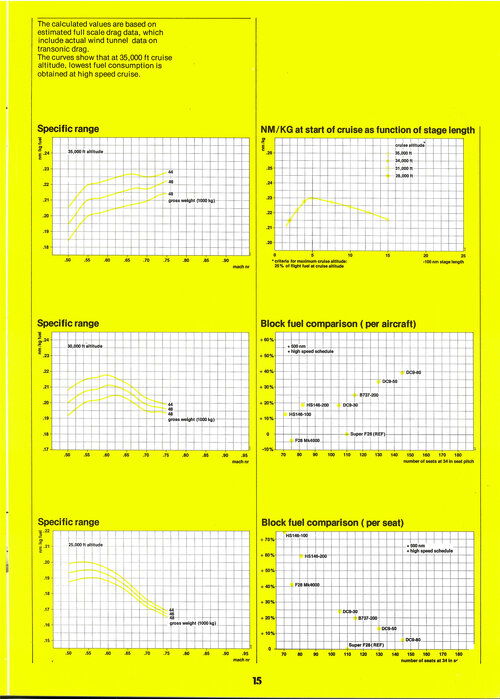
Compared with today's twinjets of comparable size, the Super F28 will in fact offer a 25% saving in block fuel over 500 nm stage lengths and a 30% saving over 1500 nm sectors. These fuel savings in turn yield operating costs some 10% lower than those of the
current aircraft.
DESIGN PHILOSOPHY
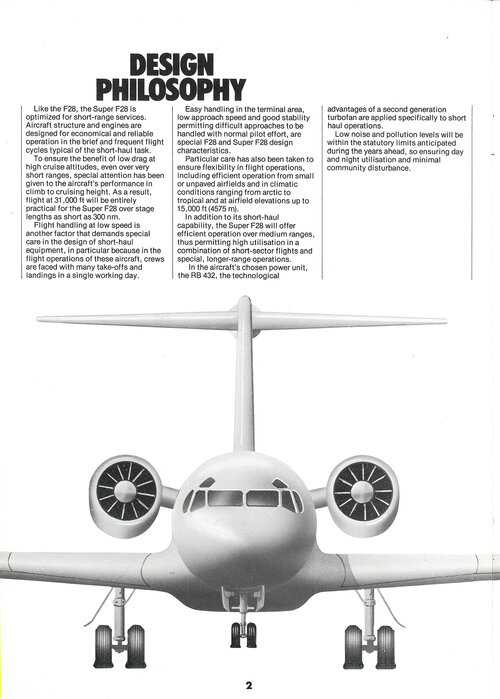
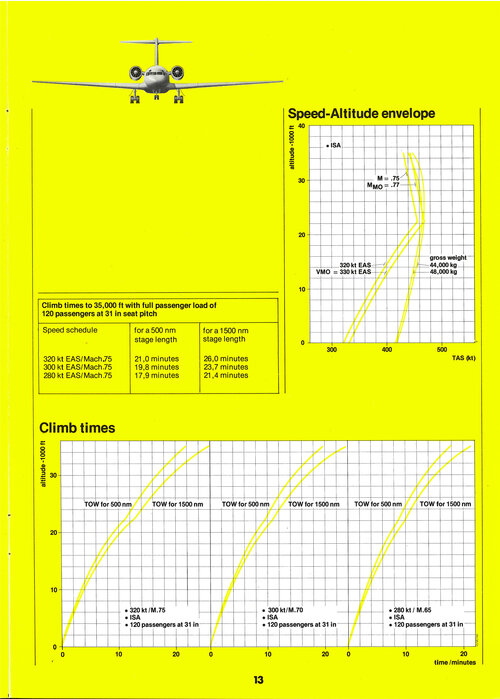
Like the F28, the Super F28 is optimized for short-range services. Aircraft structure and engines are designed for economical and reliable operation in the brief and frequent flight cycles typical of the short-haul task. To ensure the benefit of low drag at high cruise altitudes, even over very short ranges, special attention has been given to the aircraft's performance in climb to cruising height. As a result, flight at 31,000 ft will be entirely practical for the Super F28 over stage lengths as short as 300 nm.
Flight handling at low speed is another factor that demands special care in the design of short-haul equipment, in particular because in the flight operations of these aircraft, crews are faced with many take-offs and landings in a single working day. Easy handling in the terminal area, low approach speed and good stability permitting difficult approaches to be handled with normal pilot effort, are special F28 and Super F28 design characteristics.
Particular care has also been taken to ensure flexibility in flight operations, including efficient operation from small or unpaved airfields and in climatic conditions ranging from arctic to tropical and at airfield elevations up to 15,000 ft (4575 m).
In addition to its short-haul capability, the Super F28 will offer efficient operation over medium ranges, thus permitting high utilisation in a combination of short-sector flights and special, longer-range operations.
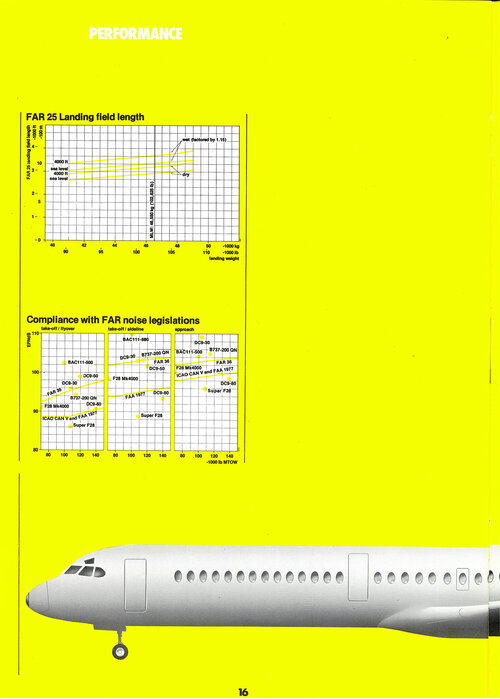
In the aircraft's chosen power unit, the RB 432, the technological advantages of a second generation turbofan are applied specifically to short haul operations. Low noise and pollution levels will be within the statutory limits anticipated during the years ahead, so ensuring day and night utilisation and minimal community disturbance.
GENERAL DESCRIPTION
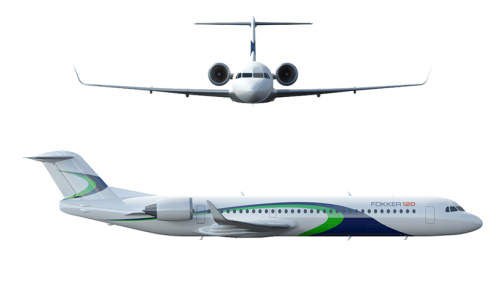
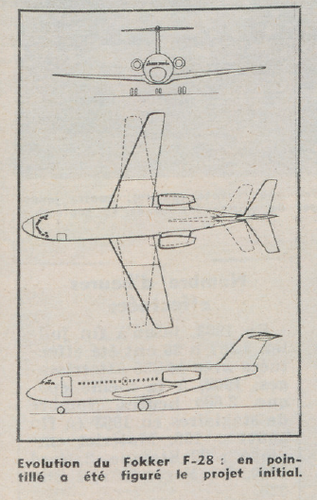
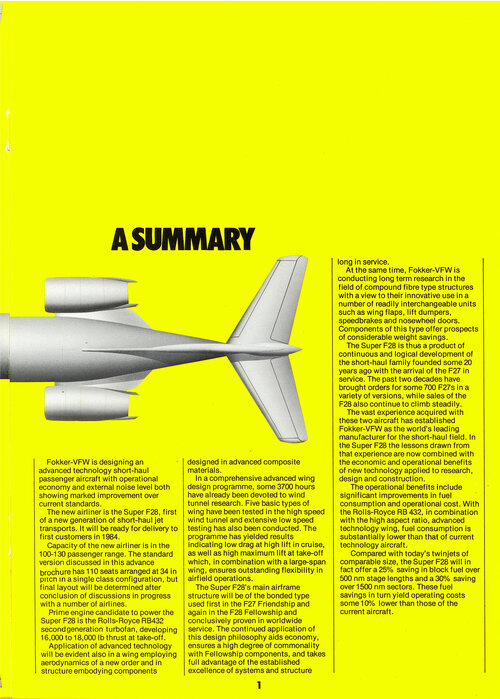
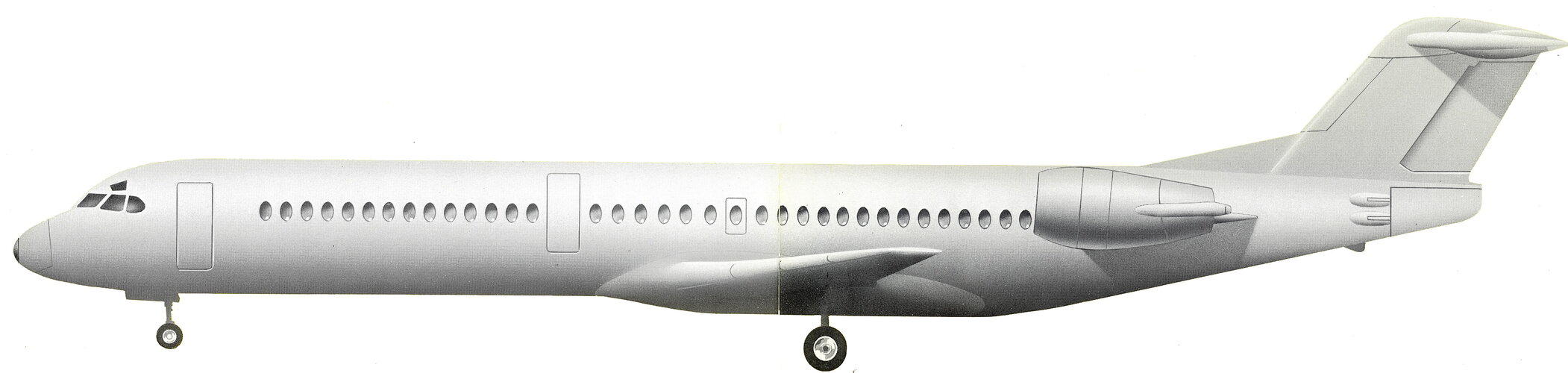
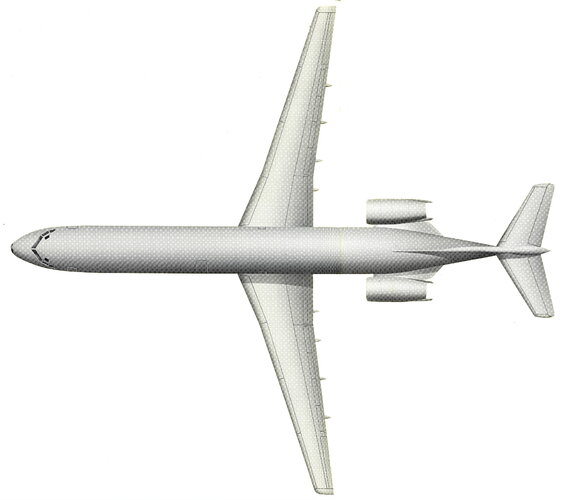
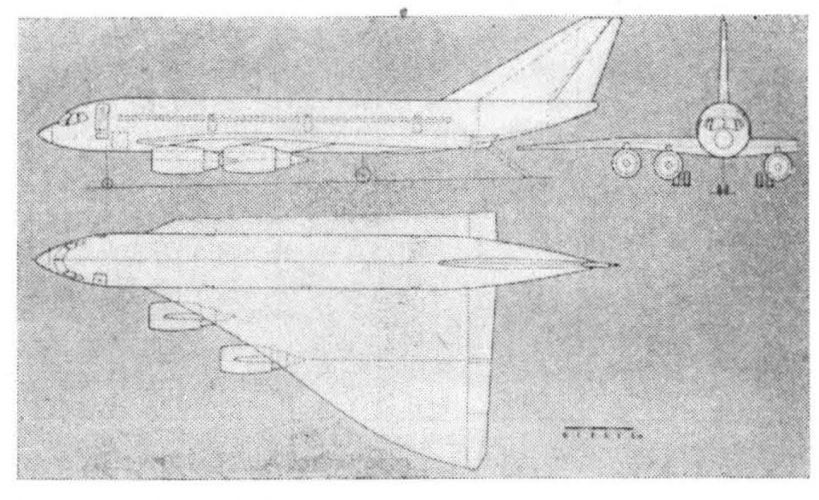
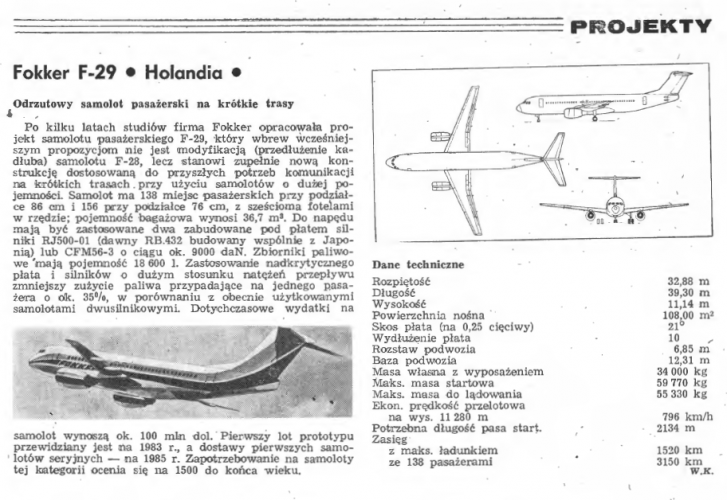
The Super F28 is a development of the F28 Fellowship and retains the aft-mounted engines and T-tail of the earlier configuration . The 5-abreast fuselage is stretched. The aircraft here presented has capacity for 110 passengers at34 in seat pitch and is the first Super F28 version. Other versions accommodating up to 130 passengers and embodying weight increases of up to 15% have been studied to ensure that future growth will be economically feasible. All Super F28 versions will have a new wing and second generation turbofan engines.
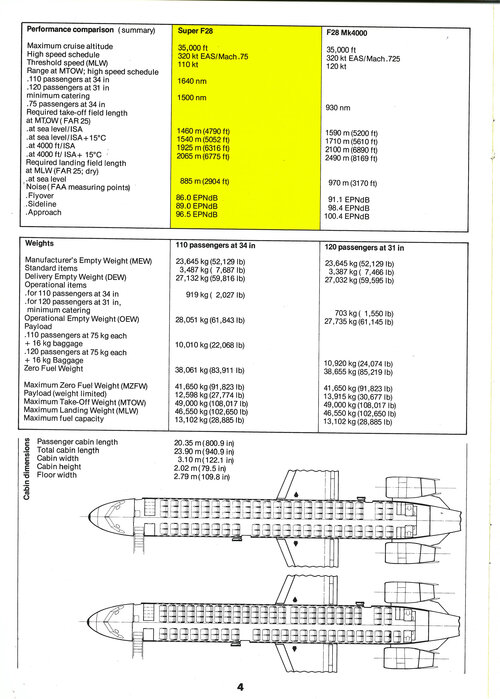
In the standard 110-seat design a second passenger door and a service door have been added to the stretched F28 Mk4000 fuselage. The layout provides fore and aft pantry area including stowage for seven service trolleys. There is thus ample scope for the high catering standards maintained by leading European airlines.
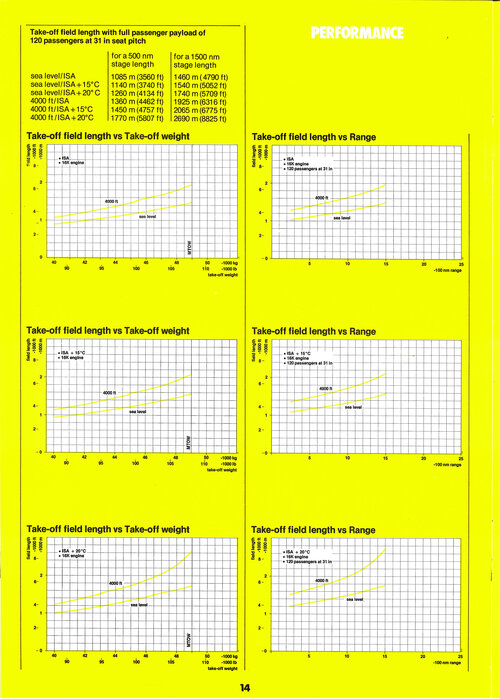
An alternative high density layout accommodates 120 passengers, most of them seated at 31 in pitch, - though a few seat rows are retained at 34 in - and has reduced space for catering facilities. In another arrangement, accommodation can be provided for 130 passengers in seats of the type specially designed for F28 operators using 29 in pitch.
The outward-opening front passenger door measures 34 in x 76 in and has integral stairs identical to those of the F28. A second, " plug" type passenger door is positioned just forward of the wing. This door permits access and disembarkation by means of Aviobridge type passenger boarding equipment or other airport facilities; alternatively a stair which stows under the cabin floor can be made available as an option.
Three cargo hatches give access to the belly cargo compartments, which have total capacity of 25 cubic metres (906 cu ft) .
The lefthand side of the fuselage has structural provision for a large cargo door, measuring 98 in x 73.5 in, above floor level. The installation is comparable to that of the F28. Standard cabin layout includes three toilets, one at the front of the cabin and two at the rear.
Two doors usable either for service or as Type I emergency exits are located fore and aft in the righthand side of the fuselage, while two Type Ill emergency window exits are installed above the wing. These arrangements meet statutory requirements covering evacuation of up to 139 passengers.
The flight deck is the same as that of the F28 in external shape and dimensions. Equipment has been chosen and layout of displays and controls arranged to meet the requirements of the next decade and, in doing so, to set new standards for two-man crew operations.
Space is available on the flight deck for a third crew member and for a supernumerary flight inspector should an operator require this arrangement. The aircraft can be equipped for Cat IIIa landings as a customer option.
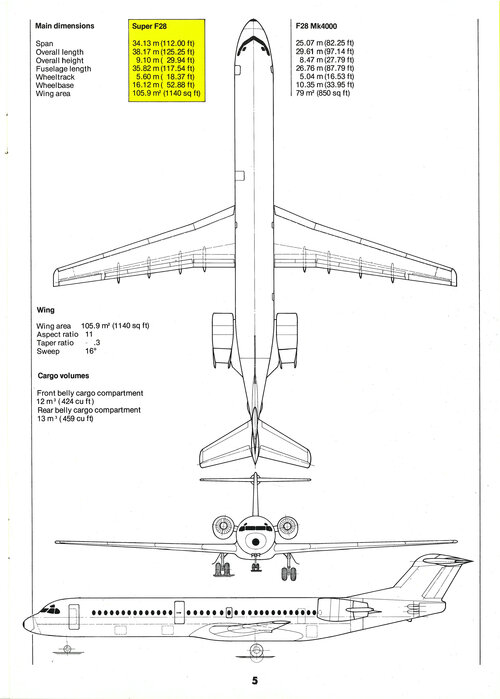
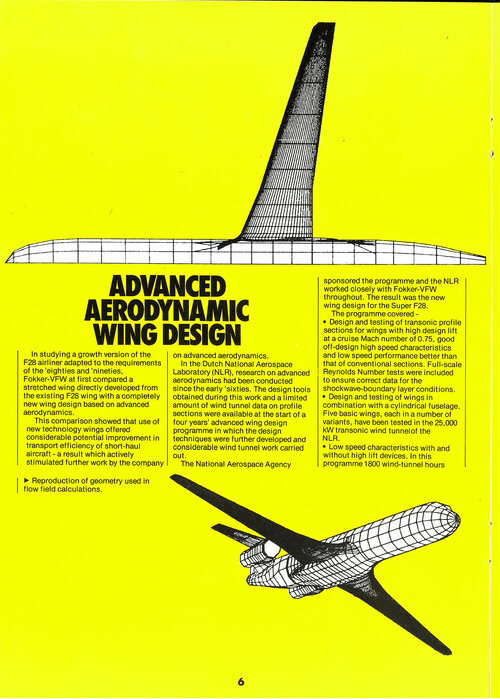
The Super F28's completely new wing is based on advanced aerodynamic research substantiated by extensive wind tunnel tests. Improved airfoil and wing technology permits high design lift in cruise, together with increased thickness ratio giving high maximum lift at take-off. The greater thickness ratio also permits an aspect ratio (AR 11 .0) substantially higher than that of the F28, while sweep angle is maintained at 16°.
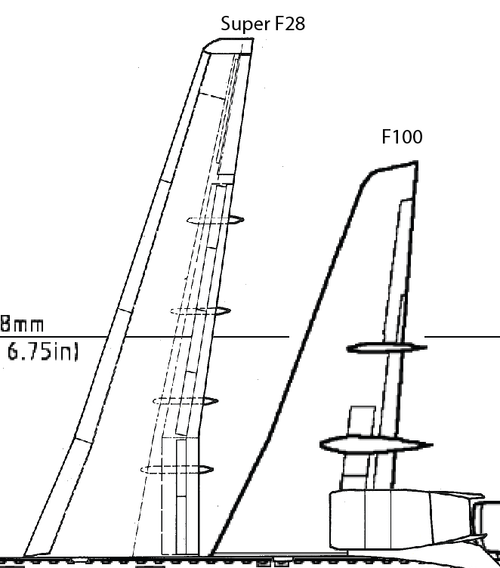
The T-tail layout is similar to that of the F28 but the size of the vertical and horizontal surfaces is increased. The elevator is power-boosted and retains inherent aerodynamic feel characteristics in pitch control. The ailerons and double-hinged rudder are hydraulically powered and also have artificial feel. Additional roll control is provided by outer wing spoiler ailerons. A speedbrake on the aft fuselage, similar to that of the F28 but larger, ensures good speed control in the terminal area as well as efficient aerodynamic braking during ground deceleration.
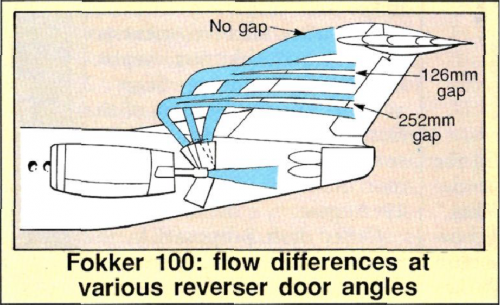
The F28's outstanding braking characteristics are maintained and ground adhesion is aided by use of automatically deflected lift dumpers in the primary phase of landing deceleration. For carriers operating in exceptionally unfavourable winter conditions, thrust reversers can be provided as an option. To this end, production engine pods will have provision for thrust reverser attachments. Landing gear configuration is comparable to that of the F28 - a twin-wheel main gear retracting sideways and a twin-wheel forward retracting nosegear. Tyres of 42 in x 17 in are standard; but low pressure tyres of 44 in x 18 in can be instal led to ensure good ground flotation characteristics on runways of low bearing strength and having LCN values lower than those applicable to today's 100-plus-seat twinjets.
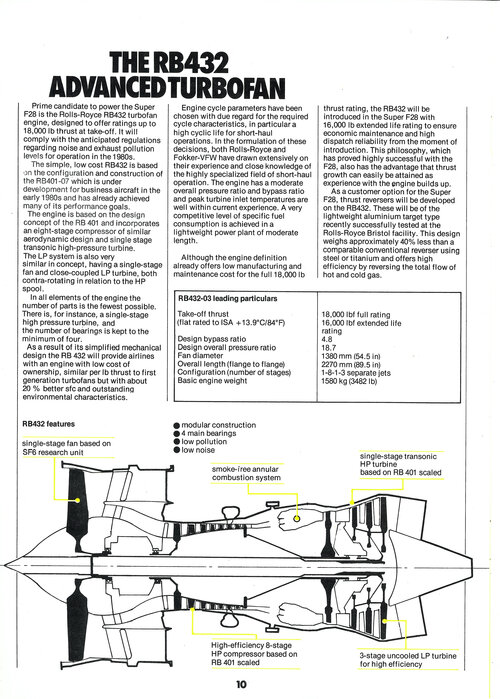
Systems are designed on the basis of F28 experience but are adapted to the Super F28's greater seat capacity and to conform to latest airworthiness requirements and design standards. The Super F28's RB432 engine is modular in concept and of latest design technology. A detailed description and diagrammatic layout appear on page 10.
THE RB432 ADVANCED TURBOFAN
Prime candidate to power the Super F28 is the Rolls-Royce RB432 turbofan engine, designed to offer ratings up to 18,000 lb thrust at take-off. It will comply with the anticipated regulations regarding noise and exhaust pollution levels for operation in the 1980s. The simple, low cost RB432 is based on the configuration and construction of the RB401-07 which is under development for business aircraft in the early 1980s and has already achieved many of its performance goals.
The engine is based on the design concept of the RB 401 and incorporates an eight-stage compressor of similar aerodynamic design and single stage transonic high-pressure turbine. The LP system is also very similar in concept, having a single-stage fan and close coupled LP turbine, both contra-rotating in relation to the HP spool. In all elements of the engine the number of parts is the fewest possible.
There is, for instance, a single-stage high pressure turbine, and the number of bearings is kept to the minimum of four. As a result of its simplified mechanical design the RB 432 will provide airlines with an engine with low cost of ownership, similar per lb thrust to first generation turbofans but with about 20 % better sfc and outstanding environmental characteristics.
Engine cycle parameters have been chosen with due regard for the required cycle characteristics, in particular a high cyclic life for short-haul operations. In the formulation of these decisions, both Rolls-Royce and Fokker-VFW have drawn extensively on their experience and close knowledge of the highly specialized field of short-haul operation. The engine has a moderate overall pressure ratio and bypass ratio and peak turbine inlet temperatures are well within current experience. A very competitive level of specific fuel consumption is achieved in a lightweight power plant of moderate length.
Although the engine definition already offers low manufacturing and maintenance cost for the full 18,000 lb thrust rating, the RB432 will be introduced in the Super F28 with 16,000 lb extended life rating to ensure economic maintenance and high dispatch reliability from the moment of introduction. This philosophy, which has proved highly successful with the F28, also has the advantage that thrust growth can easily be attained as experience with the engine builds up.
As a customer option for the Super F28, thrust reversers will be developed on the RB432. These will be of the lightweight aluminium target type recently successfully tested at the Rolls-Royce Bristol facility. This design weighs approximately 40% less than a comparable conventional reverser using steel or titanium and offers high efficiency by reversing the total flow of hot and cold gas.
STRUCTURAL DESIGN
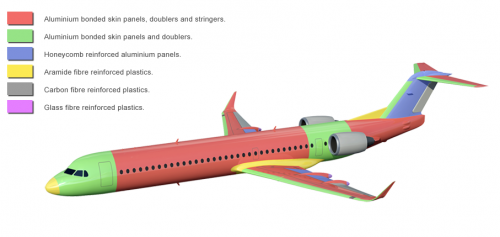
The bonded Dural um in type of structure employed in the F28 and F27 will again be used in the main airframe components of the Super F28. Over the past 20 years the Fokker-built world fleet has recorded some 9 million flights, with individual aircraft logging up to 60,000 flights each. The very substantial experience thus gained with the Fokker type of bonded structure is an irrefutable guarantee of a long life airframe with low maintenance costs and low depreciation on aircraft investment.
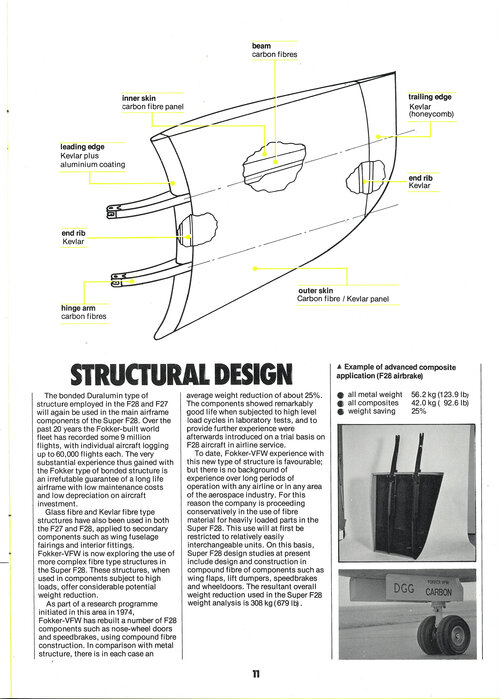
Glass fibre and Kevlar fibre type structures have also been used in both the F27 and F28, applied to secondary components such as wing fuselage fairings and interior fitting. Fokker-VFW is now exploring the use of more complex fibre type structures in the Super F28. These structures, when used in components subject to high loads, offer considerable potential weight reduction.
As part of a research programme initiated in this area in 1974, Fokker-VFW has rebuilt a number of F28 components such as nose-wheel doors and speedbrakes, using compound fibre construction. In comparison with metal structure, there is in each case an average weight reduction of about 25%. The components showed remarkably good life when subjected to high level load cycles in laboratory tests, and to provide further experience were afterwards introduced on a trial basis on F28 aircraft in airline service.
To date, Fokker-VFW experience with this new type of structure is favourable; but there is no background of experience over long periods of operation with any airline or in any area of the aerospace industry. For this reason the company is proceeding conservatively in the use of fibre material for heavily loaded parts in the Super F28. This use will at first be restricted to relatively easily interchangeable units. On this basis, Super F28 design studies at present include design and construction in compound fibre of components such as wing flaps, lift dumpers, speedbrakes and wheeldoors. The resultant overall weight reduction used in the Super F28 weight analysis is 308 kg ( 679 lb)