Flying Cars And Roadable Aircraft

Someone here posted a youtube video explaining why this is likely a scam. Notice how in the flight video the windows are completely blacked out, meaning that this thing is likely just a drone and is unable to lift the weight of a person.
 
I strongly feel that Molt Taylor's remarkable Aerocar designs more than deserve a topic of their own, instead of being drowned in this 17-page thread... Anyway, here is a remarkable 1949 video of the very first Aerocar!

View: https://www.facebook.com/watch/?v=1055557900063649
Interesting. "Molt" Taylor (Moulton Taylor, his real name, Molt was a nickname) was a USN Commander during WW 2 and as an aeronautical engineer and pilot worked on Project Gorgon. He was the first person in history on 8 March 1945 to attempt to use an air-to-air missile (a Gorgon IIA with TV and MCLOS guidance) to shoot down another aircraft off Cape May NJ (He concluded it was impossible to use MCLOS with a missile to shoot down an aircraft as the closing speeds were too high and human hand-eye coordination couldn't deal with it).
 
Last edited:
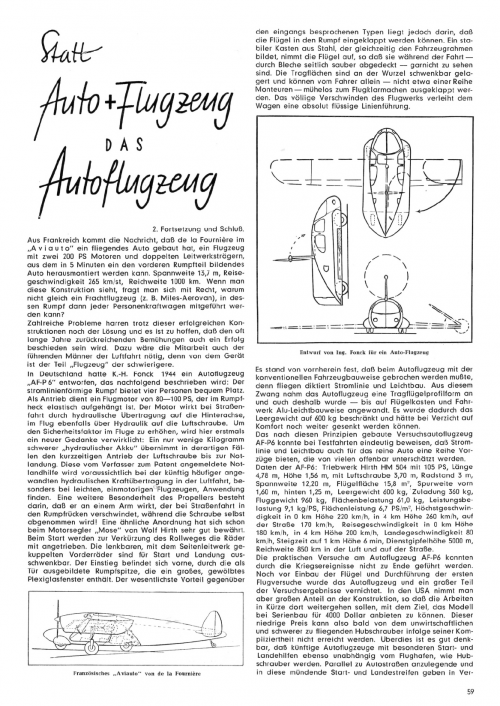
From Der Flieger 1950,

first time to hear about Fonck.
 

Attachments

  • 9.png
    9.png
    1.1 MB · Views: 37
  • 10.png
    10.png
    221.6 KB · Views: 32
Maybe the energy density is now good enough for these things
https://techxplore.com/news/2025-09-3d-fuel-cells-reshape-sustainable.htmlA team of researchers at DTU may have cracked one of the toughest nuts in sustainable energy: how to make fuel cells light and powerful enough for aerospace applications.

https://techxplore.com/news/2025-09-fuel-cell-catalyst-powering-heavy.htmlThe Brookhaven-led team designed a new nitrogen-doped catalyst made from a carefully tuned mix of five metals: platinum, cobalt, nickel, iron, and copper. Such "high-entropy intermetallic" materials.

By zooming in on the material at the atomic level using X-rays and microscopy at Brookhaven's National Synchrotron Light Source II (NSLS-II) and Condensed Matter Physics and Materials Science Department, the researchers discovered that the new catalyst has tiny distortions in its atomic structure, partly caused by what they refer to as "sub-angstrom strain."

These subtle shifts in atomic position—measuring much less than the width of a single atom—combined with strong bonds between the metals and nitrogen atoms, make the catalyst both highly active and unusually durable.


https://techxplore.com/news/2025-09-flexible-solid-electrolyte-high-fuel.htmlFuel cells traditionally rely on proton-conducting oxides that require operating temperatures above 500 °C, limiting their use in compact or mobile applications. A team from Institute of Industrial Nanomaterials, Kumamoto University, led by Assistant Professor Kazuto Hatakeyama and Professor Shintaro Ida, has developed a flexible solid electrolyte composed of monolayer silicate nanosheets with the formula H₀.₃₇Al₁.₆₇Mg₀.₃₅Fe₀.₁₁Si₃.₉O₁₀(OH)₂(H₂O)₂.₆.

This material achieves proton conductivities of 2.3×10⁻³ S/cm @10 °C, 6.2×10⁻³ S/cm @100 °C and 8.7×10⁻³ S/cm @140 °C under 100% relative humidity—comparable to or exceeding current polymer-based electrolytes like Nafion.

What sets this membrane apart is its dual performance: it not only conducts protons efficiently but also blocks hydrogen gas more than 100 times better than Nafion. This combination of properties is critical for fuel cell safety, efficiency, and longevity.

When applied to hydrogen fuel cells, the membrane enabled a maximum current density of 1080 mA/cm² and a power output of 264 mW/cm² at 90 °C. Even more impressively, the fuel cell operated stably across a wide temperature range from −10 °C to 140 °C—making it suitable for both cold climates and high-demand automotive environments.
 
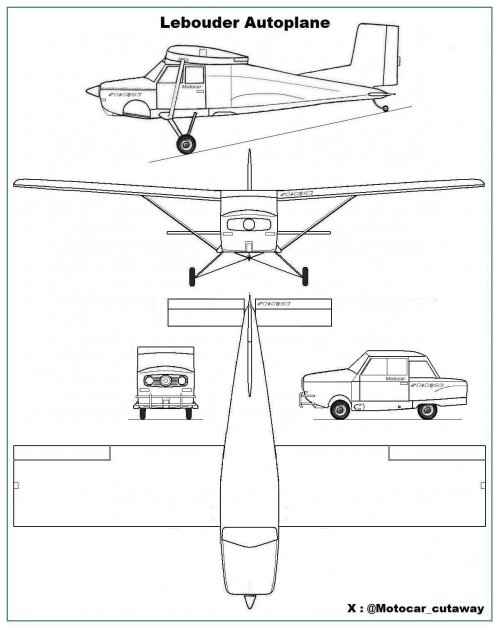
Lebourder Autoplane blueprint by Motocar
 

Attachments

  • 164157_103564552_Lebouder Autoplane.jpg
    164157_103564552_Lebouder Autoplane.jpg
    146.2 KB · Views: 29
The presenter began with his particular opinion, satirizing both Flying Cars and those of another category such as amphibians. I began to watch the video, but it took me less than a minute to get rid of it because it was useless and lacked seriousness. I thought he would go through the hundreds of attempts at Flying Cars and then comment on the problems that would arise! Anyway, what a useless waste of time it took me to write this review. In response to the Flying Car, I will say that today there are very serious proposals from large and very serious companies in Europe, Asia, and the United States. I also believe that the aforementioned drawbacks are valid.
 

Attachments

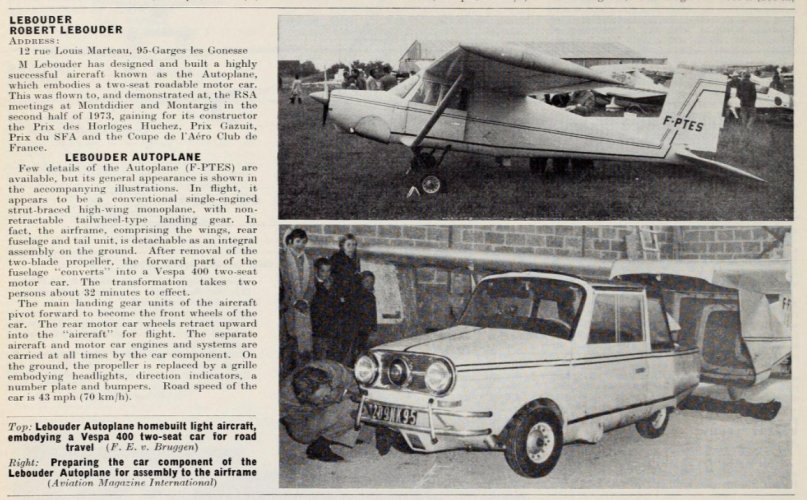
  • Jane's all the World 's Aircraft 1974-75 page 788.jpg
    Jane's all the World 's Aircraft 1974-75 page 788.jpg
    358.3 KB · Views: 28
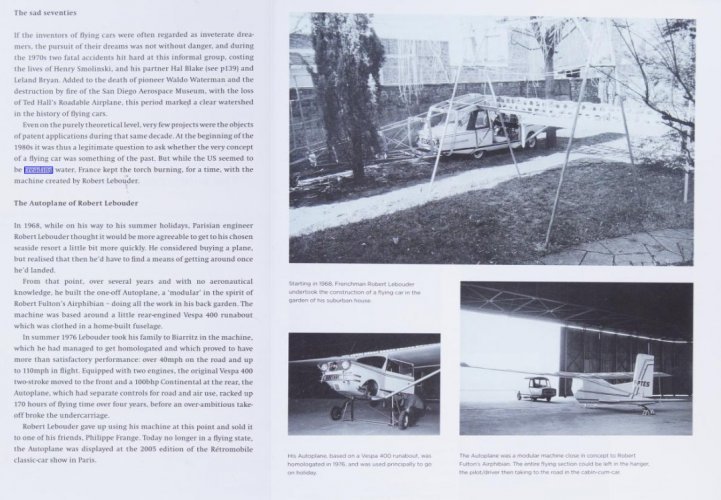
  • Flying cars --- The extraordinary history of cars designed for tomorrow's world Page 126.jpg
    Flying cars --- The extraordinary history of cars designed for tomorrow's world Page 126.jpg
    271.7 KB · Views: 27
Also from this book
 

Attachments

  • 4.png
    4.png
    1.6 MB · Views: 27
  • 5.png
    5.png
    1.7 MB · Views: 21
  • 6.png
    6.png
    1.5 MB · Views: 23
  • 7.png
    7.png
    1.7 MB · Views: 20
  • 0.png
    0.png
    588.5 KB · Views: 31
From JAWA 1960-1961,

the Bryan concept.
 

Attachments

  • 3.png
    3.png
    760.7 KB · Views: 29
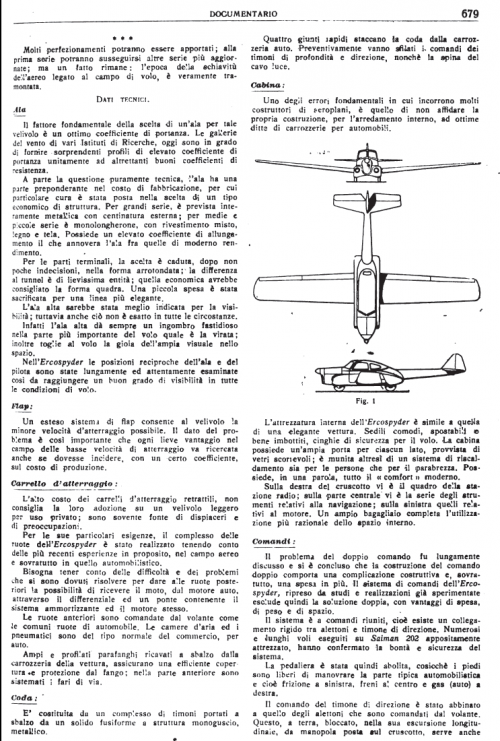
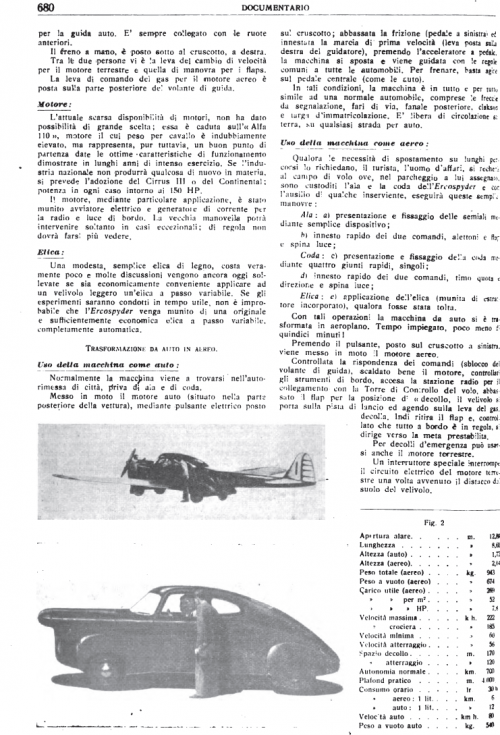
From Rivista Aeronautica 1947
 

Attachments

  • 5.png
    5.png
    191.3 KB · Views: 20
  • 6.png
    6.png
    262.5 KB · Views: 22
  • 7.png
    7.png
    353.9 KB · Views: 25

Attachments

  • IMG_3615.jpeg
    IMG_3615.jpeg
    643 KB · Views: 22
  • IMG_3617.jpeg
    IMG_3617.jpeg
    372.1 KB · Views: 21
  • IMG_3616.jpeg
    IMG_3616.jpeg
    381.3 KB · Views: 19
  • IMG_3614.jpeg
    IMG_3614.jpeg
    385 KB · Views: 22
  • IMG_3613.jpeg
    IMG_3613.jpeg
    446.1 KB · Views: 22
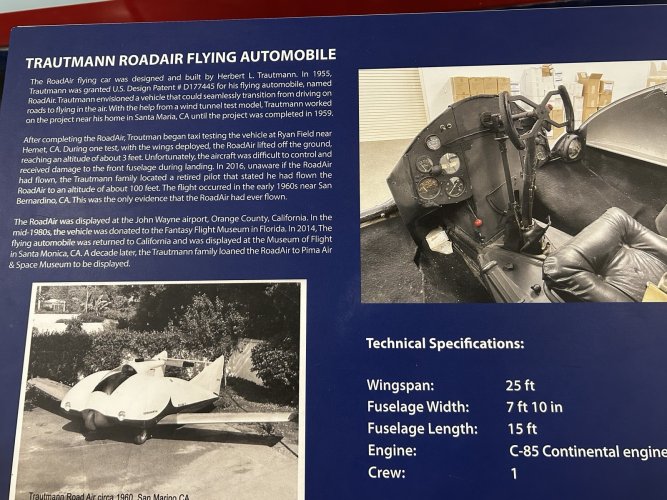
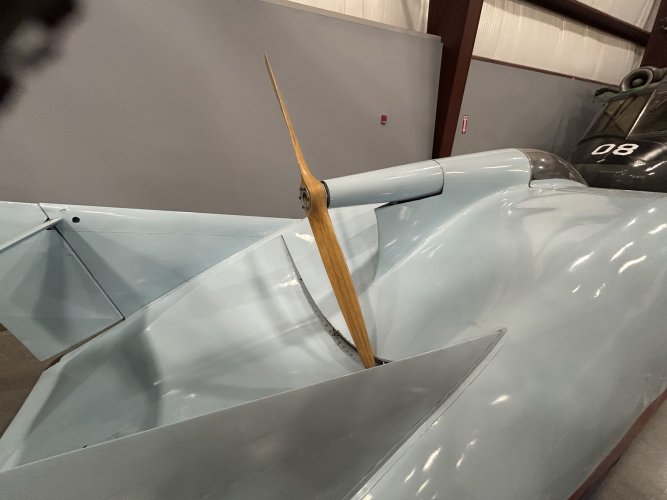
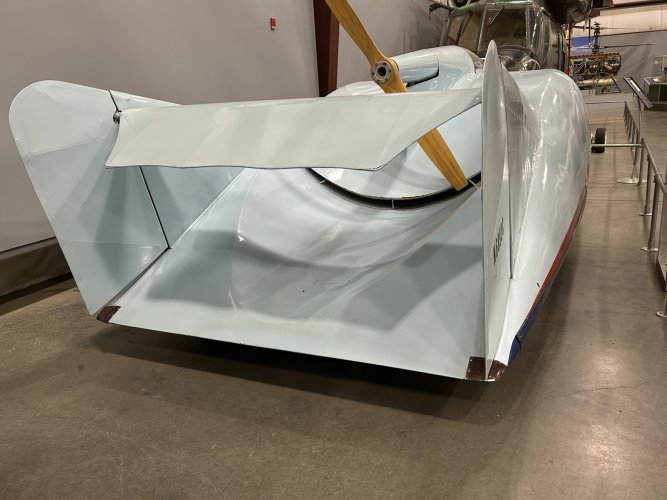
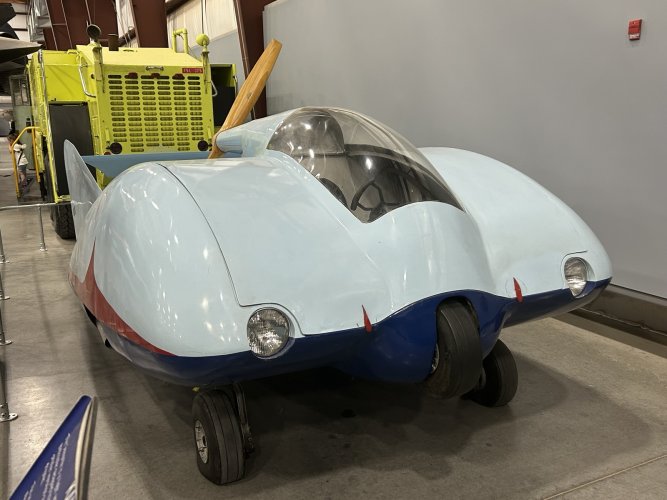
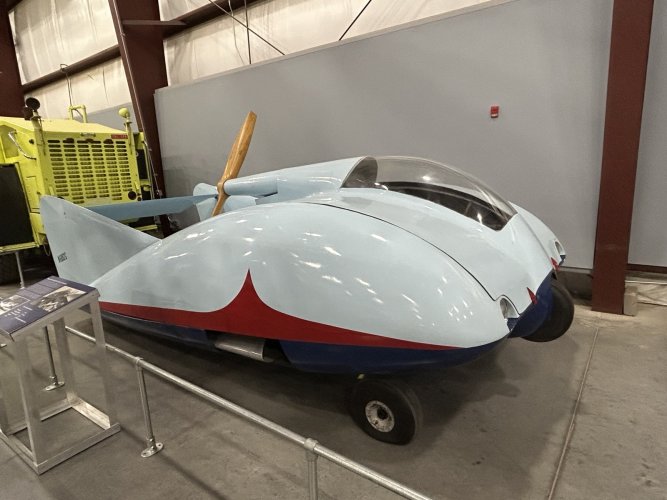
I created a video covering the Trautmann RoadAir flying car. The video detail the history of the 1959 RoadAir, a unique experimental flying car designed and built by aviation enthusiast Herbert L. Trautmann. Constructed in Southern California, the vehicle featured a tricycle gear system for roads and pivoting wings that deployed for flight, powered by an 85-horsepower Continental engine. Although it was intended to bridge the gap between automobiles and aircraft, the RoadAir only achieved limited flight, reportedly reaching low altitudes before being retired due to control instability. The archives describe its technical specifications, such as a 25-foot wingspan and a 1,000-pound gross weight, while documenting its journey through various collections including Fantasy of Flight, the Museum of Flying and the Pima Air and Space museum. Today, the aircraft serves as a rare piece of aviation history, representing the mid-century ambition to create a functional dual-purpose vehicle. Through blueprints and museum records, the sources illustrate both the innovative design philosophy and the practical challenges that kept this prototype from reaching mass production.

View: https://youtu.be/iW7ml69xwC8
 
Trautmann RoadAir flying car 3D view video reconstructed from still images. This 1959 RoadAir, a unique experimental flying car designed and built by aviation enthusiast Herbert L. Trautmann. The vehicle featured pivoting wings that deployed for flight.

View: https://youtu.be/YEcIrEYGSRs
 
If I may, the Autoplane mentioned above was designed by Robert Lebouder.

https://gallica.bnf.fr/ark:/12148/bd6t5333202h/f25.item.r=(prOx: "lebouder" 50 "avion").zoom
The automobile used by this non aeronautical engineer was an ACMA (Ateliers de construction de motocycles et d'automobiles) Vespa 400 microcar.

I have the cutaway roughed out on this model; there are complex details missing that I don't want to speculate too much about—the poor-quality photos don't help much.
 

Similar threads

Back
Top Bottom