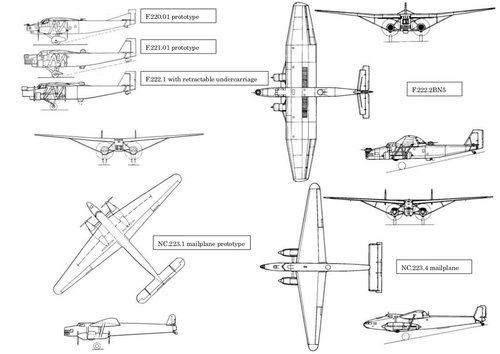
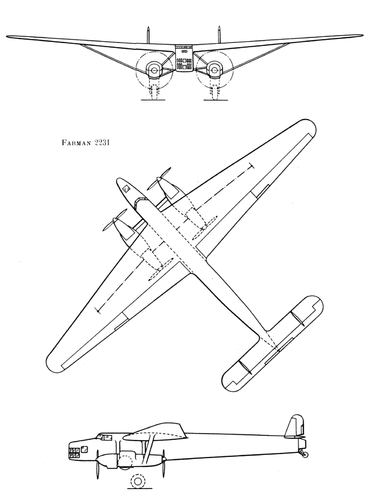
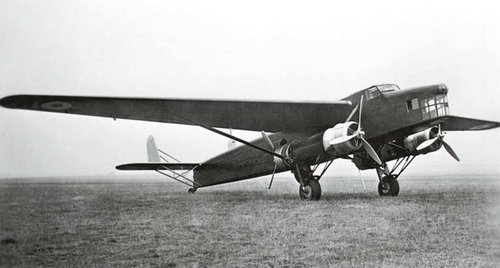
http://www.airwar.ru/enc/bww2/f222.htmlF.220.01 : Prototype with Hispano-Suiza 12Lbr engines.
F.221.01 : Revised version with enclosed gunner’s position, powered by Gnome-Rhone 14Kdrs engines.
F222.1 : Revised version with retractable undercarriage and turrets, powered by Gnome-Rhone 14Kdrs engines.
F.222.2 : F.222.1 with redesigned nose, powered by Gnome-Rhone 14N-11 engines.
NC.223,1 : Mailplane prototype.
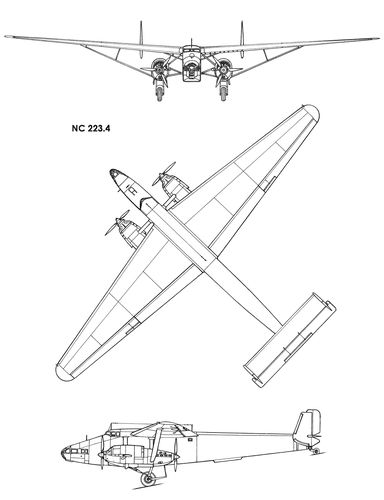
NC.223.4 : Mailplane.
Various wing, various engine and various radiator. Especially radiator design is unique.
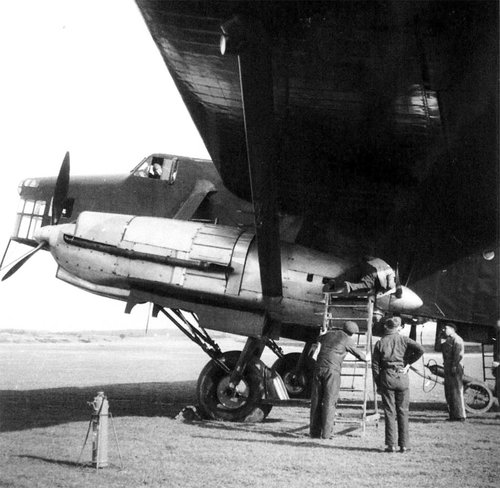
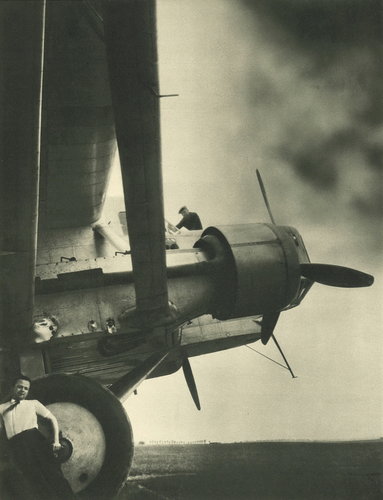
Powered by air cooling engines using such a configulation is surprising for me. Aft engine cooling is no problem?
Hi! NC223.1 mailplane prototype.
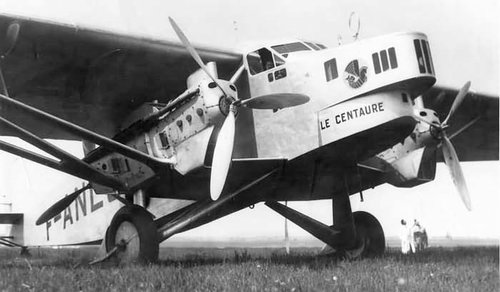
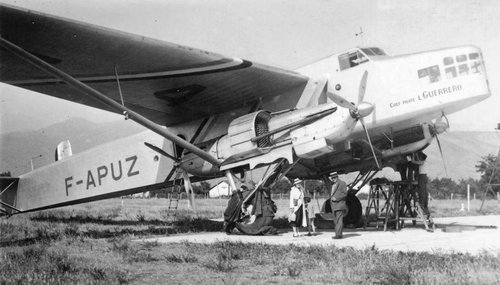
F.223.1 No. 1, in the form of a long-range postal aircraft. This machine, named F-APUZ, made its maiden flight to Tousle-les-Noble in June 1937. The aircraft was powered by four 12-cylinder Liquid Cooling Engines of the Hispano-Suisa 12 Xirsl with a capacity of 720 hp. On October 17, it set a world record by flying 1,000 km with a load of 10 tons at an average speed of 263 km/h. NC.223.1, which was named "Chef-Pilot Lauren Guerro" with a range of 8,000 km. Air France subsequently used the aircraft on a line across the South Atlantic. http://www.airwar.ru/enc/cw1/nc2230.html
The second aircraft built, the NC.223.1(NC.223.01?) was actually the first prototype bomber. It looked like a postal plane. The only significant difference can be considered a motorcycle installation. On the second NC.233.1 were four 14-cylinder two-row star-shaped engines of the Hispano-Suisa 14AA, which developed 1000 hp at an altitude of 4000 m. This aircraft took off in Toussa-le-Noble on January 18, 1938. Sema. However, the low reliability of the 14AA engines caused constant interruptions in the flight program. On June 18, the prototype aircraft was returned to SNCAC to install 12-cylinder liquid cooling engines of the Spanish-Suisa 12 Y29, which developed a capacity of 910 hp on takeoff and 920 hp at an altitude of 3345 m simultaneously designed modification NC.223.2 with star-shaped Motors. This option has gradually come to a standstill.
Hi! NC.223-4. https://hangar47.com/farman-nc-223-4-preview/
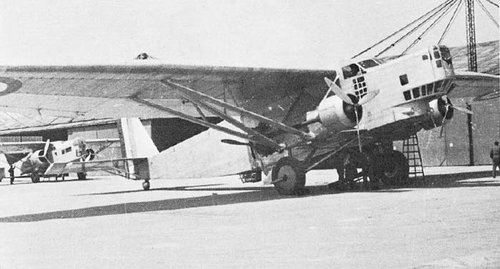
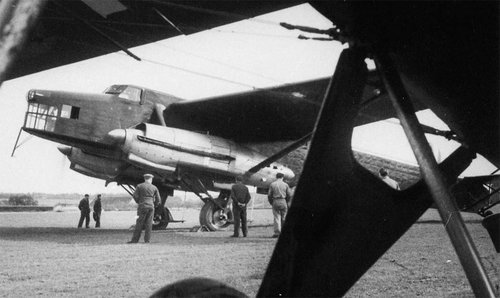
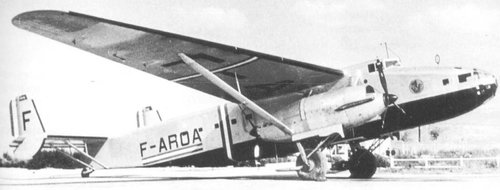
The Farman/SNCAC (Société Nationale de Constructions Aéronautiques du Centre) NC 223.4 was initially the mail plane variant of the Farman 220 series of large, four-engined aircraft that served France between the world wars as everything from airliners to cargo transports to maritime patrol aircraft and finally, as bombers. The Farman NC.223 was the most advanced version of this family of aircraft to see active service during the Second World War, and earned a place in aviation history as the first Allied aircraft to bomb Berlin during World War II.
The F.223 (redesignated NC.223 when Farman was absorbed into SNCAC) incorporated significant changes compared to its predecessors, including a twin tail and a considerably refined fuselage. The first prototype was ordered as a long range mail plane and in October 1937 established a record, flying 621 miles with a 22,046 lb. payload. The French Air Ministry ordered a production run of 8 of the NC 223.3 variant which began during 1939.
Only three of the NC 223.4 variant were built, and were initially designated as mail planes and sold to Air France. At the request of Air France inspector general Paul Codos, the NC 223.4 coded F-AJQM took the name “Camille Flammarion.” The second, coded F-ARIN took the name “Jules Verne,” while the third and last, coded F-AROA, was called “Le Verrier.” Commissioned in 1937 by Air France, the aircraft had been designated NC 223.4 since after the French government nationalized its arms industry, including the aviation concerns, in 1936, the Farman Company was a fraction of the aircraft production of SNCAC (National Aerial Vehicle Consortium).
By May 1940, with the changes wrought by another World War, Air France no longer had need of long distance air transports. The trio of 223.4’s, deemed to slow for use by the French Air Force, were transferred to the Aéronavale, forming Escadrille B5, based at Orly. Curiously, the Air France deal selling the planes to the French Navy included their civilian crews. The three aircraft were to be used as long range reconnaissance and bomber aircraft, although only one, the Jules Verne, would be converted to carry bombs. But the Jules Verne was first pressed into service for maritime patrol, deployed to protect a convoy leaving Bordeaux for Casablanca on April 4, 1940. Soon afterwards it was modified for use as a bomber. The modifications included a bombardier’s station in the nose of the aircraft, additional fuel tanks, a 7.5mm machine gun on the right side of the aircraft, and an application of matt black camouflage on the underside of the fuselage.
The 223.4 ‘s were stationed at the Lenvéoc-Poulmic airfield, which became their operational base during the German offensive starting on May 10, 1940. The first mission took place on the night of May 13-14, in which the “Jules Verne” bombed the railway junctions of Aachen and Maastricht. Other missions followed to bombard Middelburg and other cities. On the night of June 7-8, 1940, the Jules Verne became the first Allied aircraft to bomb Berlin, dropping 2 tons of bombs on the city. This operation was more in the nature of psychological warfare than an effort to achieve any meaningful military result (as was the subsequent American raid on Tokyo in April 1942 in the wake of the Japan’s attack on Pearl Harbor), for although it was repeated three days later (a raid attacking the Heinkel factories at Rostock), these attacks did not alter the outcome of the Battle of France or the Allied collapse at Dunkirk which concluded on June 4, 1940.
After Italy declared war on France on June 10, 1940, the Jules Verne three nights later bombed the petrol refineries of Porto Maghera, Italy and released leaflets over Rome. After one final bombing raid on Livorno, Italy, it was called upon for a final leaflet drop. Following these raids, the Jules Verne and its sister aircraft were transferred to North Africa. All three aircraft were subsequently relegated to transport roles, seeing service with both the Vichy regime and the Free French. Ultimately the Jules Verne was returned to civilian service and flown back to Marignane, France where it sat out the war until destroyed by fire in November 1942.
All three aircraft were subsequently relegated to transport roles, seeing service with both the Vichy regime and the Free French. Ultimately the Jules Verne was returned to civilian service and flown back to Marignane, France where it sat out the war until destroyed by fire in November 1942.
Yes, the Farman 223.4 Jules Vernes was the only strategic bomber of France in 1939-40 (and used as such)...
-the Le Verrier was shot down on 27.11.1940 flying into an aerial battle between Italian and British air forces (cape Spartivento). It is supposed that it was a mistake of an Italian fighter pilot.
-the Camille Flammarion crashed on landing on 19.01.1941 in Beyrouth (broken rear Wheel). It has not been repaired.
-for the end of the Jules Vernes, there have been some legends. The only sure thing is that it was burned by an unknown French in a hangar before the arrival of the German occupation troops invading the southern zone of France in November 1942 (following the Allied landings in French North Africa).
Some said that the plane had a bad landing (broken rear wheel) and was not reparaid after this. It's why it was in the hangar in November 1942. Other said that it was in the hangar because it was forbidden to fly by the German Armistice Commission after June 40 (as a symbol of the bombing of Berlin). It was said too that the man who burned the plane was a resistant or that the commander of the plane during the bombings of 1940 (Henri Daillière) asked someone to burn the plane if it should fall into German hands…
This site uses cookies to help personalise content, tailor your experience and to keep you logged in if you register.
By continuing to use this site, you are consenting to our use of cookies.