Michel Van

ACCESS: USAP
Senior Member
Joined
13 August 2007
Messages
10,405
Reaction score
18,054
The company Lumen Orbit want to put Data servers,
to use the abundant solar energy, cooling, and the ability to freely scale up in space.
launch of Prototype hardware is set for may 2025 launch of first micro data center in 2026
once Starship goes into commercial service they build the 5GW Data server in Low orbit

View: https://www.youtube.com/watch?v=-T--N58vwoo
Note: the original Video by Lumen Orbit is removed from YouTube...

Source:
https://www.ycombinator.com/launches/LmD-lumen-orbit-data-centers-in-space
 
Last edited:
I suppose that would rule out visiting your CoLo server to reboot?
 
The company Lumen Orbit want to put Data servers,
to use the abundant solar energy, cooling, and the ability to freely scale up in space.
launch of Prototype hardware is set for may 2025 launch of first micro data center in 2026
once Starship goes into commercial service they build the 5GW Data server in Low orbit

View: https://www.youtube.com/watch?v=-T--N58vwoo


Source:
https://www.ycombinator.com/launches/LmD-lumen-orbit-data-centers-in-space

Abundant cooling? In space? Are they aware that this is functionally like building a server in a thermos bottle?
 
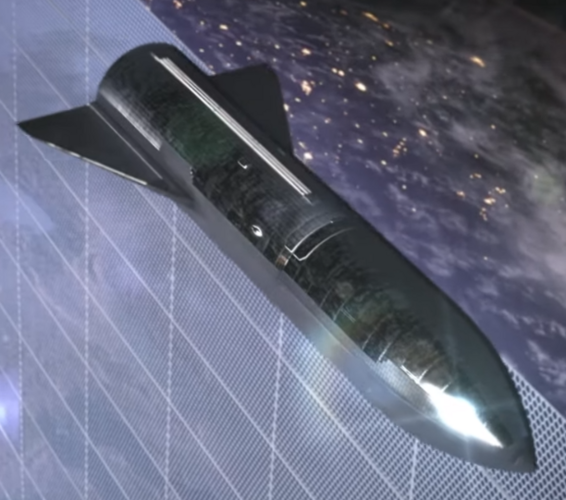
1725472398749.png

Not-A-Starship! With delta flaps...
Of course, you don't want the solar powered data center to be in such a low orbit.
 
They can't be physically seized by police, and their destruction would cause too many international outcry to seriously consider it as police measure.
Also, the locals can't complain about the size/noise/power requirements for the data centre. Which is also becoming an issue. Though even for a 'small' data centre you're talking about megawatts of power, and one in space would need even more to run the cooling.

To the extent that this is an idea, rather than merely a press release, I suspect it's a reaction to it being increasingly difficult to find sites that are suitable for, and willing to accept, terrestrial data centres. Microsoft was doing some work on subsea data centres for similar reasons, which seemed pretty promising.
 
They can't be physically seized by police, and their destruction would cause too many international outcry to seriously consider it as police measure.
On the other hand, the destruction can be done by any motivated and skilled decently sized team no matter the country.
 
Last edited:
Not to mention little things like ASATS....

On the other hand, the destruction can be done by any motivated and skilled decently sized team no matter the country.

ASAT is hardly a trivial undertaking and can't be done by a small team, no matter how motivated or skilled. It takes a moderately large pile of money, the kind of money associated with nation-state actors.

There are four countries with demonstrated ASAT capacity, and I can think of maybe four more that could do it in relatively short order, as a national effort.
 
ASAT is hardly a trivial undertaking and can't be done by a small team, no matter how motivated or skilled. It takes a moderately large pile of money, the kind of money associated with nation-state actors.

There are four countries with demonstrated ASAT capacity, and I can think of maybe four more that could do it in relatively short order, as a national effort.
ASAT and Targeting a thin, City sized LEO target with no maneuvering capability are two completely different thing.

Basically any decently sized sounding rocket does the job of significantly damaging the array and particularly polluting its orbit.

So this needs active space based defense, laser won't cut it at diverting the mass away from the kilometer-sized target so it has to be missiles.

Putting this further away, say typical MEO GPS-level orbit, solve so many problem, much cleaner orbit, much more illumination, much harder to reach and target, you just have to accept 100-200 ms latency.
 
Last edited:
On the other hand, the destruction can be done by any motivated and skilled decently sized team no matter the country.
This required such team to either have access to space-launch capabilities, or at least ASAT-capable missiles and equipment. While it's not impossible, it's sufficiently unlikely. And any non-government group THAT large and rich would clearly have better things to do than shooting down orbital data centers.

Basically any sounding rocket does the job of significantly damaging the array and particularly polluting its orbit.
It would require extremely precise calculations and decent tracking capability, to intercept orbiting object with sounding rocket. The size isn't as important as velocity; the slightest mistake of target movement calculation or the slighters deviation of the rocket would cause clear miss.
 
So this needs active space based defense, laser won't cut it at diverting the mass away from the kilometer-sized target so it has to be missiles.
Well, more like mines. A kinetic interceptor with very limited supply of delta-v, basically designed only to stand in the way of incoming missile.
 
more i read the comments here,
more becomes this project very doubtful...
 
Hey, let's see what else might be out there about orbital data centers,

https://www.cnbc.com/2024/06/27/europe-wants-to-deploy-data-centers-into-space-study-says.htmlWithin that,
The facilities that the study explored launching into space would orbit at an altitude of around 1,400 kilometers (869.9 miles) — about three times the altitude of the International Space Station. Dumestier explained that ASCEND would aim to deploy 13 space data center building blocks with a total capacity of 10 megawatts in 2036, in order to achieve the starting point for cloud service commercialization.

Each building block — with a surface area of 6,300 square meters — includes capacity for its own data center service and is launched within one space vehicle, he said.

In order to have a significant impact on the digital sector's energy consumption, the objective is to deploy 1,300 building blocks by 2050 to achieve 1 gigawatt, according to Dumestier.

https://datacentremagazine.com/articles/orbital-data-centres-a-revolutionary-concept
https://www.thespacereview.com/article/4806/1That one has an interesting quote given some comments here,
(and why does the old Battletech miniatures game suddenly come to mind when talking thermal management?)
Terrestrial high-performance compute is heavy, primarily because of liquid thermal control systems. These need to be optimized. A continued reduction in space launch costs, coupled with advances in lightweight power and thermal management solutions, will be the key factors to watch in making orbital data centers practical.

https://www.datacenters.com/news/are-space-based-data-centers-the-future-or-science-fiction
 
Last edited:
i'm afraid not, there Data Center concept art has no radiators...

Having gone to actually read their prospectus, they do talk about cooling, and argue that they need about 1/3 the area for cooling as they use for solar power collection. I'm not sold on their math, but at least they are aware of the issue.
 
Last edited:
In my opinion this thing does not seem very safe to preserve or exchange data, regardless of temperature changes it would need a very heavy radiation shielding... What is the advantage?
Exactly. Down here on earth, under the heavy shielding provided by the atmosphere, cosmic radiation already causes soft errors in data-storage hardware. We don't notice it all that often, because chips have built-in error-correction code (ECC). In essence, designers dedicate part of each byte to error checking. Typically, one of the eight bits in each byte is used as a parity bit. One bit in eight is usually enough to detect a single-bit error. This reduces the data rate a little but adds the redundancy needed for error detection (you really, really do not want undetected, "silent" data corruption).

In space, without the atmospheric shielding, you are probably going to see many more single-bit errors and, worse, more multi-bit errors that cannot be detected using a single parity bit. So I suspect that you'd need to dedicate much more of your available data storage and communications bandwidth to correcting errors, thus lowering performance. This is probably very acceptable in a massively over-resourced, experimental space program. But it does not seem like a competitive commercial proposition, especially now that most file storage and software applications are commodity priced and implemented using cloud architecture.

Cosmic radiation is a bigger deal than one might expect. Engineering once designed and released a critical memory chip without ECC in hopes of a performance gain. Within days, brand-new customer systems were panicking several times per day all over the world. I was at home on a Sunday. A very perturbed member of executive management actually called me to find out why customer CTOs were calling him.
 
Last edited:
Last edited:
Perhaps this will help
https://phys.org/news/2024-09-space-cosmic-boron-nitride-nanotube.htmlhttps://phys.org/news/2024-09-national-lab-expertise-space.html
Starship could ease mass restraints by having some type of optical hardcopy (crystal memory) with radiation not able to destroy data and read/write completely.<snip>
I did not say that one could not provide shielding, though I doubt that one could match the protection provided by Earth's atmosphere and magnetic fields. The problem is economic rather than technical. Can one provide enough shielding and error-protection while hitting the price point for a terrestrial data center?

I spent half my working life, more less, in data centers. Data centers are not created for their own sake or even for the data's sake. They are cost centers in businesses that are always looking to reduce cost. This is why most on-premises data centers have now been outsourced to virtual server farms on huge AWS and Netflix clouds. The economies of scale are enough (or are perceived to be enough) to trump concerns about the security and availability of data in cloud implementations. The proposed orbital implementation adds enormous overhead that has nothing to do with data processing (earth-to-orbit transport, radiation shielding, much more severe environmental control, etc.). I doubt that the alleged energy savings can offset them.

The optical memory with which I am familiar is also not immune to radiation. For one thing, if you can write with light, light can change what you wrote. Stray light (including IR and RF) is everywhere. Plus, any physical material is subject to damage from high-energy particles like cosmic rays. So you still have to have enough redundancy (in the form of ECC or shielding) to cope with data loss when using optical media. Redundancy equals higher cost.
 
The radiation threat to astronauts is an example of my previous point. High-energy particles (cosmic rays, gamma rays, etc.) knock holes in our DNA, the biological equivalent of bits and bytes. The resulting errors in the genetic code cause mutations that are sometimes beneficial but are more often harmful or lethal to us (cancer) or our descendants.

Mutations are an issue even on Earth, with all that atmospheric and magnetic shielding above us. So evolution seems to have produced:
  • error-correcting chemistry that can find and fix many of these errors
  • a lot of redundant code that makes critical particle strikes less likely.
 
Aside from the other issues with this, wouldn't drag and radiation pressure be a severe issue for an object with such massive solar panels in LEO?

What kind of littering fine are small Australian towns going to give when the solar maximum makes the data center crash into the outback 4 years early?
 
First AI Datacenters In Space! (EXCLUSIVE Starcloud Tour)

Oct 16, 2025
Touring Starcloud HQ in Redmond, WA with Founder and CEO Philip Johnston. Starcloud is building AI datacenters in space. This isn't just sci-fi, it's reality. Starcloud is launching the world's largest datacenter in space in just a few weeks, and will launch an even bigger one (that profitable) next year. WOW!

Join me on this exclusive tour of the headquarters, seeing the prototypes, hearing more about the vision and meeting the employees. Huge shoutout to Starcloud for having me!

It was very inspiring to get a glimpse of the future of the space economy. As SpaceX continues to push towards its Mars vision with Starship and Starlink, there will be a whole generation of startups built on top of the new railroads of space. This is the exciting start of a new era!!! Note, this was not sponsored, I'm just a big fan of Starcloud.

0:00 Intro: Touring Starcloud HQ In Redmond, WA
1:16 First Launch Coming Up
2:49 Zero Gravity Rig
3:14 Building Radiator Components
4:24 Moving AI Compute To Space
5:39 Starcloud’s First Customers
6:47 The First Space App Built on Starship & Starlink
8:42 Getting Cargo to Mars / Space
10:30 How Starcloud Becomes The Largest Business Ever
11:45 Moving Heavy Industry To Space
12:55 How Did You Fundraise For Starcloud?
14:04 Being a Seattle-based Startup
14:55 The Vibe Table
17:00 The Starcloud Prototype
17:26 Eventually NVIDIA’s Largest Customer Ever
17:58 Testing NVIDIA GPUs in Space
18:39 Meeting The Starcloud Team
21:11 Commercializing Starcloud
21:29 scam-Mining In Space
22:32 One Of The Coolest Startups Ever …?

View: https://www.youtube.com/watch?v=d3FOayh2hGk
 
By the way Starcloud was formerly called Lumen space. Hence why I posted it in this thread.
 
This 'orbital server' bears a horrible kinship to the Chinese 5-yr plan to put a super-computer into space.
What could possibly go wrong ??

D'uh, do they not check 'SpaceWeather' from time to time ??
https://spaceweather.com/
Also, if LEO for *occasional* low-latency, must else bounce data around CommSats, so latency rises.
And, 'crossing traffic', set to rise almost geometrically in next decade as 'fleets' of comm/nav small-sats launch.
( Which 'Tragedy of Commons' will, I fear, continue, accelerate until, 'Ring-Ring', a 'Kessler Cascade' ensues.... )

If GeoStand, so stable location, latency rises, as does potential exposure to Cosmic Rays, CMEs etc etc...

No, the various experiments of submerging a data centre / server in a nice cold loch or fjord adjacent to hydro-power would seem a better notion...
 
Salt water is absolutely terrible for electronics and will drive up maintenance costs. The last I recall of anyone trying data centers underwater it ended up abandoned because of the difficulty. Laser links and direct line of sight allow for low latency as demonstrated by Starlink. As for Kessler Syndrome, the real problem there is not actively controlled platforms, it’s the plethora of upper stages from government missions that are left uncontrolled in orbit. The private sector has good tools, and they’re getting better with time, at ensuring collision avoidance. Dealing with cosmic rays is to a first approximation a challenge of having enough mass available, and if we can launch gigawatt-scale structures at all, then we can certainly launch enough mass to serve as radiation shielding, whether in LEO or GEO.
 
I would like to see a library in a lunar cave--something ET could read even if humans are gone.
I have read that the works of L. Ron Hubbard have been inscribed on stainless-steel LP records and buried in bomb-proof bunkers (along with the requisite record players) for the edification of future evolved humans returning from the stars to the California coast. I have no idea whether it is true or not. But it shows how hard it can be to come up with future-proof information storage and retrieval.

To date, the most successful long-term method has proven to be sticks pressed into clay followed by nut-gall inks on vellum/parchment, papyrus, or acid-free linen paper. There's probably a lesson there.
 
The company Lumen Orbit want to put Data servers,
to use the abundant solar energy, cooling, and the ability to freely scale up in space.
launch of Prototype hardware is set for may 2025 launch of first micro data center in 2026
once Starship goes into commercial service they build the 5GW Data server in Low orbit

View: https://www.youtube.com/watch?v=-T--N58vwoo
Note: the original Video by Lumen Orbit is removed from YouTube...

Source:
https://www.ycombinator.com/launches/LmD-lumen-orbit-data-centers-in-space
Truly, deeply, absolutely love it!!! Eliminate the environmental strain of terrestrial power generation/consumption, heat and potential fossil fuel combustion products emanation, sound pollution, and real estate consumption, and stimulate orbital transportation and infrastructure building in the process - what's not to like!!!
 
Last edited:
Philip Johnston@PhilipJohnst0n
Awesome to partner with @Nvidia to bring@Starcloud_Inc1 to space!

NVIDIA@nvidia
Space isn’t just for stars anymore.

Starcloud’s H100-powered satellite brings sustainable, high-performance computing beyond Earth.

How Starcloud Is Bringing Data Centers to Outer Space
The NVIDIA Inception startup projects that space-based data centers will offer 10x lower energy costs and reduce the need for energy consumption on Earth.
October 15, 2025 by Angie Lee

View: https://twitter.com/nvidia/status/1980757719809138854


View: https://twitter.com/PhilipJohnst0n/status/1980780913429721280
 
This is a Podcast published in mid-September. Provides some insight (both personal, educational, and business) into his project.

Starcloud: The Rise of Orbital Data Centers | Delphi Intelligence's 2035


Sep 17, 2025
Join Piers Kicks from Delphi Intelligence as he explores the cutting-edge frontier of space-based computing with Philip Johnston, founder of Star Cloud. Philip is pioneering the development of data centers in space to harness abundant solar energy and overcome Earth's computing limitations. With launch costs plummeting thanks to SpaceX's Starship program, Star Cloud is preparing to launch the first H100 GPU to space in November 2025, marking a 100x increase in space-based compute power.

Starcloud: https://www.starcloud.com


Key Highlights

▸ From sci-fi dreams to space reality: how falling launch costs enable orbital data centers
▸ November 2025: launching the first H100 GPU - 100x more powerful than any space compute before
▸ The physics advantage: unlimited solar energy and natural cooling in space
▸ Why Earth's heat dissipation limits will force computing off-world within decades
▸ Radiation shielding and thermal management: the two biggest engineering challenges
▸ Starlink connectivity: solving the space internet problem for orbital workloads
▸ Defense and commercial applications: early revenue streams for space compute
▸ The roadmap to gigawatt-scale solar arrays and modular space construction
▸ Geopolitical implications: space as the new frontier for AI and defense
▸ Vision 2035: when most new data centers might be built in space
▸ From asteroid mining to Mars colonies: the broader space economy revolution

Timestamps

00:00 — Intro: Philip Johnston, Star Cloud
01:30 — Vision: data centers in space
02:00 — Launch costs drop: $60K → $500/kg with Starship
03:30 — Pivot: solar power → orbital compute
05:00 — Background: five brothers, sci-fi dreams
07:00 — Building the team: SpaceX & Microsoft vets
08:15 — Early tests: deployables in the living room
09:30 — Challenges: radiation & heat
11:00 — Radiation: LEO to deep space
12:30 — Orbits: dawn-dusk, no shadow
14:00 — Debris myths: Kessler overblown
17:00 — Space weather: flares & Carrington events
19:00 — Heat: radiating 5 GW in space
21:00 — Connectivity: Starlink for workloads
22:00 — Earth’s heat problem: compute to space
24:00 — Regulation: faster in orbit
25:30 — Model: energy provider, not hardware owner
26:30 — November launch: H100 + Gemini
28:00 — Defense & data security in orbit
29:00 — Gigawatt arrays: modular builds, 2030s
30:30 — Breakeven: launch costs vs viability
32:00 — Bitcoin mining: using spare capacity
33:15 — Space internet: real challenges
35:00 — Geopolitics: defending assets in orbit
37:00 — Sci-fi: Dyson spheres & missions
39:00 — AI risks & Fermi Paradox
41:00 — Future: Mars & asteroid mining
42:30 — 2035: space as default
44:00 — Competition: hyperscalers & startups
45:00 — Lessons: gov relations & realities
45:45 — Book: Elon Musk bio

View: https://www.youtube.com/watch?v=BaoVBhCPEj0
 
Chase Lochmiller@ChaseLochmiller
I’m excited to announce that @CrusoeAI has closed our Series E round of financing valuing the company at $10.4B to help us build the infrastructure of intelligence. This round was led by our incredible partners at Valor Equity Partners and @MubadalaCapital. Solving the scaling needs of AI is one of the greatest challenges of our generation. If you’re inspired by working on big and difficult problems, come and join us!


Crusoe, the AI factory company, raising $1.375 billion at a valuation above $10 billion to power the future of AI infrastructure

October 24, 2025

View: https://twitter.com/ChaseLochmiller/status/1981752885508522057
 
Now comes the reality check.

View: https://twitter.com/andrewmccalip/status/1982240848025964580


Data centers in orbit? Of course that’s your contention. Of course it is.

You just finished watching a Scott Manley video on radiative heat transfer and now you think you’re gonna disrupt AWS with a few solar panels and a rideshare slot.

You’re gonna believe that right up until next month when you crack open DeWitt and Incropera and start throwing around σT⁴ like you just invented radiation physics, quoting emissivity tables for polished aluminum like they’re forbidden knowledge.

Then you’ll finally open SMAD and realize your radiator isn’t some static plate glowing into the void. It’s a dynamic structure with a wicked case of thermal flutter reminiscent of Hubble’s arrays. You’ll be quoting beta angles and Earth albedo coefficients and wondering why your deployable array grenaded in vibe when the first bending mode clocked in at 38 Hz instead of the 50 Hz you promised in CDR.

After that you’ll get real ambitious, quoting Johnson and Fabisinski on inflatable polyimide PV structures, pretending you actually understand what happens when your 25-micron Kapton sail is tensioned off a Toray T1100G Cycom 5250-4 boom that has been sun-baked at 120 °C for six months in LEO. You’ll cite “areal density optimization” like gospel while your resin creeps, your modulus drops, and your perfectly flat film turns into a potato chip.

"Well, as a matter of fact, I won’t, because launch costs are about to fall another order of magnitude once Starship hits cadence. The cost per kilo will—"

Drop by tenfold and the economics flip.
Yeah, I’ve heard that one. The Wired 2012 quote, “You wouldn’t build a Boeing 747 and throw it away after one flight.” I remember. I even asked him about that over lunch once, whether the market was actually elastic enough to handle the supply increase from reusability.

Turns out it wasn’t. Non-Starlink launch mass in the United States grew at 13.7 percent CAGR from 2015 to 2023. Payload demand didn’t scale with flight cadence, so prices didn’t collapse, margins just swelled. That’s why they had to invent Starlink. When the market can’t absorb your rockets, you start building your own payloads.

Is that your thing? You read some Marc Andreessen “American Dynamism” manifesto and suddenly start ignoring the engineering realities?

You start throwing around a few buzzwords to impress the Twitter anons and earn some street cred for having a contrarian opinion?

One, don’t do that.
Two, you dropped a 500-thousand-dollar seed check on a concept that could have been debunked by a dollar-fifty worth of tokens from Grok.

"Well, at least I’m a capital allocator. We’ll be skiing in Hokkaido while you’re doing bolt preload calculations for some bridge somewhere."

Yeah, maybe. But at least I won’t be unoriginal or anonymous. I’m out here asking why the hell we’d melt the brains of a thousand aerospace engineers just to save four cents per kilowatt-hour on solar electricity.

First principles isn’t about getting nerd-sniped by a shiny-object problem. It’s about asking whether we should be solving that problem at all.

But hey, if you’ve got an issue with that, we can always take it up with E.
 
Truly, deeply, absolutely love it!!! Eliminate the environmental strain of terrestrial power generation/consumption, heat and potential fossil fuel combustion products emanation, sound pollution, and real estate consumption, and stimulate orbital transportation and infrastructure building in the process - what's not to like!!!
Once the data centers are up there, we should ban golf inside the orbit of Mars too. Would solve many problems and make for great telly.
 

Similar threads

Back
Top Bottom