
You are using an out of date browser. It may not display this or other websites correctly.
You should upgrade or use an alternative browser.
You should upgrade or use an alternative browser.
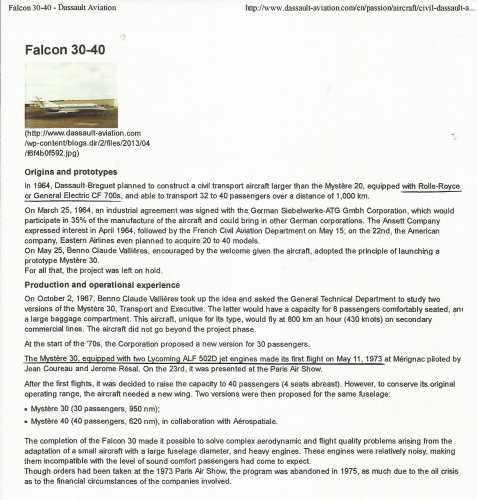
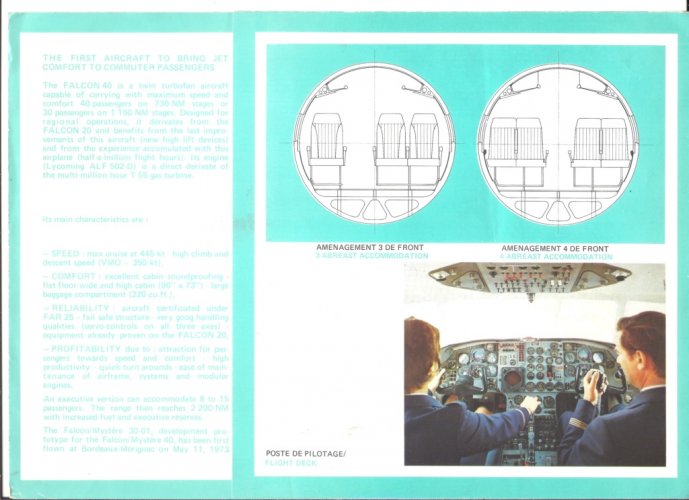
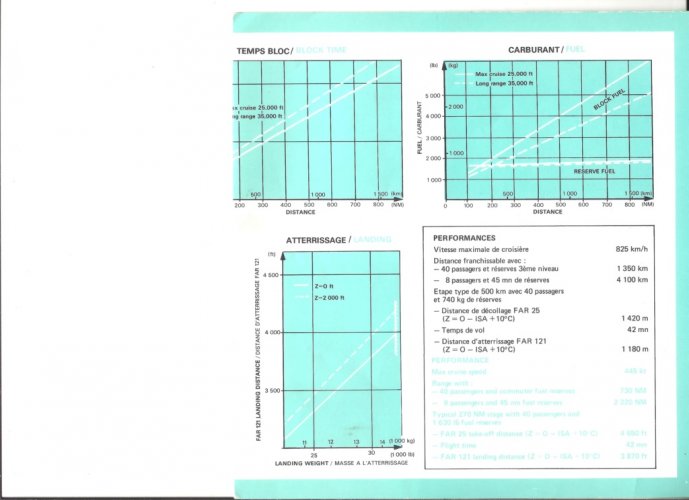
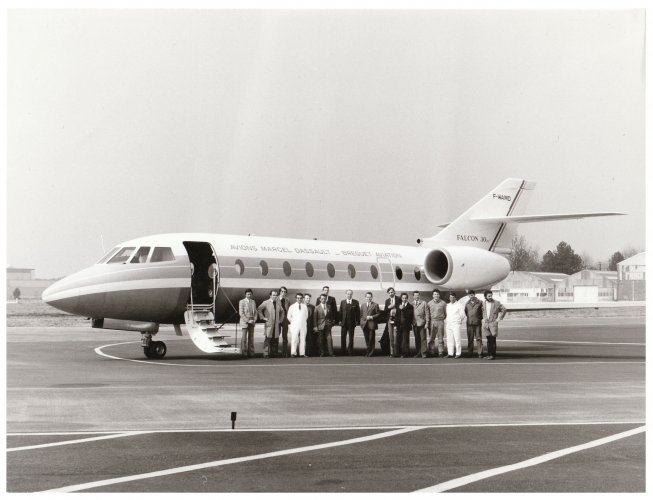
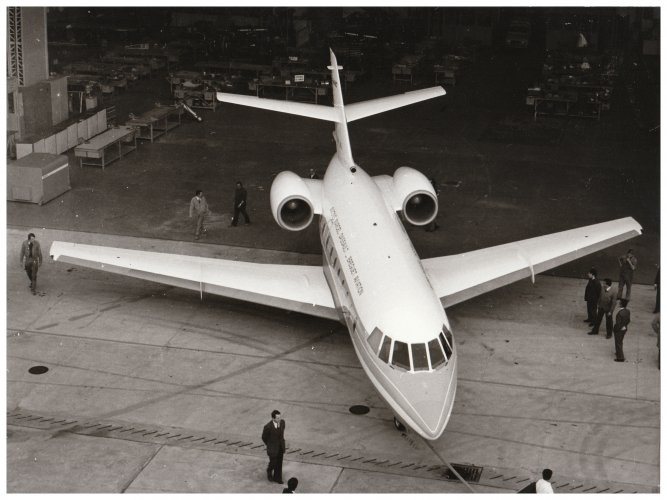
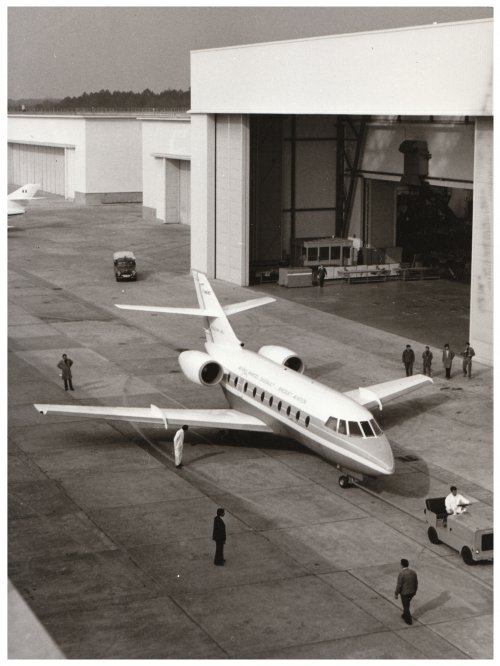
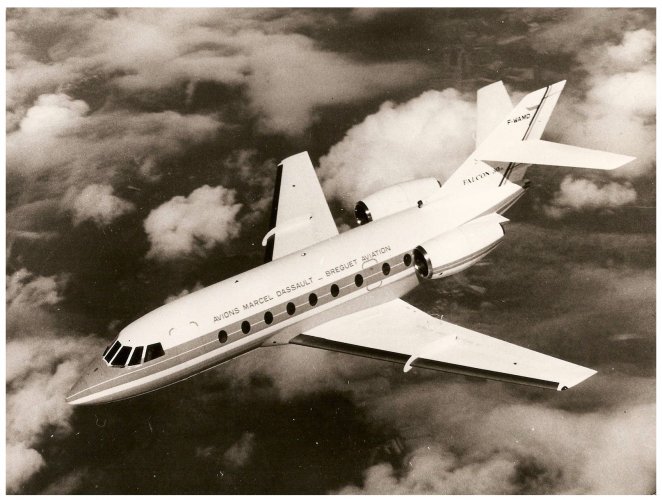
Dassault Mystere 30 (Falcon 30) prototype and Falcon 40 project
- Thread starter hesham
- Start date

- Joined
- 11 March 2006
- Messages
- 8,537
- Reaction score
- 4,998
hesham said:Hi,
some french aircraft;
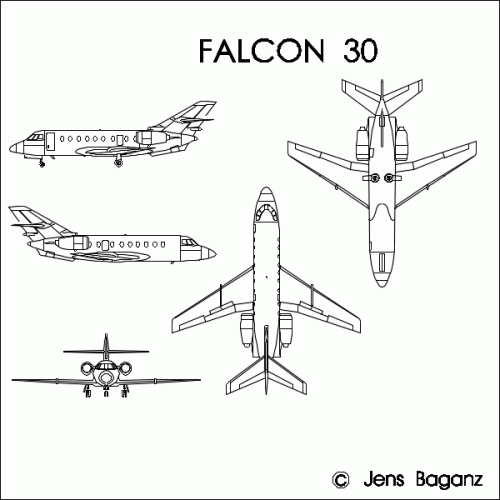
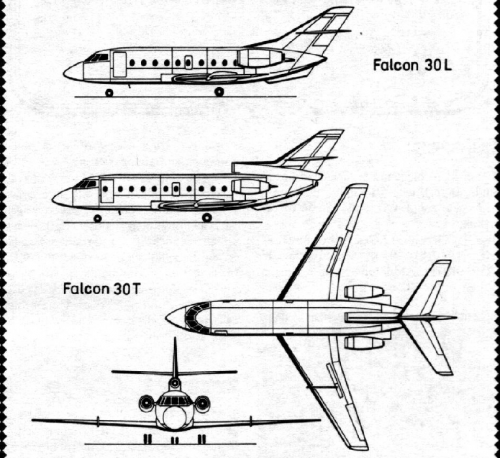
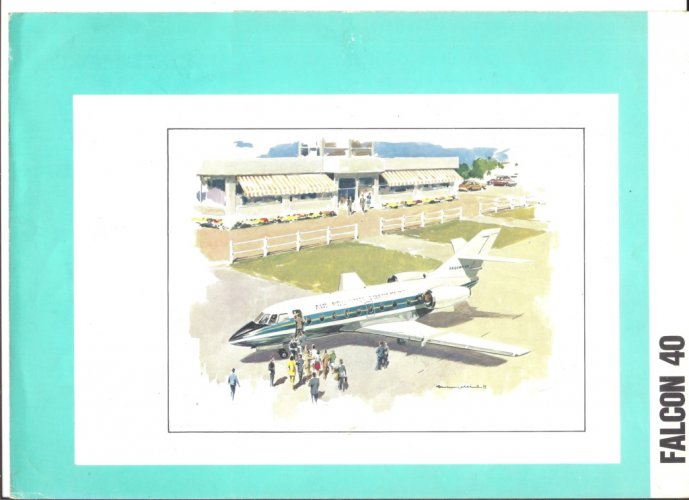
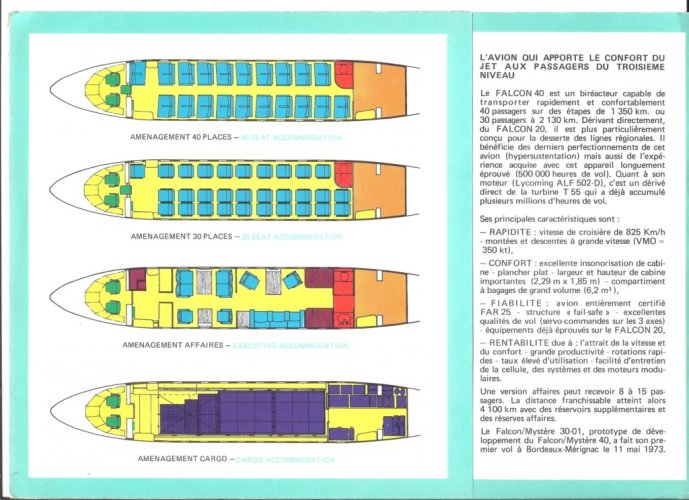
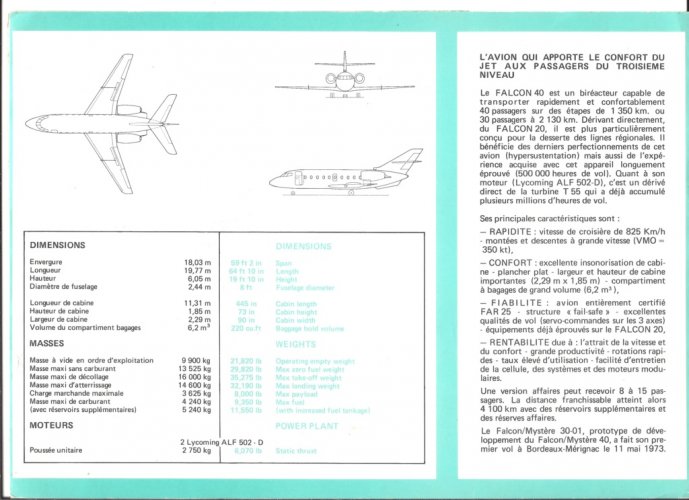
Dassault Falcon 30 :30/32 seat light airliner based on Falcon 20 with larger
fuselage, protoype only.
Dassault Falcon 40 :40 passenger version of Falcon 30,not built.
I've just an old drawing of the Falcon 30 in my collection of my own drawings,
although I think, I've seen the Falcon 40 somewhere ... but where ?
Attachments

- Joined
- 3 January 2006
- Messages
- 1,405
- Reaction score
- 1,375
Jemiba said:Still yet I've just an old drawing of the Falcon 30 in my collection of my own drawings,
although I think, I've seen the Falcon 40 somewhere ... but where ?
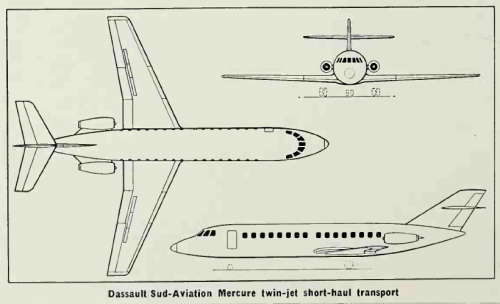
This regional jet was just ahead of its time. Oddly, the Mercure also began as an aft engined regional jet, albeit a slighly larger 50 seat aircraft.
...and was the first civilian aircraft with an HUD (30 years in advance...)
Only ten sold, in fact imposed to Air Inter (just like Concorde at the same time, by the Mercure was not glamourous and quickly forgotten...)
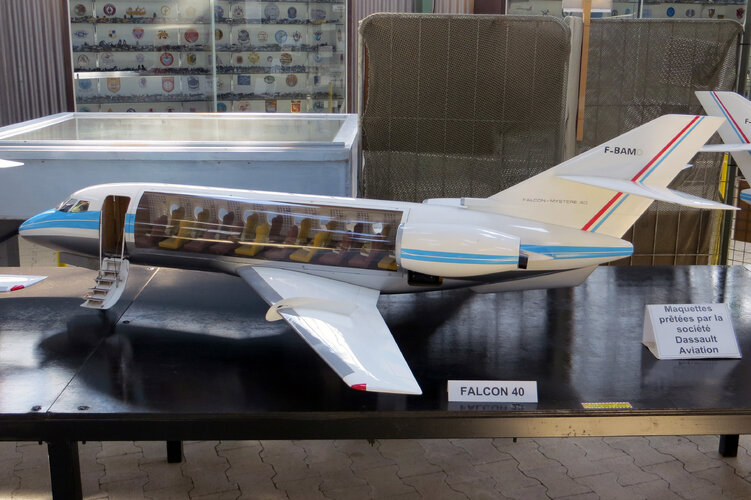
Aparently the Falcon-40 never went beyond the mockup stage...
Only ten sold, in fact imposed to Air Inter (just like Concorde at the same time, by the Mercure was not glamourous and quickly forgotten...)
Aparently the Falcon-40 never went beyond the mockup stage...
Hey Gang
Has anybody got any pics of the proposed stretched variant of the Falcon 50? Apparently it was studied for several years, and would have involved adding additional frames to boost capacity. Eventually, it was decided to completely redesign the fuselage with resulting in a significantly wider cabin resulting in the Falcon 900.
C
Has anybody got any pics of the proposed stretched variant of the Falcon 50? Apparently it was studied for several years, and would have involved adding additional frames to boost capacity. Eventually, it was decided to completely redesign the fuselage with resulting in a significantly wider cabin resulting in the Falcon 900.
C

- Joined
- 26 May 2006
- Messages
- 38,251
- Reaction score
- 20,390
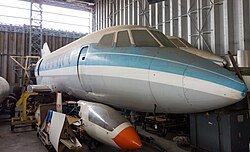
For the record: the Falcon 30 fuselage (everything else appears to be gone) is part of the CAEA collection...
https://c--aea-fr.translate.goog/fr...falcon-30?_x_tr_sl=fr&_x_tr_tl=en&_x_tr_hl=fr
https://c--aea-fr.translate.goog/fr...falcon-30?_x_tr_sl=fr&_x_tr_tl=en&_x_tr_hl=fr
Last edited:
- Joined
- 11 March 2006
- Messages
- 8,537
- Reaction score
- 4,998
- Joined
- 26 May 2006
- Messages
- 38,251
- Reaction score
- 20,390
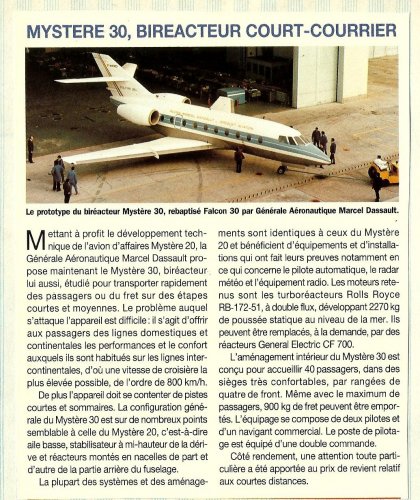
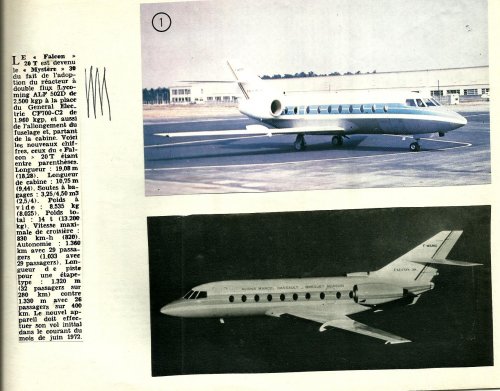
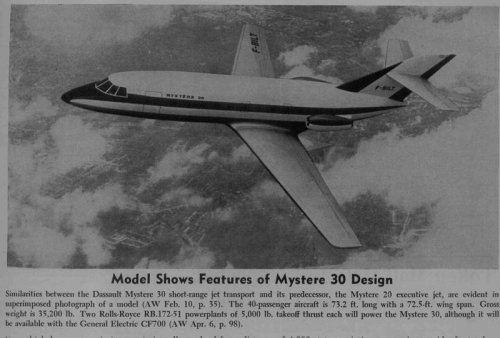
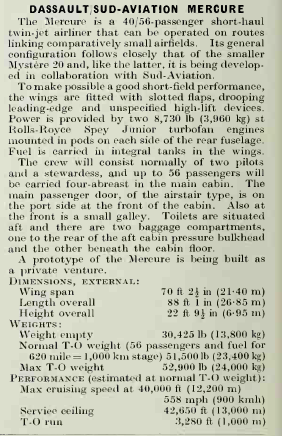
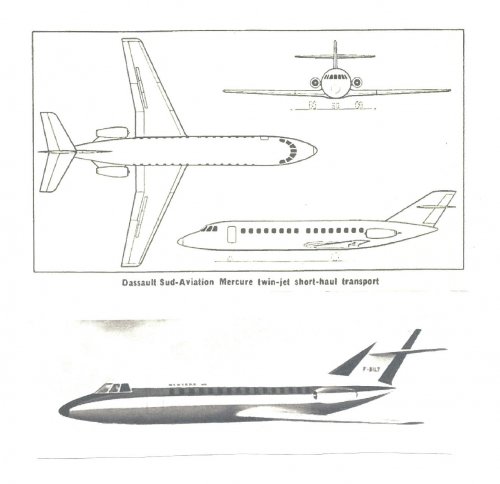
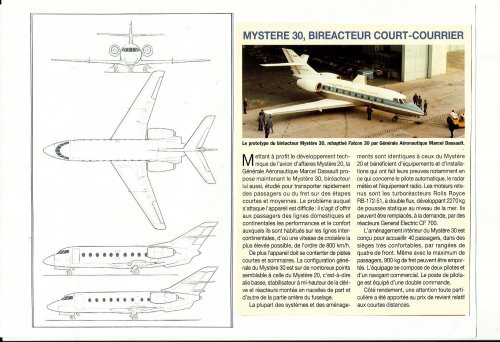
Jemiba said:Sure, that it is related to the Mercure ? It rather reminds me on the Mystere 30,
shown here from Aviation Week 1972 1-13.
My dear Jemiba,
may be there is two Mercure.
Attachments

- Joined
- 1 April 2006
- Messages
- 12,276
- Reaction score
- 15,084
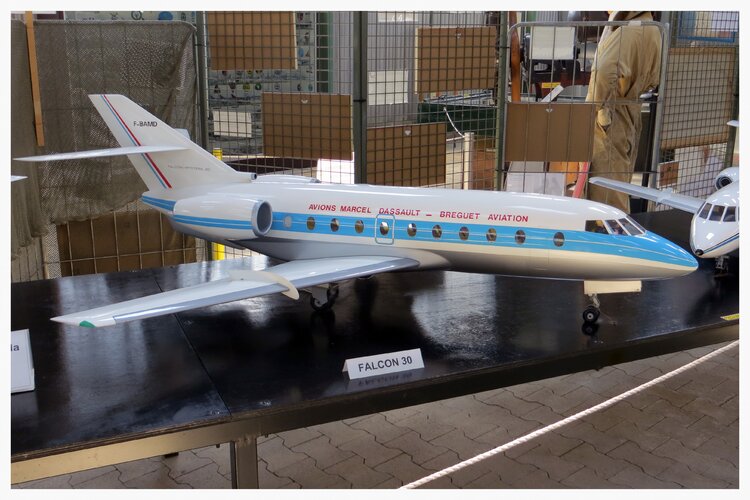
View: https://www.flickr.com/photos/aerofossile2012/24013001264/in/photostream/
View: https://www.flickr.com/photos/aerofossile2012/24558957881/in/photostream/
photos (c) Aerofossile2012
Musee Europeen de l'Aviation de Chasse - Montélimar
View: https://www.flickr.com/photos/aerofossile2012/24558957881/in/photostream/
photos (c) Aerofossile2012
Musee Europeen de l'Aviation de Chasse - Montélimar
Attachments
- Joined
- 1 April 2006
- Messages
- 12,276
- Reaction score
- 15,084
- Joined
- 1 April 2006
- Messages
- 12,276
- Reaction score
- 15,084
Attachments

Last edited:
The Falcon 30 fuselage as it stands nowadays at the CAEA.
https://commons.wikimedia.org/wiki/File:Dassault_Falcon_30_Prototype_(49894518011).jpg
https://commons.wikimedia.org/wiki/File:Dassault_Falcon_30_Prototype_(49894518011).jpg
Attachments
Last edited by a moderator:

- Joined
- 30 November 2007
- Messages
- 1,152
- Reaction score
- 772
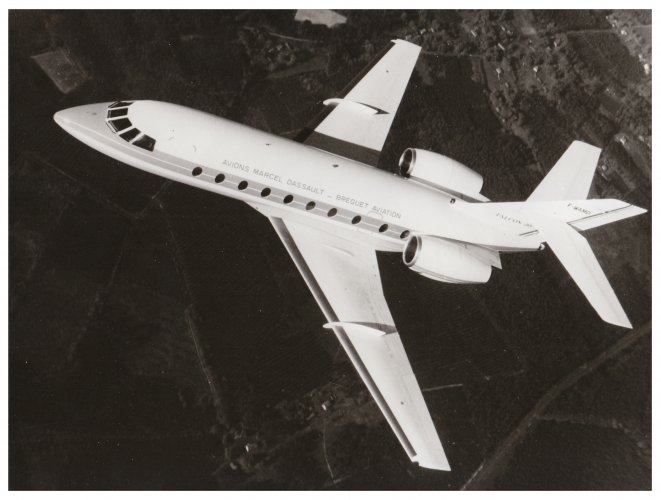
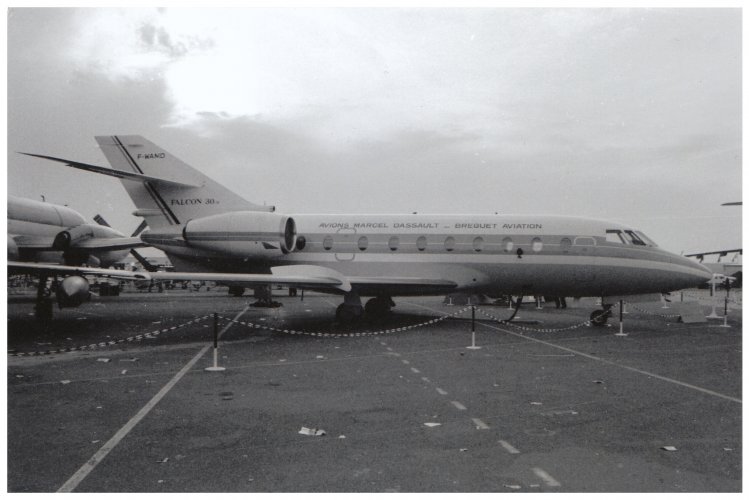
Some imagery of the Mystère 30 prototype F-WAMD......
Terry (Caravellarella)
Terry (Caravellarella)
Attachments
-
 F-WAMD - 7......jpg1 MB · Views: 43
 -
 F-WAMD - 9.......jpg174.7 KB · Views: 46
 -
 F-WAMD - 6.......jpg1.8 MB · Views: 41
 -
 F-WAMD - 5.......jpg1.8 MB · Views: 44
 -
 F-WAMD - 2.......jpg2.1 MB · Views: 39
 -
 F-WAMD - 1.......jpg1.5 MB · Views: 36
 -
 F-WAMD - 3.......jpg1.7 MB · Views: 34
 -
 F-WAMD - 4.......JPG723.1 KB · Views: 32
 -
 F-WAMD - 8.......JPG784.4 KB · Views: 40
 -
 F-WAMD - 10.......jpg787.2 KB · Views: 36

alberchico
I really should change my personal text
- Joined
- 14 January 2014
- Messages
- 1,018
- Reaction score
- 2,541
It's amazing how far ahead of its time this aircraft was. A stretched version with more economical powerplants could have been a huge success just like the CRJ-200 was. But with high oil prices and the Mercure program struggling to find any customers, I can see why Dassault abandoned this program.
- Joined
- 15 February 2024
- Messages
- 691
- Reaction score
- 1,875
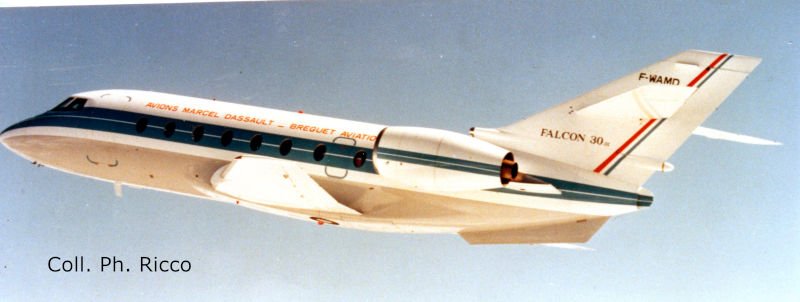
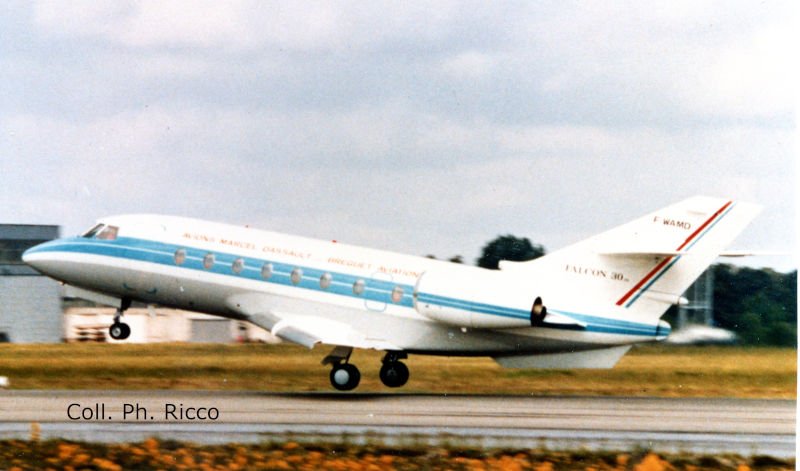
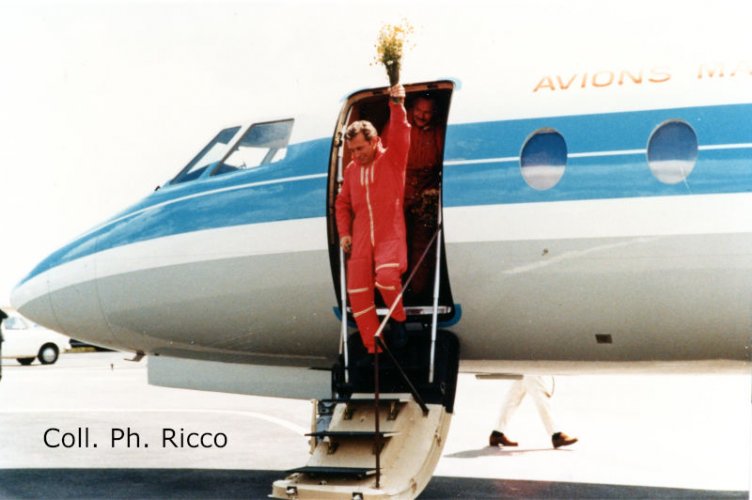
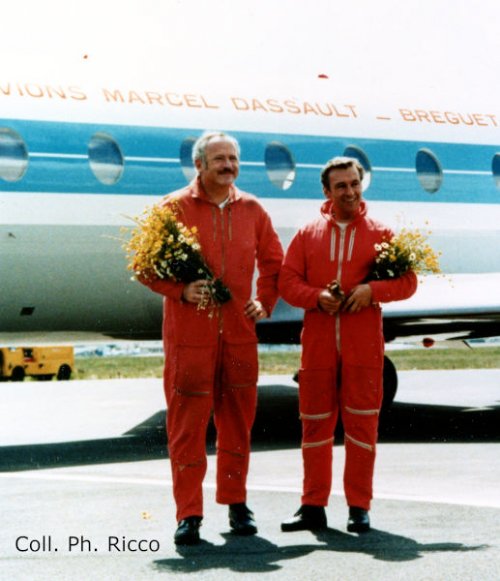
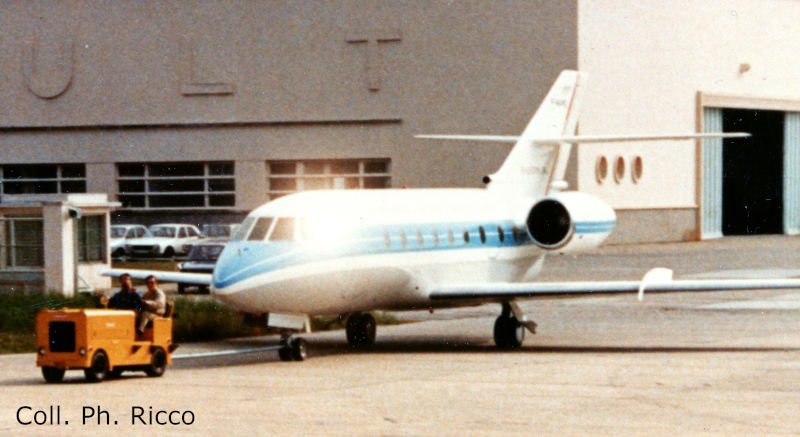
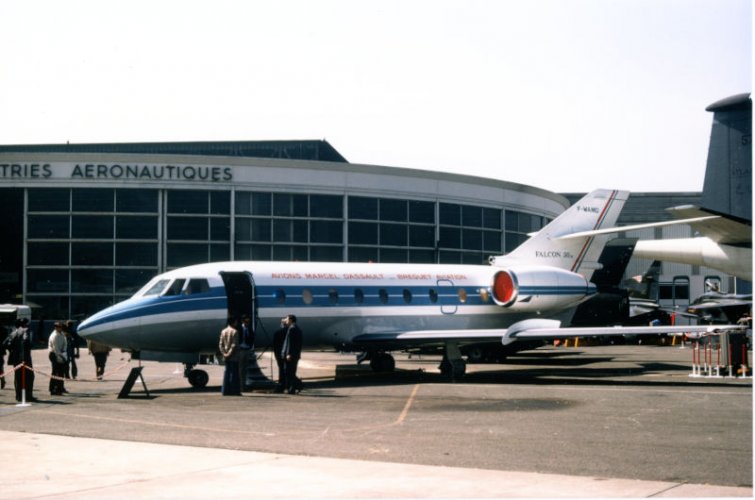
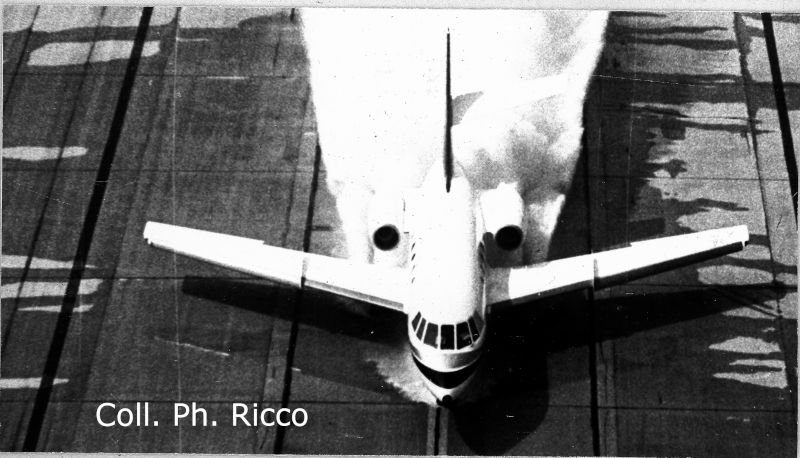
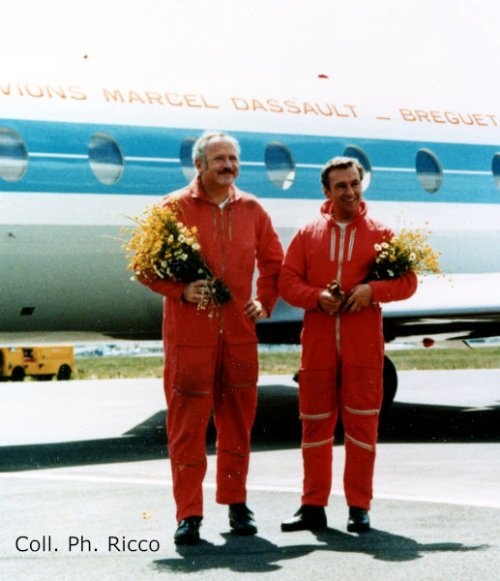
Some more photos, including first flight on May 11th, 1973 by Jean Courreau.
Attachments
-
 Dassault Falcon 30 1er vol 11 mai 1973 (PhR5).jpg47.8 KB · Views: 34
 -
 Dassault Falcon 30 1er vol 11 mai 1973 (PhR4).jpg72.2 KB · Views: 33
 -
 Dassault Falcon 30 1er vol 11 mai 1973 (PhR3).jpg66.1 KB · Views: 27
 -
 Dassault Falcon 30 1er vol 11 mai 1973 (PhR2).jpg65.1 KB · Views: 24
 -
 Dassault Falcon 30 1er vol 11 mai 1973 (PhR1).jpg77.7 KB · Views: 23
 -
 Dassault Falcon 30 - Le Bourget 1974 (PhR).jpg69.6 KB · Views: 27
 -
 Dassault-Breguet Falcon 30 n° 01 essais en piscine (CEV).jpg67.4 KB · Views: 28
 -
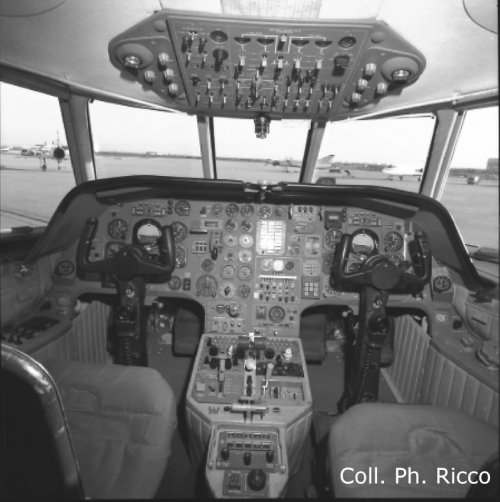 Dassault-Breguet Falcon 30 n° 01 cabine (CEV).jpg82.5 KB · Views: 39
It's amazing how far ahead of its time this aircraft was. A stretched version with more economical powerplants could have been a huge success just like the CRJ-200 was. But with high oil prices and the Mercure program struggling to find any customers, I can see why Dassault abandoned this program.
Good points. My understanding is that turboprops were almost invincibles in the 1970's and 1980's, and that even in the 1990's and beyond, Bombardier and Embraer still had some difficulties cornering the market - when ATR survived against all odds.
Turboprops vs jet was, and still is, a pitched battle. Jets are quiet and fast and sexy; but fuel costs and CO2 emissions favors ATR, even today. ATR has proven extremely resilient, even before they became part of Airbus.
Mercure, Concorde and Corvette should never have happened. They were three costly mistakes by the French government, which should never have funded them. Admittedly, Concorde was prestige so ok. But Mercure and Corvette were criminal idioties.
Corvette, because it ran head-on into the Falcon 20. What was Aérospatiale thinking ?
Mercure, because it ran into the nascent Airbus airliner business, in the days of Concorde commercial failure. What was Dassault thinking ?
By 1976 France had three awful airliner commercial failures on its hands: Concorde, Mercure, A300. They cost french taxpayers an arm, a leg and a few testicles...
We can thanks the late Frank Borman, former astronaut turned Eastern CEO, to have rescued Airbus in 1977. Also MDD stupidity not going 747SP with the DC-10, with two engines instead of three. The A300 with 260 pax and two engines was a perfect DC-8-63 replacement and also a gap filler, between 727/727/DC-9 and DC-10 / L-1011/ 747SP / 747.
Last edited:
Thank you, interesting. More interesting than the usual anti-French "French" ranting...Some more photos, including first flight on May 11th, 1973 by Jean Courreau.

bercr
ACCESS: Secret
- Joined
- 12 January 2011
- Messages
- 418
- Reaction score
- 869
Some more photos, including first flight on May 11th, 1973 by Jean Courreau.
Thank you PhR for these nice photos of the first flight of the Falcon 30. Test pilot Jérôme Résal at left, Jean Coureau (who made the first flight of Mirage 2000 in March 1978) at right.
View: https://www.facebook.com/100063679660905/posts/642979027834747/
https://www.dassault-aviation.com/en/passion/history/biographies/jean-coureau/
Last edited:
Similar threads
-
 Various Dassault Jet Projects and Prototypes
- Started by hesham
- Replies: 57
-

-
-
Dassault MD.450 Ouragan, Prototypes, Projects & Variants
- Started by Rafix200
- Replies: 32
-
Georges Briffaud Airplanes and Projects
- Started by hesham
- Replies: 7