Czech Avia Airplane Projects & Prototypes

hesham

ACCESS: USAP
Senior Member
Joined
26 May 2006
Messages
38,285
Reaction score
20,424
Hi,

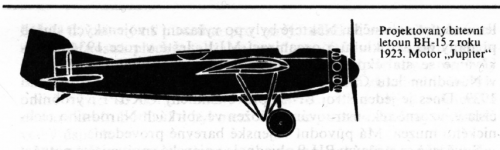
-BH-15 was a two-seat recce airplane, powered by one 450 hp Lorraine.

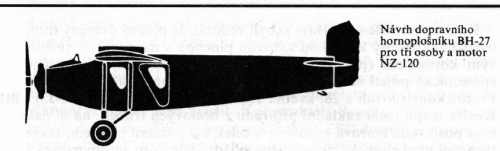
-BH-27 was a four seat high-wing transport monoplane project,powered by one 110 hp piston engine

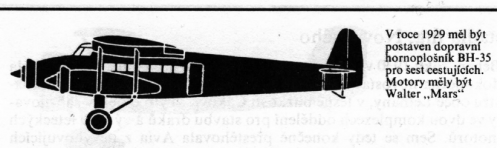
-BH-35 was a high-wing three engined postal and transport monoplane project of 1929

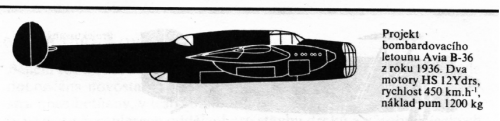
-B.36 was a twin engined mid-wing medium/heavy bomber monoplane project of 1936

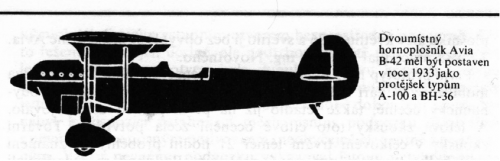
-B.42 was a two seat high wing recce and light bomber aircraft project of 1932

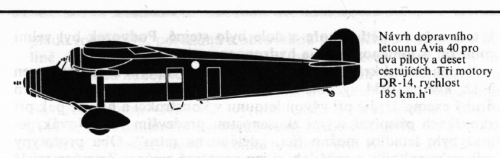
-B.40 was a three engined high-shoulder-wing transport monoplane project,accommodated ten
passenger,powered by three DR-14 engines

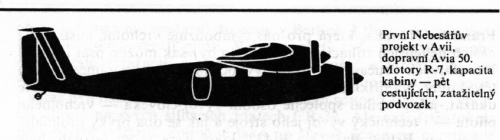
-B.50 was a three engined high-wing light transport project

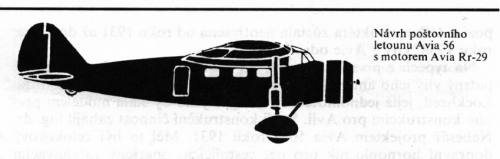
-B.56 was a single engined high-wing light transport project,led to develop B.156
 

Attachments

  • 1.png
    1.png
    156.9 KB · Views: 492
  • 8.png
    8.png
    153.5 KB · Views: 139
  • 7.png
    7.png
    154.7 KB · Views: 116
  • 6.png
    6.png
    161.4 KB · Views: 123
  • 5.png
    5.png
    172.4 KB · Views: 351
  • 4.png
    4.png
    137 KB · Views: 378
  • 3.png
    3.png
    160.1 KB · Views: 389
  • 2.png
    2.png
    167.6 KB · Views: 410
Last edited:
And;

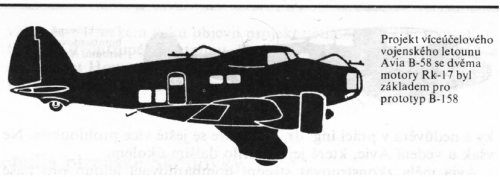
-B.58 was a twin engined medium bomber aircraft,led to develop B.158

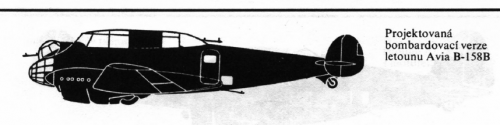
-B.158B was a revised design of B.58 twin engined medium bomber,with many improvements
 

Attachments

  • 9.png
    9.png
    168.4 KB · Views: 145
  • 10.png
    10.png
    126.9 KB · Views: 176
The B 50 was a Rohrbach design :

http://www.secretprojects.co.uk/forum/index.php/topic,2818.0.html
 
Hi,

Avia had unbuilt Projects developed from BH-33 single seat Fighter,the BH-38N was powered
by one Jupiter VI engine,BH-38NH was powered by one Hornet engine and BH-38-VII was
powered by one high altitude Jupiter VII engine.
 
Hi,

the Ba.33 was different from BH-33 in airframe,but also a single seat fighter,but also
tested as a racer airplane.
 
From L+K 1965/6.
 

Attachments

  • 1   6-1965.png
    1 6-1965.png
    39.7 KB · Views: 180
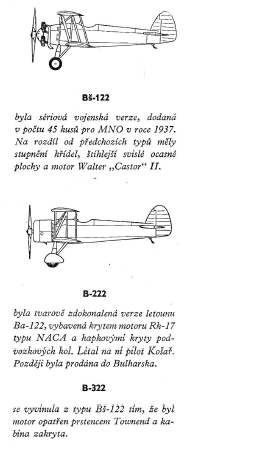
Bš-122 - military variant of Ba-122 for aerobatic training, 45 built for te Ministry of Defence in 1937. Non-stagered wings, engine Walter Castor II. Later some used by the Slovak State and also by Bulgaria, as "Osa" (Wasp).
B-222 - aerodynamically smoothened variant of Ba-122 with NACA-cowled Avia Rk-17. Flown by factory pilot Oldřich Košař. Later sold to Bulgaria. (Second machine, without engine cowling, was offered to Yugoslavia).
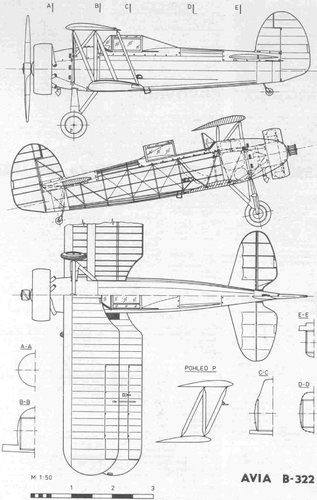
B-322 - prototype with Townend-cowled Rk-17 engine and closed cockpit, not much more known.

Drawing of B-322, source: http://www.mo-na-ko.net/letadla-planky.htm#Avia
 

Attachments

  • AviaB322_02.jpg
    AviaB322_02.jpg
    77.3 KB · Views: 210
Last edited:
Hi,

the Ba.33 was different from BH-33 in airframe,but also a single seat fighter,but also
tested as a racer airplane.
Ba.33, factory designation BH.33L, was a fighter aeroplane with Škoda L W12 engine (sort of Hispano-Suiza 8Fb / Napier Lion hybrid) as oposed to Walter Jupiter radial engine of BH.33E, 82 built.
 
From Letectvi 1951,

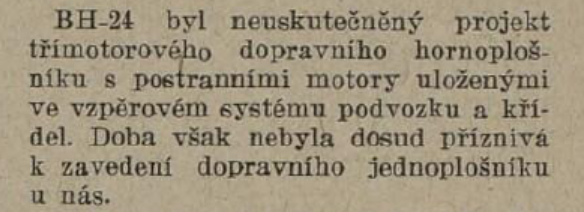
The BH-24 was an unrealized project of a "high-wing transport
aircraft with side engines mounted in the strut system of the
chassis and wings. However, the time was not yet favorable for
the introduction of a transport monoplane in our country.
 

Attachments

  • 14.png
    14.png
    228.6 KB · Views: 55
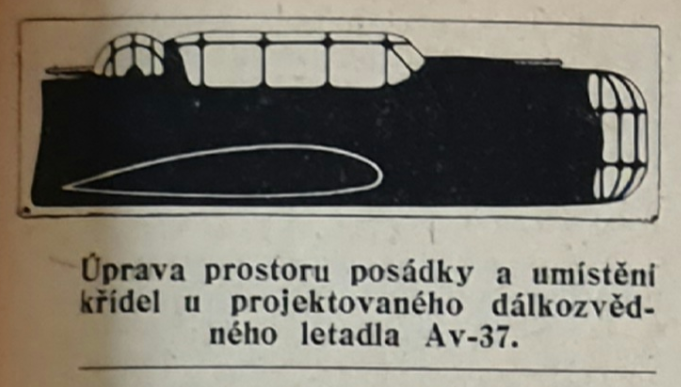
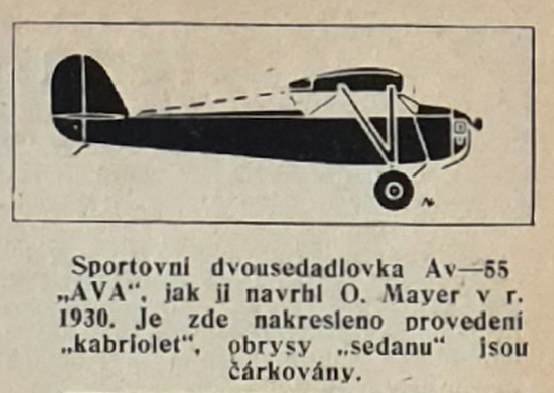
Also via my dear Sarastro,and Letectvi,

the Av.37 and Av.55.
 

Attachments

  • 25.png
    25.png
    404.9 KB · Views: 47
  • 26.png
    26.png
    337.7 KB · Views: 55
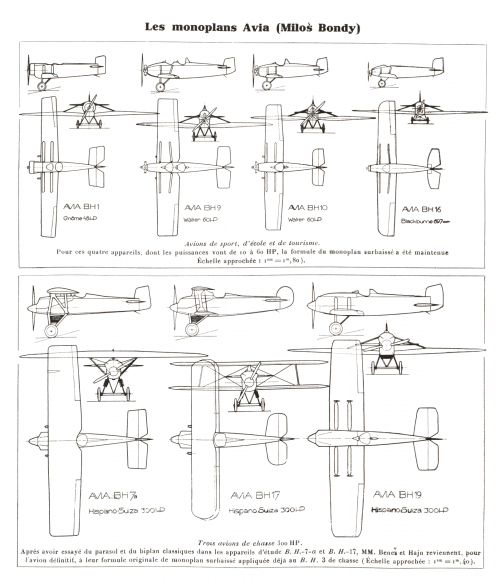
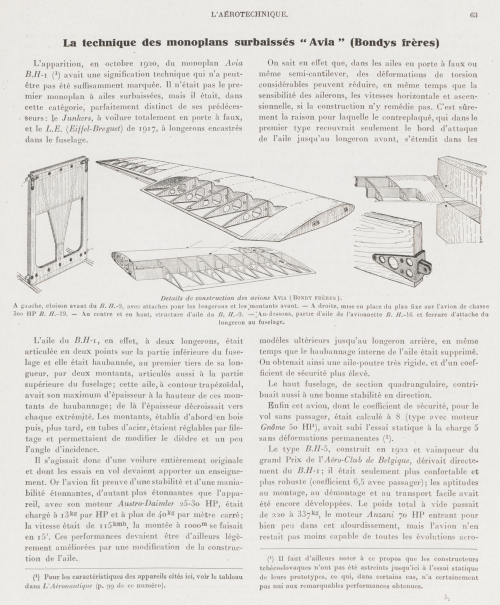
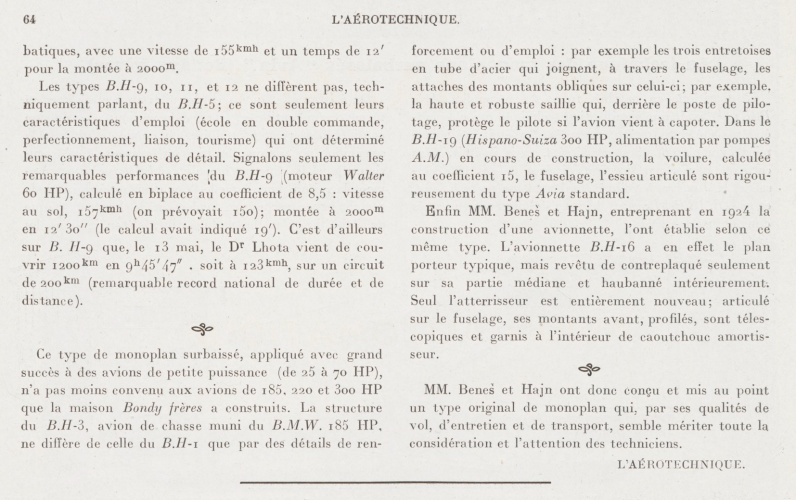
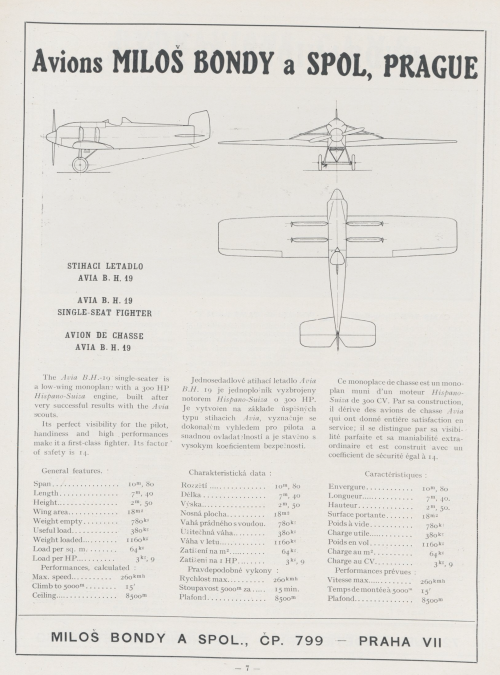
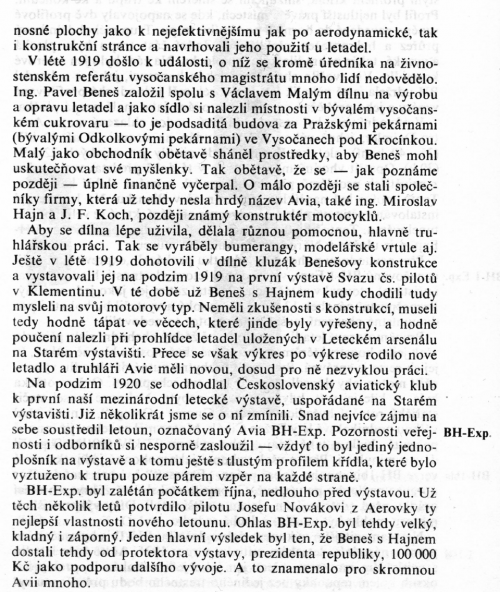
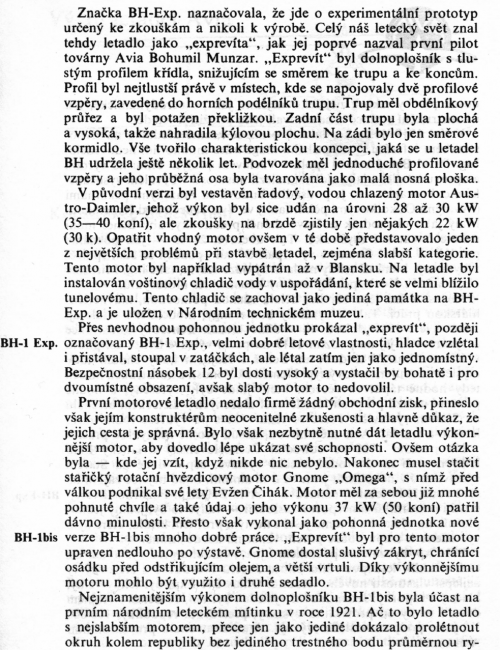
In text for image 1759242969470, it mentions the BH-1's "moteur Austro-Daimler 25-30 HP". Other sources (including Gunston) say 35-40 hp for that 4-cylinder inline. Does anyone have a designation for this engine ... other than that descriptive AD 35-40 HP naming?
 
In text for image 1759242969470, it mentions the BH-1's "moteur Austro-Daimler 25-30 HP". Other sources (including Gunston) say 35-40 hp for that 4-cylinder inline. Does anyone have a designation for this engine ... other than that descriptive AD 35-40 HP naming?

All about it.
 

Attachments

  • 10.png
    10.png
    997.2 KB · Views: 32
  • 11.png
    11.png
    1.1 MB · Views: 36
From old site on Net,

in 1936, the Czechoslovak Ministry of National Defence (MNO) formulated detailed tactical and technical requirements for a new, high-performance, twin-engine medium bomber aircraft, known as the "Type IV Bombardér," and sent them to several major aircraft manufacturers. Based on these, work began at the Letov plant on the Š-43 design, at Aero on the A-300 design , based on the earlier A-206, at ČKD-Praga on the E-48 design, and at the Avia plant, two design teams began work: those led by Frantisek Novotný and Robert Nebesář.

Engineer Novotny—known for his design of the B-534 and B-35 fighter aircraft—developed a preliminary design for a sleek, twin-engine mid-wing aircraft with a slender fuselage, twin vertical stabilizers, and retractable landing gear, designated the B-36. It was to be powered by French Hispano-Suiza 12Ydrs inline engines. At the time, Avia was finalizing a license-produced agreement for these engines, which were to become the standard power source for newly built Czechoslovak military aircraft. With these engines, the B-36 was expected to reach a top speed of 450 km/h and a bomb load of 1,200 kg.

At the same time, engineer Dr. Nebesář presented his design for an aircraft designated the B-158 , developed in May 1936 based on an earlier design for a light multi-role bomber, the B-58. It was a twin-engine, low-wing, all-metal cantilever monoplane, also intended to be powered by HS-12Ydrs engines. A top speed of 482 km/h was expected.

Avia's management, likely tempted by the anticipated improved performance, decided to proceed with the B-158 project. Construction of the first prototype, designated tactical S28, began in late 1936, and it first flew a year later, on November 11, 1937. Unfortunately, the aircraft completely disappointed its creators' expectations: its empty weight exceeded the target by a staggering 640 kg, and the maximum speed achieved during trials was a mere 435 km/h! Prototype trials continued until the dissolution of Czechoslovakia in March 1939, but even then, it was already clear that the competitive Aero A-300 proved to be the definitive "Type IV bomber." Unfortunately, both aircraft were constructed too late to enter series production and enter service with the Czechoslovak Air Force.

The B-158 prototype was built as a reconnaissance variant, featuring features such as a four-man crew, the ability to carry 10 illuminating bombs and mount cameras, and slightly more powerful defensive armament. The planned B-158B bomber version was to have a three-man crew, a forward gun turret, and a fuselage bomb bay for 500 kg of bombs. External bomb racks could also accommodate additional bombs: one 500 kg bomb or two 200 kg bombs each. However, the B-158B never progressed beyond the design stage.

After occupying Czechoslovakia, the Germans subjected captured weapons to flight tests, including the prototype B-158. After a series of trials, it was scrapped.

On the margin of this story, it can be added that engineer R. Nebesář left for the United States shortly before the German occupation of Czechoslovakia, where he worked for some time at the Howard Aircraft Company.

 

Similar threads

Back
Top Bottom