Suslova
ACCESS: Restricted
- Joined
- 9 November 2021
- Messages
- 28
- Reaction score
- 65
Well, since English isn't my first language, this text comes from a later translation. I've made my own adjustments to the translation, which hopefully have improved it.
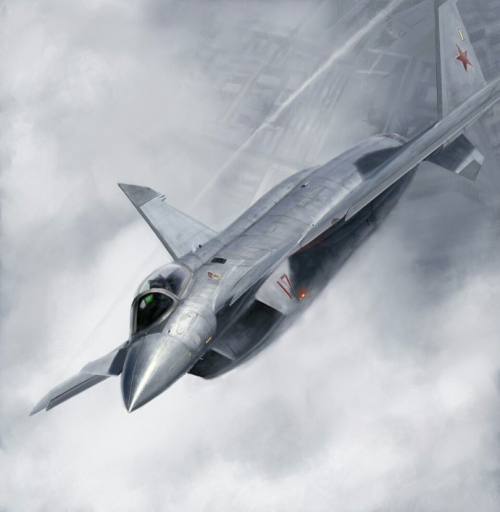
It's a story told from the perspective of a fictional "I", narrating 'how the OKB MIG might have developed if the USSR had continued to exist.
Whenever I'm done with a new part, I'll drop an update right here.
It's a story told from the perspective of a fictional "I", narrating 'how the OKB MIG might have developed if the USSR had continued to exist.
I'm hoping to make it all feel close to reality. I'm really looking forward to everyone's feedback.-Comrade, manager, friend-
In July 1995, when Pyotr Zeynegin came to see us, the OKB had not yet emerged from its setbacks. After the OKB was consolidated into MAPO (the Moscow Aviation Production Association), Belyakov had always harbored resentment toward the decision: he did not want to see the OKB’s work and decision-making be influenced by the commercial behavior of an enterprise, even if it was technically a state-owned one.
But the bigger problem was obvious: without money, there was nothing. Not only the projects we were still pushing forward, but also the basic operation of the OKB—everything required funding. And under the circumstances of the 1990s, only the enterprise could fill the gap left by the shrinking state budget. The production association promised to allocate the revenue from MiG export sales to support our development projects, and for a time, this became almost our only hope of survival.
There were no special arrangements made for Zeynegin’s visit—aside from a formal reception, everything was kept simple. We all knew that his arrival was unlikely to bring us any good news, yet everyone was still willing to hold onto some small hope. We were all working hard to bring everything back on track and keep moving forward—everyone could see this. But this time, things were different.
“Moscow hopes that the first stage of development can be completed as soon as possible, in order to restore confidence in the aviation industry.” This was not exactly bad news, but given our circumstances, it was difficult to call it good news either.
Accompanying Zeynegin was the general manager of MAPO, Vladimir Kuzmin. Compared to Zeynegin, who had come from the Air Force, Kuzmin seemed more like the person we were actually supposed to work with — but where one could be called a “comrade,” the other was clearly a “manager.” That gap alone felt enormous, as if the entire world had subtly changed.
Nevertheless, that afternoon, we sat down with Kuzmin in a conference room and talked for a long time — of course, about the further development of Izdeliye 1.42. Even though we had independently completed the assembly of the second and third prototypes and successfully sent them into the sky, the overall progress of the project was still facing many difficulties. To make the explanation clearer, I turned to face the blackboard.
“In July 1993, to ensure that the first demonstrator aircraft could safely complete its planned flight life, and to install new testing equipment, Izdeliye 1.44 was returned to the factory for modification. Meanwhile, the design drawings for the second stage finally arrived at the experimental plant, where our colleagues had already prepared four partially-built prototypes. The next two aircraft were completed in January and May of 1994. And as for what came after…”
When I stopped writing, I realized that I was not good at delivering reports. The blackboard was filled with messy, fragmented words—ironically, they accurately reflected my fragmented life and work.
Silence hung in the room for several seconds before Kuzmin finally broke it:
“To complete this project, what else do you need?”
Sitting beside us, Aleksandr Velovich glanced at me. Just a few months earlier, he had interviewed Kuzmin about the delay of the 1.42 program. And now, the roles had reversed entirely. The tension had circled right back to us.
Velovich stood up, poured Kuzmin a glass of water, and handed it to him. I was busy grinding a piece of chalk between my fingers, trying to condense all of our difficulties into a single sentence.
The documents Velovich had prepared never came into use. But this was, in a sense, an inevitable outcome — and afterward, this scene would repeat itself countless times.
“Well... what we need now is coordination from the manufacturers involved in the project,” I finally said, almost sighing it out toward the pale sky outside the window.
“We plan to begin testing the avionics and electronic systems within the year,” Velovich added hesitantly. “If coordination with the other units can be arranged.”
He knew exactly what kind of obstacles we had run into. Two years earlier, we had already discussed the feasibility of installing a radar system on the second prototype with the Tikhomirov Instrument Research Institute. The answer had, of course, been no — just like every similar question. Even a simplified radar prototype could not be delivered before 1995, and the lower-risk RLSU-30 was the current priority — but that had nothing to do with us.
Everyone preferred to work on projects that could generate revenue. Who wouldn’t?
Kuzmin stood up and left the conference room, leaving behind only a brief “I understand.”
“Thanks.”
Still believing that any Beautiful Distance must exist somewhere in this world, I instinctively used that phrase to bid him farewell.
Whether he heard me, I will never know. And in all the days that came after, I never again had the chance to speak with Kuzmin alone.
But not everyone was like us. As former colleagues and now competitors, the OKB Sukhoi had clearly gone much further in commercialization. With export restrictions lifted, their heavy fighters were performing quite well on the international market. At the time, we heard that the Indians were negotiating with Sukhoi to purchase a multi-role fighter that, officially speaking, did not even exist.
On April 2, 1996, Sukhoi’s T10-M-11 — also called Su-37 — made its maiden flight. Inside our bureau, the news caused barely a ripple. It did not surprise us in the least. After all, in facing the 21st century, we already had our own final answer— something that had been settled long ago.
But the media did not see it that way.
Whenever I'm done with a new part, I'll drop an update right here.
Last edited: