TheKutKu

ACCESS: Top Secret
Joined
13 February 2023
Messages
555
Reaction score
1,855
I noticed there wasn't a general thread for this, so I created this since there are a lot of unrealised chinese launcher projects.

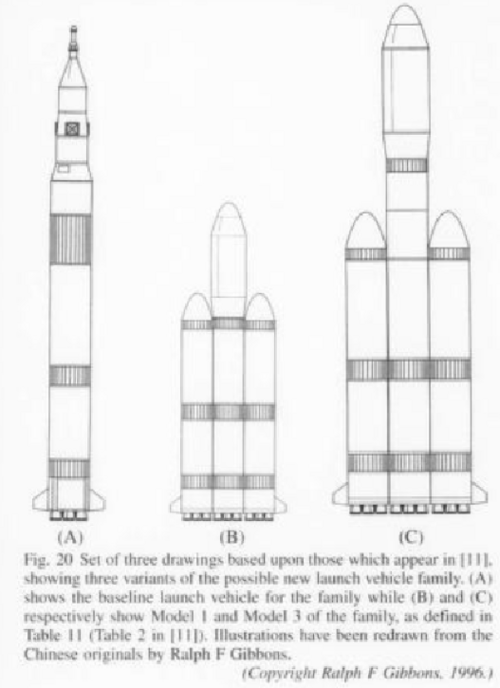
Starting with one that's already described on astronautix, but I'm posting a source, taken from Xiandong Bao "A Modular Space Transportation System" (IAF-92-0857) and also described in P.S. Clark (1999) JBIS, 52; Xiandong Bao was an engineer at what is now known as SAST, one of the main subsidiary of the Chinese astronautics giant CASC. This is one of the earlier proposals for a hydrocarbon-fuelled chinese launcher (although slightly earlier one were proposed during initial trade studies for the Shenzhou program)

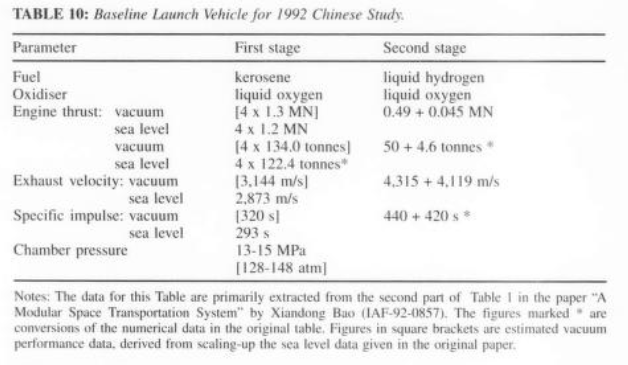
The idea behind the paper is the development of a baseline two-stage launch vehicle. The Chinese paper notes that the first stage fuel would be a "hydrocarbon (CH)" and this is taken to refer to kerosene especially since the Chinese would later express an interest in purchasing Russian liquid oxygen/kero- sene engines (discussed later in this section).

The use of liquid oxygen and kerosene on the first stage of this vehicle would mark a departure for the Chinese, since they have previously used storable UDMH and a nitrogen-derived oxidizer (usually nitrogen tetroxide)
Data for the overall launch vehicle are:
Launch mass 377 tons
Payload capability 11 tons
Length 55 m
Diameter 4.5 m
Launch thrust 4.8 MN (490 tons-force)

On top of the second stage an instrument unit 1.6 metres high would be carried, acting as a data-collection and process- ing centre for the vehicle
The first stage would carry four engines which can gimble for control. The second stage a single main engine and a set of four verniers.
1729213044505.png

Taking this base design, it is proposed that a three-stage launch vehicle could be developed which could place 6 tonnes into geosynchronous transfer orbit: although not stated, one assumes that the third stage would use liquid oxygen and liquid hydrogen.

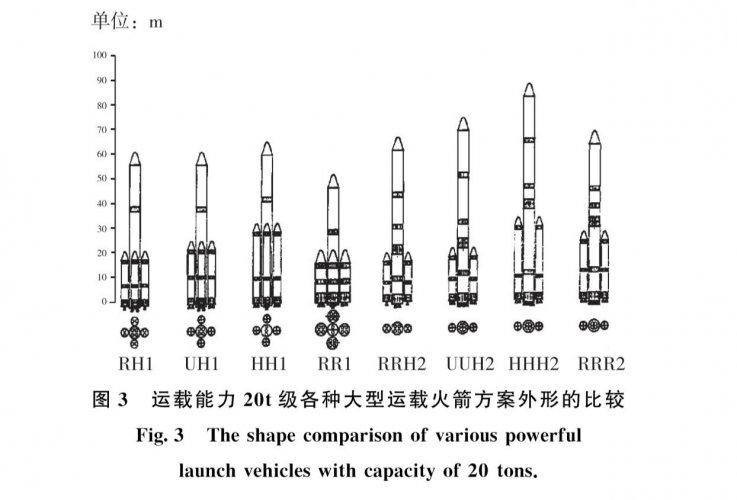
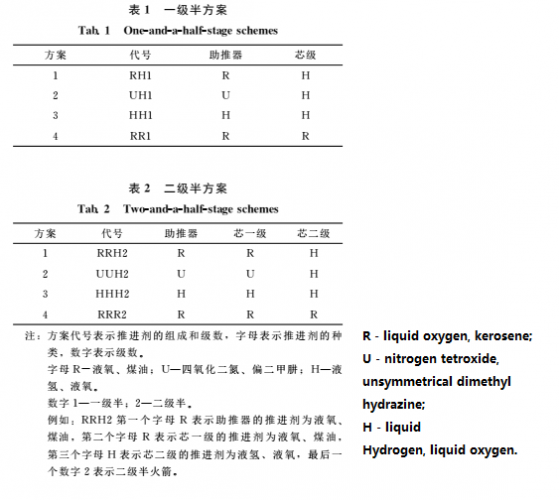
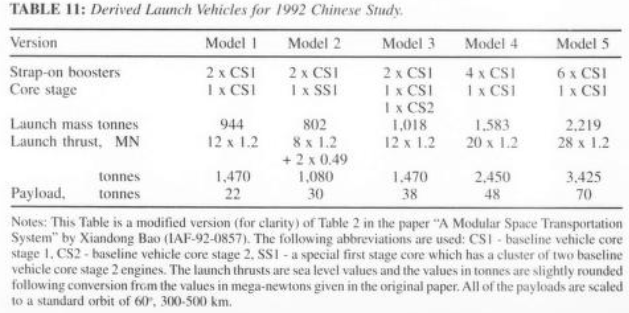
A series of different launch vehicles derived from the baseline launch vehicle's stages and the not-described third stage is proposed, leading to a maximum payload capability of 70 tonnes to the standard 60", 300-500 km reference orbit. For the larger payloads a fairing with a diameter of 5.4 metres and a length of 18 metres would be used.
1729213565652.png
1729213641752.png
The paper then speculates:

On the other hand, the Chinese have purchased an RD-120 engine. While the RD-120 itself has been used as the main engine on the second stage of the Zenit launch vehicle, the Russians are planning to introduce a modification designated RD-120K as the first stage of their new Rus/Soyuz-2 family of launch vehicles. It is not known whether the Chinese purchased the RD-120 itself or the more recent RD-120K modification.
One might speculate that if the launch vehicle family proposed in the 1992 IAF paper is being funded, then Chinese engines based upon what they have learned from studying the RD-120 technology could see an application of the first stage of the baseline launch vehicle. However, this is currently pure speculation.
Which of course turned out to be true. the YF-100 engine series was developped partially thanks to what was learned from studying a purchased ukrainian RD-120 (KRD-120 to be more accurate), more can be read here
 
1729263043543.png
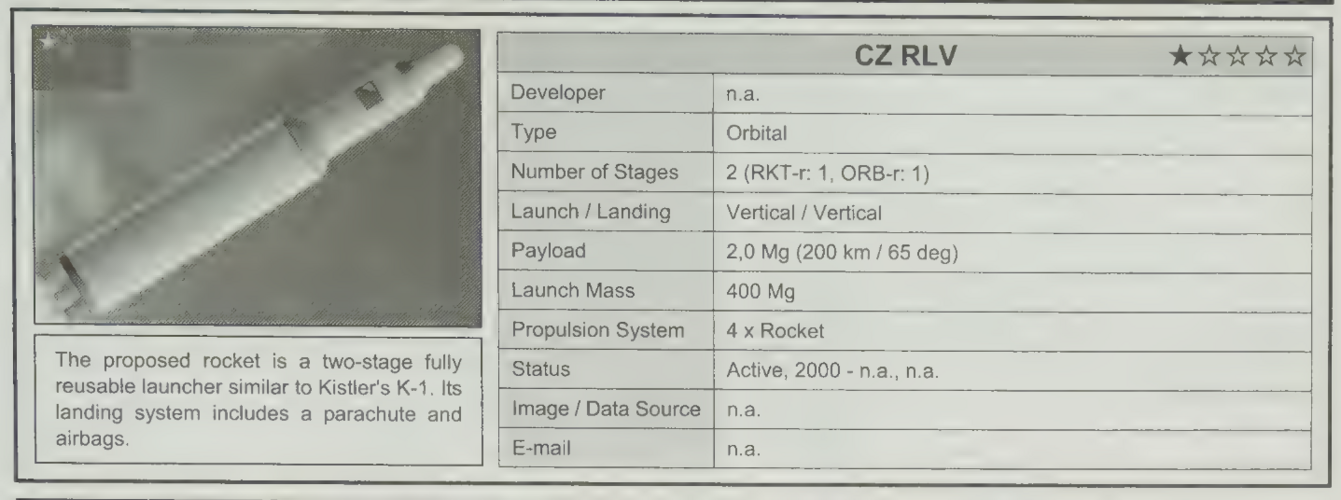
"A project of fully reusable verticaly launched launcher or "Chinese Kistler K-1"", 2000
Description from "Dragon Furieux: Les avions spatiaux chinois", Phillipe Coué, 2017
At the end of the 1990s, the "fever" of satellite constellations for mobile communications led private investors to believe that the market was sufficient to develop fully reusable and commercial launchers. Most of the initiatives were futuristic and had very little technical credibility. Other projects were only tax-saving operations accompanied by beautiful presentations and shiny websites.

However, in this American aerospace galore, the reusable two-stage K-1 launcher from Kistler Aerospace hit the headlines for several years and even reached the point of stage assembly and structural elements. It was perhaps its very classic (and therefore reassuring) configuration that had caught the attention of several potential customers such as NASA, which had at one time considered using the K-1 to resupply the International Space Station (ISS).


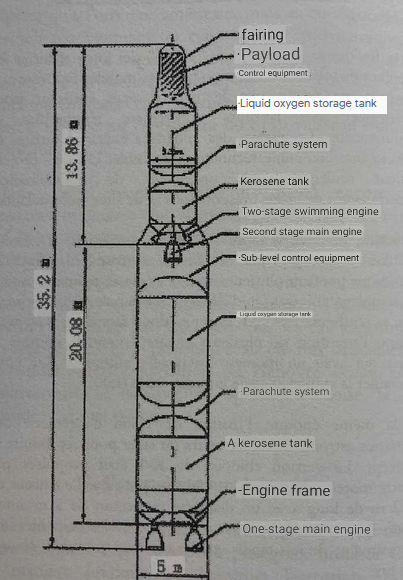
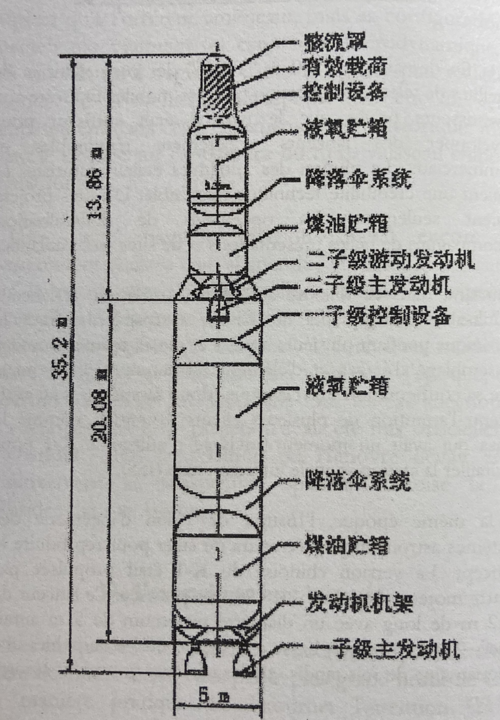
At the same time, the Beijing Institute of Astronautical Systems Engineering (part of Beihang University) took up the subject to reproduce the concept. The Chinese version of the K-1 was propelled by four Kerolox engines with 120 t of thrust (YF-100 class). This 35.2 m long launcher, with a maximum diameter of 5 m, would have sent 2 t in low orbit.

It could have been reused 50 times, while the engines would have to be replaced every 10 launches.

The article showcasing this project was published in the internal journal of CALT "Missiles and Space Vehicles", the article presented the recovery strategies and the simulations that had validated its feasibility.


When the "Chinese K-1" project was unveiled in 2000, Chen Lan, the owner of the "Go Taikonauts" website reported the rumor that this reusable launcher configuration was in competition with five other projects. The selection was expected at the end of 2000.
1729269772801.png
The mentioned news article can be read here: https://web.archive.org/web/2001042....com/CapeCanaveral/Launchpad/1921/news-23.htm
With the following low res picture of a drawing by Chen Lan (original isn't archived, I would appreciate if someone had the full version saved):
1729269650102.jpeg
 
Last edited:
"A project of fully reusable verticaly launched launcher or "Chinese Kistler K-1"", 2000
Description from "Dragon Furieux: Les avions spatiaux chinois", Phillipe Coué, 2017

View attachment 744595

From Spaceships A Reference Guide to International Reusable -- Robert A Goehlich -- Burlington, Ontario, ©2006

1734028246647.png
 
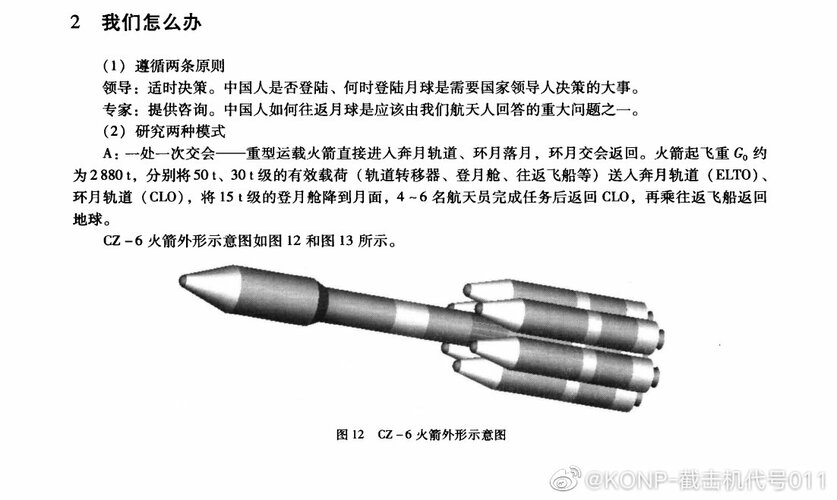
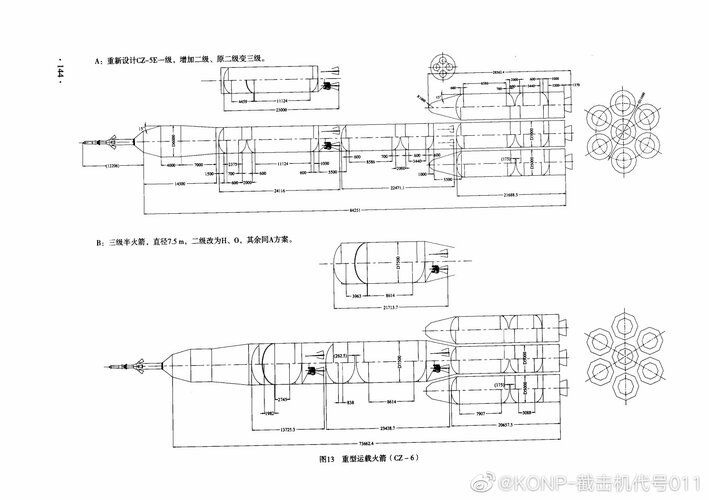
006DRnU9gy1h3rfz0zvvaj30um0ibmzm.jpg 006DRnU9gy1h3rfz1muqpj315c0t678f.jpg
A lunar rocket concept from the early 21st century.I don't know what engine it's using, but it has a takeoff weight of 2,880 tons
However, considering the number of first stage engines is 7, then the engine thrust needs to be more than 420 tons, which is higher than the thrust of the YF135
 
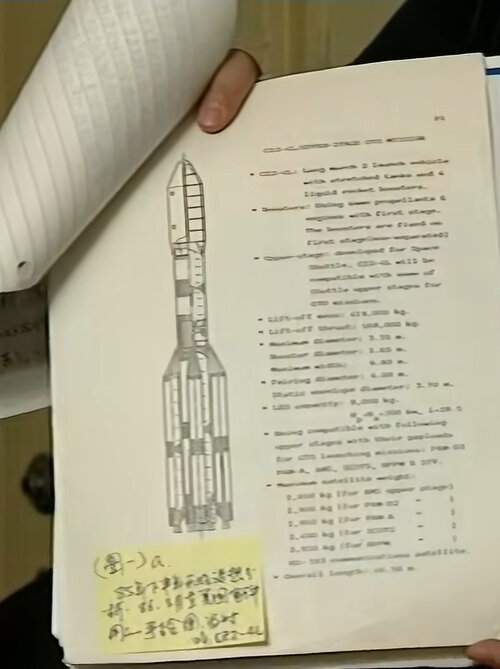
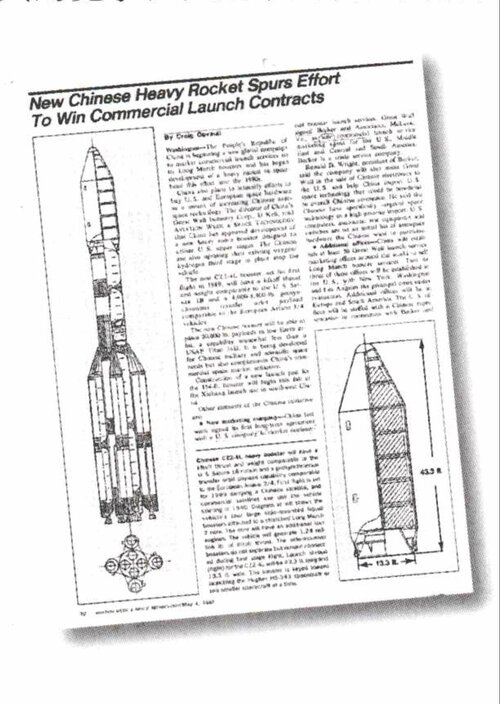
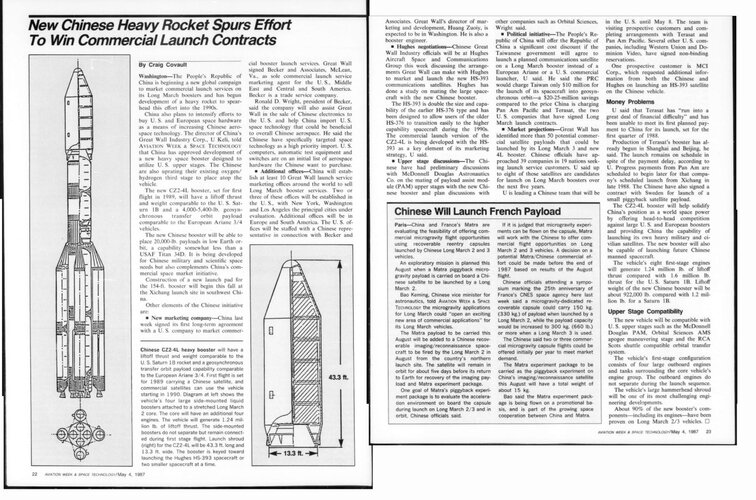
The Aviation Week article and some additional context:

AviationWeek870504.jpg

And what is being said on weibo
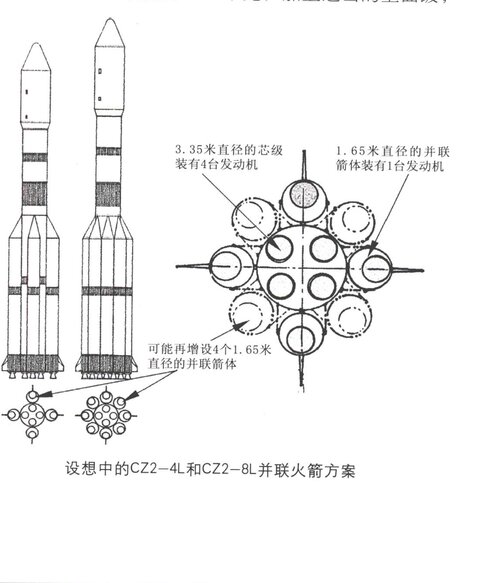
[New discoveries in space archaeology: Long March 2 four/eight boosters]
Around 1985, Huang Zuoyi, a launch vehicle expert, and Yu Menglun, a ballistics expert, jointly proposed the bundled rocket CZ2-4L. "CZ2" means that it is based on the Long March 2 series rocket with a diameter of 3.35 meters, and "4L" means adding four parallel liquid rocket boosters with a diameter of 1.65 meters (inseparable). The two form a bundled rocket with a low-orbit carrying capacity of 9,000 kilograms. With the appropriate upper stage, the synchronous transfer orbit carrying capacity is about 2,500 kilograms.
From the perspective of future development potential and overall rocket configuration, the plan also envisioned an alternative eight-booster configuration, further increasing the LEO payload from 9,000 kg to 13,500 kg.

This proposal was introduced to the international market to gauge interest and received positive feedback from potential Western launch service clients, including the United States. China Great Wall Industry Corporation (CGWIC) conducted 24 technical promotional presentations for major U.S. communications satellite manufacturers, satellite operators, space insurers, and aerospace consulting firms. The CZ2-4L rocket concept attracted significant attention, with clients generally agreeing that its design and technical capabilities met the needs of the next-generation communications satellites.

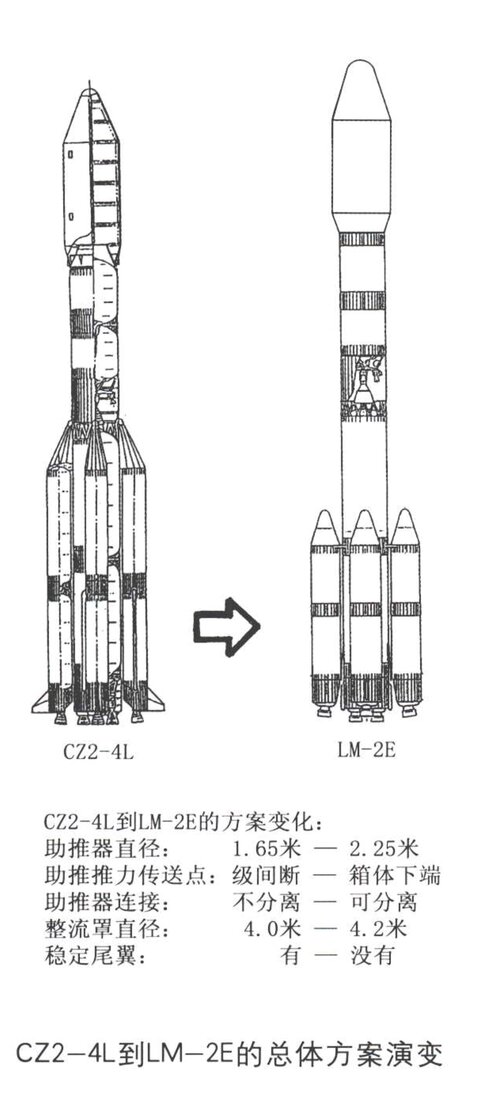
With the promising momentum in the launch services market, the design team initiated feasibility studies on the bundled rocket in 1987. The CZ2-4L was renamed LM-2E (Long March 2E). While largely retaining the original CZ2-4L concept, several modifications were made to the rocket’s overall configuration:

  • The booster diameter was increased from 1.65 meters to 2.25 meters, as the 1.65-meter structure had been discontinued.
  • The boosters were made separable, instead of being permanently attached.
  • The fairing diameter was expanded from 4.0 meters to 4.2 meters.
  • The LEO payload capacity was increased from 9,000 kg to 9,500 kg.
This proposal was previously featured in the documentary Shaking the Heavens (撼天记 ; available on bilibili, part 3 or 4 I think), though at the time, there was insufficient textual documentation to substantiate the details.
 
A 2005 article on the trade studies at the origin of the CZ-6 launcher, China's first kerolox launcher, which made its first launch a decade ago.

Overall Scheme Selection for a New Generation of Small Launch Vehicles. 2005, Cheng Tangming & Wang Xiaojun

In recent years, while traditional large-scale communication and reconnaissance satellites have continued to develop and improve, the small satellite market has emerged rapidly due to the needs of military applications and scientific research such as space environment monitoring and earth observation. The demand for economical, reliable, fast and flexible small carriers is becoming increasingly strong.

Based on the demand of the small satellite market and the current status and demonstration of my country's small launch vehicles, the following ideas are proposed for the overall planning of small launch vehicles in the near future.


1) In the near future, we will primarily use the CZ-2C and CZ-2D series for single or multiple satellite launches, and will make adaptive improvements (to improve reliability) as needed to meet the current and future small satellite launch needs. We will no longer develop small launch vehicles using toxic propellants.

2) In conjunction with the development of liquid oxygen-kerosene engines, we will accelerate the development of a new generation of small launch vehicles, employing dual or multiple satellite launch technology to meet the future launch needs of small satellites weighing 100 to 1000 kg in sun-synchronous orbits. We will strive to complete the first flight and enter commercial operation in 2009.

3) We will actively develop air-launched small launch vehicles, striving to achieve breakthroughs in key air-launched launch vehicle technologies and achieve the first flight of an air-launched launch vehicle system by the end of the 15th Five-Year Plan to meet the launch needs of small satellites weighing less than 100 kg.

4) We will develop solid small launch vehicle technology in a timely manner to meet the needs of rapid and maneuverable wartime launches of military small satellites.

Furthermore, according to my country's development strategy for a new generation of launch vehicles, the development of these vehicles should adhere to the overall development strategy of "one series, two engines, and three modules," which is based on the principles of non-toxicity, pollution-free, low cost, high reliability, strong adaptability, and good safety. The small launch vehicles planned for the new generation of launch vehicles can meet the launch requirements of small payloads and are also in line with the overall planning of small launch vehicles.
Overall Technical Specifications and Requirements
To meet the launch needs of small satellites, the following overall technical specifications and requirements for small launch vehicles have been initially formulated:
1) Payload capacity to a 700km sun-synchronous orbit of no less than 500kg;
2) Flight reliability: 0.95;
3) Orbital insertion accuracy no less than that of existing Long March rockets;
4) Axial overload coefficient during flight no more than 7g;
5) Capable of launching two or more satellites;
6) Capable of payload attitude adjustment and orientation;
7) Capable of final stage deorbiting;
8) Launch cycle not exceeding seven working days;
9) Able to launch from existing launch sites.

Overall Small Launch Vehicle Design Selection

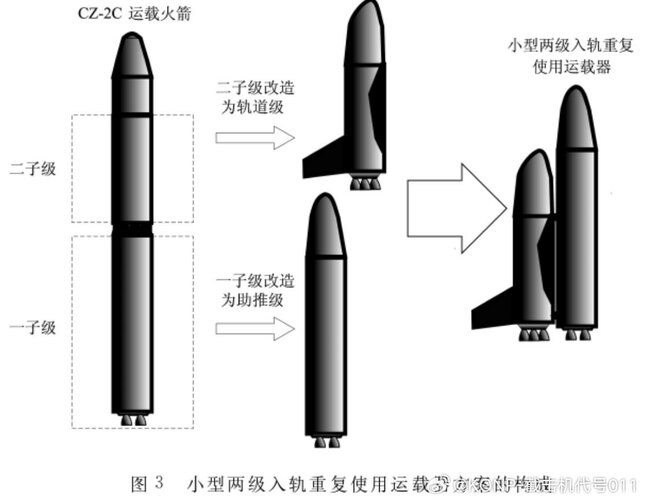
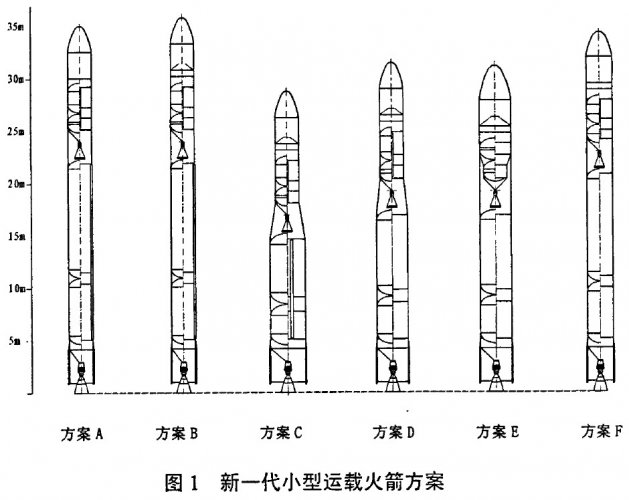
During early demonstrations, a new generation of small launch vehicles was proposed based on a 2.25m diameter module from among three newly developed modules, with two-stage and three-stage configurations. However, during the demonstration process, several issues were identified with this design, leading to the proposal of several other options. The options are shown in Figure 1. These options are all based on the YF-100 and YF-115 liquid oxygen-kerosene engines.

1759782706441.jpeg

3.1 Option A (Second-Stage Configuration, 2.25m Diameter)
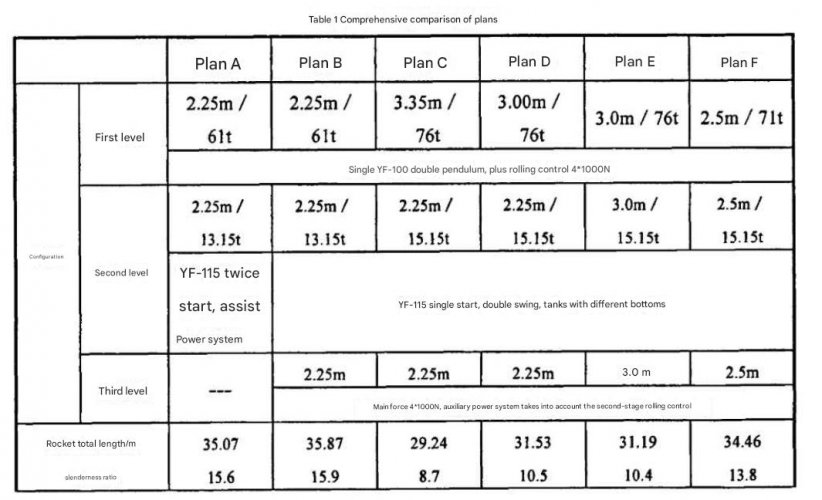
1) The first stage is a 2.25m module for a new-generation launch vehicle. The engine is upgraded from a single axis TVCto a dual-axis configuration, with a propellant mass of 61 tons and a 4x1000N hydrogen peroxide/kerosene auxiliary power system for roll control.
2) The second stage uses a 15t-class liquid oxygen-kerosene engine, with a dual-pendulum, double-start configuration and a propellant mass of 13.15 tons. Roll control, attitude control during ballistic cruise, and propellant management are controlled by 10x25N, 4x100N, and 2x300N hydrogen peroxide/kerosene auxiliary power systems.
3) The fairing has a diameter of 2.25m or 2.6m and can be hoisted in one piece or in separate pieces.
4) The rocket has an overall length of 35.07m and a diameter of 2.25m.
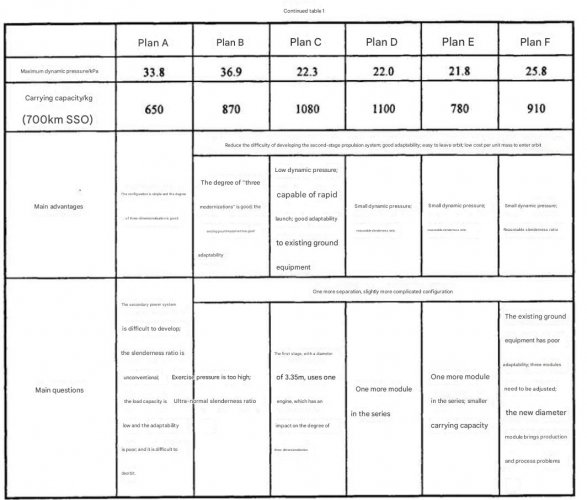
5) The takeoff mass is 84.537t, the takeoff thrust-to-weight ratio is 1.467, and the maximum dynamic pressure is 33.8 kPa, maximum axial overload 5.8 g;
6) 700 km SSO payload capacity approximately 650 kgg

3.2 Option B (three-stage configuration, 2.25 m diameter)
1) First stage same as Option A;
2) Second stage essentially the same as Option A, with single engine start;
3) Add a third stage, using 4x1000N trajectory maneuvers, 4x25N and 8x100N for second-stage roll control, and third-stage attitude control. Compared to Option A, 4 x 1000N thrust chambers and 4 x WON thrust chambers are added, while 6 x 25N thrust chambers and 2 x 300N thrust chambers are reduced, resulting in an increased fuel volume.
4) The fairing diameter is 2.25m or 2.6m, and can be hoisted in one piece or in separate pieces.
5) The rocket is 35.87m long and 2.25m in diameter.
6) The takeoff mass is 85.027t, the takeoff thrust-to-weight ratio is 1.459, the maximum dynamic pressure is 36.9kPa, and the maximum axial overload is 5.7g.
7) The 700km SSO payload capacity is approximately 870kg.

Comparison between Option B and Option A:
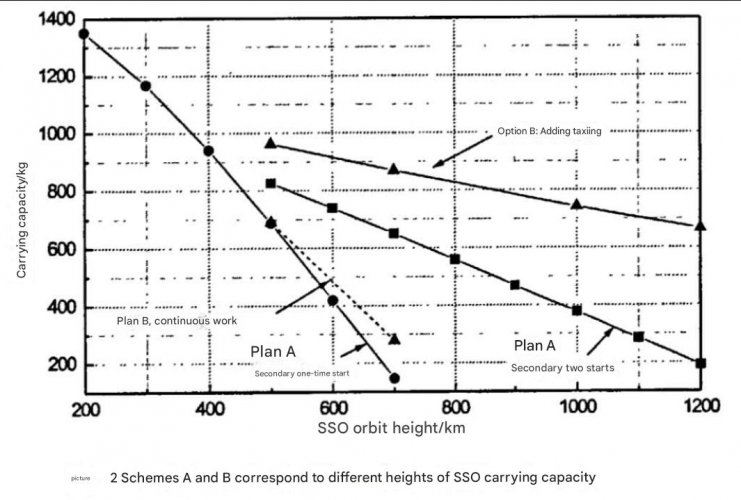
1) Adaptability: The three-stage option (Option B) significantly increases payload capacity (from 650kg to 870kg for the 700km SSO, a 34% increase; from 200kg to 670kg for the 1200km SSO, a 235% increase). See Figure 2. It also has the ability to leave orbit, which greatly increases its adaptability to different satellites.*
2) Complexity: The three-stage design adds a third stage, slightly increasing the complexity of the auxiliary power system and requiring one more separation. However, the YF-115 engine is switched to a single-stage start, simplifying the pressurization system, thus maintaining the same complexity.
3) Economical: With increased payload capacity, the rocket cost per unit payload decreases significantly. Therefore, small launch vehicles should focus on the three-stage design.

However, Plan B has the following issues:
1) The fineness ratio reaches 15.9, limiting the vehicle height and making it impossible to launch dual or larger satellites.
2) The takeoff thrust-to-weight ratio reaches 1.459, and the maximum dynamic pressure reaches 36.9 kPa, resulting in a relatively heavy payload.

These issues can be addressed by the following approaches:
1) Reducing the YF-100 engine thrust to 110 tons would resolve the maximum dynamic pressure issue, but would reduce the payload capacity by approximately 130 kg (see Figure 3).
2) Other approaches: Optimizing the tank bulkhead shape, appropriately lowering the engine height, integrating the instrument bay with the payload support, and structural optimization can partially address the problem, but not completely.
3) Increasing the rocket body diameter, increasing the propellant, and reducing the slenderness ratio simultaneously address both the low payload capacity and high maximum dynamic pressure.

3.3 Option C (Three-stage configuration, first stage diameter 3.35m)
1) The first stage adopts a 3.35m diameter and an additional 15 tons of propellant; the roll control system uses a 4x1000N hydrogen peroxide/kerosene auxiliary power system.
2) The second stage is basically the same as Option B, with an additional 2 tons of propellant.
3) The third stage is the same as Option Bo.
4) The fairing diameter is 2.25m or 2.6m and is hoisted integrally. 5) The rocket's total length is 29.237 meters.
6) The takeoff mass is 103.217 tons, the takeoff thrust-to-weight ratio is 1.20, the maximum dynamic pressure is 22.3 kPa, and the maximum axial overload is 5.0 g.
7) The 700 km SSO payload capacity is approximately 1,080 kg, and while meeting domestic measurement and control requirements, the payload capacity is 500 kg.

The main advantages of Option C are:
1) The increased diameter and reduced height result in a slenderness ratio of 8.7, resolving the issue of a high slenderness ratio. This eliminates the limitation of rocket height for dual satellite launches.
2) The increased takeoff mass reduces the maximum dynamic pressure by 39%.
3) The 700 km SSO payload capacity is increased by 25%, and the per-launch cost is comparable to Option B, reducing the unit payload insertion cost. 4) The total length of the first, second, and third stages is 24.2 meters, with a dry weight of 9.02 tons. It can be assembled in the final assembly workshop and shipped directly from the launch station for erection, testing, and fueling before launch, thus enabling rapid launch of small satellites.
5) It can be adapted to existing launch pads. The main issue with Option C is that, compared to the new generation 3.35m module, since the first stage uses a single engine, the overall interface relationship needs to be re-coordinated.

3.4 Option D (Three-stage configuration, first stage diameter 3.0m)
1) The first stage adopts a 3.0m diameter;
2) The second stage is the same as Option C;
3) The third stage is the same as Option C;
4) The fairing diameter is 2.25m or 2.6m, and it is hoisted integrally;
5) The rocket has an overall length of 31.53m and an aspect ratio of 10.51;
6) The takeoff mass is 103.167t, the takeoff thrust-to-weight ratio is 1.202, the maximum dynamic pressure is 22.0kPa, and the maximum axial overload is 5.0g;
7) The 700km SSO payload capacity is approximately 1100kg.
This option has no advantages over Option C.


3.5 Option E (Three-stage Configuration, 3.0m Diameter)
1) The first, second, and third stages have a 3.0m diameter and the same propellant workload as Option C.
2) The second-stage kerosene tank uses a suspended tank with a diameter of 2.25m.
3) The fairing has a diameter of 3.0m and can be hoisted in one piece or in separate sections.
4) The rocket has a total length of 31.19m and a slenderness ratio of 10.4.
5) The takeoff mass is 103.677t, the takeoff thrust-to-weight ratio is 1.196, the maximum dynamic pressure is 21.8kPa, and the maximum axial overload is 4.9g.
6) The 700km SSO payload capacity is approximately 780kg.
Compared to Option D, this option has the following disadvantages: the increased structural mass due to the larger second and third stage diameters reduces the payload capacity. The use of a suspended tank for the second-stage kerosene tank results in an excessively long interstage section, increasing separation difficulty.

3.6 Option F (Three-stage Configuration, 2.5m Diameter)
1) The first, second, and third stages have a 2.5m diameter;
2) The first-stage propellant mass is 71t, with the second and third-stage propellant mass being the same as Option C;
3) The fairing has a diameter of 2.5m and is hoisted integrally;
4) The rocket has an overall length of 34.46m and an aspect ratio of 13.8;
5) The takeoff mass is 98.105t, the takeoff thrust-to-weight ratio is 1.264, the maximum dynamic pressure is 25.8kPa, and the maximum axial overload is 5.0g;
7) The 700km SSO payload capacity is approximately 910kg.
The 2.5m diameter of this option was determined after optimization and can replace the 2.25m module in the original series as a booster for 5m and 3.35m diameter rockets. The three modules in the new generation series have been changed to: 5m, 3.35m, and 2.5m. However, the new diameter module brings new production and process facility problems.

1759783101798.jpeg
1759783452562.jpeg
1759783486651.jpeg
1759783575515.jpeg
The conclusions are:
1) The three-stage option offers significant advantages over the two-stage option, reducing the development difficulty of the second-stage engine, reducing the weight of the boost system, and offering greater payload capacity and adaptability. Therefore, Option A is not adopted.
2) Option E (full 3.0m diameter) presents numerous issues and is not considered.
3) Option F (2.5m diameter) involves adjustments to three modules within the next-generation series, and the new diameter introduces new production and process infrastructure challenges, so it is not recommended.
4) Considering adaptability, unit launch cost, and technical risk, increasing the first-stage diameter is reasonable. After comprehensive comparison, a 3.0m diameter first-stage (Option D) offers no advantages over a 3.35m diameter first-stage (Option C). Option C is the optimal option and should be selected as the preferred option.
5) The 2.25m diameter three-stage option (Option B) can address the issue of excessive maximum dynamic pressure through thrust reduction and optimization, but achieving a payload capacity of 1,000 kg is difficult, so it is considered the second option. 4 Conclusion: The selected small launch vehicle, Option C, aligns with the development strategy of "one series, two engines, three modules" for the new generation of launch vehicles and my country's overall small launch vehicle plan. The overall rocket solution is reasonable, feasible, highly adaptable, and offers excellent comprehensive technical and economic performance. The subsystem solution can be simplified based on the new generation basic rocket, resulting in a simple system, low cost, and high reliability.
This new generation of small launch vehicles can meet the future needs of my country's military and civilian small satellite launch markets, has excellent application prospects, and can demonstrate and verify some of the new and key technologies of the new generation basic launch vehicle.
 

Attachments

  • CZ-6.pdf
    393.1 KB · Views: 19
171.jpg 172.jpg 173.jpg
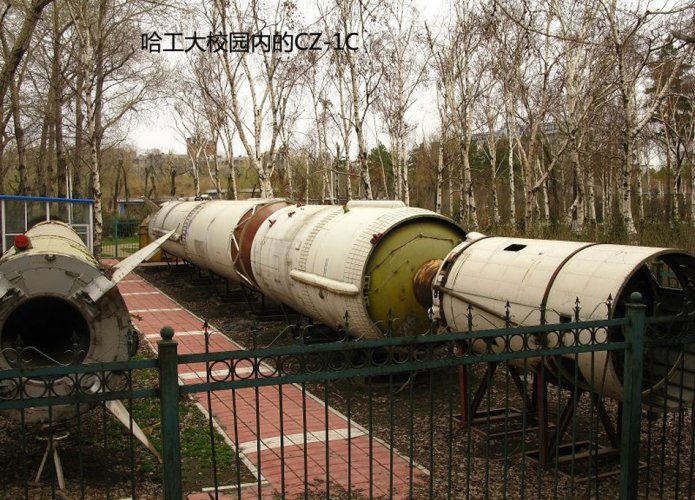
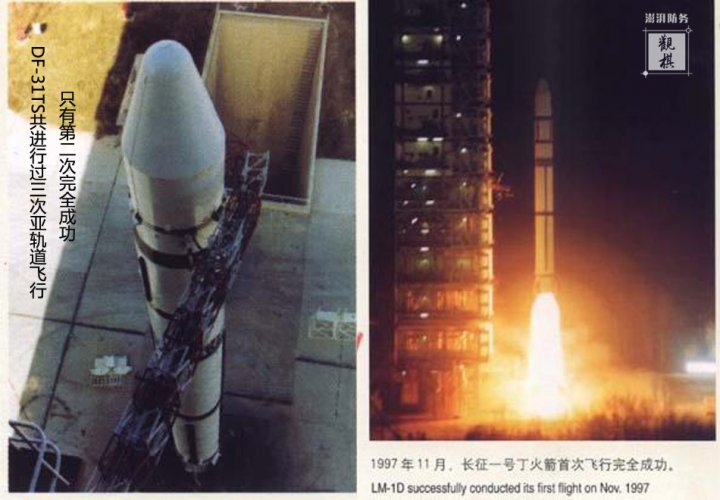
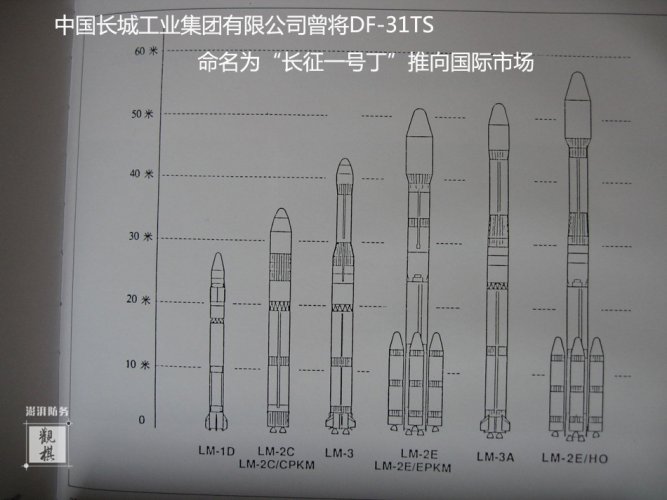
The Long March 1C was an improved version of the Long March 1, but it was abandoned due to its low carrying capacity
Later, during the development of the DF31, a batch of DF4s were modified to test missile warheads,These missiles were named DF31TS, and later the CNSA renamed them Long March 1D,It still has not been further developed due to its low carrying capacity
 
The Long March 1C was an improved version of the Long March 1, but it was abandoned due to its low carrying capacity
Later, during the development of the DF31, a batch of DF4s were modified to test missile warheads,These missiles were named DF31TS, and later the CNSA renamed them Long March 1D,It still has not been further developed due to its low carrying capacity
I've also read about the third CZ-1D being "DF-31ATS", do you know what it is?
 

Similar threads

Back
Top Bottom