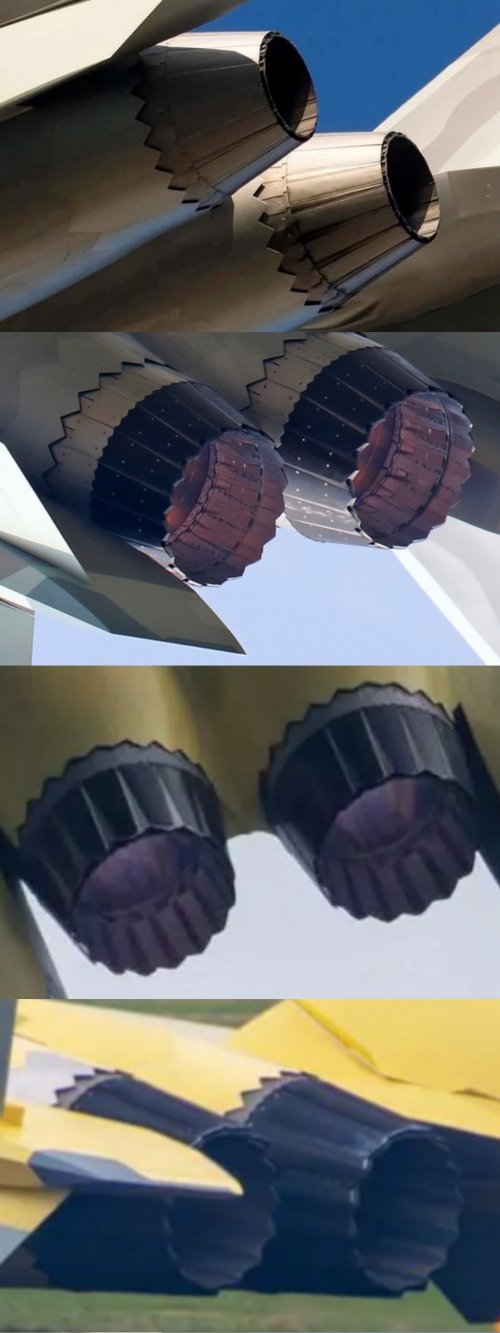
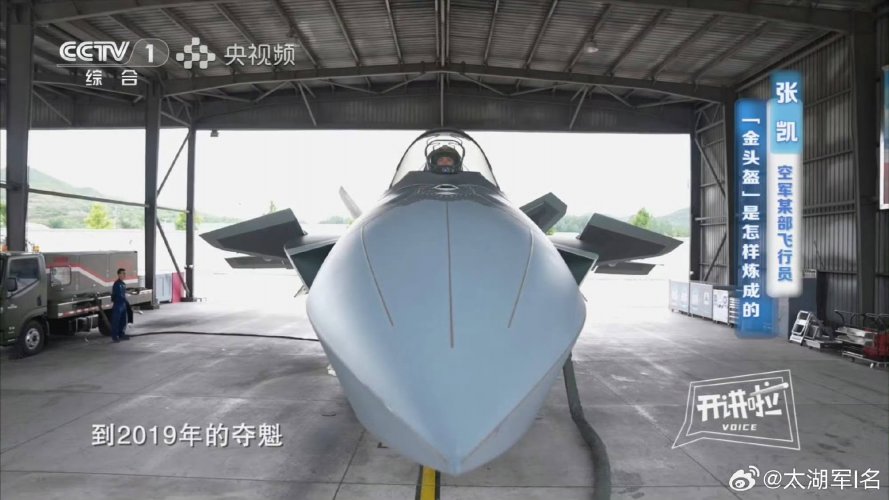
China, meanwhile, assessed Yugoslavia’s victory over the Nighthawk as a technology failure, he said. That drove the PLA’s interest in developing a counter-stealth ability, as they believed that a technology “silver bullet” could negate the U.S. advantage over targeting radars.
When he uttered those words, he’s either a severe delusional or just pushing political propaganda,its credibility is no better than any slop on YouTube. I thought this would be easy to recognize.
Just imagine a military official from India making comments on China's military-related content like that (not limited to stealth capabilities) ,their remarks wouldn't even get reposted here.
if you are going to dismiss someone's opinion on stealth, you should at least acknowledge his relevant experience.
As far as I can understand the key points, he is emphasising that
1) J-20 has some very questionable features for a stealth aircraft, and even J-50/XDS have what he thinks are some undesirable features.
2) A low RCS airframe is only one aspect of US stealth technology, and other operational technologies and factors (stealth operational doctrine, mission planning, for example) are equally important parts that China is neglecting. He's not saying China in neglecting doctrine in general.
Now, you can disagree with him, but he does at least have relevant operational knowledge of stealth. How many of the people commenting on this topic can say the same?
I'm sorry, but without pointing out what he thinks are flaws with China's stealth designs, as far as I'm concerned, he's just talking smack. And as others have pointed out operational experience, which he says the Chinese lack, can be learned. Also there's a statement about how the F117 shootdown was essentially operator error that really rubs me the wrong way - its kicking the can down the road in terms of responsibility.
If you can't define and articulate reasonable requirements under which stealth works, and it requires such detailed foreknowledge that's essentially impossible to gather under the fog of war, that points to an organizational culture where the most important thing isn't that your aircraft is invincible but that when it gets shot down, its somebody else's fault.
It's not a good excuse to claim that your enemy put their radar in a particularly unsporting position.
He's literally part of China Aerospace Studies Institute (CASI) - a United States Department of the Air Force think tank which examines all facets of the People's Republic of China and Chinese Communist Party's efforts to project power in the air and space domains. So its his job right now to analyse the Chinese aircraft industry.
His condescending tone in my book is a red flag (no pun intended) as far as taking at face value what he has to say. Propaganda and internal consumption seems to be the aim of his claims, rather than an analysis in good faith.
Actually, there's nothing wrong with him swearing a little. The main issue is that he made some conclusions but didn't provide specific reasons, which is quite confusing.
However, in any case, this topic might be skipped.
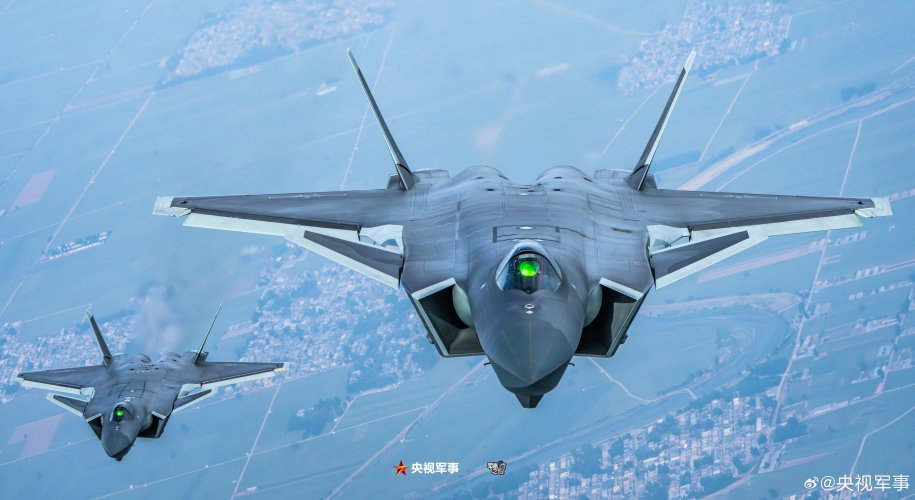
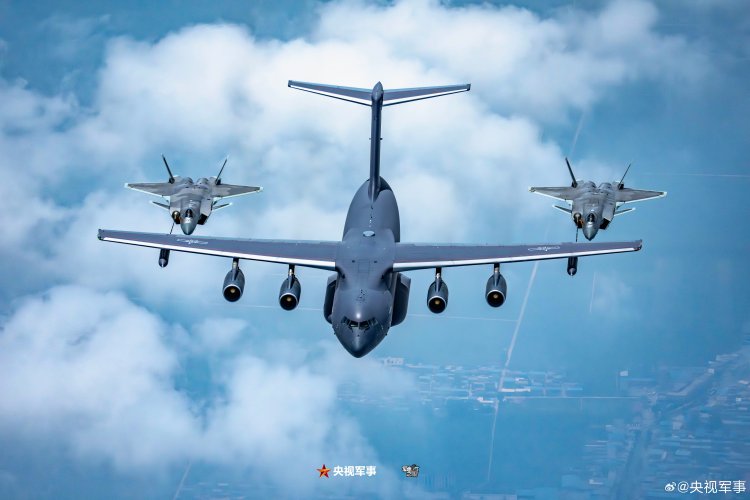
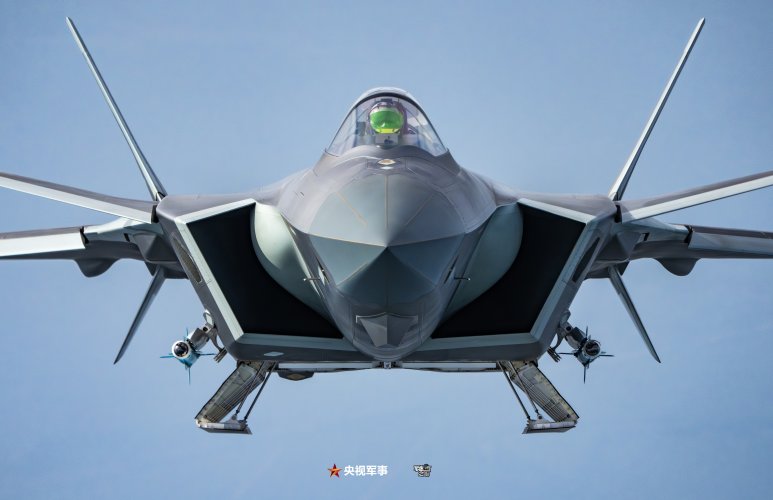
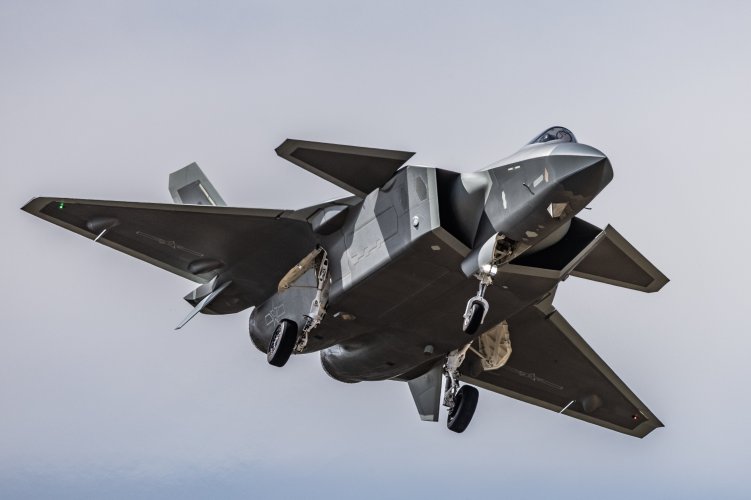
By the way, I previously posted a photo said to be of the 300th J-20. Does anyone have more specific evidence to prove this?
Won't be the first person in the know I've heard it from tbh. But these things are relative ultimately - as they come together with other parts of the aircraft "resume profile" (class-leading large main array as if from the 1960s, big IRST, EODAS), and doctrine. Is J-20 (not J-20A) likely to have a bigger signature? Well, yes. Is it so much as to end up outmatched? Highly unlikely.
It's difficult to criticise Chengdu when we see what Lockheed had to do with F-22 to address stealth detection, targeting, as well as normal communications. J-20 does all that out of the box, without a full set of pods.
PLAAF, which developed requirements for J-20, was still largely defensive. Which is, equally concerned with catching the bandits as being undetected. When an aircraft is built defensively, it's going to make design priorities different.
J-35 is a different aircraft of a different era, without a defensive mindset. And you can see that.
People in 2026 still care about government funded echochambers "think tanks"?
I thought we've long been past that point.
Not meaning to attack anyone, but I don't think some random guys opinions on aircraft he has never even caught a glimpse of irl is worth discussing for almost two pages.
Are you actually trying to get me banned, lol (jk)
I agree with @Blitzo 's broader point. What I have consistently questioned is not Ecklebe's competence as a B-2 pilot, but his claimed insight into the PLA, the Chinese aerospace industry, and Chinese military development more broadly. And as a B-2 pilot, it is hardly surprising that he views the J-20's RCS-reduction measures as inadequate, or that he is skeptical of so-called "counter-stealth" efforts based on what he was taught at the time...
The interesting thing isn't the CASI posting, or the B-2 pilot, it's the latest one, Senior ADC to the Chief of Staff of the Air Force. Which likely means he's marked for big things.
Goodbye, mwefc. You shined brightly for one day and were banned, the fastest turnaround achieved by any poster who wasn''t hawking CBD gummies or penis enlarging cream.
Not sure what you were saying, half the time, but it was hard to look past your atitude.
Are you actually trying to get me banned, lol (jk)
I agree with @Blitzo 's broader point. What I have consistently questioned is not Ecklebe's competence as a B-2 pilot, but his claimed insight into the PLA, the Chinese aerospace industry, and Chinese military development more broadly. And as a B-2 pilot, it is hardly surprising that he views the J-20's RCS-reduction measures as inadequate, or that he is skeptical of so-called "counter-stealth" efforts based on what he was taught at the time...
The thing is, as a relatively junior member of CASI (just another infamous government funded think tank!), he does not have access to information that is substantially different from what the rest of us have access to. While many dedicated members across various forums have spent decades meticulously analyzing the PLA's strengths and weaknesses, observing developments, and steadily expanding their knowledge base, none of us would dare make claims of that magnitude. And when we do make claims, nobody accepts them at face value as some form of divine insight the way they do his.
Over the years, I've seen countless military "experts" make increasingly grandiose claims about Chinese/American/Russian/etc. military capabilities or shortcomings (often to win favor with their audience and in part generate clicks), only to produce little more than speculation backed by credentials. The pattern is always the same.
Since my old posts were deleted (along with @njiiaf 's posts insulting me), I can only refer to the ones that others happened to quote. I also don't have the time to rewrite arguments I've already made at length, so this will be my final post on this issue. This particular quote more or less captures everything I wanted to say (amusingly it was deleted):
There is a technical book written by Sang Jianhua (chief designer in charge of RCS reduction on J-20/J-35) called Stealth Aircraft Design that dedicated an entire chapter to why the F-117 shoot down is NOT evidence that stealth has failed. During a public presentation, Sang also stated that even though counter stealth radar can detect VLO aircraft if they know roughly when and where an aircraft is going to intrude, it can’t effectively deal with randomized intrusions. It seems that China very much does not believe in a silver bullet solution to this type of problem.
What is baffling is that neither of these are classified information. You can in fact buy the book from Aliexpress right now if you want. It is almost as if he reached a conclusion first and then tried to find evidence to support it.
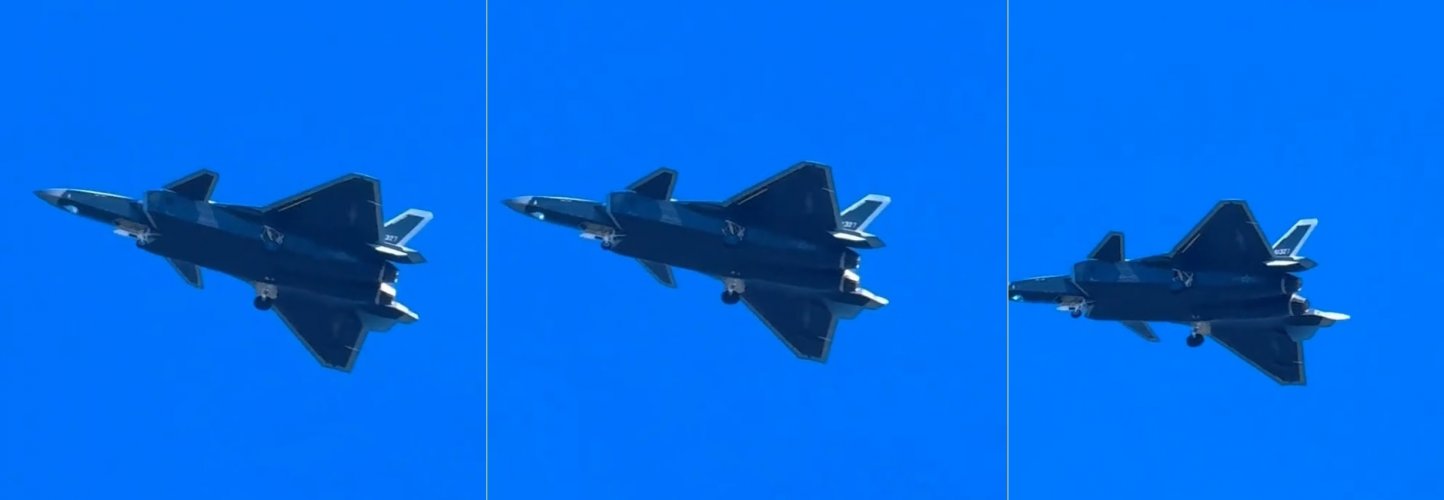
I don't think they are; they're stills from a video, which was posted in quite high resolution on Chinese social media and it looks all fairly consistent to me.
I don't think they are; they're stills from a video, which was posted in quite high resolution on Chinese social media and it looks all fairly consistent to me.
These aren't stills from this video. I watched the video, and these exact moments do not appear in the video. They may be stills from a video file, though.
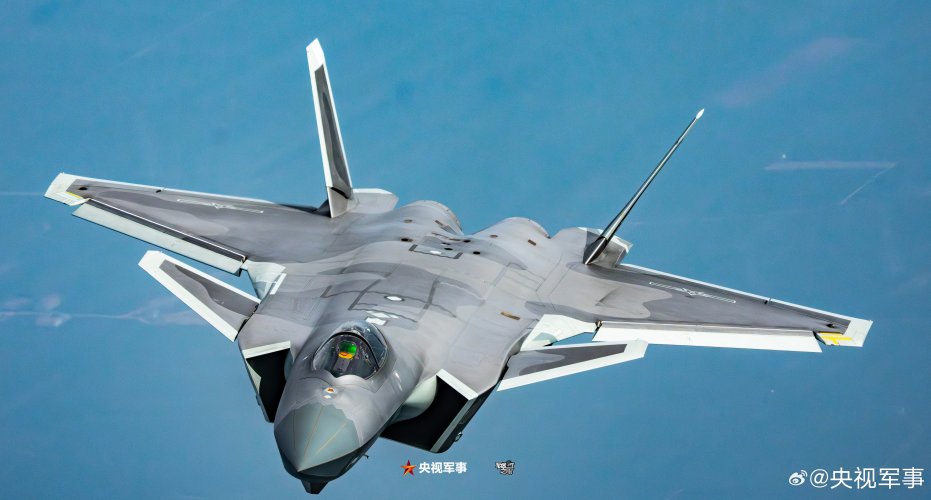
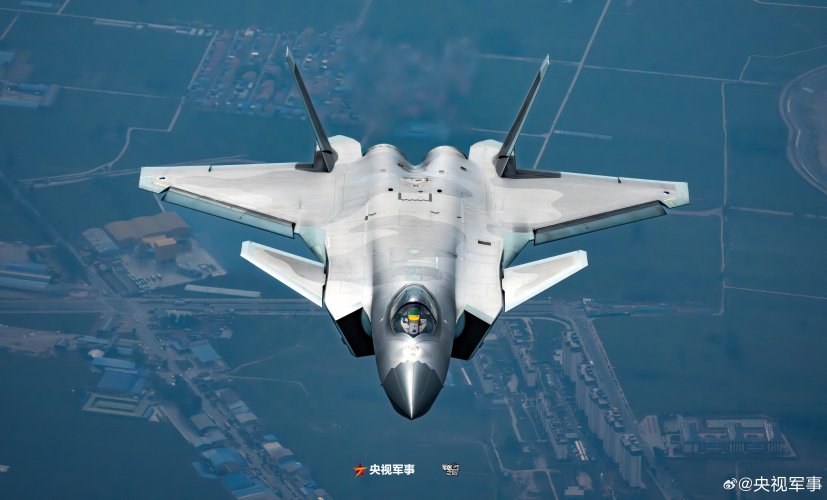
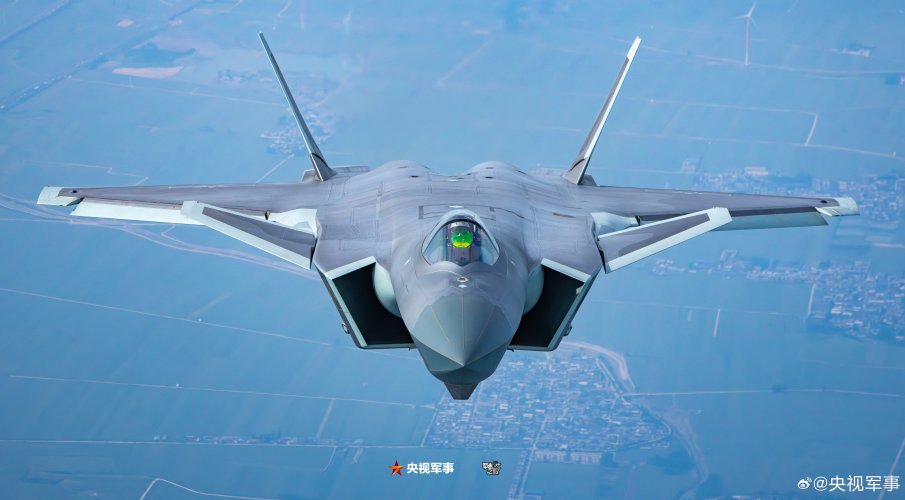
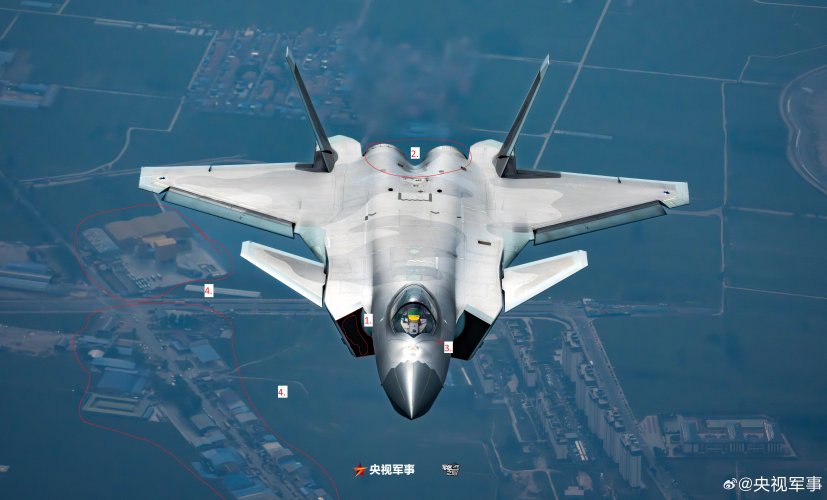
I've looked at the photos in more detail, and I'm more convinced now than I was previously. These images have had some amount of AI upscaling performed at some point in the chain from image sensor to final published image.
Here's what I see:
0. There is a fairly consistent noise pattern across the entire image, except for a couple of spots which I'll point out. These do not look like JPG artifacts. It could be sensor noise, but it doesn't look like ISO noise to me. These images were also captured in a very bright setting, so it doesn't make sense for this much noise to be present.
Instead, I believe this is the noise added in the img2img process. To upscale an image, a diffusion model first generates a noisy image via a random number (the seed). This noise is superimposed onto the source image, and the noisy source image is then converted into the latent space for processing. The model then loops the image over as many steps as the user desires within the latent space, removing noise each time and incorporating the inputs that the user has set (which can include positive and negative prompts). Finally, the image is converted back to pixel space.
Running an img2img process (as with upscaling) for a large number of steps will often, depending on the checkpoint used and the prompt, remove most of the noise and create a flat-looking image. But running the process for an insufficient number of times can leave the artificial noise mostly intact. I believe that is what we are seeing with this image noise.
1. In this first photo, notice how there is no noise in the blackest part of the jet's air intake. The middle of the intake contains noise because there were more colors there, and the model couldn't decide what to do. The blackest part contains no noise, because the model was certain that this area was intended to be black, and therefore removed all noise even within a small number of steps.
2. Notice how the rear of the jet, further away from the camera, looks kind of like an oil painting. Fewer details were captured there, and each pixel of upscaler noise corresponds to a larger portion of the jet. With fewer details to work with, the upscaler smooths everything out.
3. This tiny portion of the canopy seam is smoothed over. It doesn't even appear this way in the video. The starboard corner of the canopy clearly shows the seam, and there is no reason why the image sensor wouldn't see the port side corner seam. Instead, the noise of the upscaler plus the denoising steps were sufficient to remove this tiny detail completely, in a way that wouldn't happen for a larger detail.
4. This is the most obvious tell. These buildings are far away, and very few details were captured by the sensor. The denoising process of an AI upscaler simultaneously accentuates the edges, smooths the pixels into a flat-looking paste, and introduces distortions and curves where there would be none in an untouched JPG.
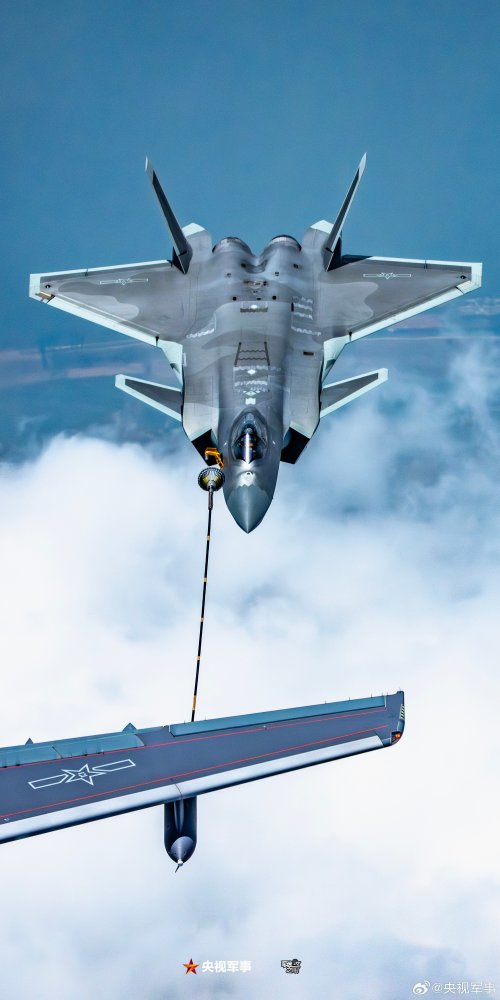
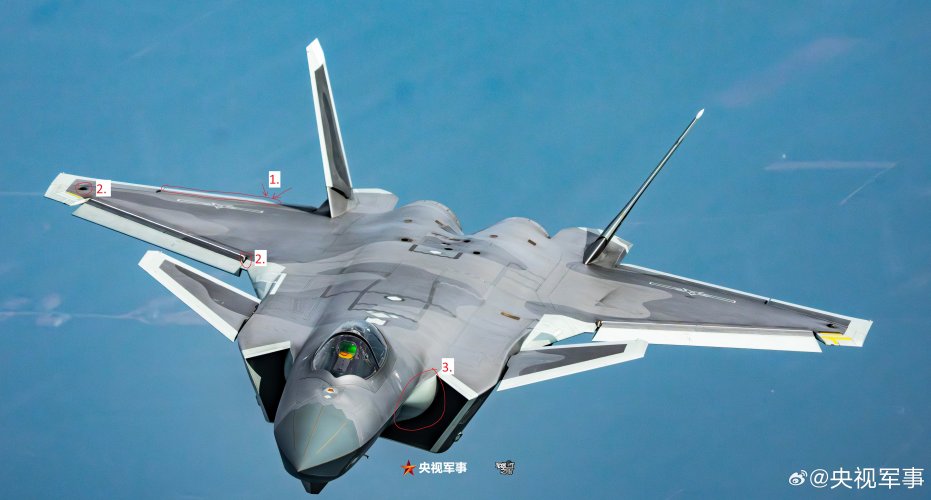
For the next image, I noticed a couple of other things:
1. The white trailing edge of the control surface has a ghost of itself superimposed on top. This is not a motion blur, it is two sharp shapes where the arrows point. AI upscalers can often do this if the parameters change partway through a generation, such as an introduction of attention guidance to improve sharpness. But this can happen even if the attention guidance is consistent across all steps. The model sees that there is an edge, but can't decide exactly where to put it, resulting in two edges in the final pixel space image.
2. Notice how the exposed control mechanism appears to have more detail and sharper edges than the running light. The model sees the edges and enhances those, whereas for the running light, the model isn't certain where the edges are and smudges everything up.
3. The DSI bump looks a bit like an oil painting. Again, this is an artifact of upscalers.
Some of these things might not be immediately obvious if you haven't spent a lot of time staring at images while refining a checkpoint as I have. These images immediately struck me as upscaled, even before I zoomed in to figure out why.
Quite an interesting observation. In fact, many photography setups now come with built-in AI enhancement features, which is not surprising. Actually, I even think that this video itself was composed of several shooting clips stitched together.
In military photography, apart from important ceremonies, especially in the Air Force, it is basically impossible and not allowed to have aircraft fly specifically for your shooting task. Photographers in the military basically have to find opportunities to capture shots during aircraft training sessions. Most of the footage will assist pilots in reviewing their training afterward, and then some of it will be selected and pieced together to make promotional videos.
As for the quality of these clips, it entirely depends on the photographer's own skills, preferences, equipment, post-processing, and the judgment of the review department.
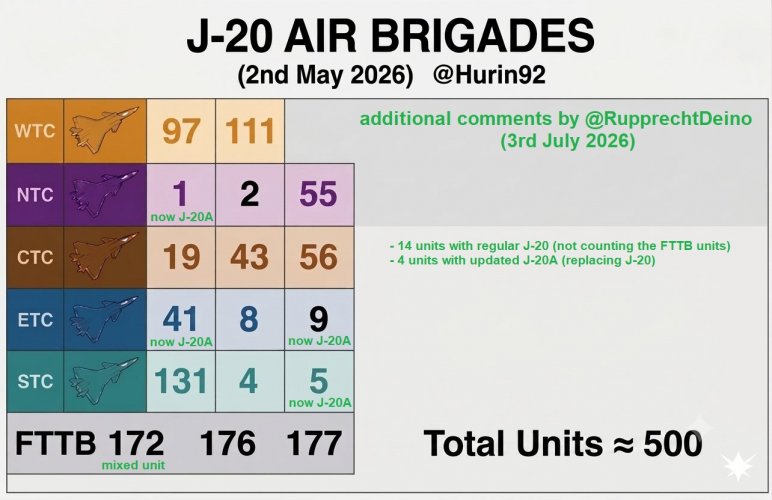
We finally have confirmation for the fourth active fighter brigade operating the improved J-20A: Serial number 61327 confirms the 1st Air Brigade at Anshan, NTC.
So far known are the 5th AB, the 9th AB and the 41st AB besides the 172nd FTTC Brigade.
However, I am surprised that this aircraft is again still powered by the WS-10C2. I had expected the 1st AB at Anshan to be the first unit to receive WS-15-powered examples, and this also confirms that considerably more J-20As with the WS-10C2 must have been built in the initial batches than previously expected.
We finally have confirmation for the fourth active fighter brigade operating the improved J-20A: Serial number 61327 confirms the 1st Air Brigade at Anshan, NTC.
So far known are the 5th AB, the 9th AB and the 41st AB besides the 172nd FTTC Brigade.
However, I am surprised that this aircraft is again still powered by the WS-10C2. I had expected the 1st AB at Anshan to be the first unit to receive WS-15-powered examples, and this also confirms that considerably more J-20As with the WS-10C2 must have been built in the initial batches than previously expected.
IMO, considering we'd reached a consensus last November that the 500th J-20 had already been built, even a conservative estimate would suggest there could be ~580< units by the end of the year Based on current estimates, China appears to be closing the stealth fighter fleet gap with the U.S. by roughly 40-60 airframes per year...
IMO, considering we'd reached a consensus last November that the 500th J-20 had already been built, even a conservative estimate would suggest there could be ~580< units by the end of the year Based on current estimates, China appears to be closing the stealth fighter fleet gap with the U.S. by roughly 40-60 airframes per year...
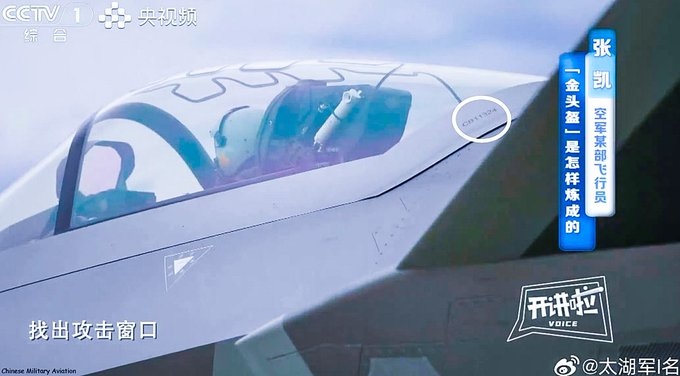
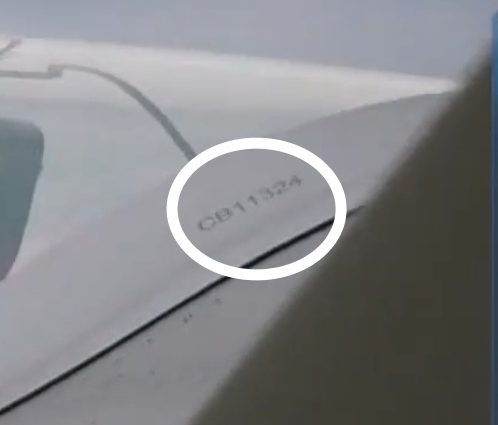
Interesting detail; J-20 cn. CB11324, aka the 324th J-20 overall built within the 11th batch was spotted. We know, J-20 no. 63106 as CB10300 aka the 300th built since the Changchun Air Show 2025 & so this one is likely one of the higher numbers within the 19th AB at Zhangjiakou.
However we also know, the 19th AB got its first J-20 by August 2024 and so the J-20s this unit operates are likely built in early 2024 which is further strong evidence—if not outright confirmation—that there are now well over 500 J-20s.
As an example of misinformation, during the cold war with the USSR, we would see different hull numbers on a particular class of submarine but found out the numbers were being changed on the same sub which had a huge dent in the sail, same sub, multiple numbers to make it think there were more than they had. Don't know if China would be doing this on the J-20.
As an example of misinformation, during the cold war with the USSR, we would see different hull numbers on a particular class of submarine but found out the numbers were being changed on the same sub which had a huge dent in the sail, same sub, multiple numbers to make it think there were more than they had. Don't know if China would be doing this on the J-20.
As an example of misinformation, during the cold war with the USSR, we would see different hull numbers on a particular class of submarine but found out the numbers were being changed on the same sub which had a huge dent in the sail, same sub, multiple numbers to make it think there were more than they had. Don't know if China would be doing this on the J-20.
Given that they are already objectively the most secretive military in the world, doing this with serial numbers offers little benefit to offset the drawbacks, even if it works in theory with tail numbers. It would also be a pointless attempt at deception against anyone with intelligence capabilities beyond basic OSINT.
What’s strange is why even "more sensible" Americans insist China must be doing this -- as if a country with China's industrial base, resources, and experience couldn't easily produce 200+ fighters annually using existing infrastructure (which they more or less already do), or scale up further if needed. What’s so implausible about that?
If the focus is stealth production, China has two manned stealth fighters aimed at widespread deployment in production compared to America's one. Beyond low-tier UADFs, they even have full-stack, tailless UADFs in operational evaluation that essentially match proper manned fighters, while the U.S. at the moment remains focused on CCA Tier 1 platforms that have only very recently begun operational evaluation.
What’s strange is why even "more sensible" Americans insist China must be doing this -- as if a country with China's industrial base, resources, and experience couldn't easily produce 200+ fighters annually using existing infrastructure (which they more or less already do), or scale up further if needed. What’s so implausible about that?
The reason this is implausible is that it would imply that America's vaunted air superiority is not so superior anymore. This cannot be the case, as it would contradict everything I have ever seen in movies and make me feel bad. Therefore, it cannot be true.
As an example of misinformation, during the cold war with the USSR, we would see different hull numbers on a particular class of submarine but found out the numbers were being changed on the same sub which had a huge dent in the sail, same sub, multiple numbers to make it think there were more than they had. Don't know if China would be doing this on the J-20.
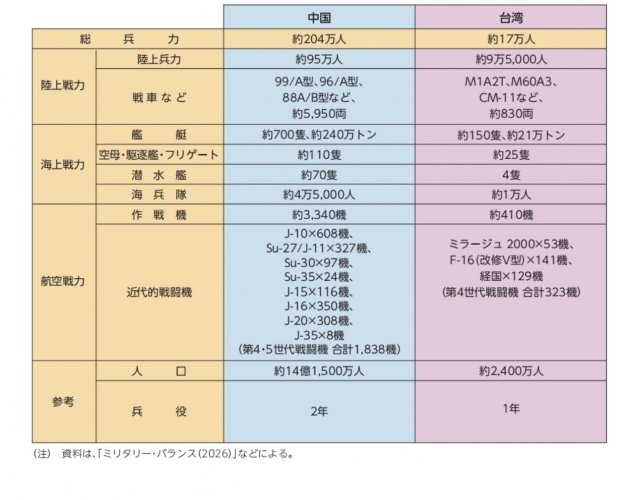
Even If you reject all the osint methodologies which have been proven right time and again, there still is Japanese Military White Paper which lists J-20 figure as 308.
This should be acceptable for kin of your kind beyond any reasonable doubt.
This site uses cookies to help personalise content, tailor your experience and to keep you logged in if you register.
By continuing to use this site, you are consenting to our use of cookies.