if China is truly serious about mounting an offensive against Taiwan they won't tip their hand by exporting J-20's.

There is something called an export version, the J-10CE (also a CAC product) has such a version available for example. And is, similarly to the J-20, an important cornerstone of the PLAAF.

There is just not much of an market for something like the J-20, which is rather large, heavy and probably far from cheap, especially if sold on the international market. And if sold, a customer would have to buy into the entire Chinese ecosystem of ordnance, spares, systems etc.

All of this makes the J-20 not particularly suited for exports. While the Su-57, which has been brought up in this discussion here and export discussions in general, greatly benefits from previous sales of UAC/Sukhoi products. Suspected customer Algeria operates the Su-24, Su-30, bought the Su-34 and Su-35 as well. So the Su-57 was the next logical step to gain a capability leap. These aircraft share plenty of weapons, some even engines or other components, while others at least have the same contact from the Russian side, so there is an established connection. Similar reasons are also the root of the F-35s huge export success, which could build on former F-16 users and general users of US hardware and weapons. The Rafale in a way also serves as an example, often following the Mirage sales of the past.

Can the J-20 benefit from this kind of base? It certainly can't, it would bring plenty of implementation headaches and complete logistic, maintenance, training and doctrine overhauls to most countries. The only operator of modern Chinese fighters is Pakistan and these J-10CEs were already a massive favor towards them. They surely cannot purchase and maintain even a dumbed down export model of the J-20. It is simply not in an advantageous position to be a suitable export offering. Could some crazy oil-rich country put the necessary funds on the table and get a "J-20E" send their merry way? Perhaps, but as it would alienate them to the US, which comfortably holds foreign policy supremacy in the region it may be theoretically possible, but practically utterly unfeasible.

The notion that the base J-20 would somehow be too sacred for export, even if it would be PLAAF spec, seems rather funny to me though. Given that the base model is by now also "old news" in a similar way to the F-22A or Su-57S really. Now a J-20A or J-20S, these may be too crucial to hand out even with changed avionics, radar, weapons etc. Simply because the adapted airframe and tandem seat configuration are improvements/one-of-a-kind adaptations perhaps too valuable to give out just for a quick buck, especially compared to the baseline model that may be what most potential adversaries are familiar with by now.
 
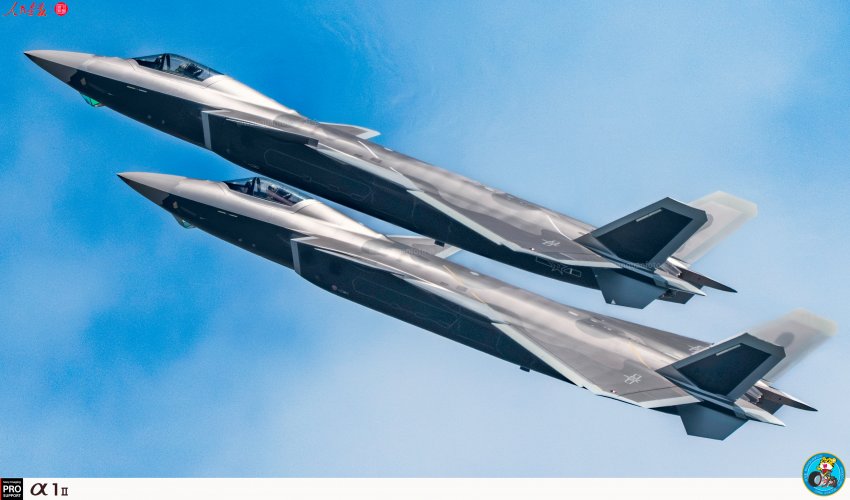
I can agree with you on that point stealthflanker from the rear the J-20 is such a beauty.
 
Notice the inlets volume and their impact of frontal drag as to stability in yaw (something that the canards aggravate).
 
Are you telling people to try to see inlet volume from a rear shot of all things?
I think he was alluding to how wide the intakes make the aircraft (overall frontal width without the nose section). In a sense, the J-20 had "brought shoulders".
 
I think he was alluding to how wide the intakes make the aircraft (overall frontal width without the nose section). In a sense, the J-20 had "brought shoulders".
It kinda looks like a Mig-25, only -canard- and with stealth features (also, ventral fins!)
 
To be honest, now I am more interested in the cooperative combat capabilities between the J-20S and unmanned combat aircraft. I want to know whether the J-20 can coordinate with those unmanned air superiority drones equipped with WS10C engines shown in the parade...
 
To be honest, now I am more interested in the cooperative combat capabilities between the J-20S and unmanned combat aircraft. I want to know whether the J-20 can coordinate with those unmanned air superiority drones equipped with WS10C engines shown in the parade...

By virtue of having a second human being in the aircraft, J-20S will likely be able to simultaneously "do more things" (including command UCAVs/CCAs/UADFs) than its generational peer and single seater J-20A counterpart (and both in turn likely to be more capable than the preceding baseline J-20).

The real question should be asked is how capable J-20A itself is in a command role.
 
The real question should be asked is how capable J-20A itself is in a command role.
And I think the real-real question will be what the procured ratio of J-20, J-20A and J-20S will end up being and what this will tell us about the evolution of air combat doctrine in China.

To be fair though, your question is also real, as real as something virtual can be I suppose :0
 
And I think the real-real question will be what the procured ratio of J-20, J-20A and J-20S will end up being and what this will tell us about the evolution of air combat doctrine in China.

To be fair though, your question is also real, as real as something virtual can be I suppose :0

I mean, that's a very important question as well, but in terms of quantifying what the "per airframe" capability of J-20S is in commanding drones, my comment was to first look at J-20A rather than J-20S because the two should share subsystems and technologies between them (J-20A having been called a single seat version of J-20S for example).

All of which is an indirect way of trying to stop people from thinking J-20S is unique in being capable of commanding drones, because J-20A also should very much have the same capability... Except J-20S just has an extra meat bag inside.
 
I mean, that's a very important question as well, but in terms of quantifying what the "per airframe" capability of J-20S is in commanding drones, my comment was to first look at J-20A rather than J-20S because the two should share subsystems and technologies between them (J-20A having been called a single seat version of J-20S for example).

All of which is an indirect way of trying to stop people from thinking J-20S is unique in being capable of commanding drones, because J-20A also should very much have the same capability... Except J-20S just has an extra meat bag inside.
If I were to guess it's that the J-20A will have much of the same ability (as in the required systems and interfaces) as the J-20S with regards to coordination of unmanned assets. But I would also guess that the J-20S is ultimately going to be more efficient at doing that mission, thanks to a dedicated operator for that task at hand. If I were to guess, I would assume that in the real world this would translate to the J-20A probably managing smaller groups of drones on average, as the single pilot has a much higher workload while they balance all the other tasks and incoming information. While the J-20S with it's drone coordinator has an entire skilled operator dedicated to the role of commanding and managing the unmanned assets and the information they gathered. Thus I'd argue a single J-20S could accordingly manage a larger group of UAVs more effectively and thus would on average probably operate with larger "flocks" of UAVs. So ultimately they can do more or less the same missions in my eyes, just that the J-20S is further optimized to get the most out of it's ability to effectively cooperate with modern UAVs.

Your thoughts?
 
If I were to guess it's that the J-20A will have much of the same ability (as in the required systems and interfaces) as the J-20S with regards to coordination of unmanned assets. But I would also guess that the J-20S is ultimately going to be more efficient at doing that mission, thanks to a dedicated operator for that task at hand. If I were to guess, I would assume that in the real world this would translate to the J-20A probably managing smaller groups of drones on average, as the single pilot has a much higher workload while they balance all the other tasks and incoming information. While the J-20S with it's drone coordinator has an entire skilled operator dedicated to the role of commanding and managing the unmanned assets and the information they gathered. Thus I'd argue a single J-20S could accordingly manage a larger group of UAVs more effectively and thus would on average probably operate with larger "flocks" of UAVs. So ultimately they can do more or less the same missions in my eyes, just that the J-20S is further optimized to get the most out of it's ability to effectively cooperate with modern UAVs.

Your thoughts?

Essentially, yes.

In discussions about J-20S, I think it is important to distinguish that the difference in UAV command capability between J-20A and J-20S is likely going to be mostly a reflection of having an extra human in the aircraft, however that J-20A will have an underlying capability to command UAVs too. J-20S's UAV command capability therefore should only be compared relative to J-20A, rather to say, F-35 or F-22 etc due to the difference in crew number.

Instead, if one wanted to compare F-35 or F-22 variants or MLUs in terms of UAV command capability with J-20S, it would be more prudent to first do so instinctively with J-20A to account for equality of crew size.
 
This actually depends on how developed China's unmanned combat aircraft have become.However, apart from knowing that China's unmanned fighter jets have been developed for a long time, we know nothing else.
 
This actually depends on how developed China's unmanned combat aircraft have become.However, apart from knowing that China's unmanned fighter jets have been developed for a long time, we know nothing else.

I assumed that the question was "holding all else equal" (including the sophistication of the relevant UCAV/CCA/UADF platforms themselves).

Overall I am a strong proponent to not view J-20S as the baseline or only UCAV/CCA/UADF command platform in the PLAAF; J-20A should be seen as the more "baseline" command platform, as well as possibly J-35A and J-20 vanilla. J-20S otoh, should probably be viewed as having "augmented" command capabilities relative to J-20A.
 
53ed1838ly1i7832wiwa5j22yo1qsu0y.jpg
53ed1838ly1i7833buk4jj22yo1qsqv7.jpg
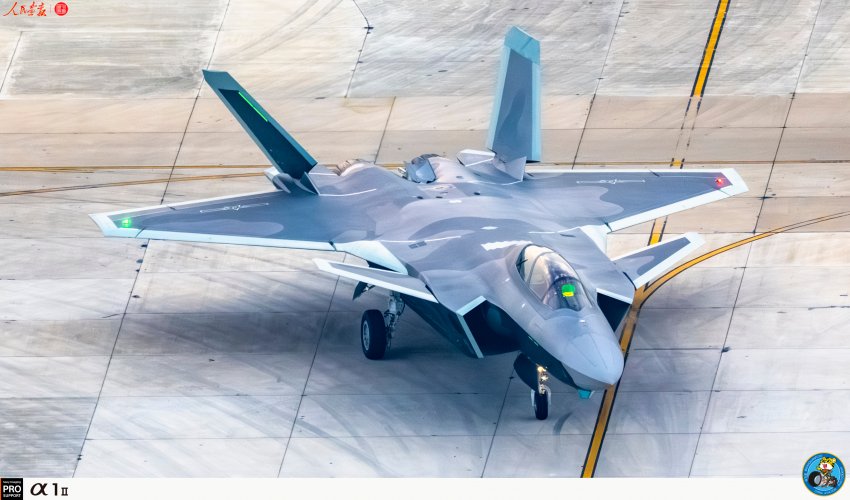
The old saying goes, if it looks right, it flies right. And the J-20A/S looks very right, especially compared to the base aircraft that preceded them. Though, do we know by now what the bump on the J-20A does? Is it purely to optimize aerodynamics or does the PLA watching grapevine indicate something in the direction of avionics or additional fuel? I know it's purpose is presumably mostly aerodynamic, but I'm curious if there are rumors what they did with the new internal volume created.

That question aside, the J-20S is drop-dead gorgeous.
 
Last edited:
Even more important is this ...

View attachment 791229
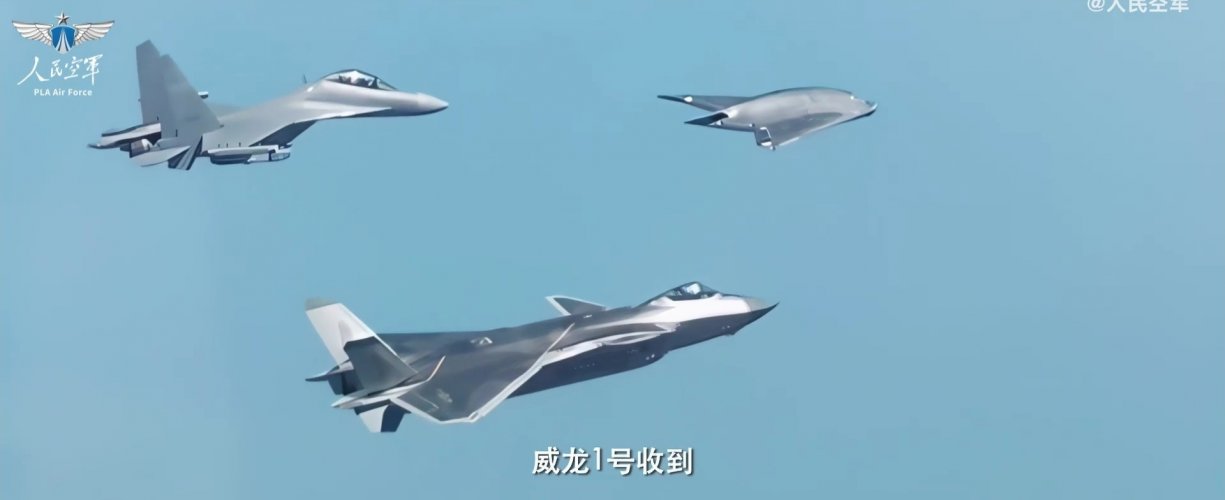
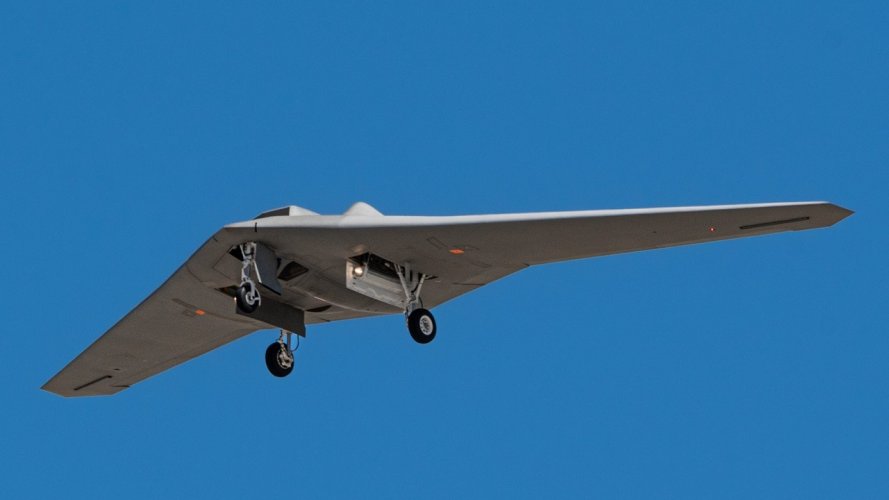
It is interesting, but not groundbreaking as such formation flights have already been displayed by the US, Russia and France a good while ago. Overall I don't think the GJ-11 as an aircraft is much to write home about, yet another stealthy strike triangle (following the Phantom Ray, X-47B, Neuron, Taranis, S-70, Skat).

What in my opinion is really the kicker and groundbreaking news is that the GJ-11 is seemingly in regular deployment already. Making it the first of it's kind to enter proper service, before the S-70, before the US CCAs, MQ-25 or XQ-58A, before Australia's MQ-28 and long before anything from continental Europe, the UK or India (on that note I'm surprised Israel hasn't developed a high end wingman for their aircraft yet).

This is what's truly special and quite a fundamental and high profile "first" in the world and for the PLAAF in my opinion. Also showing their pace with regards to integration of drones an that they're comfortable with deploying such large and comparatively complex UCAVs across different scenarios (given that there's the naval variant).

Also interesting choice with the base J-20 in the formation, makes one wonder how much it's able to effectively manage unmanned assets, most likely less so than the A/S model. But it must be optimized to some degree for it, I'd assume.
 
It is interesting, but not groundbreaking as such formation flights have already been displayed by the US, Russia and France a good while ago. Overall I don't think the GJ-11 as an aircraft is much to write home about, yet another stealthy strike triangle (following the Phantom Ray, X-47B, Neuron, Taranis, S-70, Skat).

What in my opinion is really the kicker and groundbreaking news is that the GJ-11 is seemingly in regular deployment already. Making it the first of it's kind to enter proper service, before the S-70, before the US CCAs, MQ-25 or XQ-58A, before Australia's MQ-28 and long before anything from continental Europe, the UK or India (on that note I'm surprised Israel hasn't developed a high end wingman for their aircraft yet).

This is what's truly special and quite a fundamental and high profile "first" in the world and for the PLAAF in my opinion. Also showing their pace with regards to integration of drones an that they're comfortable with deploying such large and comparatively complex UCAVs across different scenarios (given that there's the naval variant).

Also interesting choice with the base J-20 in the formation, makes one wonder how much it's able to effectively manage unmanned assets, most likely less so than the A/S model. But it must be optimized to some degree for it, I'd assume.


That's the point ... even if we've seen indeed "such formation flights have already been displayed by the US, Russia and France a good while ago" all have been made by prototypes and/or demonstrators only and none - at least by my understanding - has reached operational status in relevant numbers.
 
That's the point ... even if we've seen indeed "such formation flights have already been displayed by the US, Russia and France a good while ago" all have been made by prototypes and/or demonstrators only and none - at least by my understanding - has reached operational status in relevant numbers.
Your post left room for interpretation, but I think we are very much on the same page here then.
 
It is interesting, but not groundbreaking as such formation flights have already been displayed by the US, Russia and France a good while ago. Overall I don't think the GJ-11 as an aircraft is much to write home about, yet another stealthy strike triangle (following the Phantom Ray, X-47B, Neuron, Taranis, S-70, Skat).

What in my opinion is really the kicker and groundbreaking news is that the GJ-11 is seemingly in regular deployment already. Making it the first of it's kind to enter proper service, before the S-70, before the US CCAs, MQ-25 or XQ-58A, before Australia's MQ-28 and long before anything from continental Europe, the UK or India (on that note I'm surprised Israel hasn't developed a high end wingman for their aircraft yet).

This is what's truly special and quite a fundamental and high profile "first" in the world and for the PLAAF in my opinion. Also showing their pace with regards to integration of drones an that they're comfortable with deploying such large and comparatively complex UCAVs across different scenarios (given that there's the naval variant).

Also interesting choice with the base J-20 in the formation, makes one wonder how much it's able to effectively manage unmanned assets, most likely less so than the A/S model. But it must be optimized to some degree for it, I'd assume.
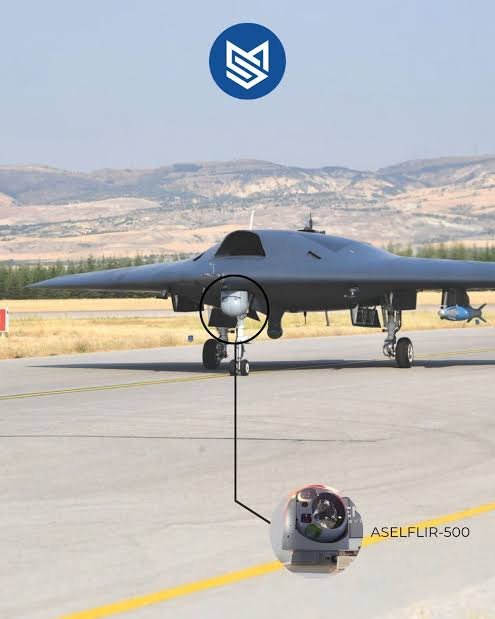
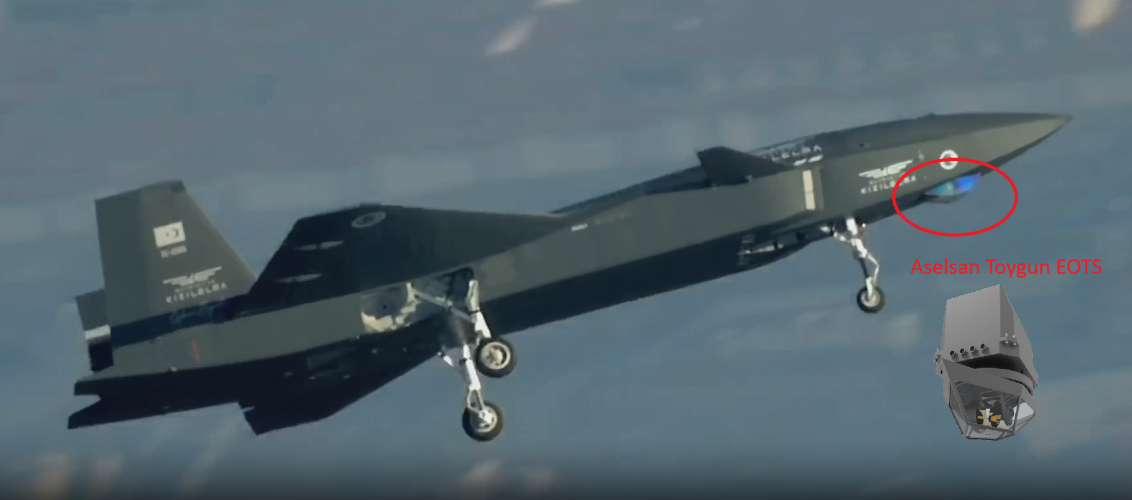
I haven't seen any other of these flying wing strike drone examples have an under chin EOTS window before. Perhaps it could be a bit more autonomous and do it's own search and track without the need of solely relying on a controller plane. Unlike all previous examples shown by other nations.
 
I haven't seen any other of these flying wing strike drone examples have an under chin EOTS window before. Perhaps it could be a bit more autonomous and do it's own search and track without the need of solely relying on a controller plane. Unlike all previous examples shown by other nations.
AFAIK, the reason it took so long to enter service is due to PLAAF wanting more autonomy with it.
 
I haven't seen any other of these flying wing strike drone examples have an under chin EOTS window before. Perhaps it could be a bit more autonomous and do it's own search and track without the need of solely relying on a controller plane. Unlike all previous examples shown by other nations.
Since the EOTS wasn’t ready yet at the time, TAI flew the Anka-3 with a regular EO turret for the LGK-82, so that weapon trials wouldn't get delayed.

They removed it after two test flights, and the EOTS has just started flying recently, on Baykar's Kızılelma. The EOTS' development is still on schedule though.


Nevertheless, China is not only the first to adopt an EOTS on a flying wing, but also the first to induct the drone into service.
 
Last edited:
View attachment 791225
View attachment 791226
The old saying goes, if it looks right, it flies right. And the J-20A/S looks very right, especially compared to the base aircraft that preceded them. Though, do we know by now what the bump on the J-20A does? Is it purely to optimize aerodynamics or does the PLA watching grapevine indicate something in the direction of avionics or additional fuel? I know it's purpose is presumably mostly aerodynamic, but I'm curious if there are rumors what they did with the new internal volume created.

That question aside, the J-20S is drop-dead gorgeous.
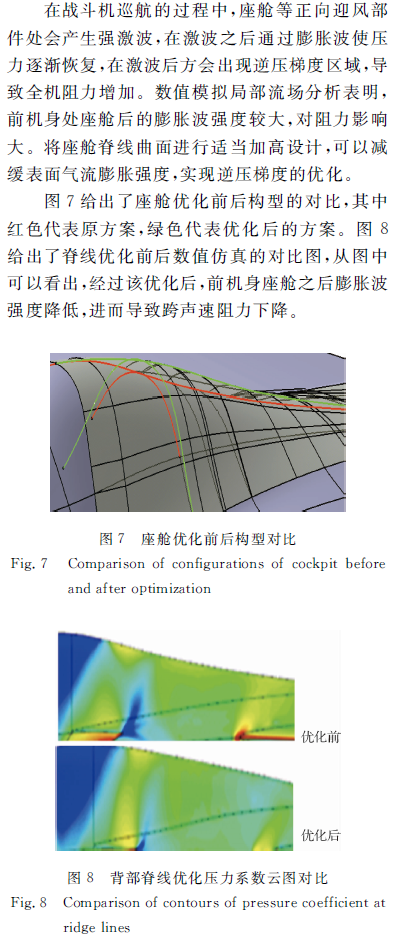
The reshaping of the cockpit canopy and fairing, was also done to the production J-35. It lowers the wave drag, as you don't get the severe expansion waves into the strong shock where the back of the canopy meets the fuselage anymore.
 

Similar threads

Back
Top Bottom