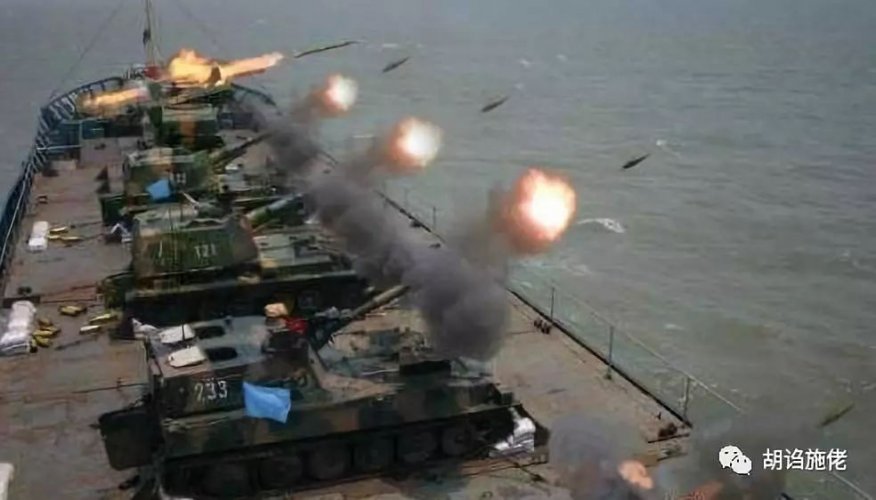
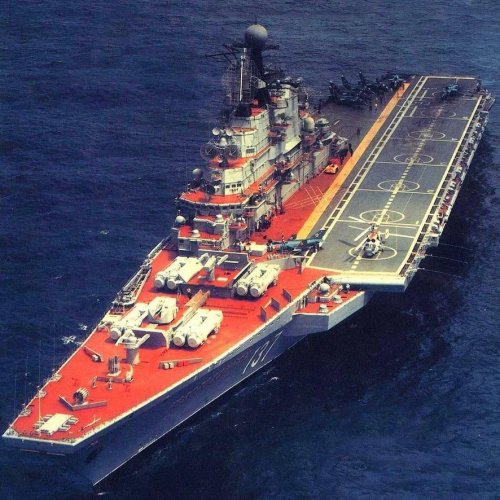
We are seeing in real conflict that aircraft is so much cheaper than tube artillery that it is affordable to dispose of the airframe for every round fired, even for mission within range of a compact fiber optics spool.
I think it is deliberately obtuse of you to refer to Mavics as an air force. If you want to go that route, then you need to use much more clear language about when you mean "air force" as in large platforms capable of carrying SDBs at least, or "air force" as in small platforms with a sub-50km range and <40lb payload.
Bombs is the lowest cost explosive payload, nothing else comes close. Glide bombs comes close and its ranges can exceed artillery.
Airframe costs was high only because a (expensively trained) human is involved. Without the human, the airframe can be scaled to fit the mission, and it is known that it can cover the artillery range case while still being cheaper.
Large strike-capable drones still cost tens of millions of dollars, it isn't the pilot driving up the cost.
If you're again referring to COTS octocopters, are you suggesting that a battleship festooned with Baba Yaga drones would be more capable of destructive fires than with a 16" gun armament? Because that is an absurd statement, and I can elaborate why if you are being serious.
Artillery in practice depends on concealment, dispersion and deception to survive. There is the theory of using active defenses however offense have been consistently cheaper than defenses and anywhere remotely similar investment in aircraft defenses or redundancies result in greater survivability.
My friend.
Everything relies on concealment, dispersion, and deception to survive. Develop this point better. Why is it different for gun systems compared to aircraft? Why is that difference favorable to your case?
A technologicalenvironment where it is plausible for a battleship to shoot down every flying projectile at it is one where it is possible for a fortress to shoot down everything the battleship is shooting at it. (and sink the battleship with long range torpedoes, to use another threat vector) The battleship is even choosing a weapon with low rate of fire while those shooting at the battleship would logically choose munitions with greatest defense penetration capability.
Knock it off. Stick to a more narrowly defined hypothetical, because this sweeping statement is absurd.
I am suggesting that carrier-based fighters, backstopped by SM-6, ESSM, and SeaRAM, could allow a gun-armed battleship group to approach to ~100 kilometers distance from a target. By evading detection through practices that will be standard in this type of warfare, they will not face a deliberate attack, only a hasty attack--insufficient missiles for a proper saturation of air defenses. The battleship group can likely defend itself from a few dozen missiles at once, a couple of times, which they should only expect to receive after shedding discretion and firing on the enemy.
The enemy "fortress" will not face a few dozen missiles, it will face a sustained barrage of hundreds or thousands of shells. The shells won't be impossible to intercept, but interceptors will run out. The interceptors would run out if the fortress was under missile attack, as well, because the attacker has the initiative and wouldn't plan an attack that failed to saturate. The difference is, 600 Tomahawks to saturate defenses costs a billion dollars and uses up 20% of stockpiles. A saturation with 16" shells costs MAYBE 10% as much and correspondingly would not deplete stockpiles so severely.
The generalization "if the battleship can defend itself, so can the target" is ridiculous and untrue, and logically, could also be applied to systems you DO like. If carrier aviation can strike from 500 miles, well obviously, so can enemy aviation. If the carrier bomber can get through, can't the enemy? I don't think this is a good basis for an argument.
It's not that simple. Someone make a cost comparison table.
The thing going for aircraft is speed and arguably range. But range is consumed by the distance of the homebase airport. So this does not apply generally to all aircrafts.
Typical allied/coalition/NATO operation involves a hundred aircrafts for one or two strike flights. From what I see it's been the same since the Vietnam war.
A towed/selpropelled cannon can act on their own.
Even if we ignore the airport/base cost the aircraft still needs a runway and a shelter, and tankers (car).
A proper cost comparision has to be widen to a force size level rather than a single system.
There really is no need. We have an enormous natural experiment in front of us. Every military in the world has an artillery park; the big and rich ones have an air force.
Consider: Russia fired the entire stockpile of decades as 2nd strongest military power worth of shells in Ukraine, and it didn't have decisive effects. Ultimately both sides run short of artillery shells and have to hold the front with drones as primary fires.
Again, I have to ask. Are you claiming that a drone-carrying warship would have a greater effect on target than a gun-armed warship? And to be clear, when I say drone, I'm talking about Mavics or maybe Vampire drones, not Reapers.
Consider: Pacific islands were completely encircled by battleships, but still could not be taken without grueling close combat.
Terrible point. Pacific islands were also encircled by carriers, and the carrier aviation also failed to seize the islands without grueling close combat. Is carrier aviation pointless as well then?
The lesson since ww1 is that dumb artillery is destructive against exposed targets, however hard cover massively reduce effectiveness down and one needs dora scaled pieces to defeat tunneling. Tube artillery just doesn't do much without a ground element applying pressure at the same time.
This is entirely valid, but
also true of aircraft. The point is that fires on their own don't win wars. We aren't arguing that. What is a more efficient way to wipe out enemy infrastructure? Expensive cruise/ballistic missiles, expensive airframes firing expensive cruise/ballistic missiles, expensive battleships firing cheap shells?