Build a modern battleship

The Japanese could have easily done this to ASM-2 and met the initial operational requirements. They spent their time developing ASM-3.

I wonder why one of the most industrialized countries in the world would do that...
Because ASM-3 is supersonic, and have massive advantages in terms of speed and time of flight. As well as in terms of penetration, since it hit target at more than Mach 3 - with more kinetic energy than 16-inch gun fired point-blank.

I somehow doubt this given the fact that USS Mason was attacked by two 70 year old cruise missiles in 2016.
You are talking about Yemen rebels, which at this time have very limited resources. Their new toys - like Iranian-delivered anti-ship ballistics - are MUCH more modern, you know.

Basically your armored ship would be useful only against extremely limited enemy with no patrons to provide even modest weapon upgrades.

In reality, weapons trickle in to replace existing inventory, and only as old stockpiles age out. They will do what is cheapest, not what is most militarily effective, because what is cheapest wins in peacetime. Making a system that is designed to be assembled once and put in a warehouse for >30 years is absolutely the cheapest option, but it is also the best option, because it is impossible to know what the future holds.
The absolute majority of modern ASM's are of modular design - simply because it simplify the production and modernization. Swapping the warhead section on Harpoon's isn't even a major rework:

1737690373987.gif


America still uses Harpoon with the same old blast-frag warheads, 50 years after its introduction, which is literally enough time for a major fleet unit to be designed, built, put into service, and age out to be replaced by a new design.
And? Were there any targets worthy of shaped charge warhead on Harpoon?

Any kind of advanced armor piercing, or in ASM-3's case armor avoiding, missile would necessarily be few in quantity. For years, perhaps decades.
Why? The shaped-charge warhead is perfectly multi-purpose.
 
Yeah, because a 500kg shaped charge is enough to blow through the turret face or roof of an Iowa and go all the way down to the magazine.

Good thing they're easy to defeat with soft kill measures or anti-aircraft missiles.

Not so much for Exocet, though.

Because ASM-3 is supersonic, and have massive advantages in terms of speed and time of flight. As well as in terms of penetration, since it hit target at more than Mach 3 - with more kinetic energy than 16-inch gun fired point-blank.

You're correct that ASM-3 was designed to defeat armored ships that ASM-2 cannot handle. That was the main driver for its terminal dive.

There was/is an expectation that PLAN surface ships will have some sort of novel belt array that precludes, or reduces, penetration at waterline. Hitting the magazine at a steep dive angle becomes more efficient. You can't armor the top of a VLS box. You might be able to armor a VLS box sufficiently that it serves as a blowout magazine though.

Which would also be part of the armor scheme tbh.

I suspect weight and mass concerns will drive armoring of magazines and CICs directly rather than full span belts, though, but the full span scheme was talked about in a NAVSEA monograph. Staggered machinery and IEP might be sufficient for damage control and allow a ship to fight hurt though the US has little experience here.

You are talking about Yemen rebels, which at this time have very limited resources. Their new toys - like Iranian-delivered anti-ship ballistics - are MUCH more modern, you know.

Everyone has limited resources. Narrowing the available selection of limited quantities of weapons that can defeat a target is always useful.

Basically your armored ship would be useful only against extremely limited enemy with no patrons to provide even modest weapon upgrades.

"Your"? No, this is the USN and the PLAN: the two largest navies on the planet.

The mythical patrons providing advanced weapons simply do not exist in reality.

The absolute majority of modern ASM's are of modular design - simply because it simplify the production and modernization. Swapping the warhead section on Harpoon's isn't even a major rework:

Peacetime assembly lines are not significant enough to support this without detracting from new production. By the time new lines are spooled up in wartime, the navies will likely be gone, and the war will be over.

And? Were there any targets worthy of shaped charge warhead on Harpoon?

Slava? Kirov? Kiev? Harpoon didn't receive a shaped charge until it needed to become a long range AGM-65 to hit Iraqi HASes with the SLAM-ER anyway. If a ship with armor appears, it probably still won't receive this, right up until the missile dents an armor belt.

Why? The shaped-charge warhead is perfectly multi-purpose.

Because they don't exist in most missiles. It's that simple.

Most missiles are designed with blast fragmentation warheads. Termite is the exception. They're designed to blow as large a hole as possible in a functionally unarmored ship, and allow for ingress of water to as many compartments as possible, because no ship can be armored against a thermonuclear warhead. Stopping them at, or before, the waterline is the most important concern.

Retrofitting missiles likely costs as much, or more, than simply designing and producing a new missile. Because not only will you want a new missile, you will need a separate line to produce the old type missiles to replace existing inventory, and a third line to disassemble existing missiles and refit new warheads onto them.

Just-in-time logistics runs the world and that includes anti ship missile inventories.

However we now live in an era where making ships is easier than ever, productivity is insanely high, and it has become economically feasible to consider a return of light cruiser sized vessels. South Korea and Japan already have some, as does the PLAN, and it will likely be the USA and UK's turns with the DDG(X) and Type 83 in the next decade.

I don't think DDG(X) will incorporate an armor belt but there might be one for a CG(X) if it ever got money.

 
Last edited:
Good thing they're easy to defeat with soft kill measures or anti-aircraft missiles.

Not so much for Exocet, though.
It'd be simple enough to either replace warheads in existing Exocets, or buy new Exocets with a ~150kg shaped charge with a fragmentation outer casing.

Hell, SLAM-ERs have a 360kg (800lb) warhead.


I don't think DDG(X) will incorporate an armor belt but there might be one for a CG(X) if it ever got money.
I don't think CGX will get an armor belt. Shipboard armor was literally discarded because it's a lot faster to make a weapon able to punch that armor than it is to make passive armor protection strong enough to withstand such a warhead.
 
Good thing they're easy to defeat with soft kill measures or anti-aircraft missiles.
It's the late 50s missile, what do you expect out of it?


You're correct that ASM-3 was designed to defeat armored ships that ASM-2 cannot handle. That was the main driver for its terminal dive.
No. It was designed to penetrate Chinese carrier group air defenses, after it become clear that with PLAN deploying its own AEW planes the idea of "slowly sneaking below radar" (i.e. subsonic sea-skimmer missile) is not efficient anymore. The ability to kill armored ships is just the cherry on top.


There was/is an expectation that PLAN surface ships will have some sort of novel belt array that precludes, or reduces, penetration at waterline. Hitting the magazine at a steep dive angle becomes more efficient. You can't armor the top of a VLS box. You might be able to armor a VLS box sufficiently that it serves as a blowout magazine though.
Never heard anything about that. Doesn't seems likely, since it would require Chinese warships to be significantly bigger and heavier than they are.


Everyone has limited resources. Narrowing the available selection of limited quantities of weapons that can defeat a target is always useful.
There are limited resources in terms "we must make this 1950s missile work, its the best we have" and limited resources in terms "I doubt we can afford ordering another five hundred missiles this year without cutting some costs".


"Your"? No, this is the USN and the PLAN: the two largest navies on the planet.
Neither of them is actually trying anything like that. Theoretical discussions arent equivalent of "it works"

The mythical patrons providing advanced weapons simply do not exist in reality.
Oh, so Yemen rebels anti-ship ballistic missiles - of which they already launched several dozens - are just growing on trees? Be real, please.


Peacetime assembly lines are not significant enough to support this without detracting from new production. By the time new lines are spooled up in wartime, the navies will likely be gone, and the war will be over.
Considering that warheads are among the simplest components of any modern missile, if you have bottleneck HERE, then you better rethink all your procurement strategy.


By the time new lines are spooled up in wartime, the navies will likely be gone, and the war will be over.
Ahhhhhh, that was really funny. Now, look at Easter Europe for the last three years.


Slava? Kirov? Kiev?
Neither of which have anything more than anti-fragment protection.


Because they don't exist in most missiles. It's that simple.
And why they don't exist? Bingo, because there isn't much need to have them.


Most missiles are designed with blast fragmentation warheads. Termite is the exception
Wrong again. Almost all Soviet school anti-ship missiles have shaped charge warheads. Even many anti-submarine missiles carried a shaped-charge secondary.

Retrofitting missiles likely costs as much, or more, than simply designing and producing a new missile
Not even remotely close, this is just the routine upgrade.


Because not only will you want a new missile, you will need a separate line to produce the old type missiles to replace existing inventory, and a third line to disassemble existing missiles and refit new warheads onto them.
Newsflash: the existing missile stockpile is often refitted, so the lines to do exactly that exists by definition.
 
It'd be simple enough to either replace warheads in existing Exocets, or buy new Exocets with a ~150kg shaped charge with a fragmentation outer casing.

Hell, SLAM-ERs have a 360kg (800lb) warhead.
Exactly. The best thing about shaped charges - they do not reduce the HE/fragmentation efficiency of warhead. So the missile with shaped charge against armored targets would also work perfectly well against unarmored. The Termit was designed mainly to kill large armored ships - battleships and gun cruisers - but as Egyptian and Indian experience demonstrated, it worked perfectly fine against thin-skinned destroyers too. Because half-ton shaped charge is a Very Big HEA Bomb by definition.
 
I suspect weight and mass concerns will drive armoring of magazines and CICs directly rather than full span belts, though, but the full span scheme was talked about in a NAVSEA monograph. Staggered machinery and IEP might be sufficient for damage control and allow a ship to fight hurt though the US has little experience here.
Do you have a link to this monograph?
 
No. It was designed to penetrate Chinese carrier group air defenses, after it become clear that with PLAN deploying its own AEW planes the idea of "slowly sneaking below radar" (i.e. subsonic sea-skimmer missile) is not efficient anymore. The ability to kill armored ships is just the cherry on top.

An LO missile akin to JASSM would be more efficient.

Never heard anything about that. Doesn't seems likely, since it would require Chinese warships to be significantly bigger and heavier than they are.

I'll ask my friend who had the file but IIRC it talked about a hypothetical armor array on Type 055s or something. It didn't go into detail except to suggest that a terminal dive on specific areas of the ship (CIC, VLS, etc.) would be more effective than punching holes into a purpose built battle damage void on the side.

There are limited resources in terms "we must make this 1950s missile work, its the best we have" and limited resources in terms "I doubt we can afford ordering another five hundred missiles this year without cutting some costs".

My point is I don't think retrofitting a missile in stockpile is very cheap. Otherwise, everyone would have their blast-frag Harpoons replaced by the SLAM-ER hollow charge, HAS-busting warheads decades ago. The AGM-84E was retired almost 20 years and the AGM-84H has been in service for nearly 20 years. This is especially true for Japan and Norway which have huge weapon factories. They haven't though. In fact, they're still making SAP blast-frag warhead missiles, like Naval Strike Missile.

While it's plausible to retrofit these missiles, look at how slowly most militaries have been reacting, and how it took literal years of cajoling to get factories spun up to produce new old ordnance, like M777 barrels. An armored ship would likely be viable to be protected against the vast majority of global inventory of cruise missiles for its entire lifespan.

Considering that warheads are among the simplest components of any modern missile, if you have bottleneck HERE, then you better rethink all your procurement strategy.

Yeah we're working on it: https://www.nbcbayarea.com/news/nat...-factory-since-the-1980s-in-kentucky/3704804/

Neither of them is actually trying anything like that. Theoretical discussions arent equivalent of "it works"

1) Nobody knows this besides Chinese NAMEs. The PLAN could very well be producing an armored cruiser. 12-13,000 tons full load would allow for a modicum of armoring of magazines, CIC, and computer rooms at least. Possibly bulkheads dividing the machinery spaces too.
2) The thread is asking of "modern battleship" which is purely theoretical. The result is a 1940s light cruiser (Juneau, Atlanta, etc.) with VLS, a deck gun or two, Aegis-type radar, a pair of helicopters, and GT or nuke plants. That's it.

It's very simple and fairly easy to build for either world superpower, and even some regional powers, as it's mostly a budget question.

Do you have a link to this monograph?

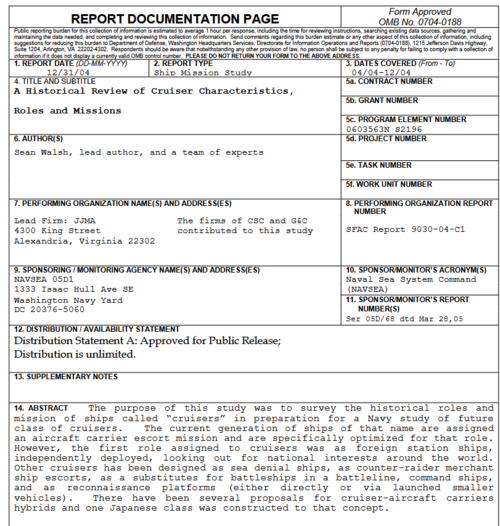
SFAC Report 9030-04-C1.

The main reason for the author suggesting return to armor is that the ships would likely need to sail alone, as DDGs like USS Mason have, through areas where light anti-ship weapons are proliferated. This was all long before the PLAN got muscular as all hell inside 15 years though.

Not super useful in a potential Pacific War 2, since the use of tactical nuclear weapons will drive protection concerns, but for any other kind of war it's probably nice to have if you can manage it.
 
Well, the Kirov armor was mainly anti-fragmens. USSR just didn't have kevlar production on hand, so it used steel to get nearly the same result.
i don't remember 1144 armor being declassified or even reliably leaked.
There's a well known scheme; it's notional and shows coverage only.

Exactly. The best thing about shaped charges - they do not reduce the HE/fragmentation efficiency of warhead. So the missile with shaped charge against armored targets would also work perfectly well against unarmored. The Termit was designed mainly to kill large armored ships - battleships and gun cruisers - but as Egyptian and Indian experience demonstrated, it worked perfectly fine against thin-skinned destroyers too. Because half-ton shaped charge is a Very Big HEA Bomb by definition.
For unprotected targets it's this way. For protected ones - while penetration can be extreme(but it still can be dealt with), external explosion by itself doesn't kill a big surface vessel.
You need to either hit something catastrophic precisely with jet(s), or have the warhead delivered deep inside.
 
Last edited:
An LO missile akin to JASSM would be more efficient.
Debatable. There are arguments both "pro" and "contra", but the general modern trend seems to look toward supersonic missiles. Japan and Taiwan already developed one, and Europe is working on their own.

I'll ask my friend who had the file but IIRC it talked about a hypothetical armor array on Type 055s or something. It didn't go into detail except to suggest that a terminal dive on specific areas of the ship (CIC, VLS, etc.) would be more effective than punching holes into a purpose built battle damage void on the side.
I.e. it's again some kind of theoretical discussions.

My point is I don't think retrofitting a missile in stockpile is very cheap.
It is not VERY cheap, but it's relatively cheap in comparison to building new missiles. It's order of magnitude cheap in comparison to building an armored warship.

Otherwise, everyone would have their blast-frag Harpoons replaced by the SLAM-ER hollow charge, HAS-busting warheads decades ago.
Why bother? Nobody is using armored warships anymore, so why bother with shaped charges?

While it's plausible to retrofit these missiles, look at how slowly most militaries have been reacting, and how it took literal years of cajoling to get factories spun up to produce new old ordnance, like M777 barrels. An armored ship would likely be viable to be protected against the vast majority of global inventory of cruise missiles for its entire lifespan.
It would not, because the efforts to refit the missiles would be pretty small-scale. And some countries, like China and Russia (and those who use Chinese or Russian equipment) just have shaped charges on ASM's by definition.

1) Nobody knows this besides Chinese NAMEs. The PLAN could very well be producing an armored cruiser. 12-13,000 tons full load would allow for a modicum of armoring of magazines, CIC, and computer rooms at least. Possibly bulkheads dividing the machinery spaces too.
Why should they bother with that?

It's very simple and fairly easy to build for either world superpower, and even some regional powers, as it's mostly a budget question.
Yeah, and it would be very simple to destroy - as simple as any unarmored ship.

SFAC Report 9030-04-C1.
That?

1737731024052.png
 
Debatable. There are arguments both "pro" and "contra", but the general modern trend seems to look toward supersonic missiles. Japan and Taiwan already developed one, and Europe is working on their own.

It's not really that debatable, tbf.

I suspect ASM-3 is mostly about time on target at range, so not so much the missile surviving as the carrier aircraft, and being able to do TOT strikes at long-ish range before the solution becomes too out of date. The USN doesn't really need to do this because it can "synergize the joint multi-domain operational kill chain" with a string of buzzwords and real-time observation through a GMTI satellite constellation.

The only problem is that the PLAN is getting that ability too...

I.e. it's again some kind of theoretical discussions.

In a thread about a "modern battleship"? You don't say.

It is not VERY cheap, but it's relatively cheap in comparison to building new missiles. It's order of magnitude cheap in comparison to building an armored warship.

Adding steel, or some form of protection scheme, and making a ship slightly bigger is not a substantial barrier.

It would not, because the efforts to refit the missiles would be pretty small-scale.

Then they would be rapidly expended in combat and be less effective.

And some countries, like China and Russia (and those who use Chinese or Russian equipment) just have shaped charges on ASM's by definition.

Any kind of passive armor reduces the cones and depth of penetration of a hollow charge, though.

A double hull surface ship with a typical 3/8-1/2" STS outer hull, comparmentalized voids, and internal turtleback would probably be more effective than a straight belt against both threats. You could even put some sort of foam or aerated rubber inside the void space to really hurt the fairly shallow penetration depth of the typical SAP warhead. That was looked at for the DD-21 designs and I wouldn't be shocked if CVV incorporated multiple voids and rubber or acrylic for SAP protection.

Trading entry and post penetration effects for a narrower, higher penetrating cone is exactly the opposite that you want for a anti-ship missile, and if you can make sea skimmers less effective you've successfully obsoleted a large portion of the inventoried firepower of anti-ship weapons worldwide, which is no trivial thing.

Unfortunately the USA would rather spend money on tiny ships instead of really big ones.

Why should they bother with that?

Because it would make Harpoon sad.

Yeah, and it would be very simple to destroy - as simple as any unarmored ship.

It would not, by definition, if it is immune to sea skimming anti-ship cruise missiles in the ~500 kg class on vital spaces. At the very least, that's going to invalidate the vast majority of USN missiles.

It gets hit a couple times, sails back to port after a day of fire control, and comes back a month later.

The biggest concern the PLAN would have are nuclear ALCMs and SLCMs obliterating their high capacity shipyards.


Ye.

 
Adding steel, or some form of protection scheme, and making a ship slightly bigger is not a substantial barrier.
"Slightly"? So you did not try to calculate how much exactly it would weight?

Well, I actually done this several years ago:

1737735313432.png

I tried to add a minimal armor for Project 1164 cruiser. One armored box spreading between 140 and 265 transverse frames, covering the engine rooms and S-300F missile drums. Vertically, it spread from upper deck to 3 meters below waterline (in case of underwater hits).

So it was an armored box 65 meters in lenght, 10 meters in height and 20 meters wide. The thickness was uniform - 10 cm (circa 4 inch) of steel.

Calculating the weight of just armored sides and deck, I got the total weight of added armor to be about 2030 tons. To make ship capable of handling this load, it would need to be at very least 50% bigger.

So no. It would make ship substantially bigger. While adding very little to its actual survivability. In my thought experiment, the armor covered only machinery & SAM magazines; not even the flotation supply. If you want more armor, the weight would increase - substantially. Roughly speaking, your "armored destroyer" would be about twice as big as unarmored with the same armament.
 
I suspect ASM-3 is mostly about time on target at range, so not so much the missile surviving as the carrier aircraft, and being able to do TOT strikes at long-ish range before the solution becomes too out of date. The USN doesn't really need to do this because it can "synergize the joint multi-domain operational kill chain" with a string of buzzwords and real-time observation through a GMTI satellite constellation.
Ugh. USN always could simply shoot closer(and, when it became available, ensure timely mcu to missiles in flight). Since 1942 it just never ever met with problem to come close to targets, and since 1944 never had problems shadowing them.

RADARSATs are not a survivable answer - not only they're foolable, they're simply primary targets in high level conflict. And there is absolutely nothing that can be done to defend them.

It's possible to make survivable constellations, but it is not applicable to existing GMTI constellations.
 
It would not, by definition, if it is immune to sea skimming anti-ship cruise missiles in the ~500 kg class on vital spaces. At the very least, that's going to invalidate the vast majority of USN missiles.
You apparently did not know, that the absolute majority of sea skimming missiles could be programmed to make pop-up maneuver at the terminal approach?

Because it would make Harpoon sad.
For about two years, which would be all the time USN would need to replace HE warhead with HE/shaped charges. After that, Chinese would be stuck with the useless armored ship, which is bigger and cost more to operate, but hardly better.

It gets hit a couple times, sails back to port after a day of fire control, and comes back a month later.
It get hit a couple times... her fire control would be knocked out (since you can't armor the antennas), and then a bomber would kill her with one-ton laser-guided bomb. Or submarine would torpedo her.
 
RADARSATs are not a survivable answer - not only they're foolable, they're simply primary targets in high level conflict. And there is absolutely nothing that can be done to defend them.
Well, they could be given self-protection measures - decoys for throwing off terminal targeting, or small kinetic mines to hard-kill the approaching enemy anti-satellite missiles. Problem is, that such systems could not be installed on already-launched satellites...
 
You apparently did not know, that the absolute majority of sea skimming missiles could be programmed to make pop-up maneuver at the terminal approach?
Deck isn't exactly magic. The problem is that it becomes feasible far beyond any postwar surface combatants, other tha Orlans and Krechets. Maybe Long Beach.
For about two years, which would be all the time USN would need to replace HE warhead with HE/shaped charges. After that, Chinese would be stuck with the useless armored ship, which is bigger and cost more to operate, but hardly better.
Ships from ~14k displacement have more than enough displacement and volume to defend against such warheads.
It isn't difficult to come up with protection solution - solutions can easily be transfered from AFV vehicles.

The problem is it isn't really sensible to make ships larger just for protection. Artillery ships benefited directly from size. Missile ships don't. Something else should drive size and powerplant requirements upwards enough to consider it again.
It get hit a couple times... her fire control would be knocked out (since you can't armor the antennas), and then a bomber would kill her with one-ton laser-guided bomb. Or submarine would torpedo her.
Absolutely solvable problem - if you expect your combatant to get hit. Now, arguably, easier than ever - ships are getting distributed sensor arrays (feeding into fuzed picture) just to get modern situational awareness.

Well, they could be given self-protection measures - decoys for throwing off terminal targeting, or small kinetic mines to hard-kill the approaching enemy anti-satellite missiles. Problem is, that such systems could not be installed on already-launched satellites...
It's possible to install protection(and arguably, for a big GEO satellite it can even be effective enough - at least against direct ascent approach). But it isn't possible to outfight a peer opponent with LEO satellite overflying enemy land at few hundred km every day many times.
 
You apparently did not know, that the absolute majority of sea skimming missiles could be programmed to make pop-up maneuver at the terminal approach?

A turtleback scheme solves this problem completely? It's only coming down at like a 25-35 degree angle. ASM-3 comes down nearly completely vertically, and might be the only serious threat to an armored ship, besides outsized cruise missiles like Kh-22.

You end up with a ship somewhere between 14,000-28,000 tons, depending on whatever else you want to put in it, like BMD capability.

For about two years, which would be all the time USN would need to replace HE warhead with HE/shaped charges.

Nah, it would take closer to 20.

After that, Chinese would be stuck with the useless armored ship, which is bigger and cost more to operate, but hardly better.

It would add nearly zero real operating cost. The main issue would be growth potential becomes limited due to increased weight, but for a navy with a robust shipbuilding industry behind it ships' growth potential is less important than combatant capability. You just build a new ship to replace the old one.

It get hit a couple times... her fire control would be knocked out (since you can't armor the antennas)

FCS looked at armored antennae using boron and silicon carbide. It's doable.

and then a bomber would kill her with one-ton laser-guided bomb.

CEC, Hawklink, and TLAM datalinks were the main capability drivers of the USN's "fight hurt" philosophy in the '80s. The only thing you really need are electrical connections to launch silos, a functional powerplant, and a radio. That CEC just took forever to roll out is less an issue now, because it's a solved problem, and the PLAN has active radar guided missiles anyway.

Or submarine would torpedo her.

Actually a potential threat! The PLAN, like the IJN, is extremely vulnerable to can-do sub skippers.

It's pretty much about the only real advantage the USN maintains at this point, besides the proven capacity to pull off a kill chain using orbital reconnaissance assets, which is the other only real advantage (and one shared by the USAF!).

Of the two I suspect the submarines have a better chance of lasting until the second weekend.
 
Last edited:
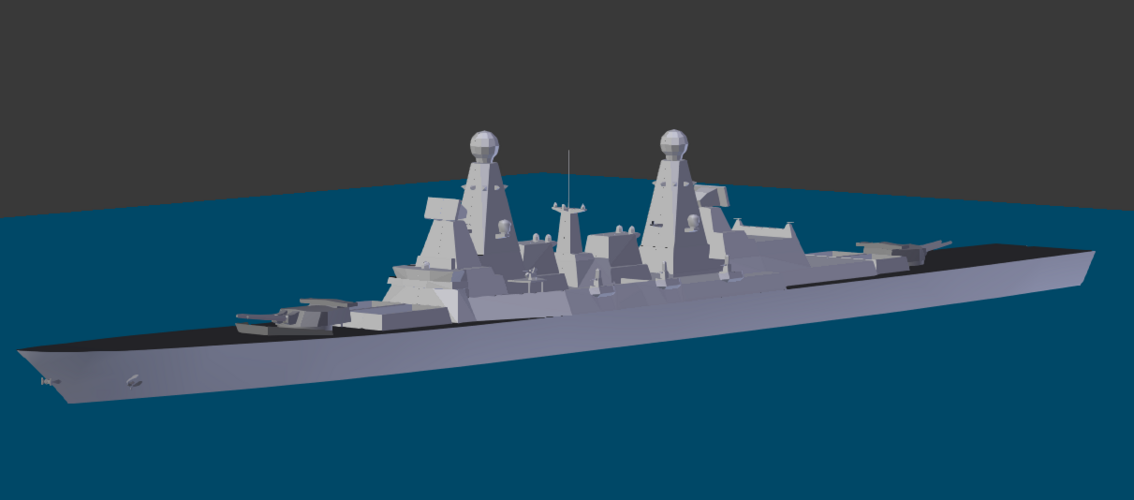
Here is a guided-missile battlecruiser concept I put together at some point:

1738531407816.png

As a starting point I took the dimensions of HMS Hood, drafted a hull based on Type 45 destroyer for those dimensions (integrating anti-torpedo bulges). Superstructure is identical to Type 45, but electronic suite is doubled. Armament consists of two gun turrets and 4 VLS clusters. Assuming replacement of steam turbines with gas turbines and some additional displacement as a result of a fuller hull, the armor protection can be somewhat increased in comparison to original, maybe even without (significant) loss of speed.

It is a pretty straightforward and off-the-shelf solution. Assuming there is a shelf with two old 15" turrets and the customer has sufficiently deep pockets :)
 
Last edited:
This is a useful thread to discuss the design and technical aspects of "modern battleships".
The only postwar ships that came close were the Kirov class nuclear cruisers with their powerful long range surface and anti air weaponry.
The Kirov to some extent was the ship which British planners in the early sixties said would be needed if the RN gave up carrier based aircraft.
In the 80s the USN reactivated four Iowa class battleships to provide fire support for the Marines and additional platforms for Cruise Missiles. The costs were kept as low as possible.
Kirov seems an excellent starting point as its armament remains unequalled by anything else on a single modern ship.
Do big guns need to return in some shape or form? The US abandoned its 8in gun programme and the later gun armament for the Zumwalts also never materialised.
A long range hypersonic shipkiller missile and a decent fire support gun and/or missile armament could provide a basis for a 21st Century Kirov.
 
Do big guns need to return in some shape or form? The US abandoned its 8in gun programme and the later gun armament for the Zumwalts also never materialised.
A long range hypersonic shipkiller missile and a decent fire support gun and/or missile armament could provide a basis for a 21st Century Kirov.
My IMHO is that battleship in some form might be reborn when military lasers hit megawatt mark and phased optical arrays would be introduced. Then yes, missile strikes would be significantly reduced in efficiency; missiles are vulnerable and it would just took way too much missiles to saturate defenses capable of electronically swing the megawatt beams.

Artillery shell, on the other hand, much less vulnerable to lasing. Of course, any single shell could be easily killed. But shells are VERY cheap. They could be fired in saturation quantities by enough automatic cannons. And even a few shells - guided - slipping through laser defenses could do a lot of damage to radars and laser arrays.

So my idea of future battleship - a big, nuclear powered warship, with phased laser arrays AND multiple autofiring gun mounts. Likely of moderate size, about 155-mm. But fully automated and numerous enough to saturate enemy laser defenses through sheer mass of metal on ballistic trajectories.
 
My IMHO is that battleship in some form might be reborn when military lasers hit megawatt mark and phased optical arrays would be introduced. Then yes, missile strikes would be significantly reduced in efficiency; missiles are vulnerable and it would just took way too much missiles to saturate defenses capable of electronically swing the megawatt beams.

Artillery shell, on the other hand, much less vulnerable to lasing. Of course, any single shell could be easily killed. But shells are VERY cheap. They could be fired in saturation quantities by enough automatic cannons. And even a few shells - guided - slipping through laser defenses could do a lot of damage to radars and laser arrays.

So my idea of future battleship - a big, nuclear powered warship, with phased laser arrays AND multiple autofiring gun mounts. Likely of moderate size, about 155-mm. But fully automated and numerous enough to saturate enemy laser defenses through sheer mass of metal on ballistic trajectories.
By that point in time, railguns should be viable as well, which would make delivering rapid fire volleys a lot easier. Imagine an 8" gun firing at 60+ rounds per minute per tube.

I'm expecting a modern "battleship" to have the big BMD arrays, pushing 25-30ft across. At least as big as those proposed for the CG(X), but if the hull has enough power and cooling I'd go as big as the hull can support. Probably on the order of the size of COBRA JUDY or COBRA KING.

I'd guesstimate 2x64cell Mk41, 20xMk57 PVLS around the outside of the helo deck (or a third 64cell Mk41), and ~8x VPMs for 24x CPS tubes.
 
My IMHO is that battleship in some form might be reborn when military lasers hit megawatt mark and phased optical arrays would be introduced. Then yes, missile strikes would be significantly reduced in efficiency; missiles are vulnerable and it would just took way too much missiles to saturate defenses capable of electronically swing the megawatt beams.
I think it's a bit of semantics.
Non-missile armament is means rather than goal.

Realistically, modern aegis destroyers (and by large all area defense large guided missile combatants) are battleships by role, as their task is temporary local sea superiority.
Which is distinctively more than "just" escort against light forces.
Granted, modern destroyer doesn't truly capitalize it's ability to move in(omnirole SM-6 is a step towards that direction though) and they're rather vulnerable if hit, but Trump class solves both.
 
It all kind of limits the battle distances to line of sight again. Next step would be what - torpedo-carrying sea-skimming missiles?
 
The critical technologies are shared with high powered lasers: high energy capacitors and high thermal capacity cooling
Hm... I'm not sure that laser tech and railgun tech are that close. AFAIK, besides power/cooling they have rather little in common. But I'm not a specialist there, so I won't argue.

It all kind of limits the battle distances to line of sight again. Next step would be what - torpedo-carrying sea-skimming missiles?
A possibility, yes. Torpedoes are efficient counter to lasers, since they could dive deep & attack from climbing, thus leaving even water-penetrating frequency laser very little chance to stop them. But those missiles would be... BIG. They would need to carry a heavy anti-ship torpedoes, capable of making attack run from 30-50 km (so missile would stay below horizon for enemy lasers). And big missiles would be easier to detect by patrolling drones (forming defense perimeter around naval units) and engage with over-the-horizon SAM's.
 
In a serious war between great powers the second victim (after the truth) will be the American aircraft carriers, their enemies have had seventy years to develop methods for their destruction.

In my opinion, the new class of battleships should replace the old armor plates with a very powerful electronic defense made up of directed energy weapons with a high firing rate capable of operating at maximum capacity for several days in a row, to support a landing operation against powerful land-based defenses.

The key to future naval combat will be the saturation of defenses using all kinds of cheap decoys and drones.

The key to survival will be the ability to generate enormous amounts of power for sensors, AI, and external defensive display.

The torpedoes will be the main problem and the only thing that can be done against them is to develop another inverted defensive dome under the ship with a considerable number of small anti-torpedo torpedoes, I don't know what kind of sensors can be used, of course the acoustic ones should be discarded due to their low reliability during real combat, perhaps some kind of electric field based on those used by marine fauna... Who knows what technological marvels have developed during the last seventy years?

Power, power and power... the more the better, and that requires very large ships.
 
The torpedoes will be the main problem and the only thing that can be done against them is to develop another inverted defensive dome under the ship with a considerable number of small anti-torpedo torpedoes, I don't know what kind of sensors can be used, of course the acoustic ones should be discarded due to their low reliability during real combat, perhaps some kind of electric field based on those used by marine fauna... Who knows what technological marvels have developed during the last seventy years?
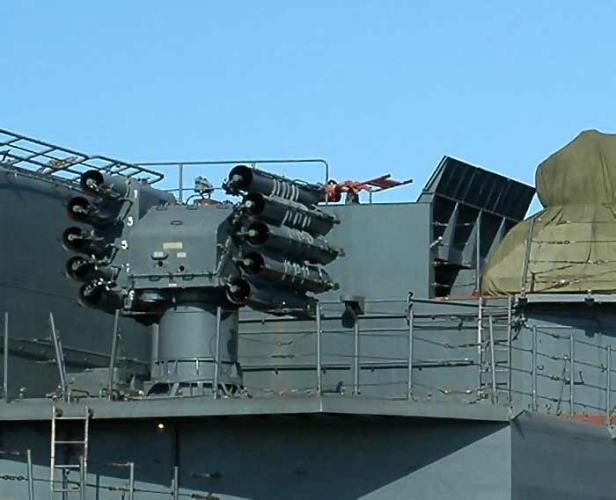
Just reverse-engineer ol' Soviet RBU-12000:

1766680928787.png

Automatic torpedo defense system, based on autoloading 14-tube rocket depth charge thrower, aimed by data from ship sonar. The ammo included both soft-kill (decoy) and hard-kill (floating mines with acoustic proximity fuzes) rounds, as well as plain old depth charges. Later model have homing depth charges, which actually homed on interception course of enemy torpedo, while sinking.

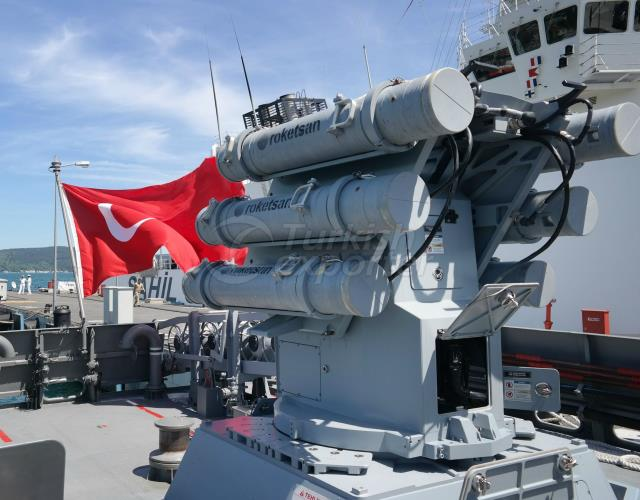
Or, if you can't copy 1970s Soviet tech, just buy Turkish analogue from ASELSAN/ROCKETSAN:

1766681075531.png
 

Attachments

  • 1766680885225.png
    1766680885225.png
    93.4 KB · Views: 11
Just reverse-engineer ol' Soviet RBU-12000:

View attachment 796400

Automatic torpedo defense system, based on autoloading 14-tube rocket depth charge thrower, aimed by data from ship sonar. The ammo included both soft-kill (decoy) and hard-kill (floating mines with acoustic proximity fuzes) rounds, as well as plain old depth charges. Later model have homing depth charges, which actually homed on interception course of enemy torpedo, while sinking.

Or, if you can't copy 1970s Soviet tech, just buy Turkish analogue from ASELSAN/ROCKETSAN:

View attachment 796401
The problem with defensive missiles and torpedoes is that the enemy knows how many you have and can plan a saturation attack.
 
The problem with defensive missiles and torpedoes is that the enemy knows how many you have and can plan a saturation attack.
“A certain percentage of combat assets, such as torpedoes or missiles, will fail. In addition, the delivery platform—an aircraft or a warship—may be destroyed.
As a result, both sides in a modern conflict will periodically concentrate their main forces to carry out specific missions and then return to their bases. In the meantime, the underwater forces of both sides will engage convoys and strike coastal installations with missiles. Light forces will attempt to mine sea lanes.
Much will depend on which side is able to rotate its main forces more efficiently and maintain a presence in the area of operations.”
 
Something approximately 20-30k tons.
Forward and aft mk71 8” guns
Forward and aft super firing mk110 57mm guns
P/S on opposing F/A corners SEARAM and phalanx
2 mk38 mod4 guns per side.
Hangar capable of handling 2 MH60s and several smaller drones.
200ish VLS cells
24 NSMs.
Hull mounted sonar
latest SPY radar.
 
If we're really talking battleships, we're talking over 35,000 tons.

Cruisers are up to 22ktons (ignoring Alaska-class).

  • I think I'm only going to go with 1 heavy gun for the Cruiser, 2 for the battleship (exception for both big guns forward like the Zumwalts). We can argue between 8", 155mm, and 5" later.
  • fore and aft Mk110s because the arcs are better than amidships like the Zumwalts
  • 128x Mk41
  • ~40x Mk57 PVLS cells around the helo deck (using the mix of Mk41 and Mk57 for packaging, Gunner's Mates will hate me)
  • 4+ APMs for CPS.
  • ~16x NSMs, or however many there is deck space for in the superstructure.
  • 69 RMA SPY6 antennas (IIRC that's 28ft diameter)
  • SEWIP v/current, the one giving Burkes that horrible muffin top
  • Super RBOC, Flares, Nulka, etc
  • Bow Sonar, towed VDS
  • Hangar for 2x Osprey or maybe King Stallions, plus 2-4x VTOL UAVs. The extra hangar space is to allow for the Admiral to have his own helo if we're working with H60s.
  • P/S RAM or SeaRAM, 200kw lasers to replace Phalanx as soon as available
  • at least 2x Mk38Mod4 guns per side, if not 3x (4-6 total): lead pair just forward of the superstructure, aft pair at the corners of the helo deck, midships pair on the boat deck
  • dual CICs: one for the ship, one for the Admiral/Commodore. Displays can be different between whether you need AAW flag to plan out air defense or a giant fleet position board.
  • Admiral's Cabin plus berthing for all the hangers-on, plus the extra crew needed to run the second CIC. If normal crew not counting the second CIC is 300, berthing space for 500+. Takes roughly 75 people to run CIC for 5 watches, then the extra dudes feeding everyone etc. Crew adds up in a stupid hurry!


==========

Okay, it's later. Pass a beverage and let's argue gun calibers.

The 8" Mk71 turret weighs 85 tons, counting 75rds ready ammunition. Based on the difference from 5"/54 Mk42 (~60 tons) to Mk45 (~22 tons), it's likely possible to reduce that weight down to something closer to 50-60 tons not counting ammunition. More automation, smaller volumes used. That said, the 8"/55 barrel alone is about 20 tons. But some saboted long range rounds would be an option, instead of the standard 260lb HE rounds.

155mm AGS is a ~105ton turret. Yes, the LRLAP rounds are expensive, ~150k each at volume. Now, however, we can get away with shaped trajectories and use vertical guns. The Mk41-replacement installation actually splits into a pair of 10ft wide guns and automatic-loading magazines, which are just slightly wider than the Mk57 PVLS, and as long as 2x Mk57s. 10x27x29ft. Yes, it does mean you need some actual armor to keep any impact from going deeper into the hull. Probably 3" STS plate, AKA HY80. With perimeter-mounted vertical guns, it would be possible to have up to 10 vertical guns up forward in the space that 40x Mk57 cells would occupy. This would allow a ship that looks more like a post-refit Zumwalt, with a 64-cell Mk41 and then 4x APM for 12x CPS tubes in the bow, with an incredible blast of 155mm gunfire in any direction.

5" Mk45 is the "we can't be bothered to make a better gun" option.
 
A modern "Battleship" if there's no restriction
I would want it to be nuclear, a trimaran design to get speed up to at least 35 kn. Size wise as "light" as possible, probably 25+kt
  • 1 or 2 Railgun cannons at least 155 mm with guided/search&seeking capability. The point is deep magazine, high rate of fire and long range as in over horizon. So it can shoot at targets found by ISR at ranges up to 1800 NM. The ammo has to be of two kinds either anti-air (anti-missile-missile/aircraft/cruise-missile, ABM) or anti-surface (ship/vehhicle/fortifications). If it's possible for a larger caliber or be caliber adjustable then I would like to shoot a mini torpedo for ASW, too.
  • backup: 4-8 Torpedo tubes if railgun can't shoot mini-torpedoes
  • backup: 24x Mk57 (whatever helo pad size): 8x ABM missiles, NSM, ESSM
  • layered defense with Mk 110 57 mm/60 mm; RAM or SeaRAM, 300kw lasers; 35 mm turrets; whatever decoys
  • SPY6, fit as much as possible and at least for 200+ NM
  • sonar
  • submerged drones, ISR drones, 1-2 helicopters
 
Last edited:
A modern "Battleship" if there's no restriction
I would want it to be nuclear, a trimaran design to get speed up to at least 35 kn. Size wise as "light" as possible, probably 25+kt
  • 1 or 2 Railgun cannons at least 155 mm with guided/search&seeking capability. The point is deep magazine, high rate of fire and long range as in over horizon. So it can shoot at targets found by ISR at ranges up to 1800 NM. The ammo has to be of two kinds either anti-air (anti-missile-missile/aircraft/cruise-missile, ABM) or anti-surface (ship/vehhicle/fortifications). If it's possible for a larger caliber or be caliber adjustable then I would like to shoot a mini torpedo for ASW, too.
  • backup: 4-8 Torpedo tubes if railgun can't shoot mini-torpedoes
  • backup: 24x Mk57 (whatever helo pad size): 8x ABM missiles, NSM, ESSM
  • layered defense with Mk 110 57 mm/60 mm; RAM or SeaRAM, 300kw lasers; 35 mm turrets; whatever decoys
  • SPY6, fit as much as possible and at least for 200+ NM
  • sonar
  • submerged drones, ISR drones, 1-2 helicopters
On the BBG(X), the primary purpose of the railgun and the 5" guns is air defense using the Hypervelocity Projectile. The HVP out of the 5" gun does have slightly better muzzle velocity than a normal shell (probably 1,000 - 1,200 m/s), but would gain significant range due to its small size and its ability to generate some lift. However, I suspect a guided shell would be most effective against air targets at relatively close ranges (maybe 10 - 15 nm at most), so it would basically supplement the ESSM layer of the air defense scheme. The 32 MJ railgun is supposed to have a muzzle velocity of 2,500 m/s and a range of 110 nm with a projectile like the HVP, and those kinematics should theoretically allow the HVP to intercept ballistic missiles at close range, probably comparable to a PAC-3 engagement within 20 - 30 nm. As far as I know, the HVP has only been demonstrated against subsonic targets at low altitude.

Attacking surface targets at 1,800 nm would be a job for hypersonic missiles like CPS or for a long-range cruise missile. Nuclear-armed Tomahawks had nearly that much range, but conventional Tomahawks with large warheads are good to less than 1,000 nm. You would need a bigger missile like an AGM-129 or a Kh-101 to reach out towards 2,000 nm.

As far as anti-aircraft and anti-ballistic missiles, I don't see a reason to go for anything bigger than what a Mk. 41 VLS can handle. The 21" SM-3 can shoot down MRBMs and IRBMs, which are the immediate threats to ships (unless anti-ship ICBMs become a serious threat), and a 21" SM-6 could engage air-breathing targets well-beyond the range of the ship's sensors (probably more than 500 km if you believe some of the range estimates for the real SM-6). Although Mk. 57 cells are slightly larger, they are functionally interchangeable with Mk. 41 cells. The choice basically just depends on where on the ship the cells will go. Normal loadouts for Arleigh Burke class destroyers include about 50 Standards, with maybe half to two-thirds of those normal SM-2s. Without Tomahawks to take up cells in the Mk. 41 VLS (because of APM tubes), a combatant with 128 cells might carry 110 to 120 Standards (or other missiles like PAC-3 MSE, Skyceptor, or THAAD) plus a few ESSMs and VLAs for self-defense.

The value proposition for larger VLS cells like the KVLS-II comes from anti-ship and land-attack missiles. The KVLS-II can handle a missile with a diameter of at least 30" and probably close to 40", so that opens up the ability to use a weapon like OpFires with a 32" booster diameter and a range of at least 1,000 nm, or large cruise missiles like the AGM-129 and Kh-101 with ranges of 2,000 nm or more. I seriously doubt that missile canisters can survive being adjacent to launching Standards like ESSM canisters can handle being quad-packed, so I don't think multi-packed Standards (or other large missiles like THAAD) will ever be a real option.

For a combatant the size of a battleship, I would like to see at least 12 APM tubes or equivalents, so the loadout apart from the Mk. 41/Mk. 57 VLS could be 36 CPS missiles, 50 MRBMs or large cruise missiles, or 84 Tomahawks or regular-sized cruise missiles. The Zumwalt conversions have 4 APM tubes, so I don't think 12 is asking too much on a 35,000 ton hull, but it would be if you start cutting down the size. I think a combatant in the 20,000 to 25,000 ton range would probably be big enough to fit 6 APM tubes and 25,000 to 30,000 tons would get 8 tubes, considering a well-balanced ship.

As far as the hull goes, the largest fast multi-hull in the world is the Independence class, which is a 3,000 ton ship. I seriously doubt that a 25,000 ton fast multihull is structurally viable, and a large monohull would be capable of 35 knots if you actually need it. Iowa and Alaska could reach 35 knots lightly loaded with overload power. Also, a 25,000 ton trimaran would be extremely wide, which would prevent construction at normal shipyards or the use of normal drydocks for repairs and overhauls. The nuclear powerplant would do the same thing, so the only place to build a ship like this would be a Newport News in the same docks where carriers are built, which means these would now be competing for building slots with carriers. The BBG(X) hull size was basically set as the largest hull that Ingalls in Pascagoula can produce with the facility that they have now, and the BBG(X) is also not nuclear-powered because Pascagoula and Bath aren't certified to build nuclear-powered ships.
 
The problem with defensive missiles and torpedoes is that the enemy knows how many you have and can plan a saturation attack.
The typical submarine can only send 3-5 torpedoes at a target ship. As soon as you raise the torpedo volley needed above that level you just invalidated the entire submarine fleet.
 
On the BBG(X), the primary purpose of the railgun and the 5" guns is air defense using the Hypervelocity Projectile. The HVP out of the 5" gun does have slightly better muzzle velocity than a normal shell (probably 1,000 - 1,200 m/s), but would gain significant range due to its small size and its ability to generate some lift. However, I suspect a guided shell would be most effective against air targets at relatively close ranges (maybe 10 - 15 nm at most), so it would basically supplement the ESSM layer of the air defense scheme. The 32 MJ railgun is supposed to have a muzzle velocity of 2,500 m/s and a range of 110 nm with a projectile like the HVP, and those kinematics should theoretically allow the HVP to intercept ballistic missiles at close range, probably comparable to a PAC-3 engagement within 20 - 30 nm. As far as I know, the HVP has only been demonstrated against subsonic targets at low altitude.

Attacking surface targets at 1,800 nm would be a job for hypersonic missiles like CPS or for a long-range cruise missile. Nuclear-armed Tomahawks had nearly that much range, but conventional Tomahawks with large warheads are good to less than 1,000 nm. You would need a bigger missile like an AGM-129 or a Kh-101 to reach out towards 2,000 nm.
I don't want just for "close" defense but in response reach out to the shooter.
The point of range is not to have to use & store "large" missiles or preferable any kind even and leveraging a much larger magazine. Maybe not the 1500 shots of classic BB main gun ammo but a few hundreds of guided/mini-missile. I'm guessing about 5-7000 m/s muzzle velocity is needed. Assuming a flight time of 600s=10min for the 1800 NM a ship running at 30kn would get as far as 9.26 NM so some sort of adjustment is needed in terminal phase. Nose cone control and tail fin would be good options but due to the limited time I'm not certain this will suffice. A AIM9 is 5" so this one fits fine but a JAGM is 178 mm so caliber might need to be larger. These two represent a sufficient sized missile shots with propulsion...
A lot of juice is needed for a shot that's why a nuclear propulsion is necessary. The ship's speed is like a bonus here.
If all works out the cannons are all it needs and deserving the battleship term.
As far as anti-aircraft and anti-ballistic missiles, I don't see a reason to go for anything bigger than what a Mk. 41 VLS can handle. The 21" SM-3 can shoot down MRBMs and IRBMs, which are the immediate threats to ships (unless anti-ship ICBMs become a serious threat), and a 21" SM-6 could engage air-breathing targets well-beyond the range of the ship's sensors (probably more than 500 km if you believe some of the range estimates for the real SM-6). Although Mk. 57 cells are slightly larger, they are functionally interchangeable with Mk. 41 cells. The choice basically just depends on where on the ship the cells will go. Normal loadouts for Arleigh Burke class destroyers include about 50 Standards, with maybe half to two-thirds of those normal SM-2s. Without Tomahawks to take up cells in the Mk. 41 VLS (because of APM tubes), a combatant with 128 cells might carry 110 to 120 Standards (or other missiles like PAC-3 MSE, Skyceptor, or THAAD) plus a few ESSMs and VLAs for self-defense.
Ofc but if things works out these are just backups and or redundant. The advantage of these cells is.. in a tight situation you could fire all before the ship is sunk and leave the rest of the work to the others in the network. This is something the guns can't match.

Edit: also note the 5 million price tag of a SM-6 is 10x the ~500k price tag of the missile "shell". The Navy complained about the 100k price tag of the railgun ammo before but if the things I'm talking about pans outs it's cheaper than using many of the VLS missiles.
The value proposition for larger VLS cells like the KVLS-II comes from anti-ship and land-attack missiles. The KVLS-II can handle a missile with a diameter of at least 30" and probably close to 40", so that opens up the ability to use a weapon like OpFires with a 32" booster diameter and a range of at least 1,000 nm, or large cruise missiles like the AGM-129 and Kh-101 with ranges of 2,000 nm or more. I seriously doubt that missile canisters can survive being adjacent to launching Standards like ESSM canisters can handle being quad-packed, so I don't think multi-packed Standards (or other large missiles like THAAD) will ever be a real option.

For a combatant the size of a battleship, I would like to see at least 12 APM tubes or equivalents, so the loadout apart from the Mk. 41/Mk. 57 VLS could be 36 CPS missiles, 50 MRBMs or large cruise missiles, or 84 Tomahawks or regular-sized cruise missiles. The Zumwalt conversions have 4 APM tubes, so I don't think 12 is asking too much on a 35,000 ton hull, but it would be if you start cutting down the size. I think a combatant in the 20,000 to 25,000 ton range would probably be big enough to fit 6 APM tubes and 25,000 to 30,000 tons would get 8 tubes, considering a well-balanced ship.

As far as the hull goes, the largest fast multi-hull in the world is the Independence class, which is a 3,000 ton ship. I seriously doubt that a 25,000 ton fast multihull is structurally viable, and a large monohull would be capable of 35 knots if you actually need it. Iowa and Alaska could reach 35 knots lightly loaded with overload power. Also, a 25,000 ton trimaran would be extremely wide, which would prevent construction at normal shipyards or the use of normal drydocks for repairs and overhauls. The nuclear powerplant would do the same thing, so the only place to build a ship like this would be a Newport News in the same docks where carriers are built, which means these would now be competing for building slots with carriers. The BBG(X) hull size was basically set as the largest hull that Ingalls in Pascagoula can produce with the facility that they have now, and the BBG(X) is also not nuclear-powered because Pascagoula and Bath aren't certified to build nuclear-powered ships.
The 25+kt I gave is just a random estimate. It will be mainly governed by the gun's recoil and the size and mass of the magazine & autoload system. A JAGM weights the about same as a heavy 155mm shell ~50kg. I assume a shortened AIM9 weights about the same. So 400 shots=20t. With the guns only it doesn't look like the ship needs to be that sizeable. Volume is the bigger issue as well as all the other systems. It would be nice if it all goes into a 10-15kt hull.

Anyhow, just like in the past it needs escorts. Assuming all are unmanned and non-nuclear. It probably needs clusters of escorts at some distances. So it can run freely between them to make use of their support while not taxing them. To be more efficient 2-3 of these groups would need to work together and provide the mass and firepower needed for the future networked fight. Don't be surprise of there's suddenly a few dozen ships here.
 
Last edited:
100000 tonnes
Nuclear powered 31+ knots
Composite Armored
Liquid propellant firing main guns 18-20 inch diameter firing gps guided saboted rounds upwards of 500-1000km but also capable of firing missiles as well as vls for offensive and defensive missile AA and Anti-ICBM CIWS Aegis Radar
2000-2500 crew half that of a modern super carrier
She could led her own SAC or join a CBG
 
Last edited:
100kt is excessive.
We need mass of ships so preferable as small as possible.

At 7000m/s and 50 kg "shell" 1.225 GJ is needed. We do need its high rate of fire ~6/min so with capacitors we need an average power generation of 0.1225 GW per barrel or 2x Long Beach-class power. We need to keep the ship steaming so 3x total at minimum. Today's containerized commercial mini reactors are supposed to offer up to 300 MW and probably in a 40 foot container. Probably not steam power but electric would be best either way. The barrel needs to be 3x as long as the old railgun if we want to keep acceleration g-forces to be the same and save on developing new fuzes, electronics etc for the shell.
If we want a cheaper version we would still need a range of at least as much as the longest range anti-ship missile so ~1000 NM. So about 75% from proposed size & energy.
Looking around the Scharnhorst's cannons produce about 1.3 GJ per shot and are about the same estimated mass of 50t. The hull obviously can take the recoil of all 9 guns. It's also slightly longer than Long Beach. So a size between Freedom-class and Long Beach sshould be able to deal with a single gun. It's only the batteries and reactor that might dominate size. Long Beach is just the safer route. So it seems 15kt hull will be more than sufficient. Ship dynamic also fits the bill.
It will be a high value target so other systems could be delegated to other ships to make it lighter & cheaper. We keep all the defenses ofc.
 
I don't want just for "close" defense but in response reach out to the shooter.
The point of range is not to have to use & store "large" missiles or preferable any kind even and leveraging a much larger magazine. Maybe not the 1500 shots of classic BB main gun ammo but a few hundreds of guided/mini-missile. I'm guessing about 5-7000 m/s muzzle velocity is needed. Assuming a flight time of 600s=10min for the 1800 NM a ship running at 30kn would get as far as 9.26 NM so some sort of adjustment is needed in terminal phase. Nose cone control and tail fin would be good options but due to the limited time I'm not certain this will suffice. A AIM9 is 5" so this one fits fine but a JAGM is 178 mm so caliber might need to be larger. These two represent a sufficient sized missile shots with propulsion...
I agree that a large magazine would be the main advantage for railguns.

I'm reminded of the stories "Irregular at Magic High School" where the primary naval weapon is a Fleming Launcher, some flavor of rail or coil gun, instead of missiles. And for exactly the reason you've identified: massive magazine capacity. And a side order of very high rate of fire, so the missile tubes have less of an advantage than we'd think today.


A lot of juice is needed for a shot that's why a nuclear propulsion is necessary. The ship's speed is like a bonus here.
If all works out the cannons are all it needs and deserving the battleship term.
Ideally, sure.

But since there's only 2 shipyards able to build nuclear powered ships at present, and one of them is packed full of submarines. The other one would be pre-empting carrier production in favor of BBGs.

The fix would be to make one of the Nuclear Repair Depots able to build ships again. Probably the one at Kittery/BIW, friend told me they'd been doing a lot of major reworking there since 2020 while managing to keep out of the way of the Repair Depot.


Ofc but if things works out these are just backups and or redundant. The advantage of these cells is.. in a tight situation you could fire all before the ship is sunk and leave the rest of the work to the others in the network. This is something the guns can't match.
As you mentioned, better to have both railguns and missile cells of the appropriate flavors, than to have only missiles or railguns.


Anyhow, just like in the past it needs escorts. Assuming all are unmanned and non-nuclear. It probably needs clusters of escorts at some distances. So it can run freely between them to make use of their support while not taxing them. To be more efficient 2-3 of these groups would need to work together and provide the mass and firepower needed for the future networked fight. Don't be surprise of there's suddenly a few dozen ships here.
Way back in the day, the 600 ship Navy suggested 1x CG and 3x DDG-51s escorting the battleships. I would expect that there would be a couple of DDGs and a couple of ASW escorts for the BBGs.
 
Back
Top Bottom