
You are using an out of date browser. It may not display this or other websites correctly.
You should upgrade or use an alternative browser.
You should upgrade or use an alternative browser.
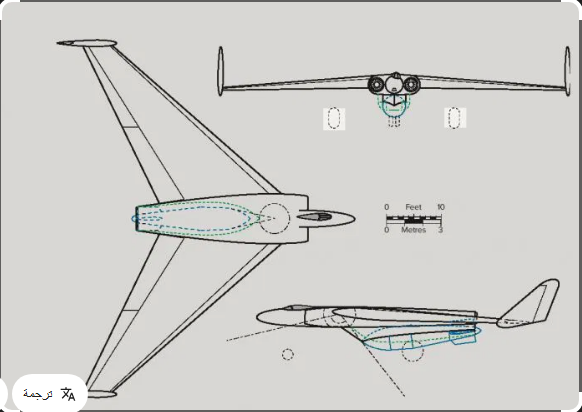
British Specification B35/46
- Thread starter toura
- Start date

- Joined
- 26 May 2006
- Messages
- 38,285
- Reaction score
- 20,423
Attachments

blackkite
Don't laugh, don't cry, don't even curse, but.....
- Joined
- 31 May 2007
- Messages
- 9,515
- Reaction score
- 9,661
https://aviationsmilitaires.net/v3/kb/aircraft/show/1904/english-electric-b3546
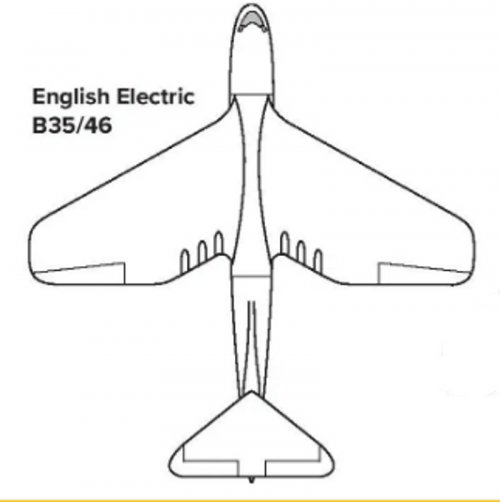
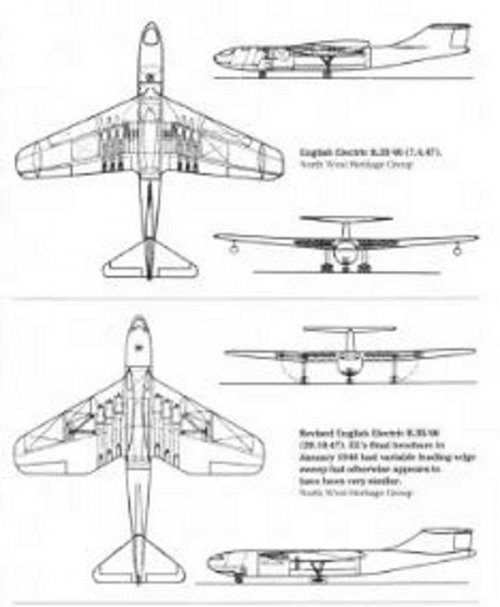
English Electric B.35/46
Historical
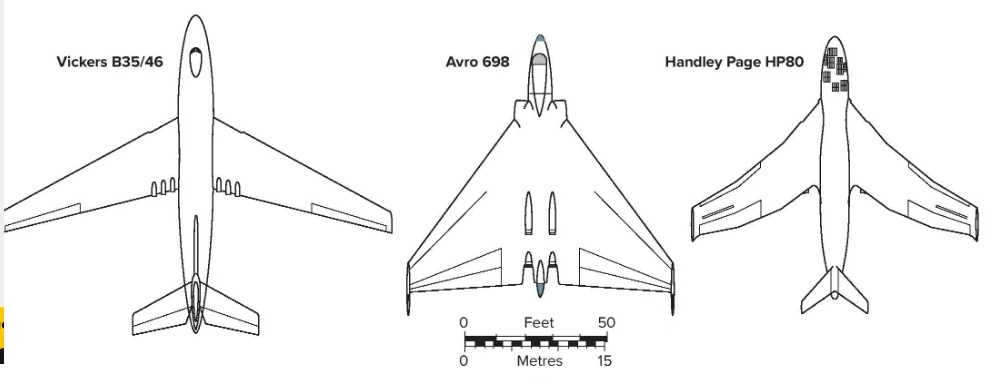
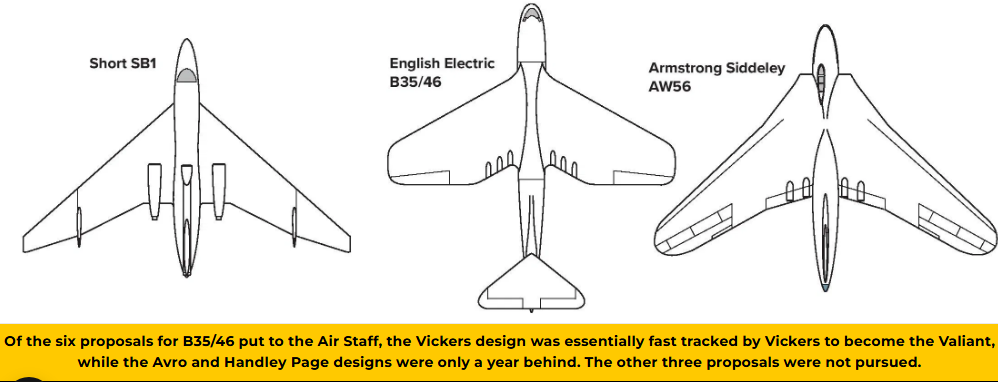
In 1946, the B.35/46 requirement (OR.229) for a strategic bomber was issued. English Electric worked on the design of a relatively lightweight bomber capable of high-altitude flight, hoping to meet medium- and long-term requirements with the same airframe.After studying seventeen different configurations, the British manufacturer proposed its B.35/46 design on April 7, 1947, an aircraft with relatively conventional lines. The high-mounted wings were swept with a slight positive dihedral and rounded tips. The six Napier E.131 jet engines, or possibly Armstrong Siddeley engines, were mounted in the wings to minimize drag. The T-tail consisted of a relatively low-swept swept fin topped by a triangular horizontal stabilizer. The tricycle landing gear was retractable, with the nose gear under the fuselage just behind the cockpit and the main gear under the wings. The bomb load was carried in a large ventral bomb bay. To improve range, two jettisonable fuel tanks could be installed under the wings.
The installation of the H2S Mk.9 radar presented some layout challenges; it was ultimately mounted at the rear of the bomb bay. The latter could accommodate one 4,536 kg MC bomb, or even two provided the bomb bay door remained ajar, or up to 14 454 kg bombs.
English Electric announced that its design fully met the requirements, except for one aspect: performance! Indeed, the required speed of 500 knots (927 km/h) seemed achievable only with very significant constraints for an aircraft weighing around 45 tons. Furthermore, it seemed unlikely that fighters produced over the next eight years would be capable of intercepting a bomber flying at 830 km/h at an altitude of 15,000 meters.
Nevertheless, English Electric's target is to reach a speed of 880 km/h, and to achieve this, several aspects of the design are being carefully considered. The empty weight is being reduced, even by carrying only the minimum amount of equipment, since calculations have shown that each kilogram carried on board the aircraft consumes 1.55 kg of fuel. The engines and landing gear are integrated into the wings without adding any protrusions. And finally, the manufacturer hopes to equip its bomber with more fuel-efficient jet engines.
When the evaluation results were announced, the Royal Aircraft Establishment (RAE) stated that all proposed designs met the requirements, except for those from Vickers and English Electric, who had opted for a slightly lower cruising speed but a higher altitude. The manufacturers were therefore asked to submit a revised proposal better suited to the requirements, ideally incorporating the Rolls-Royce Avon or Armstrong Siddeley Sapphire engines then under development.
According to calculations, installing four of these new-generation engines would not meet the requirements, and six engines would significantly increase the aircraft's weight. The wings were redesigned with the sweep angle increased from 20° to 30°, and the H2S Mk.9 radar was relocated to the front of the fuselage. The wet hardpoints under the wings appeared to have been abandoned.
The revised design was submitted a second time, but according to the RAE, the bomber's estimated weight was underestimated, and English Electric would be unable to meet its objectives. As the manufacturer was already particularly busy with the development of the Canberra, it was decided to abandon this project.
Features
- Maximum takeoff weight : 50,418 kg (111,153 lbs)
- Wingspan : 30.5 m (100.066 ft)
- Length : 32.9 m (107.94 ft)
Performances
- Maximum cruising speed : 880 km/h (547 mph, 475 kts)
- Range : 6,297 km (3,913 mi, 3,400 nm)
- Operational ceiling : 15,549 m (51,014 ft)
- Top speed HA : 954 km/h (593 mph, 515 kts)
- Maximum thrust-to-dry mass ratio at takeoff : 0.35
Engine
- 6 × Rolls-Royce Avon AJ.65 engines of 2,948 kgp (29 kN, 6,500 lbf)
- Fuel (volume) : 26,580 l (7,022 US Gal., 5,847 UK Gal.)
Attachments
blackkite
Don't laugh, don't cry, don't even curse, but.....
- Joined
- 31 May 2007
- Messages
- 9,515
- Reaction score
- 9,661
Attachments
Last edited:
blackkite
Don't laugh, don't cry, don't even curse, but.....
- Joined
- 31 May 2007
- Messages
- 9,515
- Reaction score
- 9,661
Attachments
Last edited:
blackkite
Don't laugh, don't cry, don't even curse, but.....
- Joined
- 31 May 2007
- Messages
- 9,515
- Reaction score
- 9,661
Attachments
-
 17-2.jpg44 KB · Views: 52
 -
 0216-01-1-3.jpg45.4 KB · Views: 58
 -
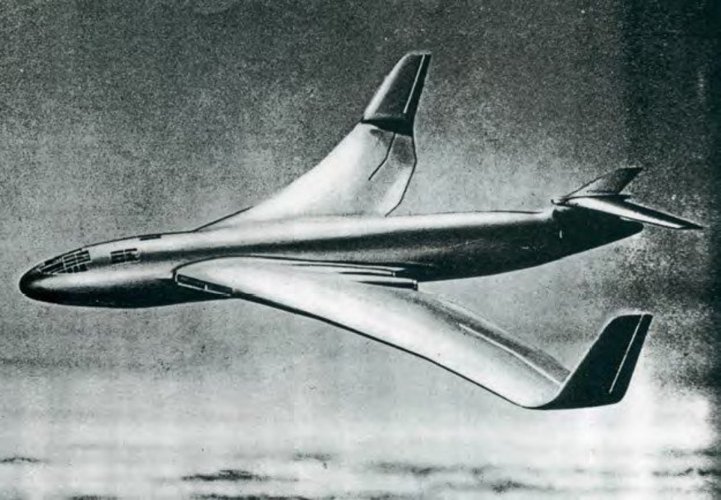 Handley Page artwork depicting the HP.80 as it was proposed to the design competition.jpg202.4 KB · Views: 51
 -
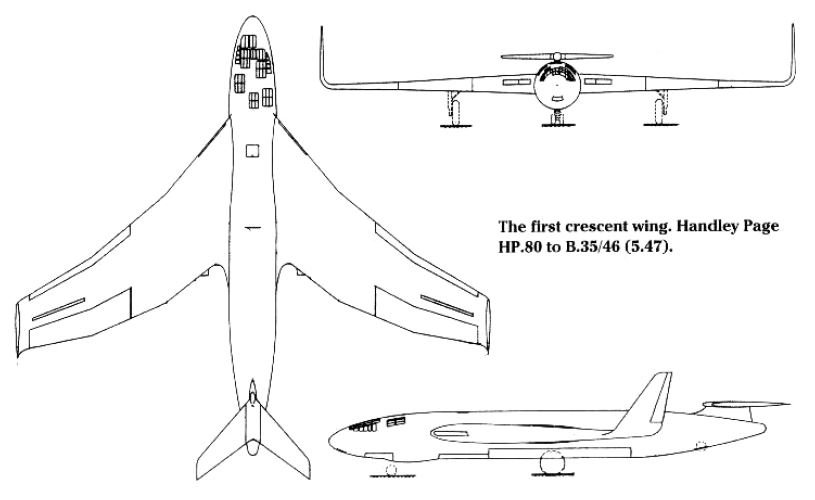 HP-80 crescent wing.JPG41.8 KB · Views: 51
 -
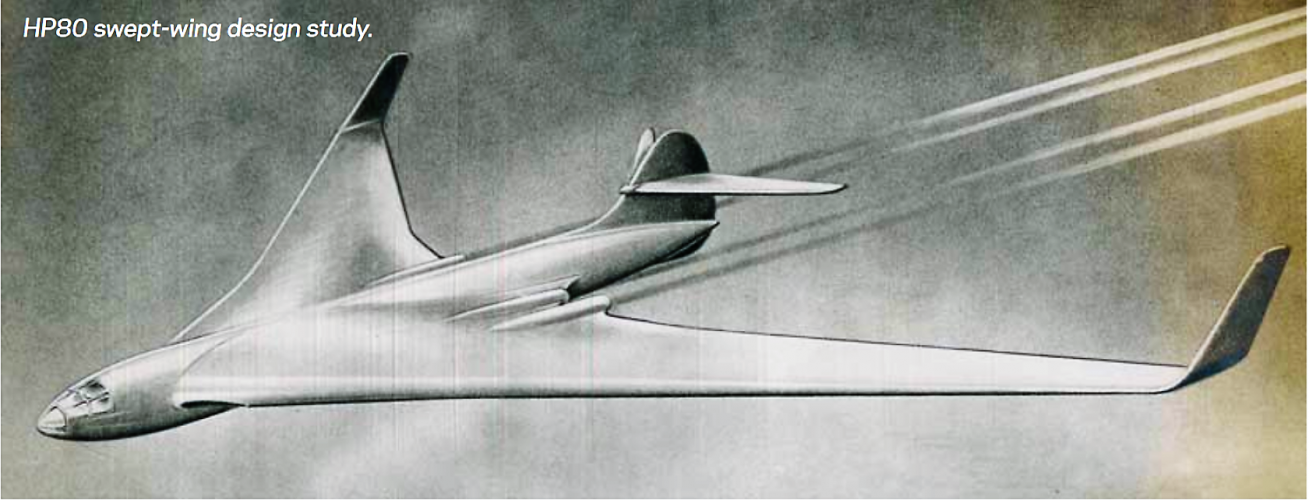 hp-80.png1.2 MB · Views: 54
 -
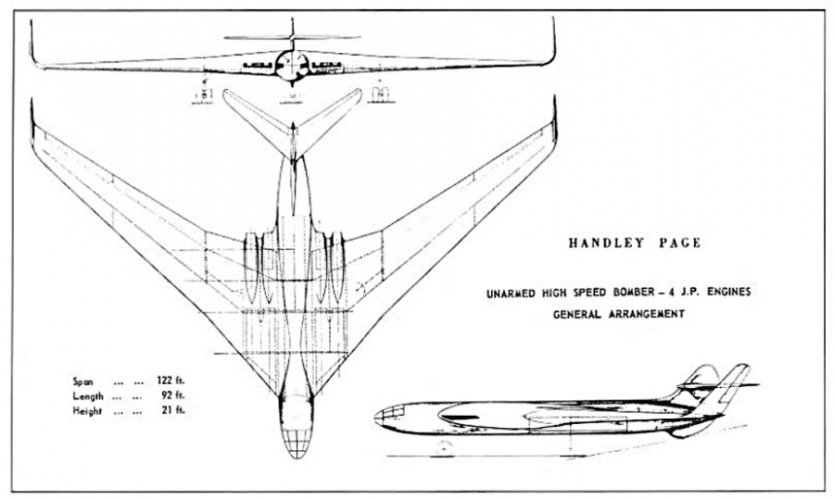 HP80.jpg48.6 KB · Views: 53
 -
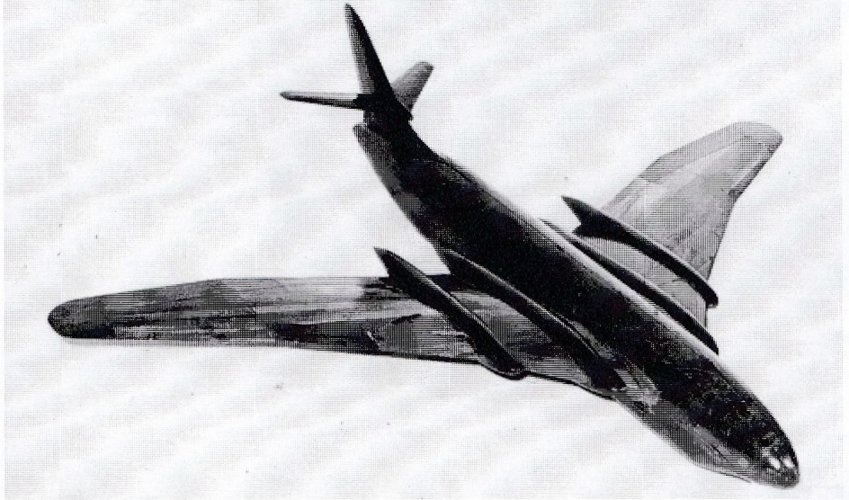 HP.80.jpg258.7 KB · Views: 57
 -
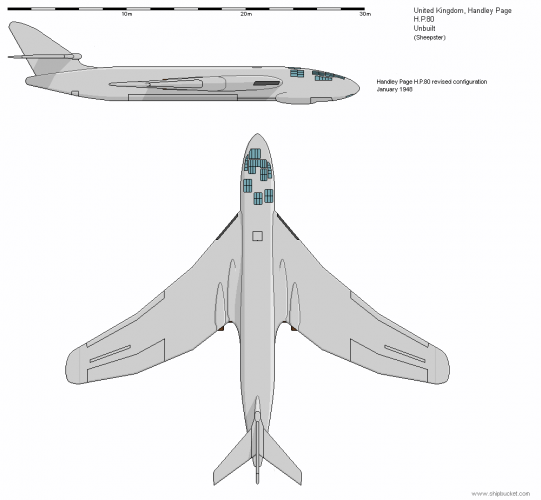 9YEK8sl.png16.1 KB · Views: 60
 -
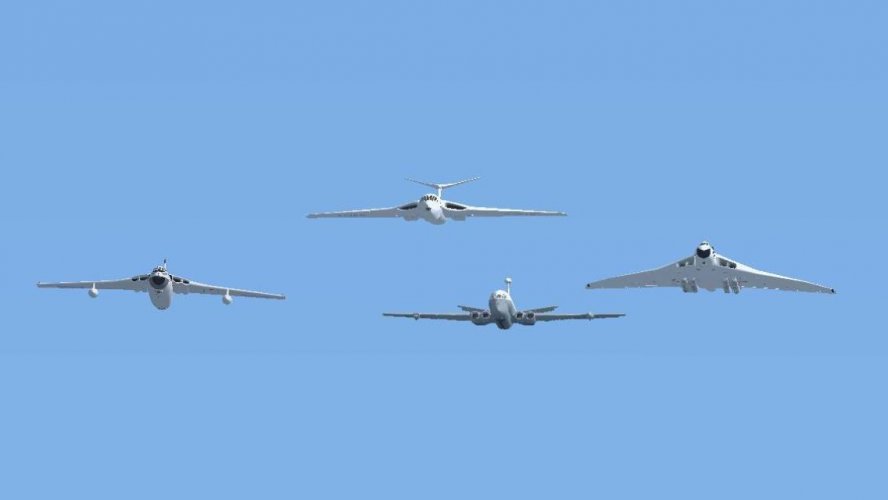 469042561_10160381590956987_5939676450791959166_n.jpg16.2 KB · Views: 28
Last edited:
blackkite
Don't laugh, don't cry, don't even curse, but.....
- Joined
- 31 May 2007
- Messages
- 9,515
- Reaction score
- 9,661
https://www.key.aero/article/vulcan-and-victor-their-mini-delta-precursors
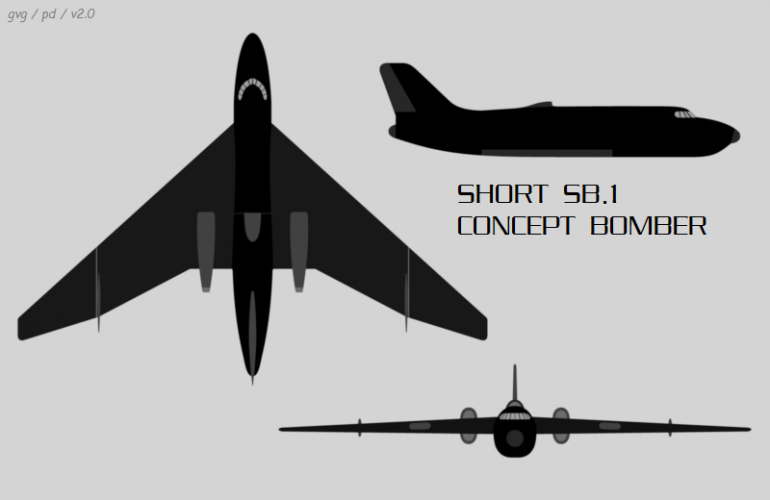
Might have been: SB.1
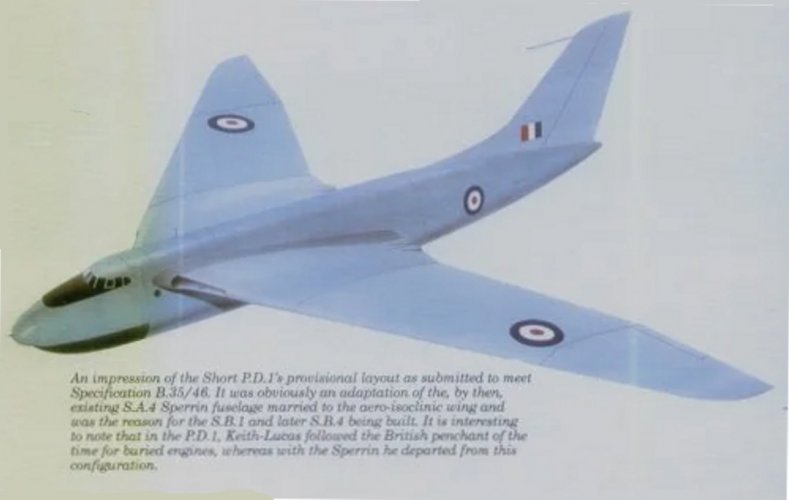
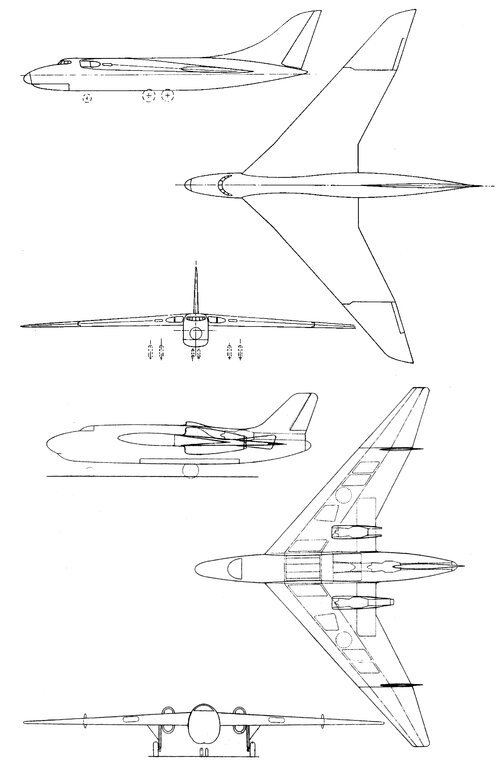
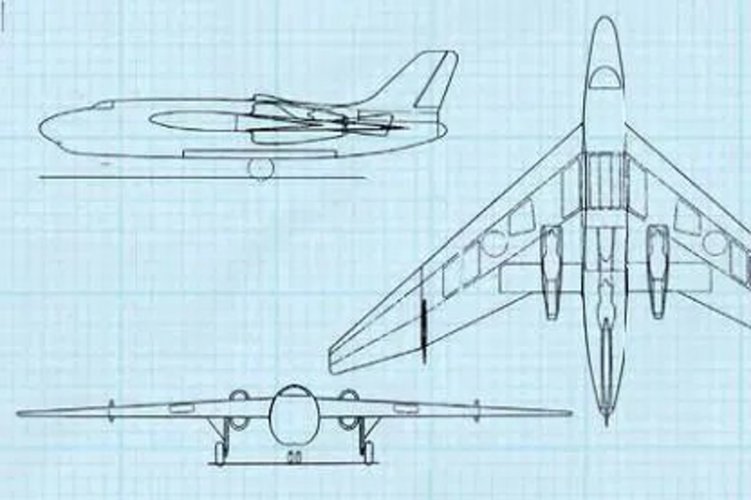
One of the Shorts submissions for the V-bomber contest was the SB.1, a flying wing, tail-less project utilising the ‘aeroisoclinic’ wing proposed by Professor Geoffrey Hill. It featured novel all-moving wing tips and the concept was tested by the SB.1 glider, which was rebuilt as the SA.4 Sherpa scale aircraft flown in the 1950s. It is now part of the Ulster Aviation Society’s collection at Long Kesh in Northern Ireland.A second ‘first generation’ V-Bomber design, the Sperrin, was also produced and flew in prototype form, but was ultimately discarded.
The SB.1 had five Rolls-Royce AJ.65s – one housed in the fuselage and two in each wing mounted in pairs one above the other. Span was 114ft (34.75m), all up weight 115,000lb (52,164kg) and projected cruising speed 576mph (927km/h) at 47,000ft (14,326m).
Attachments
blackkite
Don't laugh, don't cry, don't even curse, but.....
- Joined
- 31 May 2007
- Messages
- 9,515
- Reaction score
- 9,661
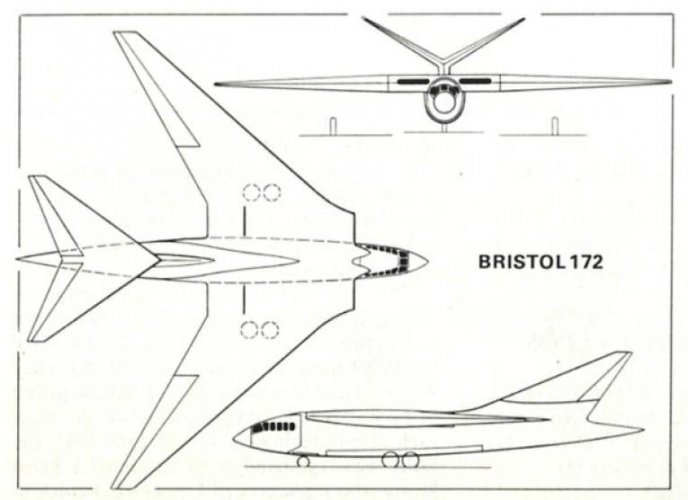
Bristol type 172.
https://www.facebook.com/photo/?fbid=901897132217770&set=a.191040519970105
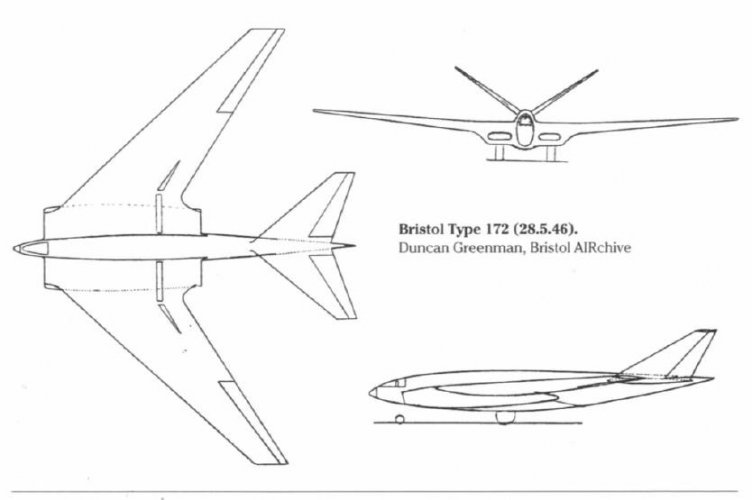
The Bristol Type 172 was a British post-World War II proposed long-range, four-engined jet bomber developed by the Bristol Aeroplane Company under Air Ministry Specification E.8/47. It featured sweptback wings and innovative design work, but aerodynamic issues in early models led to redesign attempts and scaled variants (Types 174).
https://www.facebook.com/photo/?fbid=901897132217770&set=a.191040519970105
The Bristol Type 172 was a British post-World War II proposed long-range, four-engined jet bomber developed by the Bristol Aeroplane Company under Air Ministry Specification E.8/47. It featured sweptback wings and innovative design work, but aerodynamic issues in early models led to redesign attempts and scaled variants (Types 174).
Attachments
Last edited:
blackkite
Don't laugh, don't cry, don't even curse, but.....
- Joined
- 31 May 2007
- Messages
- 9,515
- Reaction score
- 9,661
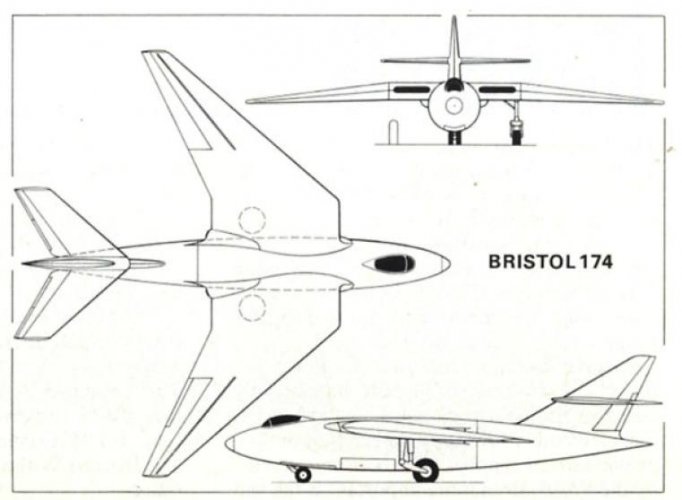
Hi! Another Bristol type 172 drawing and 174 drawing.
https://www.facebook.com/photo/?fbid=122213017742224233&set=pcb.3805799476233088
Type 174 was a half scale flying model for type 172 powered by single Rolls-Royce Nene engine.
https://www.facebook.com/photo/?fbid=122213017742224233&set=pcb.3805799476233088
Type 174 was a half scale flying model for type 172 powered by single Rolls-Royce Nene engine.
Attachments
Last edited:
- Joined
- 26 May 2006
- Messages
- 38,285
- Reaction score
- 20,423
Hi! Another Bristol type 172 drawing and 174 drawing.
https://www.facebook.com/photo/?fbid=122213017742224233&set=pcb.3805799476233088
https://www.secretprojects.co.uk/threads/bristol-type-172-type-174-bomber-projects.22020/
blackkite
Don't laugh, don't cry, don't even curse, but.....
- Joined
- 31 May 2007
- Messages
- 9,515
- Reaction score
- 9,661
blackkite
Don't laugh, don't cry, don't even curse, but.....
- Joined
- 31 May 2007
- Messages
- 9,515
- Reaction score
- 9,661
https://www.facebook.com/photo/?fbi...m.3483509708462068&idorvanity=711627028983697
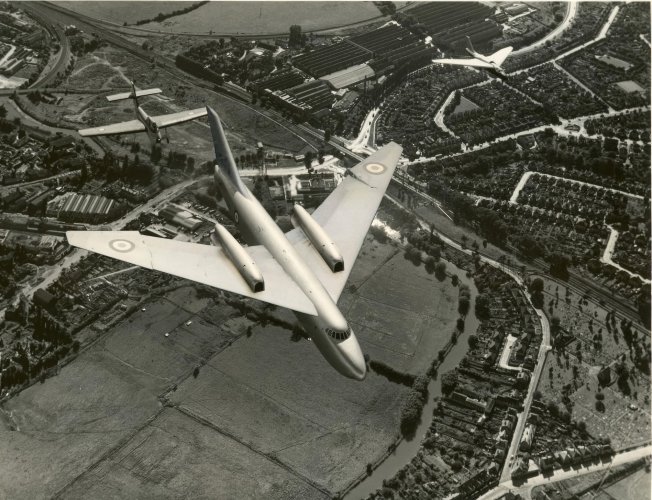
"Interesting to see the Sherpa and Sperrin flying together on an earlier post. Shorts had intended using the aero-isoclinic wing with a modified Sperrin fuselage on their V-bomber submission, the SB.1, so here's a crude mock up from me showing how it may have looked. An alternative design had wing root engines like the other V-bombers, but my attempt at that came out a right abomination. "
"Interesting to see the Sherpa and Sperrin flying together on an earlier post. Shorts had intended using the aero-isoclinic wing with a modified Sperrin fuselage on their V-bomber submission, the SB.1, so here's a crude mock up from me showing how it may have looked. An alternative design had wing root engines like the other V-bombers, but my attempt at that came out a right abomination. "
Attachments
blackkite
Don't laugh, don't cry, don't even curse, but.....
- Joined
- 31 May 2007
- Messages
- 9,515
- Reaction score
- 9,661
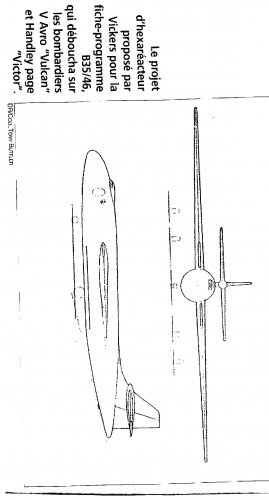
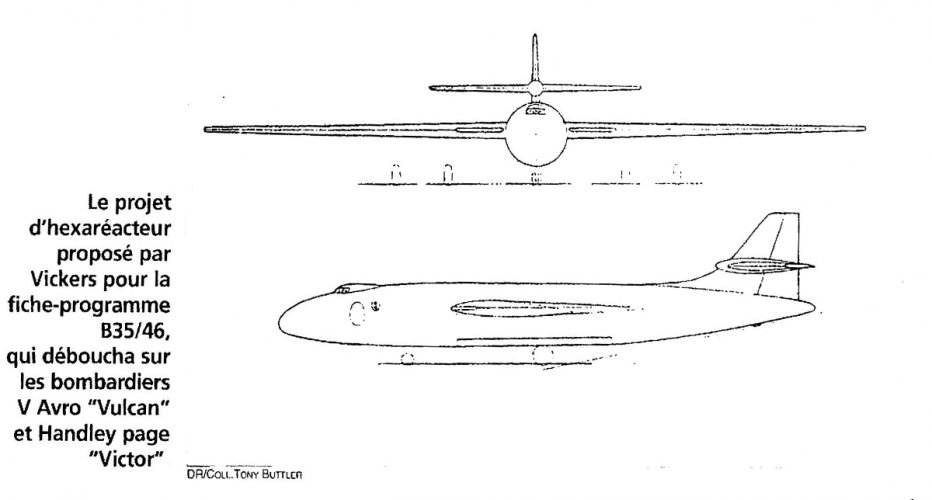
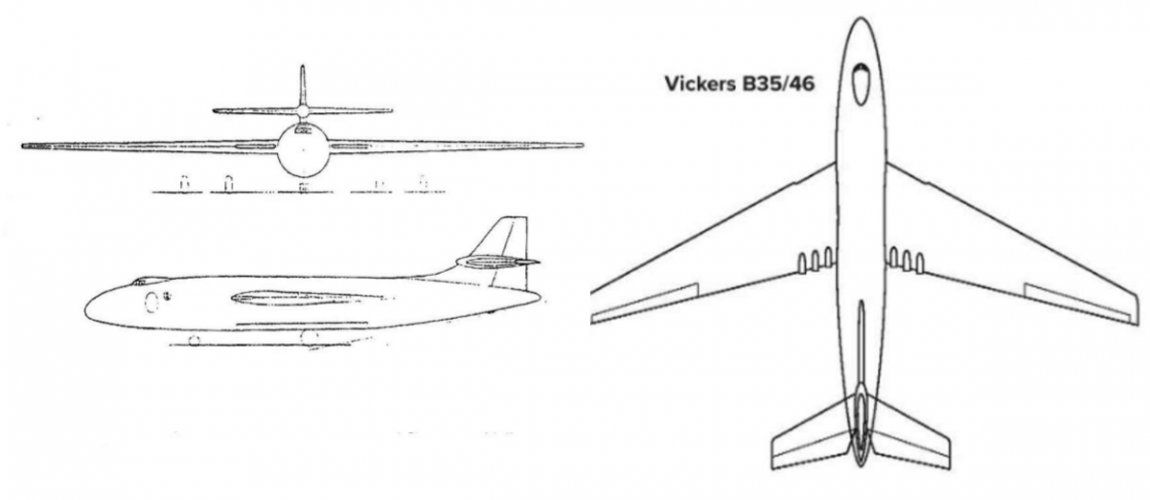
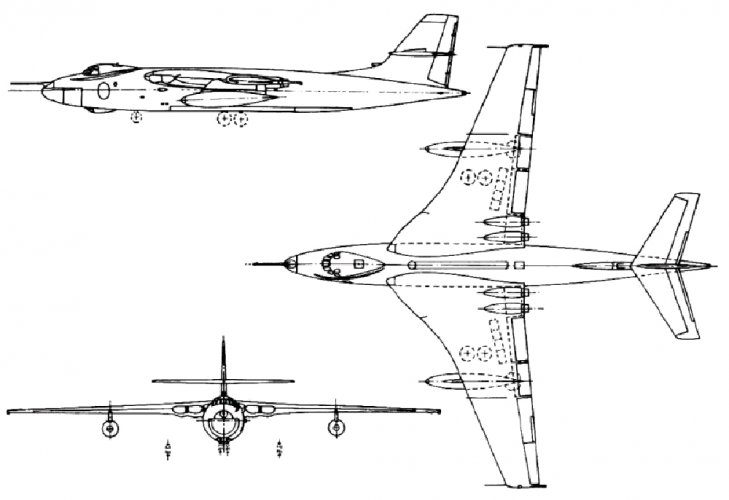
Vickers initially produced a six-engine jet bomber design proposal to meet Specification B.35/46. As progress in the development of more powerful jet engines was made, this was re-worked to a four-engine proposal in 1948.
(wikipedia)
This toura-san's contribution shows the six-engine design later became type 660 Valiant?
(wikipedia)
This toura-san's contribution shows the six-engine design later became type 660 Valiant?
Attachments
Last edited:
blackkite
Don't laugh, don't cry, don't even curse, but.....
- Joined
- 31 May 2007
- Messages
- 9,515
- Reaction score
- 9,661
Early concepts for Avro Vulcan.
https://www.secretprojects.co.uk/threads/early-concepts-for-avro-vulcan.4637/#post-102544
https://www.secretprojects.co.uk/threads/early-concepts-for-avro-vulcan.4637/#post-102544
blackkite
Don't laugh, don't cry, don't even curse, but.....
- Joined
- 31 May 2007
- Messages
- 9,515
- Reaction score
- 9,661
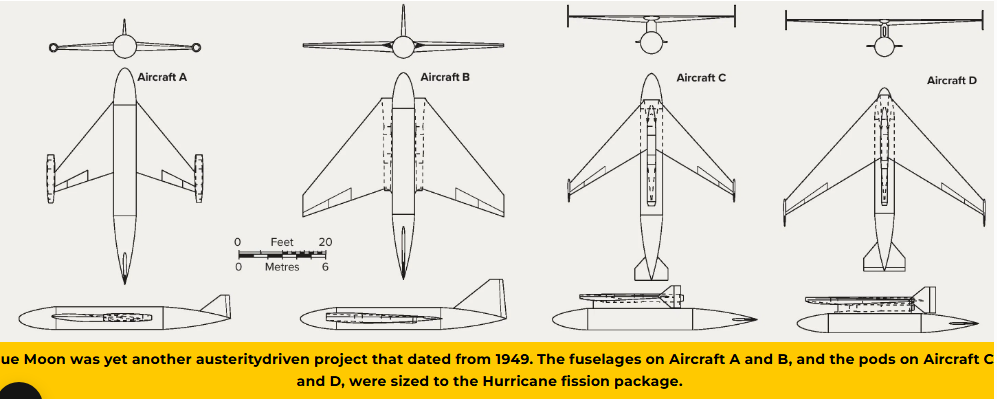
According to Gibson-san, medium bomber was very expensive, two alternative nuclear bomb delivery system were palnned from 1949..
1. Blue moon unmanned bomber which carry Hurricane fission bomb to Moscow.
Aircraft A and B :two Avon engine
Aircraft C and D : single Griffith engine.
Catapult launch or aircraft launch.
2. Smallest and lightest manned aircraft that could carry a Blue Danube or a detachable fairing that allowed high explosive bombs to be carried.
Two crews, pair of Conway turbofan engine.
Take off would be made from a trolley. Landing gear used only for landing.
Blue Moon was cancelled in May 1955 as the V-bombers were entering service.
KEY.AERO FIRST YEAR OF THE ‘V-FORCE' (by smart phone)
1. Blue moon unmanned bomber which carry Hurricane fission bomb to Moscow.
Aircraft A and B :two Avon engine
Aircraft C and D : single Griffith engine.
Catapult launch or aircraft launch.
2. Smallest and lightest manned aircraft that could carry a Blue Danube or a detachable fairing that allowed high explosive bombs to be carried.
Two crews, pair of Conway turbofan engine.
Take off would be made from a trolley. Landing gear used only for landing.
Blue Moon was cancelled in May 1955 as the V-bombers were entering service.
KEY.AERO FIRST YEAR OF THE ‘V-FORCE' (by smart phone)
blackkite
Don't laugh, don't cry, don't even curse, but.....
- Joined
- 31 May 2007
- Messages
- 9,515
- Reaction score
- 9,661
https://www.airvectors.net/avval.html
Both Sperrin prototypes were scrapped in the late 1950s. Shorts also proposed a design based on the SA.4 for the more advanced B.35/46 specification, the "SB.1", featuring a fuselage like that of the SA.4 but with a "tailless" configuration, using the company's "aero-isoclinic" scheme. The outer sections of the wings were pivoted, allowing them to maintain the same incidence even as the wing flexed. The pivoted wingtips acted as both elevators, rotating together to control pitch, and ailerons, rotating in reverse direction to control roll. The SB.1 featured the engine arrangement of the SA.4, with twin Avons in nacelles arranged top and bottom of the wing, but with a fifth Avon added in the rear of the fuselage, with an intake on top.
The SB.1 was too daring for the Air Ministry, though the aero-isoclinic wing was tested on a small demonstrator, the "SB.4 Sherpa", in the early 1950s, with surprisingly good results. However, the aero-isoclinic configuration didn't really seem to have any major advantages over more conventional configurations, and that line of investigation proved a dead end. The Sherpa name would be recycled later for the Shorts 330 / C-23 light twin-engine light transport.
Both Sperrin prototypes were scrapped in the late 1950s. Shorts also proposed a design based on the SA.4 for the more advanced B.35/46 specification, the "SB.1", featuring a fuselage like that of the SA.4 but with a "tailless" configuration, using the company's "aero-isoclinic" scheme. The outer sections of the wings were pivoted, allowing them to maintain the same incidence even as the wing flexed. The pivoted wingtips acted as both elevators, rotating together to control pitch, and ailerons, rotating in reverse direction to control roll. The SB.1 featured the engine arrangement of the SA.4, with twin Avons in nacelles arranged top and bottom of the wing, but with a fifth Avon added in the rear of the fuselage, with an intake on top.
The SB.1 was too daring for the Air Ministry, though the aero-isoclinic wing was tested on a small demonstrator, the "SB.4 Sherpa", in the early 1950s, with surprisingly good results. However, the aero-isoclinic configuration didn't really seem to have any major advantages over more conventional configurations, and that line of investigation proved a dead end. The Sherpa name would be recycled later for the Shorts 330 / C-23 light twin-engine light transport.
Attachments
Similar threads
-
 Edward Lanier's « Paraplane »... and other unnecessary designs
- Started by hesham
- Replies: 15
-
 Breguet 1180 and other projects for French Minerve Program
- Started by Deltafan
- Replies: 25
-

-
installation of AN APQ 7 Radar on planes
- Started by toura
- Replies: 2
-
 Aviation-related garage sale/flea market/auction site finds...
- Started by Stargazer
- Replies: 13