blackkite
Don't laugh, don't cry, don't even curse, but.....
- Joined
- 31 May 2007
- Messages
- 9,515
- Reaction score
- 9,661
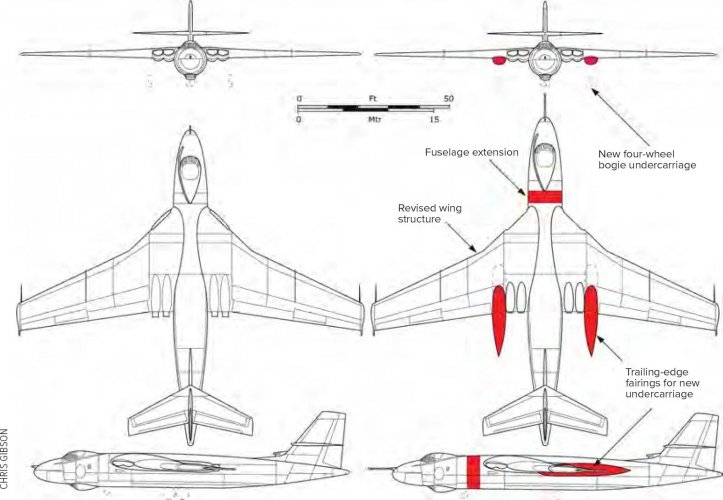
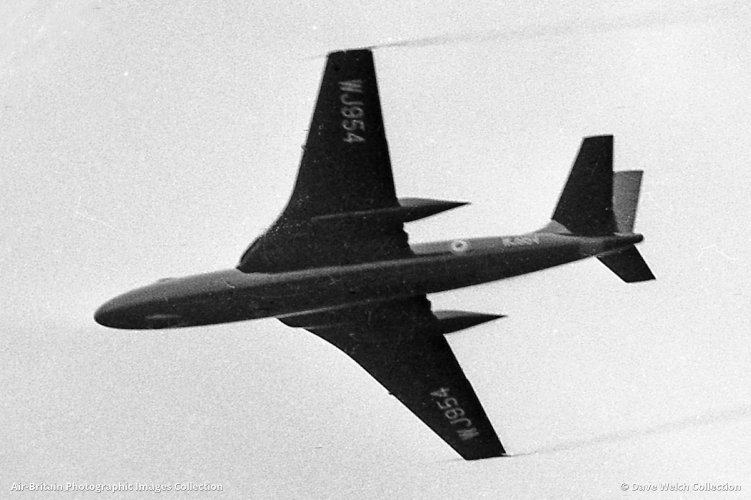
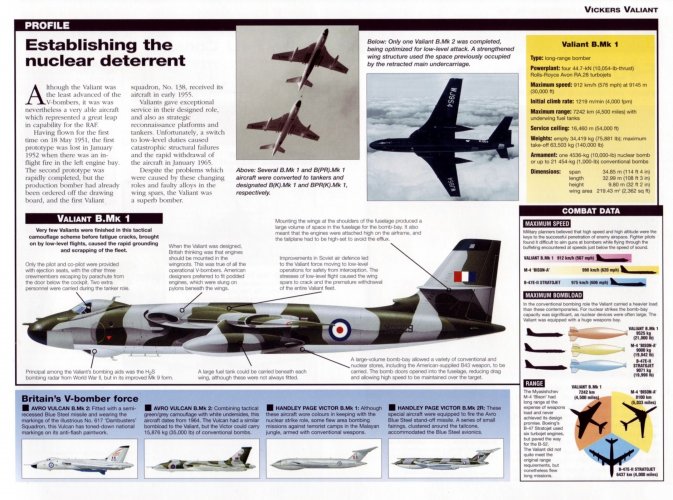
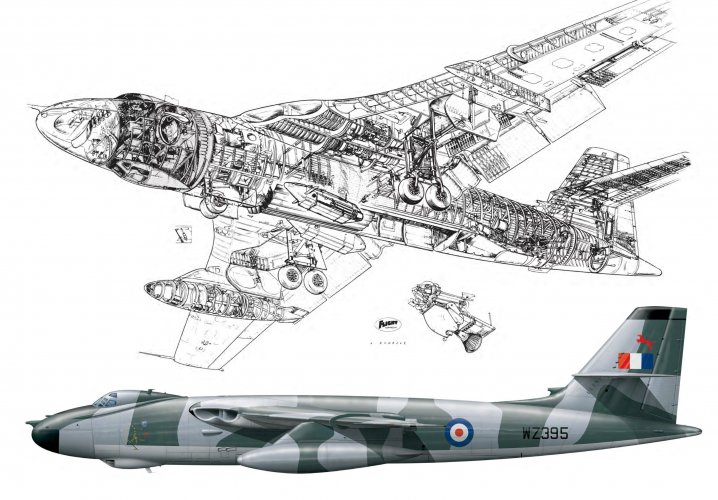
https://www.key.aero/article/v-force-pathfinder-story-unique-black-valiant-b2
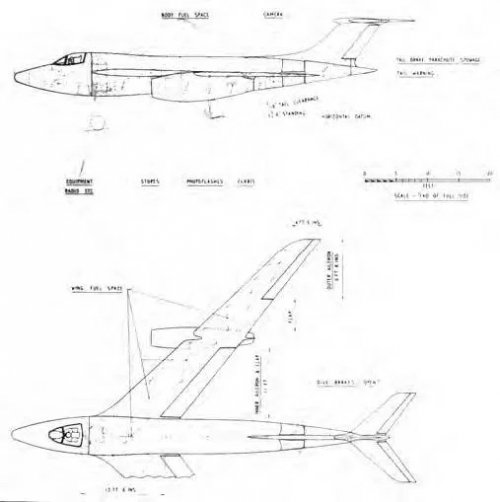
"The Bristol RA6 was to be powered by a pair of scaled-down Bristol Olympus engines rated at 4,400lbf, mounted in underwing nacelles under the swept, high-aspect ratio wings, with a wing sweep of 45°. The wing loading was computed at 96lb per sq ft, which was high, and at the all-up weight of 54,000lb would require rocket-assisted take-off (RATO). This took the form of eight solid rocket motors in vertically stacked pairs, with four rockets on each side of the fuselage just aft of the wing root trailing edge. The stores were to comprise 1,000lb of target markers and 200lb of flares and photo-flashes. To meet the range requirement the RA6 could be fitted with two drop tanks, carried at the four and eight o’clock positions on the fuselage at the centre of gravity. The Air Staff’s desire for marking in a dive was more easily met by Bristol, which fitted the RA6 with large dive brakes on the rear fuselage, while the cockpit afforded an excellent view of the target.
Bristol also suggested a version that used an existing engine, the Armstrong Siddeley Sapphire rated at 7,300lbf, but this would be a larger aircraft with an all-up weight of 73,000lb. This would have a higher cruising altitude of 44,000ft and a higher payload, carrying 2,700lb of stores. The manufacturer further described a slightly smaller version, the RA4, with an even higher wing loading of 108lb per sq ft and less equipment, for an all-up weight of 51,400lb."
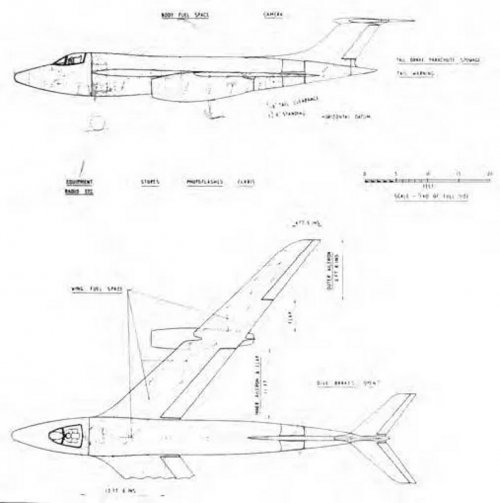
"The Bristol RA6 was to be powered by a pair of scaled-down Bristol Olympus engines rated at 4,400lbf, mounted in underwing nacelles under the swept, high-aspect ratio wings, with a wing sweep of 45°. The wing loading was computed at 96lb per sq ft, which was high, and at the all-up weight of 54,000lb would require rocket-assisted take-off (RATO). This took the form of eight solid rocket motors in vertically stacked pairs, with four rockets on each side of the fuselage just aft of the wing root trailing edge. The stores were to comprise 1,000lb of target markers and 200lb of flares and photo-flashes. To meet the range requirement the RA6 could be fitted with two drop tanks, carried at the four and eight o’clock positions on the fuselage at the centre of gravity. The Air Staff’s desire for marking in a dive was more easily met by Bristol, which fitted the RA6 with large dive brakes on the rear fuselage, while the cockpit afforded an excellent view of the target.
Bristol also suggested a version that used an existing engine, the Armstrong Siddeley Sapphire rated at 7,300lbf, but this would be a larger aircraft with an all-up weight of 73,000lb. This would have a higher cruising altitude of 44,000ft and a higher payload, carrying 2,700lb of stores. The manufacturer further described a slightly smaller version, the RA4, with an even higher wing loading of 108lb per sq ft and less equipment, for an all-up weight of 51,400lb."
Attachments
Last edited: