The max demonstrated Mn of the YF-23 was published. The supercruise speed with the YF120 was not, although Wikipedia cites M1.72.

I do remember that the YF-23 was experiencing some canopy cracking. That may have been the limiting factor in their demonstrated max Mach. We don’t know, but there could also have been an inlet flow stability problem above M1.8, the inlets were redesigned for the F-23 EMD proposal.
 
The max demonstrated Mn of the YF-23 was published. The supercruise speed with the YF120 was not, although Wikipedia cites M1.72.

I do remember that the YF-23 was experiencing some canopy cracking. That may have been the limiting factor in their demonstrated max Mach. We don’t know, but there could also have been an inlet flow stability problem above M1.8, the inlets were redesigned for the F-23 EMD proposal.
The M1.8 number is a little deceiving, I'm pretty sure the through the grapevine max supercruise with the Y120 was around 1.8. The YF-23 would do Mach 2.0 but we (Northrop) wanted focus on other things apparently. We did do a lot of weapons bay vibroacoustics flight testing with the bay operating at various mach number and maneuvering conditions since the bay was pretty large in regards to volume. And we did have the canopy cracking issue but that got resolved. The refined production F-23 with the right engine and the new inlet design wold more than likely exceed M1.8 in supercruise.
 
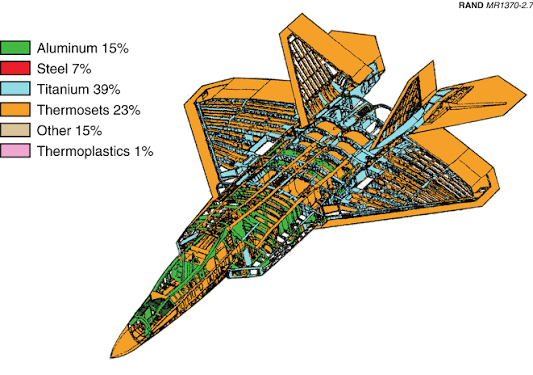
My understanding is neither the F-22 or YF-23 (or any 5th gen) does well on top speed. This is due to the skin being made of composite materials, which while possessing other advantages, isn't particularly resistant to heating. I guess that's another reason why they have fixed inlets.
 

Attachments

  • 1790187339467.png
    1790187339467.png
    148.5 KB · Views: 95
Last edited by a moderator:
This is due to the skin being made of composite materials, which while possessing other advantages, isn't particularly resistant to heating.
"Composites" is a very broad term, there are many exceptional heat resistant composite materials, many of which seeing applications in the aerospace industry.

On average though stealth aircraft tend to be rather chunky and prioritize different attributes over outright maximum speed.
 
"Composites" is a very broad term, there are many exceptional heat resistant composite materials, many of which seeing applications in the aerospace industry.

On average though stealth aircraft tend to be rather chunky and prioritize different attributes over outright maximum speed.
Original requirement was M2.6, which is more than F-15 and just short of Mig-25/31 combat vmax.
But it was found to be unachievable within available resources and priorities.
Not to mention that M2+ speed causes a dramatic increase in an aircraft's IR-signature due to aerodynamic heating of its' airframe.
That part emerged later, with further development of compact IR sensors; in a way, it also can be interpreted as cope.
 
Even the F-15, which can reach M2.3+, has heat limits with the windscreen and canopy being damaged when taken to that speed. Remember that the radome is also composite and one of the highest temperature areas of the aircraft at those speed.

The F-22 can maintain M2 using only approx 1/3 afterburner thrust, according the JB Brown. It can easily exceed M2 in a time limited envelope, similar to other aircraft like the F-111.
 
"Composites" is a very broad term, there are many exceptional heat resistant composite materials, many of which seeing applications in the aerospace industry.

On average though stealth aircraft tend to be rather chunky and prioritize different attributes over outright maximum speed.
True in general, but we know (roughly) what sort of composites does the F-22 use, which are carbon fiber and alternatingly epoxy and bismalemide resin used as binder for the high temp areas.
Which according to this manufacturers website can do 250C sustained and 400C for short periods:
https://raptorresins.com/bismaleimide-resins/

Also I was imprecise - not only temp resistance is worse, but also is the temp conductivity by orders of magnitude, which means its much harder to wick away heat from these parts.

The F-22 can maintain M2 using only approx 1/3 afterburner thrust, according the JB Brown. It can easily exceed M2 in a time limited envelope, similar to other aircraft like the F-111.
I'm glad you brought up the F-111, as that aircraft, like the MIG-25 is famous for not really having a true top speed, and can accelerate until falling apart. I suspect the situation is same with the Raptor, going too fast damages the skin, doesn't mean it's not the right call in a bugout moment.
 
Last edited:
I'm glad you brought up the F-111, as that aircraft, like the MIG-25 is famous for not really having a true top speed, and can accelerate until falling apart. I suspect the situation is same with the Raptor, going too fast damages the skin, doesn't mean it's not the right call in a bugout moment.
I dunno, doing a bugout fast enough to burn the skin of an F-22 is likely going to cost you the plane, even if it does save the pilot.
 
The max demonstrated Mn of the YF-23 was published. The supercruise speed with the YF120 was not, although Wikipedia cites M1.72.

I do remember that the YF-23 was experiencing some canopy cracking. That may have been the limiting factor in their demonstrated max Mach. We don’t know, but there could also have been an inlet flow stability problem above M1.8, the inlets were redesigned for the F-23 EMD proposal.
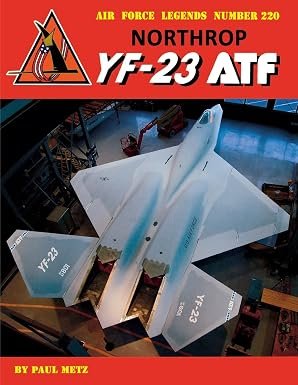
Canopy cracking happened while sitting inside a crate in a warehouse according to Paul Metz in this book.
 

Attachments

  • 71lFZ8vyeQL._SY385_.jpg
    71lFZ8vyeQL._SY385_.jpg
    24.5 KB · Views: 36
Last edited:
Even the F-15, which can reach M2.3+, has heat limits with the windscreen and canopy being damaged when taken to that speed. Remember that the radome is also composite and one of the highest temperature areas of the aircraft at those speed.

The F-22 can maintain M2 using only approx 1/3 afterburner thrust, according the JB Brown. It can easily exceed M2 in a time limited envelope, similar to other aircraft like the F-111.
Paul Metz said, "the top speed is classified but it'll do 1600 miles per hour" on one of the many Discovery/History/TLC airplane documentaries back in the early 00s. Have tried tracking down the specific episode a couple times, for evidence, with no luck. "It's fast. I mean it's really fast. The top speed is classified but it'll do 1600 miles per hour", was the full quote.
 
I dunno, doing a bugout fast enough to burn the skin of an F-22 is likely going to cost you the plane, even if it does save the pilot.
The airframe, maybe. But other components are also being saved alongside the pilot, as compared to ejecting and possibly losing everything and maybe even the pilot as well.
 
JJ Gertler dropped a nugget on the Defense and Aerospace podcast. He said the interim engine for the F-47 is an F100. That's the first I heard of it. I am not sure if this has been said previously.

That's an odd choice. Other than Hermeus, I am not sure that any fighter has used the F100 in recent memory. The F-15EX uses the F110. Recent deliveries of F-16s to Qatar and UAE also use the F110. Block 70 F-16s use the F110. The only Block 72 F-16Vs appear to be upgraded Polish Block 52s.

Is there an upgraded F100 variant going into production? Or will the F-47 use a F100-229? There is the PW-232 but was it ever tested?
I saw something from earlier in the year by Steve Trimble. He said RTX is not the engine supplier for the F-47 and that it is not using adaptive propulsion. I guess at some point we will see who has better sources.
 
If RTX (P&W) is not the engine supplier for the F-47, why is the USAF funding the XA103 development in parallel with the GE XA102? If they have already made the downselect, there is no reason to fund both programs.
 
If RTX (P&W) is not the engine supplier for the F-47, why is the USAF funding the XA103 development in parallel with the GE XA102? If they have already made the downselect, there is no reason to fund both programs.

Congress has “suggested” to DoD to keep completion open basically until production aircraft are rolling off the assembly line (I don’t recall the exact wording, I’ve posted the text verbatim elsewhere here)
 
If RTX (P&W) is not the engine supplier for the F-47, why is the USAF funding the XA103 development in parallel with the GE XA102? If they have already made the downselect, there is no reason to fund both programs.
This is likely just in reference to the interim engine. NGAP engines would be and still are in development/competition, and I imagine they wont make a selection for at least a few years if they feel confident enough with the performance of the F-47 as is. More time to get the NGAP engines refined and maximize the performance gain.
 
, and I imagine they wont make a selection for at least a few years if they feel confident enough with the performance of the F-47 as is.
If history is any indicator, and they were satisfied with the performance "as-is", they'd just cancel the NGAP effort. The reason you'd go for the newer/better engine is because you are NOT satisfied with "as-is".
 
If history is any indicator, and they were satisfied with the performance "as-is", they'd just cancel the NGAP effort. The reason you'd go for the newer/better engine is because you are NOT satisfied with "as-is".
Its possible for both to be true. You can be satisfied with the performance of the operational system as-is, and still recognize that there are still worthwhile gains that can be made with a clean sheet engine. If the gains outweigh the financial cost, its a no brainer. At the end of the day, the current operational system would have to meet the performance objectives/requirements set out by the Airforce. You can't submit a bid using an engine that doesn't exist yet (you can, but...), using metrics that haven't been validated. That would be considered way too high of risk since there's no way to validate the performance you're claiming/proposing.

The program is already expected to be immensely expensive, so investing all this time, resources, and placing strain on the industrial base for an engine with unsatisfactory performance wouldn't make much sense, only to have to revalidate all the subsystems, structure, etc.
 
Its possible for both to be true. You can be satisfied with the performance of the operational system as-is, and still recognize that there are still worthwhile gains that can be made with a clean sheet engine. If the gains outweigh the financial cost, its a no brainer. At the end of the day, the current operational system would have to meet the performance objectives/requirements set out by the Airforce. You can't submit a bid using an engine that doesn't exist yet (you can, but...), using metrics that haven't been validated. That would be considered way too high of risk since there's no way to validate the performance you're claiming/proposing.

The program is already expected to be immensely expensive, so investing all this time, resources, and placing strain on the industrial base for an engine with unsatisfactory performance wouldn't make much sense, only to have to revalidate all the subsystems, structure, etc.
F-14 / TF-30.
 
F-14 / TF-30.
Its not 1969 anymore. There isn't "urgent operational need" in the same sense as there was back then. Procurement has changed. Not to mention, the TF-30 engine was considered a poor alternative from the start since it wasn't even designed for that type of usage, but at the time they had no other option. We have the luxury these days of having more viable and proven engines for fighters depending on what your operational goals are.

We've already seen some educated guesses at what the interim engine could be. The extra desired range can be baked into the aircraft design with larger fuel fraction, modern airframe optimization techniques, and with upgrades on an already existing engine - likely at the detriment of things like supercruise, supersonic performance, etc.
 
Full F-47 Production Line “Not Too Far Away”: USAF General
A full F‑47 production line is approaching as Boeing expands its St. Louis facilities and accelerates development .The Air Force still targets a first flight in 2028 and operational service in the early 2030s .Officials highlight the jet’s sixth‑generation capabilities, including high survivability, long range, and open architecture for rapid upgrades . [...]
Link:
https://www.twz.com/air/full-f-47-production-line-not-too-far-away-usaf-general
 
Remind me to never read the comment section of a TWZ article. I think I got brain cancer from the stupidity.

But it sounds like the air force may be in the mood for buying more than 187 F-47s if they are wanting to add production lines like the general seems to be getting at.
 
Remind me to never read the comment section of a TWZ article. I think I got brain cancer from the stupidity.

But it sounds like the air force may be in the mood for buying more than 187 F-47s if they are wanting to add production lines like the general seems to be getting at.
Based on the quotes in the article, I'm not even sure he's talking about wanting additional production lines for manned fighters and not CCAs. I don't see anything there to indicate a desire for an additional F-47 line specifically. Bringing up Greenville is kind of interesting given the fact that the Air Force has never bought Greenville F-16s.
 
Adaptive three stream designs and the potential thrust, efficiency, power generation and cooling gains over current generation engines is not a panacea for everything, but a lot of force-critical aircraft beyond fighters could stand to benefit, in some cases dramatically.

The US would be wise to “generously” fund both X10x efforts both from a historic POV (F110 wrought a still continuing trend of F100 improvements) but perhaps more importantly, to ensure that the know how to execute and deliver bleeding edge complex systems like an ACE is extant at two or more companies, even if the “loser” of the first F-47 contract is awarded a contract for a subsequent F-47 engine spiral, or for another aircraft.

Personally, I won’t believe anything about GE or PW winning the initial non ACE or later ACE contracts. It seems like a v dynamic and complicated situation.

Whichever group wins a given F-47 spiral/increment engine contract, GE is going to be extremely busy building Viper and EX engines and PW has its hands full with Raider, F135 and the can’t-miss ECU program plus a healthy F100 business - that’s just the current military book!
 
Last edited:
Remind me to never read the comment section of a TWZ article. I think I got brain cancer from the stupidity.

But it sounds like the air force may be in the mood for buying more than 187 F-47s if they are wanting to add production lines like the general seems to be getting at.
The comments on TWZ are coming from mental disorder people a lot need to finish in a asylum.
 
Based on the quotes in the article, I'm not even sure he's talking about wanting additional production lines for manned fighters and not CCAs. I don't see anything there to indicate a desire for an additional F-47 line specifically.
Sure. The wording is ambiguous but I read it as a worst case best case kinda thing since a lot of this probably rests in congress's hands.

So we need to grow the existing production lines, and we need to – or at least maximize what we can get out of those existing production lines, and we need to add production lines.
For those unwilling to click in, thats the quote with regards to both manned and unmanned fighters. No mention of which types he wants to add production lines for, but its probably CCAs and F-47s if the budget permits. Maybe F-35s since that was also mentioned. Cant see F16s or F15s get a second production line.
 

Similar threads

Back
Top Bottom