
You are using an out of date browser. It may not display this or other websites correctly.
You should upgrade or use an alternative browser.
You should upgrade or use an alternative browser.
Boeing F-47 NGAD - Speculation and Theories
- Thread starter Bounce
- Start date
This because Breguet range equation assumes steady level flight (trimmed). So SFC in that equation should be whatever SFC is needed to produce the thrust needed to balance out the drag at your cruise condition.Engine thrust doesn't actually enter into the equation at all. At least not in the calculator I used.
If you have TFSC then you multiply it by cruise drag to get the SFC at cruise. This is also why you don’t double TSFC when you have two engines because presumably each engine will now only need to produce half the thrust to maintain cruise.
The tricky part about trying to predict range is therefore actually trying to estimate the drag of the aircraft. The range of possible TSFC is pretty narrow relative to range of weight and drag. (0.55-.75 is about what you can expect for modern turbojet engines) If you are going to play around with the Breguet range equation, you’d get far more variation playing with weight and L/D. This is also why TSFC isn’t as well protected as L/D and you can find TSFC on engine datasheets and gets passed around to help aerospace engineers design aircrafts. You really wouldn’t see much variation coming from the SFC term in the equation unless adaptive cycle engine is a thing and you can get TSFC closer to high bypass ratio engines (around 0.3).
If I was going to play around with the Brequet range equation I’d probably take a range of L/D based on historical data of various configurations and some guesses on empty weight and MTOW. From those values you can get Drag and thrust SFC from TSFC and fill out the rest of the range equation to get range.
You wouldn’t go without an afterburner because not having one will significantly increase the TOFL required to operate the aircraft; especially at full combat load. Whatever your max dry thrust and dry T/W ratio is, afterburners will increase that and shorten your TOFL. Seeing how basing option and ACE is at the top of wargame planners mind these days, I’m willing to bet that you will have an afterburner even if it’s just so you can operate NGAD out of more places.If the required thrust‑to‑weight ratio is achieved without afterburner, why not do without it?
JJ Gertler dropped a nugget on the Defense and Aerospace podcast. He said the interim engine for the F-47 is an F100. That's the first I heard of it. I am not sure if this has been said previously.
That's an odd choice. Other than Hermeus, I am not sure that any fighter has used the F100 in recent memory. The F-15EX uses the F110. Recent deliveries of F-16s to Qatar and UAE also use the F110. Block 70 F-16s use the F110. The only Block 72 F-16Vs appear to be upgraded Polish Block 52s.
Is there an upgraded F100 variant going into production? Or will the F-47 use a F100-229? There is the PW-232 but was it ever tested?
That's an odd choice. Other than Hermeus, I am not sure that any fighter has used the F100 in recent memory. The F-15EX uses the F110. Recent deliveries of F-16s to Qatar and UAE also use the F110. Block 70 F-16s use the F110. The only Block 72 F-16Vs appear to be upgraded Polish Block 52s.
Is there an upgraded F100 variant going into production? Or will the F-47 use a F100-229? There is the PW-232 but was it ever tested?
Is there an upgraded F100 variant going into production? Or will the F-47 use a F100-229? There is the PW-232 but was it ever tested?
The F100 is probably just a placeholder engine to enable the flight-testing of the airframe until the definitive production engine is available (Just like how the Lockheed A-12 (SR-71 precursor) first five airframes flew with the P&W J75 before flightworthy J58s were available).
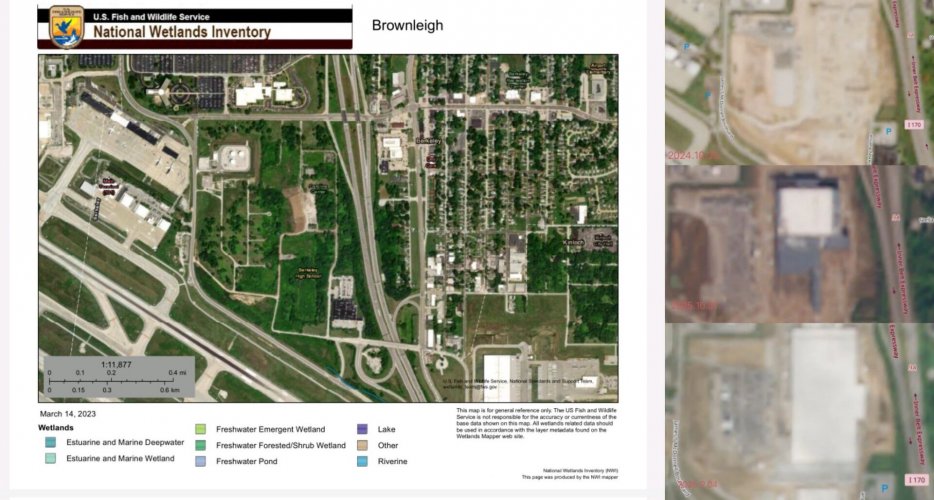
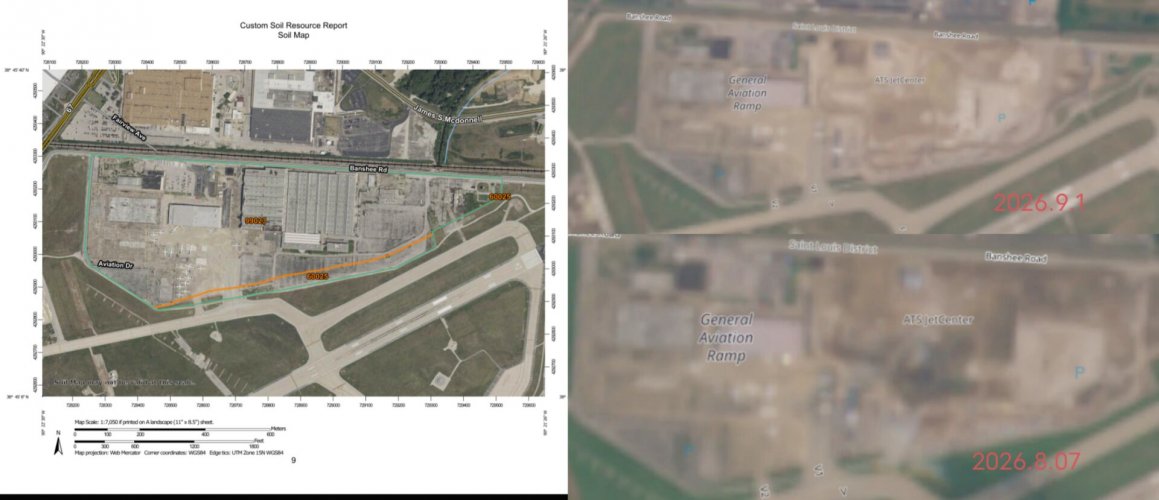
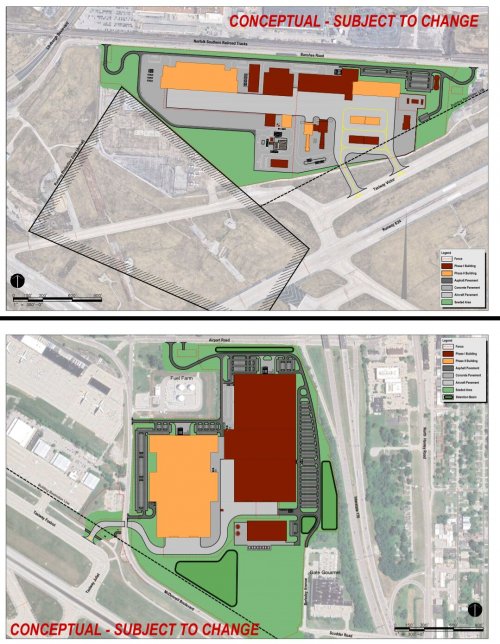
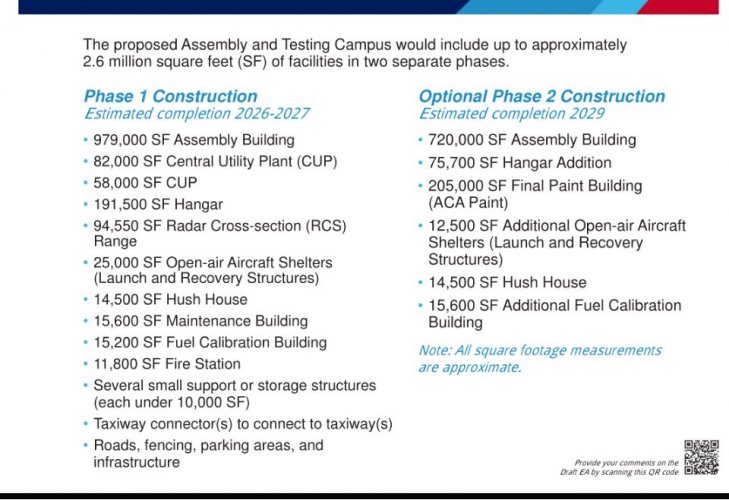
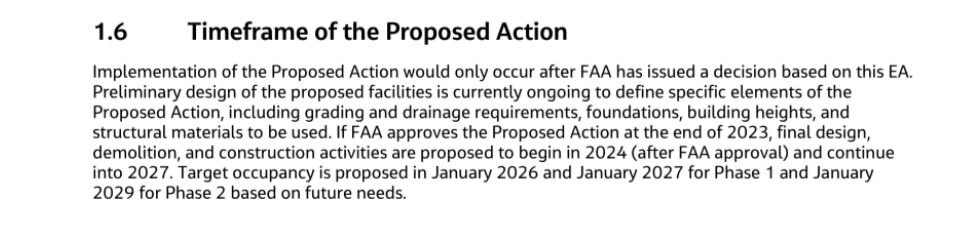
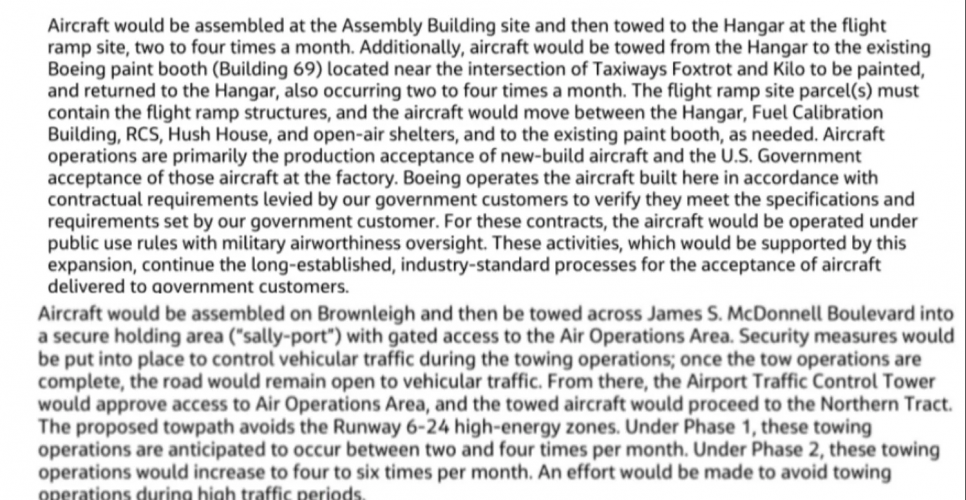
The Phase 1 assembly plant has been completed and is ready for use; additionally, the Phase 1 facilities in the northern section are scheduled to come online in January 2027. The total area for Phase 1 is 138,156.3 square meters (approximately 207.2 *mu*, excluding other facilities).
Construction for Phase 2 is projected to begin in 2029 (optional).
The last image is worth a closer look!
Construction for Phase 2 is projected to begin in 2029 (optional).
The last image is worth a closer look!
Attachments
Scott Kenny
ACCESS: USAP
- Joined
- 15 May 2023
- Messages
- 19,644
- Reaction score
- 28,116
Yeah, I was expecting F110s, not F100s. Or a couple of F119s for the higher exhaust velocity for the test birds.Definitely, but I don’t think anyone thought it would be that particular engine.
ETA: from what I heard it is unexpected. But I am not well informed.

- Joined
- 30 May 2023
- Messages
- 671
- Reaction score
- 1,446
Thanks for flagging @B2Blain
I agree that I too specifically had thought a F110 derivative was going to be used for at least the first increment but the more concrete belief was that an engine derived from the F100/F110 class was going to be used given NGAP timelines.
It’ll be interesting if the choice of going with the F100 reflected something unique PW achieved with a derivative, the fact that GE will have it hands full with EX engines (tbd what happens with a USAF Viper G model pot’l buy), something else or a combo of the foregoing.
I agree that I too specifically had thought a F110 derivative was going to be used for at least the first increment but the more concrete belief was that an engine derived from the F100/F110 class was going to be used given NGAP timelines.
It’ll be interesting if the choice of going with the F100 reflected something unique PW achieved with a derivative, the fact that GE will have it hands full with EX engines (tbd what happens with a USAF Viper G model pot’l buy), something else or a combo of the foregoing.
- Joined
- 30 May 2023
- Messages
- 671
- Reaction score
- 1,446
One wonders if the USAF should consider accelerating the treatment of these sites likes this as they would any other strategic asset that would be high on any number of counterparties target list. By treatment I crudely refer to some of the obvious remedies that arise from studying the Ukraine and ME wars and the accuracy, diversity and persistency of the fires toward certain HV targets.
But I think it might be good to start with a generous supplementation of HAS, dense & multilayered netting and cope cages.
But I think it might be good to start with a generous supplementation of HAS, dense & multilayered netting and cope cages.
sqd5driver
I really should change my personal text
- Joined
- 21 November 2016
- Messages
- 14
- Reaction score
- 59
I’ve been wondering about that same thing lately. We have always enjoyed a degree of separation here in CONUS with respect to MIC manufacturing and outside people who may have a vested interest in seeing places like these damaged or destroyed. It’s just not something that usually gets a great deal of focus outside of the geographical boundaries of a specific manufacturing plant or assembly line.
Seems to me that now might be a VERY good time to start making total security a bigger priority, especially now that we have seen first hand how much damage an inexpensive RC toy can be in the hands of a motivated and ill-intentioned person or group. It wouldn’t take much at all to shut down a critical part of any one of these lines, and that is…eh…mildly terrifying.
Seems to me that now might be a VERY good time to start making total security a bigger priority, especially now that we have seen first hand how much damage an inexpensive RC toy can be in the hands of a motivated and ill-intentioned person or group. It wouldn’t take much at all to shut down a critical part of any one of these lines, and that is…eh…mildly terrifying.
Last edited:

- Joined
- 9 March 2021
- Messages
- 171
- Reaction score
- 756
Afterburner is in. Supercruise is out.You wouldn’t go without an afterburner because not having one will significantly increase the TOFL required to operate the aircraft; especially at full combat load. Whatever your max dry thrust and dry T/W ratio is, afterburners will increase that and shorten your TOFL. Seeing how basing option and ACE is at the top of wargame planners mind these days, I’m willing to bet that you will have an afterburner even if it’s just so you can operate NGAD out of more places.
- Joined
- 28 January 2008
- Messages
- 1,664
- Reaction score
- 4,244
I think supercruise will be in but to what max mach number?Afterburner is in. Supercruise is out.
Scott Kenny
ACCESS: USAP
- Joined
- 15 May 2023
- Messages
- 19,644
- Reaction score
- 28,116
I'd guesstimate to about M1.5 as the threshold number. If someone could pull off M1.8 I think they'd take it.I think supercruise will be in but to what max mach number?
- Joined
- 28 January 2008
- Messages
- 1,664
- Reaction score
- 4,244
I think 1.8 feasible. I am wondering when the new adaptive engine comes into play, possibly Mach 2 supercruise?I'd guesstimate to about M1.5 as the threshold number. If someone could pull off M1.8 I think they'd take it.
Scott Kenny
ACCESS: USAP
- Joined
- 15 May 2023
- Messages
- 19,644
- Reaction score
- 28,116
No, I think that the 3-stream engines will lose exhaust flow velocity compared to a standard F119. And exhaust velocity is what lets you supercruise.I think 1.8 feasible. I am wondering when the new adaptive engine comes into play, possibly Mach 2 supercruise?

Reddington777
ACCESS: Top Secret
- Joined
- 23 March 2025
- Messages
- 843
- Reaction score
- 2,785
Wouldnt the adaptive cycling third stream be closed for high mach transit? It would be completely open at subsonic speeds and somewhere in between otherwise.I think 1.8 feasible. I am wondering when the new adaptive engine comes into play, possibly Mach 2 supercruise?
Wonder if there is connection with RTX's deal with Hermeus to produce F100s? Was there a competition or did Boeing or the AF select the F100 based on design considerations or test data from the demontrator(s)?Thanks for flagging @B2Blain
I agree that I too specifically had thought a F110 derivative was going to be used for at least the first increment but the more concrete belief was that an engine derived from the F100/F110 class was going to be used given NGAP timelines.
It’ll be interesting if the choice of going with the F100 reflected something unique PW achieved with a derivative, the fact that GE will have it hands full with EX engines (tbd what happens with a USAF Viper G model pot’l buy), something else or a combo of the foregoing.
Scott Kenny
ACCESS: USAP
- Joined
- 15 May 2023
- Messages
- 19,644
- Reaction score
- 28,116
I believe that's the CONOPS, yes.Wouldnt the adaptive cycling third stream be closed for high mach transit? It would be completely open at subsonic speeds and somewhere in between otherwise.
- Joined
- 30 May 2023
- Messages
- 671
- Reaction score
- 1,446
the case of why F100 for Hermeus is of course another horse and nothing to do with -XXs engines, although the F100 is a proven, well understood and modernized so it’s a good baseline design.
Still no word on power generation.
Still no word on power generation.
Last edited:

dark sidius
ACCESS: Top Secret
- Joined
- 1 August 2008
- Messages
- 1,633
- Reaction score
- 1,741
May be not , Hermeus work on a precooler for the F-110 to push the trust to enable mach 3. May be it could be use on the F-47.the case of why F100 for Hermeus is of course another horse and nothing to do with -XXs engines, although the F100 is a proven, well understood and modernized so it’s a good baseline design.
Still no word on power generation.

- Joined
- 3 June 2011
- Messages
- 20,967
- Reaction score
- 19,213
It was tested (and reached 37,150lbs of thrust) but I doubt they ever built any beyond the one test item. F119 Doctor would probably know more about that.JJ Gertler dropped a nugget on the Defense and Aerospace podcast. He said the interim engine for the F-47 is an F100. That's the first I heard of it. I am not sure if this has been said previously.
That's an odd choice. Other than Hermeus, I am not sure that any fighter has used the F100 in recent memory. The F-15EX uses the F110. Recent deliveries of F-16s to Qatar and UAE also use the F110. Block 70 F-16s use the F110. The only Block 72 F-16Vs appear to be upgraded Polish Block 52s.
Is there an upgraded F100 variant going into production? Or will the F-47 use a F100-229? There is the PW-232 but was it ever tested?

BonPlan2
ACCESS: Top Secret
- Joined
- 5 June 2025
- Messages
- 579
- Reaction score
- 741
YF23 was supercruising to mach 1.8 if I remember well.I think 1.8 feasible. I am wondering when the new adaptive engine comes into play, possibly Mach 2 supercruise?
- Joined
- 28 January 2008
- Messages
- 1,664
- Reaction score
- 4,244
And you are correct.YF23 was supercruising to mach 1.8 if I remember well.
- Joined
- 15 January 2021
- Messages
- 654
- Reaction score
- 2,887
The F100-232 had a 275 pps airflow fan derived from the YF119 design mounted to the -229 core and LPT. As far as I know, there were only a few (possibly only one) ground test demonstration prototypes built. While I don’t know for sure, the 37k thrust demonstration would have been accomplished on a cold day where the fan could have been pushed to its full potential without exceeding short term turbine temperature limits. The production engine would have been rated at 32K running regular -229 turbine temperatures.
Since the -232 fan was longer than the -229 fan, the production engine would have had a shortened AB section, extended gearbox PTO front cover, and several offset customer bleed connections to line up with the normal F-15/F-16 engine bay interfaces. If this engine was resurrected for an interim engine for either the F-47 or F/A-XX, these change consideration would be different.
Since the -232 fan was longer than the -229 fan, the production engine would have had a shortened AB section, extended gearbox PTO front cover, and several offset customer bleed connections to line up with the normal F-15/F-16 engine bay interfaces. If this engine was resurrected for an interim engine for either the F-47 or F/A-XX, these change consideration would be different.
- Joined
- 3 June 2011
- Messages
- 20,967
- Reaction score
- 19,213
Does it seem strange they'd go through the trouble of doing that rather than just using F110s? Apparently the -229s exhaust velocity is hotter/faster than the F110s, which I'd think would make it better at high speed, but from what I've read, the F110 F-16s are quicker than the -229 F-16s.The F100-232 had a 275 pps airflow fan derived from the YF119 design mounted to the -229 core and LPT. As far as I know, there were only a few (possibly only one) ground test demonstration prototypes built. While I don’t know for sure, the 37k thrust demonstration would have been accomplished on a cold day where the fan could have been pushed to its full potential without exceeding short term turbine temperature limits. The production engine would have been rated at 32K running regular -229 turbine temperatures.
Since the -232 fan was longer than the -229 fan, the production engine would have had a shortened AB section, extended gearbox PTO front cover, and several offset customer bleed connections to line up with the normal F-15/F-16 engine bay interfaces. If this engine was resurrected for an interim engine for either the F-47 or F/A-XX, these change consideration would be different.

- Joined
- 15 January 2021
- Messages
- 654
- Reaction score
- 2,887
The top speed demonstrated by either YF-23 aircraft during Dem-Val was approximately M1.8. The supercruise performance with the GE YF120 has never been publicly acknowledged, other than “very fast”. However, the YF120 was very thirsty in the low bypass supersonic mode, significantly less fuel efficient than the YF119.
The production F-22/F119 regularly supercruises at M1.7+
The production F-22/F119 regularly supercruises at M1.7+
- Joined
- 15 January 2021
- Messages
- 654
- Reaction score
- 2,887
The F110-129 has higher airflow and BPR than the F100-229 (270 pps / 0.7 vs 250 pps / 0.4) so there is more air in the exhaust for the AB to use, with exhaust being similar in temperature in AB. I would expect the -229 to have better supercruise performance than the -129, if either was able to supercruise, all else being equal (which it never is).

bring_it_on
I really should change my personal text
- Joined
- 4 July 2013
- Messages
- 4,220
- Reaction score
- 5,762
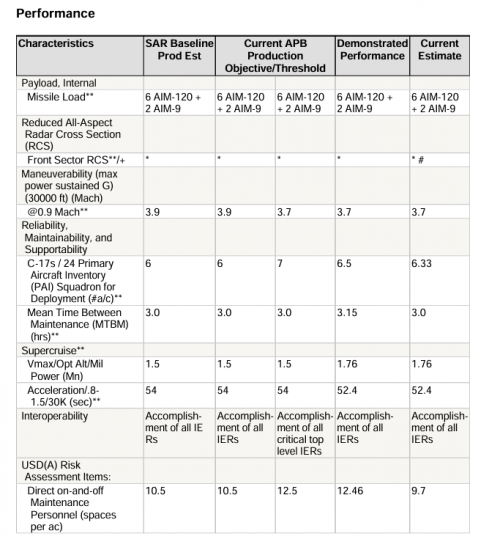
The December 2010 SAR for the F-22 lists demonstrated supercruise performance as Mach 1.76 vs a SAR baseline (program requirement) of 1.5.
Attachments
Last edited:
- Joined
- 15 January 2021
- Messages
- 654
- Reaction score
- 2,887
It would be very unlikely that the F100-232 would be resurrected for this purpose. If demonstrating supercruise with intermin engines is important, then the F119 would be the only choice. If you just want to fly fast and it doesn’t matter if it is supercruise, the F110-129 or 132 (if available, not currently in production AFAIK) would probably fit the bill. My guess is that the F100-229 would have sufficient thrust performance, but the engine airflow is low enough to impact any demonstration of inlet performance due to flow mismatch.Does it seem strange they'd go through the trouble of doing that rather than just using F110s? Apparently the -229s exhaust velocity is hotter/faster than the F110s, which I'd think would make it better at high speed, but from what I've read, the F110 F-16s are quicker than the -229 F-16s.
Reddington777
ACCESS: Top Secret
- Joined
- 23 March 2025
- Messages
- 843
- Reaction score
- 2,785
Gertler's response is that he "presumes" F100 for the first F-47s based on the comment that the demonstrator (AII-X demonstrator) flew with F100s.
The demonstrator may well have flown with an F100 because it doesnt need to demonstrate exactly what an EMD F-47 will be. It makes no sense that theres necessarily some causal relation between the demonstrator, which doesnt even need to supercruise or go particularly fast, and the first F-47s which has an absolute need to go fast.
Gertler may be qualified more than we are but his wording and the logic behind the assessment is pretty weak unless that F100 has been FUBAR'd by modifications.
The demonstrator may well have flown with an F100 because it doesnt need to demonstrate exactly what an EMD F-47 will be. It makes no sense that theres necessarily some causal relation between the demonstrator, which doesnt even need to supercruise or go particularly fast, and the first F-47s which has an absolute need to go fast.
Gertler may be qualified more than we are but his wording and the logic behind the assessment is pretty weak unless that F100 has been FUBAR'd by modifications.
Last edited:
Scott Kenny
ACCESS: USAP
- Joined
- 15 May 2023
- Messages
- 19,644
- Reaction score
- 28,116
Okay, that makes a lot more sense.Gertler's response is that he "presumes" F100 for the first F-47s based on the comment that the demonstrator (AII-X demonstrator) flew with F100s.
Similar threads
-

-

-
 DARPA to Transfer Advanced Space Debris Telescope to Air Force
- Started by Flyaway
- Replies: 6
-
 USAF/USN 6th Gen Fighters - F/A-XX, F-X, NGAD, PCA, ASFS News & Analysis [2008- 2025]
- Started by Matej
- Replies: 10K
-
Richard Vogt and B-47 design origins – father of all jets?
- Started by Ivan Culjak
- Replies: 3