- Joined
- 6 August 2007
- Messages
- 4,573
- Reaction score
- 10,565
What on earth is all-aspect, 360 degree stealth?
A myth perpetuated by people who don’t understand physics.

What on earth is all-aspect, 360 degree stealth?
Does NGAD share these technologies with the F/A-XX or are they primarily for the F-47?Most of the key new technologies deemed critical for NGAD have not been widely publicly discussed. Those things and the capabilities they deliver will probably define what “sixth generation” means to people.

Only a Klingon could understandA myth perpetuated by people who don’t understand physics.

I agree with you on that, and I did mention this some pages earlier, but I believe that the F-47 and the F/A-XX will be wholly different system due to the USAF and US Navy having different requirements for their respective programs, but given that many of those requirements align with each other, they would share common ancestry in both technology, doctrine and many more, including sensor fusion, CCAs, advanced stealth and increased range, among others.


Apparently Boeing has all kinds of extra capacity laying around. Just as soon as they get the buildings built.Forgive me if this has been stated before, but the USNI announcement of the selection had this to say with respect to the source selection:
Chief of Naval Operations Adm. Daryl Caudle said earlier this year the choice for the F/A-XX contract came down to the capacity of the builder. “The Navy’s got a lot of demand… making sure that we don’t, again, fall into a trap of oversubscribing,” he said. “One of the contractors who would make this plane for us is in a place where they really can’t deliver in the time frame we need it. So, there was a ‘check twice, cut once’ kind of mentality here on this decision.”
Like the Super Bug production line ending...Apparently Boeing has all kinds of extra capacity laying around. Just as soon as they get the buildings built.
Apparently Boeing has all kinds of extra capacity laying around. Just as soon as they get the buildings built.
Like the Super Bug production line ending...
But the buildings are there, along with whatever workers they keep. If they keep any.I suspect F/A-XX production line will look nothing like Super Hornets or EX. Some worker overlap/skills; totally different processes, for the most part. The artwork Boeing has floated over the years is admittedly fantastical but still usefully illustrative of the differences in production method changes between even how F-35 is made vs the NGADs, let alone the 35 yo -18E/F/G line
I’m sure a lot of people who know may be giggling at this but i suspect maybe, but also maybe for something noNGAD.But the buildings are there, along with whatever workers they keep. If they keep any.

Would probably remove "different carrier capability", given that the F-47s are designed with zero carrier capability in the first place. (Although I'm not sure if USAF pilots are trained to land on carriers in case of emergencies or if there are actually emergency capabilities within many USAF jets that allow them some carrier capability). As for everything else, you're right on the money.Different size, different engine, different carrier capability - but both sixth generation and from the same manufacturer (and possibly sharing some systems, such as sensors or flight controls)... should be interesting.
Runway arresting gear can stretch out thousands of feet. If an Air Force plane with an arresting hook tried to land on a carrier, it would break its landing gear and either break the hook or rip it out of the airplane.Would probably remove "different carrier capability", given that the F-47s are designed with zero carrier capability in the first place. (Although I'm not sure if USAF pilots are trained to land on carriers in case of emergencies or if there are actually emergency capabilities within many USAF jets that allow them some carrier capability). As for everything else, you're right on the money.
If an Air Force plane with an arresting hook tried to land on a carrier, it would break its landing gear and either break the hook or rip it out of the airplane.
I see. So of course, USAF jets don't have carrier capability. And even if they did land, they'll overshoot the entire angled deck and go for a hard sea landing.Runway arresting gear can stretch out thousands of feet. If an Air Force plane with an arresting hook tried to land on a carrier, it would break its landing gear and either break the hook or rip it out of the airplane.
I think the CF-188 also retained arrestor hooks for use on icy runways and possible dispersal strips.Unless it was a USAF F-4.
Would probably remove "different carrier capability", given that the F-47s are designed with zero carrier capability in the first place.
Correct, but generally, one assumes "different" to be anything but zero or non-existent, so a clarification can be made.To be fair - different can be zero (which is what I meant).

You'd have to be having a particularly bad day for it to become an optionThat being said, we don't need to worry about whether the F-47 has carrier capability because the pilots won't be landing them in aircraft carriers anytime soon.


Or it could mean F/A-XX is good enough at electronic warfare and that it doesn’t need a specialized EW version to do the job of the growler.Looking back at the press release, they mention that the F/A-XX will replace the Growler in 2030. So I think it's safe to assume we'll see a EA-XX variant in the not too distant future?
https://www.war.gov/News/Releases/R...and-us-navy-award-contract-for-fa-xx-program/

DoubtfulLooking back at the press release, they mention that the F/A-XX will replace the Growler in 2030. So I think it's safe to assume we'll see a EA-XX variant in the not too distant future?
https://www.war.gov/News/Releases/R...and-us-navy-award-contract-for-fa-xx-program/
Probably true, although I also half expect them to someday throw NGJ pods on F-35 at some point to juice up its EW capabilities (especially since the Growler is going to notionally be retired by the time they finish developing the high and low band pods, at this rate). Either way, between the two, if they're going to repurpose one of their manned airframes for dedicated EW support, it'll be the workhorse mule F-35, not their thoroughbred air dominance platform.Everything else can be "outsourced" to unmanned aircraft.
Probably like a botched engagement or maintenance failure over open ocean, which is likely to happen in the decades to come. Though in those cases, USAF pilots would still have options on the islands around the Pacific like Guam, the Philippines, and if they still have the fuel, Hawaii. Not to mention, they can get Aerial Refueling if they are in safer and more eastern areas of the ocean which would allow them to return homeYou'd have to be having a particularly bad day for it to become an option
Correct. They will share common ancestry, especially given who's making them both, but they would also have requirements that diverge due to their mission sets, as well as any particulars that pertain to the USAF or US Navy that does not align with the other service (I.e F/A-XX must be carrier capable, F-4 does not need to be carrier capable)The mission requirements aren't the same. The mission defines the aircraft, not the other way around. I'm sure they'll share systems and maybe even the canopy.

The best and safest option - if the pilot has no other choice - is to ditch / eject near a destroyer and get picked up.Probably like a botched engagement or maintenance failure over open ocean, which is likely to happen in the decades to come.
Or it could mean F/A-XX is good enough at electronic warfare and that it doesn’t need a specialized EW version to do the job of the growler.

Apparently theres nothing left to discuss until actual information gets released...Could we make an attempt to discuss the Boeing F/A-XX in this topic?

The rules are somewhat complicated, but in general an offeror has 3 days from notification to request the debriefing, 5 days after that for the government to provide it, and 10 days after that to file a timely protest with the GAO. If written questions are submitted after the debrief, the clock doesn't start ticking until the government responds.Nothing yet related to NG protesting the award, I assume they have already been debriefed regarding the decision?
Is it known why Boeing won? In the case of the F-47, their solution was described as more "revolutionary", whatever that means, but it suggests their design was likely preferable to the "conservative" LM. At the time, I don't recall anything similar for the FA-XX, but I saw rumors on this forum about the B being preferable over a year ago.Nothing yet related to NG protesting the award, I assume they have already been debriefed regarding the decision?
There’s no concrete reason given publicly yet, but I assume it’s because Boeing had a much better design than Northrop given that they’ve given the award to them even with the industrial base concerns regarding boeing having both 6th gen programs.Is it known why Boeing won? In the case of the F-47, their solution was described as more "revolutionary", whatever that means, but it suggests their design was likely preferable to the "conservative" LM. At the time, I don't recall anything similar for the FA-XX, but I saw rumors on this forum about the B being preferable over a year ago.
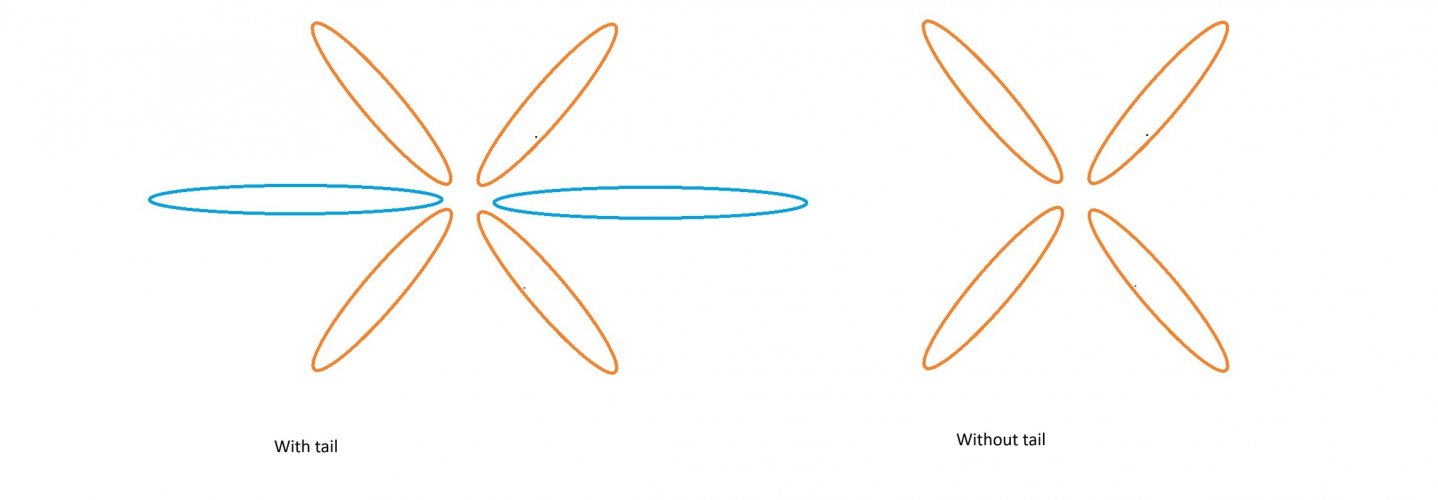
I didn't mean it literally like low RCS from any angle. But traditionally due to the vertical tail, side aspect of stealth fighter can have pretty big RCS, now with that removed their radar scattering map would look like bomber scattering mapWhat on earth is all-aspect, 360 degree stealth? Can anyone explain the physics behind this, or are we really just dreaming of black holes and science fiction?