Let alone comparing a new adaptive cycle to a F110.
“We built NGAP as essentially an agnostic system,” Sneden said. “It was, build the system first, open up options for the future, and then when those options come to the forefront, we’ll be able to take advantage of it. You have to lean into propulsion technology first.”

NGAP is a “host of technologies,” and not a single unified system, Sneden said. That means the technologies could be broken out and integrated piecemeal on other platforms—even older aircraft.

“Not everything has to have an adaptive fan,” Sneden said. “So we can actually take that backwards as well and incorporate it in some of our legacy platforms. So there is a great utilization for this type of tech.”

https://www.airandspaceforces.com/u...ting-ahead-of-2030-integration-onto-aircraft/
 
“We built NGAP as essentially an agnostic system,” Sneden said. “It was, build the system first, open up options for the future, and then when those options come to the forefront, we’ll be able to take advantage of it. You have to lean into propulsion technology first.”

NGAP is a “host of technologies,” and not a single unified system, Sneden said. That means the technologies could be broken out and integrated piecemeal on other platforms—even older aircraft.

“Not everything has to have an adaptive fan,” Sneden said. “So we can actually take that backwards as well and incorporate it in some of our legacy platforms. So there is a great utilization for this type of tech.”

https://www.airandspaceforces.com/u...ting-ahead-of-2030-integration-onto-aircraft/
We are talking about the main FA-XX here not the CCA and other things that will be built. I can see the case for not having adaptive cycle on unmanned systems. As you're saving a ton of cooling/mass/volume by removing the person that can go towards more fuel etc in addition to cost

There's significant airflow/structural requirements differences for fitting a adaptive cycle engine in. This means there's extra parasitic mass/volume if the aircraft doesn't use it. It also means the first block(s) will be bad and won't be able to either use full capability or not even have full capability installed as it won't be able to power/cool it.
 
We are talking about the main FA-XX here not the CCA and other things that will be built. I can see the case for not having adaptive cycle on unmanned systems. As you're saving a ton of cooling/mass/volume by removing the person that can go towards more fuel etc in addition to cost

There's significant airflow/structural requirements differences for fitting a adaptive cycle engine in. This means there's extra parasitic mass/volume if the aircraft doesn't use it. It also means the first block(s) will be bad and won't be able to either use full capability or not even have full capability installed as it won't be able to power/cool it.

The F/A-XX is not going to use adaptive engines. The Navy has been clear about that.
Technologies developed under NGAP and precursor programs can be integrated into other engine designs, including legacy engines. This suite of technologies is more than just "three stream" "adaptive", etc.
 
The F/A-XX is not going to use adaptive engines. The Navy has been clear about that.
Technologies developed under NGAP and precursor programs can be integrated into other engine designs, including legacy engines. This suite of technologies is more than just "three stream" "adaptive", etc.
What about an advanced derivative of the F110-GE-132.
 
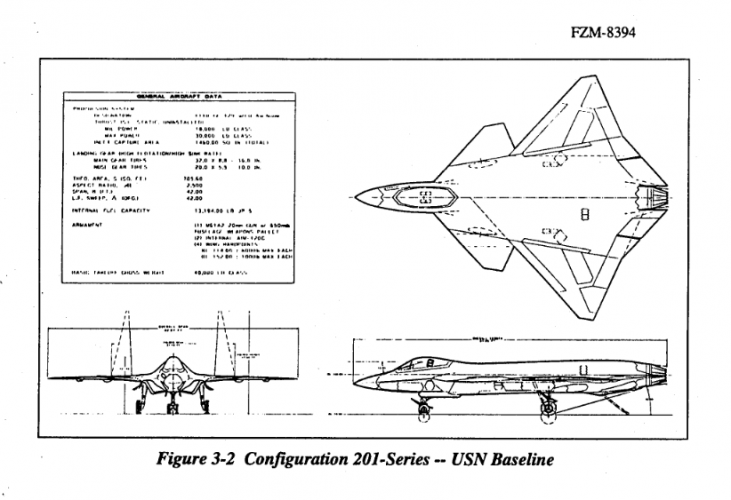
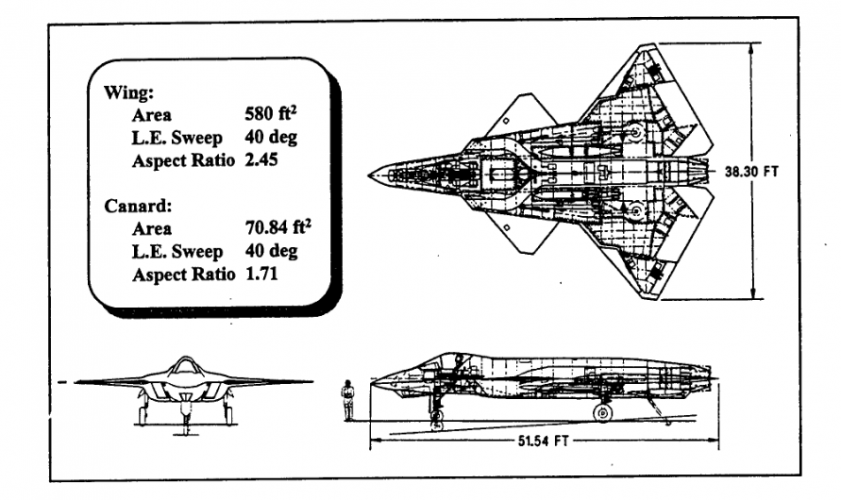
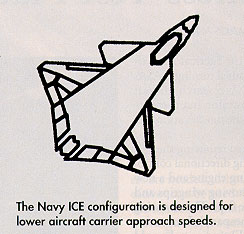
I think it is correct to understand the notch as a flap rather than a canard wing. But the tail wing seemed to have appeared out of nowhere.
And probably the dihedral that someone somewhere mentioned is really just an impression given by the silhouette of the flap, suggesting though that the trailing edge is straight (mostly) and swept slightly forward - so the planform may be diamond-shaped and tailless rather than canard-and-wing.

Actually, not unlike the J-36, come to think of it.
 

Attachments

  • 1790901229234.png
    1790901229234.png
    125.5 KB · Views: 163
  • 1790901271035.png
    1790901271035.png
    145 KB · Views: 137
  • 1790901375282.png
    1790901375282.png
    94.3 KB · Views: 147
Last edited by a moderator:
We are talking about the main FA-XX here not the CCA and other things that will be built.
We are not talking about different things. NGAP technology can be fitted on legacy engines and platforms as the quoted person explicitly says. Even a non adaptive engine like F110 can benefit from the technologies developed from NGAP. And like quellish added, its not just having a third stream. It likely wouldnt greatly impact the required airflow of the engine itself or else it would not be portable to a legacy engine.

It also means the first block(s) will be bad and won't be able to either use full capability or not even have full capability installed as it won't be able to power/cool it.
And this conclusion was reached based on what? Cooling doesnt just come from engines. Heat management is no doubt also part of NGAP and it certainly isnt just using the third stream either.

Unless you happen to know exactly which engine and what technologies were being used, Im not sure how you can be so sure of your conclusion? Id love to be enlightened.
 
Last edited:
The Navy isn't the Air Force with their historical aversion to the "A for attack" designator, if this was mostly a ground attack aircraft with the air-to-air component tacked on it would have an "A" or "A/F" designation.
No, it's got the same F/A designation as the Hornets, Legacy and Super.


I'd say two, possibly three -XX squadrons, got to figure out the -XX and F-35 mission mix.
The CSIS proposed carrier air wing was a single FAXX squadron of 12 and a single F-35 squadron of 12, plus "3-4" squadrons of heavy UCAVs (~26 total UCAV airframes, only 6 airframes per squadron). Those Heavy UCAVs were in the 10-12klbs bombload scale.

The real question is how long the USN plans to operate F-35Cs instead of FAXX. I could see the USN giving every carrier wing one FAXX squadron to start and then loop back around to replace F-35C squadrons with FAXX once all wings have their first squadron.


What about an advanced derivative of the F110-GE-132.
That is basically what I am expecting the FAXX to use.
 
The CCAs are going to need a lot of parking too. I think two FAXX squadrons is probably the max with F-35s.
Two F/A-XX squadrons, same as F-14. The USN would need a sizable CCA with a satisfactory internal payload for LO strike missions then add external stores when you cleared the threats and now you have a bomb truck. The carriers do have specific deck loading requirements, so they have to work out the proper mix for sure. They don't need a manned strike aircraft with a really good payload/range capability, I think those days are gone but the CVW does need something and just can't rely on all strike fighters or scads of small CCAs.
 
No, it's got the same F/A designation as the Hornets, Legacy and Super.


The CSIS proposed carrier air wing was a single FAXX squadron of 12 and a single F-35 squadron of 12, plus "3-4" squadrons of heavy UCAVs (~26 total UCAV airframes, only 6 airframes per squadron). Those Heavy UCAVs were in the 10-12klbs bombload scale.

The real question is how long the USN plans to operate F-35Cs instead of FAXX. I could see the USN giving every carrier wing one FAXX squadron to start and then loop back around to replace F-35C squadrons with FAXX once all wings have their first squadron.


That is basically what I am expecting the FAXX to use.
If you had a navalized Shield AI X-Bat system to complement the F/A-XX, I assume a TBD number of launchers (again precious space), containers to store the aircraft more than likely in some area of the hanger bay, wings off in the container to keep the footprint small and stackable. There are possibilities the USN would have to embrace for sure.
 
If the mods deem this post too political, I will understand.

My impression is that the USN has wanted a decision on this for a year and that the SecDef has stood in the way, just as he did the E-7. And only post Iran war did the value of AWACS and carrier borne aviation slap him in the face. My personal read.
 
What about an advanced derivative of the F110-GE-132.
https://www.secretprojects.co.uk/threads/f110-epe-proposals.40506/

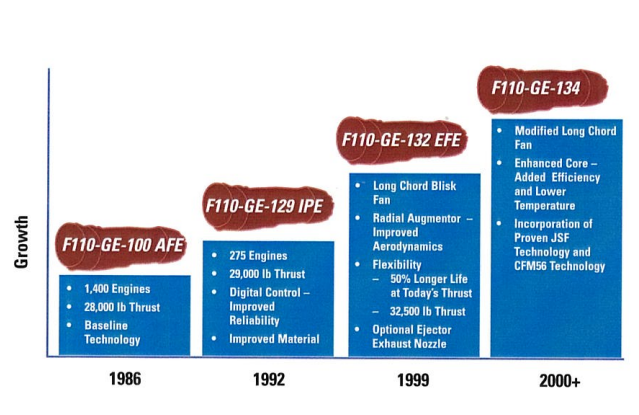
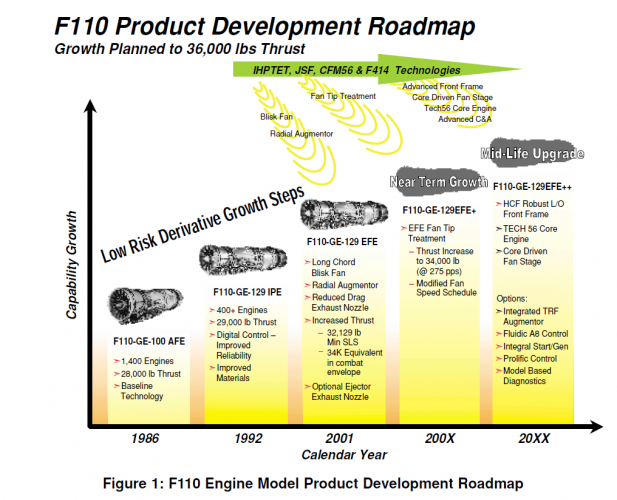
There were further growth options for F110 beyond -132 already proposed such as -134, including application of YF120 VCE technology to the F110:

Our second growth step would build on Step One to deliver performance in the 36 to 37 thousand pound thrust range (about 160 kilo- Newtons ). To accomplish this, we would employ the latest CFM56 high-efficiency core. Dual use of this advanced engine core will lead to lower development costs and improved reliability for both engine programs. We would also introduce a long-life combustor with a laser-drilled multi-hole cooling pattern ; an air-cooled low pressure turbine, and a dual channel FADEC. While increasing performance and reliability, we also expect to cut engine acquisition cost compared with today’s F110 engine. This will be done by using Quality Function Deployment and Design to Cost methods to select those technologies that satisfy critical customer requirements at the lowest life cycle cost. In the third growth step, we could provide 40 thousand pounds of thrust by simply scaling up the blisk fan. However, the increased fan diameter and higher airflow would demand a larger inlet and structural modifications to existing F110 applications. Variable cycle engine technology, as first employed on our YF120 for the Advanced Tactical Fighter program, may also be used on the F110. A variable cycle engine can provide thrust tailoring throughout the flight envelope and delivers greater flexibility than a fixed cycle turbofan of the same size.

F110-GE-129EFE++/-135?: Core driven fan stage = VCE
Perhaps has some relation to the program mentioned by @timmyjohn:
F110 advanced derivative with variable cycle technology, info as of March 2025.
 

Attachments

  • 1790902554057.png
    1790902554057.png
    278.2 KB · Views: 123
  • 1790903434276.png
    1790903434276.png
    264.5 KB · Views: 139
Last edited by a moderator:
Maybe it's the Navy's focus on extreme range AAMs - the AIM-174B and now the AIM-424 - that is creating the impression that the Navy is focused on an interceptor concept.
I think we can look at things a bit differently here too. AIM-174B may or may not have been a stopgap for the 424, but high performance AAMs can also be compensating for reduced kinematics of launch platforms - and thats not necessarily just F/A-XX. The AIM-260 flying on hornets should imply that it will instead become a pretty common missile in the fleet air arm in concert with AIM-424. Ranges have increased - yes - but its also important to look at the authoritative sources on F/A-XXs development too.


Hornet and F-35C, it looks like the F/A-XX could be the Navy's only option for a significant level of air superiority focus within the CVWs, though it still sounds like there would be more focus on strike capability than the F-47.
Yes thats more or less what I got out of trimble's comments.

I dont beleive F/A-XX is an interceptor or a dedicated fleet defense fighter or even just a striker. Trimble explicitly said that the navy cannot afford highly specialized aircraft and that F/A-XX would be able to perform these jobs but will excel at perfoming the penetrating strike mission. Per his own words, he beleives it to be a multirole fighter with an emphasis on long range and penetrating strike while being capable of A2A missions including long range fleet defense.

While quellish does say it is a strike aircraft, this has been repeated by the navy, the navy described F/A-XX as performing a very similar mission and role as the F-47 - being a strike oriented platform fighting at the edge (as opposed to near the carrier) of the battlespace and provides unique capability to the air superiority of the fleet. These are not my words. This is written House Report 119-162, Department of Defense Appropriations Act, 2026.

That is to say - it can do it all but it can do strike best. Strike is its forte.
 
why does the AF NGAD stil have a PCA requiremnet. then? Why would PCA even be discussed if there was no requirement? Thes missiles would need to arrive from extreme distances or be carried internally by a mini-carrier borne B-21....
The Navy doesn't have an air force. It has a naval air arm that is focused on supporting maritime operations. Granted missions and roles have been blurred with Air Force and Navy fighters performing the same missions during regional conflicts since WWII. This is why the Air Force is tasked with certain missions as part of the joint force and must be funded accordingly.

Circumstances may force the CVW to perform deep strikes into the Chinese mainland in a war but that is likely the purview of Air Force assets - F-47/CCAs and B-21s. The CSG will be mainly focused on sea denial and sea control operations and operate at sea and the littorals.

Naval strategy and operational concepts will be determined by the threat and American objectives in a war. We know the Navy wants to operate the CSG at range from the enemy, but that doesn't mean it will not venture closer. The main advantage of the CSG is its mobility and flexibility. The threat is more forgiving the further out you are. The biggest threat to the CSG in the short term will likely be long range missiles which can be countered by anti air surface combatants. But the enemy gets a vote and the sub and bomber threat will increase overtime. The outer air battle will become increasingly important. The main disadvantage of the aircraft carrier is that it is a low density asset. A single B-1 bomber has about the payload of a Super Hornet squadron and with greater range.

In order for the US to implement Sam Paparo's "Hellscape" concept the CSG will need to contend with Chinese A2/AD bubble around Taiwan with SAGs and fighter cover guarding the approaches to Taiwan. It will also need to protect Marines establishing choke points ear Taiwan. The Navy might need long range strikers and their escorts to penetrate or they may need to peel away the outer defense ring first. We must use stand off weapons sparingly due to their cost and number, unless we shift the paradigm and produce long range munitions at a lower cost. I don't think we really know for sure what is the best course. A lot still has not been fleshed out by the services.

It's true that a lot of the same issues have been discussed previously. Some points are more valid than others, but I think the same points are continuously raised because there is so much uncertainty regarding the roles, missions, and capabilities of various systems, which is to be expected as many of these programs are in the black world. The services also might have intended for a system to play one role during development, but find other roles once the system is introduced because of the threat or the emergence of a certain technology. When the Super Hornet was introduced how many people thought it one day would emerge fleet defender packing AIM-260s or a sniper going after HVAs with AIM-174B or AIM-424s?

The emergence of autonomy also introduces uncertainty as to what should be their role and how they should be employed. I am reading Parshall's book on Midway. While the Japanese were innovators with regards to carrier aviation, some of their doctrine and tactics put them at a disadvantage during the battle and were slowly overtaken by the Americans.

I think some opinions on this forum are nutty, but we should be open to divergent ideas.
 
The Navy doesn't have an air force. It has a naval air arm that is focused on supporting maritime operations. Granted missions and roles have been blurred with Air Force and Navy fighters performing the same missions during regional conflicts since WWII. This is why the Air Force is tasked with certain missions as part of the joint force and must be funded accordingly.

Circumstances may force the CVW to perform deep strikes into the Chinese mainland in a war but that is likely the purview of Air Force assets - F-47/CCAs and B-21s. The CSG will be mainly focused on sea denial and sea control operations and operate at sea and the littorals.

Naval strategy and operational concepts will be determined by the threat and American objectives in a war. We know the Navy wants to operate the CSG at range from the enemy, but that doesn't mean it will not venture closer. The main advantage of the CSG is its mobility and flexibility. The threat is more forgiving the further out you are. The biggest threat to the CSG in the short term will likely be long range missiles which can be countered by anti air surface combatants. But the enemy gets a vote and the sub and bomber threat will increase overtime. The outer air battle will become increasingly important. The main disadvantage of the aircraft carrier is that it is a low density asset. A single B-1 bomber has about the payload of a Super Hornet squadron and with greater range.

In order for the US to implement Sam Paparo's "Hellscape" concept the CSG will need to contend with Chinese A2/AD bubble around Taiwan with SAGs and fighter cover guarding the approaches to Taiwan. It will also need to protect Marines establishing choke points ear Taiwan. The Navy might need long range strikers and their escorts to penetrate or they may need to peel away the outer defense ring first. We must use stand off weapons sparingly due to their cost and number, unless we shift the paradigm and produce long range munitions at a lower cost. I don't think we really know for sure what is the best course. A lot still has not been fleshed out by the services.

It's true that a lot of the same issues have been discussed previously. Some points are more valid than others, but I think the same points are continuously raised because there is so much uncertainty regarding the roles, missions, and capabilities of various systems, which is to be expected as many of these programs are in the black world. The services also might have intended for a system to play one role during development, but find other roles once the system is introduced because of the threat or the emergence of a certain technology. When the Super Hornet was introduced how many people thought it one day would emerge fleet defender packing AIM-260s or a sniper going after HVAs with AIM-174B or AIM-424s?

The emergence of autonomy also introduces uncertainty as to what should be their role and how they should be employed. I am reading Parshall's book on Midway. While the Japanese were innovators with regards to carrier aviation, some of their doctrine and tactics put them at a disadvantage during the battle and were slowly overtaken by the Americans.

I think some opinions on this forum are nutty, but we should be open to divergent ideas.
When a huge chunk of Asia is available to mobile anti- ship (CVN) TBMs it is nuts not to have missile carrying deep strike organic to USN. Problem is the USN has to SEAD its way in there. AF has there own airfields to preemptively protect and the AF appears not to be acquiring hardened aircraft shelters. As a slow, non immediate A2/AD campaign unfolds the requirements to create the proverbial & now cliche Hell scape may only slowly evolve or not evolve at all..
The PLAN has had a long time to contemplate how to carefully skip that mess.
ALL political will pivots on what happens if a CVN becomes barnacle bait. That center of gravity (COG) is the only target.
 
I watched it and was gritting my teeth every time he said "prototype".

My primary takeaway was that AvWeek does not have better access to information than we do, and I spotted at least two things that almost definitely came from here.
 
... and the next thread, that becomes a candidate for "News Only", because some members haven't learned, or aren't just willing to discuss a theme, where different opinions come up ! But perhaps, that's the goal ?

If not, please, read section 5 of the forum rules again, be polite and civil, and don't start 1-vs-1 debates, that nobody wants to read and that usually are leadinf to the opposite of the recommended behaviour.
 
We are not talking about different things. NGAP technology can be fitted on legacy engines and platforms as the quoted person explicitly says. Even a non adaptive engine like F110 can benefit from the technologies developed from NGAP. And like quellish added, its not just having a third stream. It likely wouldnt greatly impact the required airflow of the engine itself or else it would not be portable to a legacy engine.


And this conclusion was reached based on what? Cooling doesnt just come from engines. Heat management is no doubt also part of NGAP and it certainly isnt just using the third stream either.

Unless you happen to know exactly which engine and what technologies were being used, Im not sure how you can be so sure of your conclusion? Id love to be enlightened.
Some technology, not lets completely re-engineer the inlets of the aircraft and is actually the biggest part of the benefit of NGAP. I would know some details as I did get some visibility into the project in a past life. The other technologies were also developed in as separate streams from the adaptive cycle engine programs.

The easiest to access and the largest majority of cooling comes form the engines.
 
I'll just leave this here again.

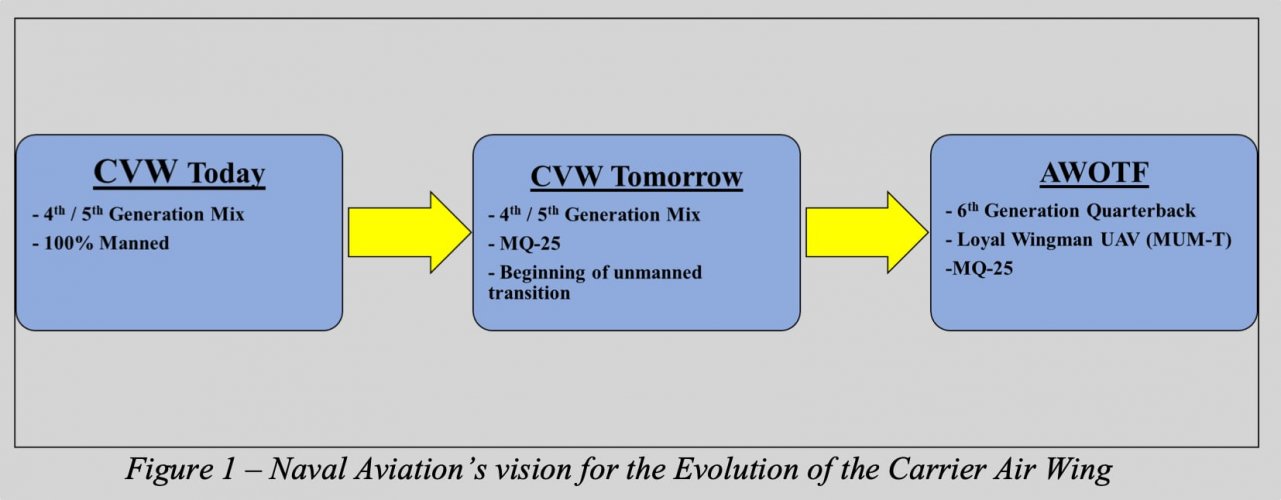
The AWOTF will deliver game-changing lethality and survivability via the Navy’s
NGAD FoS, an Internet of Things (IoT) that includes crewed and uncrewed platforms,
weapons, sensors, and networks. Crewed/Uncrewed Teaming enables a 6th Generation
crewed “Quarterback” to direct multiple CCAs at the leading edge of the battlespaces. The
AWOTF sets Naval Aviation on a path that integrates uncrewed capabilities into the core of
CVW lethality and capacity.


The Navy’s NGAD FoS is comprised of both physical platforms and functional
concepts which include:

1. A fixed-wing “Quarterback” that will have the capability to fight and orchestrate
CCA tactics utilizing reliable and resilient networks at the tactical edge of the
battlespace.

2. Use of AI to exponentially increase CVW capabilities to project high-end
combat power.

3. Live-Virtual-Constructive (LVC) systems to provide the ability to integrate
multiple live (pilot in an aircraft), virtual (pilot in a simulator) and constructive
(AI piloting a simulated platform) entities in a secure environment for high-end,
fully-informed training regardless of physical or synthetic location.

4. Crewed-Uncrewed Teaming that provides a path toward increasing uncrewed
force structure to enhance lethality and survivability.

5. Open Mission Systems (OMS) use of common software standards which enable
weapon systems, services, and subsystems such as payloads and sensors to
interact and communicate using shared data formats. This interaction can occur
within or between weapons systems, platforms, or ground segments operating
across multiple warfare domains.

Approximately 60% of the AWOTF will be comprised of Autonomous and Remotely
Crewed Systems (ARCS), to include CCA, employing AI as a force multiplier. Coupled
with Manned/Unmanned-Teaming (MUM-T) to multiply the “team’s” combat capabilities,
the CVW’s ability to project high-end combat power will increase exponentially. Synergistic
effects of NGAD FoS and autonomous technologies will further enhance the relevancy of the
CVW for decades to come.

 

Attachments

  • awotf.jpg
    awotf.jpg
    62.8 KB · Views: 99
Some technology, not lets completely re-engineer the inlets of the aircraft and is actually the biggest part of the benefit of NGAP. I would know some details as I did get some visibility into the project in a past life. The other technologies were also developed in as separate streams from the adaptive cycle engine programs.

The easiest to access and the largest majority of cooling comes form the engines.
Well on one hand you say you know and on the other hand reporting and others who know say soemthing different.

Honestly I dont know who plebs like us ought to believe anymore, but I do trust one thing - people building the plane wouldnt have overlooked something as important as power and cooling. So we'll see what happens...
 
Well on one hand you say you know and on the other hand reporting and others who know say soemthing different.

Honestly I dont know who plebs like us ought to believe anymore, but I do trust one thing - people building the plane wouldnt have overlooked something as important as power and cooling. So we'll see what happens...

Somehow Boeing was able to pull off the AII-X demonstrator , with extreme power and cooling demands, without an adaptive engine.
 
Approximately 60% of the AWOTF will be comprised of Autonomous and Remotely Crewed Systems (ARCS), to include CCA
So, that's roughly 2 squadrons of manned aircraft and 3 squadrons of ARCS. Or rather, ~24x manned and ~36x unmanned. Assuming large airframes.
 
No doubt there will be in fighting between the US Navy squadrons as to who gets what manned or unmanned F/A-XX or CCA, if there is only to be 2 squadrons of manned fighter per carrier and the rest being CCA.
 
I know it's only tangentially related to F/A-XX, but given that the Navy seeks to downsize their manned portion of carrierborne aviation, I wonder what will happen with all the aviators that suddenly have no jets to fly?
 
Have a feeling Boeing's lobby in DC is so strong they greased enough palms every which way to get F47 & FA/XX contracts, thankfully if they screw this up, which they very well may it can be taken away, Grumman and LM should be warming up in the bullpen, Boeing's track record isn't the best.
 
Two F/A-XX squadrons, same as F-14. The USN would need a sizable CCA with a satisfactory internal payload for LO strike missions then add external stores when you cleared the threats and now you have a bomb truck. The carriers do have specific deck loading requirements, so they have to work out the proper mix for sure. They don't need a manned strike aircraft with a really good payload/range capability, I think those days are gone but the CVW does need something and just can't rely on all strike fighters or scads of small CCAs.
I would hope but I am skeptical. F-35C equipped carriers still only have one squadron. Back in the day they'd have two of Legacy Hornets and two Tomcats. Would love to see two squadrons of F-35C and two F/A-XX on every carrier.
 
With the advent of the unmanned CCA I don't think that it is going to happen Sferrin, I think that the end of manned flight is nearly upon us sadly. :(
 
I know it's only tangentially related to F/A-XX, but given that the Navy seeks to downsize their manned portion of carrierborne aviation, I wonder what will happen with all the aviators that suddenly have no jets to fly?
Its not as if several hundred unmanned aircraft will suddenly sneak up on the USN aviators. It'll be phased due to build rates, learning how to integrate them, operate them from CVNs etc. This will take years, so they'll just reduce the number of new candidates they train, and draw down naturally due to promotion, retirement and attrition.

Taxi drivers aren't exactly under threat from Robocabs just yet.
 
I know it's only tangentially related to F/A-XX, but given that the Navy seeks to downsize their manned portion of carrierborne aviation, I wonder what will happen with all the aviators that suddenly have no jets to fly?
Specifically Jet Blue. Every time Ive been on one the dude landed the airliner like landing an aircraft carrier.

But im all seriousness maybe marine aviation or more frequent rotations? Separating them to jet blue would be a really bad idea.

It would be more interesting to push CCAs unto amphibs, build little escort carriers for CCAs or do what the chinese do and push it onto cargo ships. I guess VBAT could fall into that category if they can actually execute on it.

That leaves F/A-XX and UCAVs for the big carriers.
 
A bit like what they had during World War 2 Reddington777? Escort carriers might be the answer, it all depends on how many CCA's that the US Navy plans to eventually buy.
 
A bit like what they had during World War 2 Reddington777? Escort carriers might be the answer, it all depends on how many CCA's that the US Navy plans to eventually buy.
Yeah, like low tech, bare bones ship derived from a tanker hull but with a deck on top and a catapult to throw the planes hard enough.

Forgot which thread Im in and going off topic. Would be interesting to post elsewhere.
 
Last edited:
Not sure if this was already discussed, but what’s the possibility of FA-xx and F-47 being versions the same aircraft? Similar to F-35A/B/C
 
Not sure if this was already discussed, but what’s the possibility of FA-xx and F-47 being versions the same aircraft? Similar to F-35A/B/C
Scroll back like 5 pages, or like 30 pages. Its been debated to death (which is obviously no fault on you since its a lot to read), but if you dont want the nitty gritty details -

Its going to be two separate aircraft sharing the same ancestry. Expect to see similarities and shared internal subsystems. But dont expect them to look exactly the same. Not even F35 variants kind of same.
 
Last edited:
Not sure if this was already discussed, but what’s the possibility of FA-xx and F-47 being versions the same aircraft? Similar to F-35A/B/C
This has been the main topic of this thread since the contract award was announced. I think they will share a lot of commonality in terms of systems and suppliers, but they won't share a common logistics system like the F-35 and they won't share a common airframe.

Boeing and its subcontractors will be able to leverage commonalities between the F-47 and F/A-XX to increase production runs and reduce costs for components like radars, EO/IR sensors, airframe components, nuts and bolts, etc. However, the in-service support contracts will be separate and the Air Force and Navy will have their own logistics systems downstream of Boeing. A lot of the complexity with the F-35 design process was the requirement for common components, which meant that one part redesigned to handle the stress of carrier landing in an F-35C would also have to meet weight limits for STOVL performance in the F-35B and the higher G rating in the F-35A.

I think the airframes will have similar planforms, but the F/A-XX will be slightly fatter overall, though still more sleek than an F-35. I think the difference will be visually distinctive and significantly greater than the difference between an F-15D and an F-15E, which had internal reinforcements to increase service life in low-altitude flying.
 
Have a feeling Boeing's lobby in DC is so strong they greased enough palms every which way to get F47 & FA/XX contracts, thankfully if they screw this up, which they very well may it can be taken away, Grumman and LM should be warming up in the bullpen, Boeing's track record isn't the best.
Then that's all the more incentive for them to not screw this up, because even if NG and LM would take over from any mess up, too much time would have been wasted by that point, and by the time a corrected F-47 and F/A-XX from LM and NG respectively comes out, China would have already been building the next few tens of production Sixth-Gens of their own, which is something America does not want to see happen.

But otherwise, I am inclined to agree. I was for LM to win the NGAD contract, and I was more neutral on the F/A-XX contract, given that I thought that NG would be far too focused on the B-21 as a whole, but guess the Pentagon (Or rather, the Trump Admin) thought differently. Either way, let's just wait and see what happens.
 
The preference for Boeing for the F-47 was reported as early as 2023. Not sure what lobbying or Trump bribing could have done at that point. That preference did not change even throughout the NGAD review. So as much as some of you want to believe its all lies and conspiracies....
 

Similar threads

Back
Top Bottom