Bernard seaplane and flying boat racers

Schneiderman said:
George Bruner, designer at Bernard, wrote an article for Aero Album describing his work on the HV racers. In translation to English HV41 was erroneously changed to HV47, a confusion between the written 1 and 7 for native English speakers. I am sure that this has happened several times in other articles. An easy mistake to make
Hi Schneiderman,
I'm curious to see this article by Bruner. I've got your excellent book and the articles by Meurillon and Liron, so I will probably not learn anything. But it's always special to read the story as written by a first-hand actor.
Adrien
 
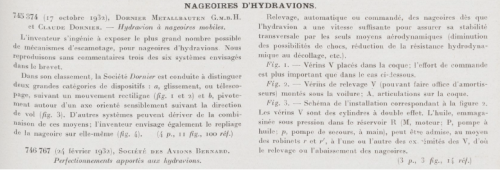
Also from l'Aeronautique 1934,


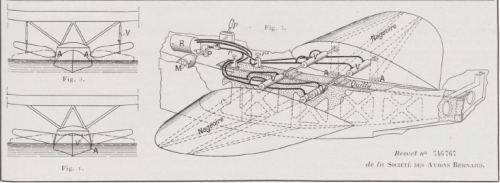
a strange patent for Bernard to a flying boat.
 

Attachments

  • Bernard.png
    Bernard.png
    273.4 KB · Views: 196
  • B-1.png
    B-1.png
    290.1 KB · Views: 162
From TU magazine 146,

a small Info about Bernard-170.
 

Attachments

  • 1.png
    1.png
    49 KB · Views: 191
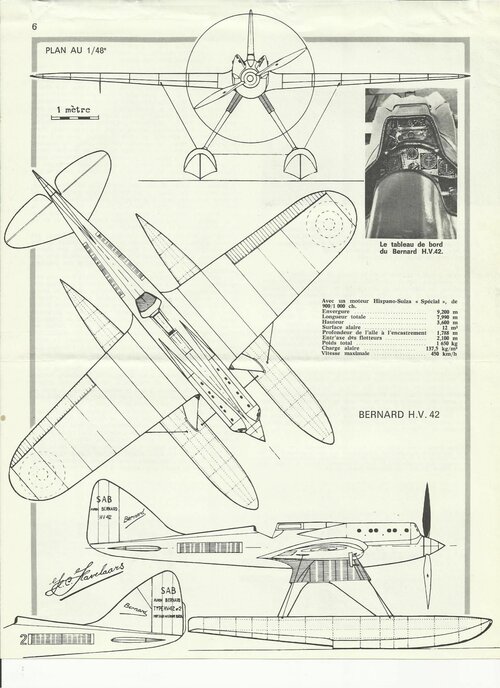
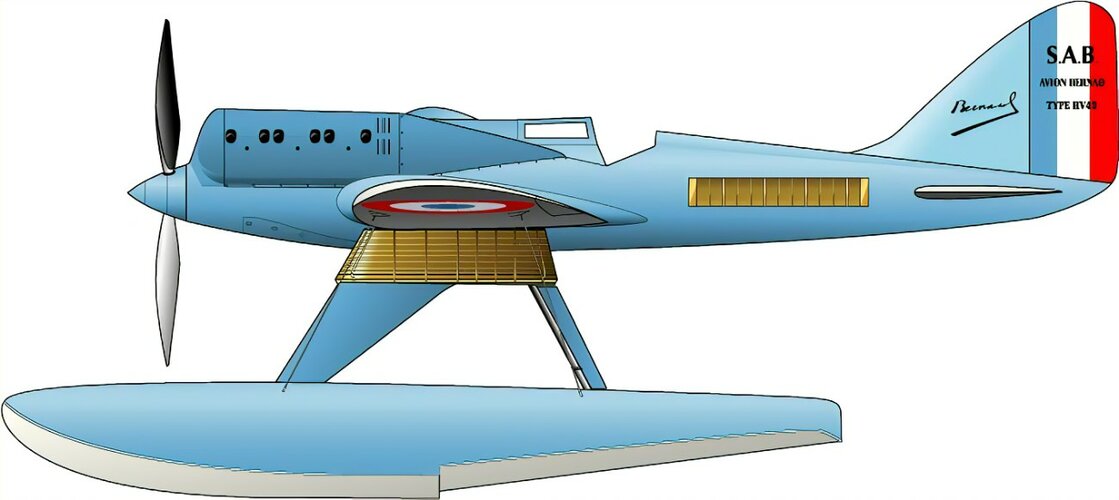
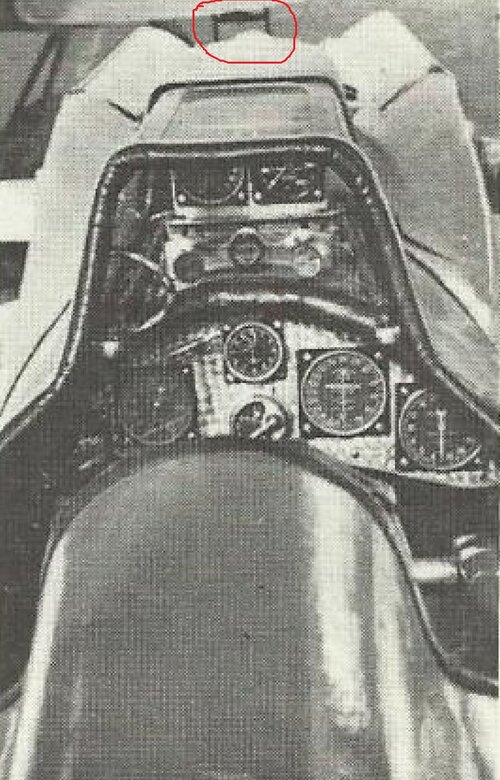
I have a question, because I'm doing a drawing of French schneiders race planes, but on some files, somes models, i see a strange thing : a litlle hump just front of the cokpit, is it an error of some drawers? I don't clearly see her on photo, and the quality is not good for them, and the drawing of the time don't show him ca5631676fb399569c3d34f6327212e9.jpg R (4).jpeg s-l1000.jpg
 
Hi Chercheuravions, I have taken the picture from your post of the cockpit and enlarged it, and also drawn a red circle around it, so you can see the hump. I would guess that it was to cover some kind of ancillary piece of equipment
 

Attachments

  • Bernard HV 42 pic.jpg
    Bernard HV 42 pic.jpg
    745.6 KB · Views: 91
1758150372389.jpeg

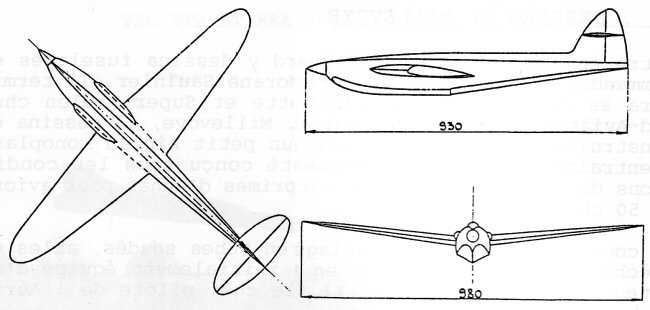
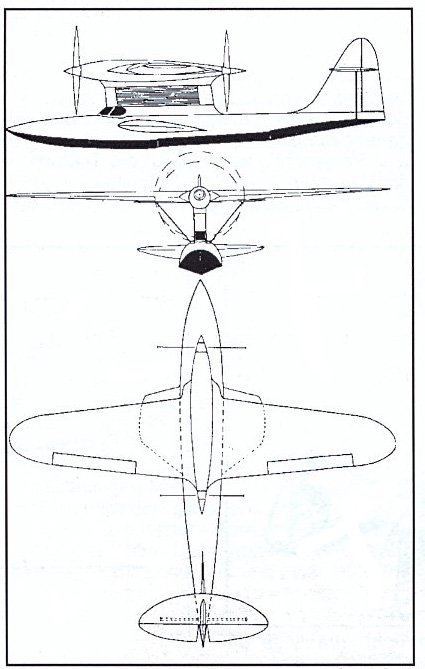
Still in the Trait d’Union #146 Nov. Dec. 1992, a Bernard racer project of 1932 used 2 Hispano 18 Sb engines of 1,100hp in the hull, to beat the speed record for flying boats. The medium wing was touching water without need of extra floats. Taking off on catapult, going down on water as glider with coaxial propellers locked horizontal. Unbuilt.
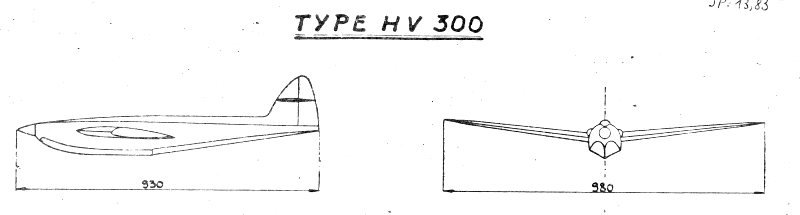
This was apparently the HV 300 project.
 
Last edited:
1758150328461.jpeg

can you name this flying boat project by Bernard-Farman from 1930?
First of all, it's probably just a Bernard project using Farman engines. Are you positive about the engines used? Because if it is confirmed, then the description totally fits the HV 100, a flying boat racer planned for the 1931 Schneider Cup, which was to use two 1480 hp Farman 18 T inverted T engines.

EDIT: Just realized that c460 had made the very same identification a long time ago!
According to Charles Claveau in Le Trait d'Union no.205, this project was called HV.100.
The drawing appeared in Les Avions Bernard by Jean Liron, but it looks like your scan comes from another source.
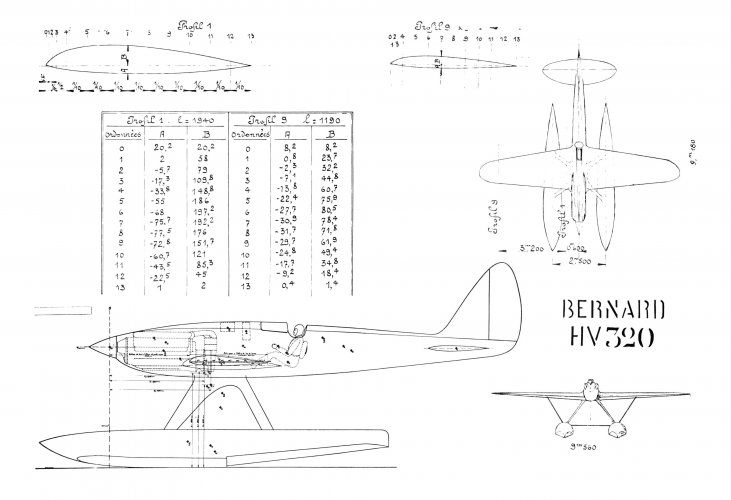
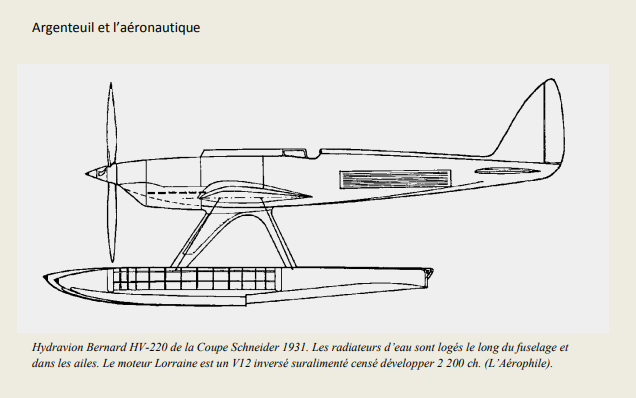
The book has drawings of other Bernard floatplane racers: the HV.40, HV.42, HV.120 and HV.120-1 prototypes, the HV.220 and HV.320 which never flew, and the HV.300 project, a strange aircraft not unlike the Piaggio-Pegna PC7.
It also has a picture of the unfinished mock-up of the Bernard 370 land-based racer (1934), but there is not enough info for a drawing.
 
Last edited:
Still in the Trait d’Union #146 Nov. Dec. 1992, a Bernard racer project of 1932 used 2 Hispano 18 Sb engines of 1,100hp in the hull, to beat the speed record for flying boats. The medium wing was touching water without need of extra floats. Taking off on catapult, going down on water as glider with coaxial propellers locked horizontal. Unbuilt.
In my humble opinion, there were no anything in this elegant monoplane racer, that could offer the reason to call it "flying boat" or even "hydroplane". Unlike conventional flying boat, it's hull only intended for alighting - so, minimal size of cross sections, hull steps and other water-based attributes (making flying boat fuselages less aerodynamic, then land-based one). Even more, catapult launch made even undercarriage unnecessary. The possible fuselage reinforcements
With all due respect to Bernard, this project seems intended as pure experimental, for achieving the highest airspeed for aircraft, not taking into account any real world details, that decrease aerodynamics- undercarriage of any kind, radiators, canopy etc.
A kind of Bell X-1 - sound barrier record breaker, unsuitable for real life purpose.
 
With all due respect to Bernard, this project seems intended as pure experimental, for achieving the highest airspeed for aircraft, not taking into account any real world details, that decrease aerodynamics- undercarriage of any kind, radiators, canopy etc.
A kind of Bell X-1 - sound barrier record breaker, unsuitable for real life purpose.
And that's exactly what it was meant for... "hydravion de vitesse" (HV) literally meant "speed seaplane" (don't forget that the word "hydravion" in French does not make any difference between "floatplane", "flying boat" or anything else taking off and/or landing on water). The main motivation for many aircraft builders at the time was to break records... The Coupe Schneider and the like were a very efficient way for a company to advertise their expertise. If built, the HV 300 would have been a unique plane: a catapulted speedster that did not have the encumber itself with a landing gear and all the extra weight that goes with it... just a pure dart dashing through the air and gracefully resting on water in the end...
 
From Hydroretro site.
 

Attachments

  • 2.png
    2.png
    41.5 KB · Views: 31

Similar threads

Back
Top Bottom