
You are using an out of date browser. It may not display this or other websites correctly.
You should upgrade or use an alternative browser.
You should upgrade or use an alternative browser.
Australian general purpose frigate program


Grey Havoc
ACCESS: USAP
- Joined
- 9 October 2009
- Messages
- 24,500
- Reaction score
- 18,175


Travlla
ACCESS: Restricted
- Joined
- 30 April 2022
- Messages
- 3
- Reaction score
- 6
Were it P-1s or C-2s I would be concerned but when ships are involved I think the Japanese will be a very reliable partner. Certainly would be my pick of the two options.

kqcke for you
PUMA PUMA PUMA
- Joined
- 3 November 2022
- Messages
- 1,867
- Reaction score
- 2,705
Me after seeing the dying chances for Meko A200/210 for australia

aonestudio
I really should change my personal text
- Joined
- 11 March 2018
- Messages
- 3,381
- Reaction score
- 9,228
I predict a lot of pain ahead for the RAN learning how to use and adapt/modify the bespoke Japanese software that will come with these ships (combat system, radar, sonar suite, platform management system etc). None of which will be in English and none of which will be even designed with configuration / customization by an export customer in mind.
This will likely end with half the Japanese systems having to be ripped out, and replaced with either RAN standard systems or more configurable export oriented systems from Raytheon, Thales, Saab etc. What’s left will be basically frozen to the original configuration and very hard to upgrade without dedicated support by the Japanese OEMs, even if full access is given (which is great on paper but doesn’t work in practice).
Mark my words… talking from bitter experience with integration, configuration and country specific mods of complex software. The platform will be great, the systems may be great initially but then will turn into a nightmare… and the systems are by far the most important part of any modern weapon.
This will likely end with half the Japanese systems having to be ripped out, and replaced with either RAN standard systems or more configurable export oriented systems from Raytheon, Thales, Saab etc. What’s left will be basically frozen to the original configuration and very hard to upgrade without dedicated support by the Japanese OEMs, even if full access is given (which is great on paper but doesn’t work in practice).
Mark my words… talking from bitter experience with integration, configuration and country specific mods of complex software. The platform will be great, the systems may be great initially but then will turn into a nightmare… and the systems are by far the most important part of any modern weapon.

- Joined
- 29 November 2010
- Messages
- 2,308
- Reaction score
- 5,292
None of which will be in English and none of which will be even designed with configuration / customization by an export customer in mind.
you base this on what exactly?
I used to be attached with the JSDF (ground, air and navy) when I lived in Japan and have seen the interface on the F-2 as well as on the Izumo. English is there.
a picture of the Mogami class (Kumano) combat information center. note the English on the displays.
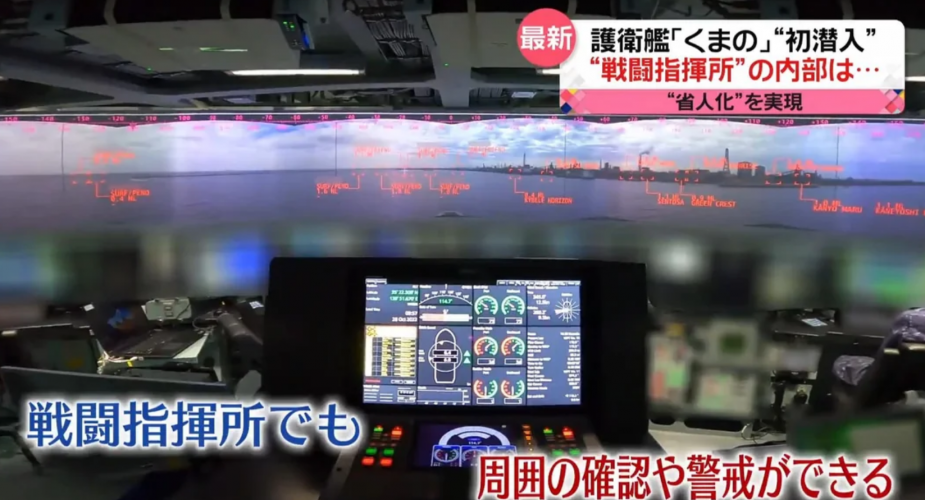
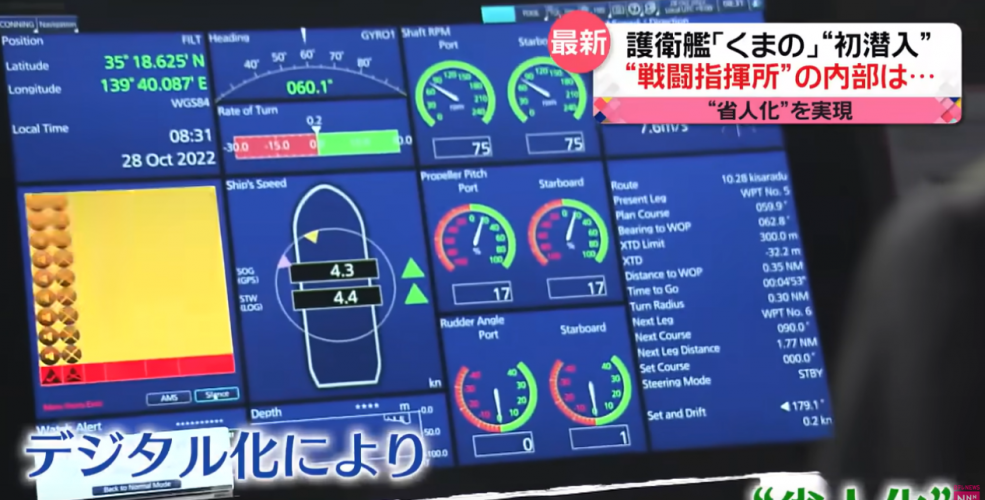
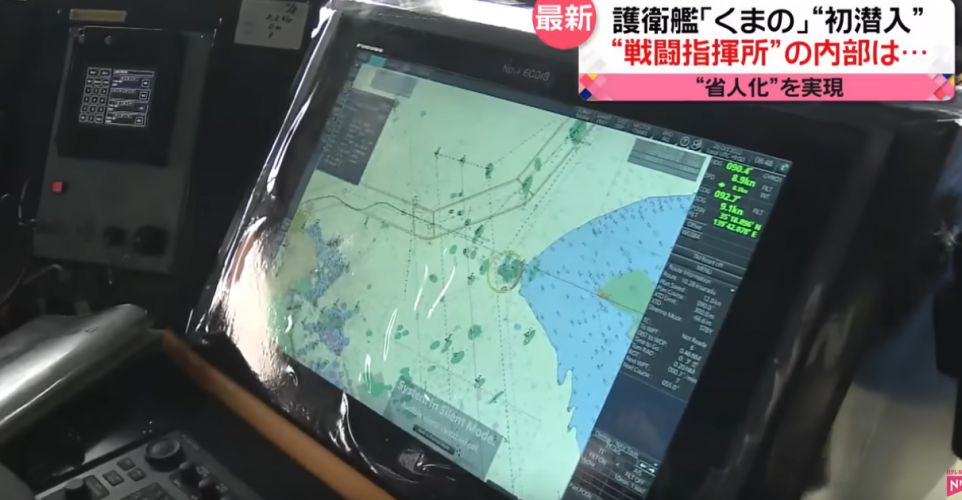
Last edited:
I'm not talking about the displays being in English - that's the tip of the iceberg and relatively easy to fix if it's not there already (like in your example).You base this on what exactly? I used to be attached with the JSDF (ground, air and navy) when I lived in Japan and have seen the interface on the F-2 as well as on the Izumo. English is there.
I'm talking about one level deeper, what's under the hood and more critical: software code, documentation etc. Is the software properly structured with metadata to enable easy country-specific reconfiguration (which includes everything from language modifications to unit designations to custom threat libraries), how easy are integrations with 3rd party software / sensors that may use different units, data dictionaries etc, how do you maintain secure authentication and cybersecurity protections across Japanese and non-Japanese designed ecosystems, is it built on configurable policy-based software code (i.e with ways to tell the software "If my national conditions A and B are met then do C rather than do what Japanese default D says") etc.
My basis for this is my own experience working a) on large complex software and b) in Japan with "English speaking" local teams of a multinational company. Behind the thin layer of English used for international projects or non-Japanese speaking expat staff, as soon as you started digging everything was in Japanese. More importantly than language, the SMEs you needed to talk to and to convince to prioritize international work often had a very "Japanese" outlook and set of priorities, focused on their own national clients (understandably). Getting proper resolution on anything else was like pulling teeth, though once they did agree to do the work it would proceed with remarkable efficiency.
Last edited:
The best choice for delivery timeframe for the RAN.
It is highly likely these will be fitted with the new CMS being built by Saab for the RAN per here, https://www.janes.com/osint-insight...as-next-gen-combat-system-on-9lv-architecture
There is obviously other customisation to happen including typical RAN weapons such as NSM, ESSM and Standard missiles, Nulka, MU90 etc and potentially non Japanese radars and sensors as well.
It is highly likely these will be fitted with the new CMS being built by Saab for the RAN per here, https://www.janes.com/osint-insight...as-next-gen-combat-system-on-9lv-architecture
There is obviously other customisation to happen including typical RAN weapons such as NSM, ESSM and Standard missiles, Nulka, MU90 etc and potentially non Japanese radars and sensors as well.
kqcke for you
PUMA PUMA PUMA
- Joined
- 3 November 2022
- Messages
- 1,867
- Reaction score
- 2,705
So mutch too off the shelveThe best choice for delivery timeframe for the RAN.
It is highly likely these will be fitted with the new CMS being built by Saab for the RAN per here, https://www.janes.com/osint-insight...as-next-gen-combat-system-on-9lv-architecture
There is obviously other customisation to happen including typical RAN weapons such as NSM, ESSM and Standard missiles, Nulka, MU90 etc and potentially non Japanese radars and sensors as well.
The press conference is going on right now and Govt specifically stated off the shelf other than CMS so looks like no radar or sensor change. I would still expect the weapons to be as I already stated.So mutch too off the shelve
Amusingly the Defence MInister wouldn't confirm that the Mogami was the recommendation of the Dept of Defence, just kept repeating it is the best capability for Australia. I expect that means the Mogami was the most capable but wasn't the cheapest of the two but most importantly had the earliest delivery date.
https://www.minister.defence.gov.au...e-selected-navys-new-general-purpose-frigatesHere is the official government publication. One of the most interesting things to note is the Aus gov claims that upgraded Mogami will have a range around 10,000 nautical miles which puts it a lot higher than published numbers on other frigates of similar sizes. The various FREMM variants sit between 6,000-7000nm and the official RN page for the Type 26 says 7,000nm

Halcyon66
ACCESS: Top Secret
- Joined
- 9 July 2022
- Messages
- 1,538
- Reaction score
- 3,287
You can play those numbers anyway you want though. The larger FFM, compared to the current Mogami, may allow more fuel to be bunkered but I suspect someone has looked at the numbers and said if we sail at 5kts instead of 12 we can go this much further...https://www.minister.defence.gov.au...e-selected-navys-new-general-purpose-frigatesHere is the official government publication. One of the most interesting things to note is the Aus gov claims that upgraded Mogami will have a range around 10,000 nautical miles which puts it a lot higher than published numbers on other frigates of similar sizes. The various FREMM variants sit between 6,000-7000nm and the official RN page for the Type 26 says 7,000nm
Most likely there will be Australia-specific modifications to the fuel bunkerage policies, much like what was done to increase the range of the Meko 200 Anzacs. These don’t always require significant rework.The larger FFM, compared to the current Mogami, may allow more fuel to be bunkered but I suspect someone has looked at the numbers and said if we sail at 5kts instead of 12 we can go this much further...
For example, you can allow ballast tanks to carry fuel for extended range missions, which is a common practice aboard USN ships but not done in most European navies (and probably not done aboard JMSDF Mogamis either). That can automatically increase range by a very large amount. Also some fresh water or void tanks can often be converted (within reason).
- Joined
- 29 September 2006
- Messages
- 1,881
- Reaction score
- 1,624
Looking backwards - specifically to the Australian County-class destroyer fiasco - possibly one of the biggest difficulties will be the RAN asking for things impossible to fit within the ship, and the Japanese side having problems saying “NO”.

I mean the exact opposite of this was true for the Collins replacement. The Japanese side was being incredibly conservative and realistic with the Soryuu proposal. They rarely talked about the Li-on capabilities since they were unfinished at the time and were incredibly blunt about the limitations of Australia being able to do the requested amount of workshare domestically. Japan has probably learned from that since a combo of their conservative approach and French overpromising lost them the deal, but I don't see Japan just switching to making empty promises especially when the first 3 of the batch should be near identical to what the JMSDF ends up adopting.Japanese side having problems saying “NO”.
But like Ozair said we don't know what the context of the 10k nm figure comes from and it is the Australian side making these claims, not the Japanese side. I have a feeling that since it will be an exported product there will be a bit more transparency on capabilities than what Japan usually advertises. It was the Australians who happened to accidentally unseal what was basically 20 years of the JGSDF SFGp only having like 5 grainy photos of them in training, so hopefully we can see something similar here.

- Joined
- 16 April 2008
- Messages
- 10,604
- Reaction score
- 18,186
The press conference is going on right now and Govt specifically stated off the shelf other than CMS so looks like no radar or sensor change. I would still expect the weapons to be as I already stated.
Amusingly the Defence MInister wouldn't confirm that the Mogami was the recommendation of the Dept of Defence, just kept repeating it is the best capability for Australia. I expect that means the Mogami was the most capable but wasn't the cheapest of the two but most importantly had the earliest delivery date.
Hmm, Breaking Defense says the CMS is the same as the Japanese ships with minimal changes to the overall build, like signage changes from Japanese to English. But I am not sure that's definitive at all.
https://breakingdefense.com/2025/08/australia-selects-japans-mogami-frigate-in-6-5b-deal/
Last edited:
It's a tricky tradeoff. Short term their best choice is to stick as closely as possible to the Japanese systems and CMS, with minimal tweaks to user interfaces (e.g. English translations - if not already present), plus a few other things that may require extra development such as the ability to insert their own threat libraries, plug into Australian comms networks etc.Hmm, Breaking Defense says the CMS is the same as the Japanese shops with minimal changes to the overall build, like signage changes from Japanese to English. But I am not sure that's definitive at all.
But software is never "done" and fairly quickly (within 2-3 years most likely) they will run into the need for bug fixes, software enhancements, changes to the default Japanese configuration logic, integrations of Australian or foreign systems etc. They'll also want a 3-10 year development roadmap with more AI, sensor upgrades, hardware refreshes etc. On all this they will either have to depend on the Japanese OEMs and the Japanese MoD (as the primary client for these systems) to prioritize the fixes & upgrades that Australia wants, or they will have to branch off their own software & hardware with Australian development teams (with full access to the source code, good training in Japan, solid documentation etc). This assumes the software platform was designed to allow such branching and multi-user configurations, otherwise you have to ask the Japanese OEMs to rearchitect entire system layers (which can be a massive undertaking and worst case can require rewriting the whole software).
They will discover that branching off will provide much more responsiveness and flexibility, but at the cost of hundreds of millions of dollars of investment in orphan software for just 10-11 ships, as well as the non-zero risk of building layers of bad code due to poor understanding of how the Japanese platform was built, what it can do etc. At that point often the best course is to start ripping out systems and replacing with more standardized national solutions that are easier to support.
It's a tough tradeoff and my prediction based on Australia's procurement track record involving integration and support of complex systems (Collins SSKs, Seasprite, Hunter class, Tiger ARH, NH90... it's a long list), is that the level of complexity of maintaining and evolving all these software systems has been underestimated and there will be lots of pain ahead... and they may well regret being "locked into" bespoke Japanese software and not taking an extra year or two upfront to install standard RAN systems such as Saab 9LV CMS etc.
(All the above based on my own experience with complex software platforms and integrations that cost hundreds of millions to build and adapt to different countries, users etc).
Last edited:
And this contributes how???Not sure if this is going to be a SNAFU or a FUBAR
Guess time will tell.
Regards,
Halcyon66
ACCESS: Top Secret
- Joined
- 9 July 2022
- Messages
- 1,538
- Reaction score
- 3,287
Yes what could possibly go wrong???
https://asiapacificdefencereporter....nteresting,faster and cheaper than Australia.
https://theconversation.com/austral...s a huge time gap,in the Philippines in 2015.
Integrating two different frigate types with varying capabilities and systems could be complex and require significant training and maintenance adjustments.
The future of the Hunter-class program, including its relevance and construction timeline, is now uncertain.
While the Mogami deal is seen as a solution to cost overruns and delays with the Hunter-class, the actual cost and delivery schedule of the Mogami frigates, especially those built in Australia, remain to be seen.
The Mogami comes with its own combat management system, potentially making Saab's system a "technical orphan".
Redevelopment of Australian shipyards to build the Mogami frigates is necessary and could be a bottleneck.
I guess it is just the never-ending incompetence when it comes to anything to do with military procurement involving Australia.
Regards,
https://asiapacificdefencereporter....nteresting,faster and cheaper than Australia.
https://theconversation.com/austral...s a huge time gap,in the Philippines in 2015.
Integrating two different frigate types with varying capabilities and systems could be complex and require significant training and maintenance adjustments.
The future of the Hunter-class program, including its relevance and construction timeline, is now uncertain.
While the Mogami deal is seen as a solution to cost overruns and delays with the Hunter-class, the actual cost and delivery schedule of the Mogami frigates, especially those built in Australia, remain to be seen.
The Mogami comes with its own combat management system, potentially making Saab's system a "technical orphan".
Redevelopment of Australian shipyards to build the Mogami frigates is necessary and could be a bottleneck.
I guess it is just the never-ending incompetence when it comes to anything to do with military procurement involving Australia.
Regards,
If all you are going to do is complain about everything, why do you even bother to be here?I guess it is just the never-ending incompetence when it comes to anything to do with military procurement involving Australia.
Halcyon66
ACCESS: Top Secret
- Joined
- 9 July 2022
- Messages
- 1,538
- Reaction score
- 3,287
I am an Australian taxpayer and citizen and maybe you forgot that it generally refers to the concept of citizens having the power to demand accountability and transparency from their elected officials and government institutions.
Normally that encompasses various mechanisms and principles that enable citizens to influence government actions, scrutinize decision-making, and seek redress for grievances.
Yet we do not have any recourse, even if we change government?
The system is broken and has been for years so why are we once again going down another doomed path.
Always the same reasons:
The procurement process is often bogged down in red tape, with multiple layers of review and approval, leading to significant delays.
A lack of clear strategic direction and a tendency to prioritize peacetime operations over wartime readiness can hinder effective procurement.
While there has been a recent increase in defence spending, it's often not matched by sufficient funding for critical areas, like munitions and local industry development.
Delays in procurement can create critical capability gaps, leaving Australia vulnerable in certain areas, particularly with the aging of most of our naval fleets.
A heavy reliance on foreign suppliers, particularly for advanced technologies, can create dependencies and raise concerns about supply chain security and Australian sovereignty.
The current system doesn't adequately support the development of a robust local defence industry, which is crucial for self-reliance and job creation.
There have been concerns raised about governance failures, lack of transparency, and potential conflicts of interest in some procurement processes. Including a never-ending revolving door of Defense ministers that have zero defence experience.
As seen in Ukraine conflict, drones are the way forward not soon to be billion dollar "holes" in the water.
https://www.navylookout.com/black-sea-battle-how-ukraines-drones-overpowered-the-russian-navy/
Regards,
Normally that encompasses various mechanisms and principles that enable citizens to influence government actions, scrutinize decision-making, and seek redress for grievances.
Yet we do not have any recourse, even if we change government?
The system is broken and has been for years so why are we once again going down another doomed path.
Always the same reasons:
The procurement process is often bogged down in red tape, with multiple layers of review and approval, leading to significant delays.
A lack of clear strategic direction and a tendency to prioritize peacetime operations over wartime readiness can hinder effective procurement.
While there has been a recent increase in defence spending, it's often not matched by sufficient funding for critical areas, like munitions and local industry development.
Delays in procurement can create critical capability gaps, leaving Australia vulnerable in certain areas, particularly with the aging of most of our naval fleets.
A heavy reliance on foreign suppliers, particularly for advanced technologies, can create dependencies and raise concerns about supply chain security and Australian sovereignty.
The current system doesn't adequately support the development of a robust local defence industry, which is crucial for self-reliance and job creation.
There have been concerns raised about governance failures, lack of transparency, and potential conflicts of interest in some procurement processes. Including a never-ending revolving door of Defense ministers that have zero defence experience.
As seen in Ukraine conflict, drones are the way forward not soon to be billion dollar "holes" in the water.
https://www.navylookout.com/black-sea-battle-how-ukraines-drones-overpowered-the-russian-navy/
Regards,
Maybe you have not noticed but this forum is hardly the place to raise your grievances with the Australian Government or its Defence Procurement system. There are places for that but it is not here. I can safely assure you that no matter how much you carry on about things here they will no make one iota of difference. If you truly are upset about things may I suggest you take it up with your local member of parliament or senator? Perhaps join a political party and take a direct part? Maybe join the likes of CASG and actually work to change things? All will be more productive than constantly complaining here and will be less of an annoyance to other members of the forum.I am an Australian taxpayer and citizen and maybe you forgot that it generally refers to the concept of citizens having the power to demand accountability and transparency from their elected officials and government institutions.
Halcyon66
ACCESS: Top Secret
- Joined
- 9 July 2022
- Messages
- 1,538
- Reaction score
- 3,287
Of course it will make no difference.
Just the same as we will never get these frigates.
Others have expressed issues with this deal, yet I have the problem.
You have an issue with me from the beginning as I just wouldn't swallow the "AUKUS" cool aide.
Regards,
Just the same as we will never get these frigates.
Others have expressed issues with this deal, yet I have the problem.
You have an issue with me from the beginning as I just wouldn't swallow the "AUKUS" cool aide.
Regards,
Looks like you are correct and I probably misheard at the conference. The transcript from the press conference is available now and has the following,Hmm, Breaking Defense says the CMS is the same as the Japanese shops with minimal changes to the overall build, like signage changes from Japanese to English. But I am not sure that's definitive at all.
https://breakingdefense.com/2025/08/australia-selects-japans-mogami-frigate-in-6-5b-deal/
https://www.minister.defence.gov.au/transcripts/2025-08-05/press-conference-canberraI’d also like to stress that there will be no changes to the Mogami-class frigate design other than the translation of the combat management system and regulatory changes required under Australian law.
The question then is will all vessels be delivered with the Japanese CMS or will the Australian deliveries include additional local content, such as the Saab CMS and a CEAFAR radar? Given the expectation the three Japanese build vessels are a Blk 1, and then the Australian built vessels will be Blk 2 and 3 I could easily see, with time now available, additional engineering to integrate those systems.
There is recourse at GTX indicated.I am an Australian taxpayer and citizen and maybe you forgot that it generally refers to the concept of citizens having the power to demand accountability and transparency from their elected officials and government institutions.
Normally that encompasses various mechanisms and principles that enable citizens to influence government actions, scrutinize decision-making, and seek redress for grievances.
Yet we do not have any recourse, even if we change government?
Yet here the Govt has gone about as fast as the process allows but you still aren't happy?The system is broken and has been for years so why are we once again going down another doomed path.
Always the same reasons:
The procurement process is often bogged down in red tape, with multiple layers of review and approval, leading to significant delays.
No the last few reviews have been much clearer on the direction and the need for weapons and systems that can fight a pacific orientated campaign.A lack of clear strategic direction and a tendency to prioritize peacetime operations over wartime readiness can hinder effective procurement.
Neither side has been better than the other on this, both have let the fleet slide over the last 50 years, but Australia is hardly alone in this. All the major western powers are now bulking up their surface fleets after decades of neglect.While there has been a recent increase in defence spending, it's often not matched by sufficient funding for critical areas, like munitions and local industry development.
Delays in procurement can create critical capability gaps, leaving Australia vulnerable in certain areas, particularly with the aging of most of our naval fleets.
Disagree completely. If I had my way no major warships would be built in Australian yards. All that does is prop up an industry that cannot compete against foreign partners. Were Australia to enter a global conflict we aren't building fleets of MSCs in Australian yards so all building warships here does is prop up niche industries with over inflated wages and subsidies. Spend that money on real capabilities that will be of use to Australian industry as a whole.A heavy reliance on foreign suppliers, particularly for advanced technologies, can create dependencies and raise concerns about supply chain security and Australian sovereignty.
The current system doesn't adequately support the development of a robust local defence industry, which is crucial for self-reliance and job creation.
And few if any ministers have knowledge/experience of any the departments they oversee, that is the point of senior executive service and department staff. Doesn't stop the Ministers and Govt from making bad decisions, just look at Tiger and MRH-90 where the Govt overruled the Defence department recommendations, but at least some domain knowledge is present.There have been concerns raised about governance failures, lack of transparency, and potential conflicts of interest in some procurement processes. Including a never-ending revolving door of Defense ministers that have zero defence experience.
No nation is pursing an all drone fleet and it would be a mistake for Australia to move down that path. There is clearly a place for future USVs but I expect Australia is waiting on their partners before those decisions and acquisitions are made.As seen in Ukraine conflict, drones are the way forward not soon to be billion dollar "holes" in the water.
https://www.navylookout.com/black-sea-battle-how-ukraines-drones-overpowered-the-russian-navy/
Regards,
But the Mogami comes with FC Network that is an offshoot of the American NIFC-CA which puts it in the same category as AJIF and should allow for CEC which is more important as and AAW Frigate that is supposed to operate alongside the Hobarts. There is a level that 9LV can integrate with AEGIS through Link 16, but its better to just move to a common infrastructure with Australia's two biggest allies than stick to 9LV because of some sunken cost fallacy when the 2 biggest non-Australian users are half way around the globe.The Mogami comes with its own combat management system, potentially making Saab's system a "technical orphan".
Halcyon66
ACCESS: Top Secret
- Joined
- 9 July 2022
- Messages
- 1,538
- Reaction score
- 3,287
Yet here the Govt has gone about as fast as the process allows but you still aren't happy?
This decision was made very quickly, actually months ahead of schedule.
And what exactly would have heralded that?
Maybe to take the spotlight off the Aukus sub disaster. Let's not forget that was going to be the best decision for Aus and what happened to that after a few years.
No the last few reviews have been much clearer on the direction and the need for weapons and systems that can fight a pacific orientated campaign.
Pretty sure there is not going to be a pacific orientated campaign, it will be all over in days. We are not taking Ukraine/Russia, we are talking about two superpowers.
What are they going to hold back, it will be nukes at dawn.
More to the point pretty sure the US is going to roll over on Taiwan and the rest of the pacific, they want everyone to increase spending, so they don't have to get involved.
So now we have the Japanese frigate disaster taking the spotlight.
How many again of these vessels are in service currently? None
How many warships has Japan ever delivered to other countries? None
What is the cost, they have awarded a tender without knowing the cost. I did read somewhere that Japan even offered Australia the first off the production line, that is f'ing hilarious.
https://www.abc.net.au/news/2025-08-05/australia-japan-navy-frigates/105613688
Australia’s defence minister, Richard Marles, and defence industry minister, Pat Conroy, would not say what the estimated total cost of the program would be, citing upcoming commercial negotiations with Mitsubishi.
Also, I wonder if the US had anything to do with this?
https://www.afr.com/world/asia/mate...ustralia-s-japan-frigate-deal-20250805-p5mked
Before Donald Trump was elected to the US presidency, the Pentagon had been pushing for Australia and Japan to strengthen their defence alliance. And the deal comes as Trump pressures US allies to significantly boost their defence spending.
Wow here we go again the US is dictating our defense.
Basically, we are being dragged into another fiasco.
Regards,
Clearly the opportunity to get vessels in the production queue. This decision has nothing to do with AUKUSThis decision was made very quickly, actually months ahead of schedule.
And what exactly would have heralded that?
Maybe to take the spotlight off the Aukus sub disaster. Let's not forget that was going to be the best decision for Aus and what happened to that after a few years.
Irrespective of what happens the strategic direction charted is smart, focus on the weapons and systems we need to win conflict that is in our region and no longer worry about what the Middle East and Europe are doing.Pretty sure there is not going to be a pacific orientated campaign, it will be all over in days. We are not taking Ukraine/Russia, we are talking about two superpowers.
What are they going to hold back, it will be nukes at dawn.
More to the point pretty sure the US is going to roll over on Taiwan and the rest of the pacific, they want everyone to increase spending, so they don't have to get involved.
So a disaster before contract has even been signed?So now we have the Japanese frigate disaster taking the spotlight.
Of the extended size none, of the current Mogami 8 are now commissioned and another four will be commissioned by Mar 2027. The Japanese build to target date is very good, few ships are ever late. The first upgraded Mogami will be commissioned by the JMSDF in 2027, two years before arrival of the first Australian vessel.How many again of these vessels are in service currently? None
Does that really matter? Their build schedule is very well understood and consistent meeting delivery dates. Additionally Japan still delivers hundreds of commercial ships (bulk, oil and container) every year.How many warships has Japan ever delivered to other countries? None
Well you referenced Kym already so here is his take,What is the cost, they have awarded a tender without knowing the cost. I did read somewhere that Japan even offered Australia the first off the production line, that is f'ing hilarious.
https://www.abc.net.au/news/2025-08-05/australia-japan-navy-frigates/105613688
https://asiapacificdefencereporter....atch of 12,approved for many other countries.A second batch of 12 upgraded Mogamis are expected to be under contract in the 2024 Japanese financial year, which ends on March 31, 2025. Construction will begin almost immediately with the first ship delivered in 2027. If Japan is chosen, Australia will receive the third ship of the new series – or the 15th Mogami overall – which will be launched in mid-2028.
So the build date and stage in the schedule where Australia would start receiving ships is well understood and has been for nearly a year.
The US has nothing to do with this...Also, I wonder if the US had anything to do with this?
https://www.afr.com/world/asia/mate...ustralia-s-japan-frigate-deal-20250805-p5mked
Wow here we go again the US is dictating our defense.
Basically, we are being dragged into another fiasco

Ares
Man from Far East
- Joined
- 15 October 2018
- Messages
- 116
- Reaction score
- 577
According to the Australian MoD, there will be no change except UI translation and legislation works for Australian Mogami class.
It appears that the CEA-FAR radar will not be used either.
View: https://www.youtube.com/watch?v=o0u68404ibc
It appears that the CEA-FAR radar will not be used either.
Avoiding an issue which has plagued other Australian shipbuilding projects – Navy fiddling with the design – Conroy said there would be no changes to the Mogami other than translation of the combat management system and regulatory changes required under Australian law.
https://www.australiandefence.com.au/news/news/more-on-mogami
Last edited:
- Joined
- 29 September 2006
- Messages
- 1,881
- Reaction score
- 1,624
Interesting, my experience in Japanese education was quite different - if asking for something the response in the negative case was “maybe”, not “no” - leading to much confusion and wasted time.I mean the exact opposite of this was true for the Collins replacement. The Japanese side was being incredibly conservative and realistic with the Soryuu proposal. They rarely talked about the Li-on capabilities since they were unfinished at the time and were incredibly blunt about the limitations of Australia being able to do the requested amount of workshare domestically. Japan has probably learned from that since a combo of their conservative approach and French overpromising lost them the deal, but I don't see Japan just switching to making empty promises especially when the first 3 of the batch should be near identical to what the JMSDF ends up adopting.
But like Ozair said we don't know what the context of the 10k nm figure comes from and it is the Australian side making these claims, not the Japanese side. I have a feeling that since it will be an exported product there will be a bit more transparency on capabilities than what Japan usually advertises. It was the Australians who happened to accidentally unseal what was basically 20 years of the JGSDF SFGp only having like 5 grainy photos of them in training, so hopefully we can see something similar here.
- Joined
- 29 September 2006
- Messages
- 1,881
- Reaction score
- 1,624
Good luck to the Enhanced Mogami-class, but I think that eyes may be cast enviously toward the Type 31 in future years.
I don't see why. It's a larger, slower, and worse armed for no major standout advantages to make up for those shortcomings. The Type 31s tend to be trending towards a 5 year cycle while the new FFMs are looking at a 3 year one. If Australia hopped on the Type 31 program they likely wouldn't get theirs until the mid 2030s. If anyone's going to be envious its gonna be the Indonesians and Poles watching Australia get their new frigates commissioned before them despite putting in an order 3 years after them.Good luck to the Enhanced Mogami-class, but I think that eyes may be cast enviously toward the Type 31 in future years.
Halcyon66
ACCESS: Top Secret
- Joined
- 9 July 2022
- Messages
- 1,538
- Reaction score
- 3,287
If anyone's going to be envious its gonna be the Indonesians and Poles watching Australia get their new frigates commissioned before them despite putting in an order 3 years after them.
The contact has not even been negotiated/signed in any capacity and somehow it is a done deal, funny that the AUST govt thinks it has some magical bargaining power. US told Aust to buy them, and they did.
SECRET BUDGET FOR JAPANESE WARSHIPS
The Albanese government could end up spending up to $20 billion on 11 new warships from Japanese firm Mitsubishi Heavy Industries, an expert has told The Sydney Morning Herald.
The contract with the Japanese company was revealed yesterday, but the estimated cost to the government is being kept secret.
Strategic Analysis Australia research head Marcus Hellyer told the SMH he felt the Albanese government was playing “stupid games” by not revealing the full estimated cost, given the public was told the estimates for the AUKUS submarine plan.
And another point.................
https://www.dailymail.co.uk/news/ar...tml?ns_mchannel=rss&ns_campaign=1490&ito=1490
Obviously, it must be time for another AUKUS extorsion payment. I think another 1 bill is coming up.
Time for a AUST US disconnect.
Regards,
Last edited:
That is only way not to enter another cuckolding spiral and cost explosion like AUKUS where they are being fucked aboutAccording to the Australian MoD, there will be no change except UI translation and legislation works for Australian Mogami class.
It appears that the CEA-FAR radar will not be used either.
View: https://www.youtube.com/watch?v=o0u68404ibc
Similar threads
-

-
Royal Canadian Navy: General Purpose Frigate (Cancelled 1963).
- Started by thebig C
- Replies: 31
-

-
 Alternate post-WW2 RAN amphibious fleet
- Started by BlackBat242
- Replies: 8