Sineva
ACCESS: Secret
- Joined
- 29 April 2010
- Messages
- 475
- Reaction score
- 1,335
Hezbollah 358 shootdown of Israeli Heron drone.


Thales has officially launched its latest version of the 70 mm laser guided rocket, LGR275 Proxy, which is equipped with new LiDAR proximity sensor specifically designed to target enemy drones.
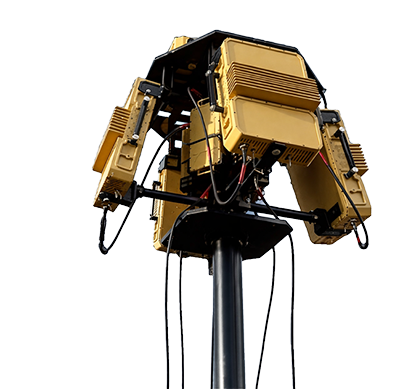
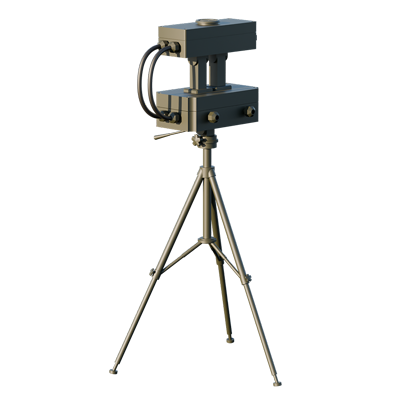
Boreades is an integrated system targeting illegal drones and is able to detect, identify, track and neutralize malicious drones as well as localize remote pilots.
Detect >> Identify >> Track >> Neutralize
- Detect: short/mid/long range 3D sensors, day/night cameras and UHD video to build a real-time air picture to the user
- Identify: distinguish drone from birds and identify friendly from malicious drones to eliminate false alarms
- Track: spot incoming threats, track them and get visual view of the drone and the contraband delivery to aid user taking proper and efficient decisions
- Neutralize: Counter the threats by jamming and spoofing the remote control and navigation systems, and/or by capturing the drone using a Net Launcher

The deal would allow L3Harris to equip its Vampire c-UAS platform with a small interceptor drone for the first time.
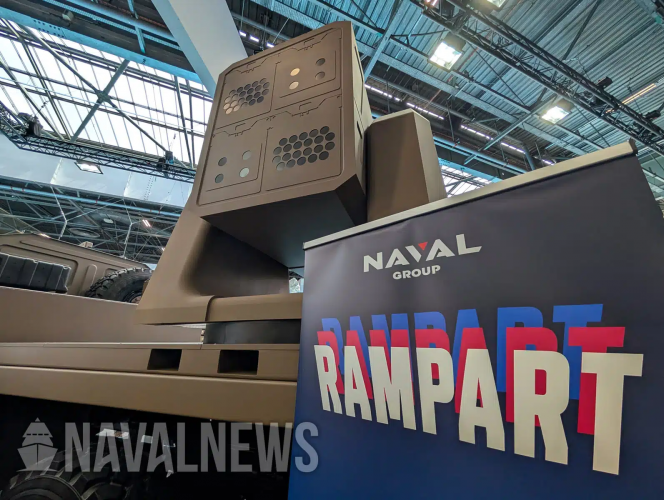
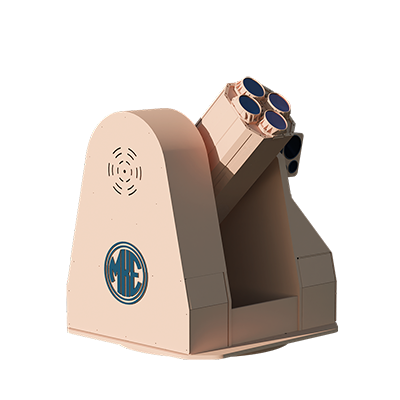
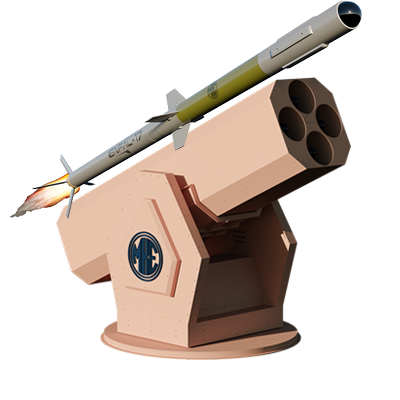
Each turret is outfitted with four launch modules, enabling a versatile mix of weapons and decoys tailored to specific threats and missions. 20x 68mm laser-guided rockets (by Thales, 68mm being a French military standard) fit in a single module, meaning a Rampart launcher may accommodate up to 80x rockets. In the case of 70mm rockets (which is the NATO standard), 12x rockets can fit in a single module (for a total of 48 rockets). Regarding very short range / MANPAD style missiles, 4 to 6 ammunition may fit in a module (depending on the missile type).
On 19th June 2026, Naval Group, MESKO and TELESYTEM signed an agreement to demonstrate MESKO’s Piorun missile capacity onto Naval Group’s Rampart during future naval exercises.
- Alpine Eagle and Origin Robotics partner to integrate the BLAZE interceptor into Sentinel, creating a layered sensor-to-effector drone defence architecture
BLAZE is a man-portable, rapidly deployable interceptor designed to defeat fast-moving aerial threats, including loitering munitions and hostile UAVs. Equipped with an HE fragmentation warhead, it ensures precise and effective threat elimination, even in contested environments.


South Korean Air Force conducting training to intercept a swarm of 50 drones.
View: https://x.com/Southwood_/status/2069694485068738789?s=20
 .
.
UK industry team looks to miniaturize DragonFire laser for Type 45 destroyer debut
Based on a 2027 target, the UK is set to become the first European NATO nation to operationally deploy novel, laser directed energy technology.
https://breakingdefense.com/2026/06...ire-laser-weapon-for-type-45-destroyer-debut/

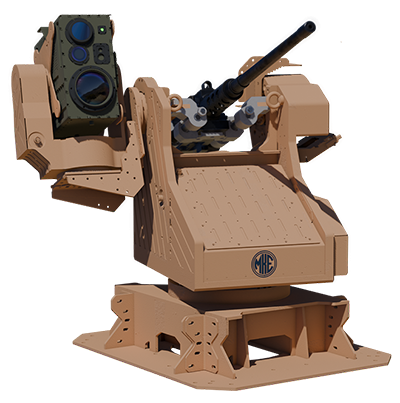
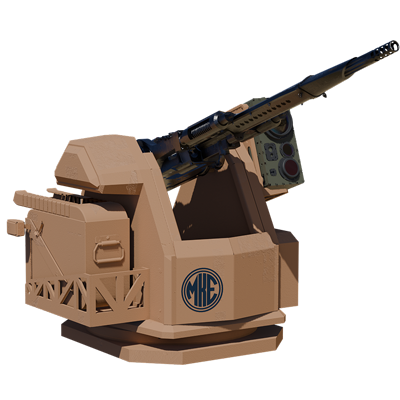
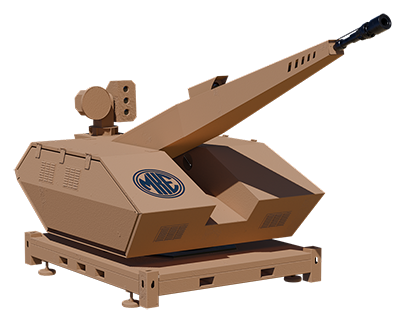
7.62×51mm NATO and 7.62x39 Anti-Drone rounds with fragmentation effect, developed by MKE
Key Points
- Echodyne told The Defence Blog its new Kirkland, Washington facility will produce more than 30,000 counter-drone radars annually.
- Echodyne's MESA radars are deployed in Ukraine, at Lithuania training grounds, and across multiple U.S. military programs.
Echodyne builds its radars around a patented technology called MESA, short for Metamaterials Electronically Scanned Array, which steers a radar beam electronically

https://rostec.ru/media/news/nashkrash-10-troynoy-udar-protiv-drona/#endMobile UAV jammer protects Russian troops, vehicles from enemy drones — tech firm
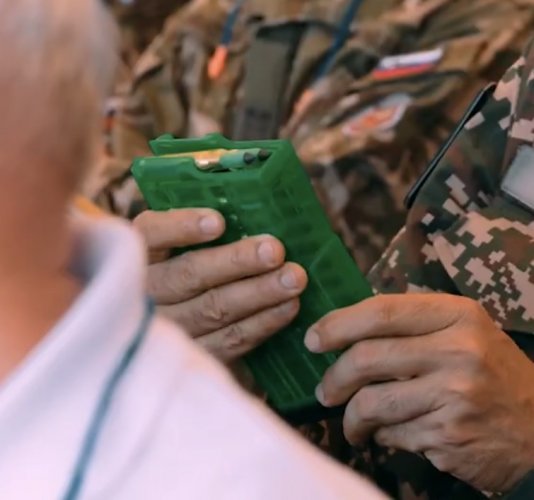
The ‘Puzzle’ radio jammer operates within a 300-meter radius
MOSCOW, July 3. /TASS/. The mobile radio jammer "Puzzle", designed to protect Russian troops and vehicles from enemy drones, is being used in the special military operation in Ukraine, a spokesman for the Vodoley Engineering Group told TASS.
"Our innovation, the mobile radio jamming system ‘Puzzle,’ is deployed in the special military operation area. The system’s modular design makes it possible to use it for the protection of both vehicles and personnel. The ‘Puzzle’ modular concept also enables its operators, within several minutes, to change its characteristics, designation, and carry out rapid repairs in field conditions without any tools," the spokesman said.
The UAV jammer has received positive feedback from troops, he added.
"The system shows high effectiveness and is capable of countering all types of radio-controlled UAVs. Its other unique properties include low energy consumption, simultaneous performance monitoring of all frequency modules, their temperature control, and monitoring of the cooling system status," the spokesman elaborated.
The ‘Puzzle’ radio jammer operates within a 300-meter radius, he said.
The developer of the Mnogotochie anti-drone cartridges on the features of the new ammunition and its areas of application
Photo: frame from the #НашКраш program
The project #НашКраш returns with the anniversary, tenthissue dedicated to the latest invention of domestic designers - anti-drone cartridges SC 226 and SC 228 "Mnogotochie". The ammunition contains a three-element bullet that separates in flight and is more likely to hit the target. Such cartridges are needed to combat FPV drones and to increase the effectiveness of combat operations. The Mnogotochie can be fired from standard small arms of 5.45 and 7.62 mm caliber.
The permanent host of the project, military journalist Alexei Egorov, not only tested the "Ellipsis" in action, but also talked to one of the developers of the new anti-drone tool, who spoke about its features and areas of application.
— What is the history of the creation of "Ellipsis"?
— The idea of multi-bullet in cartridges is not new. It has existed for more than a century in one form or another. But earlier the tasks were somewhat different. Multi-bullet cartridges were required to hit manpower at sufficiently long ranges, to ensure the penetration of equipment.
"Plus, armor began to appear. That is, this topic went somewhere into the shadows, until...
"Until the task of combating drones appeared. Our company had a certain reserve. We took these developments out of the cloth and started developing an anti-drone cartridge.
"When cutting the cartridge, three elements are clearly visible. You told me right away not to call it a bullet under any circumstances. Why can't we say that there are three bullets here?
"Because there is only one bullet. It is assembled from three elements even before installation in the case, which allows us to assemble this cartridge on standard rotor lines that do not require modification.
— When the bullet comes out of the barrel, does it twist in the classic way?
"Each element is twisted in rifling, thus obtaining stabilization, which allows us to fire through closed-type muzzle brakes, the so-called banks. And shoot far enough, unlike shotgun cartridges - 100-300 meters, depending on the caliber.
"That's what struck me. We have already understood that the bullet is divided into component elements right at the exit from the barrel. And, in theory, the silencer should interfere - either these bullets will break it, or the accuracy will increase. It turns out that none of this happened. Why?
— Precisely because of stabilization.
— And, by the way, another interesting detail. All the holes at the outlet are perfectly round. Is this also a consequence of stabilization? Because it seemed to me that every element of the bullet would rotate in flight.
"Each element of the bullet rotates like a yula. And it is quite difficult for it to shift from its trajectory.
— And it is obvious that in such a situation the damaging effect is greater than that of a hunting cartridge?
— Yes.
— Can you compare it somehow? At times?
"It's not even a lethal effect, but the range of this action is many times greater.
"By the way, let's do an experiment with this metal shield that we shot through. Just so that you understand what kind of sheet it is. It's not just some kind of foil. We take a nail, take a hammer, and it is not so easy to break through it. That is, of course, it is possible to punch, but you need to apply a decent amount of force in order to do it. By the way, how much did you expect that this cartridge would have such a killing power?
— To be honest, we did not work on steel sheets. We mostly had boards on trials. Therefore, there is also a certain amount of surprise on our part here.
— What other advantages does the "Ellipsis" have compared to the hunting cartridge?
"In terms of the work of our guys on the "belt", having this cartridge in service, they do not have to carry a hunting rifle with them. That is, the cartridge is unified with standard cartridges. The automatics of the weapon works in all operating conditions on this cartridge. That is, you will no longer have to drag excess weight in the form of a gun and cartridges to the gun.
"And, by the way, if you think that the range of this cartridge is not so long, and this is a minus, then it turns out that a short range is also often a plus.
— Yes. Having very good penetrating characteristics at ranges of 100-150 meters, then the elements of the bullet, due to the fact that they have a small mass and not very good shape, quickly lose energy and at ranges over 500 meters have practically no lethal effect. This is good in order not to hook your own.
— Why such a name "SC"?
— TsKIB equipment was invented a long time ago.
"This is such a signature feature of TsKIB. The letter "C" is added to the name of each product. TsKIB is the Central Design Research Bureau of Sporting and Hunting Weapons. What else will TsKIB surprise us with in the near future?
— We have just started working with this. We still have a lot of work to do here, modernisation.
"And graduation?"
"Graduation has already begun.
— That is, serial production of "Mnogotochie" is already underway?
— Yes, serial production is already underway.
— Is this not the first piece experimental batch?
"The first piece experimental batch is already in the troops. And now mass mass production has begun.
- Does anyone else in the country mass-produce such cartridges?
— Exactly such — no. But the work is already underway.
"In the world?"
— And in the world too.
— How common are these works now?
"Only the lazy don't do it.
— But there is no mass production yet?
— No, I don't.
"So, once again. Everything you saw today is not just exclusive. This is what is produced for the first time in our country, for the first time on a large scale, even, let's not be afraid of this word, in the world. And this is done by the Rostec State Corporation, which includes the High-Precision Complexes holding, which includes the Academician Shipunov Instrument Design Bureau and TsKIB, with one of whose designers we have just spoken. Thank you very much. It was the NashCrash project. We will surprise you later.
That is I believeView attachment 817024View attachment 817025
(1)Pewpewpew
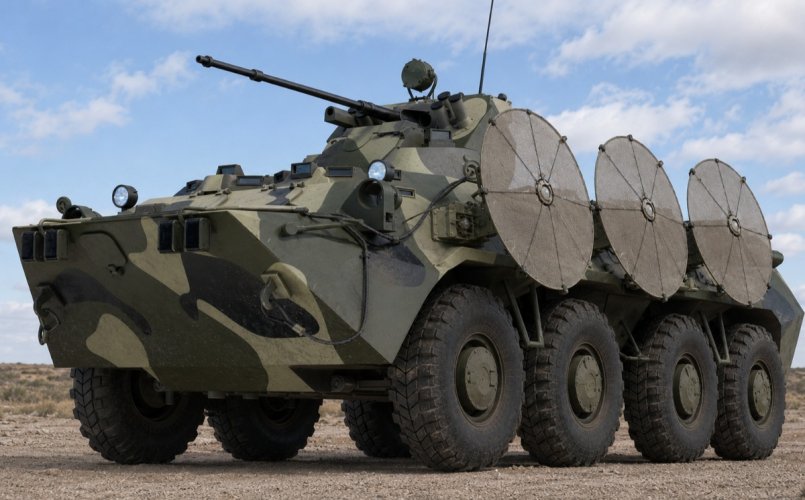
(2)CIWS design on this thing is mad. Curiously, twin KPVTs have central RPC and are in fact RWS. But with this much ammo per barrel, not for long.
(3)Arcs however are almost funny level bad; is this a ship of the line?
(4)KPVT gunports are Spanish armada level stuff; i.e. more like a galleon;well. At least it's one caliber, so English side.
The APUS-1 features a cruising speed of 140 km/h, a maximum speed of 320 km/h, and a tactical operational radius of up to 50 km. With a flight endurance of up to 50 minutes, the aircraft can carry a payload of up to 1.5 kg and is launched via catapult.
The system utilises a digital video link and a daylight camera, supporting autonomous GPS-independent navigation alongside an option for manual control. A two-person crew is sufficient for deployment, and the system can be made combat-ready in less than five minutes. Its stated operational ceiling reaches up to 4,500 m.
The APUS-1 can receive real-time target coordinates from radars or other surveillance networks. Targets are engaged either through kinetic impact or via an integrated warhead module. If a mission is aborted or a target is not found, the aircraft is programmed to return to the launch area, with self-destruction available as an optional setting.