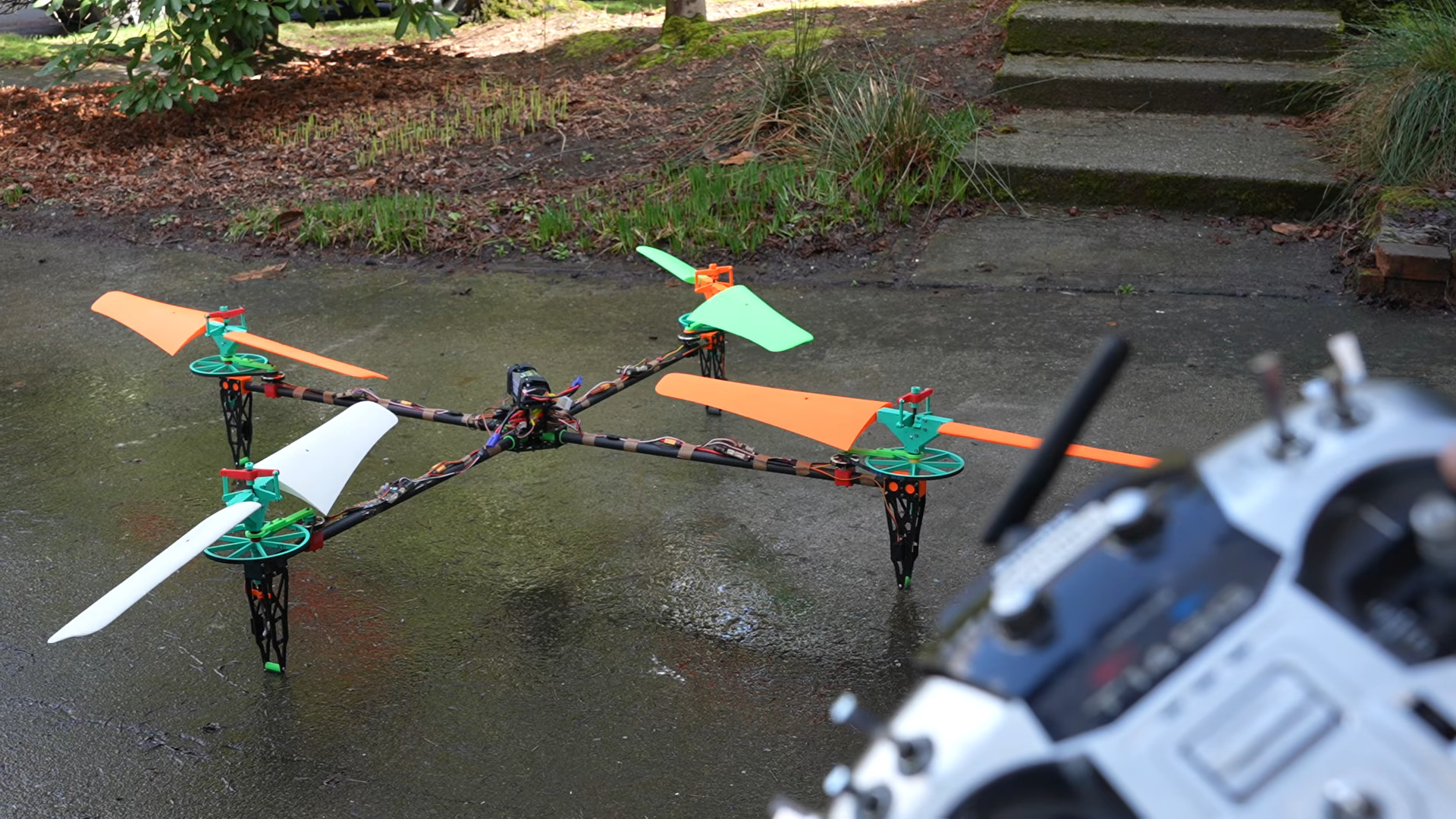
I wonder if a microphone would help interceptor drones...the noise those things make.

Efficiency


Cutest drone ever

Eesh

wow
 
Last edited:
In the future, I wouldn't be surprised if drones like Shahid were used as air mines.That is, when a plane approaches to shoot them down with cannons shaid 136 with sensors can be detected by an aircraft and explode at a certain distance of aicraft
 
Shahed-136 and other OWAs typically don't emit anything. Neither do fiber optic FPVs

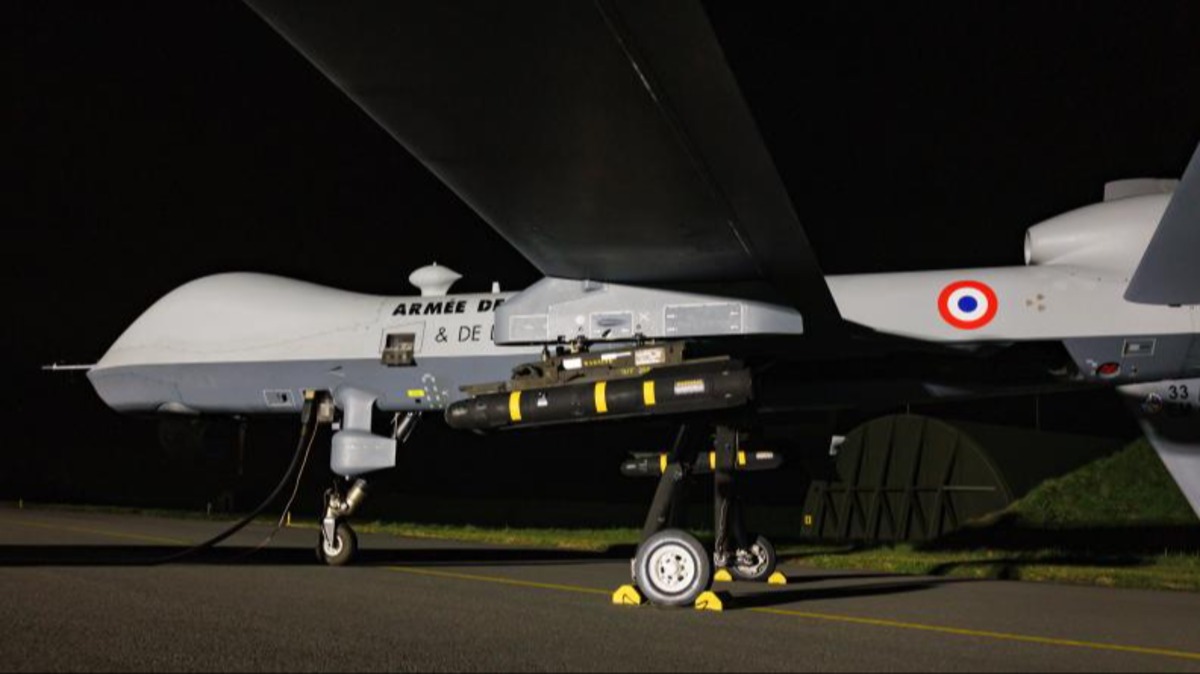
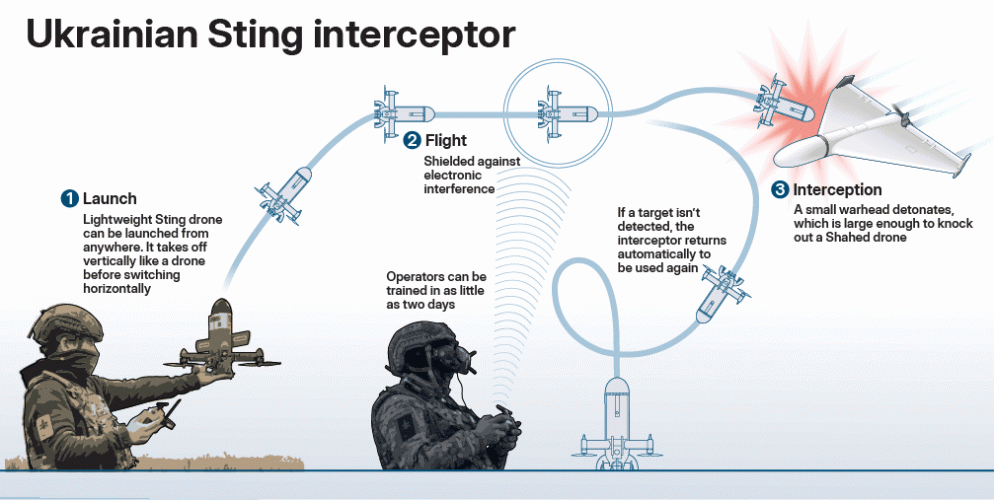
IMO, the ideal solution is MALE UCAVs like MQ-9 carrying battery electric interceptors similar to Sting. Build a multi-channel autonomous interceptor drone controller into the UCAV; it will perform the task that Ukraine currently uses human Sting operators for, and the interceptor drones can stay cheap with basic electronics on board while the more expensive AI machine vision system is on the UCAV where it doesn't get expended per shot.
Was referring to their ground control station, sort of like SEAD but for drones.
 
Quite an impressive air defense system.

"The Sky Sabre has a range of 25km and can engage 24 projectiles at the same time.
A Royal Artillery battery and Sky Sabre operators are to move into Saudi bases this week.
The defence system, comprising radar, a control node and missile launchers, can intercept munitions and aircraft. The system is capable of stopping aircraft, drones, and laser-guided bombs using the Common Anti-Air Modular Missile, which travels at more than 3,700kph."
 
France tests MQ-9 Reaper for drone intercept role

DB_image_165.jpg
 
What they maybe need is a drone that loiters and homes in on drone control emissions.
A lot of drones don't really emit anything, especially not any fiber-optic drones.


I wonder if a microphone would help interceptor drones...the noise those things make.
Ukraine has been doing that for years.


Was referring to their ground control station, sort of like SEAD but for drones.
Not all ground control stations emit signals.
 
On a somewhat strange note:
(Registration or subscription may be required)
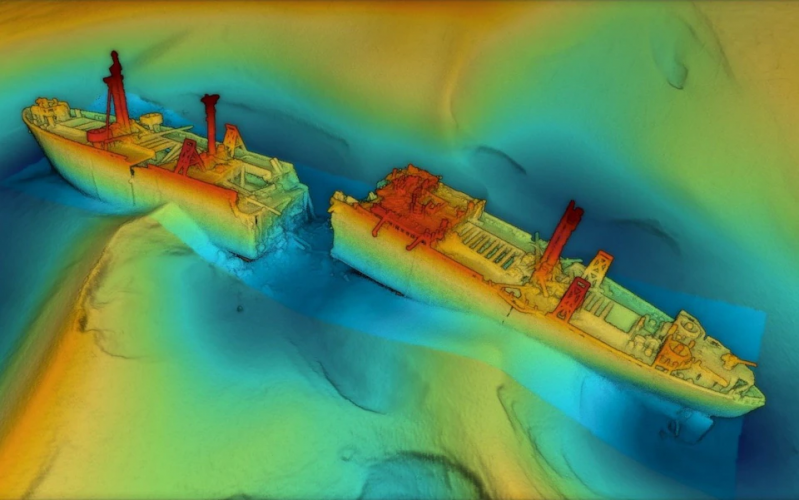
A Second World War shipwreck laden with explosives is to have its masts removed amid fears it could be a “sitting duck” for drone attacks.

The Department for Transport (DfT) has set aside £9.5m for a contractor to fund the works on the SS Richard Montgomery, an American Liberty-class cargo ship which ran aground in the Thames estuary off Sheerness, Kent, in August 1944.

Salvage efforts were abandoned a month after the wreck when the vessel flooded completely, and around 1,400 tons of explosives is still thought to be contained in the forward holds.

Last month, The Telegraph reported fears that a drone attack could topple the masts – which protrude above the surface of the water – and disturb the incendiary cargo below.

n October, an ally of Vladimir Putin reportedly told Russian state TV that Moscow should target the ship.

Detonation of the Montgomery could trigger “mass damage and loss of life” by sending a 5m-high tsunami towards the coast and Britain’s largest liquefied natural gas terminal on the Isle of Grain, previous government assessments have warned.

Government sources told The Telegraph that the authorities were alert to the prospect of a drone attack on the shipwreck, which lies around 1.5 miles off Sheerness.

In June last year, pilots and drone operators were banned from flying within a radius of one nautical mile of the wreck for “reasons of public safety”.

Katja Bego, a senior research fellow in the Chatham House think tank’s Europe programme, has warned: “A bad actor could smuggle more sophisticated drones, or rig with explosives readily available commercial drones, and ... launch an attack from UK soil directly.”

She added: “The scary thing is that you do not need to be a highly sophisticated state actor to launch a sabotage attack using commercially available drones.”

Earlier this year, Lord Beamish, chairman of Parliament’s intelligence and security committee, warned that Russia and Iran were actively recruiting people in Britain to launch “proxy” attacks.

Prof David Alexander, an expert in emergency planning and risk management, said the SS Richard Montgomery was “a sitting duck”.

The government announced its intention to remove the vessel’s three masts six years ago, but the project has been repeatedly delayed.

A DfT spokesman said: “Our priority will always be to ensure the safety of the public and to reduce any risk posed by the SS Richard Montgomery.

“The condition of the wreck remains stable, experts are continuing to monitor the site, and we have now outlined our intention to choose the Resolve Group to undertake the mast removal project.”

The contract awarded to Resolve Salvage and Fire (Europe) Ltd is estimated to run from April 2026 to March 2027, with a possible one-year extension dependent on the weather.

Resolve Marine, the parent company of the salvage operator, is based in Fort Lauderdale, Florida.

Founded by Joseph Farrell Jnr, a veteran of the US coast guard and US navy, the company previously led the salvage operation of the MV Dali tanker which crashed into the Francis Scott Key Bridge in Baltimore in 2024, causing the bridge to collapse.

Resolve Marine was also at the forefront of the response to the Deepwater Horizon rig explosion in the Gulf of Mexico.

The SS Richard Montgomery had been bound for Cherbourg with munitions to support the Normandy invasion when her anchor dragged into a sandbank during a storm, causing the hull to crack and buckle.

Annual condition surveys have not indicated that the risk associated with the wreck has increased, according to the department.

Kevin McKenna, the Labour MP for Sittingbourne and Sheppey, has called for one of the masts to be kept on the island.

“For many people on Sheppey, the Montgomery masts are far more than wreckage, they’re a cherished landmark linked to an extraordinary wartime story,” he said. “I fully support their safe removal and believe it’s vital that part of this iconic structure is preserved for future generations.

“That’s why I’m calling on the Government to secure one of the Montgomery masts for display in a local museum, so that this island’s unique history can be shared and remembered by the people of Sheppey for generations to come.”

1775727241864.png
An image of the wreck and the surrounding seabed in the Thames estuary Credit: MCA/Penn News
 
All except fibre optic ones must to control the drones surely?

That depends on how or even if the weapon is being controlled. Some OWAs like your basic Shahed-136 are autonomous after launch; they fly a preprogrammed route, don't emit anything, and don't receive any signals other than from radionavigation-satellite services like GPS. There is no signal to detect.

A cheap RC quadcopter drone will transmit a video feed constantly so the pilot can fly it remotely. If it is transmitting this signal via RF instead of optically over a fiber cable, you can detect this, but the wavelength is generally long enough that you will struggle to accurately geolocate it (especially when there are many such signals and jammers operating in the area), and even if you do, the antenna the drone pilot is using to emit the signal may be located away from the actual pilot. Ukraine for instance has in some cases been relaying these drone control signals through a starlink terminal on a second larger drone. I'm sure you could do the same thing with a fiber optic cable to a relay drone that then has transmitters to control several RF drones.

Right now we mostly see the Shahed-136 and cheap consumer drones being used in mass. As defense industries catch up I think we will start to see a lot more purpose built weapons that use military grade communication networks and/or fully autonomous "AI" controlled weapons.
 
Last edited:
That depends on how or even if the weapon is being controlled. Some OWAs like your basic Shahed-136 are autonomous after launch; they fly a preprogrammed route, don't emit anything, and don't receive any signals other than from radionavigation-satellite services like GPS. There is no signal to detect.

A cheap RC quadcopter drone will transmit a video feed constantly so the pilot can fly it remotely. If it isn't transmitting this signal via RF instead of optically over a fiber cable, you can detect this, but the wavelength is generally long enough that you will struggle to accurately geolocate it (especially when there are many such signals and jammers operating in the area), and even if you do, the antenna the drone pilot is using to emit the signal may be located away from the actual pilot. Ukraine for instance has in some cases been relaying these drone control signals through a starlink terminal on a second larger drone. I'm sure you could do the same thing with a fiber optic cable to a relay drone that then has transmitters to control several RF drones.

Right now we mostly see the Shahed-136 and cheap consumer drones being used in mass. As defense industries catch up I think we will start to see a lot more purpose built weapons that use military grade communication networks and/or fully autonomous "AI" controlled weapons.
the thing is how expensive will the military grade networks and AI stuff be. The whole point of the shahed is that it can deliver 50kg explosives at long distances at a incredibly cheap price.
Im sure they will get cheaper eventually but the countermeasures like lasers as well as anti aircraft guns slaves to a FCR and IIR sensor will still perform well against the slowish ones while micromissiles will perform well against the fast ones.
 
View: https://x.com/bayraktar_1love/status/2042885503050006845?s=20

That depends on how or even if the weapon is being controlled. Some OWAs like your basic Shahed-136 are autonomous after launch; they fly a preprogrammed route, don't emit anything, and don't receive any signals other than from radionavigation-satellite services like GPS. There is no signal to detect.

A cheap RC quadcopter drone will transmit a video feed constantly so the pilot can fly it remotely. If it is transmitting this signal via RF instead of optically over a fiber cable, you can detect this, but the wavelength is generally long enough that you will struggle to accurately geolocate it (especially when there are many such signals and jammers operating in the area), and even if you do, the antenna the drone pilot is using to emit the signal may be located away from the actual pilot. Ukraine for instance has in some cases been relaying these drone control signals through a starlink terminal on a second larger drone. I'm sure you could do the same thing with a fiber optic cable to a relay drone that then has transmitters to control several RF drones.

Right now we mostly see the Shahed-136 and cheap consumer drones being used in mass. As defense industries catch up I think we will start to see a lot more purpose built weapons that use military grade communication networks and/or fully autonomous "AI" controlled weapons.
I guess they could still home in on drone-jammers though??
 
Drones against mines

Really important work. I've periodically seen various proposals for thermal detection of landmines/UXO over I guess at least five last years, if not more (and yes, on closer inspection this is definitely one that was pointed out by Catherine Belton on her socials a couple of years back, if I remember it correctly). Whether these have been widely adopted or automated anywhere, I don't know. It'd be a tragedy if the only thing holding these developments back was the lack of funding or general interest. Certainly the potential immense savings from demining and reduced maiming alone should justify quite large investments in the field.

The original article from September 12, 2023


Additional information

 
Everything is going NASA/mission control these days..beans and bolt-actions given the boot.

"Drone tech support may I help you?
Yes, I'm trying to-
"Please hold....your proxy war is very important to us...."

From now on, LINUX for space, and Microsoft for militaries.

Peace at last....
 
All except fibre optic ones must to control the drones surely?

Fiber drones pretty much entirely displaced radio control because the radio control methods made massing weapons hard.

You can potentially go after a radar altimeter if they're over water. This was considered a big weakness for TLAM in the 80s.
 
What are these "AI-guided" turrets? I presume things like automated 35mm gun mountings directed onto target by radar but where exactly does AI factor into this?
AI is a catch phrase they like to throw around at random , but if you watch any of the anti drone interceptors they are like 95% manually flown FPVs.
 
AI is a catch phrase they like to throw around at random , but if you watch any of the anti drone interceptors they are like 95% manually flown FPVs.
If you remember the famous drone attack on Russian air bases, some of those manually piloted drones showed a failover mode on the screen. That was the AI kicking in when the jamming had prevented the pilot from controlling it.
 
If you remember the famous drone attack on Russian air bases, some of those manually piloted drones showed a failover mode on the screen. That was the AI kicking in when the jamming had prevented the pilot from controlling it.
No there was zero AI , i checked the footage , what you are seeing is 'fail safe' mode being initiated, as drone looses contact , it can switch to programmed flight. In personal drones its often just go to higer altitude to regain contact or return to home , but you can program other flight profiles , in kamikaze FPVs unless they are fiberoptic you typically loose control once they dip low enough and there are obstacles blocking LOS , in those fail safe mode is just fly straight. There was no AI to be seen in any of that vids.

Next pseudo AI is optical algorithm that marks the target , you know when you see box surrounding a target . A decade ago we made some app for such use in shootign targets, there is no AI its just algorithm looking at pixels different than background. But lets say this you could say its AI , but extremely basic one ,every aliexpress security camera for 30$ has one.

Next level would be AI actualy flying the intercept course . only ones where you see that are those Yolka drones where operator has no controls at all just a fire and forget launcher.

Ofcourse there are some AI powered interceptors ,but mostly those US supply's to Ukraine. there are good reasons why FPV works for interceptors. LOS is always free ,unlike for FPV used in ground attack role. they are much cheaper and simpler to make and once trained , operators get very proficient

Good read


2026-04-14_10h38_42.png
FPV
IW2H2LDQZFEKFAIQJ2J3JEYXTQ.gif
FPV with dislocated control center flying FPVs trough Internet-repeater so drone could be on front line and operator in Kiev
2026-04-14_10h26_55.png
 
Last edited:
Some more info on it;
View attachment 745093

"While developing the land-based 25 mm weapon system, which included the 25×137 mm Atom airburst round, Aselsan engineers had the idea to exploit the new ammunition in the Counter-UAS role, to kill unmanned air systems at range. “We considered weight, in order to be capable to install the Korkut 25 n a wide variety of vehicles, as well as cost,” an Aselsan representative explained to EDR On-Line.

The system lethality is given by a chain that starts with the target detection and ends with its neutralisation, the key element for the latter being the ammunition. The Atom 25 mm round is a pre-fragmented projectile filled with high explosive. From the rear to the front we find the power source, the base fuse with its electronics, the booster and finally the pre-fragmented body. The latter was the subject of deep studies in terms of materiel and pre-fragmentation in order to generate the appropriate cloud of fragments to cause maximum damage to the target, usually a Class 1 drone. While the 35 mm round used on the Korkut is filled with tungsten cylinders, the room available in the 25 mm did not allowed such a solution hence the decision to go for a pre-frag HE ammunition

The 25 mm gun muzzle is fitted with a muzzle brake that includes coils tat allow measuring the velocity of the single round, data being fed into the programming system which generates a current into the last magnetic coil, which programmes the smart fuse by induction before the round leaves the gun. The programming is done on the base of data provided by the tracking system, which determinates the point where the round must be ignited to generate the cloud of fragments, usually a 10-round burst being fired to ensure maximum kill probability. The Korkut 25 turret hosts 200 rounds therefore a single system can carry out 20 engagements before needing to be reloaded."


Aselsan ATOM 25 developmental footage
View: https://x.com/KaanKab66077406/status/2044405049439224173?s=20
 
No there was zero AI , i checked the footage , what you are seeing is 'fail safe' mode being initiated, as drone looses contact , it can switch to programmed flight. In personal drones its often just go to higer altitude to regain contact or return to home , but you can program other flight profiles , in kamikaze FPVs unless they are fiberoptic you typically loose control once they dip low enough and there are obstacles blocking LOS , in those fail safe mode is just fly straight. There was no AI to be seen in any of that vids.

Next pseudo AI is optical algorithm that marks the target , you know when you see box surrounding a target . A decade ago we made some app for such use in shootign targets, there is no AI its just algorithm looking at pixels different than background. But lets say this you could say its AI , but extremely basic one ,every aliexpress security camera for 30$ has one.
They trained the AI to recognise targets before the mission. What point is a "programmed flight" during the terminal homing phase when it needs to select the most vulnerable spot on the target (the fuel tanks). The drones were very cheap, so dont expect the AI to be playing chess on such a tiny onboard computer. So of course the pilot will still control it as much as possible, but the AI could have been psyops for Russias benefit lol.
 

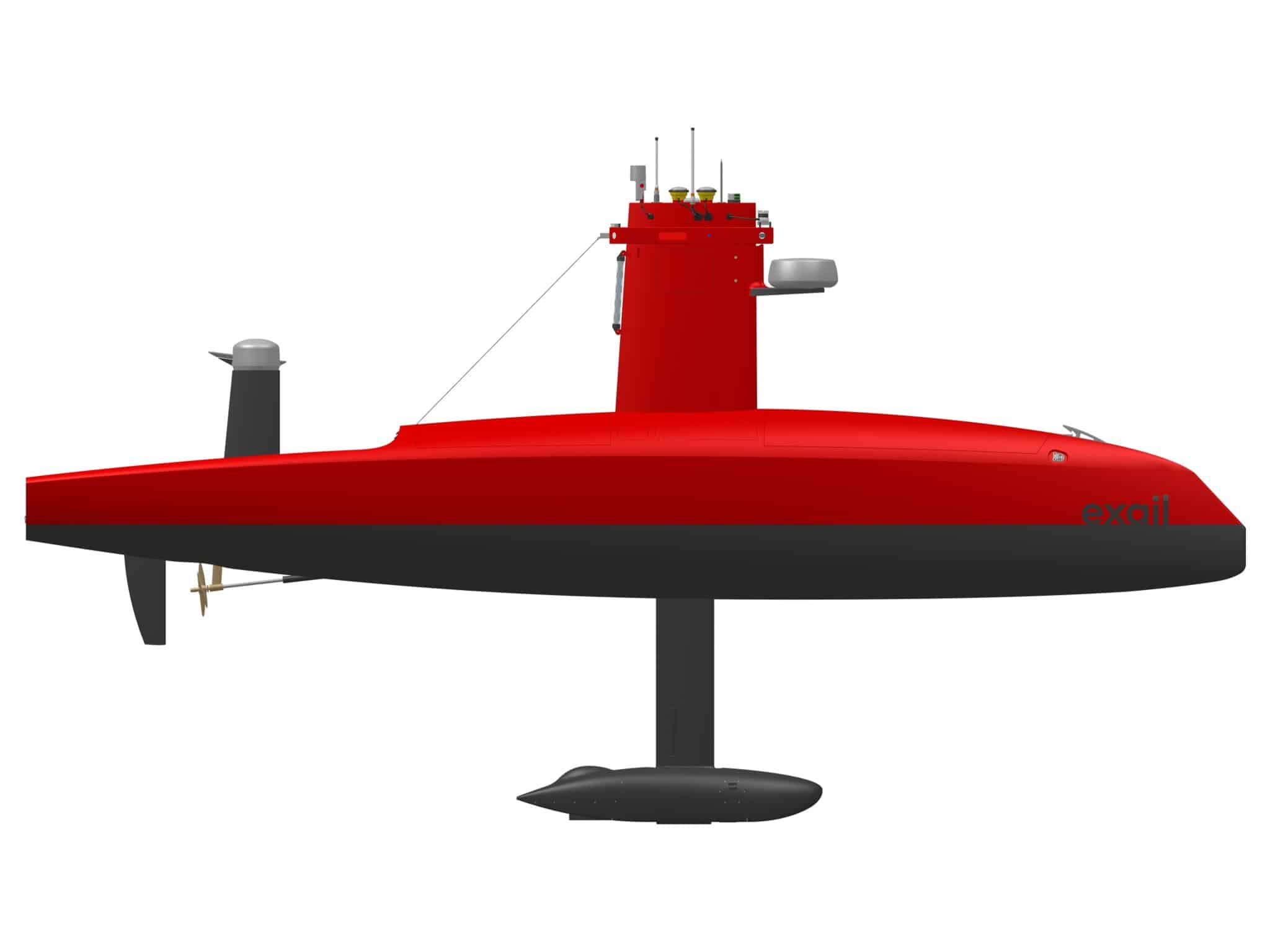
Exail’s DriX H-9 USV selected for Counter-UAS research​


Similar threads

Back
Top Bottom