AIM-174 Very Long Range AAM (SM-6)

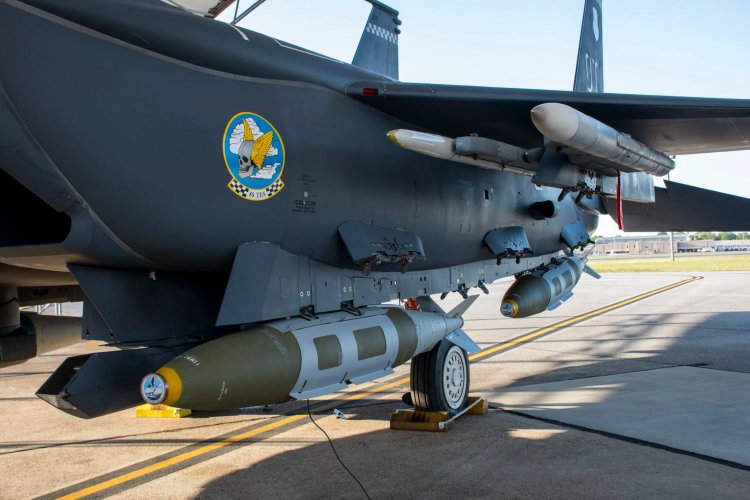
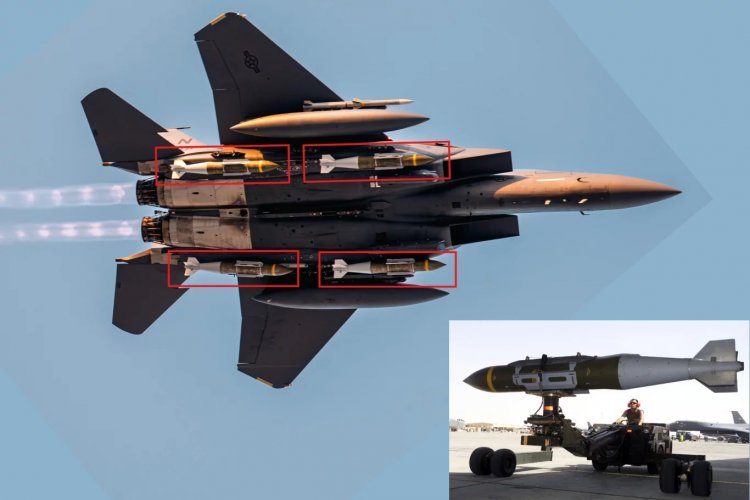
I wonder if they're too long to fit two under each CFT.
Shouldn't be. CFTs are designed around 3x2000lb weapons on the lower pylon.

Also, look at how much of those AGM-158's length runs forward of the mounting lugs. There's space for an AIM-174 on the forward-most and aft-most CFT pylons.
 
SM-6 is integrated with NIFCCA, so in principle I do not see any reason why an aircraft could not fire the weapon and let it be controlled by a platform with an appropriate SBM track. But as a practical matter, having aircraft in the right place at the right time in any meaningful numbers seems like a bigger challenge. The only advantage would be increasing the magazine depth of the task force by putting part of the ABM interceptor load on the CVN. Seems of rather dubious value to me, especially as anything more than two missiles is going to make for very limited F/18 endurance.
Well, the other advantage is that you could project airborne ballistic defense capabilities (hovewer limited) much faster, than naval or ground ones. If time is limited to hours, and you have important object to protect, patrolling fighters with AIM-174 would provide such defense much faster, than you could move PATRIOT battery or Aegis destroyer into position.
 
Shouldn't be. CFTs are designed around 3x2000lb weapons on the lower pylon.

Also, look at how much of those AGM-158's length runs forward of the mounting lugs. There's space for an AIM-174 on the forward-most and aft-most CFT pylons.
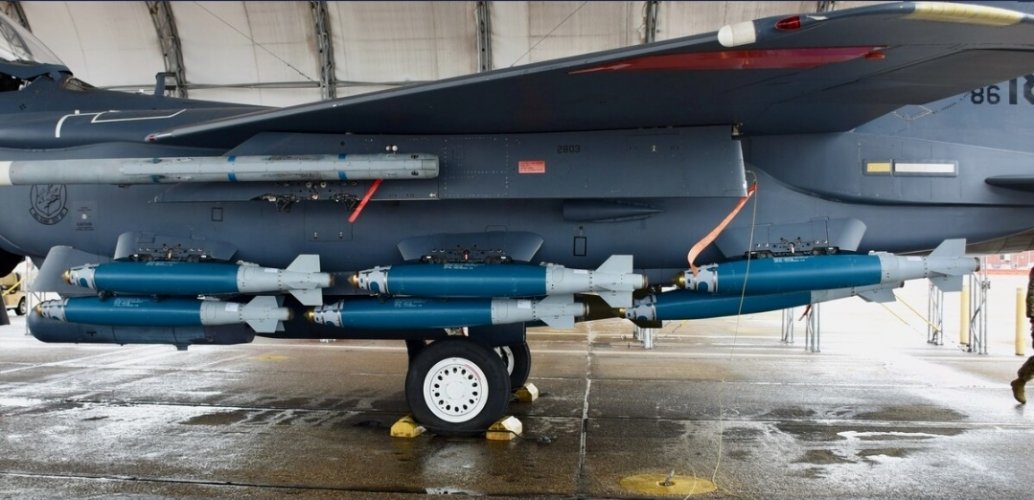
I've only ever seen them with 2 2,000lb LGBs on the CFTs.
 

Attachments

  • 220426-F-AA323-0139-scaled.jpg
    220426-F-AA323-0139-scaled.jpg
    757 KB · Views: 76
  • image-15.jpg
    image-15.jpg
    157.9 KB · Views: 61
Well, the other advantage is that you could project airborne ballistic defense capabilities (hovewer limited) much faster, than naval or ground ones. If time is limited to hours, and you have important object to protect, patrolling fighters with AIM-174 would provide such defense much faster, than you could move PATRIOT battery or Aegis destroyer into position.

Maybe, but by the time we have space based sensors capable of fire control quality tracks, I suspect space based interceptors will be right around the corner, and they will probably cost less than an SM-6, much less an AIM-174 and patrolling fighter.

Air launched boost phase intercept could be a different story though. I'm imagining a new HALE UAV that can loiter 30+ hours and launch something like an AIM-174 from ~70kft. Having a bunch of these drones over an adversary like Iran could be useful for engaging all sorts of time-critical targets, not just boosting MRBMs.
 
space based interceptors will be right around the corner, and they will probably cost less than an SM-6, much less an AIM-174 and patrolling fighter.

Really? I'm a big Spacex fan and I see cost-to-orbit continuing to dive substantially, but you believe the all-told cost of a space-based ABM weapon will be cheaper per intercept than an atmospheric missile? What type of system are you envisioning?
 
Maybe, but by the time we have space based sensors capable of fire control quality tracks, I suspect space based interceptors will be right around the corner, and they will probably cost less than an SM-6, much less an AIM-174 and patrolling fighter.

Air launched boost phase intercept could be a different story though. I'm imagining a new HALE UAV that can loiter 30+ hours and launch something like an AIM-174 from ~70kft. Having a bunch of these drones over an adversary like Iran could be useful for engaging all sorts of time-critical targets, not just boosting MRBMs.

Space based interceptors will not be cheaper than a sm-6 when you factor in the singular ecosystem around it that has not been created yet. There are many sensors that allow for good tracking data even from GEO with SBIRS and such that can support GPI. Air launched boost phase is difficult without the proper situation you would need a EKV to catch a missile most likely in local air defense of area. You only would have a much shorter window of time with a non EKV equipped interceptor and a bespoke design unless your very close to the launch location
 

Attachments

  • space.png
    space.png
    806.5 KB · Views: 55
Really? I'm a big Spacex fan and I see cost-to-orbit continuing to dive substantially, but you believe the all-told cost of a space-based ABM weapon will be cheaper per intercept than an atmospheric missile? What type of system are you envisioning?

It will be ~$100/kg to orbit with Starship. That puts the boost cost of a one metric ton weapon at ~$100k, but the weapon can be much smaller as it only needs enough rocket motor to deorbit. It will literally cost less to put weapons in space than it does to fly them around on a fighter for a couple hours. Hell it will probably be cheaper than the logistics of storing and moving them between military installations. An AIM-120D is what, $3M cheaper than an AIM-174? I bet an AIM-120 sized weapon dropped from orbit will out perform an AIM-174 fired from a manned fighter in every way other than warhead mass.
 
Last edited:
just to have a couple thousand interceptors and their satellites actually made however will cost several hundred billion dollars, have you seen the CBO report on fancy space based systems. https://www.cbo.gov/publication/62379 Hornets or other aircraft that can use sm-6 can benefit from the large ecosystem around the missile. and even then the 174b been tested for almost 10 years just getting the existing tech working and deployed. New systems like GPI also take alot of time but they dont have to be supported by new launching platforms and put into space
 
It is expected to cost $1.2T over ~20 years all said and done, but still worth it, and less expensive in the long run. Figure ~$60B a year for a global missile shield. Most of that cost could be offset by downsizing the strategic nuclear forces that would no longer need to be as large as they currently are.

We are getting way off topic here though. AIM-174 is still great for air to air and anti-surface, plus maybe a limited backup air launched BMD capability.
 
It will be ~$100/kg to orbit with Starship. That puts the boost cost of a one metric ton weapon at ~$100k, but the weapon can be much smaller as it only needs enough rocket motor to deorbit. It will literally cost less to put weapons in space than it does to fly them around on a fighter for a couple hours. Hell it will probably be cheaper than the logistics of storing and moving them between military installations. An AIM-120D is what, $3M cheaper than an AIM-174? I bet an AIM-120 sized weapon dropped from orbit will out perform an AIM-174 fired from a manned fighter in every way other than warhead mass.

How about the cost of moving the platform to an intercept orbit promptly enough to address a pop-up target? Either you have many of these things in orbit everywhere (expensive, likely to cause great geopolitical strife) or you are invoking stupendous deltaV to fulfill the maneuvering and time constraints necessary. Probably more than is physically possible. If it is, hideously expensive.

How about the upkeep of a chemical rocket in vacuum for a sustained period of time? Spaceproofing anything makes it expensive. If something breaks, it's broken, no ordnance maintainer is available to safe it and start pulling panels.

How about the problem of entry-hardening an exquisite fusing and guidance system that has to decel from orbital velocity and strike a small target moving at hypersonic speeds? How do you cheaply engineer a heat shield around that? Consider the CEP of a MIRV, traveling at suborbital velocity, targeting a static target. Extrapolate those parameters to the level of shielding and precision necessary for an intercept vehicle. Is this purely a midcourse, exo concept?

 
How about the cost of moving the platform to an intercept orbit promptly enough to address a pop-up target?

Exactly the same problem that happens with the Project THOR stuff. Either you give up on time-critical targets, you orbit tens of thousands of platforms, or you require insane levels of delta-v. Orbital mechanics is a bitch, it is not your friend, and it cannot be bargained with.
 
How about the cost of moving the platform to an intercept orbit promptly enough to address a pop-up target? Either you have many of these things in orbit everywhere (expensive, likely to cause great geopolitical strife) or you are invoking stupendous deltaV to fulfill the maneuvering and time constraints necessary. Probably more than is physically possible. If it is, hideously expensive.

How about the upkeep of a chemical rocket in vacuum for a sustained period of time? Spaceproofing anything makes it expensive. If something breaks, it's broken, no ordnance maintainer is available to safe it and start pulling panels.

How about the problem of entry-hardening an exquisite fusing and guidance system that has to decel from orbital velocity and strike a small target moving at hypersonic speeds? How do you cheaply engineer a heat shield around that? Consider the CEP of a MIRV, traveling at suborbital velocity, targeting a static target. Extrapolate those parameters to the level of shielding and precision necessary for an intercept vehicle. Is this purely a midcourse, exo concept?

An ablative heatshield jacket/shell around the weapon and a small SRM to punt it out of orbit doesn't sound that expensive to me. Jacket strips away and weapon enables in the high atmosphere doing whatever speed it is designed to survive at. All the expensive stuff lives at 0g in a shell filled with inert gas kept at a constant temperature.

The plan for Golden Dome is what, ~8k satellites? I would expand that to include anti-air and surface strike weapons. Space launch is our one key industrial advantage over the adversary. Exploit it.
 
Exactly the same problem that happens with the Project THOR stuff. Either you give up on time-critical targets, you orbit tens of thousands of platforms, or you require insane levels of delta-v. Orbital mechanics is a bitch, it is not your friend, and it cannot be bargained with.
The kinetics would require about 3km/s delta v to have a ~2min impact time. Anything intended to engage flying targets probably wants less than 2km/s for their deorbit burn.

3km/s is IIRC the main-stage rocket motor in SM3/SM6. Not the Mk72 Booster. The Mk104 DTRM.

Any space-based AAMs are going to need one heck of a heat shield on the way down, they will be shedding ~4-5000m/s into the atmosphere, dropping in at 1-2km/s in terminal dive.

Kinetics we want doing more than 3km/s at impact, so with a 3km/s deorbit burn they need to burn off less than 3km/s on the way down.
 
Orbital interceptors seem quite questionable. If it were up to me, I would just skip it and adopt orbit to ground weapons instead. You can simply wait until a platform cones into a favorable geometry to the target. This obviously does not stop opponent hypersonics (unless the launcher is the target) but it provides excellent deterrent value at far less cost.

Whatever happens, surface launched weapons will still be the final layer. Not sure if air launched weapons have much of a roll to play given the need to always have a CAP on station with very large weapons.
 
I could be misremembering (or imagining) but weren’t they going to put a patriot type system on a Global Hawk sized UAV and have it, in times of crisis for example, loiter just outside, say North Korean airspace, to intercept missiles during boost phase?

Could this system have this capability?
 
Space based interceptors will not be cheaper than a sm-6 when you factor in the singular ecosystem around it that has not been created yet. There are many sensors that allow for good tracking data even from GEO with SBIRS and such that can support GPI. Air launched boost phase is difficult without the proper situation you would need a EKV to catch a missile most likely in local air defense of area. You only would have a much shorter window of time with a non EKV equipped interceptor and a bespoke design unless your very close to the launch location
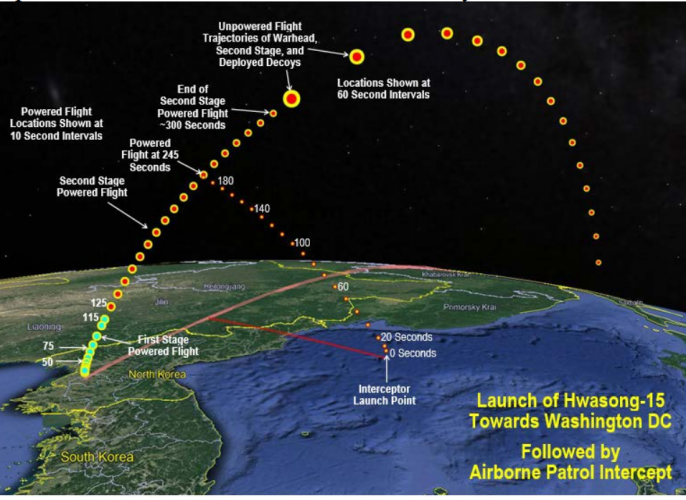
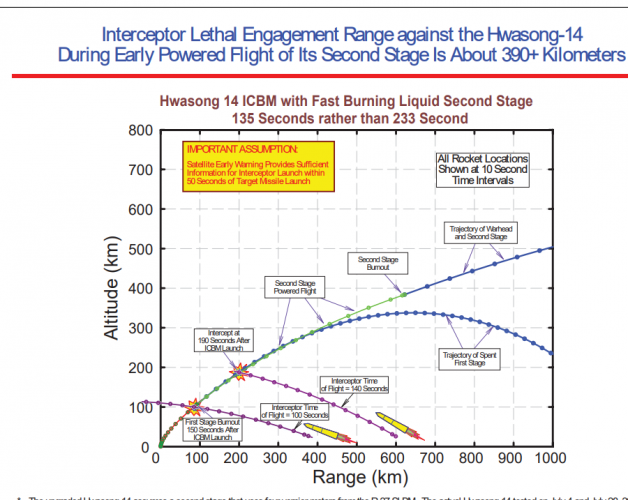
This was from the report covering the air launched design. Loitering and intercepting in boost phase which is supposedly the easiest has never been feasible. The benefit of intercepting in boost phase with air defense has turned a weapon like sm-6 into supposedly a strike weapon to deny launches in this thread. The time required for missile to strike one of these targets 200km away would leave no time for reaction. https://www.nytimes.com/2022/09/19/science/missile-defense-north-korea.html just having the average speed of the interceptor being 2.5 miles per second instead of 3.1 miles per second meant the drone had to be inside of north Korea to attack something above pyongyang
 
I could be misremembering (or imagining) but weren’t they going to put a patriot type system on a Global Hawk sized UAV and have it, in times of crisis for example, loiter just outside, say North Korean airspace, to intercept missiles during boost phase?

Could this system have this capability?
https://rlg.fas.org/refine.pdf

for reference the 2018 version they have archived just states that the sm-3 is too slow for stopping a ICBM. for a TBM you would not be able to get a indo-atmospheric intercept at 50km when a ICBM gets hit at 200km. If the decision time was 0 you would only have 100 or so seconds for a intercept with a sm-6 type weapon before it becomes inadequate on a first stage that boosts to 100km in 150 seconds
 

Attachments

  • wgehww.png
    wgehww.png
    183.9 KB · Views: 32
This was from the report covering the air launched design. Loitering and intercepting in boost phase which is supposedly the easiest has never been feasible. The benefit of intercepting in boost phase with air defense has turned a weapon like sm-6 into supposedly a strike weapon to deny launches in this thread. The time required for missile to strike one of these targets 200km away would leave no time for reaction. https://www.nytimes.com/2022/09/19/science/missile-defense-north-korea.html just having the average speed of the interceptor being 2.5 miles per second instead of 3.1 miles per second meant the drone had to be inside of north Korea to attack something above pyongyang
There was a missile concept (I posted it somewhere here years ago) that showed a Typhoon launching Mach 12 interceptors for BPI.

Here we go: https://www.secretprojects.co.uk/th...-intercept-system-ibis-ha-10.7015/#post-60166
 
Been waiting just over 100 days for a response from various sources! "You just have to ask for it" hurts my brain (then again, its a FOIA)

But you've been active on this forum since I was in preschool, so I'll get there eventually :cool:

Keep at it. Ask them what they need to narrow your request but don’t be unreasonable. Periodically ask them for status updates. The Navy is much (in my experience) better about requests than their peer components who just invite expensive and embarrassing lawsuits. Every 20 working days ask for an updated date of completion and CC their FOIA liason.


Generally the Navy isn’t a bunch of fuckups inviting an IG investigation, unlike USAF and other DoD components, who are just like “sue me” and I’m like “ok, say something else that builds my case.”
 
Last edited:

Similar threads

Back
Top Bottom