
You are using an out of date browser. It may not display this or other websites correctly.
You should upgrade or use an alternative browser.
You should upgrade or use an alternative browser.
AgustaWestland AW609
- Thread starter Triton
- Start date
The elephant in the room for me here is AEW with the pressurized cabin and 7600m ceiling, which is not explicitly stated but I guess it's what you could call maritime surveillance in a more general sense (which does get mentioned). There used to be a proposal for a new AEW version of the AW101 using a pair of APG-81s in panniers - this should be within the payload capability of the AW609 and offers commonality with the F-35B. Though with graceful degradation the antenna/transmitter of a modern AESA should be essentially maintenance free, I'm sure there are cooling, power supply and computer LRUs where parts/tools sharing would be worthwhile.
Too bad they went for the PT6 over the T700, else even the engines would have commonality with the AW101 and NH90! Endurance is probably not going to improve much if at all (maybe shorter transit helps?), so the logistics of 24/7 AEW coverage are still challenging, but that ceiling is a potentially huge benefit for STOVL carriers.
Too bad they went for the PT6 over the T700, else even the engines would have commonality with the AW101 and NH90! Endurance is probably not going to improve much if at all (maybe shorter transit helps?), so the logistics of 24/7 AEW coverage are still challenging, but that ceiling is a potentially huge benefit for STOVL carriers.

- Joined
- 18 October 2006
- Messages
- 4,782
- Reaction score
- 6,848
https://www.heliopsmag.com/articles/piloting-mv-22-to-leonardo-aw609/
Pretty good article on some of the considerations for 609 pilot development.
Pretty good article on some of the considerations for 609 pilot development.
Great read indeed.
He doesn´t mention it but the massification of tilt-rotor, if paired with the emergence of a supersonic, would probably see the decline of the Business jet as we know today (at least some of them).
Let´s Imagine that we have long range supersonic airliners with open airports all along the continent´s shores. Why would you transfer from a Mach 2 airliners to a private subsonic jet and then to a helicopter when you can greatly simplify your journey, in most cases, at a lower cost, hoping directly into a tilt-rotor? Even if the jet can theoretically fly 2 times faster, for a 1000km distance, factoring holding, takeoff&landing and aircraft transfer, you will get to your destination faster with the tilt rotor direct journey.
Hence, the choice for CPL holder will stay the same: fast jet/aircraft or slow rotorcraft. It´s the Rotorcraft itself that is evolving to be a faster machine and extend its reach with the same infrastructure and the same pilots. IFR is only a qualification at the end.
Leonardo probably did factor all this for us when designing the cockpit for their 609.
He doesn´t mention it but the massification of tilt-rotor, if paired with the emergence of a supersonic, would probably see the decline of the Business jet as we know today (at least some of them).
Let´s Imagine that we have long range supersonic airliners with open airports all along the continent´s shores. Why would you transfer from a Mach 2 airliners to a private subsonic jet and then to a helicopter when you can greatly simplify your journey, in most cases, at a lower cost, hoping directly into a tilt-rotor? Even if the jet can theoretically fly 2 times faster, for a 1000km distance, factoring holding, takeoff&landing and aircraft transfer, you will get to your destination faster with the tilt rotor direct journey.
Hence, the choice for CPL holder will stay the same: fast jet/aircraft or slow rotorcraft. It´s the Rotorcraft itself that is evolving to be a faster machine and extend its reach with the same infrastructure and the same pilots. IFR is only a qualification at the end.
Leonardo probably did factor all this for us when designing the cockpit for their 609.
Last edited:
- Joined
- 18 October 2006
- Messages
- 4,782
- Reaction score
- 6,848
The challenge for the tilt rotor, vice the fixed wing/helicopter transport means will simply be the Direct Operating Cost (DOC) of the TR. It is the bottom line. IF the DOC can be < current cost with added flexibility of potentially moving the VIP directly to the job site, I think it will become competitive. However, if EVTOL does take off (pun intended), this might put large scale utilization of TR travel at greater risk.
And what if EVTOL were the new Zeppelins? Just like the latter, they are crystalized in a certain scheme that compromise any evolved architecture (Man did get to the moon with H2 at the end).
I am pretty sure TR have a boulevard in front of them before anybody even figure how to catch-up (for real).
I am pretty sure TR have a boulevard in front of them before anybody even figure how to catch-up (for real).

Grey Havoc
ACCESS: USAP
- Joined
- 9 October 2009
- Messages
- 24,507
- Reaction score
- 18,182
From back in October of 2021:
https://www.leonardo.com/en/press-r...-and-technology-for-the-vip-helicopter-sectorThe announcement took place at the grand opening of the new rotorcraft terminal by Leonardo and Falcon Aviation Services in Dubai, purposely designated Casa Agusta. The terminal will facilitate the mobility to and from the Expo 2020 site in Dubai. An AW609 TiltRotor and an AW609 full scale VIP/corporate cabin mock-up will be on static display close to Casa Agusta for a limited period. The first appearance of the AW609 TiltRotor in the Middle East with its official presentation in Dubai marks the global commercial launch of the revolutionary multirole aircraft as it gets closer to its civil certification.
The Casa Agusta design is based on a brand new concept, which combines a helipad, showroom and lounge areas in a single city-based heliport. The terminal concept will support the development of a network of point-to-point connections for both urban transfers and connections between cities, while meeting the growing demands for sustainable and modern vertical lift mobility, as well as greater access to urban areas. VIP and charter services users and passengers will be provided with levels of service typically available in larger private airport facilities far from downtown and urban areas. Casa Agusta features a strong environmentally friendly design, which is modular through the use of recyclable materials and, if required, the terminal can be transported. Leading operator Falcon Aviation Services will use the terminal to deliver the best-in-class helicopter transport services.
The experience must provide a sense of Agusta before each take-off and landing, therefore Leonardo has developed an ideal ground base, which will be at the start and end of each journey. A modern, modular, sustainable, refined rotorcraft terminal, which meets the evolving trends in airborne mobility with an adaptable space, and areas to enjoy for business or relaxation. Through the combination of an amazing infrastructure with the revolutionising AW609, which delivers rotorcraft versatility and turboprop-like performance, what Leonardo is doing in Dubai today perfectly epitomises the Company’s vision of a not-so-distant future in modern air mobility.

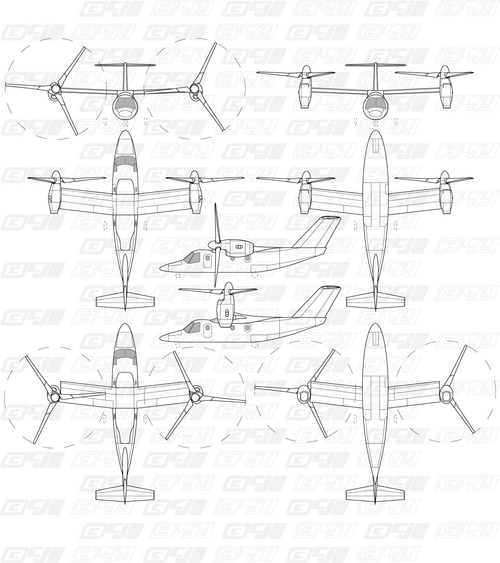
Outstanding work
Tail and Nacelle seem slightly different (Tail is thinner and more elongated, nacelles are more axially rotated with the inlet protruding more toward the side and shallower in shape). Nacelles have also a streamlined bump on the inboard side.

There was also some design modification with the tail and the way the vertical tail integrates with the tail cone. I would say that there is no more tail cone but a straight flat extension.
I would also tend to think the span of the horizontal stabilizer is greater. Not sure though.
Tail and Nacelle seem slightly different (Tail is thinner and more elongated, nacelles are more axially rotated with the inlet protruding more toward the side and shallower in shape). Nacelles have also a streamlined bump on the inboard side.


There was also some design modification with the tail and the way the vertical tail integrates with the tail cone. I would say that there is no more tail cone but a straight flat extension.

I would also tend to think the span of the horizontal stabilizer is greater. Not sure though.
Last edited:

RavenOne
ACCESS: Top Secret
- Joined
- 18 June 2008
- Messages
- 1,198
- Reaction score
- 3,856
and in further developments re EU Clean Skies - according to this press release I received
MEDIA INFORMATIONCompany InternalEU CLEAN SKY 2’S NEXT GENERATION CIVIL TILTROTOR TECNOLOGY DEMOSTRATOR(NGCTR-TD) PERFORMS FIRST FLIGHT MARKING MAJOR PROJECT MILESTONERome, 19 December 2025 - Leonardo and the EU Clean Aviation JU (Joint Undertaking) are pleased toannounce the first flight of the Next Generation Civil Tiltrotor – Technology Demonstrator (NGCTR-TD),which took place at Leonardo’s Cascina Costa di Samarate facility (Italy) today. This milestone marks thestart of the flight test phase for one of the most advanced technology programmes in the European civilaviation landscape.The Next Generation Civil Tiltrotor (NGCTR) programme aims to revolutionise civil vertical lift by combininghelicopter versatility with fixed-wing aircraft performance. With a cruise speed of 280 knots and a range ofapproximately 1,000 nautical miles, the tiltrotor opens new scenarios for mobility, freight transport andSearch & Rescue missions, enabling faster coverage of larger areas with a significantly reducedenvironmental footprint.The NGCTR-TD has been developed within Clean Sky 2, a core initiative of the European Horizon 2020programme and an EU-funded Initiative for the development and validation of aeronautical technologiesthat will improve environmental impact and enhance the European aerospace supply chain. The NGCTRTD brings together industry, research centres and academia to address the environmental and societalchallenges of aviation, reducing emissions and noise while strengthening Europe’s global competitiveness.


cheers
MEDIA INFORMATIONCompany InternalEU CLEAN SKY 2’S NEXT GENERATION CIVIL TILTROTOR TECNOLOGY DEMOSTRATOR(NGCTR-TD) PERFORMS FIRST FLIGHT MARKING MAJOR PROJECT MILESTONERome, 19 December 2025 - Leonardo and the EU Clean Aviation JU (Joint Undertaking) are pleased toannounce the first flight of the Next Generation Civil Tiltrotor – Technology Demonstrator (NGCTR-TD),which took place at Leonardo’s Cascina Costa di Samarate facility (Italy) today. This milestone marks thestart of the flight test phase for one of the most advanced technology programmes in the European civilaviation landscape.The Next Generation Civil Tiltrotor (NGCTR) programme aims to revolutionise civil vertical lift by combininghelicopter versatility with fixed-wing aircraft performance. With a cruise speed of 280 knots and a range ofapproximately 1,000 nautical miles, the tiltrotor opens new scenarios for mobility, freight transport andSearch & Rescue missions, enabling faster coverage of larger areas with a significantly reducedenvironmental footprint.The NGCTR-TD has been developed within Clean Sky 2, a core initiative of the European Horizon 2020programme and an EU-funded Initiative for the development and validation of aeronautical technologiesthat will improve environmental impact and enhance the European aerospace supply chain. The NGCTRTD brings together industry, research centres and academia to address the environmental and societalchallenges of aviation, reducing emissions and noise while strengthening Europe’s global competitiveness.
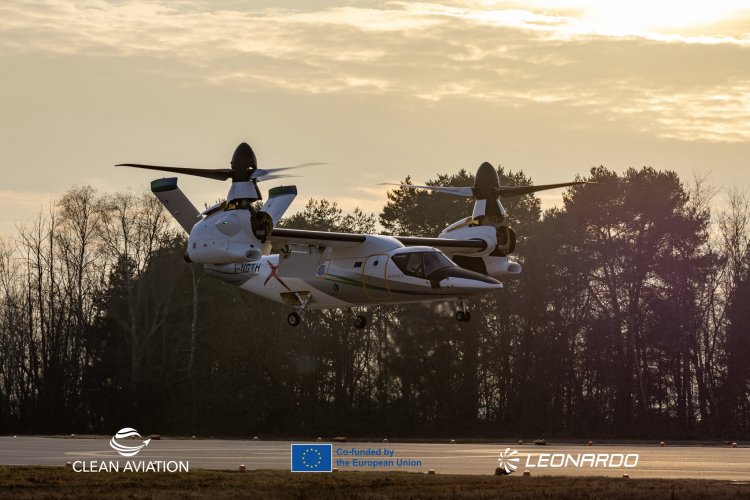
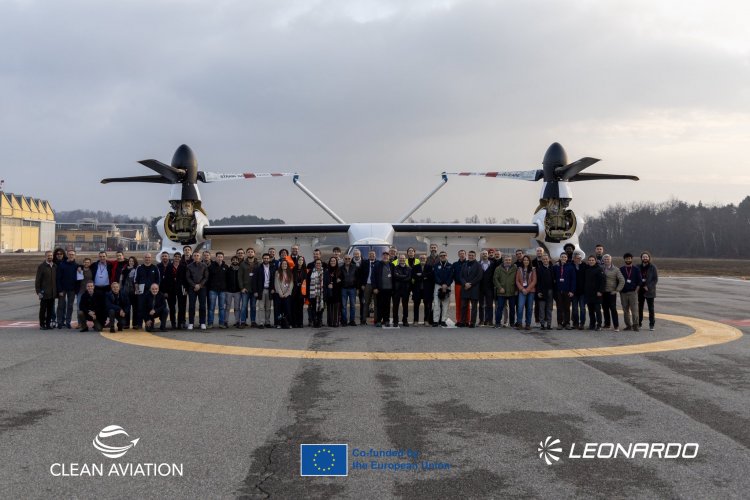
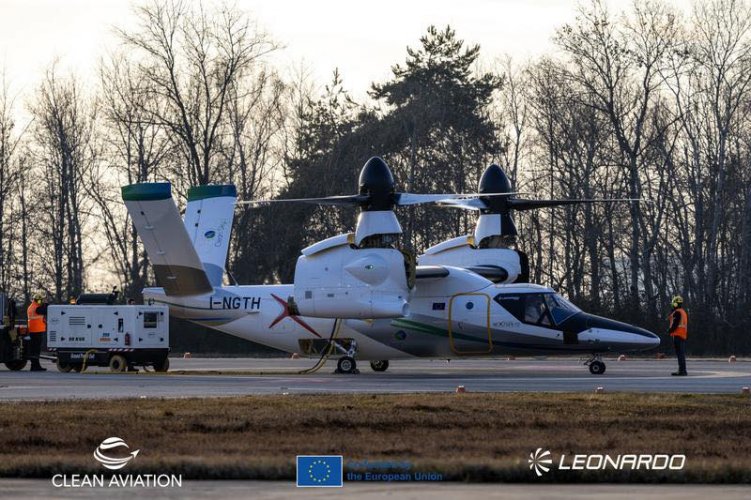
cheers
- Joined
- 18 October 2006
- Messages
- 4,782
- Reaction score
- 6,848
I have to wonder if the "new" engine and rotor layout will supersede the current one one the 609. I doubt it will be considered until the base model has been certified. Assuming it is eventually certified.
- Joined
- 18 October 2006
- Messages
- 4,782
- Reaction score
- 6,848
https://www.helis.com/database/news/ngctr-td-first-flight/
Interestingly the NGCTR is said in the article to be 12 ton, vice 8 ton per 609. Also I note new deflected rotor tips, which I assume is a rotor noise reduction tool. I wonder if there is a penalty for the rotor system in turboprop flight mode.
Interestingly the NGCTR is said in the article to be 12 ton, vice 8 ton per 609. Also I note new deflected rotor tips, which I assume is a rotor noise reduction tool. I wonder if there is a penalty for the rotor system in turboprop flight mode.
Deflected out of the rotor plan is for tip vortices. Noise attenuation is generally done by augmenting the angle of sweep of the blade tip.
Also, it is dubious that this little machine would be of any interest for the military. Unless Italian army is ready to start drafting 7 years old boys and girls!
Also, it is dubious that this little machine would be of any interest for the military. Unless Italian army is ready to start drafting 7 years old boys and girls!
exclaimedleech8
ACCESS: Top Secret
- Joined
- 30 September 2024
- Messages
- 829
- Reaction score
- 1,001
Oh my god, are they finally going to start flying?
- Joined
- 18 October 2006
- Messages
- 4,782
- Reaction score
- 6,848
I doubt that this demonstrator is anything more than that. Leonardo did demonstrate sitting eight combat equipped troops in the 609 with equipment. So while I agree that an assault platform it is not, as a SOA it does have potential. UAE(?) or one of the Gulf States has said they have/had an interest in using it as a SAR platform.Deflected out of the rotor plan is for tip vortices. Noise attenuation is generally done by augmenting the angle of sweep of the blade tip.
Also, it is dubious that this little machine would be of any interest for the military. Unless Italian army is ready to start drafting 7 years old boys and girls!
Besides the 609 is going to get certified ...next year.
Grey Havoc
ACCESS: USAP
- Joined
- 9 October 2009
- Messages
- 24,507
- Reaction score
- 18,182
Leonardo Helicopters has doubled down on its pursuit of a future tiltrotor aircraft, unveiling a new “optimised” design even as it ramps up flight testing of an EU-funded technology demonstrator.
In the meantime, the airframer continues pressing ahead with the slow-running certification campaign for the AW609 – a programme now well into its third decade of development.
Although Leonardo Helicopters has one eye on the future, it continues to test in the here and now, carrying out more flights of the NGCTR.
Having performed its maiden sortie on 19 December, the NGCTR technology demonstrator returned to the skies on 25 February – showcasing the capability to stakeholders including Clean Sky 2 representatives; in total it has now accumulated around 30min of flight time.
Funding from Clean Sky 2 ran until completion of the first flight, but Ragazzi says the airframer will continue to bankroll further tests and “keep expanding the envelope and test different flight regimes”.
Indeed, flight testing will carry on for “as long as it’s needed and as long as someone gives me some money”, says Ragazzi.
In addition to its own R&D budget, Leonardo Helicopters will draw from the €100 million ($115 million) European Defence Fund-backed EU Next Generation Rotorcraft Technology programme, he says.
The second phase of the that military-focused initiative, in which it is partnered with Airbus Helicopters, recently got under way.
At its inception, the NGCTR was intended to mature five key technology bricks incorporated in its design, including:
Ragazzi says the V-tail, a collaboration with GKN/Fokker, will test both the aerodynamic configuration – its vertical tips increase the span, much like an airliner’s winglets – and the thermoplastic material itself.
- an advanced wing architecture featuring morphing surfaces to improve hover performance and state-of-the-art composite construction
- a thermoplastic V-tail to improve handling, cut drag and reduce interference from the wing
- a non-tilting engine installation – opening up powerplant choice – with a high-efficiency nacelle architecture like that on the Bell MV-75
- a split-gearbox drivetrain
- an advanced, modular, distributed and scalable flight-control system that cuts weight and complexity.
“It is a technological solution that we applied already on other aircraft but wanted to see if we could do it with such a big component,” he adds.
Its proprotors also feature blades with a slight tip anhedral, and Leonardo Helicopters is currently analysing their suitability for the AW609 programme, although that aircraft will enter service with its current blade design.
The NGCTR also has an additive-layer manufactured (ALM) proprotor gearbox support, while “the only part on the AW609 that’s ALM is the exhaust”, says Ragazzi.
Airbus Helicopters has also developed the Racer, its own Clean Sky 2-funded technology demonstrator. In addition to maturing another set of technology bricks, one Racer goal is to achieve cruise speed of 220kt (427km/h) while cutting fuel burn.
However, Ragazzi says the NGCTR has no need to chase speed goals. Airbus Helicopters had “to prove a point that we didn’t need to prove”, he says, given the established performance of the AW609. Leonardo Helicopters lists its maximum cruise speed as 270kt.
While that figure may have been established through flight testing, the AW609 has still not entered service amid the continued slow pace of Federal Aviation Administration (FAA) certification.
Testing continues with two prototypes, AC4 and AC5, while a sixth aircraft will shortly roll out from the manufacturer’s AW609 final assembly line in Philadelphia in the United States. That asset will be used for function and reliability testing.
Likely stung by previous predictions that have not panned out, Ragazzi no longer offers a forecast of when the AW609 will receive regulatory clearance.
He had hoped certification flights would wrap up this year, but given lack of clarity from the FAA he is now uncertain of timing.
Regardless, the first three customer aircraft – the manufacturer has previously declared six firm orders – are in various stages of production in Philadelphia.
And despite the uncertain timeline, the programme is still attracting operator interest, with several potential buyers having recently flown the aircraft. “There is constantly a queue of people coming in to trial their missions,” says Ragazzi. However, further commercial activity is on hold until certification.
Additionally, the company continues to work with multiple Italian governmental bodies, including the army, navy and Guardia di Finanza, and with others thought to be interested.
But with the NGCTR already demonstrating a more-advanced tiltrotor architecture than the AW609, is the latter aircraft still relevant?
Ragazzi thinks so: “We need a first generation to start building [from],” he says. Besides, it is not just about the aircraft, he argues, there is also a need for the wider ecosystem and operators to be ready.
“It is not conventional what we have in front of us – you need to have [operators] learn; it is still a new architecture.”
Support for the concept is also maintained at the top of the company. Leonardo Helicopters managing director Gian Piero Cutillo says the tiltrotor architecture ”is really overcoming the embedded limits” of traditional vertical-lift platforms and that ”we continue to believe” in its value.
Although conceding the certification process ”seems like a never-ending story”, he maintains that ”we are really making some important progress”.
Similar threads
-

-

-
 UK Apache replacement held up by AgustaWestland, BBC report states
- Started by Flyaway
- Replies: 0
-
 AW249 Fenice: Informations and possible future versions
- Started by Regio Ammiraglio
- Replies: 77
-
