dauby09

ACCESS: Restricted
Joined
10 June 2024
Messages
3
Reaction score
4
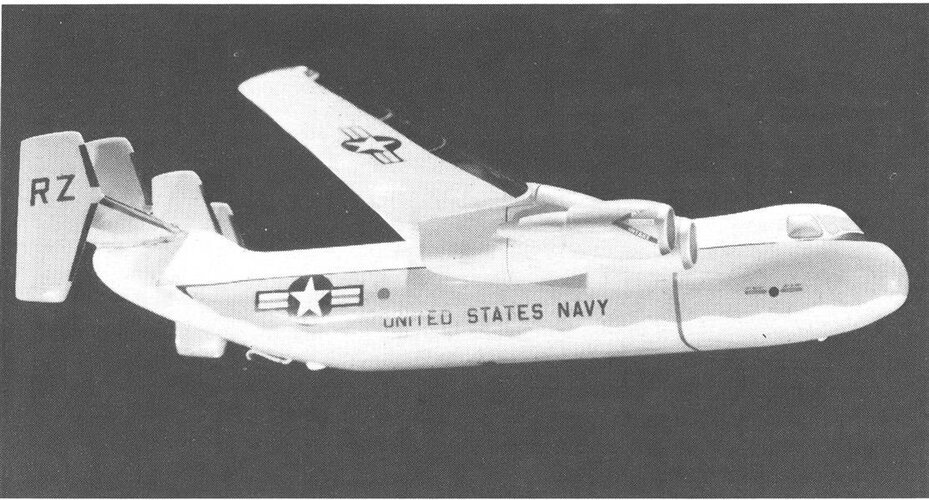
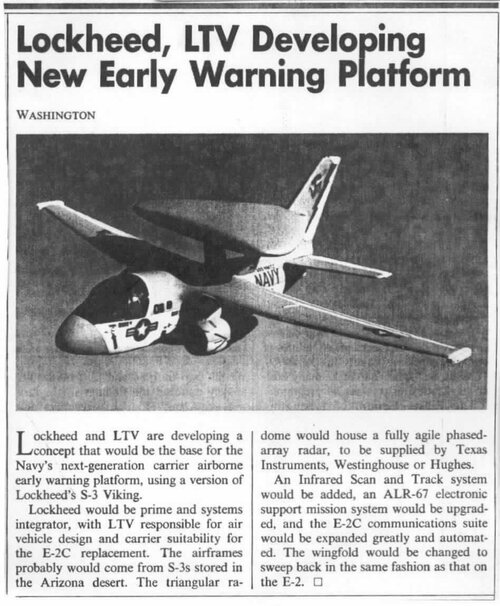
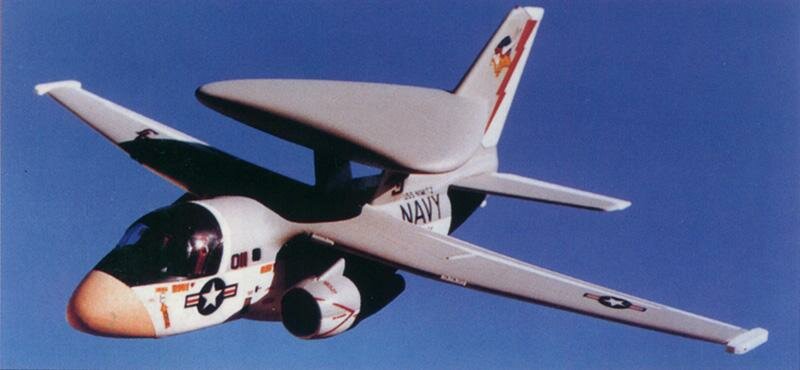
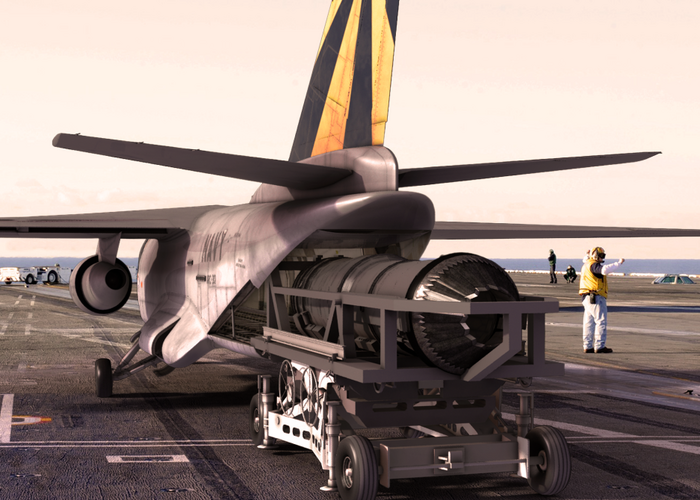
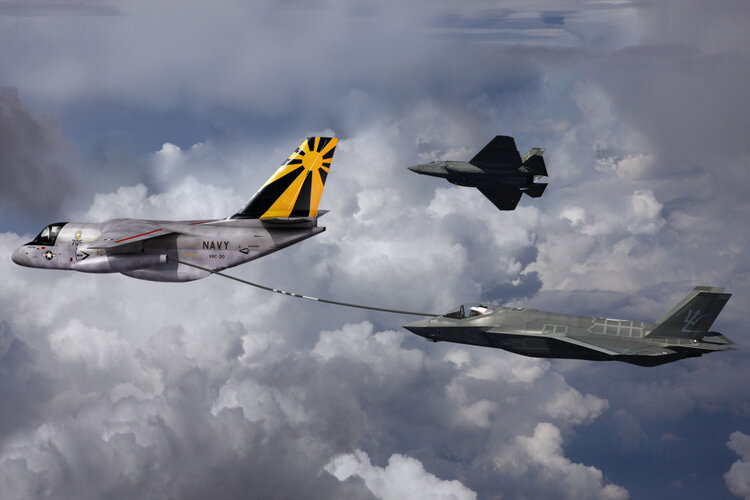
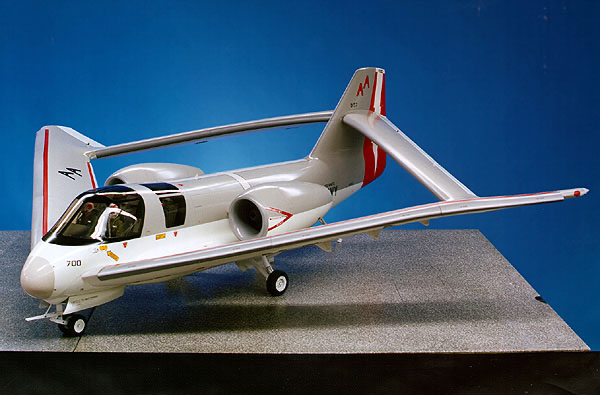
Late 80s (88-90) US Navy Program to replace the E-3C, S-3B and EA-6B carrier-based AEW, ASW and EW aircraft. I believe it evolved into the E-X program to replace the E-2, this is why i’m attaching the image of the Boeing E-X proposal, which is seen here in ASW markings. (VS-24 scouts was an S-3 viking squadron). That seems to have the same advanced antenna arrays as proposed for ATSA.

The plan at some point (around 1990) seems to have been for the future air wing to feature 3 fixed wing aircraft : an air superiority fighter with F-14 or NATF ; a strike/attack jet with the A-12 Avenger II from the ATA program ; and ATSA. This leaves room for COD and SIGINT, which could have been incorporated into ATSA. Furthermore ATSA could have been merged with ATA (the A-12 program) with a stretched A-12 for more crew.

I have found little more information.
https://www.usni.org/magazines/proceedings/1990/june/naval-aviation-revolution-jeopardyhttps://www.usni.org/magazines/proceedings/1988/december/world-naval-developmentsare all i’ve found so far.

Here is a relevant extract :
It was reported in September that the U. S. Defense Resources Board had approved development of a new Advanced Tactical Support Aircraft (ATSA), to replace the EA-6B electronic warfare, S-3 antisubmarine, and E-2C airborne early warning aircraft. In theory, then, the future carrier air wing might consist of only three types of fixed-wing aircraft: fighters (either F-14 or Advanced Tactical Fighter [ATF]), strike (Advanced Tactical Aircraft [ATA]), and ATSA. The ATSA likely would shift missions more by changing software than by changing internal configuration. It would employ “smart skin” antennas capable of operating over a very broad frequency range, and very-high-capacity, general- purpose computers. In its E-2C mode, an ATSA might use conformal antennas along the leading edges of its wings and around its nose. The same antennas might perform surface search and inverse synthetic aperture radar ship identification when the aircraft was in its S-3 mode. Some of them would be used to monitor sonobuoys. In the EA-6B mode, the same antennas would be used to transmit jamming signals.

The great appeal of the ATSA is that it would drastically reduce the range of spare parts and maintenance equipment required to be carried on board a carrier. Moreover, it would allow the carrier air wing to be tailored instantly to changing conditions. For example, of three carriers operating together, one might function as an antiair warfare (AAW) ship, one as an ASW ship, and one as a strike carrier. If the ATSA were fully flexible, then the ATSAs on board the AAW ship would function as E-2Cs and EA-6Bs; those on board the strike ship would be EA-6B escort jammers; and those on board the ASW ship would function as S-3s do now. Carriers currently accommodate about five E-2Cs, five EA-6Bs, and ten S-3s, an overhead that cuts into their strike complements. In theory, then, a truly flexible ATSA could drastically reduce this overhead and increase striking power.

There are, of course, some important caveats. The ideal ATSA would serve for all three missions, changing only its software (i.e., changing on board the carrier). This might be extended to adding some underwing pods, as in the case of a jammer. The next best thing would be a common airframe, which would cut acquisition costs without adding the sort of operational flexibility suggested here.

Some earlier projects suggest that these goals are not as farfetched as they may appear. In about 1960, Grumman proposed an electronic warfare conversion of the A-6 Intruder, in which jamming pods would be hung from the underwing hard points and new avionics essentially snapped in, replacing the standard cockpit panels. Some special antennas (particularly the tail crown) were still needed, but the proposal was a true dual-purpose aircraft. It failed because electronic warfare required two more operators and a big computer. But computer power is now more easily packaged than in 1960, and both of the alternative ATSA missions need extra crewmen. They presumably would be supplied with general- purpose displays that could function as electronic warfare terminals-

Similarly, during the 1970s the A-6E was proposed for ASW use, carrying sonobuoys in underwing pods and communicating its data back to the carrier, much as LAMPS Mk-I helicopters communicate back to their frigates. This was not as attractive as an S-3, but it had the advantage of using existing carrier aircraft and thus increasing the carrier s potential striking force of A-6s.

Several aircraft have been proposed as the bases for the ATSA: the Lockheed S-3 (with new wings and canard surfaces), the ATA, and even the V-22 Osprey tilt-rotor. For example, the ATSA might be an ATA with a stretched fuselage (for more crew members) and a “smarter skin. Using a derivative of the ATA might be attractive politically because Congress has pressed the services to cut the total number of new aircraft programs by collaboration. The ATA is a mandated collaborative effort (to replace the A-6 and the Air Force’s F-l 11); the ATSA would be a Navy-only airplane, at least initially.

Two other carrier roles might be filled by ATSA variants: the electronic intelligence role—to be filled by ES-3s and currently filled by EA-3s—and the carrier-on-board delivery role.

Whatever design is chosen for the ATSA, it and the ATA are likely 10 consume much of the naval aviation budget in the next five to ten years- That probably explains recently reported decisions to cease production ot new A-6s and EA-6Bs after 1990. The prospective cost of these aircraft may also affect the Navy’s participation in the Air Force’s ATF program, which is envisaged as a stealthy follow-on to the F-l5; the program also is designed to produce a naval version to replace the F-14.

I hope someone has more, renders, more info on these multi band array antennas that sound very novel for the time.
 

Attachments

  • IMG_5563.png
    IMG_5563.png
    334.3 KB · Views: 367
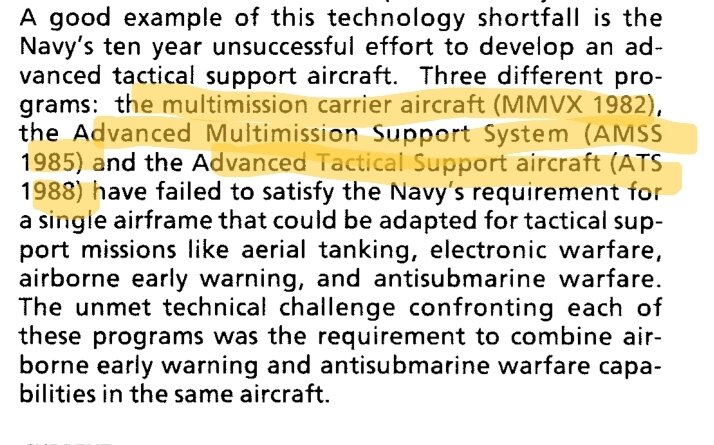
There was a zoo of programs. In your searches note that ATS often being used without _A
 

Attachments

  • Screenshot_20241202_003629_ReadEra.jpg
    Screenshot_20241202_003629_ReadEra.jpg
    200.3 KB · Views: 293
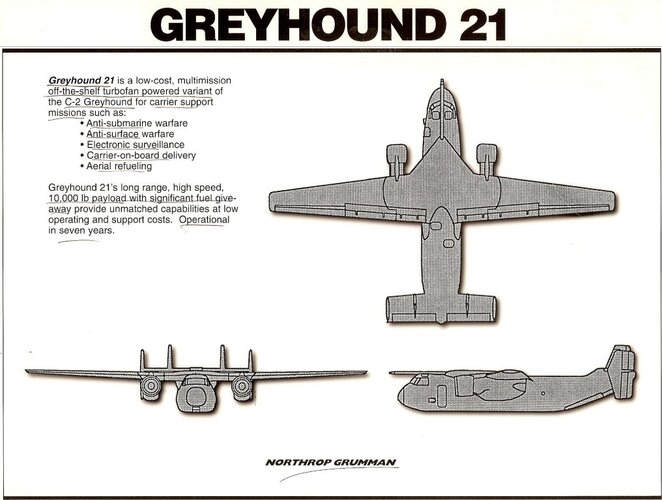
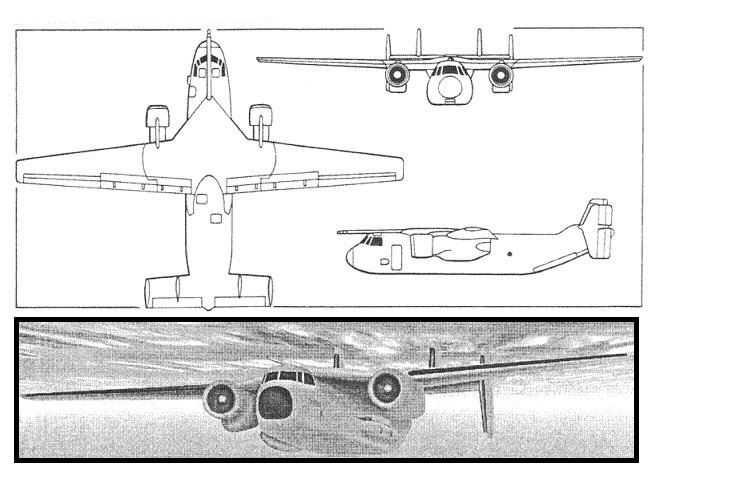
So that's three programs that we have very little on. One on a couple of Grumman designs for MMVX, one on a possible Northrop design for AMSS with a couple posts on Lockheed or Grumman or a collaboration of the two on another AMSS design, and this thread. That isn't a lot for three programs that were obviously a Navy priority, and they were followed by CSA which was similarly unsuccessful, though I thought that was more a matter of post cold war procurement malaise.

Speaking to the attachment above in post 5, both ASW and AEW require long loiter times and high endurance, but one involves low altitude search at slow speeds and the other high altitude loiter at longest endurace cruising speed. That isn't as big a challenge as combining the F6D and F-111 in one aircraft, but is it really so big a challenge that no one in the 80s could manage a solution and come up with a aircraft to satisfy the Navy?
 
Visually, I really like the E-X. Radar arrays integrated into the wings were pretty trippy as an idea then, but look at the F-35 and B-21, with not just conformal arrays, but arrays baked into the wing skins!

Speaking to the attachment above in post 5, both ASW and AEW require long loiter times and high endurance, but one involves low altitude search at slow speeds and the other high altitude loiter at longest endurace cruising speed. That isn't as big a challenge as combining the F6D and F-111 in one aircraft, but is it really so big a challenge that no one in the 80s could manage a solution and come up with a aircraft to satisfy the Navy?
I think the idea died out due to the collapse of the USSR, not due to any technical challenges.
 
I think the idea died out due to the collapse of the USSR, not due to any technical challenges.

That was pretty much the primary reason that the "CSA" (Common Support Aircraft) program was cancelled - along with a bunch of other things.
 
It's the "bunch of other things" that interests me.
The list is endless. It's why we have 20 B-2's in service instead of 200. It's why the F-22 was cut off at under 190 airframes. It's why we have 3 Seawolf subs instead of 30. A bunch of stuff that was designed to beat top-flight Soviet gear was basically cast aside when those great fleets of Soviet gear were left to rust in some field or pier. The other decisions are also numerous. For example, if the Soviet Union hadn't collapsed, there's no way in the fires of Hell that the US Navy would have relied on the Super Hornet as it's primary tactical airframe after the Cold War. It wasn't bought for it's capabilities. It was bought because it was considered a safe, cheap choice in a low-threat world environment where the Navy's biggest competitor was the US Air Force. And the Army killed Comanche because it was designed to take on fleets of Hinds and T-72's and we ended up with a world whose biggest threat for decades was a bunch of fanatics with AK's on horseback. It was way cheaper to use things like old Kiowas or Little Birds in such a threat environment.
 
The list is endless.
Those are all political reasons. I'm familiar with those. It's the technical reasons I'm curious about. Why three separate three year long programs during the 80s? And MPSNA, And then CSA. It was a high priority, second to the A-12 but ahead of NATF, and each time the effort fizzled out. There weren't any contract awards to challenge, so that implies to me there were technical issues that couldn't be resolved.

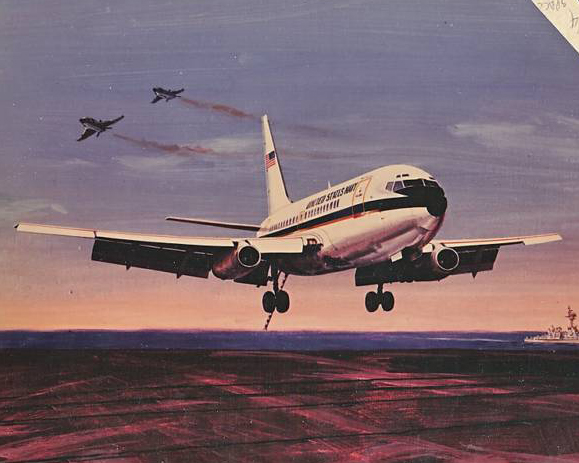
This one I can understand, the desire for one set of sensors to do everything was beyond the state of the art as recently as the abortive E-10, it was clearly beyond 80s tech. But a common airframe? On paper they could have done that with the S-3. Or E-2. Or this Boeing design, which is a really attractive aircraft in my opinion.
 
Late 80s (88-90) US Navy Program to replace the E-3C, S-3B and EA-6B carrier-based AEW, ASW and EW aircraft. I believe it evolved into the E-X program to replace the E-2, this is why i’m attaching the image of the Boeing E-X proposal, which is seen here in ASW markings. (VS-24 scouts was an S-3 viking squadron). That seems to have the same advanced antenna arrays as proposed for ATSA.

The plan at some point (around 1990) seems to have been for the future air wing to feature 3 fixed wing aircraft : an air superiority fighter with F-14 or NATF ; a strike/attack jet with the A-12 Avenger II from the ATA program ; and ATSA. This leaves room for COD and SIGINT, which could have been incorporated into ATSA. Furthermore ATSA could have been merged with ATA (the A-12 program) with a stretched A-12 for more crew.

I have found little more information.
https://www.usni.org/magazines/proceedings/1990/june/naval-aviation-revolution-jeopardyhttps://www.usni.org/magazines/proceedings/1988/december/world-naval-developmentsare all i’ve found so far.

Here is a relevant extract :


I hope someone has more, renders, more info on these multi band array antennas that sound very novel for the time.
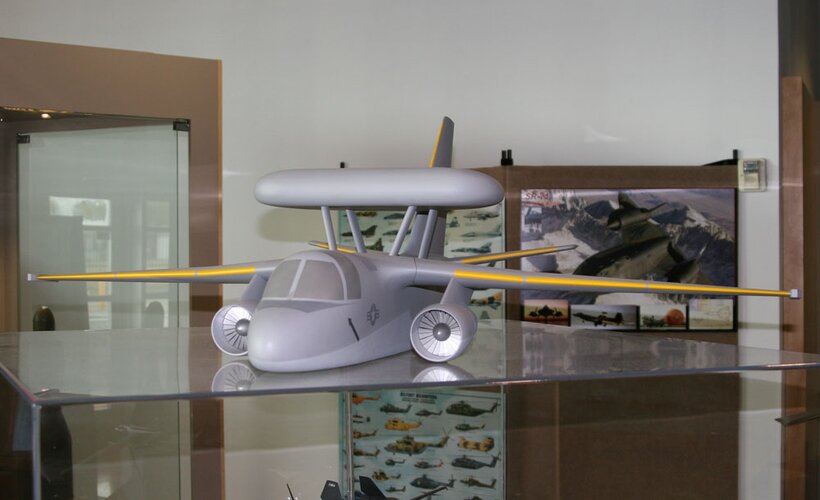
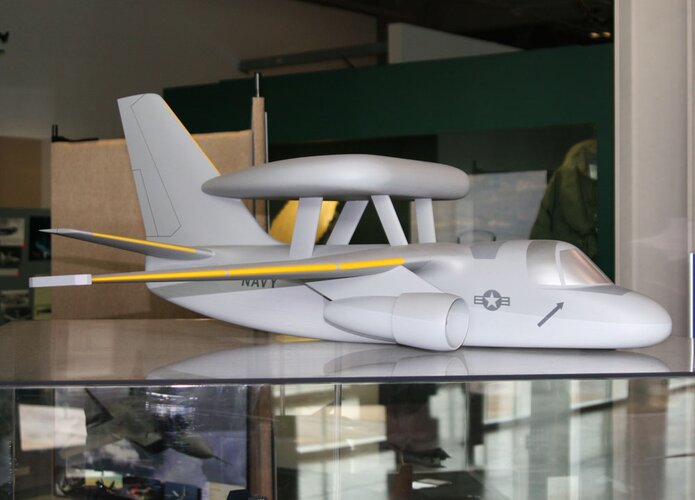
It's a beautiful model!!

Regards
Pioneer
 
It's a beautiful model!!

Regards
Pioneer

I just have serious reservations over the placement of the engines... the aircraft attitude while landing will be slightly nose-high... meaning that disturbed air from the wing will be entering the intakes - as well as the wing partially blanking the intakes right when it is absolutely critical to have max power available instantly.
 
I just have serious reservations over the placement of the engines... the aircraft attitude while landing will be slightly nose-high... meaning that disturbed air from the wing will be entering the intakes - as well as the wing partially blanking the intakes right when it is absolutely critical to have max power available instantly.
That wasn't a problem on 727s, to give one example.
 
I just have serious reservations over the placement of the engines... the aircraft attitude while landing will be slightly nose-high... meaning that disturbed air from the wing will be entering the intakes - as well as the wing partially blanking the intakes right when it is absolutely critical to have max power available instantly.

That wasn't a problem on 727s, to give one example.

727s never had to do carrier landing approaches, nor combat maneuvers. And its engines were a lot further aft of the wings, giving the airflow time to even out.

Additionally, the B727 never achieved anywhere near the kind of AOA that USN aircraft regularly perform during carrier ops (even E-2s etc).
 
727s never had to do carrier landing approaches, nor combat maneuvers. And its engines were a lot further aft of the wings, giving the airflow time to even out.

Additionally, the B727 never achieved anywhere near the kind of AOA that USN aircraft regularly perform during carrier ops (even E-2s etc).
Learjets, Citations, Falcons, Gulfstreams, MD-80/90s...
 
Learjets, Citations, Falcons, Gulfstreams, MD-80/90s...
All with plenty of distance between the trailing edge of their wings and the intakes of their engines.

That diamond-wing Viking has the engine intakes at (or overlapping) the trailing edge of the lower front wing sections.
 
All with plenty of distance between the trailing edge of their wings and the intakes of their engines.

That diamond-wing Viking has the engine intakes at (or overlapping) the trailing edge of the lower front wing sections.
Yet they all had specific Deep Stall training, where the main wing could block airflow over the T tail at sufficient angles of attack...
 
727s never had to do carrier landing approaches, nor combat maneuvers.
Boeing did approach [and maybe roller landing] tests successfully in the CQ box at Whidbey Island in the early 1960's; pursuant to proposing the 727M as a carrier-capable COD. TINS!

Douglas bid a fully carrier-capable DC-9-10 derivative with IFR boom, tailhook and catapult towbar nose landing gear. A variant had folding wings, as well. Pictures elsewhere on SPF and in American Secret Projects 3 (Full chapter on COD).
 
Several aircraft have been proposed as the bases for the ATSA: the Lockheed S-3 (with new wings and canard surfaces), the ATA, and even the V-22 Osprey tilt-rotor. For example, the ATSA might be an ATA with a stretched fuselage (for more crew members) and a “smarter skin. Using a derivative of the ATA might be attractive politically because Congress has pressed the services to cut the total number of new aircraft programs by collaboration.
I can picture that with the Northrop and Grumman proposal, it could wind up looking something like an X-47B, but how would it work with the MD-GD dorito?
I just have serious reservations over the placement of the engines... the aircraft attitude while landing will be slightly nose-high... meaning that disturbed air from the wing will be entering the intakes - as well as the wing partially blanking the intakes right when it is absolutely critical to have max power available instantly.
That is a bit odd looking, but given how close they are to the wing could Boeing be designing for the flow along the top of the wing to get funneled into the engines at landing AOA? Although looking at the EX thread it seems as if the nacelles moved around a lot on the various models and drawings, so maybe they were having trouble with it.
 
I can picture that with the Northrop and Grumman proposal, it could wind up looking something like an X-47B, but how would it work with the MD-GD dorito?
Since we all know the Dorito doesn't work, we can happily ignore that option.


That is a bit odd looking, but given how close they are to the wing could Boeing be designing for the flow along the top of the wing to get funneled into the engines at landing AOA? Although looking at the EX thread it seems as if the nacelles moved around a lot on the various models and drawings, so maybe they were having trouble with it.
I'd actually expect a LERX or something to shove a vortex right down the inlet at landing AoA.
 
Late 80s (88-90) US Navy Program to replace the E-3C, S-3B and EA-6B carrier-based AEW, ASW and EW aircraft. I believe it evolved into the E-X program to replace the E-2, this is why i’m attaching the image of the Boeing E-X proposal, which is seen here in ASW markings. (VS-24 scouts was an S-3 viking squadron). That seems to have the same advanced antenna arrays as proposed for ATSA.

The plan at some point (around 1990) seems to have been for the future air wing to feature 3 fixed wing aircraft : an air superiority fighter with F-14 or NATF ; a strike/attack jet with the A-12 Avenger II from the ATA program ; and ATSA. This leaves room for COD and SIGINT, which could have been incorporated into ATSA. Furthermore ATSA could have been merged with ATA (the A-12 program) with a stretched A-12 for more crew.

I have found little more information.
https://www.usni.org/magazines/proceedings/1990/june/naval-aviation-revolution-jeopardyhttps://www.usni.org/magazines/proceedings/1988/december/world-naval-developmentsare all i’ve found so far.

Here is a relevant extract :


I hope someone has more, renders, more info on these multi band array antennas that sound very novel for the time.

I'm not sure if the desgin will work well IRL
 
Late 80s (88-90) US Navy Program to replace the E-3C, S-3B and EA-6B carrier-based AEW, ASW and EW aircraft. I believe it evolved into the E-X program to replace the E-2, this is why i’m attaching the image of the Boeing E-X proposal, which is seen here in ASW markings. (VS-24 scouts was an S-3 viking squadron). That seems to have the same advanced antenna arrays as proposed for ATSA.

The plan at some point (around 1990) seems to have been for the future air wing to feature 3 fixed wing aircraft : an air superiority fighter with F-14 or NATF ; a strike/attack jet with the A-12 Avenger II from the ATA program ; and ATSA. This leaves room for COD and SIGINT, which could have been incorporated into ATSA. Furthermore ATSA could have been merged with ATA (the A-12 program) with a stretched A-12 for more crew.
I don't believe that the ATSA would successfully merge with the ATA, especially not the selected MDD Dorito. ASTA would require significant changes to the outer mold line of either ATA proposal, and messing with the OML is how you ruin a stealthy design.

But the Boeing E-X and all the other S-3 based options would work. ES-3s were carrier-borne SIGINT/ELINT birds, for example, and there was a proposed S-3 COD variant. I think you'd end up with the COD being a different, dedicated airframe, though. The fuselage needs to be too different to fit a fighter engine inside, and the cargo door does not suggest dropping sonobuoys or whatever; at least not without swapping the entire cargo ramp out!

Remember that the Tracker/Tracer/Trader and Hawkeye/Greyhound families had a very different airframe for the CODs compared to the AEW and ASW birds. But they did have the same wings, tail, and forward fuselage, so it'd be mostly simple.

The problem is, I think you'd still end up with ~18 airframes between AEW, Jammer, ASW, and ELINT.

The typical carrier air wing hauled ~5 Hawkeyes, ~5 Prowlers, and 12 Vikings. All 5 AEW birds are needed for 24/7 AEW. You still need ~10 ASW airframes for patrolling. 2 ELINT airframes might be flexible with the AEW airframes, since you'd be using them at the same time you'd be needing all 10 ASW airframes. At best, you'd be able to flex some ASW airframes into Jammers for an alpha strike mass attack. At worst, you're still carrying 22 ASTA airframes, plus another 2-3 COD airframes, total of ~25.

The best reduction might be in the Jammers, since a fully stealthy air wing should not need Prowler-style standoff jamming capabilities. Flex a couple of the ELINT birds across to AEW and I think you could get as few as 16 ASTA plus 2-3 COD. ~6 AEW/ELINT, 10 ASW, 2-3 COD, total of ~18. And yes, in theory you could still flex some of the ASW birds to Jammers if you had to.

Assuming that your ASTA airframes have a bomb bay, I'd plan that the airframes assigned to AEW work would have a bomb bay fuel tank installed for more loiter time. The ES-3s were long range standoff planes, so the ELINT birds could also probably carry bay fuel tanks. Obviously the ASW bird needs a bomb bay for torpedoes etc, and I'd want that bay to be big enough to carry 2-4 HARMs if the Jammers are still happening. After all, Growlers routinely carry a pair of AARGMs and/or JSOWs to address surprise emitters that weren't on the briefing, so I'm expecting any ASTA Jammers to do the same.
 
Assuming that your ASTA airframes have a bomb bay, I'd plan that the airframes assigned to AEW work would have a bomb bay fuel tank installed for more loiter time. The ES-3s were long range standoff planes, so the ELINT birds could also probably carry bay fuel tanks. Obviously the ASW bird needs a bomb bay for torpedoes etc, and I'd want that bay to be big enough to carry 2-4 HARMs if the Jammers are still happening. After all, Growlers routinely carry a pair of AARGMs and/or JSOWs to address surprise emitters that weren't on the briefing, so I'm expecting any ASTA Jammers to do the same.
I've been thinking about a scenario in which the F6D missileer went forward, and what would happen next when it came around to replacing it. Squadron strength at the time was anticipated to be one 12 aircraft F6D squadron per carrier, along with 4-6 AEW airframes.

My idea for the next stage in missileer evolution is to combine the missileer and AEW platforms into one. This would give you more AEW platforms, which would be especially important in a threat environment for more complete coverage, a need for fewer CAP fighters since the AEW flight is armed, the ability to earlier engage bomber and missile threats, and significant self defense capability in your AEW platform. Long story short, I'd be looking at 12-18 AEW-missileers, so you'd need the bomb bay for missiles. The GD-W AIM-152 would be perfect, although in the present day adding a couple of SM-6s on the wings for even longer ranges might be appropriate as well.
 
My idea for the next stage in missileer evolution is to combine the missileer and AEW platforms into one. This would give you more AEW platforms, which would be especially important in a threat environment for more complete coverage, a need for fewer CAP fighters since the AEW flight is armed, the ability to earlier engage bomber and missile threats, and significant self defense capability in your AEW platform. Long story short, I'd be looking at 12-18 AEW-missileers, so you'd need the bomb bay for missiles. The GD-W AIM-152 would be perfect, although in the present day adding a couple of SM-6s on the wings for even longer ranges might be appropriate as well.
Such a concept was considered as part of the Lockheed MPSNA study. It envisaged AEW aircraft operating out at 750 nautical miles from the carrier, requiring self defence armament, and dedicated AAW aircraft sitting at about 500 nautical miles to augment the F-14s. Both would carry six AIM-152s, and the latter would actually be the ASW aircraft with some modules swapped out in the radar.

The envisaged future air wing under that concept had two unarmed AEW, six armed AEW, ten ASW and four ECM aircraft. No tankers, though - a weapons bay pack would allow those hard-working ASW airframes to do the job.
 
1753365350032.png
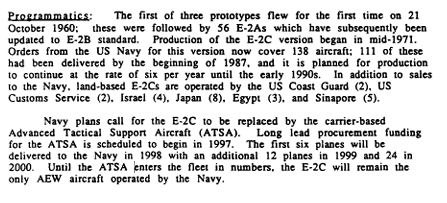
A 1992 Booz-Allen & Hamilton report to DARPA suggesting that a long lead procurement of the ATSA is scheduled to have funding beginning in 1997. Six to be delivered in 1998, 12 in 1999 and 24 in 2000 with 42 in all. The international sale potential based on the above document for E-2C replacement could be on the order of 20 aircraft or so if those outside of DoD bought the replacement aircraft.

With a lead time of five years to possibly to fund the ASTA and the importance of replacing so many platforms (i.e. S-3, ES-3, E-2C, etc.), I'm curious if Boeing/McDonnell Douglas, Lockheed, Grumman, Northrop, LTV, or others conducted further research and testing in an effort to stay ahead of the pack between 1992-1997. For example, a 1989 concept of a Joined Wing NASA research vehicle was contemplated, but not built (was a modification to the NASA AD-1, known as JW-1). Any evidence of further research by the manufacturers for the ATSA during the 92-97 period?
1753380843284.png 1753382269558.png
 
Last edited:
I've been thinking about a scenario in which the F6D missileer went forward, and what would happen next when it came around to replacing it. Squadron strength at the time was anticipated to be one 12 aircraft F6D squadron per carrier, along with 4-6 AEW airframes.

My idea for the next stage in missileer evolution is to combine the missileer and AEW platforms into one. This would give you more AEW platforms, which would be especially important in a threat environment for more complete coverage, a need for fewer CAP fighters since the AEW flight is armed, the ability to earlier engage bomber and missile threats, and significant self defense capability in your AEW platform. Long story short, I'd be looking at 12-18 AEW-missileers, so you'd need the bomb bay for missiles. The GD-W AIM-152 would be perfect, although in the present day adding a couple of SM-6s on the wings for even longer ranges might be appropriate as well.
Hrm... Yeah, that's not impossible.

Though I think the USN would end up with more missileers than just 12 per carrier. Remember that the F14 carrier air wings had 2 full squadrons.

But point absolutely taken about the ATSA AEW birds carrying some AAMs. Assuming that the ATSA could carry the same load as the S-3 Viking of 4900lbs, IIRC 3000lbs internally. That'd be 2x Phoenix, or probably 2x Hughes/Raytheon (due to wingspan) or 4x GD/W AIM-152s.
 
Hrm... Yeah, that's not impossible.

Though I think the USN would end up with more missileers than just 12 per carrier. Remember that the F14 carrier air wings had 2 full squadrons.

But point absolutely taken about the ATSA AEW birds carrying some AAMs. Assuming that the ATSA could carry the same load as the S-3 Viking of 4900lbs, IIRC 3000lbs internally. That'd be 2x Phoenix, or probably 2x Hughes/Raytheon (due to wingspan) or 4x GD/W AIM-152s.
The GD/W AAAM was 380 pounds. By weight you could carry 7 or 8 internally, given how compact they are, assuming the bay dimensions can fit them. But if you're making a EFS-3 you can adjust the bay size to fit them.

Forrestal class Air Wing, late '50s when the F6D was in development (from wiki):

1 fighter squadron (VF) flying 12 McDonnell F3H-2N Demons or Douglas F4D Skyrays
1 fighter squadron (VF) flying 12 North American FJ-2/-3 Furys or Vought F8U-1 Crusaders
1 attack squadron (VA) flying 10 Grumman F9F-8B Cougars and later 2 attack squadrons of Douglas A-4 Skyhawks
1 attack squadron (VA) flying 10 Douglas AD-6 (A-1H) Skyraiders
1 heavy attack squadron (VAH) flying 10 Douglas A3D Skywarriors
1 detachment of all weather attack squadron (VAAW) flying 3 Douglas AD-5N (A-1G) Skyraiders
1 carrier airborne early warning (VAW) squadron detachment of 3 Douglas AD-5W (EA-1E) or Douglas AD-5Q (EA-1F) Skyraider airborne early warning aircraft.
Various detachments flying photo-reconnaissance (VFP/Det) versions of the Grumman F9H Panther or McDonnell Banshee and later Vought F8U-1P Crusader jets (3-4 jets/detachment), and Piasecki HUP Retriever (HU) rescue helicopters.

Each squadron had a different role on the carrier. I believe the idea with the F6D was it would replace one of the fighter squadrons, with a couple squadrons of F-4s or F-8s as well, depending on the carrier. This is when ASW carriers (CVS) were still around, so the CVAs didn't need to have ASW aircraft on them.

Later on the '60s VFAX program would lead to something that would replace the rest of the fighters and light attack aircraft, with the A-6 for strike on the supercarriers. The original idea with the F-14, since the F6D was long gone by then, was for it to replace everything but the A-6*, and maybe even that when the F-14C went into production in the early '80s. Assuming everything fits and you go forward with the armed AEW idea, you might be looking at an EF squadron (or two if you want 16-18 of them), two to three F-14B squadrons, and an A-6 or F-14C squadron.

To really throw a wrench in the works, I can see an ATSA type aircraft (not an S-3 derivative) combining the ASW and A-6 role. That way you could have 18-20 aircraft that could swing back and forth between strike and ASW depending on the situation. The caveat to all this is that if everything is about the size of an S-3 or F-14 you'd max out at around 72 aircraft rather than the 90+ Cold War carriers had.

*It was designed to be able to replace the A-7, but that capability was deleted prior to production to save costs, only to be added back in with the "Bombcat".
 
The GD/W AAAM was 380 pounds. By weight you could carry 7 or 8 internally, given how compact they are, assuming the bay dimensions can fit them. But if you're making a EFS-3 you can adjust the bay size to fit them.
IIRC they were intended to be packed in 3s, so 6 of them.


Forrestal class Air Wing, late '50s when the F6D was in development (from wiki):

1 fighter squadron (VF) flying 12 McDonnell F3H-2N Demons or Douglas F4D Skyrays
1 fighter squadron (VF) flying 12 North American FJ-2/-3 Furys or Vought F8U-1 Crusaders
1 attack squadron (VA) flying 10 Grumman F9F-8B Cougars and later 2 attack squadrons of Douglas A-4 Skyhawks
1 attack squadron (VA) flying 10 Douglas AD-6 (A-1H) Skyraiders
1 heavy attack squadron (VAH) flying 10 Douglas A3D Skywarriors
1 detachment of all weather attack squadron (VAAW) flying 3 Douglas AD-5N (A-1G) Skyraiders
1 carrier airborne early warning (VAW) squadron detachment of 3 Douglas AD-5W (EA-1E) or Douglas AD-5Q (EA-1F) Skyraider airborne early warning aircraft.
Various detachments flying photo-reconnaissance (VFP/Det) versions of the Grumman F9H Panther or McDonnell Banshee and later Vought F8U-1P Crusader jets (3-4 jets/detachment), and Piasecki HUP Retriever (HU) rescue helicopters.

Each squadron had a different role on the carrier. I believe the idea with the F6D was it would replace one of the fighter squadrons, with a couple squadrons of F-4s or F-8s as well, depending on the carrier. This is when ASW carriers (CVS) were still around, so the CVAs didn't need to have ASW aircraft on them.
I think the issue that pops up is the massive increase in the Soviet missile-strike capabilities. That's what drove the 2 squadrons of Tomcats.

I'm guessing that the F6D would have replaced the Demons or Skyrays (big radar night/all weather fighters).


To really throw a wrench in the works, I can see an ATSA type aircraft (not an S-3 derivative) combining the ASW and A-6 role. That way you could have 18-20 aircraft that could swing back and forth between strike and ASW depending on the situation. The caveat to all this is that if everything is about the size of an S-3 or F-14 you'd max out at around 72 aircraft rather than the 90+ Cold War carriers had.

*It was designed to be able to replace the A-7, but that capability was deleted prior to production to save costs, only to be added back in with the "Bombcat".
Well, when the ATSA was planned, the A-6s were supposed to be replaced by the A-12.

So an ATSA replacing A-6s would need to be stealthy.

Better to keep ATSA as the AEW/ASW/Jammer/ELINT birds that do not have to be stealthy.
 

Similar threads

Back
Top Bottom