Btw Yugoslavia worked on their own SAM project that was based upon technology acquired from Japan (!). Perhaps this is an explanation that they were not interested in Swiss systems. Eventually, of course, Yugoslavia did buy S-75 and (later on) S-125 from the USSR.
I heard about Vulkan SAM project, but did not knew that they get the tech from Japan. Interesting!
 
I heard about Vulkan SAM project, but did not knew that they get the tech from Japan. Interesting!
A bit OOT here, but you can look up Japan's Kappa Rocket program headed by Hideo Itokawa. Specifically, it was Kappa 6 rockets that were exported to Yugoslavia and examined.
 
I would add to the MX 1868 info on this system that the reason it got cancelled was the USAF and US Army were in a turf war over air defense in the early 50's and that got resolved with the US Army being responsible of air defense except for "strategic" systems (defined as those with a range greater than 200 miles) which went to the USAF.
The result was the Army stuck with the Nike series and HAWK for short-range tactical air defense which were their in-house developments and USAF projects like GAPA and MX 1868 got nixed, the USAF was left with developing BOMARC into a long-range interceptor missile.
 
As for the RSE Kriens/Micon missile system, which is far less known than its predecessor by Oerlikon, it is quite interesting what guidance system it actually used.

Available sources are no so clear. English Wikipedia says "Beam control" that suggers that the missile rode up a radar beam (as Oerlikons did). German Wikipedia (which is probably a bit better informed) says "Kommando-Zieldeckungs-Lenkverfahren", which sounds quite similar to "command guidance", and http://waffen-der-welt.alices-world.de says (in German!) "Commandbeamrider" (see: http://waffen-der-welt.alices-world.de/missiles/sam/ch_micon.html).

So was it a beam-rider system? Taken into consideration that it was developed in the early 1960s it seems rather strange that the Swiss used a system that was already considered rather obsolete at that time.

It's intriguing what the waffen-der-welt.alices-world.de says on the system:


Translation by Google:


Does anyone here know more on that?

BR
Piotr

At https://www.bilibili.com/video/BV1th4y1U7N2/ you'll find a promotional video 'Contraves MICON Surface to Air Guided Missile System' by Rheinmetall Air Defence AG. It explains how the system actually worked.

The video contains footage of the MICON tests at missile ranges in Sardinia and France. Very interesting IMHO.

Piotr
 
Last edited:
Beamrider was correct. I think it was chosen because it was a simple system and so cheaper to develop and to produce.

From
http://waffen-der-welt.alices-world.de/missiles/sam/ch_micon.html


A battery consisted of a command post, a computer vehicle, three generator vehicles, two direction finders, a monopulse tracking radar, and four launchers, each with two guided missiles. Three such batteries formed a defense group (as Contraves called it), with an additional fire control station, a detection radar, and a generator vehicle. This was in turn connected to the national air defense system, from which it received its targets.
Control was carried out using the beamrider method. The tracking radar tracked the target that had previously been transmitted to it by the detection radar. The guidance radar then tracked the guided missile from launch until it was within the beam of the tracking radar. The guided missile then followed the guidance beam of the tracking radar. Each guidance radar was aligned with one guided missile, allowing up to three guided missiles to be guided simultaneously into the guidance beam of the tracking radar to ensure a successful launch.
 
I think the special thing with this beam riding method lies in the fact that the guidance radar beam did not direct the missile to the target but into the beam of the tracking radar which lock-followed the target.
One can find a good visual description on youtube under "Contraves Micon Missile System" (Channel: Cockpit Luftfahrtmagazin).
 
Last edited:
A bit more on MX 1868:

The Missile Test Center at Holloman AFB in New Mexico started making arrangements to receive the ordered missiles from Oerlikon and some details on this are in quarterly reports the base generated, things like an assembly building, test building, launch site, etc., were being constructed.

Then the Key West agreement hits. This gives SAM development to the Army ending all USAF shorter range SAM development like GAPA and MX 1868. The USAF Air Material Command cancelled the order for Oerlikon missiles, and none were ever delivered. Any mention of this project drops off of Holloman reports and shortly afterwards, missile development moves from Holloman to Cape Canaveral Florida, where the USAF starts development of BOMARC as a long-range "strategic" SAM to keep skin in the game so-to-speak.

The reason the USAF wanted to stay in SAM development was in the early 50's SAM programs got the highest priority for funding among all missile programs. Ballistic missiles were considered relatively unimportant in the short run as the USAF had plenty of manned strategic bombers to deliver nukes and the Soviet Union was poorly equipped to defend against them.

On the other hand, the US had a poor air defense system to intercept a potential Soviet bomber force, and AA guns were seen as obsolescent, at best, against high flying, fast bombers. Thus, a SAM for defending important targets was a critical issue and got top priority. The USAF was developing, but hadn't gotten into service, supersonic interceptors with a good ground control system at that point. This would become aircraft like the F-102 or 106 coupled with SAGE by the late 50's.
 
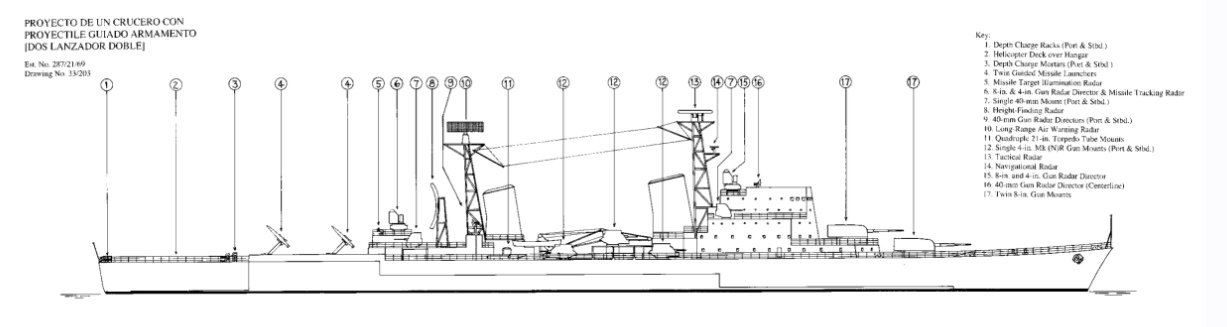
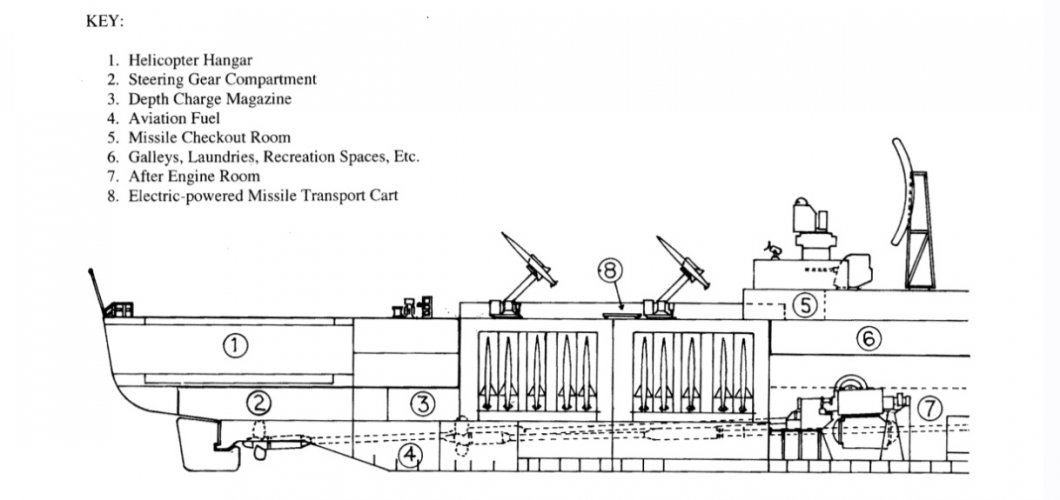
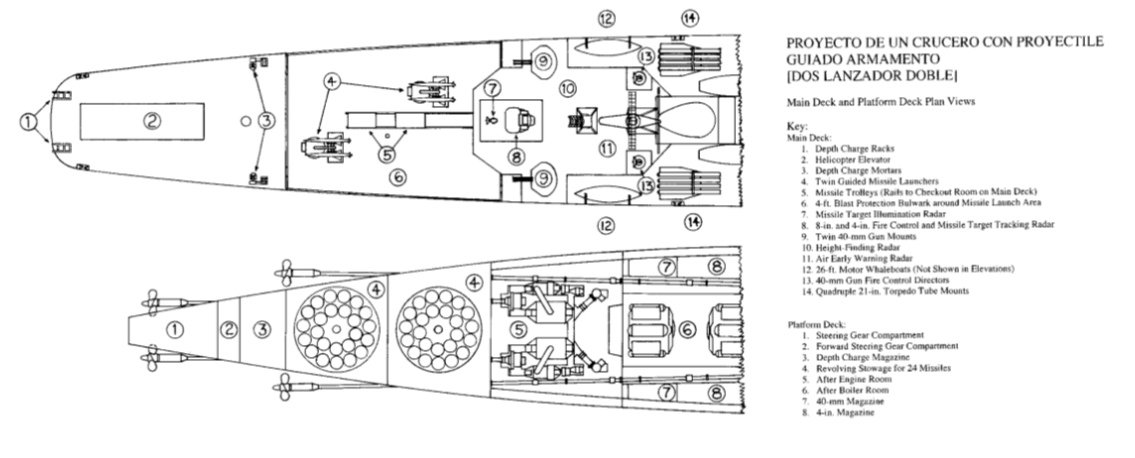
The Oerlikon/Contraves SAM was even considered for naval applications:
Vickers-Armstrong included it in a proposal for a missile cruiser for Venezuela. The design featured two aft-mounted twin-arm launchers, each with below deck magazines. The British government approved the cruiser export plan in December 1957, but, needless to say, it didn't come to fruition.
[Friedman a. Baker, British Cruisers, 2010]
 

Attachments

  • 9121.jpg
    9121.jpg
    74 KB · Views: 93
  • 9119.jpg
    9119.jpg
    122.6 KB · Views: 84
  • 9120.jpg
    9120.jpg
    112 KB · Views: 67
Last edited:
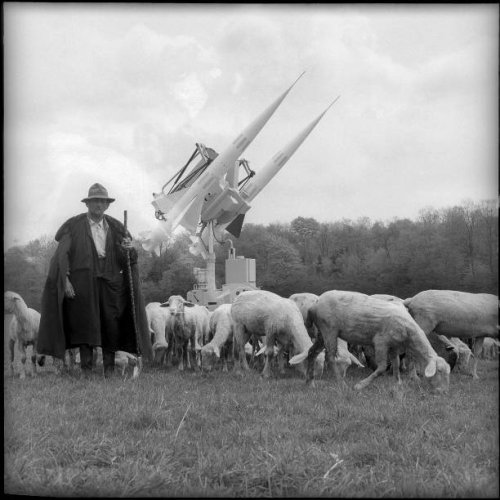
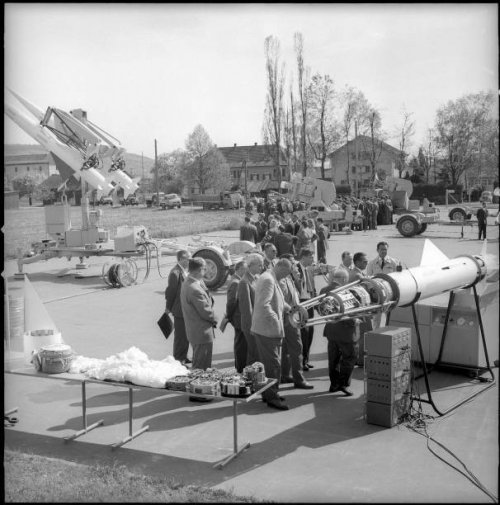
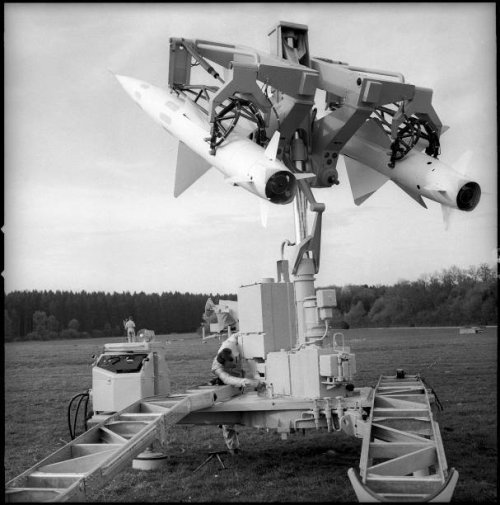
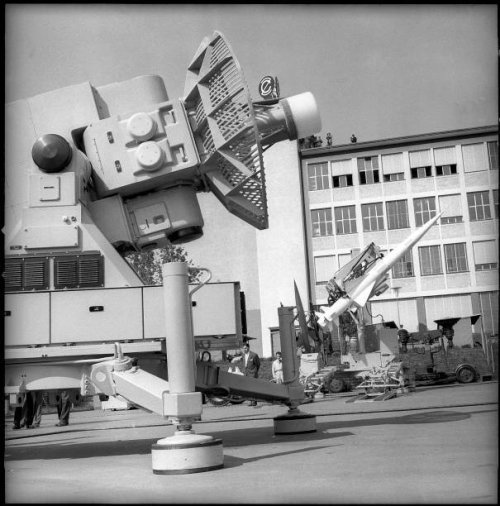
Found a bunch of pictures of RSC/D for sale on ebay here
 

Attachments

  • Herd of sheep with Contraves anti aircraft missiles Zurich 1958 Old Photo.jpg
    Herd of sheep with Contraves anti aircraft missiles Zurich 1958 Old Photo.jpg
    47 KB · Views: 51
  • Demonstration of Contraves air defense system Zurich 1958 Old Photo.jpg
    Demonstration of Contraves air defense system Zurich 1958 Old Photo.jpg
    56.3 KB · Views: 46
  • Contraves air defense rockets Zurich 1958 Old Historic Photo.jpg
    Contraves air defense rockets Zurich 1958 Old Historic Photo.jpg
    48.9 KB · Views: 44
  • Contraves air defense system guided missile Zurich 1958 Old Photo.jpg
    Contraves air defense system guided missile Zurich 1958 Old Photo.jpg
    57.9 KB · Views: 45
Thank you gents for your knowledge!
I'm looking for a SAM system for an 'Alternative Australian Defence Forces ORBAT', on another forum and was thinking the RSC/RSD-57 and RSD-58 series might have been a good and non-aligned SAM system to counter Indonesia's Tu-16 Badger's!
Why would Oz be wanting non-aligned when they have access to UK and US weapons?

For the long-ranged SAMs, Nike-Herc or Bloodhound would be ideal. Or heck, Talos.


Translation by Google:
"MICON (MIssile CONtraves) was developed from 1959, when RSD was fully developed. MICON is slightly larger than RSD and has many innovations compared to its predecessor. It was powered by a single-stage solid-fuel rocket motor with two stages of acceleration. The radar was able to steer three guided missiles towards the same target. The MICON battery was to consist of a computer unit in a command post, a generator vehicle, a radar car with a survey monopulse radar, a tracking radar, two directional radars and four dual launchers. The chassis of the double starter was based on the chassis of the GDF anti-aircraft system, as was the Skyguard much later. The system found no customers, but was fully developed by the mid-1960s."
That description really sounds more like SARH, but it looks like we got the real answer of "it rode the tracking beam"
 
Aside from the Bloodhound I suspect that Australia would've been a good candidate for the aborted Land Talos.
Not sure, actually. It seems that Land Talos did not have conventional version, being strictly nuclear system. On all available photos of this system, there are no interferometer antennas for semi-active terminal guidance; this indicates that Land Talos was purely beam-riding missile, with nuclea warhead only.
 
Not sure, actually. It seems that Land Talos did not have conventional version, being strictly nuclear system. On all available photos of this system, there are no interferometer antennas for semi-active terminal guidance; this indicates that Land Talos was purely beam-riding missile, with nuclea warhead only.
But if built off the RIM-8E Unified Talos missile, that would not be a problem for Oz. They just buy/assemble them all as conventional Talos instead.
 
Not sure, actually. It seems that Land Talos did not have conventional version, being strictly nuclear system.

Land Talks while no doubt using the nuclear armed RIM-8B/D would've relied mainly on the RIM-8E unified Talks missile.

But if built off the RIM-8E Unified Talos missile, that would not be a problem for Oz. They just buy/assemble them all as conventional Talos instead.

This!

You know, Scott, it has just occurred to me that if Land Talks had gone into production Israel would probably have bought it and possibly imperial Iran too.
 
Land Talks while no doubt using the nuclear armed RIM-8B/D would've relied mainly on the RIM-8E unified Talks missile.


This!

You know, Scott, it has just occurred to me that if Land Talks had gone into production Israel would probably have bought it and possibly imperial Iran too.
The reasons it wasn't taken up are mainly two:

First, the Army didn't invent it. That means in their opinion, they shouldn't adopt it.

Second, adoption would have meant replacing all of the launcher systems, maintenance, and fire control systems with ones that worked with Talos. That was expensive, time consuming, and ultimately unaffordable.
 
Are you talking about the US army or the Australian army?
The US Army. The Army has a long history of "not invented here." Their ordinance department is infamous for it.

Without US Army adoption, it was highly unlikely any other nation could afford to do the R&D to get a land-based version up and running.
 
The US Army. The Army has a long history of "not invented here." Their ordinance department is infamous for it.

The SecDef back then should've read the US army top-grass the metaphorical riot-act and tell them to implement Land Talos, this was a very capable SAM system but IMO SAC should've been allowed to retain control of Land Talos for its' bases.
 
But if built off the RIM-8E Unified Talos missile, that would not be a problem for Oz. They just buy/assemble them all as conventional Talos instead.
By the time of Unified Talos, the Land Talos was long forgotten. Bristol Bloodhound or Nike Hercules would be much more available solutions.
Land Talks while no doubt using the nuclear armed RIM-8B/D would've relied mainly on the RIM-8E unified Talks missile.
As far as I know, the Land Talos did not include any kind of target illumination radar, so RIM-8E could not be used in conventional version.
 
As far as I know, the Land Talos did not include any kind of target illumination radar,

I find that very surprising unless the USAF had intended to provide its own compatible illumination-radar.
 
I find that very surprising unless the USAF had intended to provide its own compatible illumination-radar.
AFAIK, the USAF in 1950s wasn't interested in conventional version, only in nuclear one. And nuclear version was a pure beam-rider, which did not require target illumination.
 
The SecDef back then should've read the US army top-grass the metaphorical riot-act and tell them to implement Land Talos, this was a very capable SAM system but IMO SAC should've been allowed to retain control of Land Talos for its' bases.
It was but, Nike Hercules was compatible with existing fire controls for Nike Ajax, could use the Nike Ajax sites and storage facilities, along with the same launcher system. That made it far more affordable. Nike Hercules would also be available about a year sooner at the least. Everything I've read on this says that's the overwhelming reason Talos was not accepted. Interestingly, the Army also looked at the Corporal ballistic missile as a possible nuclear SAM at the time but that too was rejected for a number of reasons.

By the time of Unified Talos, the Land Talos was long forgotten. Bristol Bloodhound or Nike Hercules would be much more available solutions.

As far as I know, the Land Talos did not include any kind of target illumination radar, so RIM-8E could not be used in conventional version.
Actually it did.

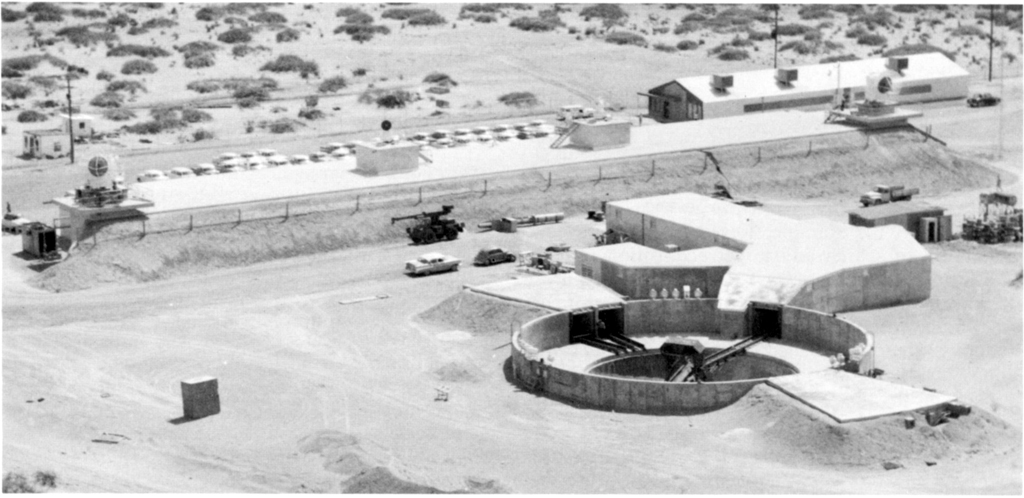
Talos%20Land%20System%20WSMR%201024.jpg


That's the test site at White Sands NM. You can see the two target illuminators at either end of the long building behind the launcher. The two smaller radars towards the middle of the building on small housings are missile guidance to the target duplicating the Navy system.

Unlike Nike, a battery was envisioned as being capable of engaging 4 targets (two launchers each with two radar sets). Nike could only engage one target at a time.
 
Nuclear Talos was beam riding only.

I know.

Unlike Nike, a battery was envisioned as being capable of engaging 4 targets (two launchers each with two radar sets). Nike could only engage one target at a time.

That was the major drawback of the Nike system as each battery could only engage one target at a time.
 
Clicking on "Oerlikon SAM" leads to this Land Talos, Nike content / "discussion". Is there a mistake in the link?
 
Clicking on "Oerlikon SAM" leads to this Land Talos, Nike content / "discussion". Is there a mistake in the link?
The connection here is that the USAF at one point in the early 50's ordered a batch of RSA models along with a guidance system and launchers for testing at Holloman AFB Missile Test Center in New Mexico. Before any were delivered, the Key West Agreement came into effect with the US Army and surface-to-air missiles with a range of less than 250 NM were no longer part of the USAF.

The result was the order was cancelled and preparations to receive the missiles at Holloman were ended. The USAF never got or tested the ordered missiles.
 

Similar threads

Back
Top Bottom