From Old site,
the
Chinese aviation industry was very underdeveloped in the 1930s and 1940s, and its role in the production of aircraft equipment for the air force was negligible. The few existing aircraft workshops and factories, although expanded during the Sino-Japanese War, were primarily engaged in the ongoing maintenance and repair of existing aircraft and the assembly of licensed aircraft.
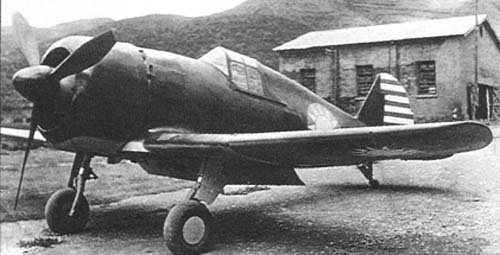
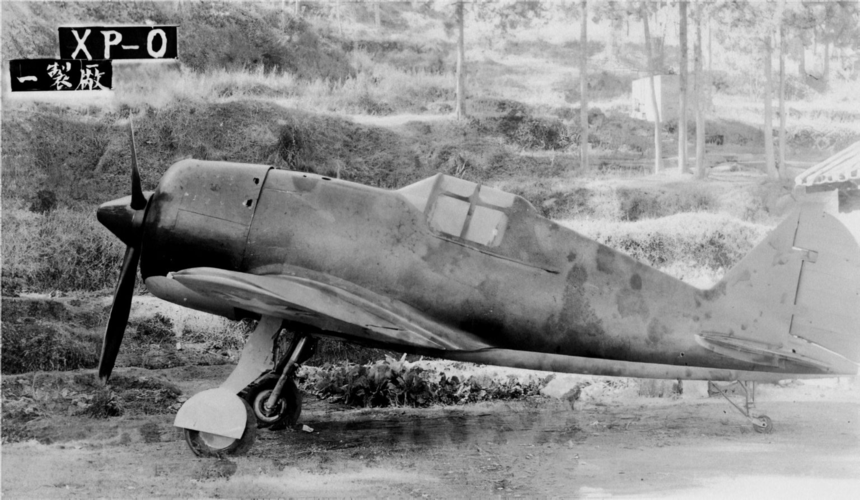
One of the few military aircraft designed in-house in China—and likely the only one built during World War II—was the single-engine fighter aircraft X-PO (also known as Yen Chui Ling How ), designed at the AFAMF No. 1 Air Force Factory in Kunming in early 1941 by Maj. Gen. Chu Chia-Gen, head of the Air Force Technical Bureau. The X-PO was based on the American Curtiss "Hawk" 75A fighter . It was a low-wing cantilever monoplane with an enclosed cockpit and retractable tailwheel landing gear. Given the factory's technological capabilities, the aircraft's structure was designed according to early 1930s standards. The fighter had three-spar wooden wings and a welded steel-tube truss fuselage covered with plywood and fabric. The aircraft was powered by an American Pratt & Whitney R-1830-S1C3-G "Twin Wasp" radial engine with an output of 1,200 hp. Armament consisted of two or four 20 mm cannons, carried in under-wing nacelles. Under the fuselage, bomb racks were also provided, allowing the aircraft to be used for ground attack.
The first and only prototype of the X-PO fighter was built at AFAMF workshops, but it did not fly until 1943 from nearby Yangling Airfield, northeast of Kunming. However, on its first flight, the aircraft was severely damaged during landing, and further development was abandoned. By this time, the United States was already heavily involved in supporting China in its fight against the Japanese forces, which was also reflected in the supply of modern fighter aircraft. Therefore, the Chinese air force deemed it unnecessary to continue work on building its own fighter.