
You are using an out of date browser. It may not display this or other websites correctly.
You should upgrade or use an alternative browser.
You should upgrade or use an alternative browser.
NASA/Lockheed Martin X-59A Quiet Supersonic Technology (QueSST)
- Thread starter Flyaway
- Start date


- Joined
- 3 June 2006
- Messages
- 3,408
- Reaction score
- 5,630
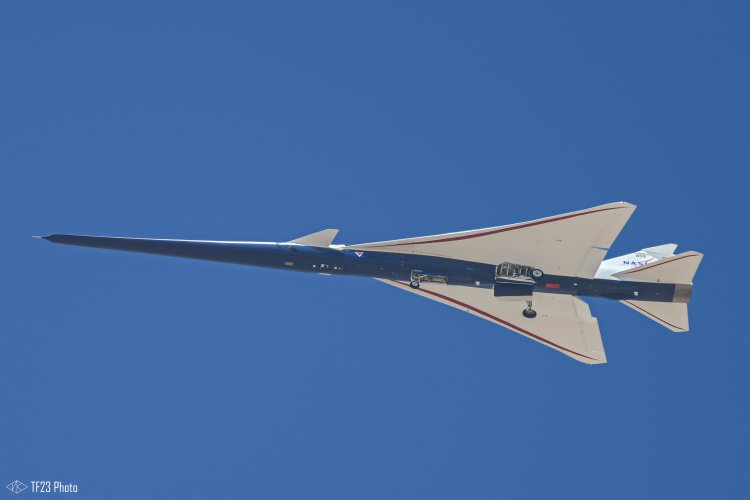
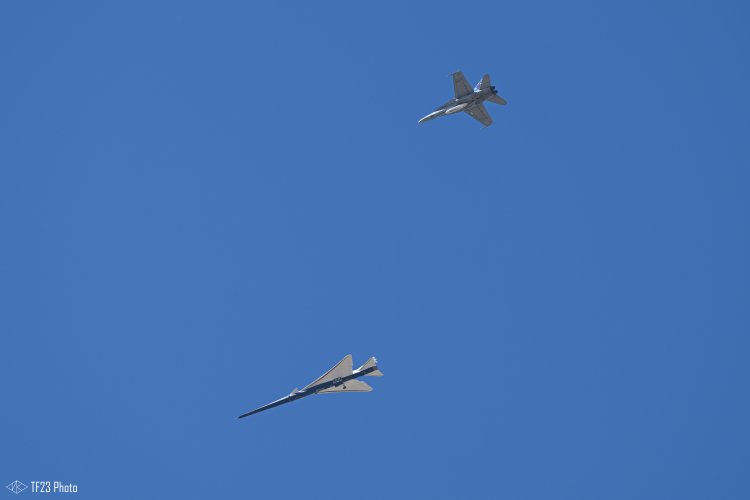
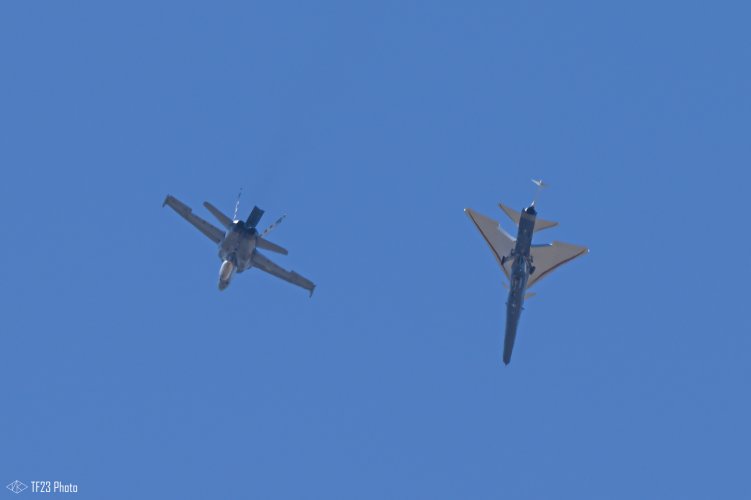
Here's a photo album on Flickr showcasing the X-59's first flight on October 28, 2025, by TF23 Aviation. 
Link:
Link:
Additional video clips of the first flight, some of them strikingly beautiful:
View: https://youtu.be/wmkygc5pPHM
Scott Kenny
ACCESS: USAP
- Joined
- 15 May 2023
- Messages
- 17,001
- Reaction score
- 24,121
I ran across an interesting explanation of why the QueSST is so stretched out on FB.
So, whenever there's an object sticking off the fuselage, a shock interaction happens where the two shocks meet and amplify each other. In addition to the shock on the nose. At a distance, those shocks tend to consolidate into each other, so you get the big double booms that we all know and love. So what LockMart did on QueSST was to stretch those separate interactions out so that on the ground we're still hearing individual overlap booms, not the consolidated effects that are much louder. Instead of a single kaBOOM or BOOM-BOOM, you'd hear a Boom-crackle-crackle-crackle-crackle.
And then NASA is going to boom unsuspecting cities with sound level measurement equipment in place to see how many complaints by sound level they get.
So, whenever there's an object sticking off the fuselage, a shock interaction happens where the two shocks meet and amplify each other. In addition to the shock on the nose. At a distance, those shocks tend to consolidate into each other, so you get the big double booms that we all know and love. So what LockMart did on QueSST was to stretch those separate interactions out so that on the ground we're still hearing individual overlap booms, not the consolidated effects that are much louder. Instead of a single kaBOOM or BOOM-BOOM, you'd hear a Boom-crackle-crackle-crackle-crackle.
And then NASA is going to boom unsuspecting cities with sound level measurement equipment in place to see how many complaints by sound level they get.

bercr
ACCESS: Secret
- Joined
- 12 January 2011
- Messages
- 391
- Reaction score
- 773
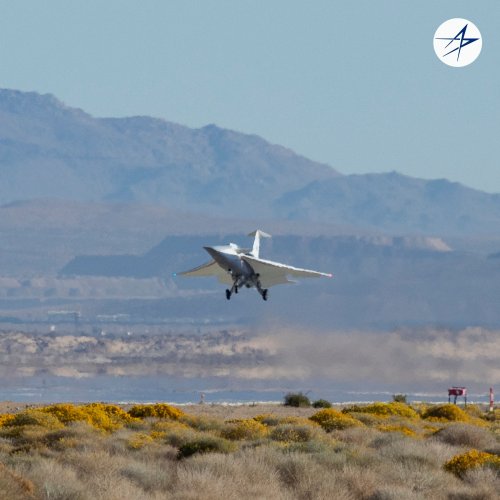
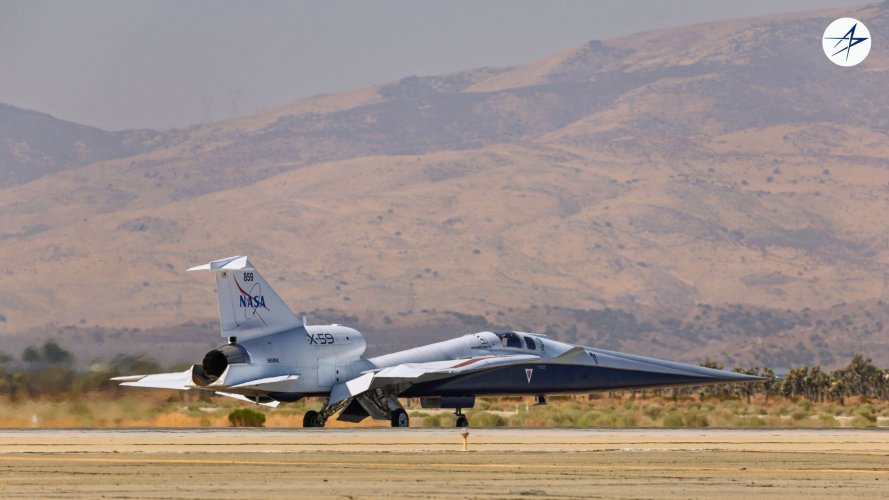
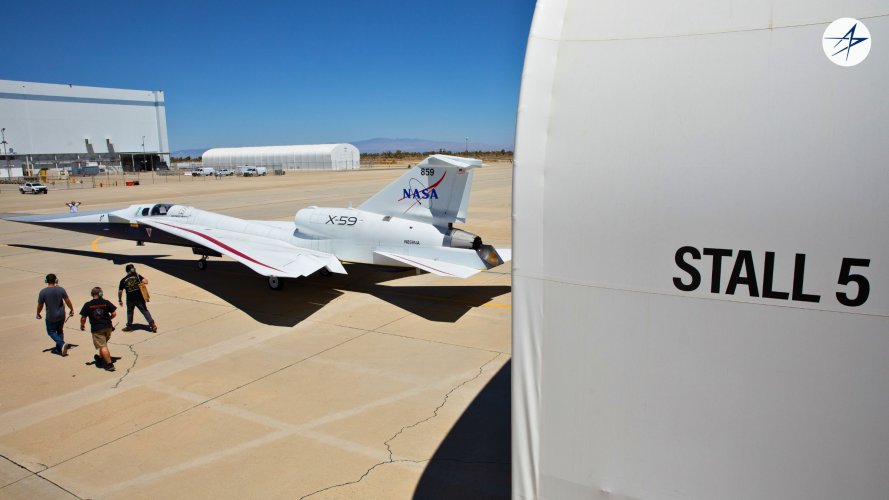
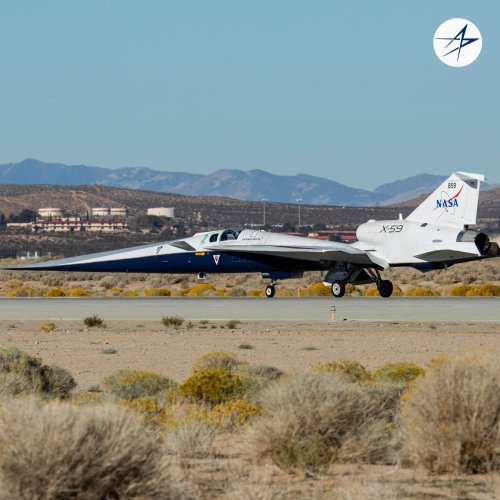
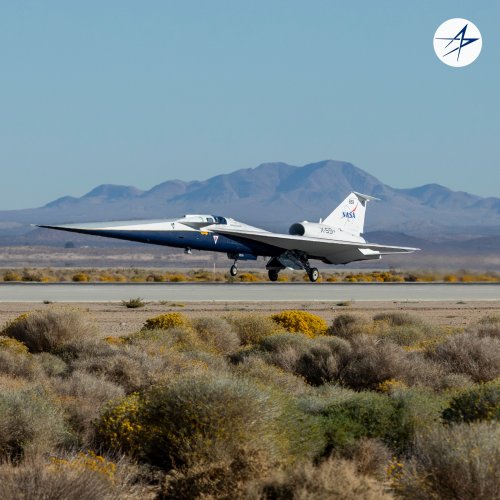
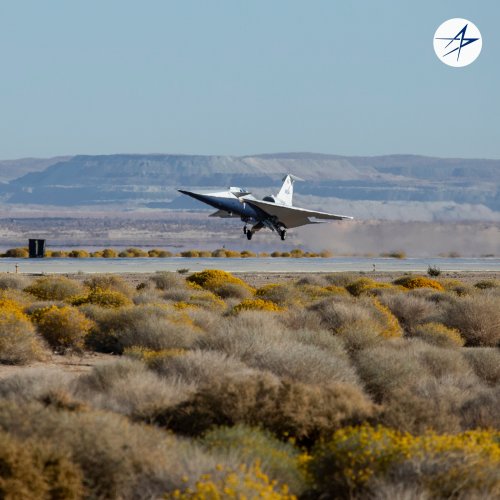
Lockheed X-59A first landing photos.

 www.friendsofnasa.org
NASA X-59 Quiet Supersonic Jet's First Flight over California: New Pictures
Friends of NASA is an independent NGO dedicated to building international support for peaceful space exploration, commerce, science and STEM education
Attachments

Brett Davidson
ACCESS: Top Secret
- Joined
- 26 September 2006
- Messages
- 4,041
- Reaction score
- 11,743
Ah yes, the first rule of aviation: try to make the number of landings equal the number of takeoffs.

- Joined
- 21 January 2015
- Messages
- 14,341
- Reaction score
- 22,739
- Joined
- 21 January 2015
- Messages
- 14,341
- Reaction score
- 22,739
- Joined
- 21 January 2015
- Messages
- 14,341
- Reaction score
- 22,739
Inside preparations for X-59’s first supersonic flight [Jan. 13]
The flight campaign is due to resume in March, starting with 10 “envelope expansion” flights, a spokesperson at NASA Langley told me by email. Test pilots will gradually fly the aircraft “higher and faster, reaching the mission test point of 55,000ft and Mach 1.5.”
- Joined
- 21 January 2015
- Messages
- 14,341
- Reaction score
- 22,739
NASA Adds Two F-15 Aircraft to Support Supersonic Flight Research
 www.nasa.gov
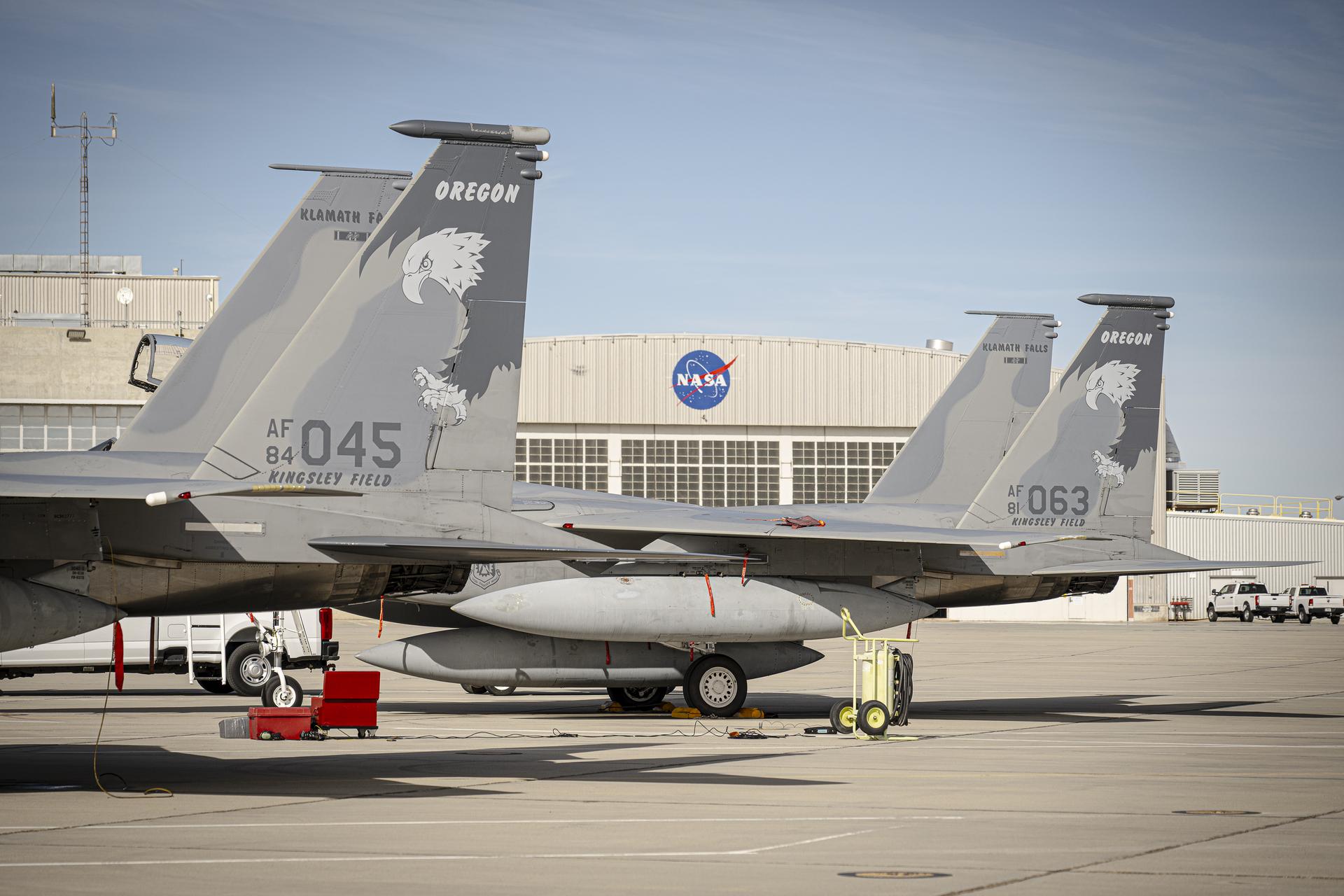
Two retired U.S. Air Force F-15 jets have joined the flight research fleet at NASA’s Armstrong Flight Research Center in Edwards, California, transitioning from military service to a new role enabling breakthrough advancements in aerospace.
The F-15s will support supersonic flight research for NASA’s Flight Demonstrations and Capabilities project, including testing for the Quesst mission’s X-59 quiet supersonic research aircraft. One of the aircraft will return to the air as an active NASA research aircraft. The second will be used for parts to support long-term fleet sustainment.
“These two aircraft will enable successful data collection and chase plane capabilities for the X-59 through the life of the Low Boom Flight Demonstrator project” said Troy Asher, director for flight operations at NASA Armstrong. “They will also enable us to resume operations with various external partners, including the Department of War and commercial aviation companies.”
The aircraft came from the Oregon Air National Guard’s 173rd Fighter Wing at Kingsley Field. After completing their final flights with the Air Force, the two aircraft arrived at NASA Armstrong Dec. 22, 2025.
“NASA has been flying F-15s since some of the earliest models came out in the early 1970s,” Asher said. “Dozens of scientific experiments have been flown over the decades on NASA’s F-15s and have made a significant contribution to aeronautics and high-speed flight research.”
The F-15s allow NASA to operate in high-speed, high-altitude flight-testing environments. The aircraft can carry experimental hardware externally – under its wings or slung under the center – and can be modified to support flight research.
Now that these aircraft have joined NASA’s fleet, the team at Armstrong can modify their software, systems, and flight controls to suit mission needs. The F-15’s ground clearance allows researchers to install instruments and experiments that would not fit beneath many other aircraft.
NASA has already been operating two F-15s modified so their pilots can operate safely at up to 60,000 feet, the top of the flight envelop for the X-59, which will cruise at 55,000 feet. The new F-15 that will fly for NASA will receive the same modification, allowing for operations at altitudes most standard aircraft cannot reach. The combination of capability, capacity, and adaptability makes the F-15s uniquely suited for flight research at NASA Armstrong.
“The priority is for them to successfully support the X-59 through completion of that mission,” Asher said. “And over the longer term, these aircraft will help position NASA to continue supporting advanced aeronautics research and partnerships.”
NASA Adds Two F-15 Aircraft to Support Supersonic Flight Research - NASA
Two retired U.S. Air Force F-15 jets have joined the flight research fleet at NASA’s Armstrong Flight Research Center in Edwards, California, transitioning
www.nasa.gov

- Joined
- 18 June 2009
- Messages
- 1,514
- Reaction score
- 2,794
- Joined
- 21 January 2015
- Messages
- 14,341
- Reaction score
- 22,739
Inside NASA: Jared Isaacman Talks Aeronautics with NASA's X-59 Pilots
View: https://youtube.com/watch?v=skxVNFh3yyA
Jan 30, 2026
NASA’s Armstrong Flight Research Center in Edwards, California, has been at the forefront of aviation innovation for decades – from historic X-planes to today’s cutting-edge research shaping the future of flight. In this exclusive conversation, NASA Administrator Jared Isaacman joins test pilots Nils Larson and Jim “Clue” Less to discuss Armstrong’s legacy, the role of X-planes in advancing technology, and what the next era of aeronautics might look like.
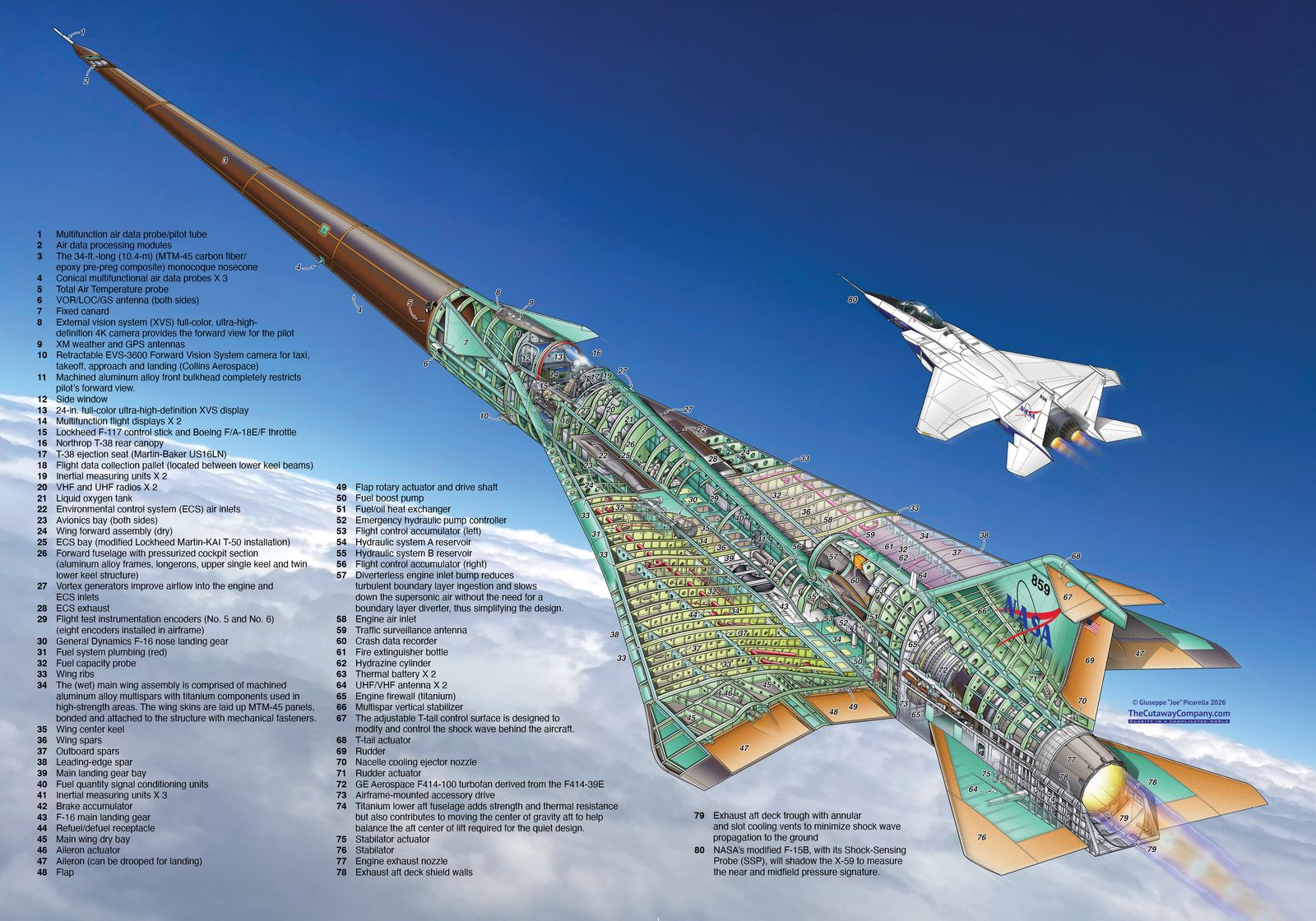
Inside NASA’s X-59 Low-Boom Demonstrator | Aviation Week Network
Aviation Week takes the wraps off NASA’s Lockheed Martin-built X-59 quiet supersonic research aircraft as preparations begin for envelope expansion tests.
 aviationweek.com
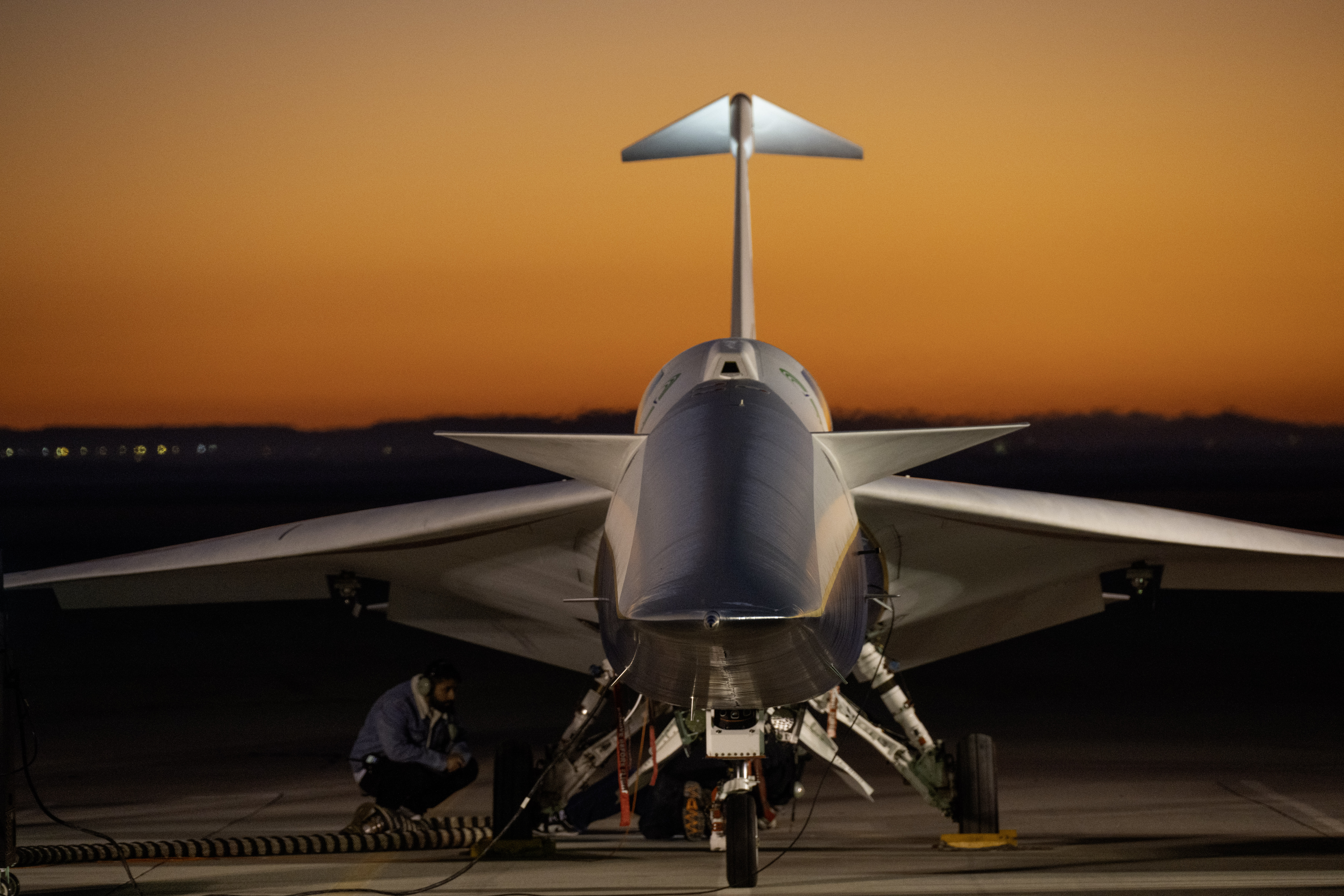
NASA’s X-59 Prepares for Second Flight - NASA
NASA’s X-59 experimental aircraft is preparing for its second flight, a step that will set the pace for more flight testing in 2026.
www.nasa.gov
Attachments

Kiltonge
Greetings Earthling
- Joined
- 24 January 2013
- Messages
- 838
- Reaction score
- 1,922
Incredible, 10 'envelope expansion' flights required to get to Mach 1.4, before it even starts to do any science.
The N-156 went supersonic on its first flight, 67 years ago.
What's gone wrong? We have all the tools to predict how this thing will fly. Is it simply an overabundance of risk aversion? Self-preserving project management? Lack of impetus? Exploitation of budget?
The N-156 went supersonic on its first flight, 67 years ago.
What's gone wrong? We have all the tools to predict how this thing will fly. Is it simply an overabundance of risk aversion? Self-preserving project management? Lack of impetus? Exploitation of budget?
Last edited:
Scott Kenny
ACCESS: USAP
- Joined
- 15 May 2023
- Messages
- 17,001
- Reaction score
- 24,121
Making sure that the computer model actually agrees with reality.Incredible, 10 'envelope expansion' flights required to get to Mach 1.4, before it even starts to do any science.
The N-156 went supersonic on its first flight, 67 years ago.
What's gone wrong? We have all the tools to predict how this thing will fly. Is it simply an overabundance of risk aversion? Self-preserving project management? Lack of impetus? Exploitation of budget?

Attachments
Last edited:
Kiltonge
Greetings Earthling
- Joined
- 24 January 2013
- Messages
- 838
- Reaction score
- 1,922
Has anybody considered that X-59A might be about producing a.reasonably accurate computer model, validated by hardware?
Just asking.
Its possible, but seems like a self-licking lollipop.
The purpose of the X-59 is to demonstrate that low-boom sonic flight is tolerable. The design isn't generally applicable to future aircraft, due to impracticality, so any computer model would likewise lack forward applicability.
Essentially it would be validating itself for the sake of validation. Which, IMHO, sums up the X-59.
Scott Kenny
ACCESS: USAP
- Joined
- 15 May 2023
- Messages
- 17,001
- Reaction score
- 24,121
I think you're dismissing the computer models unfairly.Its possible, but seems like a self-licking lollipop.
The purpose of the X-59 is to demonstrate that low-boom sonic flight is tolerable. The design isn't generally applicable to future aircraft, due to impracticality, so any computer model would likewise lack forward applicability.
Essentially it would be validating itself for the sake of validation. Which, IMHO, sums up the X-59.
The design is particularly unusual, which means it's out at the ragged edge of where we know computer models are accurate. Which means that we need to make sure that the computer models are accurate for designs optimized around sonic boom reduction.
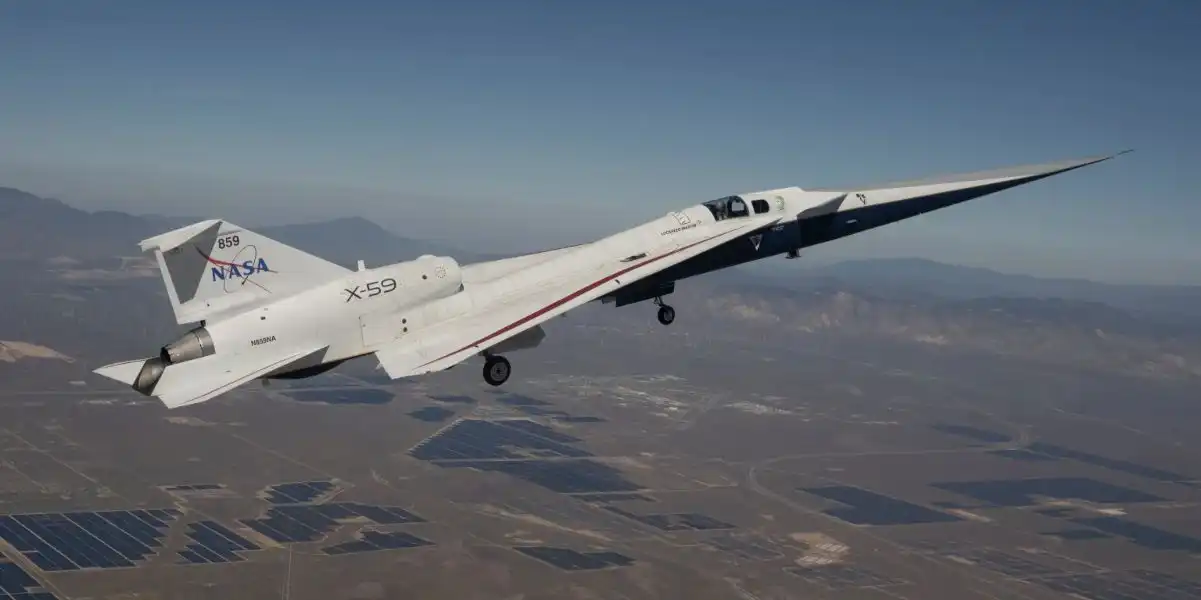
It was a short 9min 2nd flight:
 theaviationgeekclub.com
The aircraft took off at 10:54 a.m. PDT from Edwards Air Force Base, near NASA Armstrong. Several minutes into the flight, pilot Jim “Clue” Less saw a vehicle system warning in the aircraft’s cockpit. Following flight procedures, the aircraft landed at 11:03 a.m. after a return-to-base was called.
X-59 second flight abbreviated due to technical issue
Lockheed Martin X-59 quiet supersonic technology (QueSST) X-plane second flight abbreviated due to technical issue
theaviationgeekclub.com
Last edited:
- Joined
- 21 January 2015
- Messages
- 14,341
- Reaction score
- 22,739
NASA Administrator Jared Isaacman
And we are planning to fly X-59 again tomorrow. We are getting back into a flight test groove. Like most things at NASA, we want to execute safely, with urgency, and achieve the objectives. Because whatever comes next should be that much more impressive, ambitious, and inspiring
View: https://twitter.com/NASAAdmin/status/2037349791051485559
NASA’s X-59 Returns To Flight After False Positive Cockpit Warning
NASA’s X-59 Returns To Flight After False Positive Cockpit Warning | Aviation Week Network
The cockpit warning light that cut short the second flight of NASA’s X-59 low-boom supersonic flight demonstrator on March 20 proved to be a false positive.
aviationweek.com
Podcast: Can NASA’s X-59 And Boom’s Overture Really Deliver A New Era Of Supersonic Travel?
Podcast: Can NASA’s X-59 And Boom’s Overture Really Deliver A New Era Of Supersonic Travel? | Aviation Week Network
As NASA begins X-59 envelope expansion and Boom develops its first high speed engine, civil supersonic activity is at its highest since the retirement of Concorde in 2003. Editors discuss the latest developments and the challenges that lie ahead.
aviationweek.com
- Joined
- 21 January 2015
- Messages
- 14,341
- Reaction score
- 22,739
0.95M
 www.nasa.gov
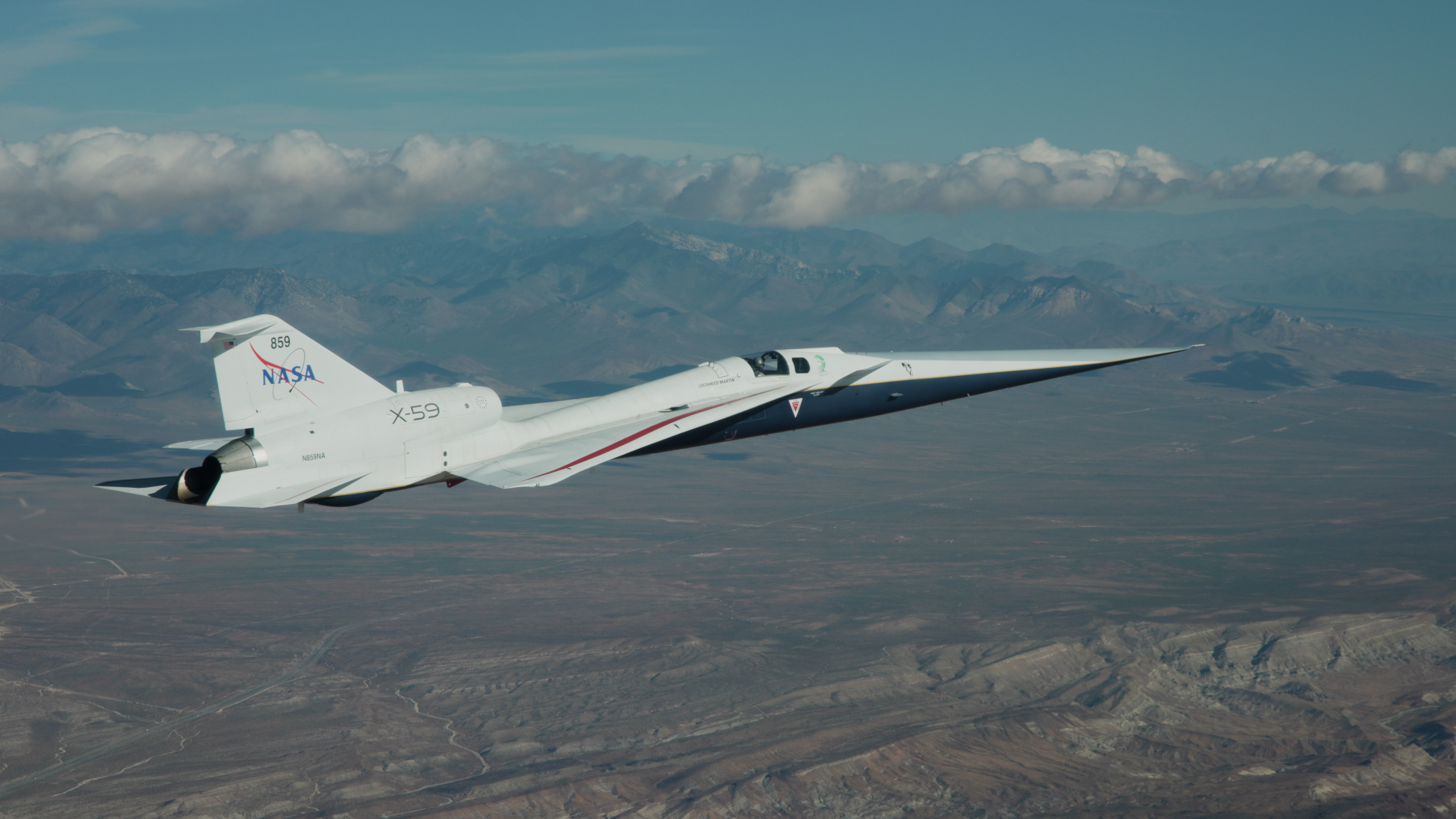
In a pair of test flights on April 10 and April 14, the aircraft reached new altitudes and speeds, reaching 43,000 feet and 528 to 627 mph (approximately Mach 0.8 to 0.95 in those conditions). Those flights were the eighth and ninth overall for the X-59 and marked a jump from its previously reached altitude of 32,000 feet, attained on April 7.
Latest NASA X-59 Flights Go Higher and Faster - NASA
NASA’s X-59 experimental aircraft has made its highest and fastest flights so far, expanding its operational range and making progress toward supersonic flight.
www.nasa.gov
Similar threads
-
 Proposed NASA budget could lead to a number of new X-Planes
- Started by Flyaway
- Replies: 21
-
-

-
 Sikorsky Long-Range Hybrid-Electric VTOL Demonstrator (HEX)
- Started by VTOLicious
- Replies: 5
-
