LACAB Projects and Prototypes

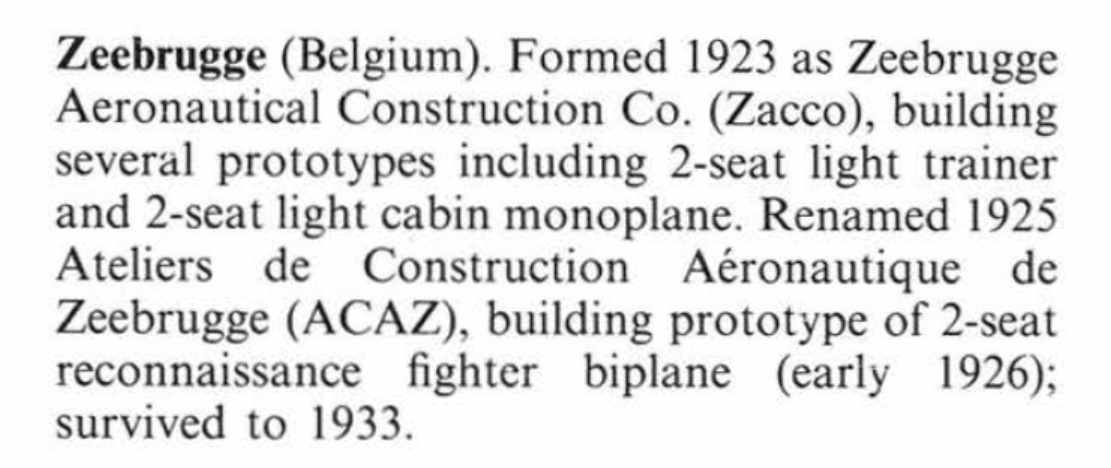
... we can say, it was ET.1 or ET.2 ?,

Not without evidence.

At the moment, we have no published mention of any such ACAZ designation. Nor do we have proof that Bill Gunston wasn't simply referring to the T.1, T.2, or T.3 two-seater tourers.

My sense is that any hypothetical or theoretical designation sequences should be in the Alternative History and Future Speculation section. Am I alone in this conclusion?
 
My sense is that any hypothetical or theoretical designation sequences should be in the Alternative History and Future Speculation section. Am I alone in this conclusion?
No you're not :)
The last thing we want to do here on SPF is to manufacture dubious speculative information not strongly flagged as such. There are enough dubious sources as it is.
 
My sense is that any hypothetical or theoretical designation sequences should be in the Alternative History and Future Speculation section. Am I alone in this conclusion?

Of course I agree with that,but the T.1 or T.2 were NOT a light trainer at all ?!,so Mr. Bill Gunston
was very specifically to distinguish it from T series.
 

Of course I agree with that,but the T.1 or T.2 were NOT a light trainer at all ?!,so Mr. Bill Gunston
was very specifically to distinguish it from T series.

Okay, "NOT a light trainer at all ?!" Since your style there seems to indicate absolute certainty, can you provide evidence?

Any kind of certainty about obscure firms like ACAZ would be most welcome. Do you have an exact quote from Gunston?

I would be the first to agree that an aircraft like the T.2 is better described as a 'tourer'. However, similar lightplanes have often been described as 'trainers' - even by you in the past, my dear hesham. Anyway, we can debate usage and nomenclature but actual evidence must always trump :)
 
My dear Apophenia,

certainly Mr. Gunston had his reliable sources,we can assume that,it may be JAWA or a Germany book talked about aircraft year by year in this early period ?.

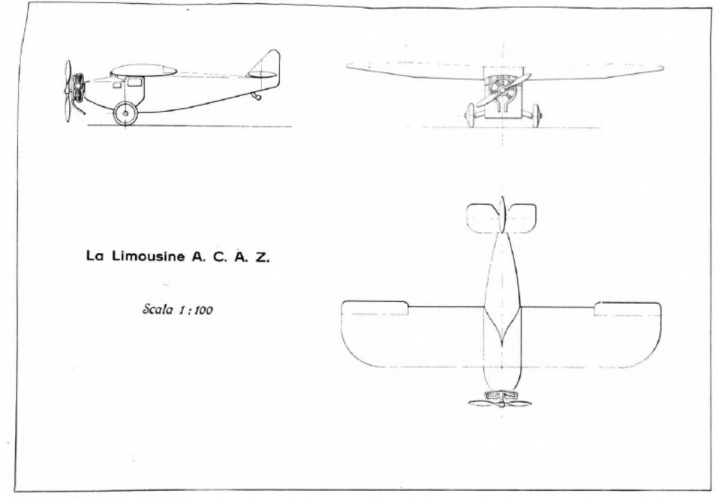
Its appearance didn't like a trainer at all,and may I can solve this clue,by Renard's list,the R-5 was aircraft for ACAZ from 1920,so we could suppose that,it was the light trainer,designed and built before formed or found the company ?!.
 

Attachments

  • 1.png
    1.png
    743.4 KB · Views: 45
  • 2.png
    2.png
    53.3 KB · Views: 33
Last edited:
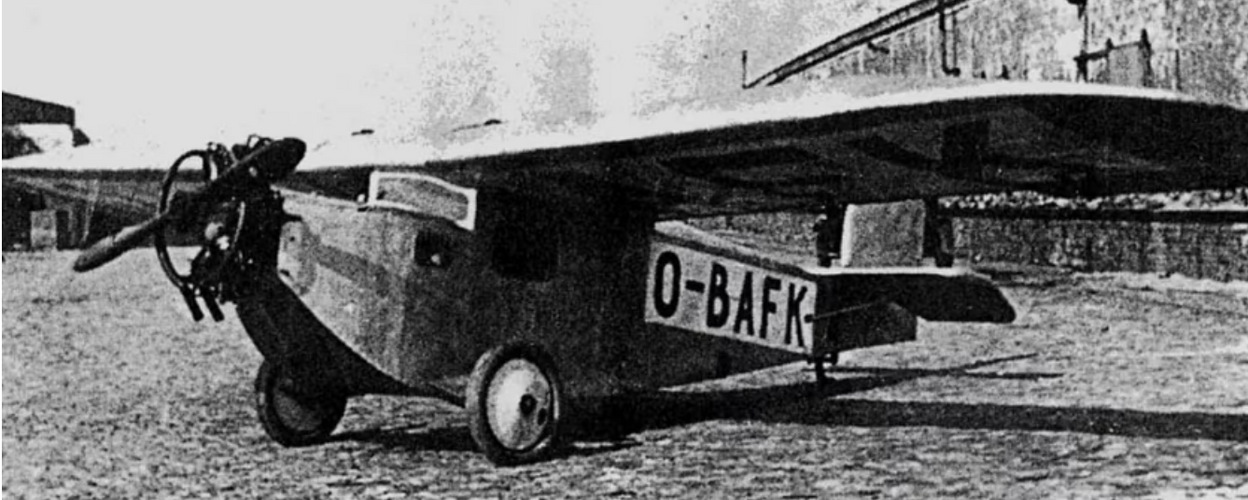
Yes, the T.1 was O-BAFK (and the T.2 was O-BAFM/OO-AFM).

On the usage of trainer vs tourer, I seem to be unable to make my point clearly enough. As such, I will retire from the field.

[Edit: Or not ...]
 
Last edited:
Its appearance didn't like a trainer at all,and may I can solve this clue,by Renard's list,the R-5 was aircraft for ACAZ from 1920,so we could suppose that,it was the light trainer,designed and built before formed or found the company ?!.

OK we close this case,but I want to explain something,

the aircraft in number "1" is from the video,it was the T.1 of 1923,BUT the
Renard R-5 was not displayed in any where,and the aircraft was in 1920 ?!.
 
Just for the info :
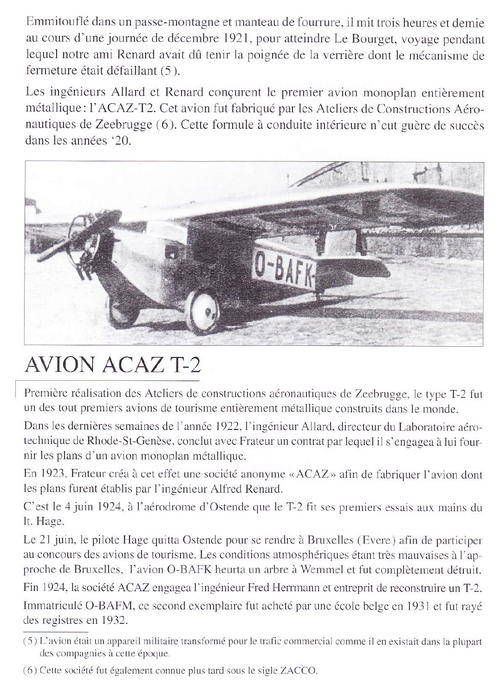
.Avion A.C.A.Z. T-2 ..... fut un des tous premiers *avions de tourisme *
entiérement metalique dans le monde.

source : page111 (annexe2) Les Avions Renard- Andre Hauet
 
Thanks lark. Good to see the original. There are plenty of claims on the internet that the ACAZ T.2 was "the first all-metal airplane". Your Andre Hauet quote makes clear that this Renard/Allard design was the first all-metal tourer.

There is a simple explanation for the elusive 'Renard R-5' designation. No direct evidence has emerged that this designation ever existed. In March 2015, c460 posted a list of Renard technical files. The title is: Liste Numerotee des dossiers d'etude et de Fabrication A. Renard (Numbered List of A. Renard Study and Manufacturing Files).

-- https://www.secretprojects.co.uk/th...ing-r-s-v-stampe-et-renard.19607/#post-243475

Column 1 is listed as ; column 2 as Objet du Dossier

Unfortunately, c460 mentioned that "[f]ile numbers generally [my emphasis] correspond to the R designations, and this document explains the gaps before R-16 and between R-17 and R-30". Taking that word "correspond" quite literally, hesham concluded that the designation "Renard R-5" could be inferred from: "5 Avion ACAZ (Zeebrugge) (1920)".

To my mind, Arjen then cleared this up with his statement "No exact match to the R designations, then. I think file number 5 simply refers to the ACAZ T.2 - which, to my knowledge, was never referred to as R.5".

-- https://www.secretprojects.co.uk/th...ing-r-s-v-stampe-et-renard.19607/#post-306614

However, those who prefer to make up their own minds can take a closer look at c460's Brussels Air Museum Magazine (no.65, 1990) file:

I have typed out the key section below (adding in an abréviation du numéro and hyphen to each listing for clarity):
"...
N° 4 -- Moto avec cadre en Dural et moteur 2 temps
N° 5 -- Avion ACAZ (Zeebrugge) (1920)
N° 6 -- Hydroglisseur à aile marine (brevet)
N° 7 -- Avion RSV 32-90 (1921)
N° 8 -- Avion RSV 26-180
N° 9 -- Moteur RENARD 5 cylindres 120 CV (1923); en série, ch. de Louvain
N° 10 - Avion chasse Epervier, construit en 2 exemplaires 1er à Deurne, 2e à SABCA
N° 11 - Avion RSV quadriplace 32-90 Bis
N° 12 - Outillages (presse, etc.) pour fabrication en Dural ..."

So, listing N° 4 refers to a Duralumin-framed motorcycle; N° 7 to a patent application; and N° 12 to machine tools. Numbers 5, 7, 8, 10, and 11 all refer to built aircraft types with known designations - the ACAZ T.2; RSV 32-90; RSV 26-180; Renard Type 2; and RSV 32-90 Bis, respectively.

I hope this demonstrates that there was no absolute correlation between the numerical listings and Alfred Renard's 'R' series designations. Each number on that list simply pertained to an 'Object in the Folder'.

 
From, Notiziaro di Aeronautica 1924.
 

Attachments

  • 22.png
    22.png
    230.4 KB · Views: 22
From old site on the Net,

the small Belgian aircraft manufacturer Les Ateliers de Construction Aéronautiques Belges (LACAB) was founded in Haren in 1932. Soon after, it developed the LACAB T.7, a single-engine biplane trainer aircraft, which was to become the new standard trainer of the Belgian Air Force. However, the T.7 lost the competition to the competing Stampe et Vertongen SV-5, and LACAB began work on a much larger, this time twin-engine, multirole combat aircraft.

In the 1930s, some countries—especially those with less industrial potential than the world's superpowers—became fashionable to design versatile combat aircraft that could be used to perform a wide variety of missions. Given the limited capabilities of the aviation industry, this was intended to provide their own air forces with modern aircraft at a relatively low cost. However, most attempts to build such multi-role combat aircraft ended in failure, as the greater the aircraft's versatility (the more different missions it was supposed to perform), the more complex the design became, and the longer it took to bring the aircraft to a stage suitable for mass production.

In the mid-1930s, the Belgian Air Force also became interested in the possibility of building a multi-role combat aircraft that could function as a heavy (for the conditions of the time) bomber, torpedo bomber, reconnaissance aircraft, and, if necessary, even as a heavy fighter for disrupting and combating enemy bomber formations. LACAB, among others, undertook the construction of such an aircraft, designated GR.8 and unofficially nicknamed "Doryphore ," and began preliminary design work as early as 1934. Its competitor was the SV-10 aircraft from Stampe et Vertongen, built with a similar design layout and powered by the same engines. The new aircraft was a large, twin-engine, braced biplane with enclosed cockpits and a fixed tricycle landing gear with a tailwheel. The upper wing was equipped with ailerons and had a significantly greater span, chord, and area than the lower wing (for this reason, this arrangement is also called a "half-wing"). The aircraft had a mixed construction, with a metal truss fuselage and all-wooden wings. The covering was primarily plywood and fabric. The aircraft's crew—depending on needs—was to consist of three, four, or five pilots. The aircraft's armament was to consist of six movable machine guns, two in each of three gunnery stations, and up to 800 kg of bombs or one torpedo, although the prototype flew unarmed. The GR.8 was to be powered by two French Gnôme-Rhône 14Kdrs radial engines, each producing 780 hp, housed in nacelles under the upper wing.

The sole GR.8 prototype built was ready in early 1936 and first flew on 22 February (according to [1] on 14 May). In June, the aircraft was taken over by the Aéronautique Militaire for comprehensive flight tests, which lasted until the spring of 1938. On 4 April 1938, the prototype crashed at Evére Airport near Brussels, resulting in severe damage. The landing gear and right wing halves were completely destroyed. Despite this – and despite the GR.8 not being accepted into Belgian Air Force service – the Aéronautique Militaire decided to thoroughly overhaul the aircraft. The prototype's reconstruction was not completed until 1940, but flight tests were not resumed. In May 1940, at the time of the German attack on Belgium, the Netherlands, and France, the GR.8 prototype was standing, fully restored, in a hangar at Evére Airport. In this perfect condition, the aircraft fell into German hands, but its subsequent fate is unknown (according to [1], the aircraft was damaged during the bombing of Evére Airport and was scrapped after the Germans occupied Belgium).

According to some sources, the prototype of the GR.8 bomber was purchased by the Republican government during the Spanish Civil War, but the aircraft was never handed over to the Spanish (perhaps due to the above-mentioned crash of the prototype).
 

Similar threads

Back
Top Bottom