(And all the other supporting bits, like CAD draftsmen etc)
Small unimportant note - modern programs no longer have "drafting" groups anymore. New programs don't even use physical or digital drawings, but rather all drawing notations, tolerances, PMI, etc. are all placed on the model itself in 3D. This is all done by the same engineers/designers that make the parts in CAD. Its easier for all parties involved, including the machinists who actually have to make the parts.

To your point, yes Boeing will be stretched thin in personnel. You can probably assume they're already planning/executing recruiting campaigns in Melbourne, Palmdale, and other locations of NG/LM to try and increase the engineer base instead of hiring within.
 
Small unimportant note - modern programs no longer have "drafting" groups anymore. New programs don't even use physical or digital drawings, but rather all drawing notations, tolerances, PMI, etc. are all placed on the model itself in 3D. This is all done by the same engineers/designers that make the parts in CAD. Its easier for all parties involved, including the machinists who actually have to make the parts.
I mean, it is really good that that is the case now.

Wasn't back when I was dealing with McBoing.


To your point, yes Boeing will be stretched thin in personnel. You can probably assume they're already planning/executing recruiting campaigns in Melbourne, Palmdale, and other locations of NG/LM to try and increase the engineer base instead of hiring within.
And I would expect at least a few people to be laid off from both NG and LM since they lost FAXX and NGAD to Boeing this round.
 
And I would expect at least a few people to be laid off from both NG and LM since they lost FAXX and NGAD to Boeing this round.
Definitely a possibility, but generally I think all three companies are generally pretty good at finding places for people when a program is lost. Might take 6-12 months to fully place people in permanent spots, but they'll do whatever it takes to retain talent. But without a doubt many from both will be looking at going to Boeing.

When Boeing-LM lost LRSB, Boeing was able to find spots for all the personnel that were on the program, as far as I was told.
 
I don’t want to go into speculation of red flag manipulation of aerospace related unions in certain states that are home to critical NATSEC manufacturing assets, but Boeing really needs to get its house in order in terms of labor relations, comp, HR, etc. strikes over the past few years are disconcerting and some derailed program timelines.
 
I don’t want to go into speculation of red flag manipulation of aerospace related unions in certain states that are home to critical NATSEC manufacturing assets, but Boeing really needs to get its house in order in terms of labor relations, comp, HR, etc. strikes over the past few years are disconcerting and some derailed program timelines.
Back when it was the Boeing employees union instead of the International Association of Machinists, the strikes derailing contracts happened every time production timelines were slipping and penalty clauses were about to kick in.

An observation of facts, not an unsupported statement that Boeing corporate pushed any given bargaining unit into striking to allow Corporate to claim force-majeure on delivery to avoid penalties.
 
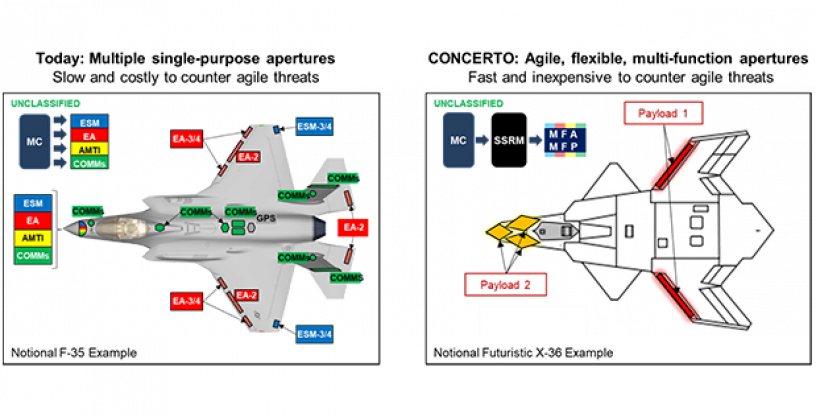
Arent most AESA main arrays capable of doing this already?

They pretty much want everything on the plane thats got a piece of RF antenna on it to be multifunctional and usable for target tracking.

No, unfortunately, and the capabilities of certain AESA radars have been.... overstated. There is one family of radars that for a while seemed to be getting some magical new capability every few months, at least according to the press and the internet (these claims were not based in facts). It's a radar, it's a jammer, it's a HPM DEW, etc.
 
There is one family of radars that for a while seemed to be getting some magical new capability every few months, at least according to the press and the internet (these claims were not based in facts). It's a radar, it's a jammer, it's a HPM DEW, etc.
F-35's radar if I had to guess. Second guess is either some GBAD radar or MAWS.

It sounds like this could enable side facing antennas to help perform targeting, but I am curious how useful those other arrays are.

Say the main radar acquired a lock, does it take significantly less power to be able to hold that lock using a smaller array / antenna? And would FOV and power of these smaller antennas even be useful at acquiring targets alone?

The genetic algorithms and reinforment learning used for resource management and scheduling can decide for the plane the right amount of power and priority to maintain tracks and that seems to imply it takes much less resources to maintain tracks than it does to acquire them.

Altogether really fascinating. learned a little of genetic algorithms in school and never thought theyd be used here.
 
Im guessing the FAXX is a naval variant of the F-47.

LMCO is loaded up on F-35, and trying to gain a CCA footing with Vectis.

NG is loaded up on B-21 and working Talon Blue.
 
Im guessing the FAXX is a naval variant of the F-47.

LMCO is loaded up on F-35, and trying to gain a CCA footing with Vectis.

NG is loaded up on B-21 and working Talon Blue.

Not exactly a variant but more so they both have a common ancestor(s) that heavily influenced their designs.
 
Arent most AESA main arrays capable of doing this already?

They pretty much want everything on the plane thats got a piece of RF antenna on it to be multifunctional and usable for target tracking.
Nope, only very few. AESA being physically capable of something is just a starting point, especially since most of AESAs in service are still direct roll-ons onto available back-end and architecture.
 
Sailors don’t want a land‑based aircraft. What problems? Build a carrier-based fighter and use it on the ground as well, just as was done with the F‑18. In this case, the logic behind Boeing’s victory is quite clear.
 
Yeah, I think the problem is that the US went all in on stealth. The idea was that AESA can do LPI and has less noise on both transmit and receive sides, and the doctrine idea was that the higher SNR and massively higher RCS of an enemy 4th gen would allow something like the F-22/35 to detect and engage planes without being engaged themselves.

Unfortunately enemy stealth planes have appeared, and detection mechanisms, as well as signal processing has developed to the degree, that this 'safe engagement range' has shrunk massively, and the practicality of the approach has become questionable.

Which meant that you need to fall back to higher transmit powers. And there lies AESA's massive weakness, that solid state transmitters are inherently less powerful and less efficient than TWT/Klystron based designs, and dealing with waste heat seems to be even more of a challenge on stealth aircraft.

Needless to say, a 0.01sqm jet cranking out 80kW of power is not exactly inconspicuous, which kind of defeats the purpose of the whole thing.

In practical terms, the Block 4 upgrade for the F35 shows the issue with AESA - the APG-85 needs way more power and especially cooling than available, making it dependent on the engine upgrade which is slated for 2031 at the earliest. Add a few years of 'Locheed time', I think it's plausible that the F35 Block 4 and F-47 entry's going to be only a few years apart, with the Chinese getting ahead of both.
 
I don’t know man, look at what we got with F-35. I can see them pulling that again.
Given what had happened with the Joint Strike Fighter Program, that is not likely to happen now. The USAF and US Navy have very different requirements for their Sixth-Generation fighters, if anything, the common ancestry would be more on the technology and capabilities side of things. The design, missions, and everything else is not gonna be the same
 
Sailors don’t want a land‑based aircraft. What problems? Build a carrier-based fighter and use it on the ground as well, just as was done with the F‑18. In this case, the logic behind Boeing’s victory is quite clear.
The F-18 was a land-based fighter (YF-17) made into a navy plane.
 
Sailors don’t want a land‑based aircraft. What problems? Build a carrier-based fighter and use it on the ground as well, just as was done with the F‑18. In this case, the logic behind Boeing’s victory is quite clear.
That's not really how either the Su-33(J-15) or Mig-29K were built and by all accounts they are excellent.
 
Americans have their own national madness. Despite the presence of serious internal contradictions and a growing national debt, the government is initiating the development and implementation of two identical programs that require significant financial investments. The Navy doesn’t need a fighter jet shared with the Air Force; give it an original one. These imperial ambitions will lead nowhere good; times have changed.
 
The Su-57 has a minimum runway length between 300-400m, it's rumored that this figure gets under <300m with second stage engines. This is literally shorter than the runway of a Ford-class. If you can do that, you can skip the reinforcements and strengthening you need for tailhooks and cats. I think it's highly plausible that you could operate a jet like that from an aircraft carrier with little modification.
 
The Su-57 has a minimum runway length between 300-400m, it's rumored that this figure gets under <300m with second stage engines. This is literally shorter than the runway of a Ford-class. If you can do that, you can skip the reinforcements and strengthening you need for tailhooks and cats. I think it's highly plausible that you could operate a jet like that from an aircraft carrier with little modification.
But surely this mean minimal fuel and payload, so it won't be of any practical use in this configuration.
 
I don’t know man, look at what we got with F-35. I can see them pulling that again.
implementation of two identical programs that require significant financial investments. The Navy doesn’t need a fighter jet shared with the Air Force; give it an original one.
No. The two programs were concieved of for different mission sets since the very beginning, and set out programmatically from the very start to avoid the same issues with the F-35 program.

The breadcrumb trail going back ten years has been consistent and unchanging. They are not identical programs. They are not identical planes. They are not even variants in the way F-35s are (F-35s at least share a mission set). They may look somewhat similar, they may share a ton of internal systems, but thats about it.

If you want to call it a variant, then we must explain how we plan on landing said air force aircraft in at most half of the deck length (notably less than 300m. 1092ft is the entire length of the carrier. Even the slanted runway itself isnt long enough) of the carrier deck when its pitching unpredictability in rough seas. Then explain how we reconcile the air intake flows of two different engine types. And then walk back and explain away every single HASC report, every press release, every talking head reporting the same message for the past 10 years contradicting this very notion. Maybe if it was just american government officials lying to the public (because as we all know only americans have problems) then fine. But a whole host of problems of which these three arent even the most prominent? Doubtful.

Unless there are ways to explain it all away, at this point its just creating an argument for the sake of outrage. The topic has been talked to death at this point. Shoulda just make a copy pasta for it.
 
Last edited:
No. The two programs were concieved of for different mission sets since the very beginning, and set out programmatically from the very start to avoid the same issues with the F-35 program.

The breadcrumb trail going back ten years has been consistent and unchanging. They are not identical programs. They are not identical planes. They are not even variants in the way F-35s are (F-35s at least share a mission set). They may look somewhat similar, they may share a ton of internal systems, but thats about it.

If you want to call it a variant, then we must explain how we plan on landing said air force aircraft in at most half of the deck length (notably less than 300m. 1092ft is the entire length of the carrier. Even the slanted runway itself isnt long enough) of the carrier deck when its pitching unpredictability in rough seas. Then explain how we reconcile the air intake flows of two different engine types. And then walk back and explain away every single HASC report, every press release, every talking head reporting the same message for the past 10 years contradicting this very notion. Maybe if it was just american government officials lying to the public (because as we all know only americans have problems) then fine. But a whole host of problems of which these three arent even the most prominent? Doubtful.

Unless there are ways to explain it all away, at this point its just creating an argument for the sake of outrage. The topic has been talked to death at this point. Shoulda just make a copy pasta for it.
Well said, Reddington.

The NGAD programs of both the USAF and US Navy ARE NOT THE SAME!. They will not simply create one single plane and then make variations out of it, as given the requirements, two wholly different airframes is preferred. As mentioned, the only thing they will both share is the technologies and capabilities that comes with them being designed as the next generation of fighter jets, and these technologies include highly advanced avionics and sensors that allow sensor fusion across multiple units in multiple fields and classes, the use of unmanned CCA drones to fly alongside them and rendering the manned aircraft a quarterback, and more, some of which still remain classified.

What incompatible tasks are we talking about that will not allow them to be solved in a single glider?
Let's see....one requires carrier compatibility, and the other does not. The USAF wouldn't want their fighter to be carrier-capable, they would rather prioritize longer range precisely so that it can go to a farther and safer airfield well away from the range of Chinese and Russian missiles rather than an aircraft carrier when returning from its missions. Additionally, the F/A-XX would be pretty large if the artist conception is anything to come by, but it would be a bit smaller when compared to the F-47 so that it fits in the elevators and hangar deck of the aircraft carrier. When you're using a rather small space in the middle of the ocean, size is king, and smaller size, even if slight, would mean that more can be included.

Now, I know there are more differences that can be discussed and I could be wrong on a few things, but with the answers here, it is clear that a single airframe (If that's what you mean by "glider") isn't gonna cut it. And should the US Government or the Pentagon force the use of a single NGAD airframe upon both the USAF and US Navy, expect either one or the other to eventually walk out of the program, and if it did happen, then realistically, it would be the Navy, like they did with the F-111 program due to them not liking the F-111B overall, and then later on, making their own preferred design in the form of the F-14.

 
The only serious question should be "why was Boeing awarded both contracts"
Based off some of the discussions here and in the F/A-XX thread, it's because Boeing's designs satisfied both the USAF and US Navy, that it met or exceeded expectations. Also that Boeing could potentially use some of their upcoming Production Plant towards F/A-XX production, thus saving them some money, and the Navy saw that and were satisfied with it as well. I could be wrong though.
 
Let's see....one requires carrier compatibility, and the other does not. The USAF wouldn't want their fighter to be carrier-capable, they would rather prioritize longer range precisely so that it can go to a farther and safer airfield well away from the range of Chinese and Russian missiles rather than an aircraft carrier when returning from its missions. Additionally, the F/A-XX would be pretty large if the artist conception is anything to come by, but it would be a bit smaller when compared to the F-47 so that it fits in the elevators and hangar deck of the aircraft carrier. When you're using a rather small space in the middle of the ocean, size is king, and smaller size, even if slight, would mean that more can be included.
FAXX could be really quite big, possibly 90-100klbs MTOW in full beast mode with ~12-15klbs external ordnance and ~12-15klbs internal (steam cat limit is ~85-90klbs, EMALs should be able to handle 100klbs). The catch is that it can only be about 55klbs when it lands on a carrier, recovering with ~12klbs of internal ordnance and ~3klbs of fuel means FAXX needs to be around 40klbs empty.

Somewhere between F-14 and F-111B size, in plain English.


Now, I know there are more differences that can be discussed and I could be wrong on a few things, but with the answers here, it is clear that a single airframe (If that's what you mean by "glider") isn't gonna cut it. And should the US Government or the Pentagon force the use of a single NGAD airframe upon both the USAF and US Navy, expect either one or the other to eventually walk out of the program, and if it did happen, then realistically, it would be the Navy, like they did with the F-111 program due to them not liking the F-111B overall, and then later on, making their own preferred design in the form of the F-14.
The other option would be something like the F-4, USAF using the USN airframe with USAF avionics.

Or maybe the reverse of the F-35, where the USN has the smaller wing due to empty weight limitations and the USAF has the big wings for more range. And IIRC a lighter structure than the carrier-compatible version.


Based off some of the discussions here and in the F/A-XX thread, it's because Boeing's designs satisfied both the USAF and US Navy, that it met or exceeded expectations. Also that Boeing could potentially use some of their upcoming Production Plant towards F/A-XX production, thus saving them some money, and the Navy saw that and were satisfied with it as well. I could be wrong though.
I can't argue with your reasoning.

I just hate it because of the industrial reasons.
 
FAXX could be really quite big, possibly 90-100klbs MTOW in full beast mode with ~12-15klbs external ordnance and ~12-15klbs internal (steam cat limit is ~85-90klbs, EMALs should be able to handle 100klbs). The catch is that it can only be about 55klbs when it lands on a carrier, recovering with ~12klbs of internal ordnance and ~3klbs of fuel means FAXX needs to be around 40klbs empty.

Somewhere between F-14 and F-111B size, in plain English.
Yeah, that'll be accurate. Maybe closer to F-111 sized, but it still wouldn't be as big as the F-47 in my opinion.
The other option would be something like the F-4, USAF using the USN airframe with USAF avionics.

Or maybe the reverse of the F-35, where the USN has the smaller wing due to empty weight limitations and the USAF has the big wings for more range. And IIRC a lighter structure than the carrier-compatible version.
Given Boeing has their expertise in making Carrier-based aviation (Especially after absorbing McDonnell Douglas into itself), that would somehow make sense. Make the F/A-XX chassis first, then modify it to become the F-47. However, given that they won the F-47 first, that probably isn't the case now, but then again, who knows really. I could be wrong, and paralay (And by extension, Alex Hollings) could be correct, but regardless, the F-47 and F/A-XX would be suited for very different missions and have different requirements regardless of whether they share a base airframe or have different airframes.
I can't argue with your reasoning.

I just hate it because of the industrial reasons.
Well, the Military-Industrial Complex just gotta do Military-Industrial Complex things, I guess.
 
Well for one, if they were the same air frame, why have two competitions? Why have two separate procurement programs going back more than 10 years? Why is there no JPO? Why consider a different set of vendors for two programs of the same design?

Even if it were like scott said, where just the wings would be different and the reinforced fuselage be different, theres no reason to have a second conpetition or a second program or even a second group of vendors. The fact that the pentagon was concerned with development resources and the fact that Boeing is standing up two different programs with their associated teams should show that this is not simply just a modification of one airframe into another.

From Boeing's point of view, Boeing did say that having both fighter programs reduces risk - yes. But thats not because they are the same air frame. Thats more so because theres an entire ecosysem in place for building next gen aircraft. It would be more risky for Boeing to use a single airframe to try and fulfill the requirements of both programs. Those new buildings were invested in for both programs.

I could keep going, but lets start with that.
 
Last edited:
Well for one, if they were the same air frame, why have two competitions? Why have two separate procurement programs going back more than 10 years? Why is there no JPO? Why consider a different set of vendors for two programs of the same design?

Even if it were like scott said, where just the wings would be different and the reinforced fuselage be different, theres no reason to have a second conpetition or a second program or even a second group of vendors.

From Boeing's point of view, Boeing did say that having both fighter programs reduces risk - yes. But thats not because they are the same air frame. Thats more so because theres an entire ecosysem in place for building next gen aircraft. It would be more risky for Boeing to use a single airframe to try and fulfill the requirements of both programs. Those new buildings were invested in for both programs.

I could keep going, but lets start with that.
Exactly to a T. Different programs would have different requirements, which would naturally entail different airframes, especially if one is requested by the USAF, and the other is requested by the US Navy. Again, I wouldn't know the exact details as most of it is obviously classified, but given that two different programs exist, the two having different airframes is not just more likely, it's most likely the truth.
 
Yeah, that'll be accurate. Maybe closer to F-111 sized, but it still wouldn't be as big as the F-47 in my opinion.
When the F-47 was announced it was supposed to be roughly F-22 sized. Call it ~85klbs, with nothing under the wings. Maybe 105klbs with 4x drop tanks.


Given Boeing has their expertise in making Carrier-based aviation (Especially after absorbing McDonnell Douglas into itself), that would somehow make sense. Make the F/A-XX chassis first, then modify it to become the F-47. However, given that they won the F-47 first, that probably isn't the case now, but then again, who knows really. I could be wrong, and paralay (And by extension, Alex Hollings) could be correct, but regardless, the F-47 and F/A-XX would be suited for very different missions and have different requirements regardless of whether they share a base airframe or have different airframes.
IIRC the Boeing demonstrator was supposed to be a carrier-optimized version.

But yes, I believe that F-47 and FAXX are going to be more or less unrelated airframes.


Well, the Military-Industrial Complex just gotta do Military-Industrial Complex things, I guess.
Yep.
 
The Russians, French, and Chinese have no problem adapting land‑based aircraft for use on aircraft carriers, so what’s stopping the Americans from taking this logical and economically justified step — I just don’t understand.

We have something that’s impossible to keep secret.

F/A‑XX
It’s being developed as a replacement for the F/A‑18E/F, and its specifications are known. The new aircraft is one and a half to two generations younger, which means that in most respects it should surpass the Hornet by 15–25 %. This is primarily a carrier‑based aircraft, which means its capabilities are limited by the size of the aircraft carrier’s elevators and the capabilities of the catapult and arresting gear. It cannot be a “flying wing” or a tailless aircraft.

F‑47
The F‑47 is being developed as a replacement for the F‑15 and F‑22; their characteristics are known. He surpasses them by one generation, i.e., by 5–10 %. He has no limitations regarding dimensions and takeoff weight, except for the capabilities of promising engines. Unlike carrier-based aircraft, a tailless aerodynamic configuration without a vertical tail is not only possible but also desirable, as it allows for halving the effective scattering area compared to the Raptor (no more than 0.2 m2).
 
I'm confident they'll be different aircraft, probably different engines, OML, landing gear, flight envelopes, stores, all kinds of stuff. Purely by the likely requirements.

That said, they may be substantially more similar than other contemporary programs from past days. There's been a lot of lip service given to open systems architecture, modularity, maximizing the use of LRU and streamlining the depot and field maintenance as much as possible.

I would expect that with the same manufacturer designing relatively similar aircraft at around the same time, there were great advantages to this that brought down development cost and benefited the streamlining of systems in both airframes. They may or may not look pretty different on the outside, but on the inside there should be a level of commonality in systems and parts that might even exceed the F-35. We're plane nerds so we naturally focus on how it looks, range, envelope, E/M spreads, stuff like that. But materially I do expect a ton of shared guts. I suspect this was beneficial to Boeing's bid, and I think that's a good thing. It would be foolish not to take advantage of the economies of scale that present themselves in these two particular roughly simultaneous programs.
 

Similar threads

Back
Top Bottom