
You are using an out of date browser. It may not display this or other websites correctly.
You should upgrade or use an alternative browser.
You should upgrade or use an alternative browser.
UK-Japan-Italy Global Combat Air Programme (GCAP) News & Technical Analysis
- Thread starter Deltafan
- Start date
Scott Kenny
ACCESS: USAP
- Joined
- 15 May 2023
- Messages
- 19,560
- Reaction score
- 28,015
I mean, that's basically London-Reykjavik or London-Bodo (~1900km). Might be more like 3000km to patrol station if someone is trying to be well past Bodo ("Buddha").Implied radius figures be rather more than 500nm. Though that might be for CAP distance from airfield.
But we all know that we're trading patrol distance with time-on-station.

Titus K
ACCESS: Top Secret
- Joined
- 6 September 2025
- Messages
- 818
- Reaction score
- 2,783

Forest Green
ACCESS: USAP
- Joined
- 11 June 2019
- Messages
- 14,523
- Reaction score
- 31,577
To be expected. Typhoon is small even by non-VLO standards. You want range, IWBs and VLO, that means a large aircraft.
https://www.secretprojects.co.uk/th...cap-news-technical-analysis.40657/post-938939
According to @Scott Kenny on previous page, Japan wants a 2 hour CAP patrol at 500nm radius. So that's 2 hours circling at maybe 500kts, which is basically another 1000nm, except with turns, which translates to a strike radius of ~1000nm.Implied radius figures be rather more than 500nm. Though that might be for CAP distance from airfield.
https://www.secretprojects.co.uk/th...cap-news-technical-analysis.40657/post-938939

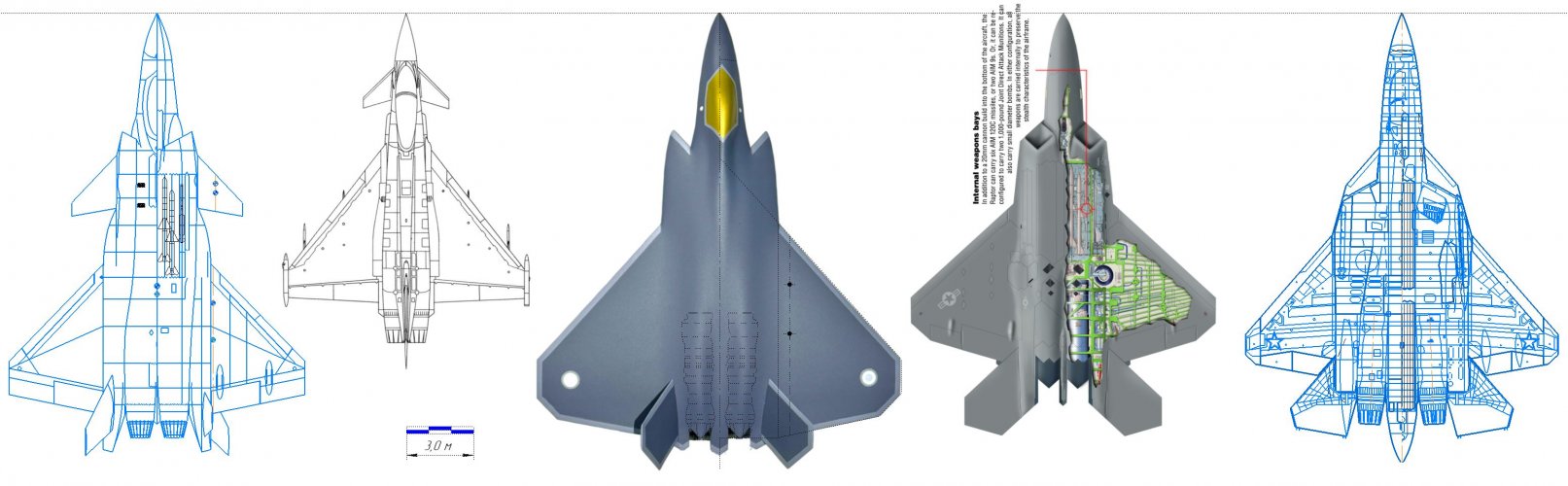
added
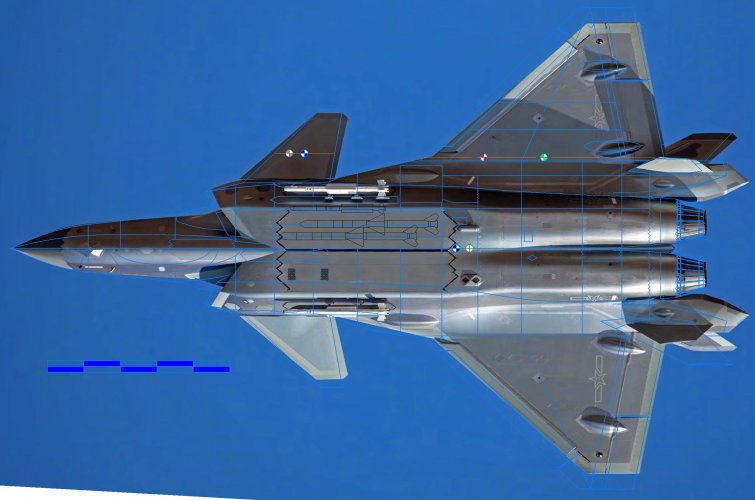
Yes, on a scale. There are no official drawings for the J‑20, so there may be discrepanciesHang on, a J-20 is supposed to be about 35% longer than an F-35 (21.2m vs 15.7m respectively), are these to scale? Eye-balling it, but that looks more like 5-10% or 1-2m based on scale. Su-57 is also supposed to be 20.1m long. Based on that 3m scale, the rear of the J-20 and Su-57 should be off the image.
Not James Stockdale
ACCESS: Secret
- Joined
- 29 August 2025
- Messages
- 242
- Reaction score
- 462
Isn't that an F-22?Hang on, a J-20 is supposed to be about 35% longer than an F-35 (21.2m vs 15.7m respectively), are these to scale? Eye-balling it, but that looks more like 5-10% or 1-2m based on scale. Su-57 is also supposed to be 20.1m long. Based on that 3m scale, the rear of the J-20 and Su-57 should be off the image.
Scott Kenny
ACCESS: USAP
- Joined
- 15 May 2023
- Messages
- 19,560
- Reaction score
- 28,015
It's pretty credible. Granted that F-111 engines are less efficient than the modern ones, but we're still talking about something with broadly F-111 range (or more!) and weapons payload.Is this credible or am i being trolled ?
Long range plus internal weapons bays equals big airframe.

TorpedoJ
ACCESS: Secret
- Joined
- 11 October 2023
- Messages
- 434
- Reaction score
- 869
This is a bit old in the thread, but GCAP is absolutely intended for stand-in missions. The way the RAF talk about it it's going to shoot down every Russian jet in the air on day one, then spend the rest of the war loitering over Moscow firing Spear at any Russian radar insolent enough to radiate.iirc, fb-22 was more of a stand in interdictor, not dissimilar to supercanberra (from RAF Lutton ofc).
Fighter part was largely solved by vanilla raptor.
Here it's a stand off platform with equally important anti air.
Ainen
I really should change my personal text
- Joined
- 25 August 2011
- Messages
- 2,830
- Reaction score
- 4,937
Maybe, I just doubt they really mean it.This is a bit old in the thread, but GCAP is absolutely intended for stand-in missions. The way the RAF talk about it it's going to shoot down every Russian jet in the air on day one, then spend the rest of the war loitering over Moscow firing Spear at any Russian radar insolent enough to radiate.
Maybe I'm being naive here, but to me indication of deep pen mission intent is broadband stealth?
GCAP certainly has a ridiculous range requirement, but at least the Japanese one is over open water.
Its the same for the UK, Russian Planes/Cruise missiles/Ships will be going through the GIUK gap than going through the Baltic or flying over allied Europe.but at least the Japanese one is over open water.
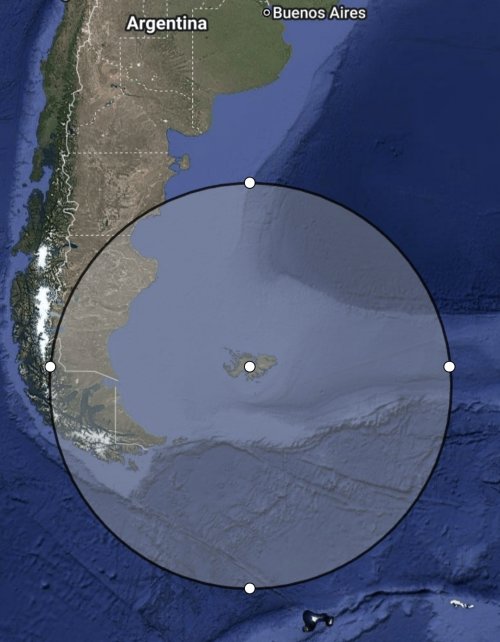
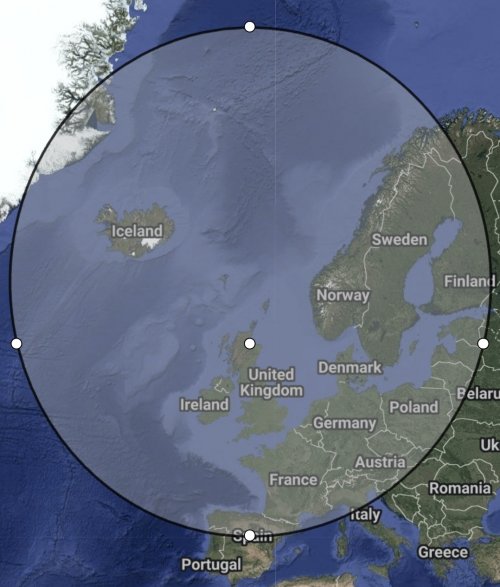
I mean look what 500nm of CAP range can get you from Mount Pleasant or 1000nm of strike from Lossiemouth, plenty of open water, and thanks to the larger and deeper IWB we don't need to fly deep into Russian airspace to target their deep industry. A Stratus-LO launched from the eastern Baltic could likely reach anywhere west of the Urals, while a Stormshadow would be on the fringe of the Moscow region.
Attachments
Ainen
I really should change my personal text
- Joined
- 25 August 2011
- Messages
- 2,830
- Reaction score
- 4,937
I personally think it's the opposite. Russian weapons either have the range to make GIUK completely irrelevant(all big classic long range weapons from before the war), or will go shortest lines from the east, as they have barely enough range (all the affordable mass types introduced during the war).Its the same for the UK, Russian Planes/Cruise missiles/Ships will be going through the GIUK gap than going through the Baltic or flying over allied Europe.
No Russian aircraft or ships should be expected there during the war, unless Norway is overrun; certainly not fighters. If it is, you hardly need so much range once again.
I.e. broadly, from fighter perspective, I think RAF is spending a fortune on a requirement, irrelevant for over 3 decades.
Japan, on the other hand, apparently wants to contest(strike, interdict) in SCS from Ryukyu chain. Which is a rather optimistic assessment, anchored on both Taiwan and Philippines holding (otherwise you want broadband once again), but it's a valid mission.
All true, and it pairs very well with aircraft range. But this is the opposite of stand in.thanks to the larger and deeper IWB we don't need to fly deep into Russian airspace to target their deep industry. A Stratus-LO launched from the eastern Baltic could likely reach anywhere west of the Urals, while a Stormshadow would be on the fringe of the Moscow region.

You probably can make a case to vector into Russia from the far north without deep VLO, but it's on the risky side, and would take even more range than GCAP (4500-5000 miles ideally).
Last edited:

- Joined
- 11 March 2006
- Messages
- 8,537
- Reaction score
- 5,001
The OT discussion about Storm Shadow and the like has been moved to the Bar
Would be great, if such digressions would be avoided from the start, but that’s probably just naive …
https://www.secretprojects.co.uk/threads/air-launched-weapons-comparison.52254/
Would be great, if such digressions would be avoided from the start, but that’s probably just naive …
https://www.secretprojects.co.uk/threads/air-launched-weapons-comparison.52254/
Forest Green
ACCESS: USAP
- Joined
- 11 June 2019
- Messages
- 14,523
- Reaction score
- 31,577
Yes, on a scale. There are no official drawings for the J‑20, so there may be discrepancies
Oh yeah, my bad.Isn't that an F-22?
There's still the issue that the J-20 should be 1.1m longer than the Su-57 though., which would make it longer than the GCAP on the drawing. Where did the measurements for the GCAP come from though? When I Google it says 19-21m estimated.
Last edited:
TorpedoJ
ACCESS: Secret
- Joined
- 11 October 2023
- Messages
- 434
- Reaction score
- 869
F35 did OK in Iran, obviously it's not quite the same with Russia but a tailless design clearly isn't absolutely necessary especially if the tail allows e.g. a couple of extra ARMs to be carried for penetration, Shrike-Vulcan style.Maybe, I just doubt they really mean it.
Maybe I'm being naive here, but to me indication of deep pen mission intent is broadband stealth?
GCAP certainly has a ridiculous range requirement, but at least the Japanese one is over open water.
As an aside, does anyone know of any trials towards using IWBs for fuel tanks? Being able to swing between the two would allow short range bomb truck missions and super long range without compromising aerodynamics or stealth.
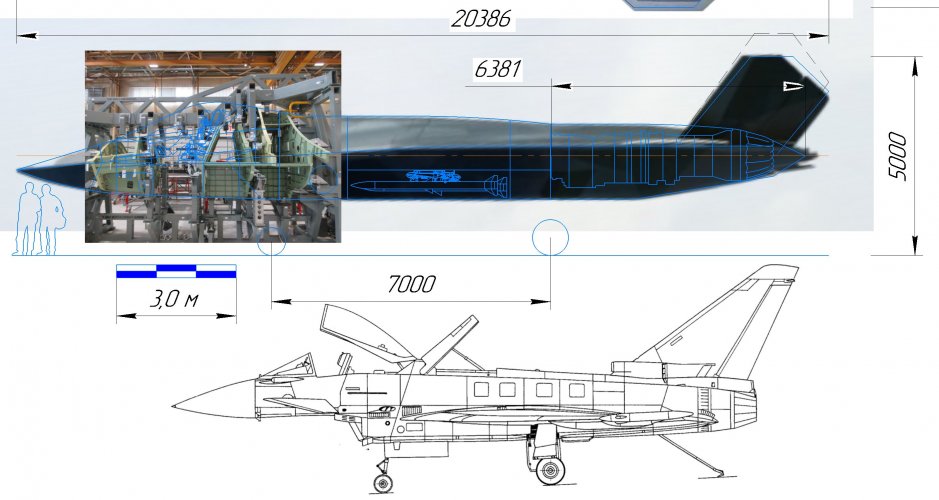
That’s exactly how it turns out - 20.4 mWhen I Google it says 19-21m estimated
Attachments
Forest Green
ACCESS: USAP
- Joined
- 11 June 2019
- Messages
- 14,523
- Reaction score
- 31,577
The J-20 should still be longer at 21.2m though.That’s exactly how it turns out - 20.4 m

- Joined
- 29 November 2010
- Messages
- 2,288
- Reaction score
- 5,217
did you just try to overlap a picture of the CFAD bulkhead (which is smaller than the GCAP) over your GCAP line drawing?That’s exactly how it turns out - 20.4 m
Pilots are the same everywhere, and the cockpit is similar in size.
- Joined
- 29 November 2010
- Messages
- 2,288
- Reaction score
- 5,217
No, there is not enough information on out there since GCAP hasn't been built yet. We are only relying on models, but based on what exists, the frontal fuselage of GCAP and CFAD have differences.Pilots are the same everywhere, and the cockpit is similar in size.

Brett Davidson
ACCESS: Top Secret
- Joined
- 26 September 2006
- Messages
- 4,445
- Reaction score
- 12,836
From Teh Grauniad.
https://www.theguardian.com/business/2026/sep/08/europe-fighter-jet-plans-france-germany
These are opinions, not intentions, let alone agreements, but interesting:
For Germany that leaves the somewhat embarrassing option of asking to join GCAP. Canada joined GCAP at Farnborough but only as an “observer”. That could put it front of the queue to buy products but does not entitle it to the politically valuable manufacturing jobs that come with status as a core partner.
Some of the industrial partners are open to Germany joining. Lorenzo Mariani, the chief executive of Leonardo, Italy’s lead defence company in GCAP, said Germany would be a “positive element” and a “strong financial partner, financially the strongest in Europe”. However, another core partner would add to the risk of delays, he acknowledged.
Tufan Erginbilgiç, the chief executive of the Tempest jet engine maker Rolls-Royce, told reporters at Farnborough that “I don’t think it will negatively impact GCAP at all” if Germany joins – although he would not be drawn on whether Rolls could share work with MTU.
Reopening discussions to let in another core member could be tricky....
Michael Schoellhorn, the chief executive of Airbus Defence and Space, told reporters in London that the company would join something where they could “have a significant portion of the work and the leadership. That’s currently being explored.”
https://www.theguardian.com/business/2026/sep/08/europe-fighter-jet-plans-france-germany
These are opinions, not intentions, let alone agreements, but interesting:
For Germany that leaves the somewhat embarrassing option of asking to join GCAP. Canada joined GCAP at Farnborough but only as an “observer”. That could put it front of the queue to buy products but does not entitle it to the politically valuable manufacturing jobs that come with status as a core partner.
Some of the industrial partners are open to Germany joining. Lorenzo Mariani, the chief executive of Leonardo, Italy’s lead defence company in GCAP, said Germany would be a “positive element” and a “strong financial partner, financially the strongest in Europe”. However, another core partner would add to the risk of delays, he acknowledged.
Tufan Erginbilgiç, the chief executive of the Tempest jet engine maker Rolls-Royce, told reporters at Farnborough that “I don’t think it will negatively impact GCAP at all” if Germany joins – although he would not be drawn on whether Rolls could share work with MTU.
Reopening discussions to let in another core member could be tricky....
Michael Schoellhorn, the chief executive of Airbus Defence and Space, told reporters in London that the company would join something where they could “have a significant portion of the work and the leadership. That’s currently being explored.”
Scorpion82
ACCESS: Secret
- Joined
- 20 May 2006
- Messages
- 407
- Reaction score
- 873
Michael Schoellhorn, the chief executive of [/COLOR][/FONT][/SIZE]Airbus Defence and Space, told reporters in London that the company would join something where they could “have a significant portion of the work and the leadership. That’s currently being explored.”
That's either outright stupid, or a really unlucky expression, if you want to join an extant cooperation and demand leadership. Probably meant is an equal say in the programme. That this will likely meet resistence from existing partners is inevitable, unless they are really desparate for funds with the only choice of make or break.

- Joined
- 11 February 2007
- Messages
- 4,138
- Reaction score
- 8,884
I suspect the meaning is 'a significant proportion of the leadership', to go with 'a significant proportion of the work'. It's just less clear if you say portion vs proportion. Not sure if that's lost in translation, poor word choice, or even journalistic misinterpretation (or Grauniad mis-spelling). The article suggests Saudi Arabia is beating at the door to be let in, so German funding isn't the only extra available.That's either outright stupid, or a really unlucky expression, if you want to join an extant cooperation and demand leadership. Probably meant is an equal say in the programme. That this will likely meet resistence from existing partners is inevitable, unless they are really desparate for funds with the only choice of make or break.
Scorpion82
ACCESS: Secret
- Joined
- 20 May 2006
- Messages
- 407
- Reaction score
- 873
Quite possible. If there is an original staterment available we could checkout ourselves. Time will tell.

vikmto999
ACCESS: Confidential
- Joined
- 3 September 2025
- Messages
- 83
- Reaction score
- 322
Not a lot, but some official changes like the supply chain now includes other countries.
https://www.gov.uk/government/publi...on-defence-export-controls-de-minimis-exports
https://www.gov.uk/government/publi...on-defence-export-controls-de-minimis-exports
vikmto999
ACCESS: Confidential
- Joined
- 3 September 2025
- Messages
- 83
- Reaction score
- 322
It's going to be a porcupine, to the F47 predator I think. Hard to kill, rather than an out and out predator.
https://www.leonardo.com/en/press-r...apability-to-next-generation-fighter-aircraft
https://www.leonardo.com/en/press-r...apability-to-next-generation-fighter-aircraft
https://www.leonardo.com/en/press-r...apability-to-next-generation-fighter-aircraft
https://www.jedonline.com/2026/09/03/gcap-g2e-readies-for-concept-assessment-phase/
Edgewing Systems Limited and G2E sign a contract.
It is an 18-month contract worth £4.6 billion.
https://www.jedonline.com/2026/09/03/gcap-g2e-readies-for-concept-assessment-phase/
Edgewing Systems Limited and G2E sign a contract.
It is an 18-month contract worth £4.6 billion.
Following on the announcement that GCAP would be boom fueled, and that the UK was consequently going to start getting into boom refueling, the FMS contract cap for the KC-46 just tripled, with no confirmed buyer.
https://defence-blog.com/boeing-kc-46a-export-deal-ceiling-jumps-to-19-1-billion/
https://defence-blog.com/boeing-kc-46a-export-deal-ceiling-jumps-to-19-1-billion/
Not James Stockdale
ACCESS: Secret
- Joined
- 29 August 2025
- Messages
- 242
- Reaction score
- 462
The RAF is already working on adding booms to their MRTTs, which is what they always should have done. There is no reason to think that they would ever buy KC-46s.Following on the announcement that GCAP would be boom fueled, and that the UK was consequently going to start getting into boom refueling, the FMS contract cap for the KC-46 just tripled, with no confirmed buyer.
https://defence-blog.com/boeing-kc-46a-export-deal-ceiling-jumps-to-19-1-billion/
Like the article said, raising the FMS cap doesn't mean there are new orders right now. However, it gives more room for Japan and Israel to order additional aircraft. The IAF got by with 6 or 7 KC-707s for decades when they only had to deal with Lebanon and Syria, but now they need a lot more than 8 KC-46s if they are going to be fighting Iran, the Houthis, or Turkey with more regularity.
Also, the State Department just put their approval on a Qatari order for KC-46s, so raising the contract cap could be in preparation for that. The Israelis bought 8 planes for $2.4 billion, but the Qataris get 4 planes for $4.5 billion. https://www.state.gov/releases/bure...26/08/qatar-kc-46a-aerial-refueling-aircraft/ The Saudis and Emiratis already have MRTTs, but maybe there is another country willing to drop $1 billion per tanker for a few more airframes.
Scott Kenny
ACCESS: USAP
- Joined
- 15 May 2023
- Messages
- 19,560
- Reaction score
- 28,015
Disagree.I.e. broadly, from fighter perspective, I think RAF is spending a fortune on a requirement, irrelevant for over 3 decades.
The UK (and the Falklands) is broadly comparable to a carrier group, so air defense operates the same way. BARCAP at 250-500nmi.
Absolutely. Apart from there being no need to buy more tankers in the short term, the British government would greatly prefer to spend money in the UK, e.g. on A330 wings & engines, & there are logistical advantages to operating the A330.The RAF is already working on adding booms to their MRTTs, which is what they always should have done. There is no reason to think that they would ever buy KC-46s.
Ainen
I really should change my personal text
- Joined
- 25 August 2011
- Messages
- 2,830
- Reaction score
- 4,937
BARCAP needs something that's affected by this barrier - which is "archers".Disagree.
The UK (and the Falklands) is broadly comparable to a carrier group, so air defense operates the same way. BARCAP at 250-500nmi.
Against "arrows" (which is the only current threat, but a huge one) it's very marginally beneficial, if beneficial at all. It can easily turn out that typhoon will directly outperform GCAP one for one, and it won't be even close to one for one.
vikmto999
ACCESS: Confidential
- Joined
- 3 September 2025
- Messages
- 83
- Reaction score
- 322
I mentioned back at the UK air show Poland where interested with cryptic comments, it seems there is a definitive movement of interest now.
https://www.tvp.info/95309178/budow...dziemy-wiedziec-wiecej?utm_source=chatgpt.com
When can binding decisions be made?
KG: I hope we will know more by the end of this year.
https://www.tvp.info/95309178/budow...dziemy-wiedziec-wiecej?utm_source=chatgpt.com

Japan's Air Development and Test Command is holding a symposium next month for active developments. It will cover a lot of different topics, but GCAP related development will likely be the main focus.
https://www.ec-convention.com/ADTCSymposiumtouroku/
vikmto999
ACCESS: Confidential
- Joined
- 3 September 2025
- Messages
- 83
- Reaction score
- 322
Seems Canada wants to move past just being an Observer. This little snippet isn't really news anywhere, just a line mixed in other stories.
https://www.reuters.com/world/canad...ary-coalition-says-carneys-office-2026-09-16/The two men discussed opportunities for defense industrial cooperation through the Global Combat Air Programme, an advanced fighter jet project that Canada joined as an observer in July 2026, Carney's office said.
Scott Kenny
ACCESS: USAP
- Joined
- 15 May 2023
- Messages
- 19,560
- Reaction score
- 28,015
Depends on the capacity for small AAMs.BARCAP needs something that's affected by this barrier - which is "archers".
Against "arrows" (which is the only current threat, but a huge one) it's very marginally beneficial, if beneficial at all. It can easily turn out that typhoon will directly outperform GCAP one for one, and it won't be even close to one for one.
How many APKWS pods can Typhoon carry? 2? 4?
GCAP is honestly what Canada needs, not F-35.Seems Canada wants to move past just being an Observer. This little snippet isn't really news anywhere, just a line mixed in other stories.
But they're going to have to buy F-35s for a long time.
- Joined
- 11 February 2007
- Messages
- 4,138
- Reaction score
- 8,884
6 is a fairly safe bet, possibly 8 to 10 if the Twin Missile Carriers for SRAAMs can take APKWS pods. And that configuration could still take three tanks and four Meteors.Depends on the capacity for small AAMs.
How many APKWS pods can Typhoon carry? 2? 4?
Brett Davidson
ACCESS: Top Secret
- Joined
- 26 September 2006
- Messages
- 4,445
- Reaction score
- 12,836
Seems Canada wants to move past just being an Observer. This little snippet isn't really news anywhere, just a line mixed in other stories.
https://www.reuters.com/world/canad...ary-coalition-says-carneys-office-2026-09-16/
This is politics, but I'm only observing context rather than advocating a position or saying any political development is good or bad, so I hope that's allowable in this thread.
https://www.bbc.com/news/articles/crlyqg1ekj4po
https://www.rnz.co.nz/news/world/14...ers-of-eu-european-parliament-president-hints
Japan has been mentioned too.
GCAP, the AUKUS subs, the Mogami frigates, Canada's defence procurement shifting towards Europe - all initiated separately for different reasons nonetheless seem to combine to be the industrial/military spearhead of this potential economic/strategic development. See also Carney's Davos speech. With Trump's isolationism, will the US component of AUKUS atrophy, meaning that a new acronym, sounding like the call of a crow, be necessary? 'CAUK', 'JACUK'?
Anyway, my point is that material trends can converge towards a common aim affected by and affecting strategic policy and here we have an example of it.
Similar threads
-
BAE Systems CAFD (Combat Air Flying Demonstrator)
- Started by Jackonicko
- Replies: 122
-

-
-
 MBDA Future Cruise / Anti-Ship Weapon (FC / ASW)
- Started by Triton
- Replies: 396
-
Leonardo Britecloud and associated developments
- Started by timmymagic
- Replies: 9