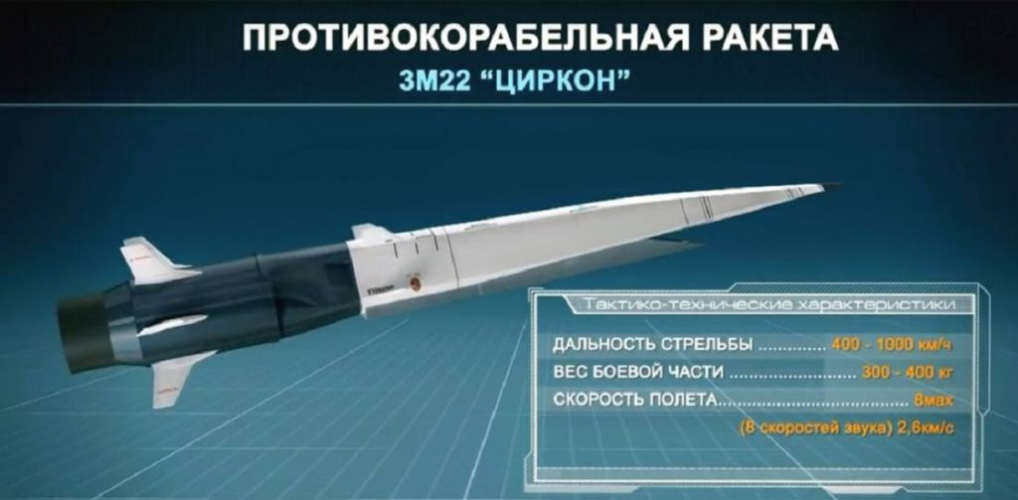
NPOMash 3M22 Zircon / Tsirkon (SS-N-33)

There have been very strong arguments why Zircon was not air breathing for awhile now, and literally no evidence it was air breathing, but people still for some reason held to the belief that it MUST be air breathing because it was a "cruise" missile.

Just the mere thought of Zircon being solid rocket powered was thought to be slander to Russia.
To be fair, Zirkon won't be a first cruise missile on SRF. There's no strict obligation to be air breathing, only to have a distinctive powered cruise phase, which Zirkon apparently does have.
 
To be fair, Zirkon won't be a first cruise missile on SRF. There's no strict obligation to be air breathing, only to have a distinctive powered cruise phase, which Zirkon apparently does have.
Yes exactly, I don't think any official Russian sources which could know about Zircon's propulsion. Explicitly said the Zircon was scramjet powered. Only that it was a hypersonic cruise missile. That it is, as it flies a flattened cruise trajectory, is maneuverable and is hypersonic throughout the entire cruise phase.
 
I do not think the Russians ever made any statements as to propulsion. The fact that it seems likely a SRM solution does not really change it’s performance class appreciably.
 

Attachments

  • 1788234495731.jpeg
    1788234495731.jpeg
    268.7 KB · Views: 88
Last edited by a moderator:
There have been very strong arguments why Zircon was not air breathing for awhile now, and literally no evidence it was air breathing, but people still for some reason held to the belief that it MUST be air breathing because it was a "cruise" missile.
No, the position was that extraordinary claims require extraordinary evidences. Claim that Zircon is not an air-breather is extraordinary, and therefore required more evidence than "someone thought something from poor-quality photo".
 
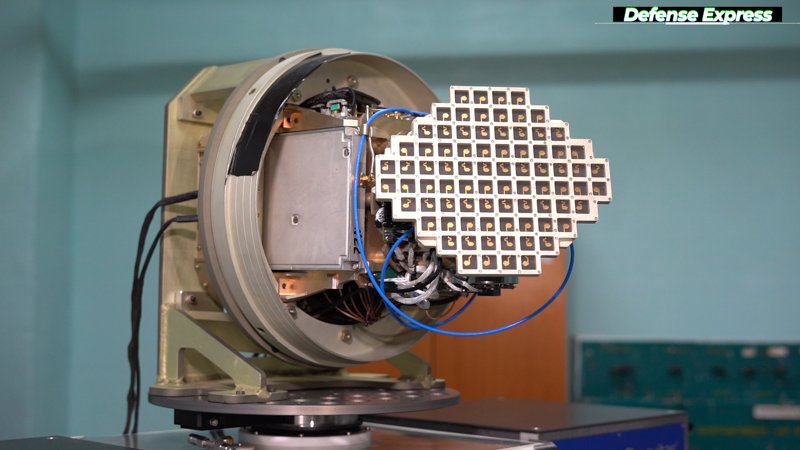
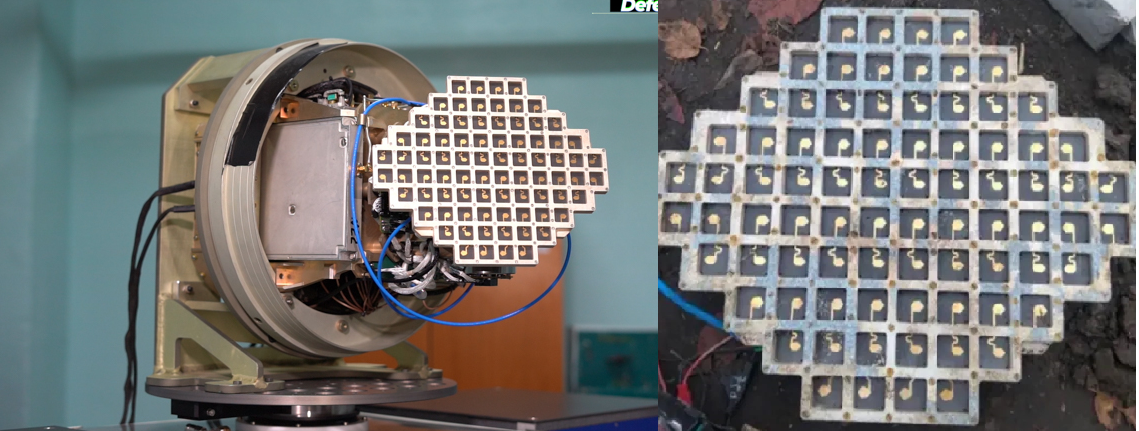
As to how that ends up there, guess Russian hit a place where Neptun are being made or stored, explosion happen and that antenna intact.

Much more likely from an R-360 that malfunctioned and crashed or was shot down but in either a substantially intact wreck was recovered.
 
I'll just think that's indeed Neptun seeker antenna. As to how that ends up there, guess Russian hit a place where Neptun are being made or stored, explosion happen and that antenna intact.
I kinda doubt that Ukrainean engineers would not recognize their own antenna, so this is highly likely deliberate misleading. Probably to make their reconstruction more believable for commoners.
 
No, the position was that extraordinary claims require extraordinary evidences. Claim that Zircon is not an air-breather is extraordinary, and therefore required more evidence than "someone thought something from poor-quality photo".
IMHO the claim that the Russians had a combat-ready scramjet vehicle in service years ago is the extraordinary claim that was never well supported by evidence.
 
Talking about a rocket motor for its second stage - how long would the burn time of said rocket be? Assuming 1000 km range, and Mach 7 speed - that works out to approximately 8 minutes of flight time. For the missile to be a cruise missile, most of said distance would have to be covered while propulsion is working. So... what sort of rocket motor burns for like 7 or so minutes? Can someone point out historical examples of rocket motors of similar size class and speed class burning for so long?
 
Talking about a rocket motor for its second stage - how long would the burn time of said rocket be? Assuming 1000 km range, and Mach 7 speed - that works out to approximately 8 minutes of flight time. For the missile to be a cruise missile, most of said distance would have to be covered while propulsion is working. So... what sort of rocket motor burns for like 7 or so minutes? Can someone point out historical examples of rocket motors of similar size class and speed class burning for so long?
Probably the lightest SRF space rockets are the closest match.
Japanese SS-520 is not that far in terms of engine and overall size, probably.
 
Talking about a rocket motor for its second stage - how long would the burn time of said rocket be? Assuming 1000 km range, and Mach 7 speed - that works out to approximately 8 minutes of flight time. For the missile to be a cruise missile, most of said distance would have to be covered while propulsion is working. So... what sort of rocket motor burns for like 7 or so minutes? Can someone point out historical examples of rocket motors of similar size class and speed class burning for so long?
IIRC they've been tracked at M6, slowing to M5, then doing a high dive down and reaching M7 at impact. So they're not burning the entire distance.
 
Talking about a rocket motor for its second stage - how long would the burn time of said rocket be? Assuming 1000 km range, and Mach 7 speed - that works out to approximately 8 minutes of flight time. For the missile to be a cruise missile, most of said distance would have to be covered while propulsion is working. So... what sort of rocket motor burns for like 7 or so minutes? Can someone point out historical examples of rocket motors of similar size class and speed class burning for so long?
Doesn't need to burn that long. Once it's up to speed something like that can glide for a long time. A "cigarette" grain can burn for a relatively long time but doesn't produce a lot of thrust. Could be one (or two) motors get it to speed, and the final motor just stretches out the slowdown.
 
Can someone calculate the maximum range for a ballistic missile travelling at mach 6.8 and 30-40 km (or whichever altitude the zircon flies at) because this looks like one of those ridiculous hit pieces the Ukrainians have been doing on Russian weapon systems since the beginning of the war (i remember when the Iskander was considered a useless pos, the lancet and geran were getting shot down without hitting anything, UMPK's missed targets by miles)
Very difficult to calculate because it is not a true ballistic missile. Depends on burn rate and impulse of second stage fuel and whether it is multi-pulse. It could be that the second stage is dual pulse and the second pulse fires near the end of the flight.

The aim of the release is to get the involved parties/suppliers sanctioned, so it would be counter-productive to distort the details.

I wonder how close it is to a 40N6 SAM, which little is known about?

Anyway, you heard it here last:

Russia’s Zircon May Not Be A Hypersonic Cruise Missile After All​

Ukraine’s intelligence report maps Zircon’s production chain and claims to identify U.S.-origin electronics inside the missile.
https://www.twz.com/sea/russias-zircon-may-not-be-a-hypersonic-cruise-missile-after-all
 
Last edited:
For some, just the mere thought of Zircon being solid rocket powered was thought to be slander to Russia.
Well stated. I think the problem is folks asking others to prove the negative. If it is claimed to be scramjet powered, first substantiate that with hard evidence before refuting alternative theories or evidence from Ukraine.
 
But if the rocket motor is burning for just a limited time, followed by a long glide - then it's essentially a glider. Only with a long, circular body, not really optimized for gliding. Unlike various body lift glider warheads or at least the Dark Eagle warhead. So - a bad glider. OR are we saying that Tsirkon too has a small, terminal stage that does most of the gliding? Anyway, if it's such a glider - then it can't really afford to do much maneuvering, as that'd shave too much speed. Even proper glider warheads can't really make a full circle without using up most of their range. If that applies to Tsirkon as well - then it'd hardly be a cruise missile. It'd be more like a ballistic missile with limited maneuvering abilities. But none of set waypoints A, B, C, D to go around and approach from behind, for example - which seems to be a defining feature of cruise missiles.

I guess multiple pulse rocket motor could do a bit more maneuvering, but is anything we saw in Tsirkon images suitable to such a theory?
Do we at least know when does Tsirkon detach its booster and when does the next rocket motor stage fire up?
 
IMHO the claim that the Russians had a combat-ready scramjet vehicle in service years ago is the extraordinary claim that was never well supported by evidence.
I agree with this. Additionally, the claim that Tsirkon was scramjet powered became more extraordinary over time, it required believing that the Russians had developed an operational scramjet (the nuclear fusion of aero-propulsion) and then used it for only a single application.

Fabian Hinz wrote a piece on his substack back in June hypothesising that Tsirkon was really a multi-stage manoeuvrable quasi-ballistic missile that uses a glide phase to vary its range/speed profile. It’s a compelling piece and I think accurate, to the point I’ve retired my original view that Tsirkon used a highly tuned ramjet and some narrative exaggeration.

Fabian’s piece is here: https://luftlage.substack.com/p/not-quite-a-diamond
 
Last edited:
Fabian Hinz wrote a piece on his substack back in June hypothesising that Tsirkon was really a manoeuvrable ballistic missile that uses a glide phase to vary its range/speed profile. It’s a compelling piece and I think accurate, to the point I’ve retired my original view that Tsirkon used a highly tuned ramjet and some narrative exaggeration.
Must admit, the arguments in favor of solid-fuel rocket (maybe multiple pulse) became persuasive.

P.S. Still should point out, that photo of seeker is not from Zirkon, but from Neptun missile.
 

Attachments

  • Identical.png
    Identical.png
    1 MB · Views: 76
Last edited by a moderator:
But if the rocket motor is burning for just a limited time, followed by a long glide - then it's essentially a glider. Only with a long, circular body, not really optimized for gliding. Unlike various body lift glider warheads or at least the Dark Eagle warhead. So - a bad glider. OR are we saying that Tsirkon too has a small, terminal stage that does most of the gliding? Anyway, if it's such a glider - then it can't really afford to do much maneuvering, as that'd shave too much speed. Even proper glider warheads can't really make a full circle without using up most of their range. If that applies to Tsirkon as well - then it'd hardly be a cruise missile. It'd be more like a ballistic missile with limited maneuvering abilities. But none of set waypoints A, B, C, D to go around and approach from behind, for example - which seems to be a defining feature of cruise missiles.

I guess multiple pulse rocket motor could do a bit more maneuvering, but is anything we saw in Tsirkon images suitable to such a theory?
Do we at least know when does Tsirkon detach its booster and when does the next rocket motor stage fire up?
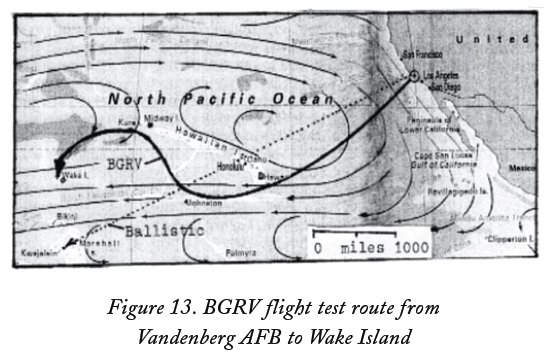
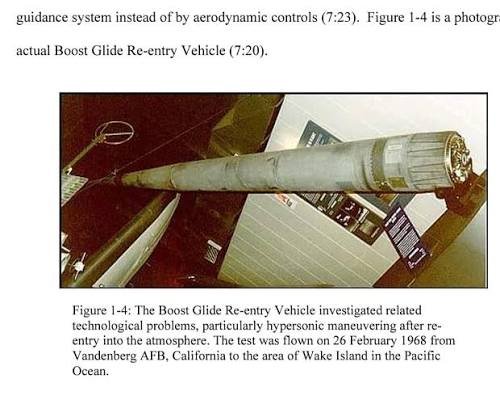
I should have this picture on a hotkey. Just because it's circular doesn't mean it's limited. Is it limited compared to a winged glide vehicle? Probably. But it definitely doesn't have to be as limited as a MARV. Also it's much more space efficient in a cell. Lots of wasted space with a winged glider. Flight profile of a "circular" boost-glider, over half a century ago (and it flew most of it at an altitude under 130k feet):
 

Attachments

  • Map_zps601bdc94.jpg
    Map_zps601bdc94.jpg
    155.8 KB · Views: 53
  • images.jpg
    images.jpg
    32.7 KB · Views: 61
There have been very strong arguments why Zircon was not air breathing for awhile now, and literally no evidence it was air breathing, but people still for some reason held to the belief that it MUST be air breathing because it was a "cruise" missile.

For some, just the mere thought of Zircon being solid rocket powered was thought to be slander to Russia.

lol... Just look at the speculations and hubbub on this thread. It is the exact opposite. Ukrainian experts? More osint gold! Next let's post a VoA article on the flying Chernobyl!
 
I know fabian hinz thinks solid rocket is more likely than liquid, but that graphic of alleged fattah2 in the Iranian missile thread does make you wonder if mashinostroyenina worked with raduga in secret and perhaps used propulsion concepts used for kh32, while making the whole propulsion system ampulated, for containerised usage.

If it could be made compact enough, liquid propulsion does seem like a somewhat better fit for a missile that has to maneuver, throttle its thrust and fly a 1000 km, despite all the issues such motors bring to the table.
 
If it could be made compact enough, liquid propulsion does seem like a somewhat better fit for a missile that has to maneuver, throttle its thrust and fly a 1000 km, despite all the issues such motors bring to the table.
Agreed. Liquid fuel would likely be better for a rocket that needs to throttle. And agreed that long term storage of liquid rocket fuels are an immense pain.
 
Defense Updates has a new video out about the SS-N-33:


A new Ukrainian intelligence report provides an unusually detailed assessment of the complex production chain behind Russia’s 3M22 Zircon missile, including the identification of U.S.-origin electronic components found within one of Moscow’s most advanced weapons.

The extensive analysis identifies 70 enterprises and 84 individuals involved in the missile’s development and production, while providing a component-by-component examination of one of Russia’s most closely scrutinized—and least-understood—weapons systems.

More importantly, the assessment challenges the conventional characterization of the Zircon as a true hypersonic cruise missile, instead indicating that it as a maneuverable quasi-ballistic missile.That distinction could have significant implications for how the weapon performs in modern conflict scenarios.​

This mandates an objective examination.
https://www.youtube.com/hashtag/defenseupdates
#defenseupdates #zirconmissile #usvsrussia

Chapters:
0:00 TITLE
00:11 INTRODUCTION
01:06 SPONSORSHIP - NordVPN
01:40 ZIRCON OVERVIEW
03:16 THE CATCH
06:35 UKRAINIAN REPORT EXPOSES ZIRCON
09:18 ANALYSIS
 
Why would you post a slop video from “Defense Updates” a horrible source to discuss things already being discussed in this thread??

It's a short summary in video format, I don't see why that it is a problem.
 
I can only imagine those posting this kind of youtube clickbait trash have a vested interest, either propaganda or they have have a stake in those accounts, baiting us to click so they make money. I can't see other explanation for the flood of youtube trash being posted on SDF recently by certain members. If it was me i'd ban such posts at the very least.
 
Can someone calculate the maximum range for a ballistic missile travelling at mach 6.8 and 30-40 km (or whichever altitude the zircon flies at) because this looks like one of those ridiculous hit pieces the Ukrainians have been doing on Russian weapon systems since the beginning of the war (i remember when the Iskander was considered a useless pos, the lancet and geran were getting shot down without hitting anything, UMPK's missed targets by miles)
As for what i personally can say:
- They said it was a scramjet before, now it's "just" a Solid Fuel Ballistic missile
- 120 kg warhead is bogus, perhaps the total explosive mass but the footage i've seen doesn't look like a 120 kg warhead total
- ARH seeker is expected, it was originally designed as an anti ship missile, and it seems to perform well enough, unlike the Kinzhal
- The claim for top speed looks bogus to me, the only open source intel i've seen is AMK and i've seen 9000+ km/h reported for these, which should be more than possible for a two-stage ballistic missile
If we use the simplified ballistic missile calculation model I previously created—referencing the numerical values used for the Iskander—the range is approximately 600–700 km, excluding the cruise engine. Note that this model tends to slightly overestimate the range.
 
I don’t see issues with original claims? I don’t think Russian media ever said that 3M22 is air breather. They’ve just used placeholder graphics as at the time of reports looks of the missile were secret.
The quoted speed of Mach 8-10 was also wrong, aside from the completely wrong imagery (below). The claimed warhead weight was also completely wrong and the range has been determined to be more like 700km since. So it was all wrong really. Basically the brochure issued for the Zircon was ironically a better fit for ROK's Hycore missile - at least the warhead weight and range are correct as well as the general shape, even if the speed is still off.
 

Attachments

  • 1788613111998.png
    1788613111998.png
    493 KB · Views: 22
There have been very strong arguments why Zircon was not air breathing for awhile now, and literally no evidence it was air breathing, but people still for some reason held to the belief that it MUST be air breathing because it was a "cruise" missile.

For some, just the mere thought of Zircon being solid rocket powered was thought to be slander to Russia.
The issue is this: if the 3M22 is not air-breathing, then it is unlikely to be a cruise missile; instead, it would have to be a quasi-ballistic missile with a maximum speed of at least 3–4 km/s—at least such a speed would be required for it to fly over 1,000 km, much like the Kh‑47M2 missile. That is because, for a traditional rocket engine, it is not necessarily worthwhile to maintain a long-duration sustainer thrust, and there are also stringent requirements for propellant processing technology. On the other hand, if Ukrainian observations indicate that its maximum speed is only about Mach 6.8, that would actually suggest that the 3M22 is a cruise missile, just not necessarily with a top speed of Mach 8–9; otherwise, the apparent conflict between speed and range would be hard to explain. Moreover, a high‑speed air‑breathing cruise missile is not alien technology for Russia—its P‑700 and P‑800 are both supersonic, air‑breathing cruise missiles, albeit not yet at hypersonic speeds. It is entirely possible for Russia to achieve hypersonic speeds on a similar configuration through technological innovation.

In short, if the publicly released Ukrainian data on the 3M22 simultaneously imply a range of about 1,000 km, a speed ceiling of about Mach 6.8, significant terminal maneuverability, and that it is also a purely rocket‑powered quasi‑ballistic weapon launched from a ship, then whether this combination of characteristics is self‑consistent is open to serious doubt.

I am inclined to consider the 3M22 a cruise missile; however, it does not reach the advertised Mach 8–9 range, but rather only Mach 5–6.
Alternatively, one could acknowledge that the 3M22 can accelerate to approximately 3–4 km/s using a two-stage engine design and perform quasi-ballistic flight within the atmosphere—even if Ukraine did not observe its maximum speed—implying that it is another weapon similar to the Kh-47M2.

 
Last edited:

Similar threads

Back
Top Bottom