What he's really saying is that NAVSEA couldn't get out of its own way and said one thing during the selection process, claiming that they would be flexible and would accept the intrinsic trade-offs of selecting a foreign parent design, then pivoted hard afterwards to insist on by-the-book alignment with every NAVSEA standard, irrespective of the cost-benefit trade-offs, schedule impact and whether NAVSEA's requirements were even materially better than foreign standards.

Translated for you below:
That's pretty accurate from what this somewhat disinterested observer can see.
 
What he's really saying is that NAVSEA couldn't get out of its own way and said one thing during the selection process, claiming that they would be flexible and would accept the intrinsic trade-offs of selecting a foreign parent design, then pivoted hard afterwards to insist on by-the-book alignment with every NAVSEA standard, irrespective of the cost-benefit trade-offs, schedule impact and whether NAVSEA's requirements were even materially better than foreign standards.
That would be grounds for a breach-of-contract lawsuit.

As well as Finncaneri learning the same lesson that every other ship-builder on the Great Lakes has: to never do business with the USN because they're incapable of leaving a design unchanged.
 
Kelly Johnson:

Starve before doing business with the damned Navy. They don't know what the hell they want and will drive you up a wall before they break either your heart or a more exposed part of your anatomy.

- p.272, 1994 1st paperback edition - Skunk Works, by Ben R. Rich & Leo Janos
 
That would be grounds for a breach-of-contract lawsuit.

As well as Finncaneri learning the same lesson that every other ship-builder on the Great Lakes has: to never do business with the USN because they're incapable of leaving a design unchanged.
Great Lakes shipbuilding accounted for something around 600,000 tons of USN warships in WW2. Plus foreign contract tonnage. Plus refits like the two training carriers. Plus civilian tonnage. The Navy was also constantly tinkering with the subs and escort designs they specialized in, with some hulls arriving on station with significant changes compared to when they were laid down. And they make bank doing it. Miss me with slogan-based revisionism.
 
Great Lakes shipbuilding accounted for something around 600,000 tons of USN warships in WW2. Plus foreign contract tonnage. Plus refits like the two training carriers. Plus civilian tonnage. The Navy was also constantly tinkering with the subs and escort designs they specialized in, with some hulls arriving on station with significant changes compared to when they were laid down. And they make bank doing it. Miss me with slogan-based revisionism.
WWII was the last time any of those shipbuilders worked for the USN before Finncaneri tried with FFGX
 
WWII was the last time any of those shipbuilders worked for the USN before Finncaneri tried with FFGX
In the 50s they built about another 100,000 tons, and Defoe was building frigates on the Saginaw until '74. Then the frigates got too large for the canal and the southern yards' lower costs gave them a leg up.
 
In the 50s they built about another 100,000 tons, and Defoe was building frigates on the Saginaw until '74. Then the frigates got too large for the canal and the southern yards' lower costs gave them a leg up.

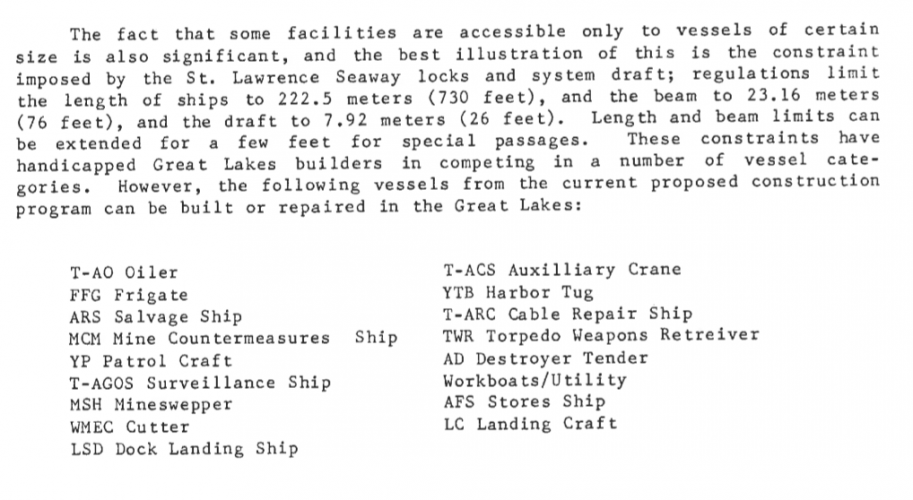
Interestingly, the Great Lakes yards were still building MCM vessels into the 1980s and could have built many of the ships in the 600-ship Navy plan, including FFGs. Found an interesting report on the history and capacities of the Great Lake yards in that era. The price advantage of the Gulf Coast wasn't that big, and Pacific yards kept building for a while despite being even more expensive.

https://www.glc.org/wp-content/uploads/GLC-US-Military-Vessel-Procurement-and-GL-Shipyards-1985.pdf

Screenshot_20260617-164419.png
 
Worth a read. From just after cancellation.

https://warontherocks.com/cogs-of-w...ons-of-the-navys-latest-shipbuilding-debacle/

I couldn't find a succinct summary but makes sense because every issue is multipronged. No silver bullet.
If every issue is comprehensible by a single person, it is not multipronged. If this is a founder led company or under conditions of national war of survival, this category of problem can be resolved.

However the standard mode of operation is the construction of artificial intelligences running on law processed by lawyers. If a human makes the decision, it could be abused, you know.

People worry about poorly aligned superintelligences, but the game changer is properly aligned human-level intelligences.....
 
Last edited:
If every issue is comprehensible by a single person, it is not multipronged. If this is a founder led company or under conditions of national war of survival, this category of problem can be resolved.

However the standard mode of operation is the construction of artificial intelligences running on law processed by lawyers. If a human makes the decision, it could be abused, you know.

People worry about poorly aligned superintelligences, but the game changer is properly aligned human-level intelligences.....
Thats not even related to the article. Most of the issues raised were organisational one way or another.
 
Thats not even related to the article. Most of the issues raised were organisational one way or another.
Organizations are created by man at some point in its lifecycle.

One is stuck only when one have to play by the rules.

However, to run things without rules but with only agency is truly dangerous with humans that can do anything. A reliable intelligence would be revolutionary.
 
Organizations are created by man at some point in its lifecycle.

One is stuck only when one have to play by the rules.

However, to run things without rules but with only agency is truly dangerous with humans that can do anything. A reliable intelligence would be revolutionary.
I guess you didn't read it either, but yes organisations evolve over time with influence from many people. Big organisations develop so much inertia that they become difficult to adapt and improve. Some members also become siloed, in terms of having power over other parts of the organisation but only being incentivised to have results in their own area.

Apparently there was a "miriad" of officers throughout the navy that had veto power over different aspects but were risk averse because they weren't affected by "program failure", and the only deadline that was critical was photo ops for the keel laying ceremony. Thats only one facet the article covered.
 
The very recent GAO report to Congress reveals the near unbelievable total stupidity of the USN Admirals.
To cover their tracks they have retrospectively changed the contract from fixed price to cost plus as Fincantieri were suing the Navy for mismanagement and this will stop any of the gory details being revealed in court if Navy had mounted a defense.
As of September 2025, over 3 years since construction authorized the functional design still remained incomplete at only 87%, also revealed Navy design changes requested resulted in 1,100 metric ton weight growth impairing speed, range, and stability, to counter the weight growth they were looking at removing primer from steel plating and reducing firefighting system capacity, among other things, to me an example of the Admirals total stupidity.
Navy has stopped any new material buys for FFG 62 and 63 in March, likely outcome both ships will be cancelled before completion and the $billions spent written- off.

Weapon Systems Annual Assessment July 2026 - GAO-26-108457 p.144
 

Rheinmetall Unveils GMF140 Next-Gen 6,000-Tonne Frigate for North America​

https://www.navalnews.com/naval-news/2026/08/rheinmetall-unveils-gmf140-frigate/

About GMF140​

– Length: 140 metres
– Displacement: Approximately 6,000 tonnes
– Primary Missions: Anti-Air Warfare (AAW), Ballistic Missile Defence (BMD), Anti-Submarine Warfare (ASW), Long-Range Strike
– Combat System: AEGIS augmented with CMS330 as appropriate
– Primary Radar: US sourced air defence radar, in various optional configurations including full BMD tracking capability
– Vertical Launch System: 64 Strike-Length VLS cells
– Other Weapons and Sensors: Anti-ship missile, torpedo launcher, 5″ main gun, laser, secondary armament, CIWS, EO, EW, towed and hull mounted sonar and decoy systems fully supported
– Missile Compatibility: Full range of air defence, ballistic missile defence and land-attack missiles
– Design Philosophy: Open architecture, future growth, NATO interoperability and high survivability
 
Seems like a good design, though what shipyard(s) would build it is a more pressing question.
 
Seems like a good design, though what shipyard(s) would build it is a more pressing question.

I'm not quite sure how this is supposed to end up any better than the Constellation. If it's actually possible to tell the Navy to not adapt the design in the same ways that bedevil the Connie's, just do that to the Connie design itself. If not, this is another adaptation train wreck waiting to happen.
 
Let not forget that North America is not just the US, but also Canada and Mexico. Specifying 'North America' implies it's likely not the USN to me, though 6,000t seems on the large side for Canada's continental defence corvette requirement.

Far too big.

And absolutely not Mexico.
 
Far too big.

And absolutely not Mexico.
Unless there are unreported undercurrents of Canada getting cold feet on a single River class destroyer procurement and wanting split AAW/ASW fleets, I can’t see what North American tender they are going after, shy of an expansion of the current exploratory efforts around using Japanese & South Korean yards.

https://news.usni.org/2026/04/24/u-...ew-navy-frigate-destroyer-work-in-1-85b-study

I would have thought that the upcoming European AAW recapitalisation efforts where various countries are known to be considering AEGIS are more likely.
 
Far too big.

And absolutely not Mexico.
... the floor for frigates has raised to the point that they're effectively mini-destroyers, in this case mini-Burkes for the US's case.

There's literally no ignoring it.

I wouldn't be surprised if a frigate displaces 10k tons when it's all said and done.
Seems like a good design, though what shipyard(s) would build it is a more pressing question.
... I wouldn't be surprised that a good chunk of the development budget was for the required upgrades that Congress will outright veto if it was out in the open.
 
I'm not quite sure how this is supposed to end up any better than the Constellation. If it's actually possible to tell the Navy to not adapt the design in the same ways that bedevil the Connie's, just do that to the Connie design itself. If not, this is another adaptation train wreck waiting to happen.
I suspect that's why Rheinmetall seem to have basically already gone through that customization phase--what they're proposing is tailored for AD and already has AEGIS and Mk41 and other US-specific tech baked into it. Basically, if they do all the design work themselves, now, to make it exactly fit the stated requirements, then they might be able to keep the USN from requesting changes and getting into the design alteration death loop.
 
I doubt it could meet the range requirement for the Pacific.
Add another 10m for expansion etc and that might do.
 
I suspect that's why Rheinmetall seem to have basically already gone through that customization phase--what they're proposing is tailored for AD and already has AEGIS and Mk41 and other US-specific tech baked into it. Basically, if they do all the design work themselves, now, to make it exactly fit the stated requirements, then they might be able to keep the USN from requesting changes and getting into the design alteration death loop.
If it is 6,000 tons at 140 m, that is still closer to the FREMM or Type 31 than the Constellation class. The issues with the Constellation redesigns were related to Navy standards intended to maximize survivability with heavier hull and bulkhead plating and fittings. These kinds of standards are part of the reason why a Burke class weighs 2,000 tons more than a Type 052D despite having roughly the same waterplane dimensions. If the GMF-140 isn't designed to those standards (not that using those standards is necessarily a good thing), they haven't addressed what killed the Constellation. Of course, it's not their responsibility to fix those problems.
 
Its not 64 quadpacked missiles like the F126 right? But good starting point I guess. Maybe Damen can try building it again.

Hope it comes with lots of Rheinmetal CIWS.
 
Seems like there are strong factions in the administration (importantly including OMB) that want to do "FFG(X) 2.0, but the right way."

Sec. 3. Expanding Investment and Competition in the United States Maritime Industrial Base. (a) Pursuant to 10 U.S.C. 8679(b), I have determined that it is in the national security interest of the United States to increase domestic shipbuilding capacity using the Memorandum of Understanding of October 9, 2025, between the United States and Finland with regard to medium icebreaker construction as a model. This “Finland Model” shall be used for up to three ship classes described in subsections (b)(i) and (b)(ii) of this section, provided that the foreign supplier:

(i) simultaneously builds a new shipyard in the United States or assumes ownership or a majority equity position in an existing shipyard in the United States, and builds all ships after the first two such ships in United States shipyards;

(ii) hires and trains an American citizen workforce for the United States shipyards;

(iii) licenses the proprietary shipbuilding techniques and technologies used at the parent foreign shipyard to the United States shipyards; and

(iv) sources a United States supply chain for construction and maintenance of all ships at the United States shipyards.

(b) Within 90 days of the date of this memorandum, the Secretary of War shall:

(i) in consultation with the Secretary of the Navy, submit a plan to the President, through the Director of OMB and the APNSA, that includes timelines and resourcing requirements, for a new competitive acquisition approach for surface combatants with sufficient inherent capabilities to perform anti‑submarine warfare, surface warfare, and convoy escort duties, allowing for proposals based on the international procurement model described in subsection (a) of this section;
(c) The Navy shall not impose iterative design changes upon the original mature parent designs within the above programs implemented pursuant to the plans developed under subsections (a) through (b) of this section. No changes from parent designs shall be made without the approval of the Secretary of War, in consultation with the Secretary of the Navy, the Director of OMB, and the APNSA.

https://www.whitehouse.gov/presiden...vy-and-americas-shipbuilding-industrial-base/

To summarize:
  1. Foreign shipbuilder has a mature design for surface combatant(s) that can do ASW, ASuW, and convoy escort (AAW)
  2. NAVSEA doesn't change the design
  3. Foreign shipbuilder builds two ships in their own yard for the USN
  4. Foreign shipbuilder builds the rest of the ships in a US yard which they either build or buy
Sounds like FFG(X), with the addition of building two first-of-class ships in a foreign yard.

So which nation, which company, and which ships? South Korea has been the most active with US shipyard aquisitions, with Hanwha acquiring the Philly Shipyard and attempting to acquire Austal USA. Will we get a South Korean ship?

Or will we get an Italian FREMM at long last?
 
Last edited by a moderator:
If that's "the right way" I'd hate to see the wrong way
The wrong wat is exactly what we are confronted with. When it comes to America’s private shipbuilding industry as it stands now, no amount of investment will turn things around. The optimal way forward is to restore the U.S. Navy’s in-house design capacity and the construction capabilities of naval shipyards.
 
Folks, let's and try and keep things civil.
We've all heard the arguments about 100 times in this thread and the FF(X) threads. We don't need to rake them over ad infinitium. We also don't need a repeat of "what is a frigate" classification argument - again we've heard it all 100 times before. A classification is whatever the navy officially designates.

If you must indulge your fantasy USN fleet regarding frigates please do so here: https://www.secretprojects.co.uk/threads/future-usn-frigate-design-speculation.51745/
 
Seems like there are strong factions in the administration (importantly including OMB) that want to do "FFG(X) 2.0, but the right way."


https://www.whitehouse.gov/presiden...vy-and-americas-shipbuilding-industrial-base/

To summarize:
  1. Foreign shipbuilder has a mature design for surface combatant(s) that can do ASW, ASuW, and convoy escort (AAW)
  2. NAVSEA doesn't change the design
  3. Foreign shipbuilder builds two ships in their own yard for the USN
  4. Foreign shipbuilder builds the rest of the ships in a US yard which they either build or buy
Sounds like FFG(X), with the addition of building two first-of-class ships in a foreign yard.

So which nation, which company, and which ships? South Korea has been the most active with US shipyard aquisitions, with Hanwha acquiring the Philly Shipyard and attempting to acquire Austal USA. Will we get a South Korean ship?

Or will we get an Italian FREMM at long last?

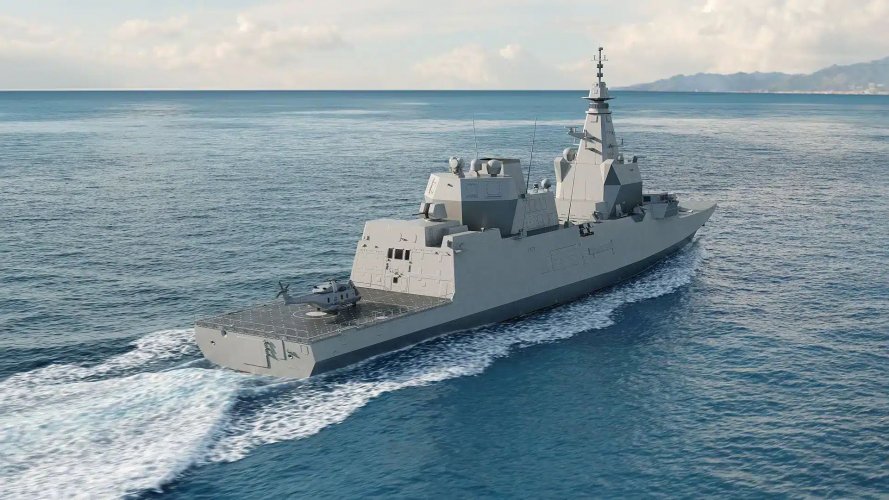
I would laugh if the Ficantieri bring the FREMM EVO on board and win actually.
They got the US background for the Constellation-class, had (not the best) experience with the US Navy way of thinking, so in many ways they are in good position. The FREMM itself is mature design, do the job, but the EVO is new version, which provide some risk in the table.

Clipboard_08-15-2026_01.jpg

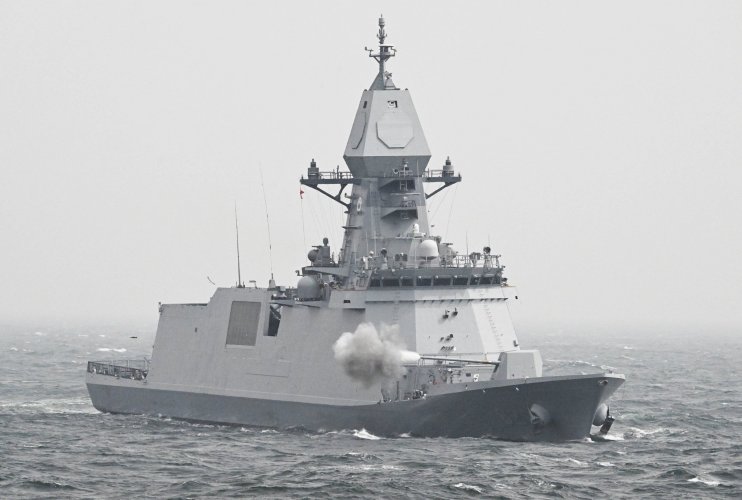
I would bet second to the South Koreans. They on the roll to get the necessary naval infrastructure in the US soil, they have the Chungnam-class frigate, which I would call the weak point of the offer, but that's my personal taste. What South-Korea had difficulty is to prove their capabilities (yea, I know the Ficantieri too has this problem with the Constellation-class...). They probably the dark horse still in this race...

1786806192599.jpeg

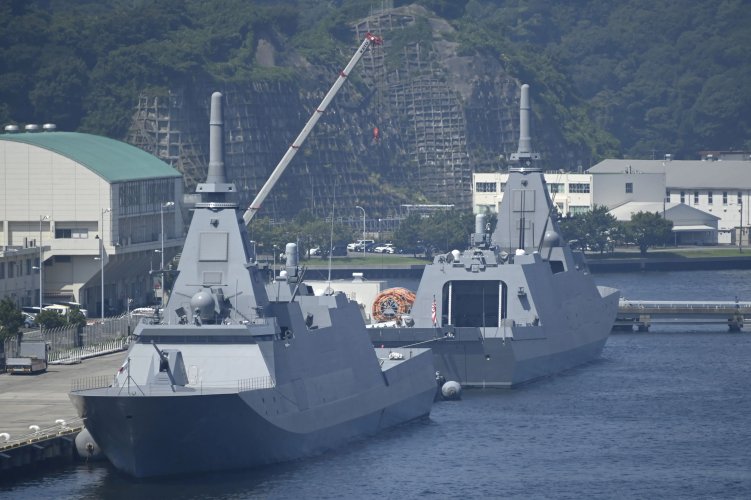
Japan maybe maybe the strongest contributor, the Mogami is more than fit for the role, they prove more than impressive their building scale and export commitment with the Australian frigate tender. But Mitsubishi does not have any ground in the US military naval build - yet they have good relations to the US Navy, like in the US ship repairs in japan.

Clipboard_08-15-2026_01.jpg

The BAe Type-26 is can be a contender, dedicated ASW frigate with good backwind of the BAe zillion connections with the US higher ups. What it's weak point it's maturity, which is nonexistent, so they perhaps cannot even put in the start line.

What is interesting question is the other notional options. The Babcock Arrowhead 120/140 probably a cheaper alternative, but I hardly seen a strong contender placed next to the other potential alternatives, and actually it's not a mature design, just as the Type-26.
Perhaps the french try their luck with the FDI, and even the germans the MEKO 200, those are mature designs, but they don't really have the right connection level to the higher ups to get serious chance...

But that's only my week eyed insight...

 
The biggest question for me is about shipyards. What yards are there that a foreign company could realistically purchase or invest in to build frigate-sized surface combatants? Fincantieri and Hanwha already have yards in the US, but there really aren't that many yards left. I doubt yards like Pascagoula or Bath that are already producing DDGs would be an option. I think the main options would be attempting new construction at a repair yard like Vigor Portland or BAE Jacksonville, or trying to expand a Gulf coast yard doing construction for the offshore industry.

I don't really envision a large defense prime attempting a green/brown field construction project like Saronic in Brownsville. I also wonder if a European or Asian company might have a better shot at the California Forever project, but I seriously doubt the viability of any construction project in California.
 
I don't think at this point it's economically wise for any other foreign company to invest into american shipyards. With the little margins they won't ever get it back. If they price it too hard they will never get it.
 
I would laugh if the Ficantieri bring the FREMM EVO on board and win actually.
They got the US background for the Constellation-class, had (not the best) experience with the US Navy way of thinking, so in many ways they are in good position. The FREMM itself is mature design, do the job, but the EVO is new version, which provide some risk in the table.

View attachment 821066

I would bet second to the South Koreans. They on the roll to get the necessary naval infrastructure in the US soil, they have the Chungnam-class frigate, which I would call the weak point of the offer, but that's my personal taste. What South-Korea had difficulty is to prove their capabilities (yea, I know the Ficantieri too has this problem with the Constellation-class...). They probably the dark horse still in this race...

View attachment 821068

Japan maybe maybe the strongest contributor, the Mogami is more than fit for the role, they prove more than impressive their building scale and export commitment with the Australian frigate tender. But Mitsubishi does not have any ground in the US military naval build - yet they have good relations to the US Navy, like in the US ship repairs in japan.

View attachment 821069

The BAe Type-26 is can be a contender, dedicated ASW frigate with good backwind of the BAe zillion connections with the US higher ups. What it's weak point it's maturity, which is nonexistent, so they perhaps cannot even put in the start line.

What is interesting question is the other notional options. The Babcock Arrowhead 120/140 probably a cheaper alternative, but I hardly seen a strong contender placed next to the other potential alternatives, and actually it's not a mature design, just as the Type-26.
Perhaps the french try their luck with the FDI, and even the germans the MEKO 200, those are mature designs, but they don't really have the right connection level to the higher ups to get serious chance...

But that's only my week eyed insight...
Have you given any consideration to US systems, supply chains, standards, and requirements?

Just to begin, none of these are designed to serve as the ASW picket for a CSG and the only vessel that comes close to fitting the bill (FREMM EVO) has almost no integration with US systems or supply chains.

The Korean designs specifically are not at all excellent. They are small, built to poor DC standards, and the Korean shipyards are difficult to work with (ask the British about their experience ordering the Tide class tankers!)

While I would in principle agree with a T26 derived design, more specifically thanks to experience with the Hunter and River class developments, at that point we're just back to parent hull design which caused the issue in the first place.

I am yet to hear a good argument against the American requirements given they represent a solid all round ASW frigate with sufficient capacity to defend itself and contribute to the defense of naval formations. In this context I don't understand why the solution isn't a cleansheet design to those specifications, perhaps with the addition of a HMS.
 
Have you given any consideration to US systems, supply chains, standards, and requirements?

Just to begin, none of these are designed to serve as the ASW picket for a CSG and the only vessel that comes close to fitting the bill (FREMM EVO) has almost no integration with US systems or supply chains.
...

I do, but the early request do not ask to changes for mandatory US systems.

Perhaps the only such changes can be considered is the Mk.41 VLS instead of the domestic solutions - and the Mogami is actually use Mk.41's...
If you want any deeper changes you violate the "NAVSEA doesn't change the design" request.

About the ASW picket role the Mogame fill that too as I see.

I am yet to hear a good argument against the American requirements given they represent a solid all round ASW frigate with sufficient capacity to defend itself and contribute to the defense of naval formations. In this context I don't understand why the solution isn't a cleansheet design to those specifications, perhaps with the addition of a HMS.

That's the problem. If you want a clean sheet design, you violate the maturity request, which is nonexistent in this regard.
If you take a clean sheet, that's cost you years of finalizing the exact demands of the frigate class, what kind of design would use and so on. When the first ships on the water, then can be take 1-2-3 years of testing and evaluate the design. This add at least 3-5 years to the whole process, while the tides turn 11 years ago to the USN need a capable frigate class and currently even with the fastest option they hardly get any such ship before 2029 (not counting the two Connie, which would later than that anyway), if they ink the deal in the fall of 2026.

That's why the US Navy considering a mature design, and won't accept the clean sheet design option.
 
Stick to the Legends hull. Equip the hulls in U.S. locations after the hull is seaworthy. Might be able to get partner nations to build shipyards much closer than Japan or South Korea. We have plenty of coastline to locate them. Would like to see them built stateside. But Mexico and Canada have places that could be used, too, for hull building by partner nations. I expect South Korea will want to build there but then immature hulls have to cross the Pacific. I do not see them using South Korea to install everything for them as we would want total control of technology in that space.
 
I do, but the early request do not ask to changes for mandatory US systems.
Which is stupid and driven by a certain political figure and not operational requirements, in my opinion
About the ASW picket role the Mogame fill that too as I see.
Mogamis are built to extremely different damage control standards that rely upon automation and not the crew. This is fundamentally incompatible with American doctrine. I have been told they don't have a backup DC station or CIC either. New FFM resolves some of these issues (aiui this was a non negotiable for the RAN). On top of this currently OYQ-1 cannot utilize any AAW missiles either. The RAN wants to integrate ESSM, SM-2, and SM-6 so perhaps that problem will resolve itself.

The lack of AAW missile integration leads into the next major flaw in this idea:

Mogamis are not fleet ASW pickets, they are predominantly meant to be regional patrol and mine clearance vessels. Beyond their design, this is exemplified in the operational structure through which they are employed. Mogamis are part of the Patrol and Defense Groups of the JMSDF alongside their OPVs and missile boats.
The JMSDF fleet ASW assets are called "Destroyers" (DDs, not to be confused with their Aegis equipped DDGs).

There is also a major question here of who can actually build them. Japan has already stretched out domestic acquisition program timelines to fill the RAN's order for New FFM. They functionally don't have any more capacity unless they accept longer timelines for domestic surface combatant acquisition
That's why the US Navy considering a mature design, and won't accept the clean sheet design option.
They just completed the very successful Burke ASW upgrade program. The notional frigate must have an ASW capability superior to the ASW upgrade those Burkes received while being able to support CSG operations. They have to also be able to be delivered faster than the Constellation class (recall that two are still being built). If you can find a design that meets requirements better than the Constellation class and can be delivered faster I would be very interested but to date I am not aware of such a vessel
 
The BAe Type-26 is can be a contender, dedicated ASW frigate with good backwind of the BAe zillion connections with the US higher ups. What it's weak point it's maturity, which is nonexistent, so they perhaps cannot even put in the start line.
BAE definitely have the clout and the influence to make a big that could be very successful. If it's based on the Hunter class, then it's already designed to take the aegis combat system. UK DEFSTANs would be near enough appropriate for the USN.

The only issue is the proven design. They might be able to claim that if they can rush HMS Glasgow into trials, or grease a few palms with money, as they do. This might have a chance.
 
BAE definitely have the clout and the influence to make a big that could be very successful. If it's based on the Hunter class, then it's already designed to take the aegis combat system. UK DEFSTANs would be near enough appropriate for the USN.

The only issue is the proven design. They might be able to claim that if they can rush HMS Glasgow into trials, or grease a few palms with money, as they do. This might have a chance.

But if the claim is that the Constellation is too big and expensive, the T26 is clearly worse on both counts.
 
But if the claim is that the Constellation is too big and expensive, the T26 is clearly worse on both counts.
Ummm... I've never heard that the complaint of Constellation was it was "too heavy" or "too expensive". Definitely taking too long, can't argue there.
 

Similar threads

Back
Top Bottom