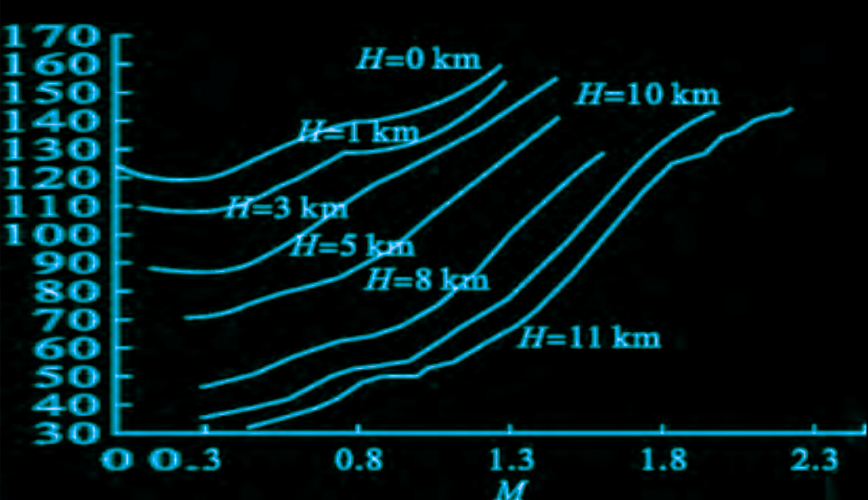
Except that's not true. The F110 is not derived from the CFM56 but rather the F101. And yes! The WS-10 is quite a sophisticated machine with contra-rotating spools. The core might be vaguely based on the CFM56, but everything else is so different that at this point it's basically a thing of it's own. The vanilla WS-10 is quite comparable to the F110-GE-100 with superior thrust curves before M0.3 and past transonic speeds.
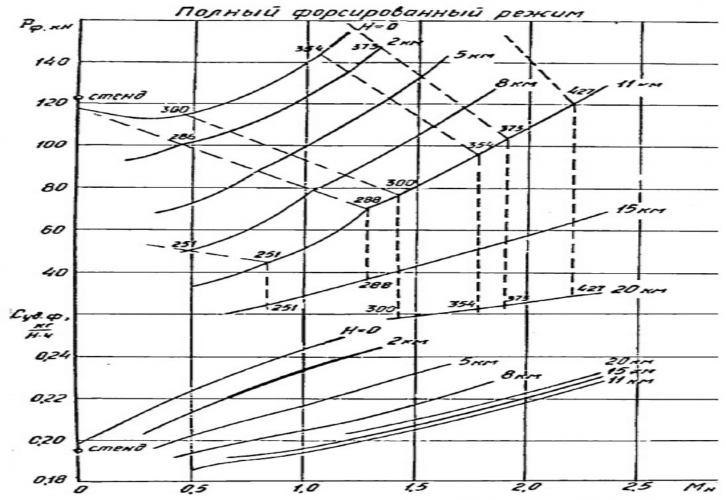
In fact, this envelope diagram comes from early Chinese imports of the AL-31F engines; however, it has been edited using PS to pass security requirements, meaning its curves—especially the latter half—are completely inaccurate.
I cannot reveal more information; you may choose to receive comments on this selectively.
Furthermore, the paper was published in October 2016. In fact, China had no experience using the AL-31FM2 at that time, and considering that the original paper discussed a twin-engine fighter jet, it could not actually be the AL-31FN series.
In fact, this envelope diagram comes from early Chinese imports of the AL-31F engines; however, it has been edited using PS to pass security requirements, meaning its curves—especially the latter half—are completely inaccurate.
I cannot reveal more information; you may choose to receive comments on this selectively.
Furthermore, the paper was published in October 2016. In fact, China had no experience using the AL-31FM2 at that time, and considering that the original paper discussed a twin-engine fighter jet, it could not actually be the AL-31FN series.
I highly doubt that. It's quite far removed from the baseline performance of the AL-31F. Yes, the thrust curves are indeed not quite accurate, but actually in the nerfed sense (as in the actual installed performance is even better). Source: I had the opportunity to come across a conversation between a Beihang professor (that worked with AECC) and an undergrad. It is a primary source with basically nothing to back it up, so I'm gonna have to take a page out of your playbook:
Anyways, the cyrillic in the paper understandably led most people to conclude this is an AL-31F of sorts. But what they're forgetting is that early WS-10s' FADEC systems are heavily based on (some even say more or less directly taken from) the AL-31F.
I highly doubt that. It's quite far removed from the baseline performance of the AL-31F. Yes, the thrust curves are indeed not quite accurate, but actually in the nerfed sense (as in the actual installed performance is even better). Source: I had the opportunity to come across a conversation between a Beihang professor (that worked with AECC) and an undergrad. It is a primary source with basically nothing to back it up, so I'm gonna have to take a page out of your playbook:
Anyways, the cyrillic in the paper understandably led most people to conclude this is an AL-31F of sorts. But what they're forgetting is that early WS-10s' FADEC systems are heavily based on (some even say more or less directly taken from) the AL-31F.
Just to illustrate my point additionally (been meaning to do this for a while), here's the adjusted thrust curves of the so-called "Photoshopped AL-31F" since the way the axes were formatted originally should be a crime against humanity:
And here's the REAL AL-31F (I stretched it a bit):
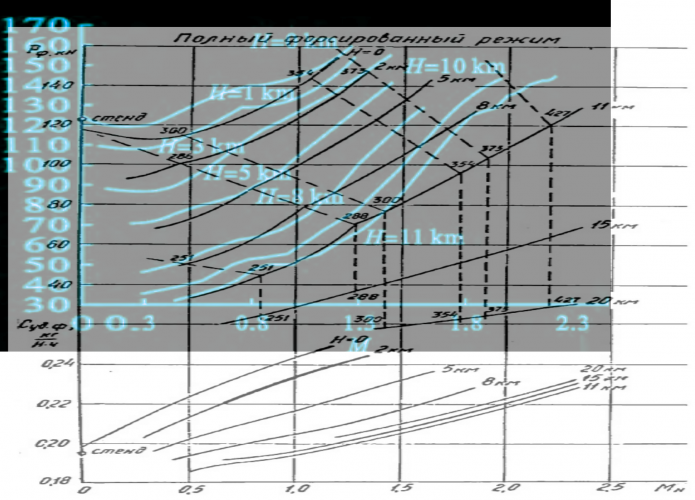
Overlapping the two gives:
You can see that:
- despite being an entire kilometre higher (3 vs 2 km) it puts out the same/slightly more power from transonic speeds on
- puts out almost 20 kN more at 8 km/M1.5
- puts out at least 30 kN more at M2
"Photoshop" my ass this is a whole damn different engine.
Furthermore, the paper was published in October 2016. In fact, China had no experience using the AL-31FM2 at that time, and considering that the original paper discussed a twin-engine fighter jet, it could not actually be the AL-31FN series.
Good point. So let's think about this! This is an engine that:
- is in the same class as the AL-31F
- in flight testing with the PLAAF during the early 2010s
- uses a Russian or Russian-based FADEC (which still needed minor fine-tuning at the time of writing, i.e. early 2010s)
- used on a new twin-engined fighter that was undergoing airframe-intake integration
- supposedly had significantly better thrust curves than the AL-31F
That rules out the base AL-31F, it can't be the AL-31FN/M1, and the PLAAF haven't taken delivery of the AL-31FM2 at the time.
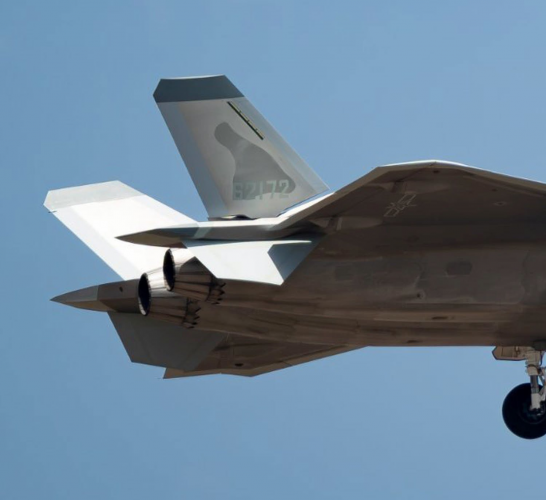
One engine fits the bill perfectly. Just saying. So pray tell, which is more likely: this is a comically boosted AL-31F thanks to Photoshop, or that this is the WS-10(A) flight testing on the J-16?
This site uses cookies to help personalise content, tailor your experience and to keep you logged in if you register.
By continuing to use this site, you are consenting to our use of cookies.