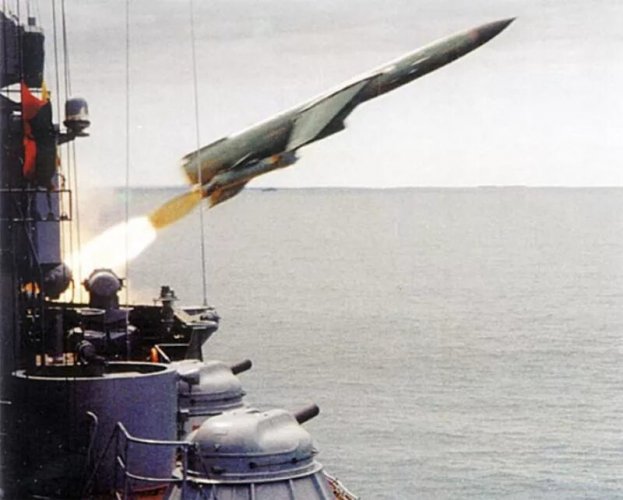
With all respect, but it's not so relevant in surface-to-surface action. More important disadvantage is that S-300F have only a single point of failure, frankly.
Opening number and flexibility of engagement channels is the general trend of naval fire control.
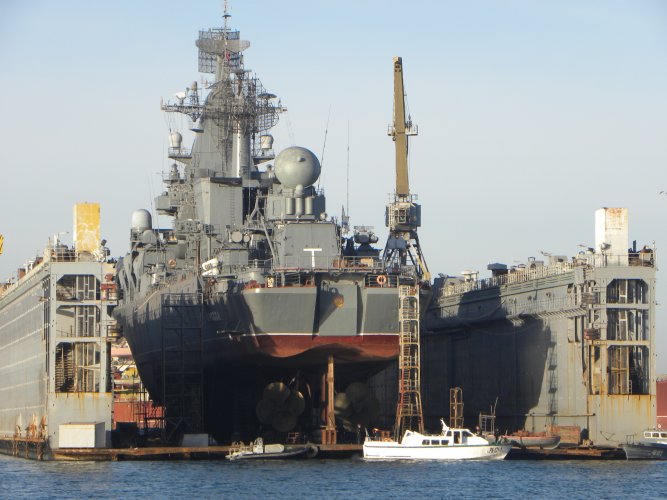
First major post-soviet surface combatant for Russian navy looks like this:
nothing to add here, really.
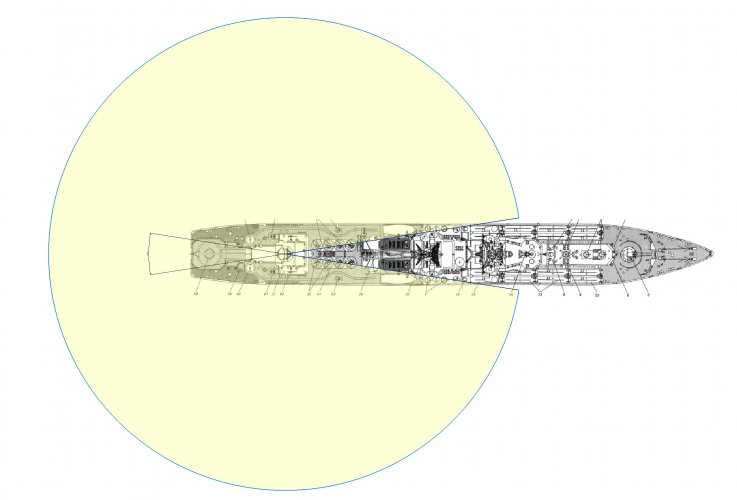
The 1980s gunnery FCS have no problems with ship maneuvering for a long time. Its not gonna "throw off its own aim".
Fire control had(to a degree still have) sea state/maneuvering limitations when firing weapons and conducting operations. The same is true for gun accuracy.
Yes, CW ships can fire during sustained maneuvers, but this is nowhere near close to freedom of maneuver.
Which means that Tico must survive to get into Harpoons range first. And when the opponent have basically triple your range in missiles, it would be tricky.
It would really help if our world were a flat, featureless, and space without any complications. Alas, it is not.
Note that even now, with actually usable Kh-35s and P-800s, Russian preferred instrument for ship engagement is Geran.
Its more due to Tico destroyer origins.
Partially. But major reason is generational - aegis CMS, deeper primary battery, more modern and multi-purpose cruise missile, and earlier availability of TLAM.
Against all that, the Soviet cruiser has much more layered self-defenses (though mostly of previous generation, as up-to-date systems took a better part of the decade to develop), and theater missiles.
I should point that USN viewed its lack of missile range as serious concern, and thus created TASM to at least partially compensate.
Certainly, as USN ships didn't have a matching theater ASCM capability at all.
And developed one, much like Soviet Union went to get Onyx, Kalibr, and Uran families.