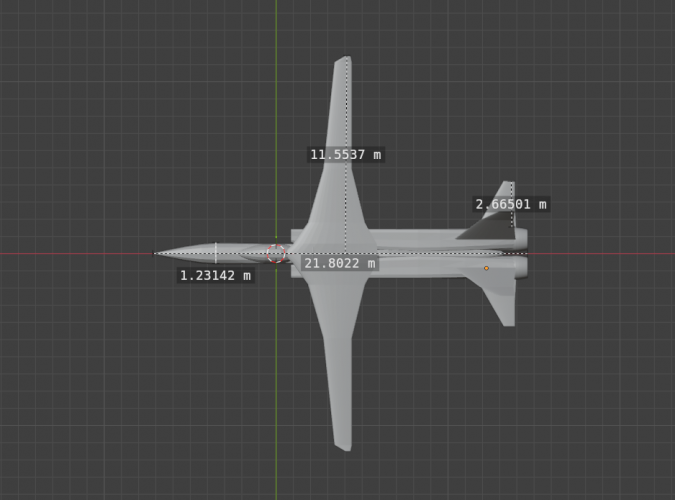
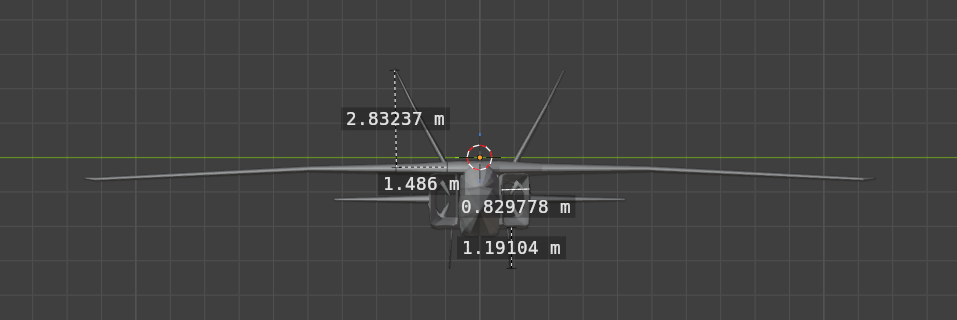
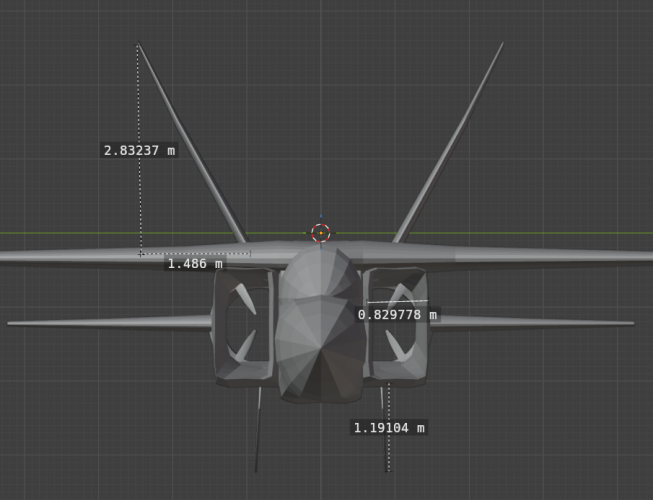
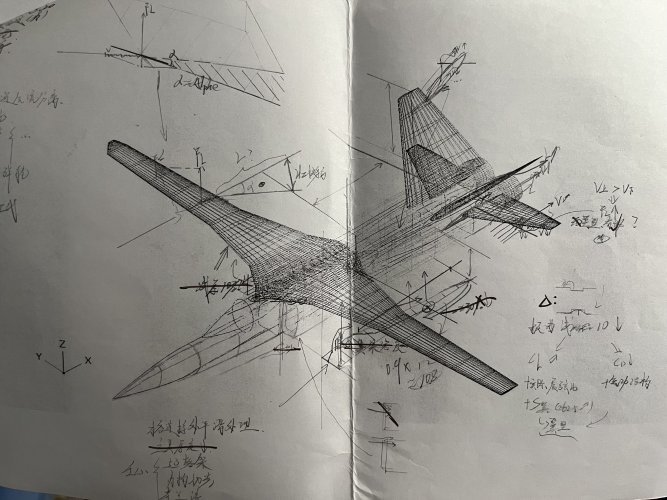
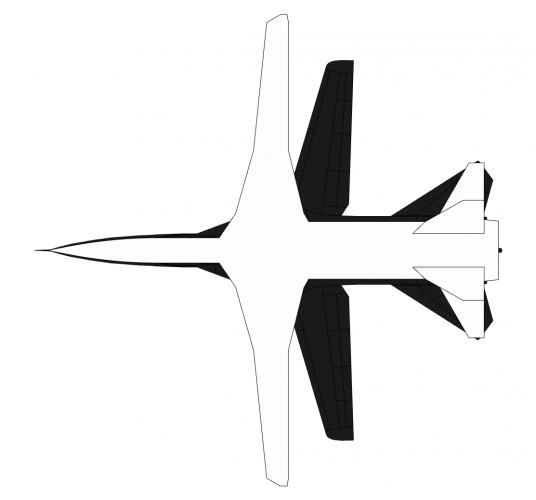
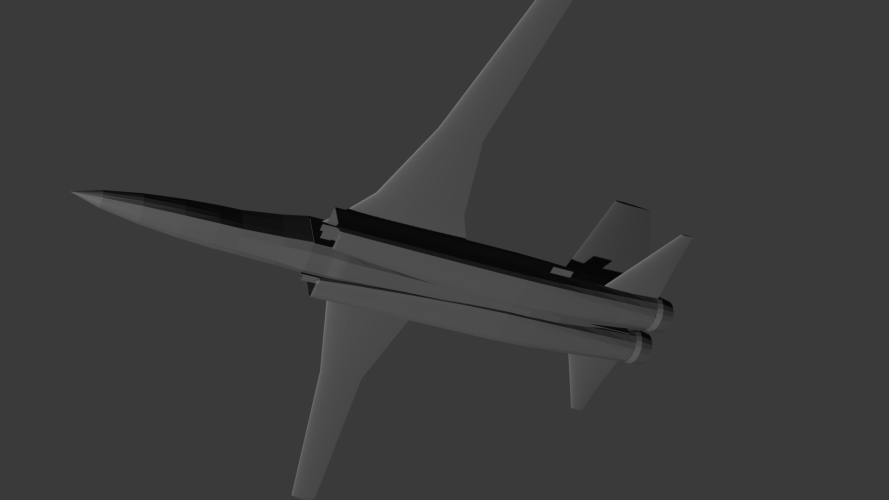
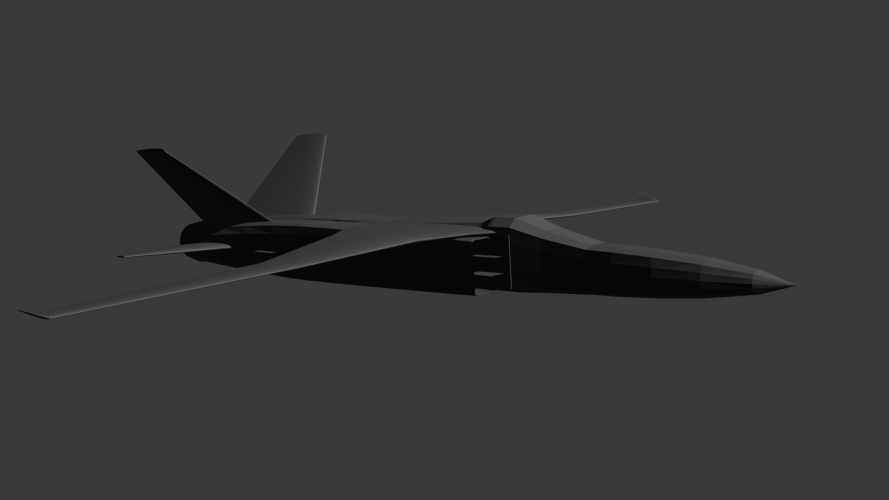
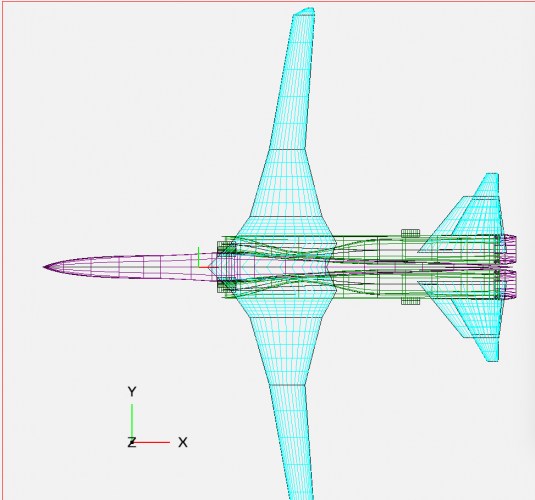
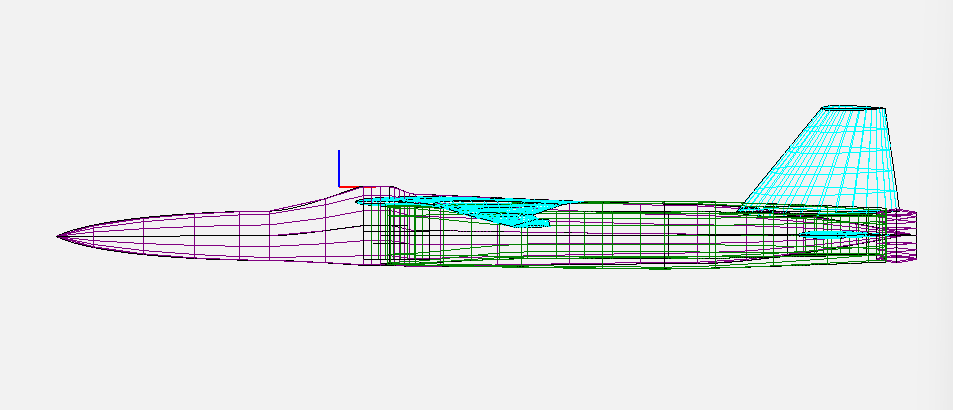
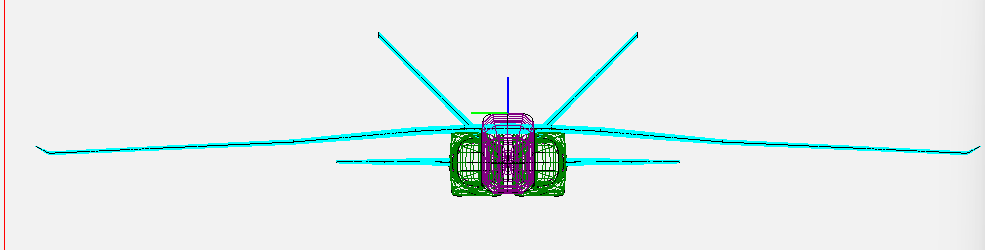
High altitude and long endurance attack carrier (bomb truck) outside the theater.

addment

ACCESS: Restricted
Joined
26 February 2026
Messages
18
Reaction score
21
A twin-engine heavy unmanned aerial vehicle with large straight upper wings, outward-tilted twin vertical tails, fully movable horizontal tails, and two side air intakes.
Role: Heavy unmanned low-altitude penetration platform


Designed by myself
 

Attachments
  • 屏幕截图 2026-02-26 210916.png
    屏幕截图 2026-02-26 210916.png
    62 KB · Views: 121
  • 屏幕截图 2026-02-26 210957.png
    屏幕截图 2026-02-26 210957.png
    70.4 KB · Views: 117
  • 屏幕截图 2026-02-26 211100.png
    屏幕截图 2026-02-26 211100.png
    40.6 KB · Views: 113
  • 屏幕截图 2026-02-26 211111.png
    屏幕截图 2026-02-26 211111.png
    132.4 KB · Views: 103
Last edited by a moderator:
fnf A twin-engine heavy unmanned aerial vehicle with large straight upper wings, outward-tilted twin vertical tails, fully movable horizontal tails, and two side air intakes.
Role: Heavy unmanned low-altitude penetration platform


Designed by myself
Interesting concept. The twin-engine layout, large straight wings, and twin-tail configuration look well suited for a low-altitude penetration UAV. I'd be interested to see more details about the propulsion system, payload capacity, and intended operational range.
 
Last edited:
A twin-engine heavy unmanned aerial vehicle with large straight upper wings, outward-tilted twin vertical tails, fully movable horizontal tails, and two side air intakes.
Role: Heavy unmanned low-altitude penetration platform


Designed by myself
I'm not sure that the wings are the right shape for low altitude work. They look more like sailplane wings, and their lack of sweep is going to limit your speed somewhat.

Also, about the engines: dual ducted fans, or actual jets?
 
I'm not sure that the wings are the right shape for low altitude work. They look more like sailplane wings, and their lack of sweep is going to limit your speed somewhat.

Also, about the engines: dual ducted fans, or actual jets?
I think that the large flat wing will produce great drag at low altitude, but it will bring great lift. Driven by two turbofan engines with about two 20KN thrusts, it can reach subsonic speed.
 
Interesting concept. The twin-engine layout, large straight wings, and twin-tail configuration look well suited for a low-altitude penetration UAV. I'd be interested to see more details about the propulsion system, payload capacity, and intended operational range.
Its propulsion system will have two turbofans with 20KN thrust. As for the load, I hope to reach the maximum load of 15000KG and the wing load of 242KG/M2. I haven't come to a conclusion about the voyage. It is used for the breakthrough and critical destruction in the early stage of the war. I don't think it needs many voyages, because it can completely take off from the aircraft carrier and carry out unmanned combat.
 
Its propulsion system will have two turbofans with 20KN thrust. As for the load, I hope to reach the maximum load of 15000KG and the wing load of 242KG/M2. I haven't come to a conclusion about the voyage. It is used for the breakthrough and critical destruction in the early stage of the war. I don't think it needs many voyages, because it can completely take off from the aircraft carrier and carry out unmanned combat.
Can you expand on the concept a bit?
 
I think that the large flat wing will produce great drag at low altitude, but it will bring great lift. Driven by two turbofan engines with about two 20KN thrusts, it can reach subsonic speed.
Something akin to a pair of Williams FJ44s or CJ610s?

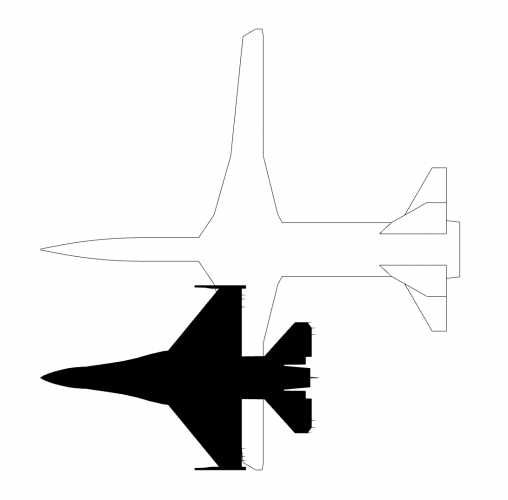
*mentally recalibrates the size of the drone to a T-38*

I think you're going to struggle with that power-to-weight ratio. 30 tons on 10klbs thrust isn't good for a military craft.
 
Its propulsion system will have two turbofans with 20KN thrust. As for the load, I hope to reach the maximum load of 15000KG and the wing load of 242KG/M2. I haven't come to a conclusion about the voyage. It is used for the breakthrough and critical destruction in the early stage of the war. I don't think it needs many voyages, because it can completely take off from the aircraft carrier and carry out unmanned combat.
Since you do have set an aircraft carrier as a contraint you should start with determining what kind of wing you need.
Your available take off distance is 300 ft. I doubt a U2 like wing can survive a catapult launch.
Now you can calculate and play around with the
take off distance equation = (1.21/gravity)*(weight / wing_area) / (air_density*Cl_max*(thrust/(weight)) )
Note: this does not include runway drag, aerodynamic drag; and you shoud include a safety margin.

Low level fight requires more power due to air density-drag and consumes more fuel.
I don't think it will work out for a large craft as onvisioned but small one should be possible.
 
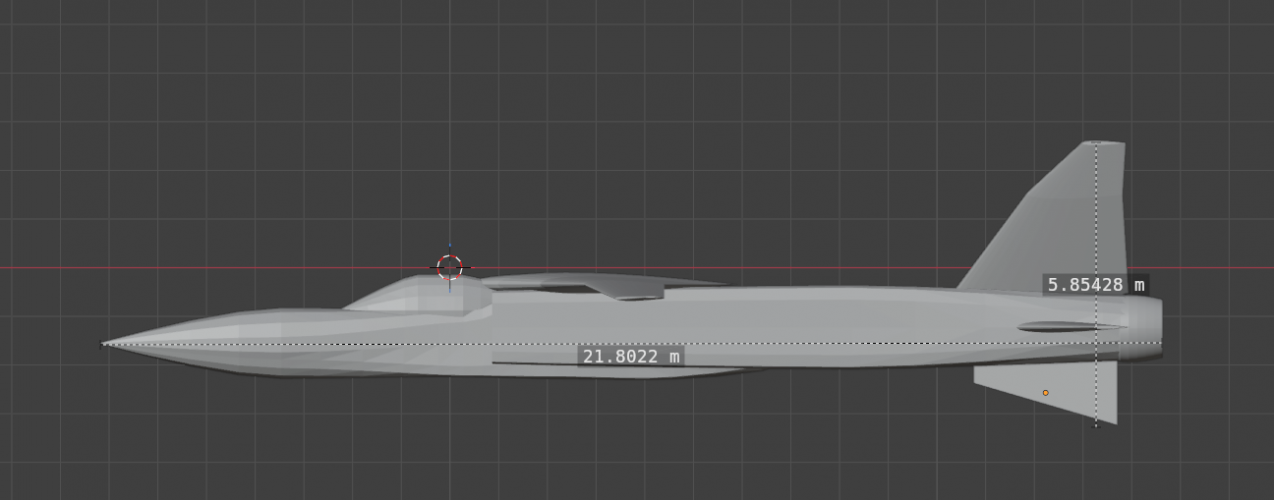
Frankly speaking, I didn't realize it was so big.Maybe the size was wrong when it was exported from OPENVSP. Actually, it was only 2/3 of what I saw. I defined it as an unmanned combat center, which can not only complete precision strikes alone, but also be competent for some high-altitude guidance.
 
Last edited:
Since you do have set an aircraft carrier as a contraint you should start with determining what kind of wing you need.
Your available take off distance is 300 ft. I doubt a U2 like wing can survive a catapult launch.
Now you can calculate and play around with the
take off distance equation = (1.21/gravity)*(weight / wing_area) / (air_density*Cl_max*(thrust/(weight)) )
Note: this does not include runway drag, aerodynamic drag; and you shoud include a safety margin.

Low level fight requires more power due to air density-drag and consumes more fuel.
I don't think it will work out for a large craft as onvisioned but small one should be possible.
You are right,i really need to improve it.I seem to need to give up on aircraft carrier take-off and landing because of its size and thrust.
 
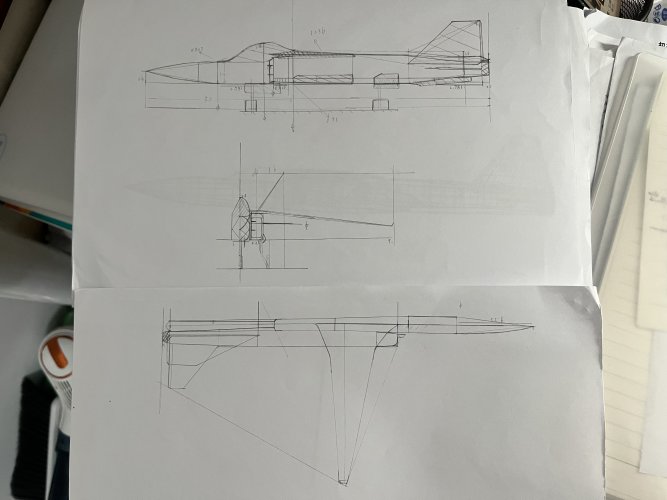
now i am busy with my study as i am just a student at the age of 15.in the future , i will try my best to improve it.So, any suggestions about fuselage design?I will send some of my latest two-dimensional drawings here, please wait a moment.
 
Last edited:
%E5%B1%8F%E5%B9%95%E6%88%AA%E5%9B%BE-2026-06-22-194630-png.816028
 
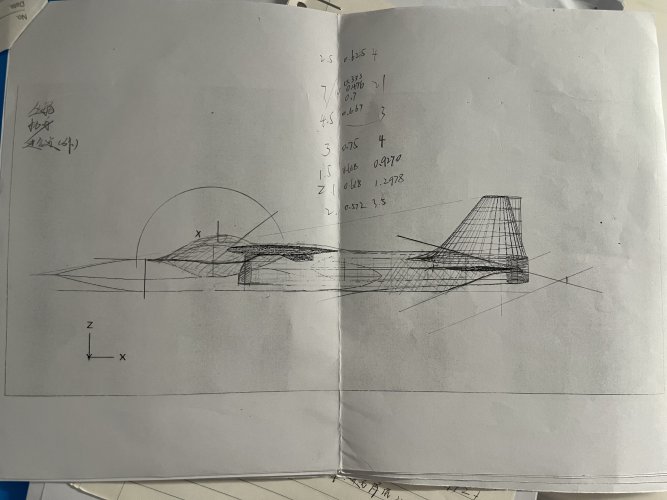
I return.New desige.There is also an S-shaped intake (expected, not yet started)
 
Nice isometric drawing.

I'm not really sure on the requirement here though. "Heavy unmanned low-altitude penetration platform" - how is it expecting to avoid being detected and shot down at low altitudes? Why twin large vertical tails? wings seem too far forward (not much weight in front, too much behind) and too high an aspect ratio for smooth low altitude flight. I guess crew comfort isn't a factor, but a large span wing will probably need a gust load alleviation flight control system like the B-2 to avoid vibrations, and airframe fatigue.

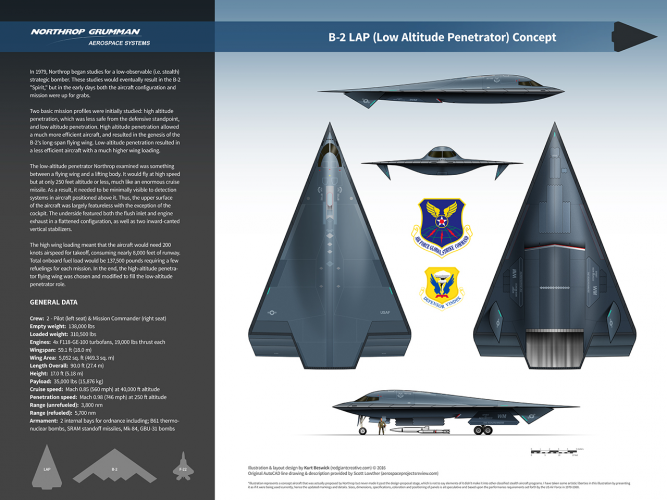
Unmanned version of the LAP configuration has advantages in many areas.
 
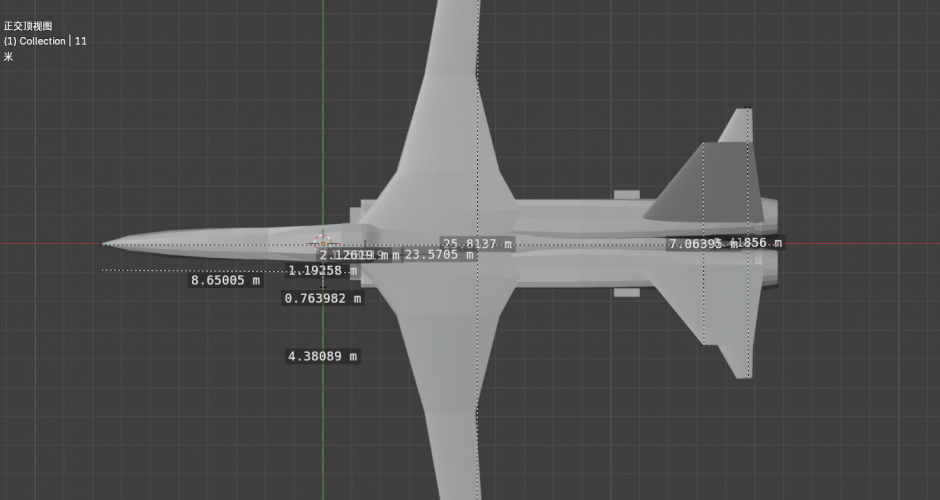
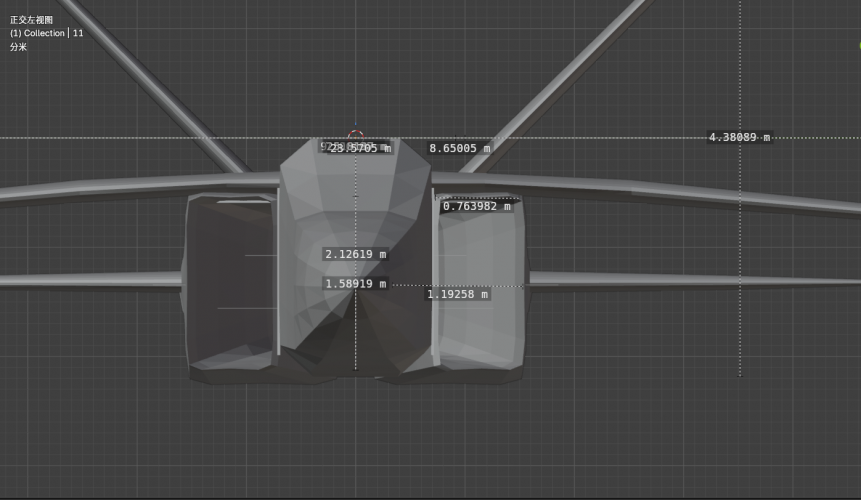
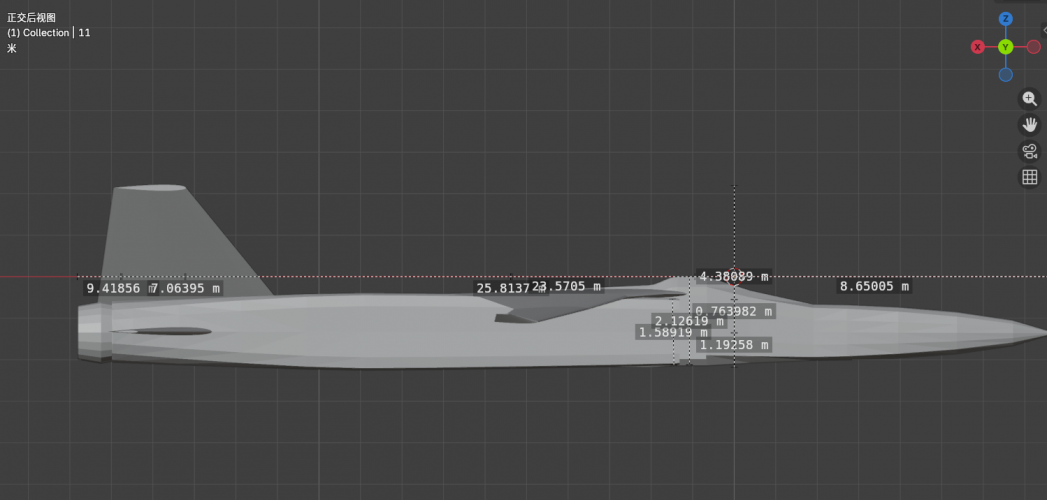
The wingspan is 25.8 meters, the captain is 23.5 m 屏幕截图 2026-06-25 201729.png 屏幕截图 2026-06-25 201739.png 屏幕截图 2026-06-25 201757.png eters, the height of the vertical tail machine is 4.38 meters (excluding the landing gear), and the height of the fuselage is 2.12 meters.
 
Does anyone know how to deal with the gap between the wing and the inlet and the fuselage?
 
Put two F110s in it and you're talking F-15EX payload and range. If it were me, I'd go with a large delta blended wing. Carries a lot more fuel, greater area allow STOL performance, greatly increasing available runways. Lots of places underwing and along the fuselage for conformal weapoms carry. Lower RCS without going overboard on stealth. Top inlets also help with RCS and reduce the chance of FOD on damaged or marginal runways. I'd guess 20k+ pounds max capacity. It'd be survivable in the semi-contested space at standoff distance behind the line of engagement.
 
Last edited:
The wingspan is 25.8 meters, the captain is 23.5 mView attachment 816247View attachment 816248View attachment 816249eters, the height of the vertical tail machine is 4.38 meters (excluding the landing gear), and the height of the fuselage is 2.12 meters.
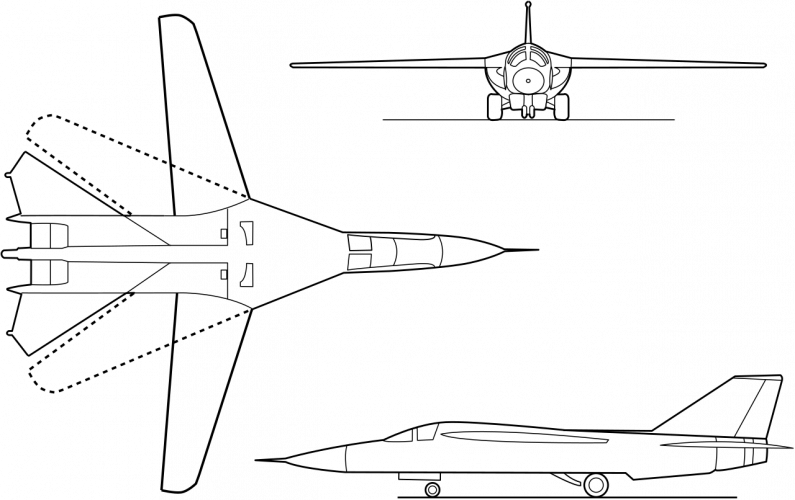
Okay, so this is something about the same size as an Su24 or F-111, with even more wingspan. Think 75KN engines for this.

Also, what's the wing area? While long thin wings are more efficient, the wings on this look too far forward relative to their size. Remember, your wings' center of lift needs to be just slightly forward of the aircraft center of gravity.
 
Okay, so this is something about the same size as an Su24 or F-111, with even more wingspan. Think 75KN engines for this.

Also, what's the wing area? While long thin wings are more efficient, the wings on this look too far forward relative to their size. Remember, your wings' center of lift needs to be just slightly forward of the aircraft center of gravity.
Wing area is 63.03M2
 
I was also leaning towards an F-11 variation. Nice to know I was not too far off the mark.
 
I think it will be of great value. There are many things that can be done when flying at high altitude for a long time, such as fighting or monitoring outside the area, transportation and temporary base stations in disaster areas. I hope it can become a supplement to the weapon system of big countries and an important means of attack for small countries.
 
It will have a very powerful ground-to-air radar and put it in a huge and long nose. A small area of the S-shaped inlet will be left as a conformal bomb bay for hanging short-range air-to-air bombs, and there are about 4-5 hanging points (on each side) under the long and straight wing for hanging large air-to-ground missiles or reconnaissance equipment.
 
Friend, I want to know what shortcomings or mistakes it has so that I can improve it. If you can casually point out
 
Where's the main weapons bays for this?

One defensive bay on each side of the inlet, F-22 style. That pushes the actual inlet duct towards the center of the airframe. The engines may be too close together to let that work easily.
Also, your inlets look too big. Compare how big your inlets are to the F-111 and Su-24. IIRC, your inlet mouth should be about 80% the area of the engine inlet, as the air needs to slow down and increase in pressure before going into the engines.

The main bay needs to be more or less under the wings to save trim problems, the F-111 bay is actually forward of the wing, under the triangular LERX sections.

Also, having all those different edge angles on the wings and tail are going to create more spikes on the radar cross section plot.
 
Very nice!

Couple of things I would have a look at:

1. Main landing gear bays, where will the gear retract into?
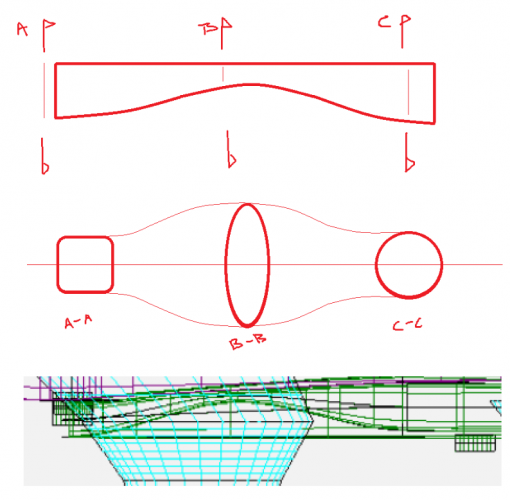
2. The swaging down of the intake duct towards the middle is pinching, should try to keep the cross-sectional area roughly consistent down the full length, meaning where the duct becomes narrower, it must become taller:

1786018489476.png
(excuse the quality!)

Might need to fatten up the fuselage a bit to achieve the above?
Keep going mate, this is cool.
 
Back
Top Bottom