
You are using an out of date browser. It may not display this or other websites correctly.
You should upgrade or use an alternative browser.
You should upgrade or use an alternative browser.
Data Centers in Space

- Joined
- 27 December 2005
- Messages
- 19,226
- Reaction score
- 35,643
Topic renamed to more generic term, as not all posts were specifically about one player and this has become a thing lots of companies are interested in, somewhat incomprehensibly (speaking as someone familiar with data centres).
Last edited:
https://medium.com/@marc.bara.inies...ii-spacexs-million-satellite-bet-cfd4e2bdcf66
What do you think about this ? (TBH computing is 100% not my area of knowledge)
What do you think about this ? (TBH computing is 100% not my area of knowledge)
The coordination problem
There is a technical challenge the filing does not address that deserves attention.
SpaceX proposes using the system for “large-scale AI inference.” Inference workloads can be parallelized and are relatively tolerant of latency. A query can be routed to whichever satellite has capacity, and response times of tens of milliseconds are acceptable for many applications.
Training is another matter entirely. Modern AI training requires tight synchronization between compute nodes, with gradients exchanged continuously across the cluster. The latency and bandwidth requirements are punishing even in terrestrial data centers with dedicated interconnects.
Current Starlink satellites support laser links of up to 200 Gbps, with next-generation hardware targeting 1 Tbps. This is impressive for satellite communications but modest for AI training interconnects, where clusters use links of 400 Gbps to 800 Gbps per GPU with sub-microsecond latencies.
A million satellites spread across orbital shells from 500 to 2,000 kilometers cannot achieve the tight coupling required for frontier model training. The speed of light imposes minimum latencies of several milliseconds for inter-satellite communication, even before accounting for routing through the mesh.
This means orbital compute, if it ever becomes viable, would serve inference workloads rather than training. That is a smaller market and one where terrestrial data centers have fewer constraints. The economic case becomes even harder to make.
Last edited:

garand1937
I'm really just here cause of Ace Combat
- Joined
- 5 November 2022
- Messages
- 17
- Reaction score
- 16
The problem with that that I can foresee (granted im not a lawyer) is that it being outside of the reach of police may actually be a liability. From what I understand of it, alot of private data storage is converted bunkers in Western, liberal, democratic and most importantly stable countries. If your data center is outside of any countries territory than its also outside of your direct protection. While you can argue about duty to protect investment in territory outside the nation until the cows come home, at a fundamental level just easier physically for China to send a spacecraft up there than it is for them to march into Nebraska. Also there is the issue that even if police can't get to the data center, someone still needs to collect payment and pay for operating expenses, and the FBI can nail that guy to the wall if there's bad stuff in orbit.They can't be physically seized by police, and their destruction would cause too many international outcry to seriously consider it as police measure.
Man we really are living in the future.How Starcloud Is Bringing Data Centers to Outer Space
The NVIDIA Inception startup projects that space-based data centers will offer 10x lower energy costs and reduce the need for energy consumption on Earth.
October 15, 2025 by Angie Lee
View: https://twitter.com/nvidia/status/1980757719809138854
View: https://twitter.com/PhilipJohnst0n/status/1980780913429721280
exclaimedleech8
ACCESS: Top Secret
- Joined
- 30 September 2024
- Messages
- 823
- Reaction score
- 999
This is a regular reminder of how guillable investors can be
martinbayer
ACCESS: Above Top Secret
- Joined
- 6 January 2009
- Messages
- 5,062
- Reaction score
- 6,969
Another classic case of wannabe clueless investors getting sucked in by hucksters - https://en.wikipedia.org/wiki/There's_a_sucker_born_every_minute comes to mind, except because of global population growth acceleration its now down (or up?) to there's a sucker born every second...

- Joined
- 13 August 2007
- Messages
- 10,405
- Reaction score
- 18,054
SpaceX presented there AI satellite
View: https://twitter.com/SawyerMerritt/status/2064108916611420273
View: https://twitter.com/SawyerMerritt/status/2064108916611420273
- Joined
- 13 August 2007
- Messages
- 10,405
- Reaction score
- 18,054
A lot of grass-roots opposition to local server farms might help the cause….there were two solar farms struck by twisters in an outbreak just a few days ago. Between that, NIMBYs and the need for powersats—I am actually warming to the concept.
For cooling
https://techxplore.com/news/2026-06-efficiently-cooling-satellite-components-space.html
For cooling
https://techxplore.com/news/2026-06-efficiently-cooling-satellite-components-space.html
Last edited:
What "need" for powersat? Powersat receiving stations are just as vulnerable as solar farms. Basically no difference in them, except the wavelength of the energy they receive.there were two solar farms struck by twisters in an outbreak just a few days ago. Between that, NIMBYs and the need for powersats—I am actually warming to the concept.
Last edited:
A rectenna is closer to power lines than shingle-like PV panels with more surface area. More inert at least.
Astronomy concerns
https://spacenews.com/astronomers-fear-orbital-data-centers-will-interfere-with-observations/
Astronomy concerns
https://spacenews.com/astronomers-fear-orbital-data-centers-will-interfere-with-observations/
Last edited:
I don't understand what advantages this location in space can have, unless a debate is being generated to obtain funding for new technologies to protect against radiation and micro meteorites... or a great idea to avoid paying taxes in any country.
Scott Kenny
ACCESS: USAP
- Joined
- 15 May 2023
- Messages
- 19,533
- Reaction score
- 27,980
1) solar energy is cheap and it's trivial to acquire in zero gee.I don't understand what advantages this location in space can have, unless a debate is being generated to obtain funding for new technologies to protect against radiation and micro meteorites... or a great idea to avoid paying taxes in any country.
2) no NIMBY protesters.
3) no property taxes.
2.) is the biggie
I guarantee you the same anti-server farm protestors are the ones filling the “cloud” (that server-farms provide)…with the same old pictures/videos of birthday parties/theme park trips and other nonsense that used to stay out of societies’ way in the attic as dis-used Super-8 film/VHS/DVD hardcopies.
If they want to pick up a protest sign, they need to put down their smartphones and have landlines only.
I doubt any of these server farms have back and forth discussions about the Riemann hypothesis floating about as zeros and ones…just granny commenting on how natural uncle looks in his $10,000 casket—-another waste of money.
I guarantee you the same anti-server farm protestors are the ones filling the “cloud” (that server-farms provide)…with the same old pictures/videos of birthday parties/theme park trips and other nonsense that used to stay out of societies’ way in the attic as dis-used Super-8 film/VHS/DVD hardcopies.
If they want to pick up a protest sign, they need to put down their smartphones and have landlines only.
I doubt any of these server farms have back and forth discussions about the Riemann hypothesis floating about as zeros and ones…just granny commenting on how natural uncle looks in his $10,000 casket—-another waste of money.
Last edited:
that would be wrong.A rectenna is closer to power lines than shingle-like PV panels with more surface area.
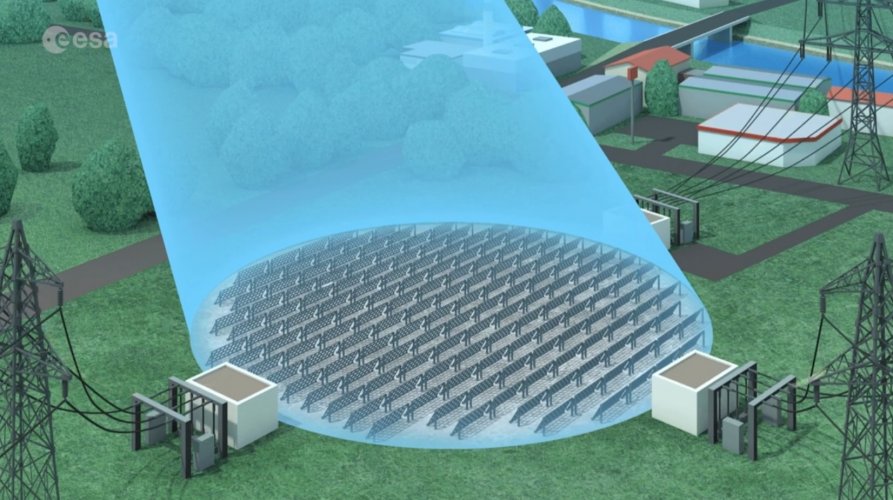
Attachments
cooling is cheap.1) solar energy is cheap and it's trivial to acquire in zero gee.
2) no NIMBY protesters.
3) no property taxes.
because of water and power use.2.) is the biggie
Not if everyone fusses about the water use.
I am hoping all optical computing can come along and help out. If nothing else, simple reflectors could beam more light to solar farms not in twister prone areas, with Petra’s rock boring tech allowing underground utilities.
There has been push-back about tech-bros having some heavy handed tactics down here—which can only make space servers more attractive. Wage stagnation and higher gas prices have folks hopping mad. Still—I’m not a big fan of NIMBY-think.
I am hoping all optical computing can come along and help out. If nothing else, simple reflectors could beam more light to solar farms not in twister prone areas, with Petra’s rock boring tech allowing underground utilities.
There has been push-back about tech-bros having some heavy handed tactics down here—which can only make space servers more attractive. Wage stagnation and higher gas prices have folks hopping mad. Still—I’m not a big fan of NIMBY-think.
exclaimedleech8
ACCESS: Top Secret
- Joined
- 30 September 2024
- Messages
- 823
- Reaction score
- 999
That's another thing. How is the water situation going to be handled?because of water and power use.
Water is only use for terrestrial cooling.That's another thing. How is the water situation going to be handled?
My point was if it weren't for water and power use, nobody would care about their location.Not if everyone fusses about the water use.
How is that relevant to this topic?Wage stagnation and higher gas prices have folks hopping mad.
Must not be a home ownerStill—I’m not a big fan of NIMBY-think.
Scott Kenny
ACCESS: USAP
- Joined
- 15 May 2023
- Messages
- 19,533
- Reaction score
- 27,980
I honestly don't get the water complaint. They're using the water for cooling and then dumping it back into the aquifer. There should not be any treatment required except for allowing the water time to cool.
Scott Kenny
ACCESS: USAP
- Joined
- 15 May 2023
- Messages
- 19,533
- Reaction score
- 27,980
But more complex since you can only radiate that heat. Your radiators should be perpendicular to the solar panels and in the shade of the solar panels.cooling is cheap.
martinbayer
ACCESS: Above Top Secret
- Joined
- 6 January 2009
- Messages
- 5,062
- Reaction score
- 6,969
As an Earth surface dweller on an ever warming planet myself, that's actually the only cooling I really care about.Water is only use for terrestrial cooling.

- Joined
- 6 November 2010
- Messages
- 6,351
- Reaction score
- 8,226
Dumping cooling water can play havoc with local ecosystems.I honestly don't get the water complaint. They're using the water for cooling and then dumping it back into the aquifer. There should not be any treatment required except for allowing the water time to cool.
Not really, it is done all the time.But more complex since you can only radiate that heat. Your radiators should be perpendicular to the solar panels and in the shade of the solar panels.
Scott Kenny
ACCESS: USAP
- Joined
- 15 May 2023
- Messages
- 19,533
- Reaction score
- 27,980
Only because they're lazy and not pulling heat out of the water.Dumping cooling water can play havoc with local ecosystems.
Say, by using it to spin a turbine in a cogeneration setup.
exclaimedleech8
ACCESS: Top Secret
- Joined
- 30 September 2024
- Messages
- 823
- Reaction score
- 999
The heat given off doesn't have enough usable energy in it to spin a turbine.Only because they're lazy and not pulling heat out of the water.
Say, by using it to spin a turbine in a cogeneration setup.
Scott Kenny
ACCESS: USAP
- Joined
- 15 May 2023
- Messages
- 19,533
- Reaction score
- 27,980
Depends on what cooling media people use. Something like anhydrous ammonia would work quite well. And then you use ground water to condense the ammonia gas back to liquid ammonia.The heat given off doesn't have enough usable energy in it to spin a turbine.
Exactly. The preferred operation temperature for chips is around 60° C; for any kind of power generation as well as best heat radiation require temperatures above at minimum 300°, preferabe >600°, best around 900-1500°.The heat given off doesn't have enough usable energy in it to spin a turbine.
Cooling will take "longer" due to low irradiation while require more coolant for heatsink capacity.
Then we got to consider shielding this will cost the most in terms of mass.
- Joined
- 6 November 2010
- Messages
- 6,351
- Reaction score
- 8,226
By running it through a cooling tower, or some other kind of heat exchanger? Cooling bassins?Only because they're lazy and not pulling heat out of the water.
Money would have to be spent on those, which will likely need laws and rules in place, then an authority willing to enforce them. In some places, there are no such rules, or an authority willing to enforce them.
Not lazy - cheap. Make a buck.they're lazy
Last edited:
Scott Kenny
ACCESS: USAP
- Joined
- 15 May 2023
- Messages
- 19,533
- Reaction score
- 27,980
Anhydrous ammonia as the material you're boiling and then running through a turbine works well enough to drop the temperature of the chill water. And then that turbine spins a generator to recover some of the energy used to make rocks think.By running it through a cooling tower, or some other kind of heat exchanger? Cooling bassins?
Money would have to be spent on those, which will likely need laws and rules in place, then an authority willing to enforce them. In some places, there are no such rules, or an authority willing to enforce them.
Not lazy - cheap. Make a buck.
Which reduces their power draw from external sources.
spikedpsycho
ACCESS: Secret
- Joined
- 14 March 2026
- Messages
- 336
- Reaction score
- 471
If you want Data center built just buy a used super tanker and gut it. Fill it with concrete and sink it. Below decks are sea water heat exchanger. Mid deck data center. Ship 1200 by 200 feet so build 3 story structure atop it.


martinbayer
ACCESS: Above Top Secret
- Joined
- 6 January 2009
- Messages
- 5,062
- Reaction score
- 6,969
Without global unified government incentives/rules/regulations, capitalism will always resort/default to the cheapest near term solution.Anhydrous ammonia as the material you're boiling and then running through a turbine works well enough to drop the temperature of the chill water. And then that turbine spins a generator to recover some of the energy used to make rocks think.
Which reduces their power draw from external sources.
Last edited:

BlueAbyssal
ACCESS: Top Secret
- Joined
- 14 January 2024
- Messages
- 534
- Reaction score
- 931
I think that's a overly rosy view of the state, and an equally pessimistic view of corporations, when the reality is far more mixed (after all, it's a common refrain in the military about how military procurement is bid as cheaply as possible!).Without global unified government incentives/rules/regulations, capitalism will always resort/default to the cheapest near term solution.
martinbayer
ACCESS: Above Top Secret
- Joined
- 6 January 2009
- Messages
- 5,062
- Reaction score
- 6,969
I don't see any contradiction here, since in practice most governments around the globe routinely engage in a capitalist race to the bottom.I think that's a overly rosy view of the state, and an equally pessimistic view of corporations, when the reality is far more mixed (after all, it's a common refrain in the military about how military procurement is bid as cheaply as possible!).
spikedpsycho
ACCESS: Secret
- Joined
- 14 March 2026
- Messages
- 336
- Reaction score
- 471
Most mundane aspects of our society
Parking garages, solar panels, water towers .
Data centers can use all.
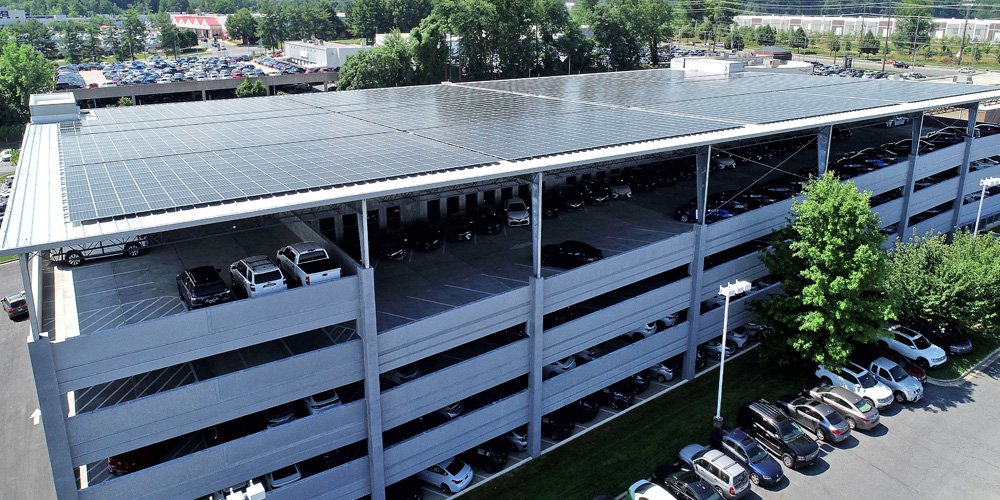
Parking garage with solar roof, the data centers accommodate top floor. A small water tower can hold 1-2 million gallons of seawater pumped from bay or sea. Solar panels refill the tank daily. Water is released to allow cold seawater to exchange heat with devices air siphoned away and saltwater is returned to sea only slightly warmer than before.
Power consumption of data centers is largely based load factors. Biggest heat. About 70% all data centers energy use is not about where the bytes go, because theyre fiber optic now but where the machine heats stacks up and must me disposed of. Passive cooling systems that are gravity fed use little energy.

Parking garages, solar panels, water towers .
Data centers can use all.
Parking garage with solar roof, the data centers accommodate top floor. A small water tower can hold 1-2 million gallons of seawater pumped from bay or sea. Solar panels refill the tank daily. Water is released to allow cold seawater to exchange heat with devices air siphoned away and saltwater is returned to sea only slightly warmer than before.
Power consumption of data centers is largely based load factors. Biggest heat. About 70% all data centers energy use is not about where the bytes go, because theyre fiber optic now but where the machine heats stacks up and must me disposed of. Passive cooling systems that are gravity fed use little energy.
Last edited:
Similar threads
-
 Lockheed Emergency Earth Orbital Escape Device (EEOED) 1969
- Started by Triton
- Replies: 20
-

-
Space: 1959 "Space Age" concept poster on cardboard
- Started by Triton
- Replies: 22
-
Why These Badass Balloons Are the Pentagon's New Secret Weapon
- Started by seruriermarshal
- Replies: 21