Shifting gears: Space Force moves to embrace space mobility for orbital warfare​

https://breakingdefense.com/2026/04...o-embrace-space-mobility-for-orbital-warfare/

Space Force Kicks Off Effort to Build Airborne Targeting Satellites by Selecting Vendor Pool​

https://www.airandspaceforces.com/space-force-developing-space-based-airborne-targeting-satellites/

9 firms win orbital AMTI deals, Space Force says​

https://breakingdefense.com/2026/04/9-firms-win-orbital-amti-deals-space-force-says/

Space-based MTI coming soon, base contracts awarded​

https://insidedefense.com/daily-news/space-based-mti-coming-soon-base-contracts-awarded
 
Last edited:
Last edited:
Space Force’s Newest Weather Satellite Feeding Data to NOAA Forecasters [Jan. 13]

DOD plans to leverage the GOESS follow-on satellites, dubbed the Geostationary Extended Observations program, or GeoXO. Asked during the hearing whether the department is concerned its weather capabilities would be impacted by future cuts to the program, Mundhenk said he’s confident the service’s needs are “being heard” and that communication between the agencies is strong.
 
Last edited:
RTX's Raytheon delivers second missile-warning sensor to U.S. Space Force [Apr. 28]

Raytheon, an RTX (NYSE: RTX) business, has delivered its second sensor to Lockheed Martin for the U.S. Space Force's Next-Generation Overhead Persistent Infrared (Next-Gen OPIR) Geosynchronous Earth Orbit (GEO) Block 0 satellite program. The satellites, commonly referred to as NGG, will provide enhanced missile warning and tracking to address evolving space-based threats.

Raytheon's sensor payloads use advanced optical designs and algorithms to detect the heat signatures of missile launches, including hypersonic weapon systems and other advanced threats. The sensors deliver improved sensitivity and tracking performance as part of an advanced missile warning architecture.

"Demand for resilient missile warning and tracking across all orbital regimes continues to accelerate," said Jeff McCall, vice president for Mission Solutions & Payloads for Raytheon. "Programs like NGG demonstrate how high-altitude, long-duration observation sensing unlocks new mission coverage in key areas."

The NGG satellites built by Lockheed Martin will provide continuous coverage over mid-latitudes, complementing the current satellite constellation and new entrants in Low Earth Orbit and Medium Earth Orbit.

Raytheon designed and built the sensor payloads for two satellites, with the first satellite complete and ready to support initial launch capability.
 
How long until Space Force starts wondering about Starship as a bomber? One flight tossing out 100 tons of terminally guided conventional bombs then it continues around the planet and is captured on a tower. Fully reusable. Wouldn't be a nuclear capable vehicle, obviously, and it wouldn't be immune to a nuclear strike. They'd also have to harden the facilities against cheap drones. . .makes one go "hmmmm".
 
Starship has to work first. But USSF has already contemplated the possibility of renting/owning starships, though they have not explicitly stated a mission.
 

View: https://x.com/USSF_SSC/status/2060463403005571549?s=20

Pentagon’s Plans To Track Aircraft From Orbit Accelerated With New $4B SpaceX Deal​

https://www.twz.com/space/pentagons...rom-orbit-accelerated-with-new-4b-spacex-deal

Space Force Gives SpaceX $4.2B for Satellites to Track Airborne Targets​

https://www.airandspaceforces.com/space-force-spacex-4b-airborne-target-tracking-satellites/
Under the contract, SpaceX is scheduled to field “a constellation of satellites” by 2028
The Space Force has been working with the National Reconnaissance Office to develop and fly space-based AMTI prototypes, to see if they can perform a mission from orbit that has traditionally been conducted by ground-based radars and aircraft. Air Force Secretary Troy Meink and other officials have said those experiments have proven the viability of space and that the goal is create a multidomain architecture that relies on air, space, and ground sensors to track these targets—one they expect will be more resilient against adversaries’ anti-access/area-denial systems.

The Space Force’s fiscal 2027 budget request includes $7 billion to procure Space-Based AMTI satellites and $1 billion for a separate effort to conduct ground-moving target indication from orbit.

View: https://x.com/NatSecLedger/status/2060411543427174476?s=20
 
Last edited:
Given the contract is just with SpaceX, that presumably means they are making the sensors themselves.

How different is it to make phased arrays for aircraft detection vs ones for Starlink?
 
Given the contract is just with SpaceX, that presumably means they are making the sensors themselves.

How different is it to make phased arrays for aircraft detection vs ones for Starlink?
Maybe SpaceX would sub those out to someone like NG, LM or RTX. That wouldn't necessarily be in the contract, would it?
 
Maybe SpaceX would sub those out to someone like NG, LM or RTX. That wouldn't necessarily be in the contract, would it?

That is my guess. Starshield definitely used at least some NG supplied sensors.
 
View: https://x.com/defpostmedia/status/2064581246865334728?s=20
The chip leverages the W-band spectrum, a range of very fast radio waves that help microchips send and receive more detailed information. Developed and market-ready in under six months, this breakthrough lets military radar systems send secure data wirelessly and quickly through satellites, while also supporting the next generation of 5G/6G connectivity.


View: https://x.com/CharlesMullins2/status/2065587299027718258?s=20
 
Last edited:
https://www.vandenberg.spaceforce.m...zes-historic-space-launch-complex-6-for-next/
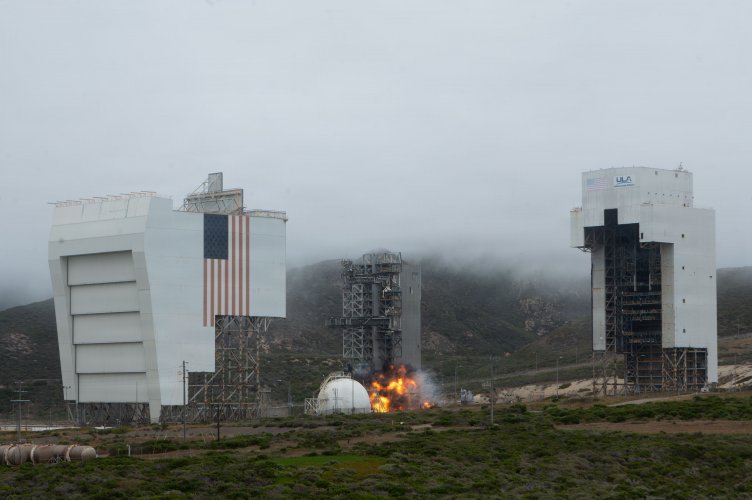
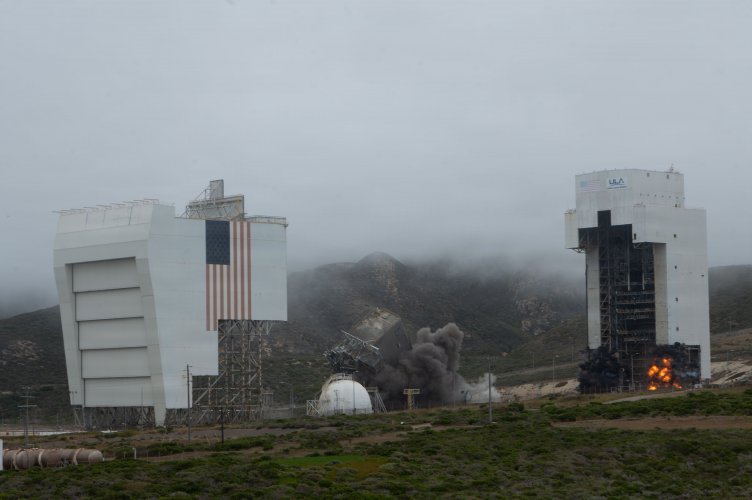
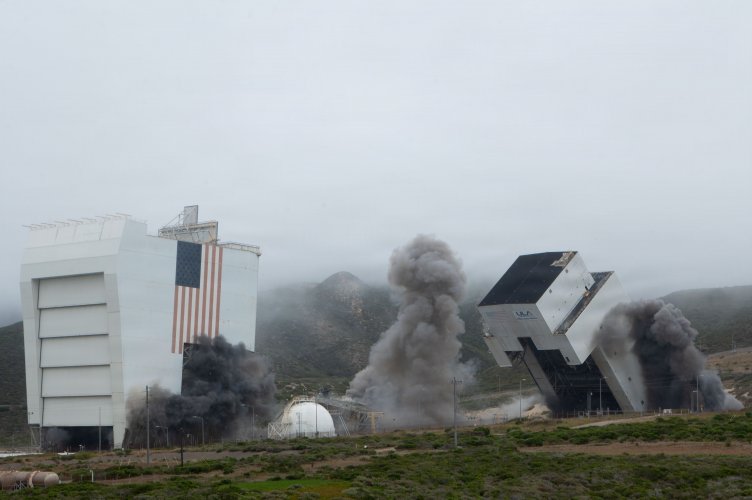
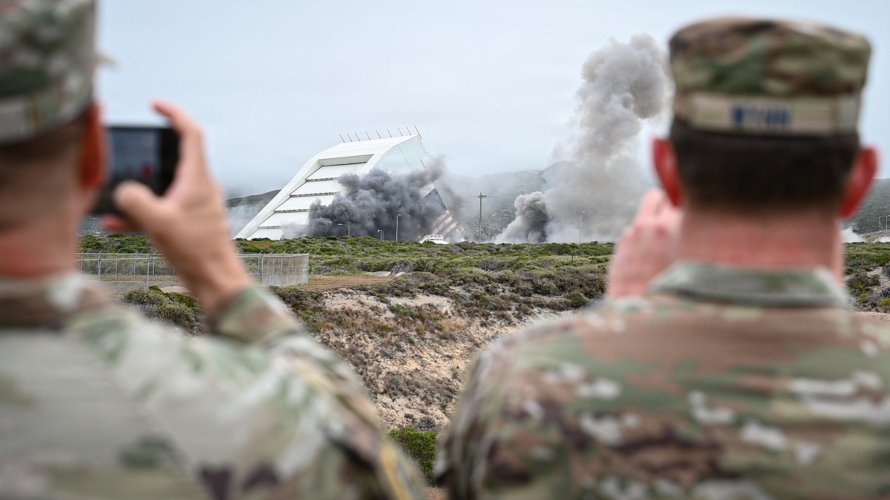
Jun. 16, 2026 – Space Launch Complex-6 (SLC-6), one of the nation's most historic launch facilities, entered a new era of national defense capability following the scheduled demolition of its legacy structures on June 16 at 11:00 a.m. PT.
"To maintain our competitive edge in a dynamic space environment, we must accelerate the delivery of next-generation capabilities," Horne said. "We are not just updating infrastructure; we are leveraging industry capabilities to field a more resilient space enterprise, ensuring the United States is prepared to protect our national interests and meet future challenges for decades to come."


​


Attachments

  • 260616-F-XB588-1036.jpg
    260616-F-XB588-1036.jpg
    1.8 MB · Views: 16
  • 260616-F-XB588-1038.jpg
    260616-F-XB588-1038.jpg
    1.6 MB · Views: 15
  • 260616-F-XB588-1039.jpg
    260616-F-XB588-1039.jpg
    1.5 MB · Views: 13
  • 260616-X-PR456-2044.jpg
    260616-X-PR456-2044.jpg
    1.8 MB · Views: 14
Looks like Rocket Lab did launch from LC-1 in Mahia without anyone outside the "circle of trust" seeing or hearing anything. As per Jonathan McDowell, "Unannounced LAUNCH at about 1020 UTC Jun 19 by Electron from Mahia of the US Space Force mission VICTUS HAZE Puma, to a 347 x 461 km x 97.5 deg, 2241LTDN sun-sync orbit." An X posting by "Lukas C.H." adds, "2026-142A has been identified by Space-Track as 'VICTUS HAZE PUMA', and Electron's second stage has been cataloged as well."

Incredible and impressive.

View: https://x.com/planet4589/status/2068417784195784920

View: https://x.com/GewoonLukas_/status/2068391495585944014
 
Now comes confirmation from US Space Force's Space Systems Command, via Aviation Week, that Rocket Lab did indeed launch an Electron rocket at 6:19 a.m. ET (10:19 p.m. NZT), on June 19, 2026, from Launch Complex-1 (LC-1) in Mahia, New Zealand, as part of the US Space Force's Tactically Responsive Space Victus Haze mission.

Here's the first photo released of the launch, published by Aviation Week. The photo is credited to US Space Force and Rocket Lab:
rocket_lab_victus_haze_launch.jpg


Aviation Week - Rocket Lab Launches Second USSF Victus Haze Spacecraft
by Vivienne Machi - June 22, 2026
The call came before sunrise in Mahia, New Zealand. Less than 17 hr. later, Rocket Lab launched a company-built satellite to space with its Electron rocket, marking a key milestone in a U.S. Space Force program aimed at developing the ability to quickly deploy spacecraft to orbit in response to potential threats.

The Electron rocket lifted off on June 19 at 10:19 UTC (6:19 a.m. EDT) from one of two company pads in Mahia. The launcher flew 16 hr. and 42 min. after the Space Force sent Rocket Lab the notice to launch on June 18 at 17:35 UTC, and the spacecraft reached low Earth orbit approximately 9 min. later.

The effort, part of the service’s Victus Haze mission, requires Rocket Lab to launch to a previously unknown orbit within 24 hr. of call-up. Following on-orbit checkout and vehicle commissioning, the Rocket Lab platform was charged to then maneuver to join a second spacecraft, built by True Anomaly and launched last month, and snap a photo of it within 72 hr. of launch.

That phase has been completed, the Space Force’s Space Systems Command (SSC) told Aviation Week June 22.
. . .
*** COMPLETE STORY IS LINKED AT TITLE ***

Videos posted by both Rocket Lab and True Anomaly about the mission:
As per Rocket Lab's video description:
The Space Force called, and we launched. From call up to lift-off in just 16 hours 42 minutes Rocket Lab has made history - the fastest response time ever for a ‪@U.S.SpaceForce‬ ‪@SpaceSystemsCommand‬ Tactically Responsive Space mission.Lifting off from Rocket Lab Launch Complex 1 in New Zealand at 10:19 pm NZT on June 19th, the mission shattered the previous TacRS record set by VICTUS NOX by more than 10 hours. The feat establishes a new global benchmark for rapid call-up space capabilities.

As per True Anomaly's video description:
Today, True Anomaly's JACKAL-0004 spacecraft officially begins VICTUS HAZE mission operations. Alongside Rocket Lab and partners from the United States Space Force, True Anomaly will operate its Jackal spacecraft and Mosaic command and control system as part of the USSF’s most advanced demonstration of Tactically Responsive Space (TacRS) to date. We are proud to work alongside Rocket Lab, Space Safari, and the USSF operations community to execute this mission.
 
Last edited:
Interesting. Interesting themes, I was honestly expecting more pantheons.

Those categories, chosen by Guardians over the last year, are:
  • Orbital warfare: Norse pantheon
  • Cyber warfare: Mythological creatures
  • Satellite communications: Constellations
  • Space domain awareness: Ghosts
  • Electromagnetic warfare: Snakes
  • Missile warning: Sentinels
  • Navigation warfare: Sharks
Navigation warfare? Like GPS-jamming?


How long until Space Force starts wondering about Starship as a bomber? One flight tossing out 100 tons of terminally guided conventional bombs then it continues around the planet and is captured on a tower. Fully reusable. Wouldn't be a nuclear capable vehicle, obviously, and it wouldn't be immune to a nuclear strike. They'd also have to harden the facilities against cheap drones. . .makes one go "hmmmm".
You'd need ~2-3km/s delta vee on each weapon to drop those out of orbit quickly, plus the thermal protection system to survive scrubbing off 3-5km/s in the atmosphere.
 
Interesting. Interesting themes, I was honestly expecting more pantheons.


Navigation warfare? Like GPS-jamming?


You'd need ~2-3km/s delta vee on each weapon to drop those out of orbit quickly, plus the thermal protection system to survive scrubbing off 3-5km/s in the atmosphere.
Drop them while you're sub orbital. One pass, then boost enough to go the rest of the way around to your catch tower.
 
The US military is proposing a new launch complex in Cape Canaveral, LC-51.

Very interesting and this would make it the closest launch site to public areas

Did some digging, and according to the Orlando Sentinel, they want to replace SLC-46.

"The goal of the new site would be to give the U.S. Army and Navy a place to test launch missiles instead of relying on the existing Space Launch Complex 46, which falls too close to Blue Origin’s launch site, according to a public notice published in April."

It does make sense, seeing how that area is mainly a beach and could not support large launch vehicles.

View: https://twitter.com/Truthful_ast/status/2068007446543585566


View: https://twitter.com/Echo5550/status/2068012973063311463

Here's that Orlando Sentinel article:

https://www.orlandosentinel.com/202...t-new-launch-site-only-2-miles-from-the-port/

By Richard Tribou | June 13, 2026

The Department of the Air Force, which oversees the facility, is gathering information for an Environmental Assessment for a proposed Space Launch Complex 51 that would be about 2 miles from Port Canaveral.

The goal of the new site would be to give the U.S. Army and Navy a place to test launch missiles instead of relying on the existing Space Launch Complex 46, which falls too close to Blue Origin’s launch site, according to a public notice published in April.

The purpose of the proposed pad is the move Army and Navy operations “to a location outside all commercial space launch providers’ explosive clear zones.”

...

SLC-51 would be constructed about 2.5 miles south of SLC-46 just south of Pier Road and include “the complete construction of new infrastructure, utilities and structures” across 50 acres. This would be close to two launch sites previously used by the Navy’s Naval Ordnance Test Unit, Space Launch Complex 25 and 29, both of which are inactive.
 
No clue how everyone missed this, but apparently SLC-46 is actually going to be leased to someone with a Superheavy Launch Vehicle. There are literally only two possible people who could buy SLC-46 under that description currently, which would be Blue Origin and SpaceX.

This means SLC-51 is just the military replacing a pad they are selling. All this is depending on IF they can lease it, though, as this document is only them researching and seeing the viability of using SLC-46 as a pad.

Source: https://sam.gov

View: https://twitter.com/Echo5550/status/2068174106713841709
 

Similar threads

Back
Top Bottom