Reuben James
ACCESS: Top Secret
- Joined
- 15 September 2024
- Messages
- 546
- Reaction score
- 1,113
https://drive.google.com/file/d/1t9J7SpwCbTa5-xkD_Xmqzor79sV4qsm9/view
Hey everyone, I noticed we didn't have a centralised thread for discussion of the Royal Navy's movement towards its planned Hybrid Navy, and Atlantic Bastion (Net, Shield and Strike). The attached document above, from CNE 2026, gives an introductory overview in decent detail.
I'll summarise, though.
I'll be posting everything Hybrid Navy-relevant here, feel free to drop your own articles, thoughts and opinions below!
Hey everyone, I noticed we didn't have a centralised thread for discussion of the Royal Navy's movement towards its planned Hybrid Navy, and Atlantic Bastion (Net, Shield and Strike). The attached document above, from CNE 2026, gives an introductory overview in decent detail.
I'll summarise, though.
- The Royal Navy has four primary concerns - homeland defence, maritime strike, global presence and nuclear deterrence. All of the missions undertaken, and equipment purchased, fall into at least one of these four categories.
- These continue to be the basic four requirements of the Royal Navy. However, as budgets have shrunk, the RN has been left doing more and more, with less and less.
- The thinking goes, that investing en masse in uncrewed and lean-crewed assets, with very high degrees of networking, can initially compensate for a decline in traditional strength, and then eventually deliver an increase in capability over established platforms. This is what is known as the 'Hybrid Navy'. Note that this is a hybrid, not an autonomous, navy. Manned platforms will remain present.
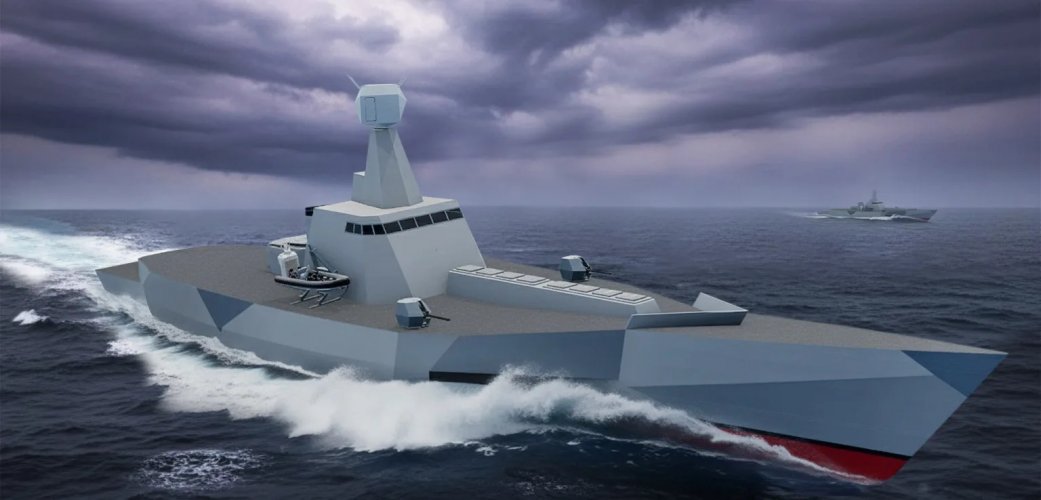
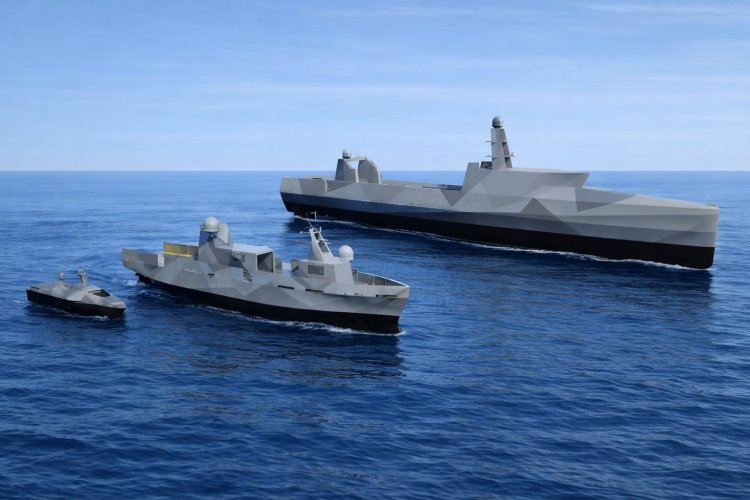
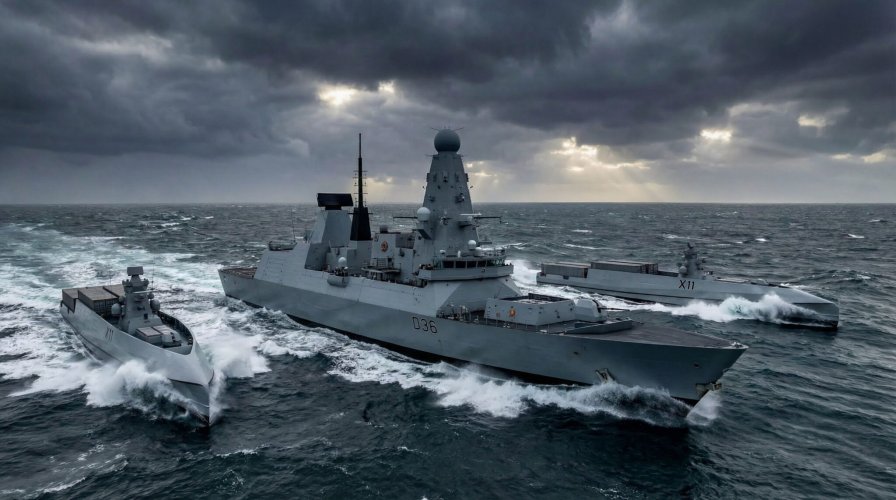
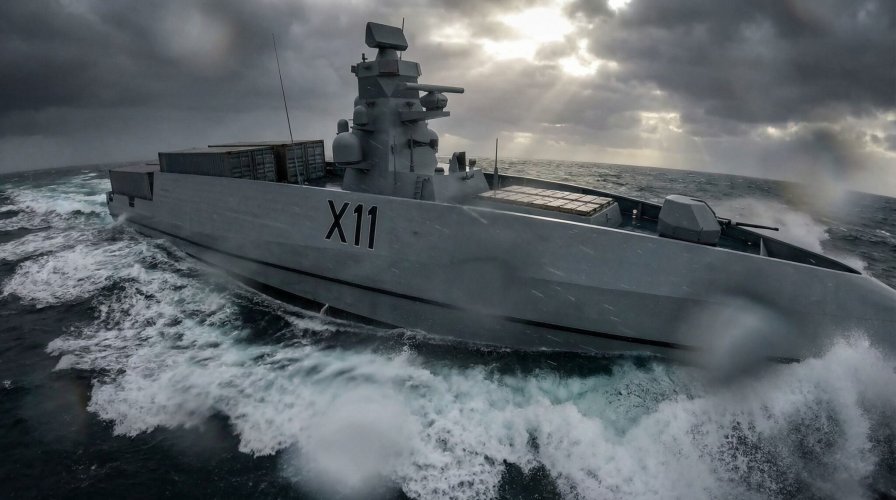
- Under this framework, the traditional role of the warship (and eventually the form of the warship) will change. Warships will work in tandem with multiple uncrewed vessels. This offers three principle advantages: an increased operational footprint, an increased operational endurance, and an additional layer of protection for the manned ship. Large unmanned surface vessels (LUSVs) and large unmanned underwater vessels/vehicles (LUUVs) will extend the sensor reach of the manned vessel, for example with onboard sonar or radar, increase the weapons complement of the manned vessel (they might carry additional missiles, for example), whilst being able to operate more aggressively without risking crew lives.
- The manned warship will be known as the Collaborative Combat Vessel (CCV). The first CCVs will be the Type 45 destroyers, likely beginning testing with large unmanned vehicles in 2027-28. The incoming Type 26 and Type 31 frigates will also fill this role, whilst the Type 83 destroyer will be the first warship designed from the ground up as a CCV.
- There is also the Hybrid Air Wing initiative, that seeks to undertake a very similar plan of action, but with the F-35B Lightning as the CCV-equivalent. Trials should begin in 2026.
I'll be posting everything Hybrid Navy-relevant here, feel free to drop your own articles, thoughts and opinions below!