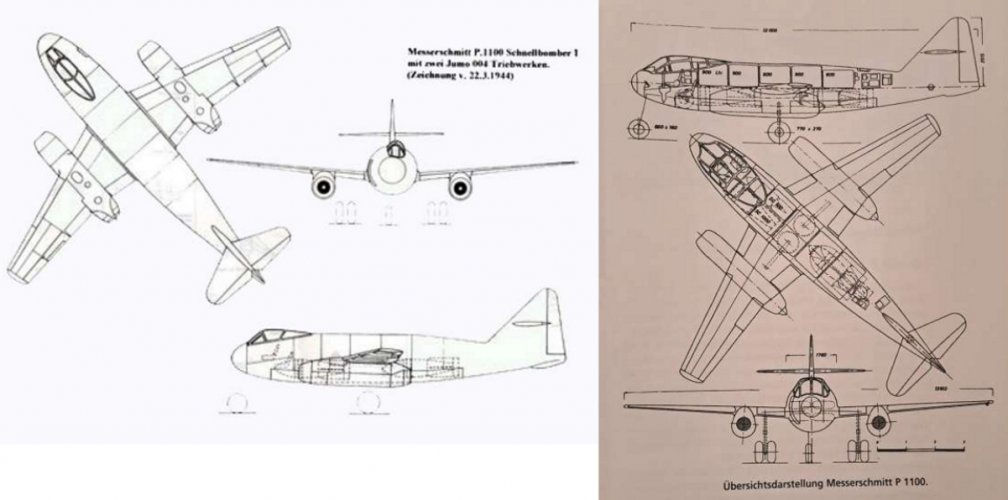
Secret weapon part 9 - Me P. 1100 “The level bomber”. Until that Dan Sharp released his next book with new details, I will bring the data I have could find. Me P.1100 (22 March 1944). In the...
www.facebook.com
"Secret weapon part 9 - Me P. 1100 “The level bomber”.
Until that Dan Sharp released his next book with new details, I will bring the data I have could find.
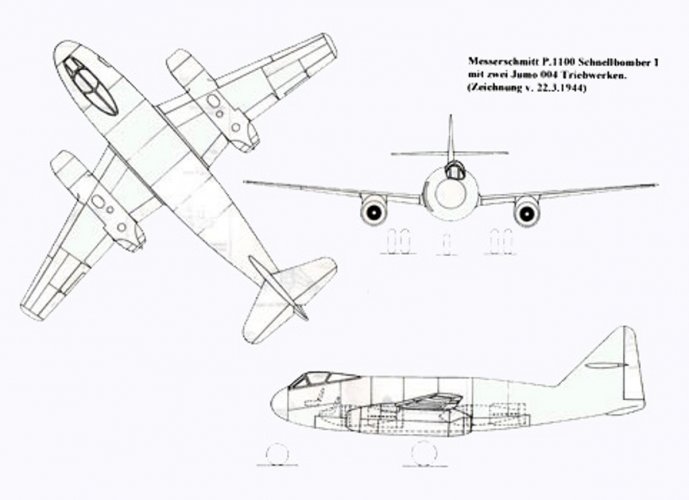
Me P.1100 (22 March 1944).
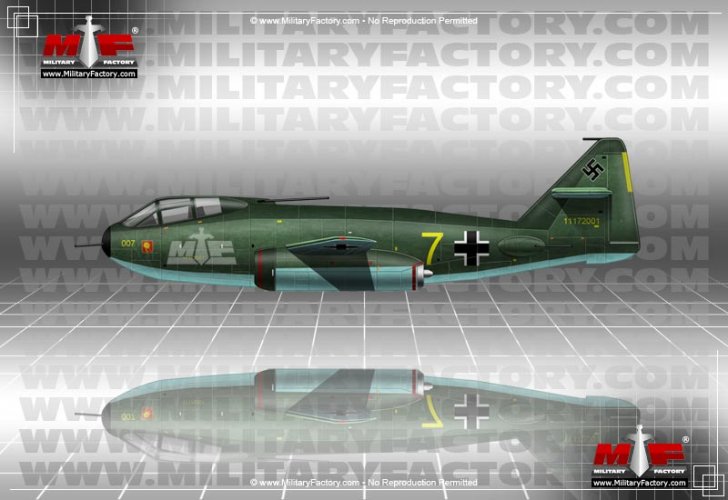
In the beginning of 1944 Messerschmitt began the Heavy fighter Me P. 1099 and the fast bomber Me P.1100 project. The project sharing the same fuselage for both product line, and the drawings are saved under project XVIII.
A version:
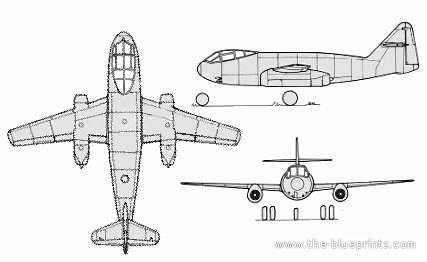
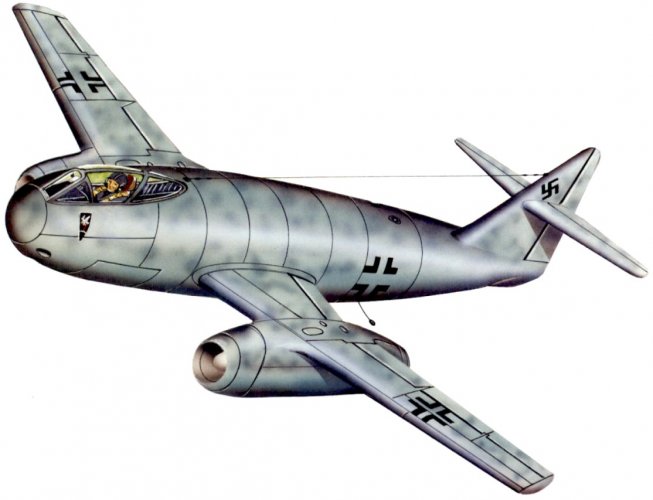
The first project was project XVIII/70/1 is dated the 22 march 1944(see
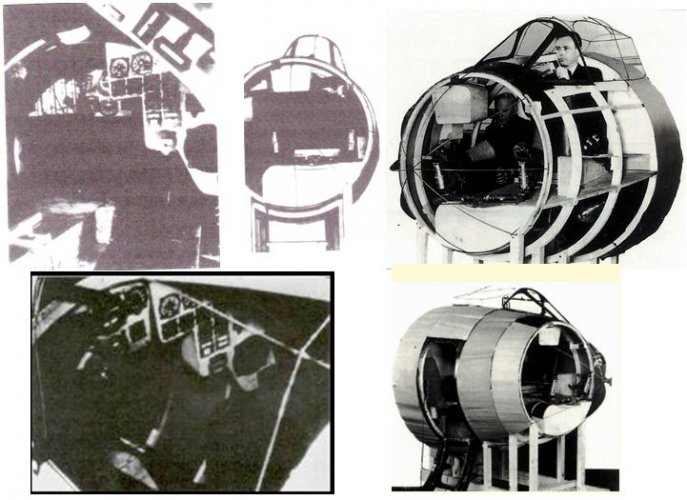
illustration 1 & 2), but the documents is shown another date (13.01-1944). This plane was build as a mock- up of the cockpit design (
See illustration 3), had an asymmetric placement of the cockpit.
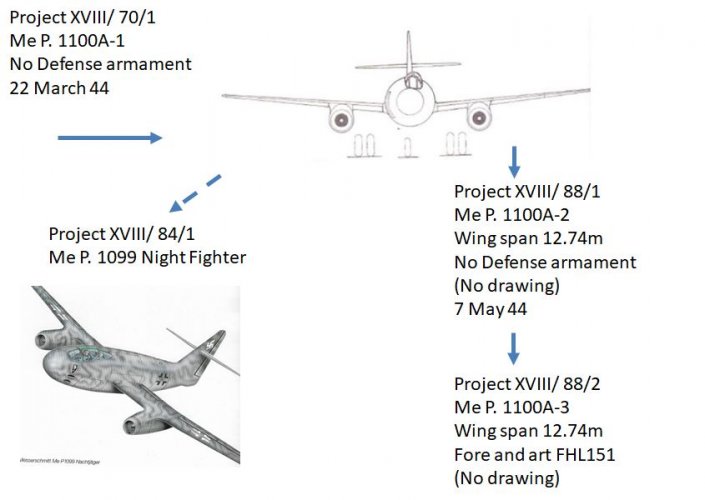
I have named it as Me P. 1100A-1 and this concept was later developed into the concept XVIII/84/1 (Me P.1099 night fighter). (See the over view for A versions,
illustration 4)
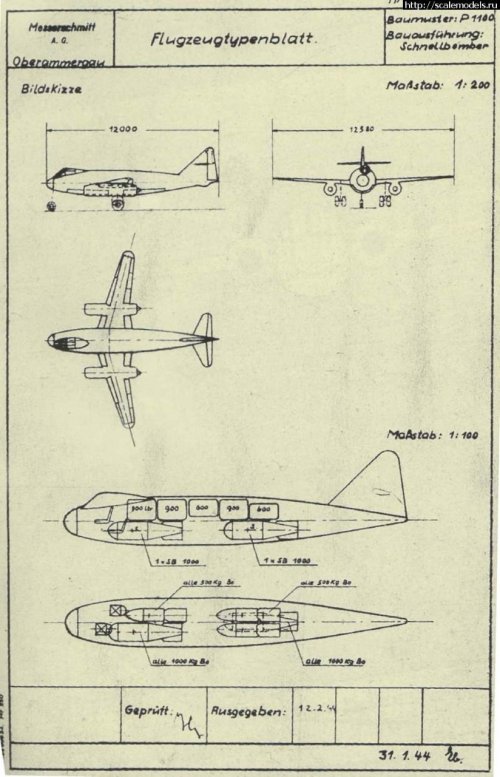
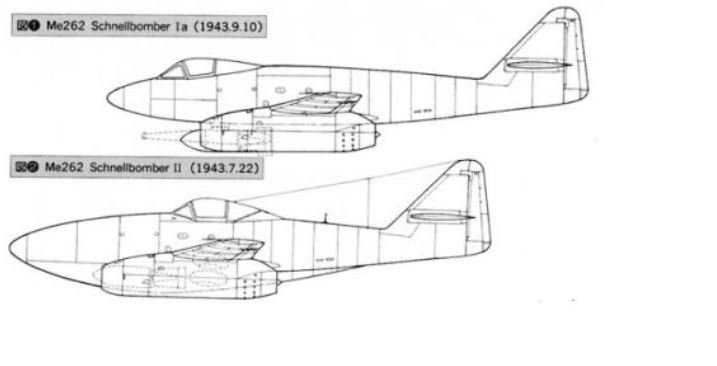
Compared with the earlier bomber version of Me 262 could the Me 262A-2A carried 2x 250kg bombs, the “schnellbomber I” carried 2x 500kg (See
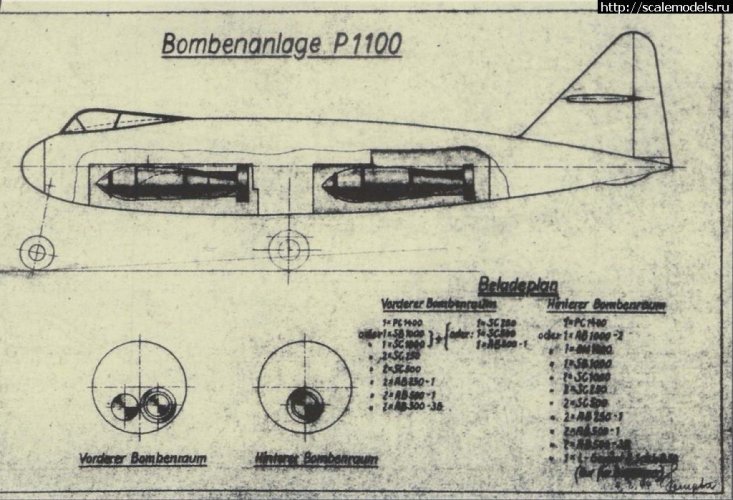
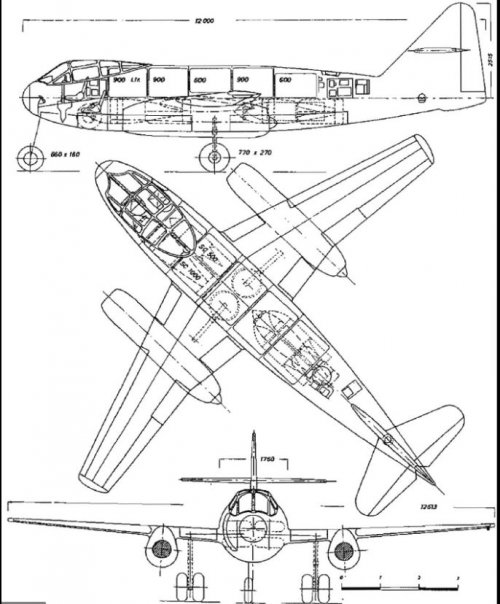
illustration 5), and Me P. 1100 could carried 4x 500kg, 2x 1000kg, or in overload condition 2x PC1400 (total 2800kg). The Me P1100 had the bomb bay split up in two rooms, placed in the fuselage separated by the bay for the main landing gear.
The earlier design of bomber version of the Me 262 family, had problems with center of gravity after dropping the bombs. With Me P.1100 design the bombs would be drop synchronized with the same weight from the front and rear bomb bay. So it was possible to drop the half of the load.
The two crew design make this plane to a level bomber (pilot and bombardier).
The Me P.1100A-1 design wasn’t armed with any defense armament, but was rely on speed advantage.
The maximum speed level was calculated to 722 km/h at sea level, and 746km/h at 6.000 meter . It was power by two Jumo 004C jet engine (see
illustration 6).
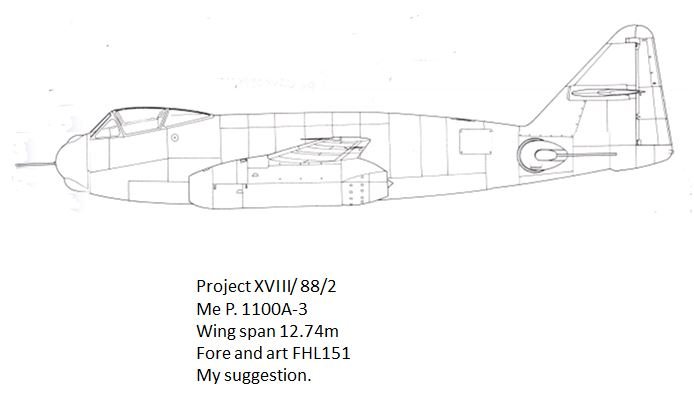
The project XVIII/70/1 was development into project XVIII/88/1 dated the 7 May 1944 (in this context named as Me P.1100A-2) where the wing span is increase to 12.74m from 12.613m.
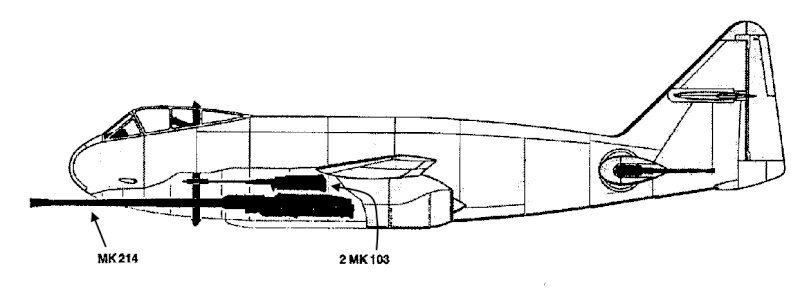
(Me P.1100A-3) Project XVIII/88/2 did also had remote weapon system 15mm MG FHL151 (in A and D stand). I have make a suggestion for the weapon system, and with asymmetric cockpit it will give some problem with aiming the weapons (See
illustration 7)
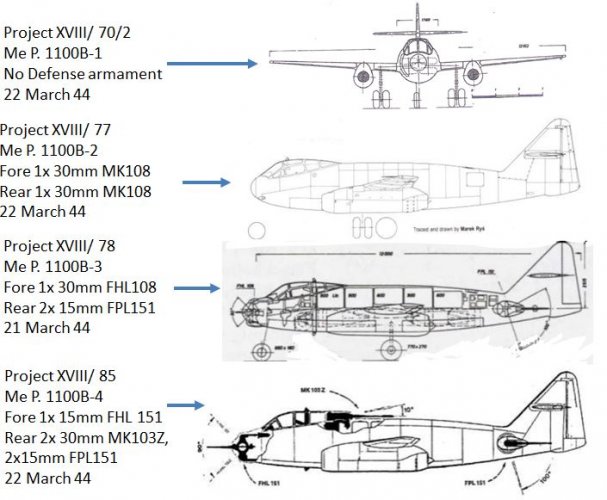
B-version: (see
illustration8)
(Me P.1100B-1) Project XVIII/70/2 had a larger cockpit, and didn’t had any defense armament
(Me P.1100B-2) Project XVIII/77 had one 30m MK 108 in port side placed in the front (A-stand) and in the rear (D- stand). The pilot aimed the rear gun by the periscope.
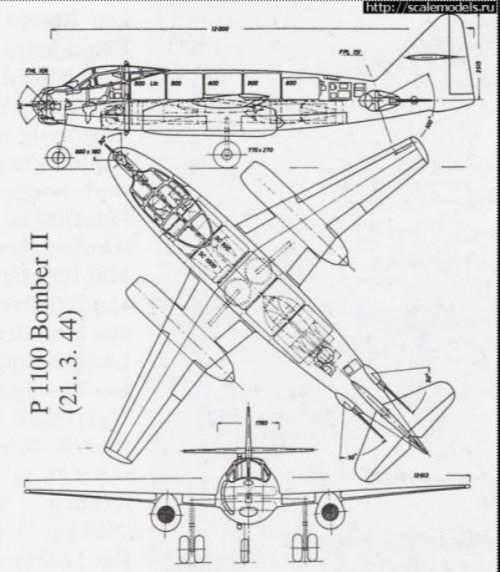
(Me P.1100B-3) Project XVIII/ 78 had moveable gun (30mm FHL108) in the front (A-stand) controlled by the navigator, and he is controlled the Rear gun turret system (15mm FPL151) with periscope (D-stand). (see
illustration 9). The rear gun system was also used by Me 410 (but only 13mm MG).
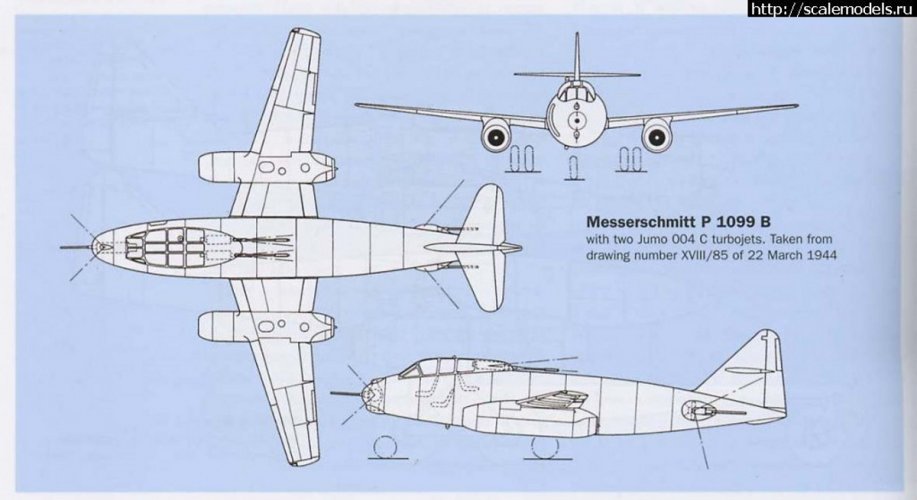
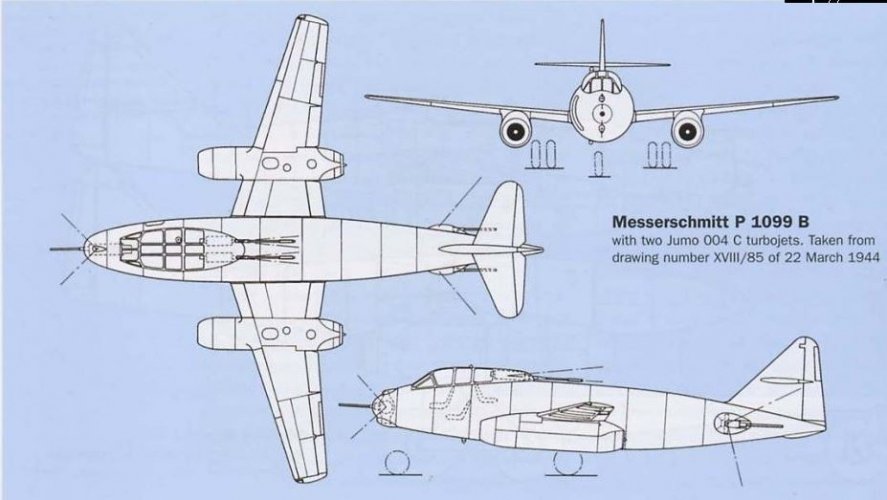
(Me P. 1100B-4) Project XVIII/ 85 were a three crew design. Pilot, (front gunner/bombardier / Periscope gunner) and rear top gunner/ radio operator (see
illustration 10). The front gun was now change to a 1x 15mm FHL 151 (A- stand), top rear gun controlled by the 3th crew member 2X 30mm MK108Z (B-stand), and 2 x15mm FPL 151 in D –stand.
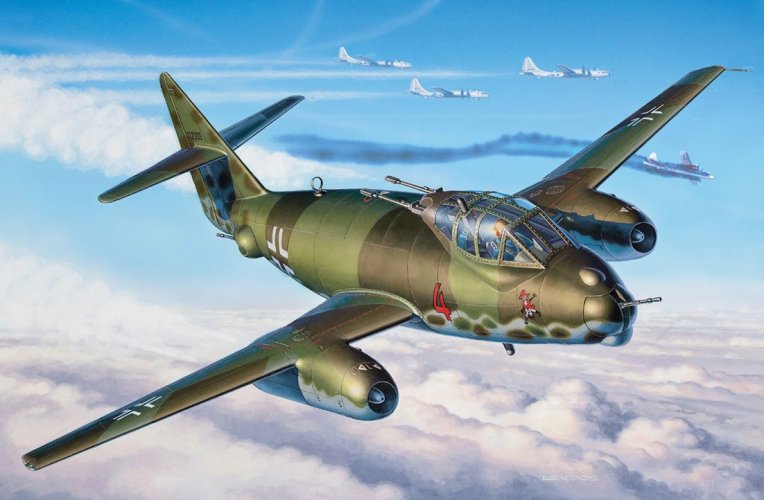
This design was inspiration for Revell model Me P.1099B/1, but this design wasn’t a fighter.
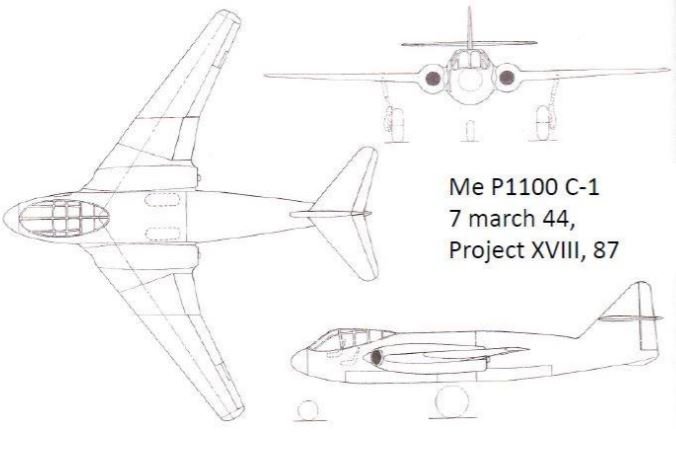
C-Version (
see illustration 11):
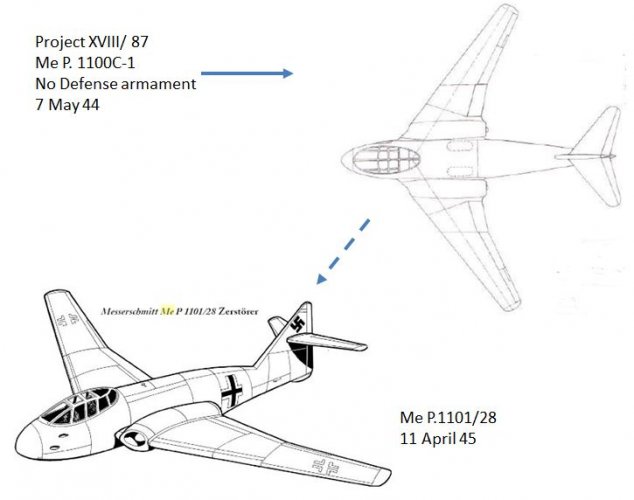
(Me P.1100C-1) Project XVIII/ 87 was powered the more powerful HeS 011A jet engine buried in the wing root and with 35 degree sweep back wing. The speed is unknown, but a later design indicated the speed
(see illustration 12)
In the last days of the war, the air manufacture still had to show results of new design, and here come the fighter project Me P.1101/28 (11 April 1945) that is very similar to project XVIII/87. Sources indicate the max speed to 910Km/h, and the dimension is the span 14.30m, Length 13.35m and the height to 4.4m.
The armament is unknown, but the demand for this period was 4x 30mm MK108.
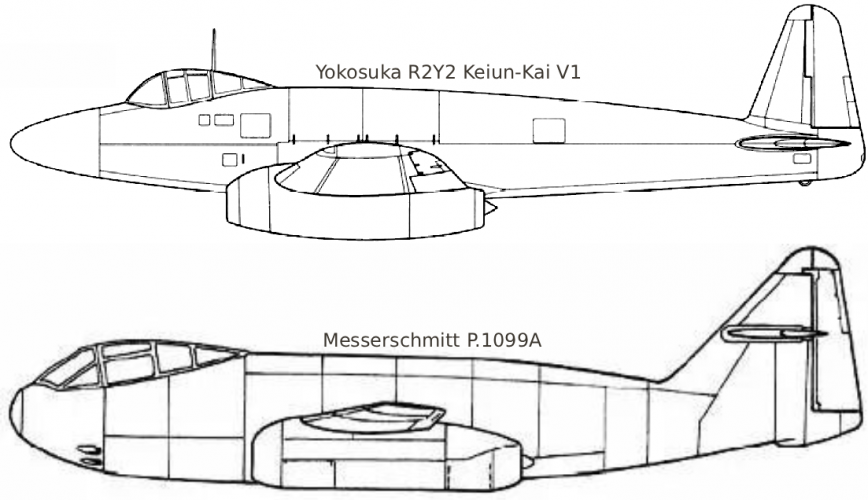
Me P.1100 design after the war many of the German technicians took hire in other countries, and the Me P.1100 was also known inspiration for two projects. These projects were the British Canberra and the French S.O. 4050 Vautour II.
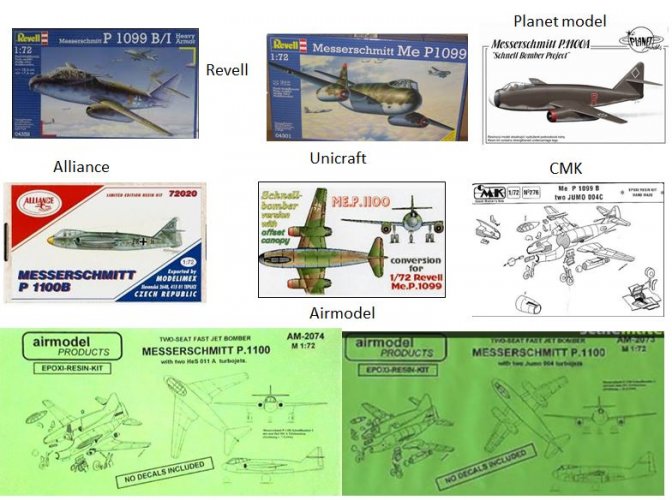
Model kit in scale 1/72 has been made by Revell, Planet model, Alliance the same mold as Airmodel, and CMK.
(
See illustration 13)."