
You are using an out of date browser. It may not display this or other websites correctly.
You should upgrade or use an alternative browser.
You should upgrade or use an alternative browser.
Junkers Projects and Prototypes 1919 - 1939
- Thread starter raravia
- Start date
gabrielorosco
I really should change my personal text
- Joined
- 10 December 2016
- Messages
- 205
- Reaction score
- 263
Incredible, always wanted to see this. Source would be awesome.Hi!
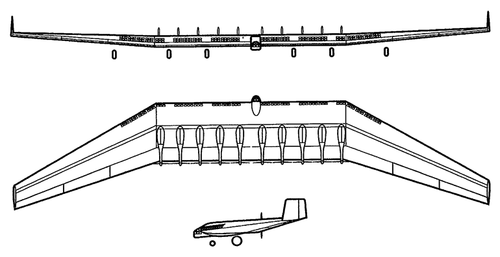
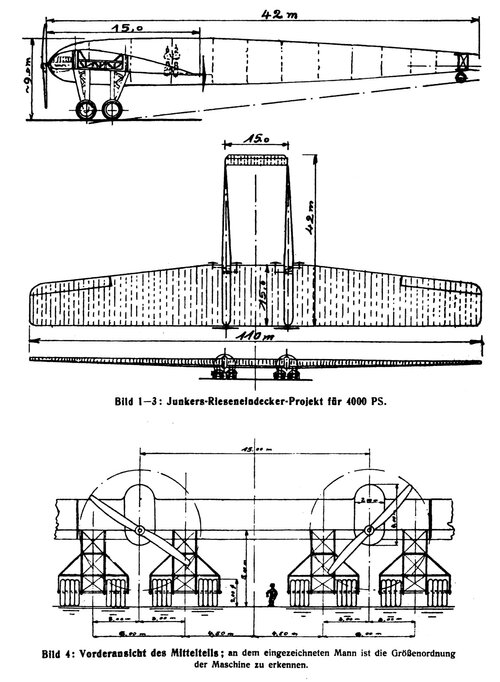
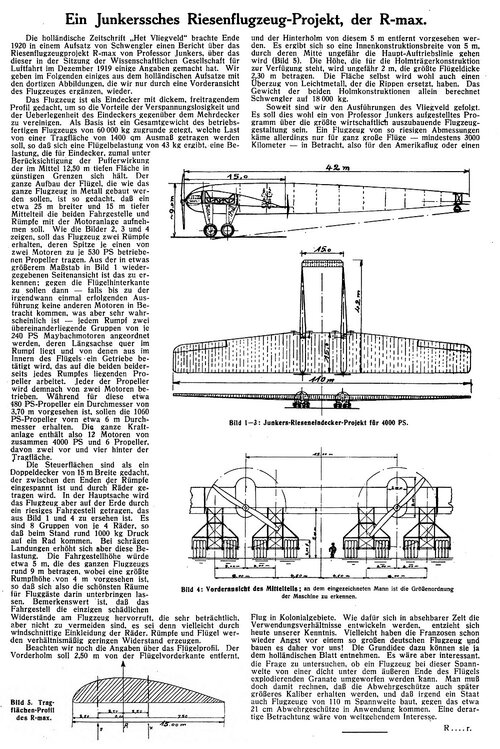
Junkers Project 14 - Junkers "Ju.Y" - 100 ton transport project. Sorry I lost the source.
View attachment 624680

blackkite
Don't laugh, don't cry, don't even curse, but.....
- Joined
- 31 May 2007
- Messages
- 9,515
- Reaction score
- 9,661
Hi!
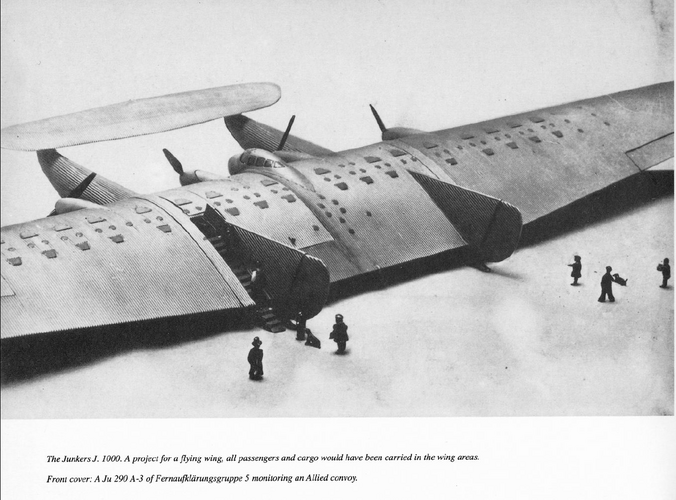
"Even after the construction of its giant passenger G-38 Hugo Junkers is not complacent and in 1930 develops a project of pure flying wing of unprecedented scale with the windows of passenger cabins on the front edge. Ten motors are located in the central plan and spin pushing air screws at its back edge.
The arrow-shaped flying wing consoles with keels at the ends made this scheme really sustainable. The main supports of the chassis with six racks had to be distributed on a scale. Junkers this project paved the way for the works of American Northrop on its flying wings.
These unrealized projects of large passenger vehicles reflected Professor Junkers' deep conviction that the efficiency of long-haul air travel was determined by the aerodynamic quality of the aircraft. And the less its harmful resistance, the greater the quality. Therefore, everything that does not create lifting power is superfluous."
https://www.you-books.com/book/L-L-Anczeliovich/Neizvestnyj-Yunkers
"Even after the construction of its giant passenger G-38 Hugo Junkers is not complacent and in 1930 develops a project of pure flying wing of unprecedented scale with the windows of passenger cabins on the front edge. Ten motors are located in the central plan and spin pushing air screws at its back edge.
The arrow-shaped flying wing consoles with keels at the ends made this scheme really sustainable. The main supports of the chassis with six racks had to be distributed on a scale. Junkers this project paved the way for the works of American Northrop on its flying wings.
These unrealized projects of large passenger vehicles reflected Professor Junkers' deep conviction that the efficiency of long-haul air travel was determined by the aerodynamic quality of the aircraft. And the less its harmful resistance, the greater the quality. Therefore, everything that does not create lifting power is superfluous."
https://www.you-books.com/book/L-L-Anczeliovich/Neizvestnyj-Yunkers
Last edited:
blackkite
Don't laugh, don't cry, don't even curse, but.....
- Joined
- 31 May 2007
- Messages
- 9,515
- Reaction score
- 9,661
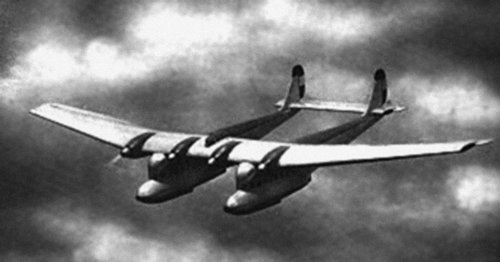
Junkers Flying Catamaran Project

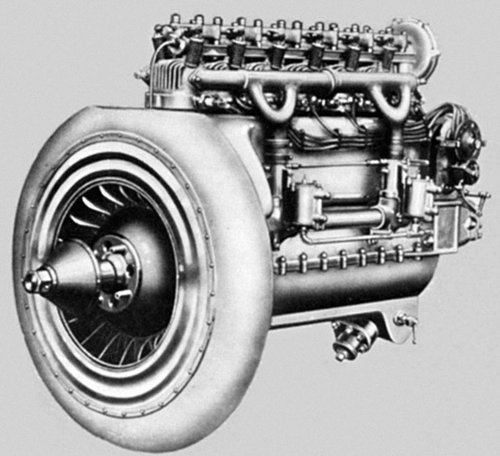
Junkers L1 Aircraft Engine
Hugo is convinced that in peacetime, light single-engine aircraft will require a small engine. In 1920, he began designing an ordinary inline air cooling engine with six L1 cylinders.

Junkers L1 Aircraft Engine
Hugo is convinced that in peacetime, light single-engine aircraft will require a small engine. In 1920, he began designing an ordinary inline air cooling engine with six L1 cylinders.
Last edited:

![310819_37_i_086[1].jpg](https://www.secretprojects.co.uk/data/attachments/160/160499-6d44a6b1f46075892d64791b57b0f8d9.jpg "310819_37_i_086[1].jpg")

- Joined
- 26 May 2006
- Messages
- 38,292
- Reaction score
- 20,435
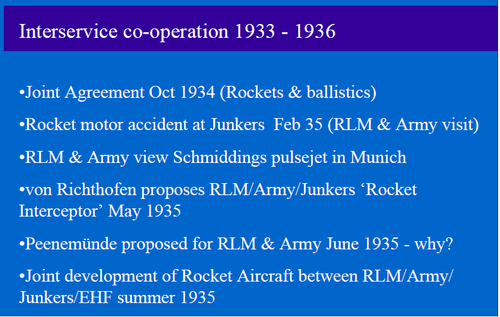
Here is two unknown Projects,
Junkers designed a rocket interceptor Project in May 1935,in co-operation with RLM/Army,also anther rocket aircraft in summer 1935,also with co-operation with RLM/Army/EHF,maybe developed or based on this one;
https://www.secretprojects.co.uk/threads/junkers-doepp-rocket-fighter.16563/
- Heinkel He 176 douglas downer-smith
Junkers designed a rocket interceptor Project in May 1935,in co-operation with RLM/Army,also anther rocket aircraft in summer 1935,also with co-operation with RLM/Army/EHF,maybe developed or based on this one;
https://www.secretprojects.co.uk/threads/junkers-doepp-rocket-fighter.16563/
- Heinkel He 176 douglas downer-smith
Attachments
Last edited:
- Joined
- 26 May 2006
- Messages
- 38,292
- Reaction score
- 20,435
Attachments
- Joined
- 26 May 2006
- Messages
- 38,292
- Reaction score
- 20,435
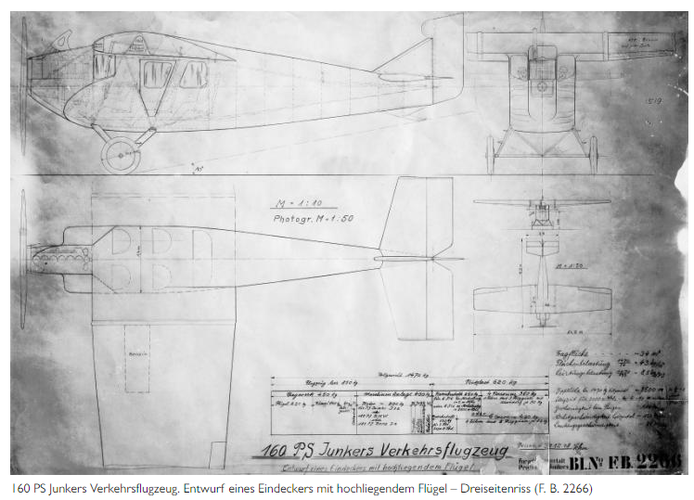
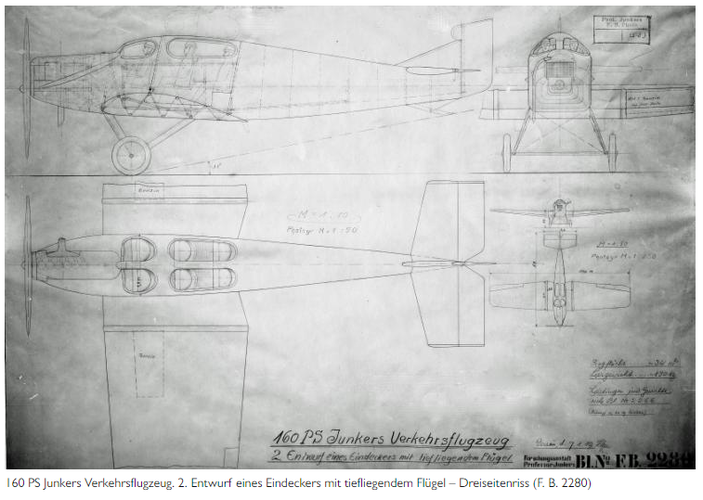
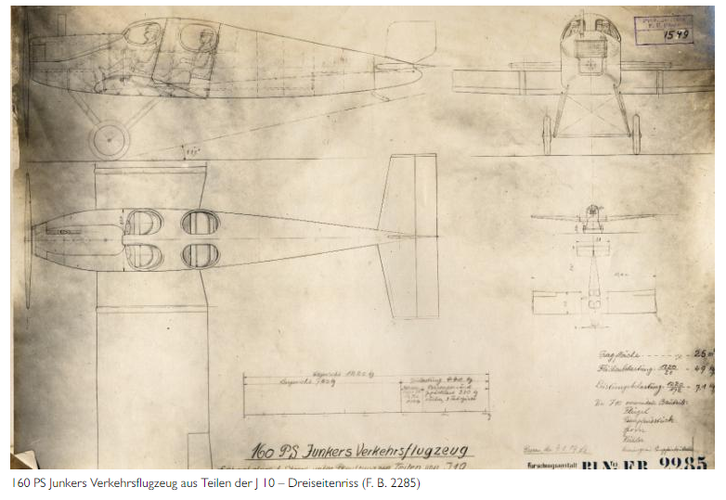
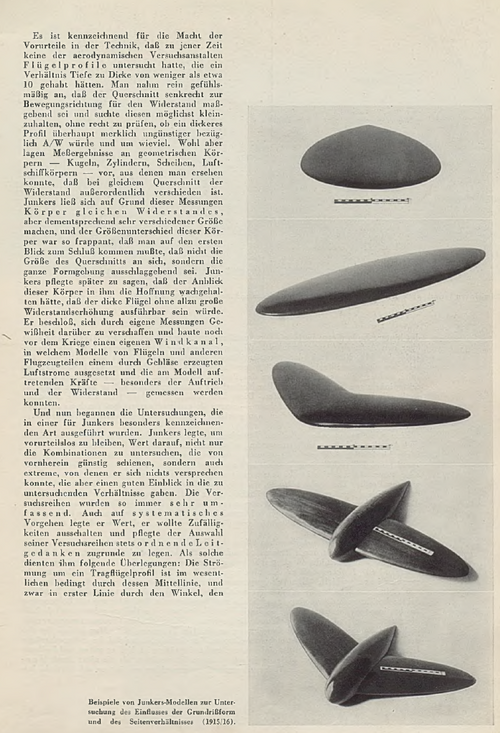
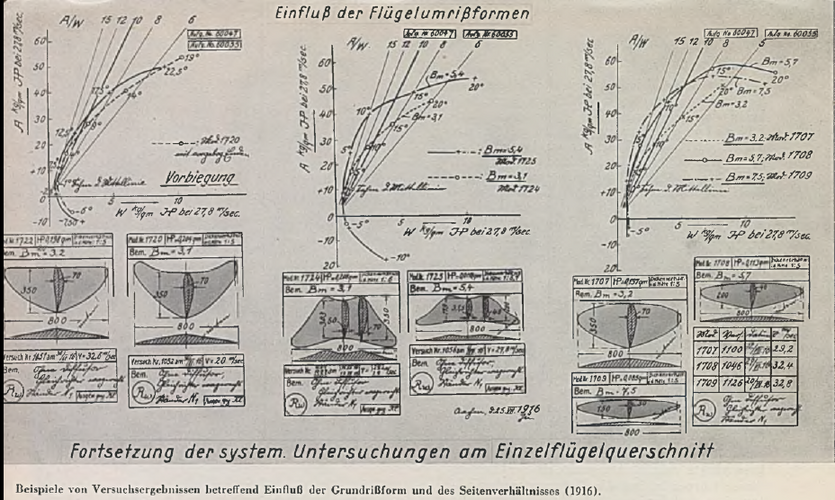
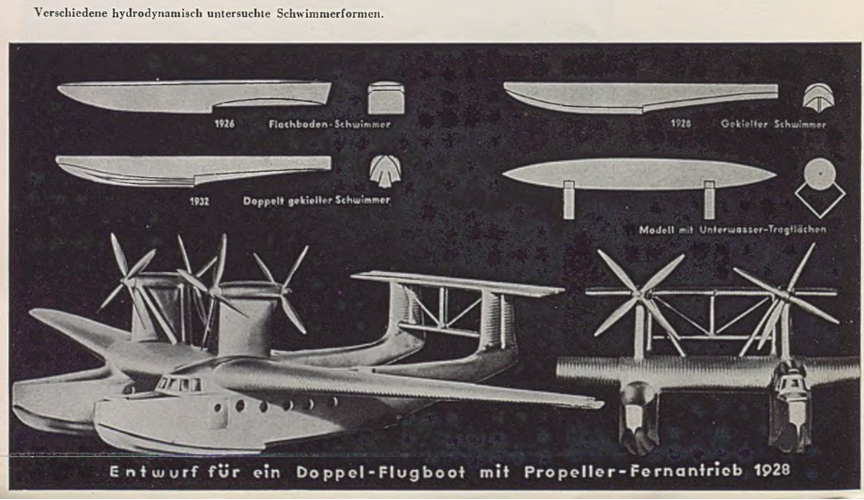
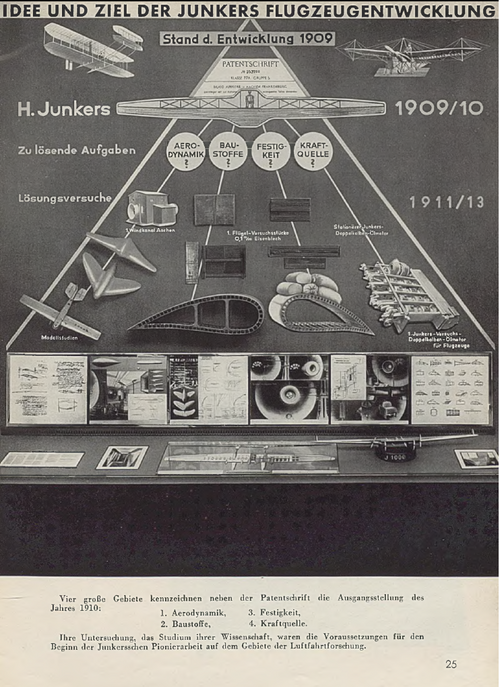
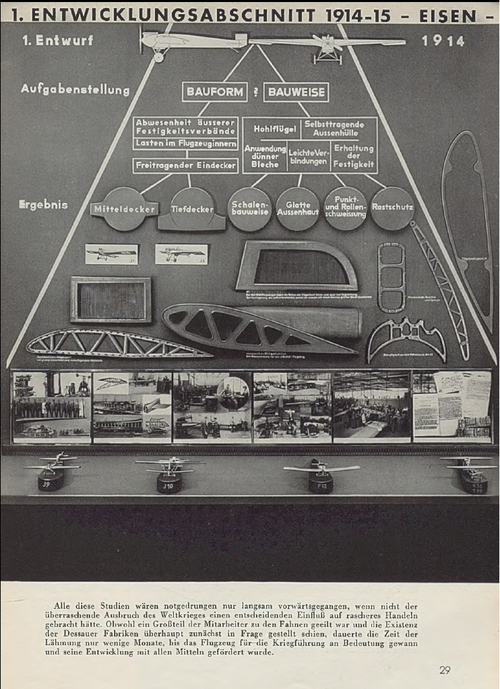
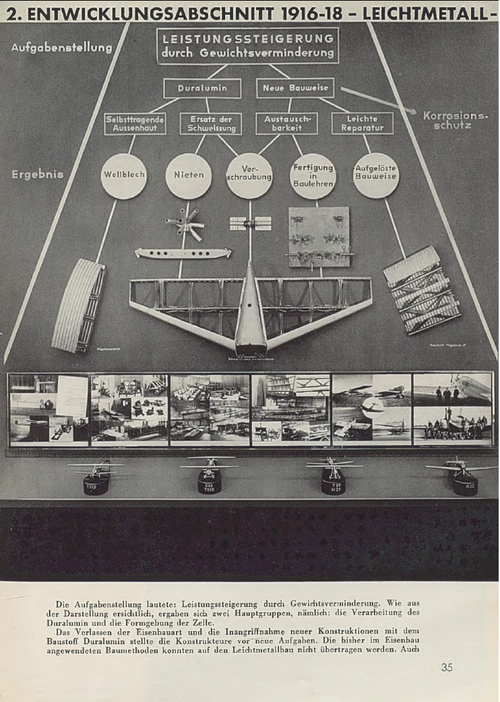
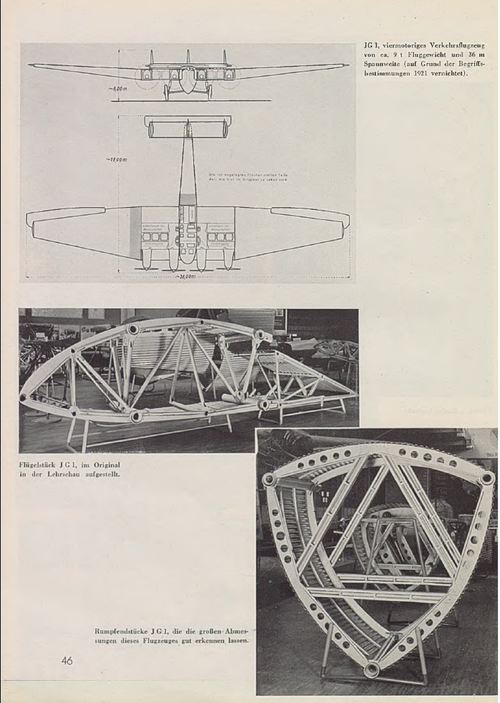
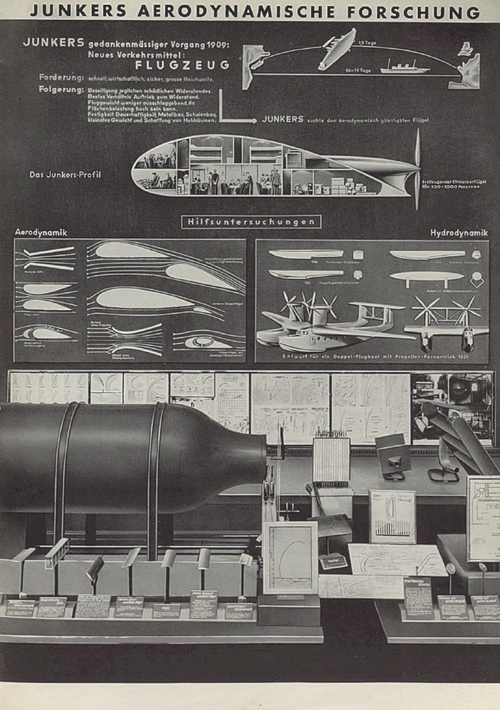
From, Die Junkers Lehrschau 30 Jahre Junkers-Flugzeugforschung 1910-1940.
Attachments
-
 1.png1.1 MB · Views: 160
 -
 2.png945.9 KB · Views: 139
 -
 3.png919 KB · Views: 129
 -
 4.png1.3 MB · Views: 124
 -
 5.png1.3 MB · Views: 124
 -
 6.png1.3 MB · Views: 130
 -
 7.png1.1 MB · Views: 149
 -
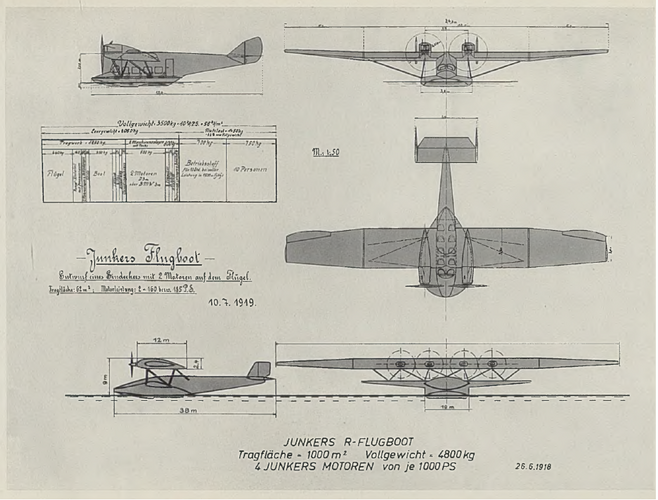 8.png884.7 KB · Views: 168
 -
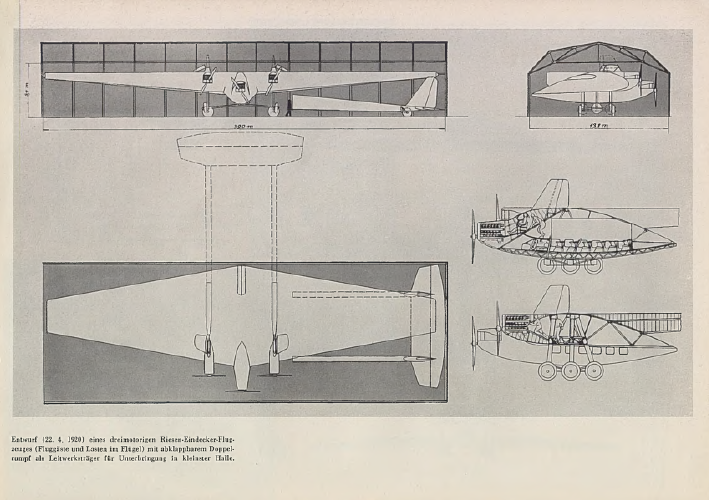 9.png565.3 KB · Views: 152
 -
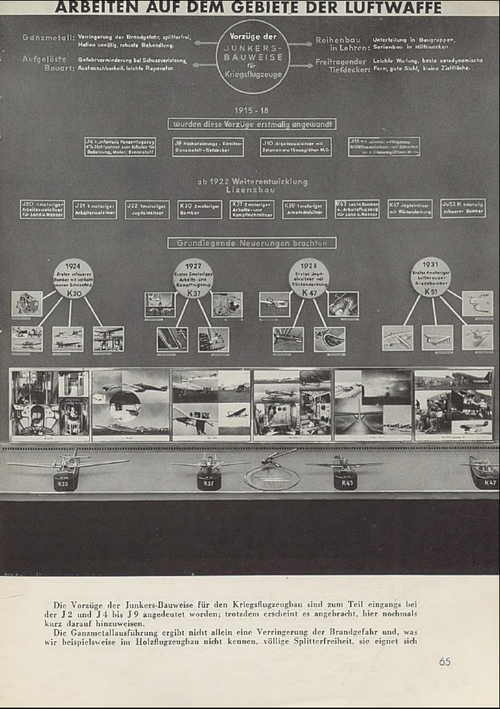 10.png1.2 MB · Views: 134
 -
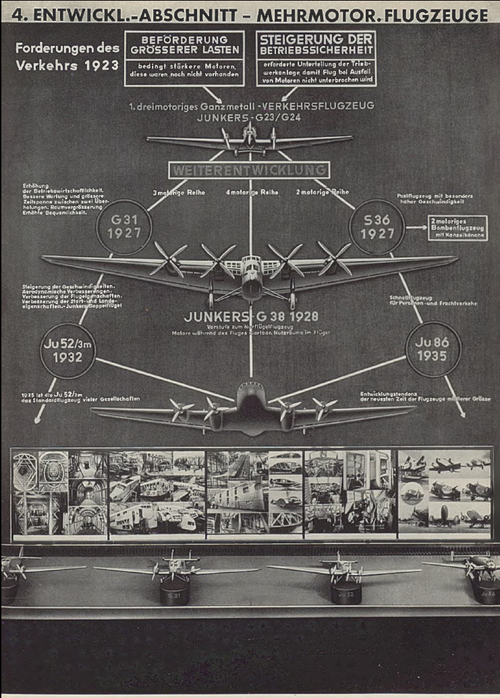 11.png1.4 MB · Views: 127
 -
 12.png1.4 MB · Views: 155
- Joined
- 26 May 2006
- Messages
- 38,292
- Reaction score
- 20,435
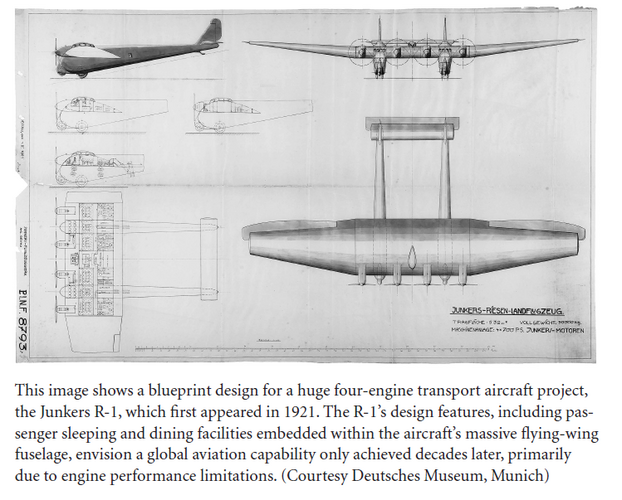
Junkers Junkerissime layout from the 1998 book Junkers Grossflugzeuge...
Source:
Junkers Grossflugzeuge (H.J.Nowarra) Motorbuch Verlag (1998) ISBN 3613012243
A good 3-view from the book;
Flying Man Hugo Junkers and the Dream of Aviation
Attachments
- Joined
- 26 May 2006
- Messages
- 38,292
- Reaction score
- 20,435
For Junkers G24;
G3 S1 24 projected ambulance aircraft of 1924, three Junkers L2
G1 Sa 24 projected reconaissance aircraft of 1924, single-engined
G2 Sb 24 projected bomber aircraft with several three engined approaches
http://hugojunkers.bplaced.net/junkers-g23-and-g24.html
G3 S1 24 projected ambulance aircraft of 1924, three Junkers L2
G1 Sa 24 projected reconaissance aircraft of 1924, single-engined
G2 Sb 24 projected bomber aircraft with several three engined approaches
http://hugojunkers.bplaced.net/junkers-g23-and-g24.html

Why is it that so many manufacturers threes have proposed twin-hull flying boats, but so few have entered production?Junkers Flying Catamaran Project
View attachment 624756
Junkers L1 Aircraft Engine
Hugo is convinced that in peacetime, light single-engine aircraft will require a small engine. In 1920, he began designing an ordinary inline air cooling engine with six L1 cylinders.
View attachment 624758
I did see a video of an American model demonstrating a nasty oscillation in a tow-tank.

- Joined
- 26 May 2006
- Messages
- 38,292
- Reaction score
- 20,435
Source, please?
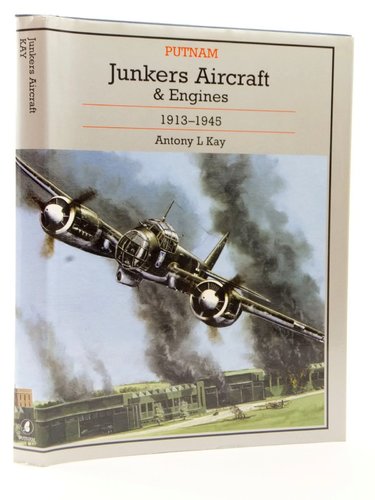
The source is; Junkers Aircraft Engines 1913-1945
Attachments
- Joined
- 26 May 2006
- Messages
- 38,292
- Reaction score
- 20,435
Still no evidence of the Double-hull Junkers seaplane contender to the Blohm & Voss Bv 138?
Which one my dear Wurger ?
So, Hesham, since you know so many Junkers double-hull flying-boat projects, I am asking for the Ha(Bv) 138 contender.Which one my dear Wurger ?

- Joined
- 25 June 2009
- Messages
- 15,515
- Reaction score
- 9,447
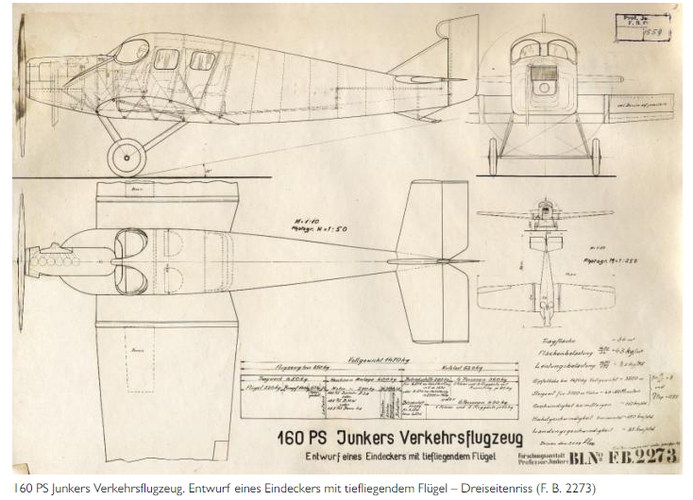
An excellent document (in German) researched by author Günter Frost for the Arbeitsgemeinschaft Deutsche Luftfahrthistorik about interwar Junkers projects/prototypes up to 1935. Included (either as a mere description of with pictures) are the J 14, J 17, J 18, J 22, J 25, EF 17, EF 24, EF 29, EF 30, EF 31, EF 34, EF 37, EF 48, EF 49, EF 52, K 85, EF 59 and EF 61.
Attachments
Last edited:
- Joined
- 26 May 2006
- Messages
- 38,292
- Reaction score
- 20,435
Here is two unknown Projects,
Junkers designed a rocket interceptor Project in May 1935,in co-operation with RLM/Army,also anther rocket aircraft in summer 1935,also with co-operation with RLM/Army/EHF,maybe developed or based on this one;
https://www.secretprojects.co.uk/threads/junkers-doepp-rocket-fighter.16563/
- Heinkel He 176 douglas downer-smith
I hope my dear Dan explain what is this ?.
- Joined
- 26 May 2006
- Messages
- 38,292
- Reaction score
- 20,435
Thanks dear Chuck,
that site have names of unknown projects (only names);
http://luftwaffe35.ifrance.com/html/junkers.htm
In that site,there are a many mysteries?,such as Ju-77,Ju-82,Ju-84,Ju-91
to Ju-96,Ju-185 & Ju-299 ?.
Attachments


- Joined
- 25 July 2007
- Messages
- 4,922
- Reaction score
- 5,551
One person's mystery is another's garbled fiction. Take a look at the RLM number assignments (while remembering the simple fact that allocation doesn't guarantee use).
"Ju-77" -- 8-77 = Arado Ar 77
-- An obvious error for the EF 077 (Ju 352 study)
"Ju-82" -- 8-82 = Savoia-Marchetti SM.82
-- Probably confusion with EF 082 project [1]
"Ju-84" -- 8-84 = Albatros Al 84 (L 84)
-- If RLM ever reassigned number to Junkers, not used
"Ju-91" -- 8-91 = Allocated but probably not used
"Ju-96" -- 8-96 = Arado Ar 96
"Ju-185" - 8-185 = Flettner Fl 185
"Ju-299" - 8-299 = Allocated but probably not used
___________________________________________
[1] Horst Zoeller (Hugo Junkers Homepage) speculated that, internally, the number 82 may even have been associated with the EF 083 project.
"Ju-77" -- 8-77 = Arado Ar 77
-- An obvious error for the EF 077 (Ju 352 study)
"Ju-82" -- 8-82 = Savoia-Marchetti SM.82
-- Probably confusion with EF 082 project [1]
"Ju-84" -- 8-84 = Albatros Al 84 (L 84)
-- If RLM ever reassigned number to Junkers, not used
"Ju-91" -- 8-91 = Allocated but probably not used
"Ju-96" -- 8-96 = Arado Ar 96
"Ju-185" - 8-185 = Flettner Fl 185
"Ju-299" - 8-299 = Allocated but probably not used
___________________________________________
[1] Horst Zoeller (Hugo Junkers Homepage) speculated that, internally, the number 82 may even have been associated with the EF 083 project.
Mu17
I really should change my personal text
- Joined
- 30 December 2013
- Messages
- 35
- Reaction score
- 39
I would like to make an observation on this thread and do please knock me down if my opinion is flawed.
Despite books on tailless types regularly referring to Junkers patent and interest in tailless/all-wing/nurflugel types......
The reality is that the patent has been misrepresented, sometimes intentiuonally so (as I was aware) and relates to a thick wing within which passengers and engines can be enclosed, to reduce drag on an aircraft with a conventional tail.
Except for Project 14 / Ju Y/ F.B 5243, the 100 ton, 10 engined tailless prject (even then a second variant had a fuselage and tail) there are NO other Junkders tailless projects until EF128 and EF130. No previous wind tunnel models and no small scale test aircraft that are recorded.
Therefore Junkers should not be cited as especially interested in tailless types (until 1944), nor having influenced the aerodynamics or handling characteristics of them, other than the drag reduction opportunities offered by a thick wing. In turn, that advantage fell out of fashion in the Germany of 1943/44 as the advantages of thin wings became apparent
Despite books on tailless types regularly referring to Junkers patent and interest in tailless/all-wing/nurflugel types......
The reality is that the patent has been misrepresented, sometimes intentiuonally so (as I was aware) and relates to a thick wing within which passengers and engines can be enclosed, to reduce drag on an aircraft with a conventional tail.
Except for Project 14 / Ju Y/ F.B 5243, the 100 ton, 10 engined tailless prject (even then a second variant had a fuselage and tail) there are NO other Junkders tailless projects until EF128 and EF130. No previous wind tunnel models and no small scale test aircraft that are recorded.
Therefore Junkers should not be cited as especially interested in tailless types (until 1944), nor having influenced the aerodynamics or handling characteristics of them, other than the drag reduction opportunities offered by a thick wing. In turn, that advantage fell out of fashion in the Germany of 1943/44 as the advantages of thin wings became apparent
- Joined
- 26 May 2006
- Messages
- 38,292
- Reaction score
- 20,435
Except for Project 14 / Ju Y/ F.B 5243, the 100 ton, 10 engined tailless project (even then a second variant had a fuselage and tail) there are NO other Junkders tailless projects until EF128 and EF130. No previous wind tunnel models and no small scale test aircraft that are recorded.
From where this dear Mu17 ?!.
Mu17
I really should change my personal text
- Joined
- 30 December 2013
- Messages
- 35
- Reaction score
- 39
As part of the book I am writing, I am looking at the contemporary influences on the Horten brothers up to 1945.
My previous post can be broken into two parts - does anyone have evidence of any Junkers tailless projects apart from the three I quoted ? Lack of multiple tailless projects surely demonstrates that Junkers did not have a great interest in the tailless planform.
Any counter evidence ?
My statement about the original Junkers 1909 patent referring to a thick wing of conventional planform, rather than to an all-wing concept might well be regarded as heresy but I am aware that this view has been around for at least 50 years or more.
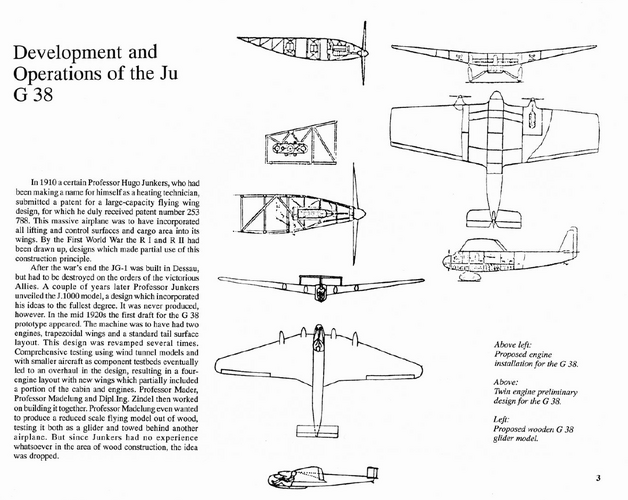
In Hugo Junkers and his aircraft (1986) by Gunter Schmitt, page 19, it is plainly stated that the 1909 patent, granted in 1910 nr 253788 was......... later often wrongly identified as being for a 'flying wing'. althpugh it is best characterised as a design for a thick wing. As late as 1929 one of Junkers closest assistants, Professor Otto Mader projected this erroneous view and in doing so contributed to the consolidation of the misconception whereby the object of Junkers first patent in the field of aeronautics was thought of as being for a complete aircraft, albeit one that had neither a fuselage or tail and which consisted solely of a wing.....
.......the Kaiserlisches Ptentamt dated November 14, 1912, bore the misleading description 'Glider with hollow body which embraces all components which do not produce aerodynamic lift'.
However it was neither a 'flying wing' nor a glider. The manuscript draft of Junkers'application for the patent dated December 3rd 1909, bears the quite different title 'Patenr for a hollow wing form'. Thus eventhe inventors initial designation makes it clear that the object of the application was not a complete aircraft but only a part of one, namly a new wing form.
Junkers consistently followed his thick wing concept for CONVENTIONAL aircraft, even giant bombers and transport. The 1928 Junkers G38 could have acted as a stepping stone to the Projekt 14 / Ju Y/ F.B.5243 interms of construction but where are wind tunnel tests or small experimental prototypes that sought to develop an aerodynamically viable tailless/all-wing type ? even the Ju Y had two variants - one with a tail.
If Junkers patent did not relate to flying wings and their first tailless design did not appear until 1930 and then nothing until 1944/45, then I find it difficult to accept the view that Junkers was greatly interest in the tailless planform.
I welcome any alternative views with the evidence to support them.
Paul
My previous post can be broken into two parts - does anyone have evidence of any Junkers tailless projects apart from the three I quoted ? Lack of multiple tailless projects surely demonstrates that Junkers did not have a great interest in the tailless planform.
Any counter evidence ?
My statement about the original Junkers 1909 patent referring to a thick wing of conventional planform, rather than to an all-wing concept might well be regarded as heresy but I am aware that this view has been around for at least 50 years or more.
In Hugo Junkers and his aircraft (1986) by Gunter Schmitt, page 19, it is plainly stated that the 1909 patent, granted in 1910 nr 253788 was......... later often wrongly identified as being for a 'flying wing'. althpugh it is best characterised as a design for a thick wing. As late as 1929 one of Junkers closest assistants, Professor Otto Mader projected this erroneous view and in doing so contributed to the consolidation of the misconception whereby the object of Junkers first patent in the field of aeronautics was thought of as being for a complete aircraft, albeit one that had neither a fuselage or tail and which consisted solely of a wing.....
.......the Kaiserlisches Ptentamt dated November 14, 1912, bore the misleading description 'Glider with hollow body which embraces all components which do not produce aerodynamic lift'.
However it was neither a 'flying wing' nor a glider. The manuscript draft of Junkers'application for the patent dated December 3rd 1909, bears the quite different title 'Patenr for a hollow wing form'. Thus eventhe inventors initial designation makes it clear that the object of the application was not a complete aircraft but only a part of one, namly a new wing form.
Junkers consistently followed his thick wing concept for CONVENTIONAL aircraft, even giant bombers and transport. The 1928 Junkers G38 could have acted as a stepping stone to the Projekt 14 / Ju Y/ F.B.5243 interms of construction but where are wind tunnel tests or small experimental prototypes that sought to develop an aerodynamically viable tailless/all-wing type ? even the Ju Y had two variants - one with a tail.
If Junkers patent did not relate to flying wings and their first tailless design did not appear until 1930 and then nothing until 1944/45, then I find it difficult to accept the view that Junkers was greatly interest in the tailless planform.
I welcome any alternative views with the evidence to support them.
Paul
blackkite
Don't laugh, don't cry, don't even curse, but.....
- Joined
- 31 May 2007
- Messages
- 9,515
- Reaction score
- 9,661
Attachments
blackkite
Don't laugh, don't cry, don't even curse, but.....
- Joined
- 31 May 2007
- Messages
- 9,515
- Reaction score
- 9,661
Attachments
-
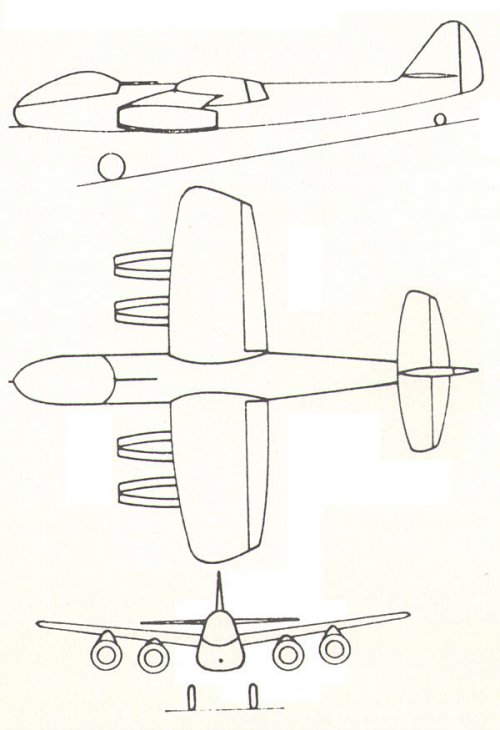 ju008-dr.jpg52 KB · Views: 29
 -
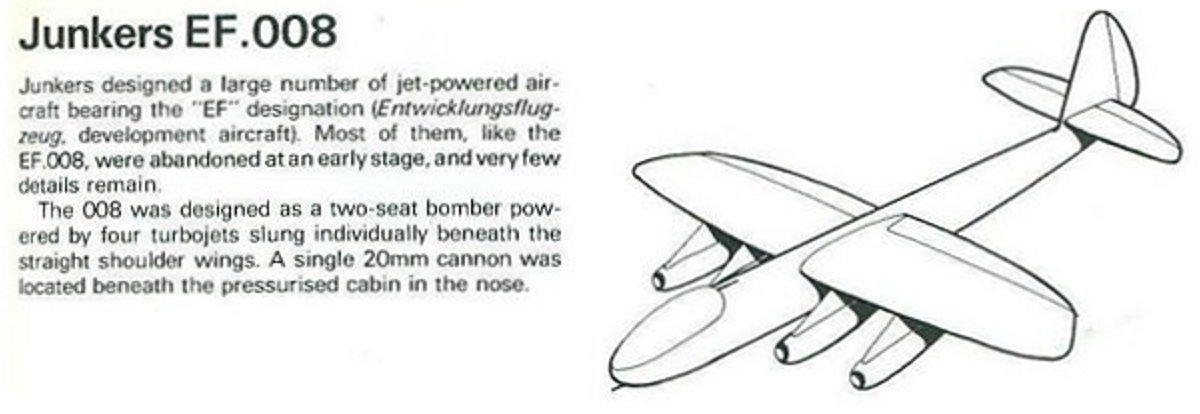 ju008-art.jpg206.7 KB · Views: 26
 -
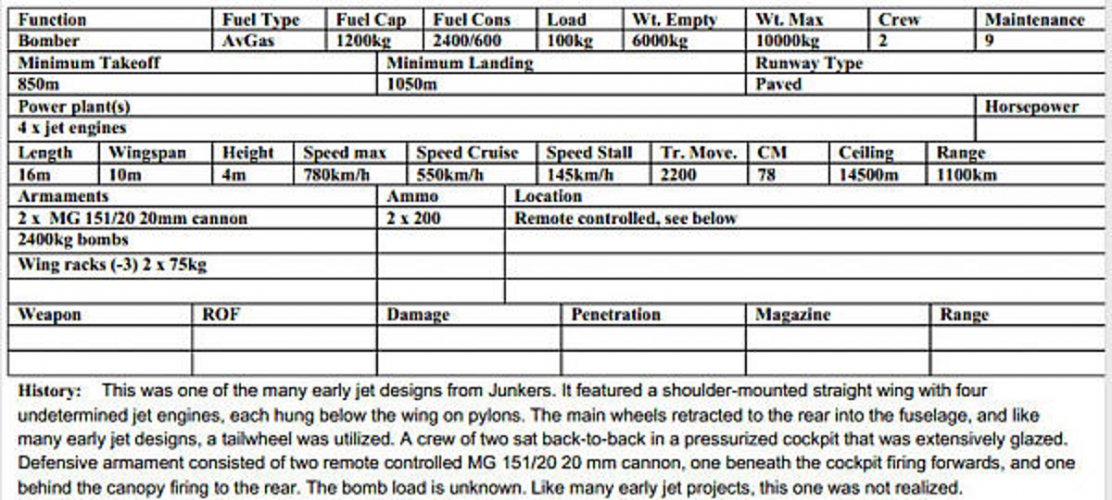 ju008-data.jpg578.9 KB · Views: 28
 -
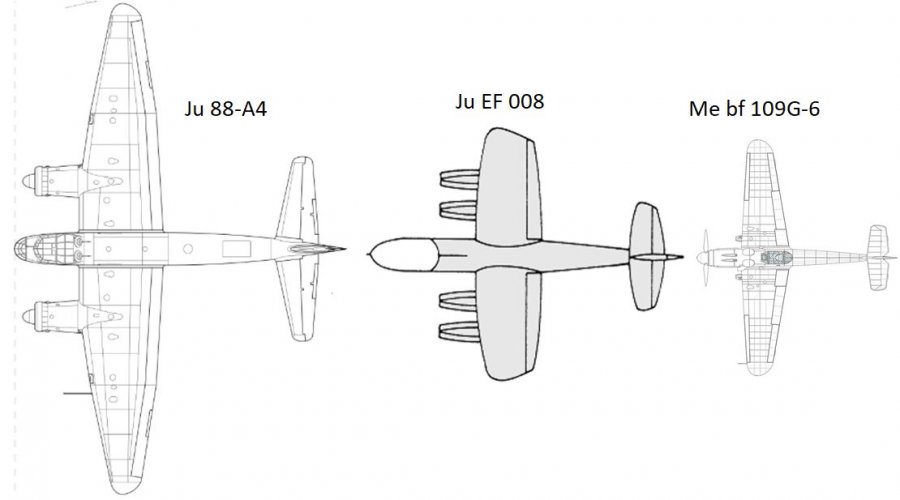 82212137_10156950520612260_7534643496532049920_n.jpg43.4 KB · Views: 18
 -
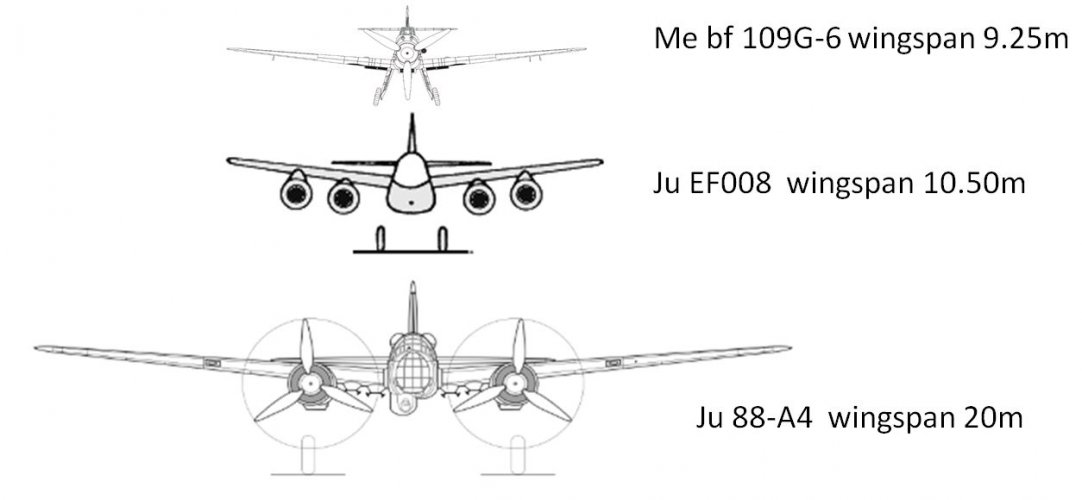 92948305_10156950520557260_2851964511970131968_n.jpg43.7 KB · Views: 18
 -
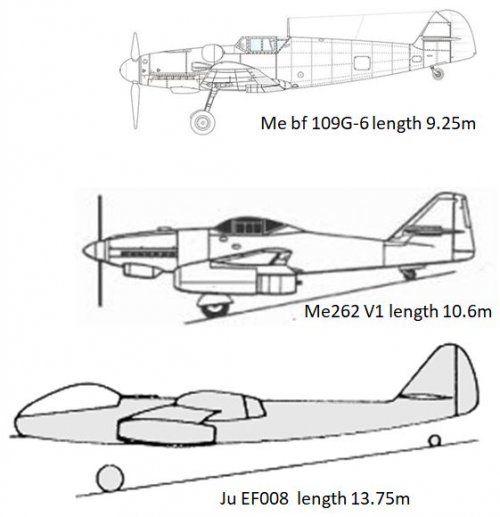 101378677_10156950520637260_3221784904375205888_n.jpg33.2 KB · Views: 17
Last edited:
blackkite
Don't laugh, don't cry, don't even curse, but.....
- Joined
- 31 May 2007
- Messages
- 9,515
- Reaction score
- 9,661
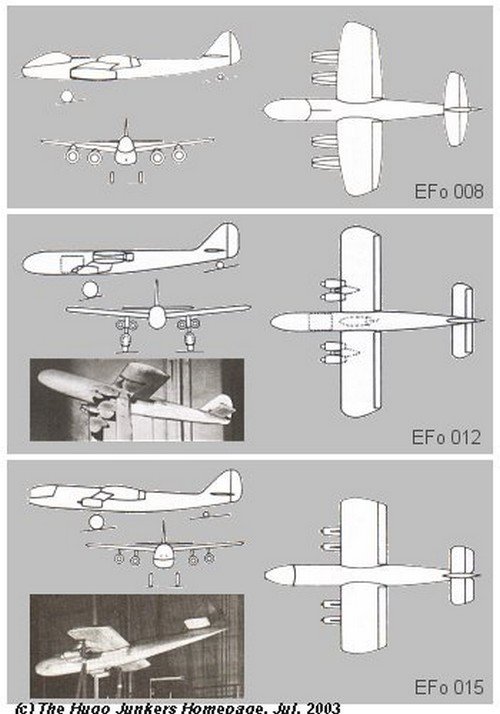
Hi! EFo-009.
https://www.facebook.com/1000719247...lustered-around-the-fuselage/541290364945117/http://www.unicraft.biz/germ/ju009/ju009.htm"History
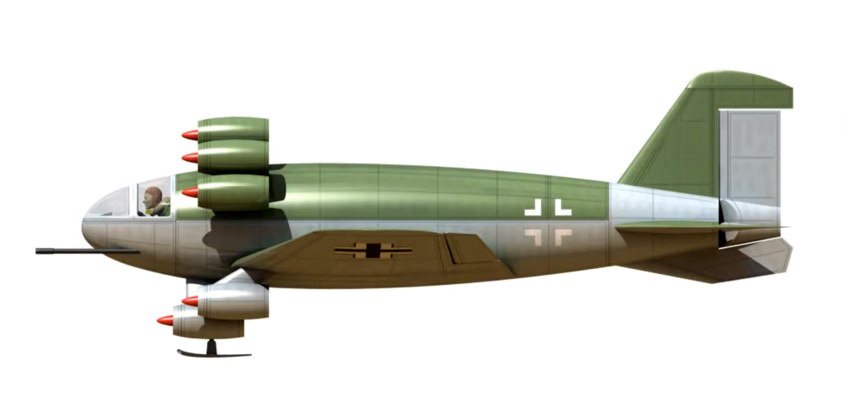
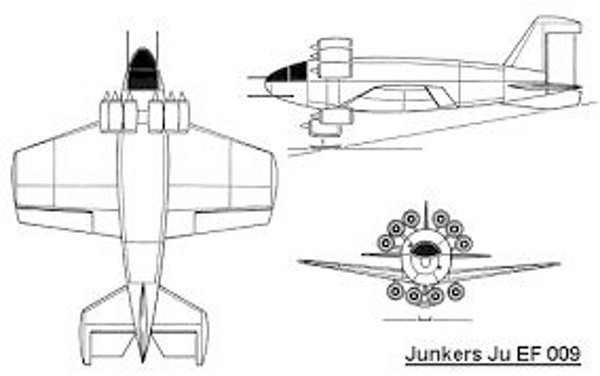
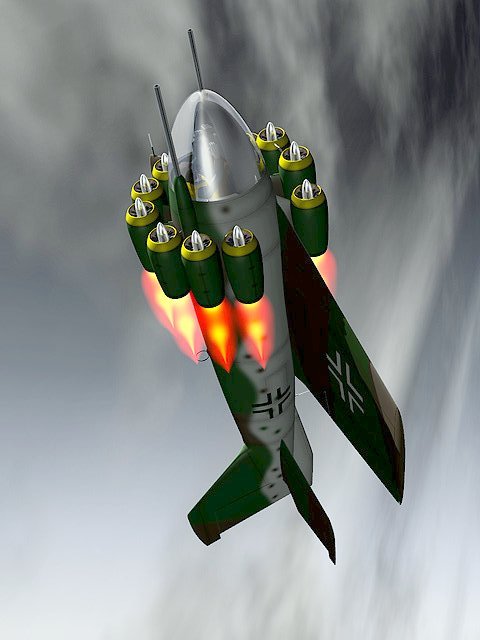
One of the most unusual German jet projects was the Ju.EF.009 - a little single-seat fighter, powered with 10 engines mounted around the fuselage. Take-off would be performed from the ground starting ramp, while landing (after the 6 minutes flight) had to be made on a belly landing skid. Pilot under the trans- parant canopy occupied a prone position.
Ju. EF.009 specifications:
Max. speed ..................950 km/h
T/O weight..................2000 kg
Span ............................4 m
Length ..........................5 m
Armament .....................2 x 30mm Mk.108 guns"
https://www.facebook.com/1000719247...lustered-around-the-fuselage/541290364945117/http://www.unicraft.biz/germ/ju009/ju009.htm"History
One of the most unusual German jet projects was the Ju.EF.009 - a little single-seat fighter, powered with 10 engines mounted around the fuselage. Take-off would be performed from the ground starting ramp, while landing (after the 6 minutes flight) had to be made on a belly landing skid. Pilot under the trans- parant canopy occupied a prone position.
Ju. EF.009 specifications:
Max. speed ..................950 km/h
T/O weight..................2000 kg
Span ............................4 m
Length ..........................5 m
Armament .....................2 x 30mm Mk.108 guns"
Attachments
Last edited:
blackkite
Don't laugh, don't cry, don't even curse, but.....
- Joined
- 31 May 2007
- Messages
- 9,515
- Reaction score
- 9,661
AI-generated overview
The Junkers Ju EF 009 is
A highly unusual point-defense (local fighter) jet fighter project planned by Junkers in Germany during World War II.It is known as a "Hubjäger" (vertical takeoff and landing aircraft), with 10 small jet engines positioned around its nose.
The main features are as follows:
Reddit +3
The Junkers Ju EF 009 is
A highly unusual point-defense (local fighter) jet fighter project planned by Junkers in Germany during World War II.It is known as a "Hubjäger" (vertical takeoff and landing aircraft), with 10 small jet engines positioned around its nose.
The main features are as follows:
- Ten jet engines: Six small jet engines were arranged in a ring around the fuselage (in front of the cockpit), with four on the bottom.
- VTOL (Vertical Take-Off and Landing) design: The plan was to take off vertically without needing a runway to intercept Allied bombers, and land by gliding after running out of fuel, using skids on the underside of the fuselage.
- Short-range capability: Fuel is stored in the wings, and it was designed as an extremely short-range, localized defense aircraft with an operating time of only about 6 minutes on a full tank.
- Pilot burden: To cope with the high G-forces of vertical takeoff, the aircraft was designed for pilots to fly in a prone position.
- Armament: It was planned to be equipped with either two MG 151/20 20mm autocannons or two MK 108 30mm autocannons.
Facebook +4
Reddit +3
Attachments
Last edited:
blackkite
Don't laugh, don't cry, don't even curse, but.....
- Joined
- 31 May 2007
- Messages
- 9,515
- Reaction score
- 9,661
Attachments
Last edited:
Similar threads
-
 Junkers G.38 Projects, Concepts, & Variants
- Started by Adler
- Replies: 1
-
 German Small Airliner & Giant Aircraft and Projects of 1920s
- Started by hesham
- Replies: 62
-
-
Civilian Heinkel Projects and Prototypes
- Started by hesham
- Replies: 9
-