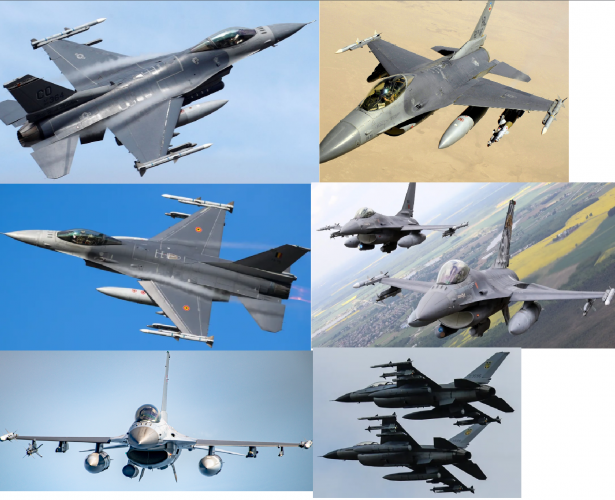
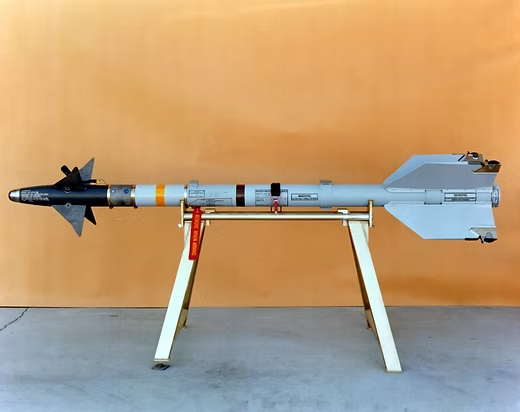
The donated AIM-9L/Ms may be old but they are perfectly adequate for shooting Shaheed and Geran-2 drones.
Ugh, they are and they aren't. They can work good enough in normal conditions - but drones tend to prefer less than normal conditions, in which lock on ranges drop, engagement cycle extends, and failuers happen. It's better than for mig/sus with 1980s radars(you can figure it out just from mean intercept per flight they gave in interviews), but it's still a drop in a bucket compared to hundreds and hundreds of drones every night.

Furthermore, note the rest of the list. As long as GCI guided AN/APG-68 equipped fighter onto a small annoying target - fighter effectively goes blind on rest of the world to keep track of it, no TWS. Even this isn't a guarantee, lock can be thrown of for many reasons.

A month or so ago there was an interesting interivew(about Iran strikes actually), where non-ESA fighters have to be commanded by AESA assets, just because they have the picture of the air situation.
 
Crud, I suspect that anything newer than a -9H would be good enough.

Are there any AIM-9Hs left? Other older obsolescent Sidewinder variants around that would be useful for shooting down Russian drones (And maybe cruise-missiles too) are the AIM-9J/N/P.
 
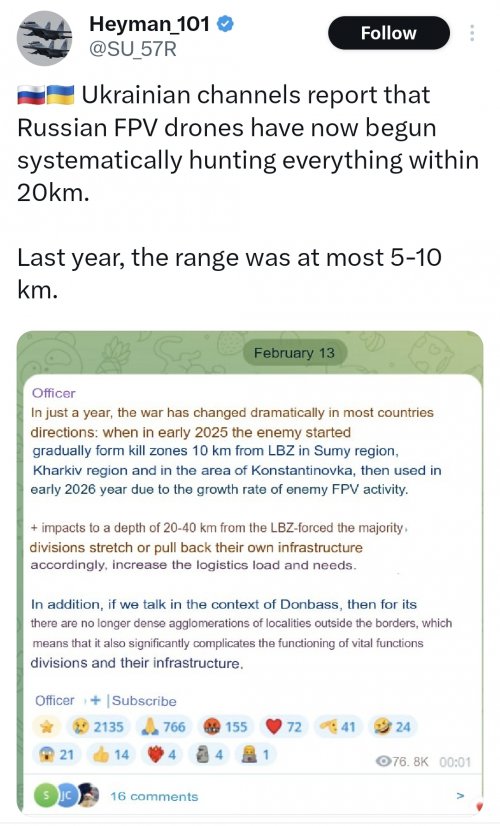
Here's a video from Suchomimus concerning the destruction of ~6,000 FPV drones in a warehouse in Rostov-on-Don last month (Apparently it has only just be confirmed as a drone storage warehouse):


Satellite imagery confirms strike on a logistics warehouse in Rostov-on-Don, destroying around 6,000 FPV drones on the night of January 13–14

It's a pity it wasn't 6,000 Shaheed/Geran-2 drones.
 
Last edited:
An unsurprising development with no doubt the Ukrainians soon to do it if they haven't already. However I think that Russia's being cutoff from the Starling network will severely hinder future drone operations beyond short ranges.
 

Well, now we'll have a second one. Just so happens also being Americans. Tbh it's almost funny how much more foresight US oftentimes has compared to others.
Though fun part with USMC is their fixed wing hydra carriers will soon leave, and unless there's a crush program to get it onto F-35B(which will surely make brits happy, they love bdsm and meteor integration delays), this isn't for long.

Poor navy though, I'd assume superbugs with their canted pylons are screwed on rockets.
 
Last edited:

Well, now we'll have a second one. Just so happens also being Americans. Tbh it's almost funny how much more foresight US oftentimes has compared to others.
Though fun part with USMC is their fixed wing hydra carriers will soon leave, and unless there's a crush program to get it onto F-35B(which will surely make brits happy, they love bdsm and meteor integration delays), this isn't for long.

Poor navy though, I'd assume superbugs with their canted pylons are screwed on rockets.

Comes with spending as much as the next 10 countries combined. Besides they did try to play drone warfare with the huthis but spent time shooting at each other and dodging friendly fire and when not doing that just throwing F18s overboard. Whole mission was a failure ,commercial shipping is still not flowing .

Defending Israel was much simpler simply because you are protecting territory size of a walmart parking lot with couple hundred fighters and multiple airforces. The density of planes and radars is unreal for other scenarios.
 
Last edited:
Comes with spending as much ast next 10 contries combined.
I wonder, APKWS is not an especially expensive program, nor it is unique - there's over a dozen similar systems around the world.
USAF just worked on a perspective threat when everyone else was showing off how completely they managed to dispense with rocket pods of the past.
 
I wonder, APKWS is not an especially expensive program, nor it is unique - there's over a dozen similar systems around the world.
USAF just worked on a perspective threat when everyone else was showing off how completely they managed to dispense with rocket pods of the past.
Not really US just spent 20+years in war blowing up single persons with Hellfire missiles and AKPWS was meant to fill that rolle at lesser cost , just happened to work for drones ,but more or less as new application due to wars its sponsoring .

US always had a lead in guided munitions , but GWOT also shaped the design to a degree that made them faceplant in Ukraine , whole switchblade family should have given US decade head start , but they were designed to fight folks that can fight back .similar all the GPS guided arsenal , many of European armies very always sceptical towards GPS guided stuff as it was well known how signals can be spoofed. Switchblade is no where to be seen , US military is instead experimenting with new Anduril developments instead.


2025 Like 15+ years after jihadis in Iraq . ''it's almost funny how much more foresight US oftentimes has compared to others''
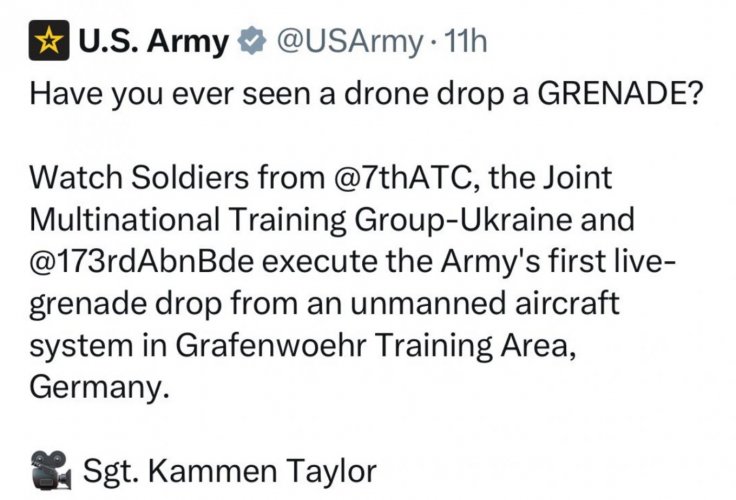
this grenade drop probably cost million+$ to get there.
4be6880d34d10c21.jpeg


Like this contraption is some massive foresight by US in regards to , drones , its basically just an expensive jihad mobile probably developed in some field workshop. Jihadis would use toyota and likely make it with rotating pedestal and in such a way that it would not try cook and smoke the operators at every launch while actualy being able to engage targets other than narrow frontal sector. But man child that developed this could not be bothered.

marine-corps-new-hellfire-missile-counter-drone-system.jpg
 
Last edited:
Last edited:
Nothing new for anyone that has any experience with drones , but lots of folks severely underestimate how unprepared most of NATO armies are for Ukraine scenario. Note only baba yaga type drones were used no FPV at all.


Ukrainian POW

''The myth that NATO is a real army has been shattered. The myth that NATO would defeat russia has been shattered as well.
Ten Ukrainian soldiers wiped out two NATO battalions in a single day during a drone warfare simulation.
NATO conducted exercises in Estonia involving 16,000 troops. They proved vulnerable to drones and were effectively destroyed.
The Hedgehog 2025 exercises included 12 NATO member states, along with Ukrainian frontline drone operator teams.
In one scenario, a British brigade and an Estonian division advanced without camouflage. Drones made the battlefield completely transparent.
A team of 10 Ukrainians, acting as the opposing force, destroyed 17 armored vehicles in half a day and carried out 30 additional strikes on other targets.
In a single day of simulation, they eliminated two NATO battalions. Those units lost combat capability.
NATO units were unable even to detect or strike the Ukrainian drone teams attacking them.
Thirty drones operated over an area of less than four square miles (10.4 km²).
Even at half the drone density seen on the real front line, “there was nowhere to hide,” said Aivar Hanniotti, who led the drone unit.
Ukraine used its AI-enabled battlefield management system, Delta.
Real-time intelligence, rapid target identification, seamless data sharing, and fast kill chains — see, transmit, strike — within minutes or faster.
NATO restricts data sharing. Ukraine, by contrast, saturates its units with information to accelerate strikes.
One NATO commander observing the exercise said: “We’re finished.”
The battlefield has become transparent. Drone saturation is increasing. Without rapid adaptation, armored vehicles and mass formations have become liabilities.
Source: translated and adapted from Tymofiy Milovanov.


View: https://x.com/i/status/2022724252236157282

View: https://x.com/i/status/2022727757701034467
 
Last edited:
The excercise was probably deliberately set up to expose traditional tactics against drone warfare. One side with drones, the other without. Similar to an excerise set up to expose EW vulnerabilities years back.

Yes, the headlines seem quite click-batey as this, to my understanding hasn't been the only exercise where the Ukrainians have been brought in to share their UAV expertise. It is of course a very salutary experience to see oneself in the eyes of the most proficient users of these technologies but that is the exact motivation here. One of the very reasons JATEC exists.


This is not to say that some kinetic encounter between Russian and NATO/EU forces would be exactly like the fighting (currently is or has been) in Ukraine. It is also most clear that the procurement of relevant technologies with NATO militaries cannot be at the evolutionary level of all the daily and weekly jury rigging at the Ukrainian front as resources would be wasted on soon obsolete technologies. This adaptation is highly dependent on one's status on the escalation ladder. Besides, there are many EU UAV tech companies present in Ukraine, operating within contact areas and feeding directly into innovation and tactics.

The lessons of Ukraine have not been lost on many European militaries. There's intricate knowledge in NATO of how UAV and EW technologies are intertwined in battlefield conditions sometimes in chaotic and unpredictable ways but in unique engagements, be it exercising or not, results will vary. Exercises are part and parcel of operationalizing that knowledge and embedding it as possible to the level of each soldier and reservist.
 
Similar to an excerise set up to expose EW vulnerabilities years back.
Speaking of which:

We have proximity fuses--maybe this will result in the opposite---a sensor for drones to cut power and drop in case something chirps in-bound...

Short range
Equip with grenades—when carrier drone is jammed-release these

The new killbot magnate

Long life

Real?

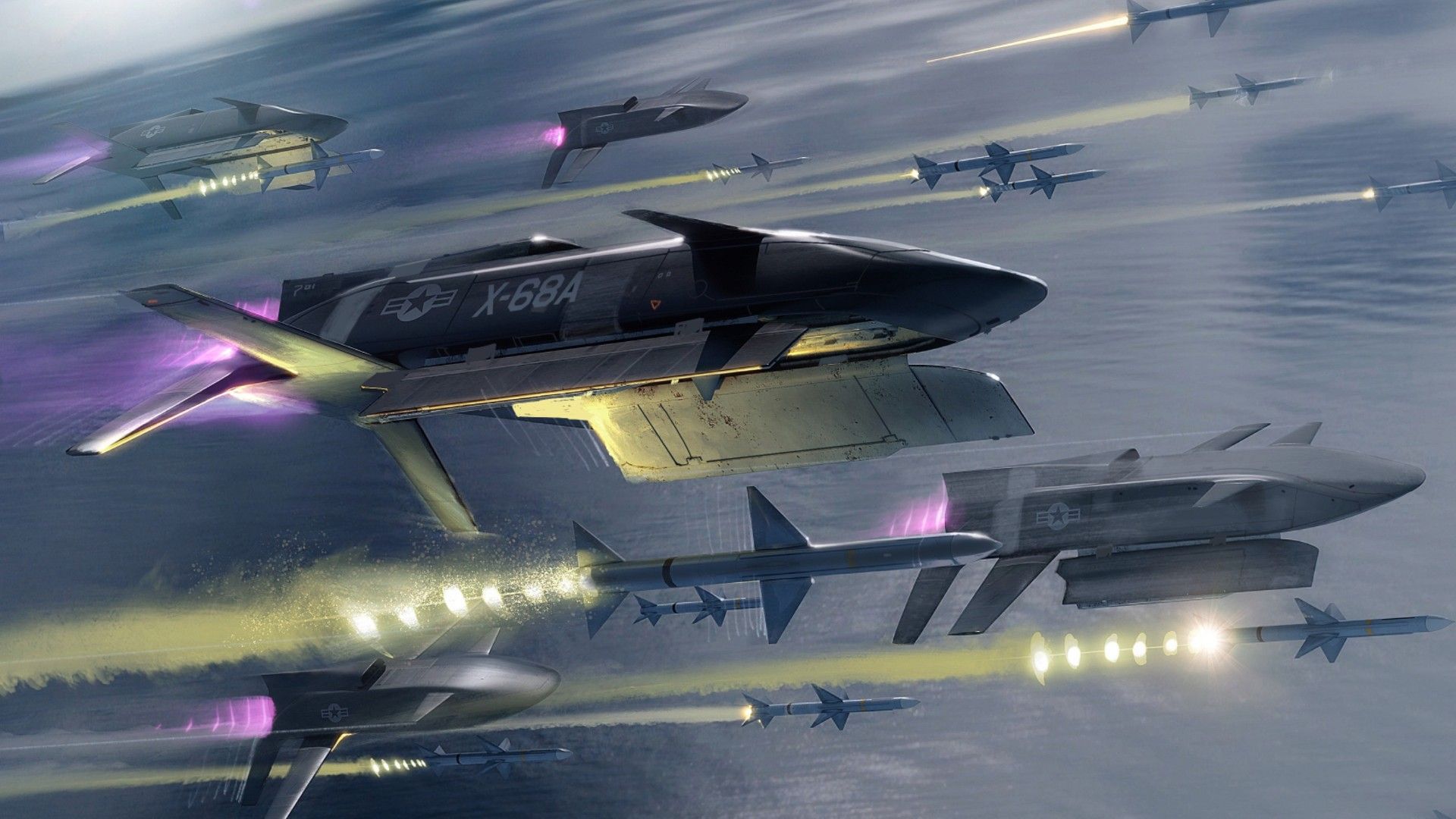
X-68

Spoofing
 
Last edited:

AH-64 Apache Is Getting Proximity Fuzed 30mm Cannon Ammo For Swatting Down Drones​

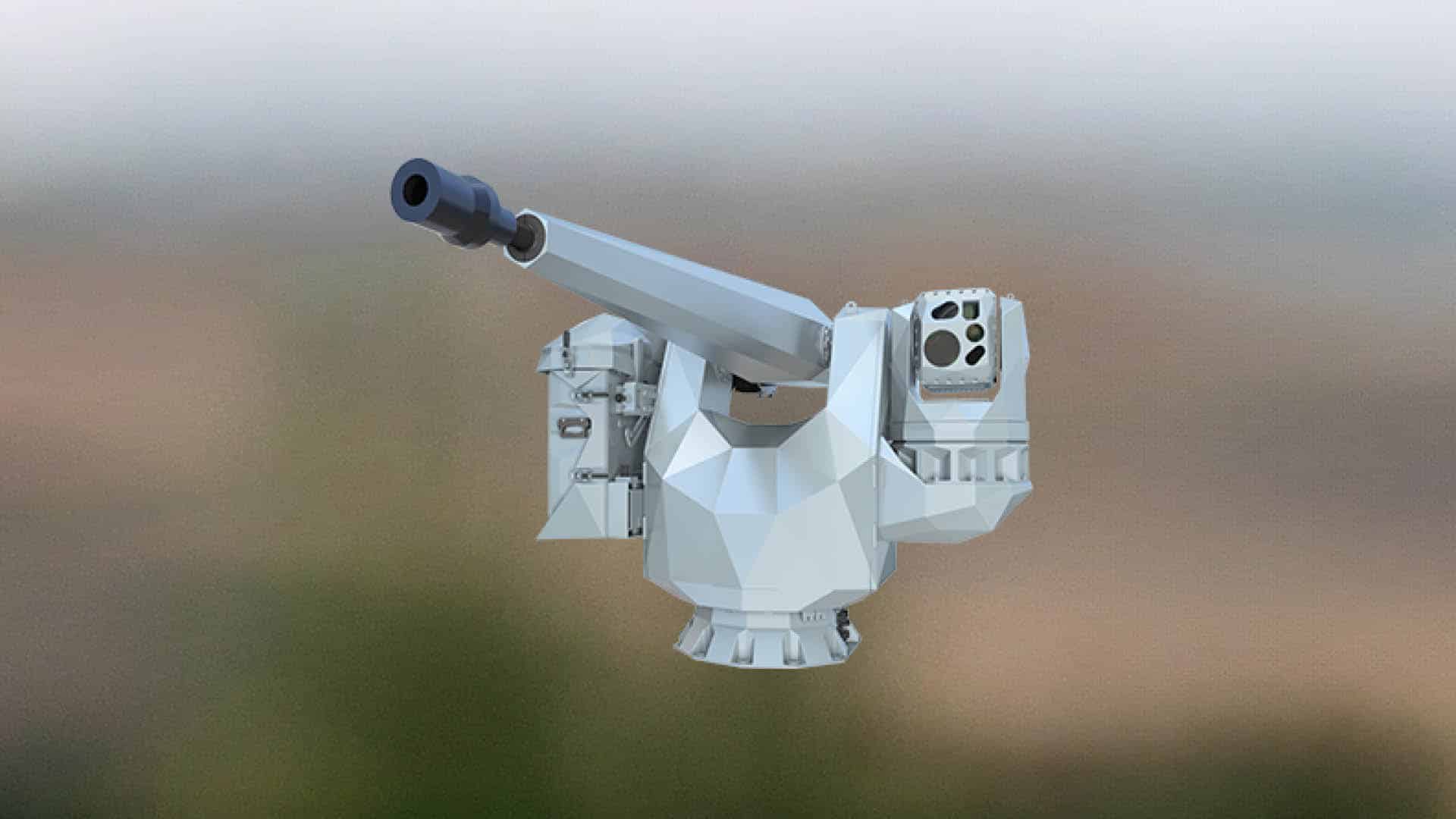
Swedish Navy procures Seasnake 30mm RWS from Rheinmetall​


U.S. Navy MH-60s, Air Force F-16s Will Soon Fly With New C-UAS Missiles​

 
Last edited:
It might all come down to which device works first.

Can the projectile close the gap before the flying murderbot detects it? Stay tuned!

Mel Brooks: " They're using drones against us!"

Jump cut to a New Age choir humming.
"....and their guns, and their bombs...."

Wow…
View: https://m.youtube.com/shorts/JxuAJNkpa9A
 
Last edited:
 
>ATGMs become a problem.
>Every advanced nation tries developing APS since the 70's-80's.
>Operational only in the 2010's.
>Still exists only in small numbers.

>FPV drones become a problem.
>"Here's 25 ways to kill them!"
>60% of solutions are from dudes in a shed.
>"Look I can do 50 in 1 sec!"


TLDR: UK, France, Germany, Italy and Poland (the European Group of Five/E5) launch Low-Cost Effectors & Autonomous Platforms (LEAP) initiative.

"Its first focus will be on a new surface-to-air weapon – a lightweight, affordable weapon designed to counter the drone and missile threat."
 

No surprise there, there's a good reason why a lot of Central and South American men have been volunteering to fight for Ukraine and it's not for altruistic reasons. They've been fighting there so that they can learn how to use drones and drone tactics so that they can bring that skillset back to Central and South America to be used by the major drug-cartels.​
 
Anyone has any info about the latest development of communication technologies for navigation in gps-denied environments? Except for wired solutions of course.

One such example is uwb.
 
Last edited:
Anyone has any info about the latest development of communication technologies for navigation in gps-denied environments? Except for wired solutions of course.

One such example is uwb.
Communications in GPS-denied environment? Sounds like not so related things. Did you mean navigation in denied environment?

Some drones in Ukraine-Russia have been spotted with a CRPA - Controlled Reception Pattern Antenna.

If you've ever seen an antenna's reception pattern, you'll know it has areas of narrow and high gain beams, and also areas of high attenuation. The latter are called nulls.
And if you have an array, you can play with the time delays between transmission or reception through these antennas to create and steer beams.
Upon detecting a jam, you digitally steer the beams to center a null on the jam source. And you steer a high gain beam to the satellite (or satellites for GPS).


Another thing if you have no emitters anywhere around - is IMUs. But relative to their capabilities they are expensive so should be coupled with additional things for terminal guidance if it's a long distance flight.

Anti-jam techniques also include DSMAC and target recognition. These do rely on a capability to frequently update terrain data.

In some areas of the world you can triangulate based on known fixed transmitters, like civilian cellular networks. By design, and with a sufficient quality receiver, you should have pings from multiple cell towers.
Some take it a step further and use the cellular network to transmit back data to an operator. But this is suitable for low cost, low quality solutions.

Some American missiles are now fitted with M-Code GPS receivers. M-Code is a new GPS signal that is both encoded differently (so occupies different frequencies on the same band) but also has a narrow beam instead of the typical very wide GPS beams.
Which allows receivers to pick up a stronger GPS signal.

If you can be more specific I can talk about more options perhaps.
 

Similar threads

Back
Top Bottom