The effect of Australia going ahead with the 1919 Jellicoe report?

Caryina2642

ACCESS: Top Secret
Joined
17 September 2022
Messages
582
Reaction score
311
What would be the effect of Australia and possibly New Zealand if the decided to fund the recommendations of the 1919 Jellicoe Report?
How is the Washington Naval Treaty effected if Australia's got a couple of Battlecruisers on order? How does the Washington Naval Treaty look in this scenario?
How does the infrastructure improvements effect the RAN?
Would Cockatoo Island get upgraded to allow bigger Cruisers to built in Australia?
How does this effect the RAN in the 30s going into WW2?
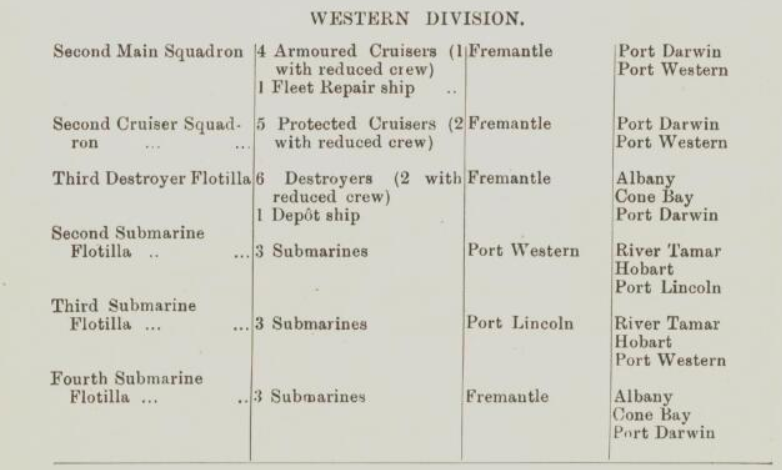
Screenshot_20251105_103649_Chrome.jpg
 
What would be the effect of Australia and possibly New Zealand if the decided to fund the recommendations of the 1919 Jellicoe Report?
How is the Washington Naval Treaty effected if Australia's got a couple of Battlecruisers on order? How does the Washington Naval Treaty look in this scenario?
How does the infrastructure improvements effect the RAN?
Would Cockatoo Island get upgraded to allow bigger Cruisers to built in Australia?
How does this effect the RAN in the 30s going into WW2?
View attachment 802174
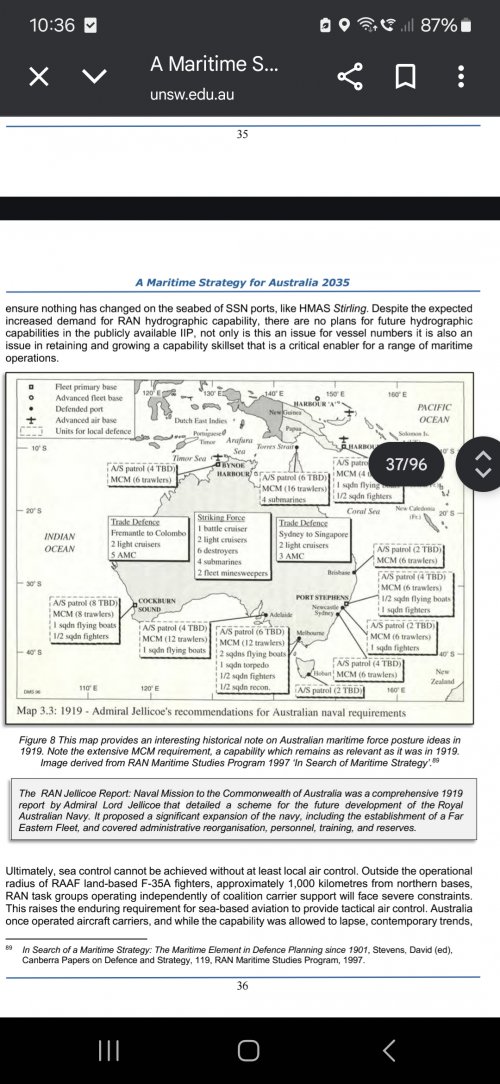
I think it would make more sense to co-locate increased building yards at the fleet base at Port Stephens, which is close enough to Newcastle to draw its workforce from there via railway or tramway, even without the plans to add a major civilian harbour ('Port Pindimar') in addition to the fleet base.

If the Port Stephens development goes ahead then the RAN, and RN, get a purpose-built major base, but its position is still problematically far south, and you need developments at (probably) Townsville and Darwin to project power into the DEI and up towards Singapore.

Perhaps the larger question is whether Australia would remain interested in funding the larger navy through the 20s and early 30s.
 
What would be the effect of Australia and possibly New Zealand if the decided to fund the recommendations of the 1919 Jellicoe Report?
How is the Washington Naval Treaty effected if Australia's got a couple of Battlecruisers on order? How does the Washington Naval Treaty look in this scenario?
As far as I could understand, Jellico wasn't focused on capital ships, and merely thought that HMAS Asutralia needed to be replaced due to her growing obsolence. While he suggested construction of a new warship, it would probably be more reasonable to buy one of Lion-class battlecruisers (especially since HMS Princess Royal was already offered for Chile in early 1920s).
 
How is the Washington Naval Treaty effected if Australia's got a couple of Battlecruisers on order? How does the Washington Naval Treaty look in this scenario?

Australia was seen, quite correctly, as part of the RN so whatever Australia was doing would be taken from the British totals. Perhaps overall the British would push for 16 capital ships given the unusual status of a RAN capital ship.
 
Australia was seen, quite correctly, as part of the RN so whatever Australia was doing would be taken from the British totals. Perhaps overall the British would push for 16 capital ships given the unusual status of a RAN capital ship.
Well, this point was a bit more complex, since technically RAN wasn't a part of RN. But Australia did not press the point.
 
As far as I could understand, Jellico wasn't focused on capital ships, and merely thought that HMAS Asutralia needed to be replaced due to her growing obsolence. While he suggested construction of a new warship, it would probably be more reasonable to buy one of Lion-class battlecruisers (especially since HMS Princess Royal was already offered for Chile in early 1920s).
Jellicoe recommend 2 Battlecruisers and 1 Aircraft Carriers for the RAN which makes it interesting for Washington naval treaty. i think Australia would prefer new construction or at least 15inch ships
 
I think it would make more sense to co-locate increased building yards at the fleet base at Port Stephens, which is close enough to Newcastle to draw its workforce from there via railway or tramway, even without the plans to add a major civilian harbour ('Port Pindimar') in addition to the fleet base.

If the Port Stephens development goes ahead then the RAN, and RN, get a purpose-built major base, but its position is still problematically far south, and you need developments at (probably) Townsville and Darwin to project power into the DEI and up towards Singapore.

Perhaps the larger question is whether Australia would remain interested in funding the larger navy through the 20s and early 30s.
There was a plan to build a large naval base at Port Stephenson with also keeping the naval yard in Sydney, plus still building ships at Cockatoo Island and Williamstown. A trade protection force was meant to be based at Sydney and fremantle, while the main striking force at Port Stephenson
 
Last edited:
Jellicoe recommend 2 Battlecruisers and 1 Aircraft Carriers for the RAN which makes it interesting for Washington naval treaty. i think Australia would prefer new construction or at least 15inch ships

How many cruisers and fleet destroyers?
 
Jellicoe recommend 2 Battlecruisers and 1 Aircraft Carriers for the RAN which makes it interesting for Washington naval treaty. i think Australia would prefer new construction or at least 15inch ships
I know how I'd want to build that: all three built on the same enginerooms, like how Lexington and Saratoga were built on BC hulls.

Same boilers, same turbines, same reduction gears, likely same screws. Possibly even same lower hulls, so they're really building 3 Battlecruisers but one is getting finished as a carrier.
 
How many cruisers and fleet destroyers?
The suggested makeup of the RAN would include; one aircraft carrier, two battlecruisers, eight light cruisers, one flotilla leader, twelve destroyers, a destroyer depot ship, eight submarines, one submarine depot ship, and a small number of additional auxiliary ships. The annual cost and depreciation of the fleet was estimated to be £4,024,600
Plus the report also says P class destroyers and Coastal subamrines as well for coastal defence
 
I
The suggested makeup of the RAN would include; one aircraft carrier, two battlecruisers, eight light cruisers, one flotilla leader, twelve destroyers, a destroyer depot ship, eight submarines, one submarine depot ship, and a small number of additional auxiliary ships. The annual cost and depreciation of the fleet was estimated to be £4,024,600
Plus the report also says P class destroyers and Coastal subamrines as well for coastal defence
I suspect the 8 light cruisers are for the striking force and the number of light cruisers would be higher, probably closer to 12 plus. As in the attachment on my first post it has for trade defence
  • Trade defence Sydney to Singapore 2 light cruisers and 3 AMC
  • Trade defence from Fremantle to Colombo 2 light cruisers and 5 AMC
 
The suggested makeup of the RAN would include; one aircraft carrier, two battlecruisers, eight light cruisers, one flotilla leader, twelve destroyers, a destroyer depot ship, eight submarines, one submarine depot ship, and a small number of additional auxiliary ships. The annual cost and depreciation of the fleet was estimated to be £4,024,600
Plus the report also says P class destroyers and Coastal subamrines as well for coastal defence

That's a massive Navy, and typical of what Admirals say when asked what's needed. They pick the worst possible scenario and put forward the most conservative, risk averse answer to said scenario with little to no anchor in political and economic reality.

It represents one side of the arc, with the obviously inadequate then current state of the Navy being the other.
 
That's a massive Navy, and typical of what Admirals say when asked what's needed. They pick the worst possible scenario and put forward the most conservative, risk averse answer to said scenario with little to no anchor in political and economic reality.

It represents one side of the arc, with the obviously inadequate then current state of the Navy being the other.
It is a big fleet plan which was supposed to be apart of a bigger far east imperial fleet. It also the sort of sized fleet a country the size of australia with its coastline needs to defend. Post WW1 the RAN should have taken priority with Australia becoming a naval nation instead of the army tradition. With the RAAF being funded 2nd and the army being mainly a CMF force
 
Post WW1 the RAN should have taken priority with Australia becoming a naval nation instead of the army tradition. With the RAAF being funded 2nd and the army being mainly a CMF force
Well, the problem was, that Australia after World War I could not build much of a navy. Definitedly nothing comparable with forces Japanese or Americans could sent against it.
 
Well, the problem was, that Australia after World War I could not build much of a navy. Definitedly nothing comparable with forces Japanese or Americans could sent against it.
Australia would only build cruisers, destroyers and sloops, plus a few auxiliarys. I would say Cockatoo Islands main slipway would get extended to allow larger cruisers to get built. Wouldnt suprise me if williamstown and Morts dock get naval contracts for destroyers. Though inital numbers come Britian. The battlrcruisers n carrier wpuld have to be built in the uk
 
I would think that Japan would balk at the WNT limits and demand more battleships in a better ratio because of it. The US, in turn, would do the same. It would let the US go wild in comparison to the other nations in the treaty. The US would very likely finish all six S. Dakota class (1920 type) battleships. I could see the Lexington class battlecruisers mostly finished as carriers simply because the US was never big on battlecruiser-type ships. Let's say the build 3 or 4 large carriers and a couple of battlecruisers.

Japan can't match this. I could also see, without the WNT, the US putting in coast defenses on their Pacific possessions. The US, at the time loved massive coast defense fortress systems.

Australia building battlecruisers and a carrier would definitely set Japan off. Then the US building massive defense systems and far more ships than they could under the WNT wouldn't help. I could also see the US NOT building large cruisers, at least initially. Cruisers were seen as scouting ships and escorts for carriers, not alternate line-of-battle ships that would fight major surface actions on their own.

For the British, this would be a near disaster. They can't keep up with the US and really wouldn't have the fleet for a major war in Europe / the Atlantic or holding assets for one just in case while having to fight Japan.
 
For the British, this would be a near disaster. They can't keep up with the US and really wouldn't have the fleet for a major war in Europe / the Atlantic or holding assets for one just in case while having to fight Japan.
I would say in this scenario there would probably would have to be a battlecruiser section instead of combined capital ship. Australia would probablhy have to be apart of the washington naval treaty with tonnage lower than france & Italy.
I don't think so cause Britain was planning to build 4 Battleships and Battlecruisers. you would probably see all ship that where cancelled by WNT built plus the battlecruisers for Australia. Then a pause in capital ship building would be my guess
 
How would all the improved infrastructure effect Australia?
Also Jellicoe Report talks about reorganizing the RAN, how does this effect the RAN?
 
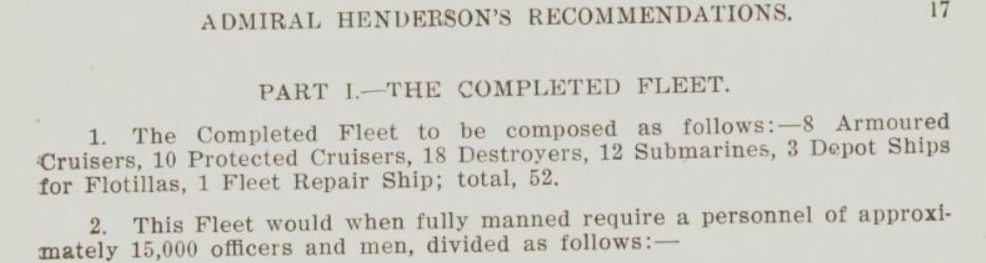
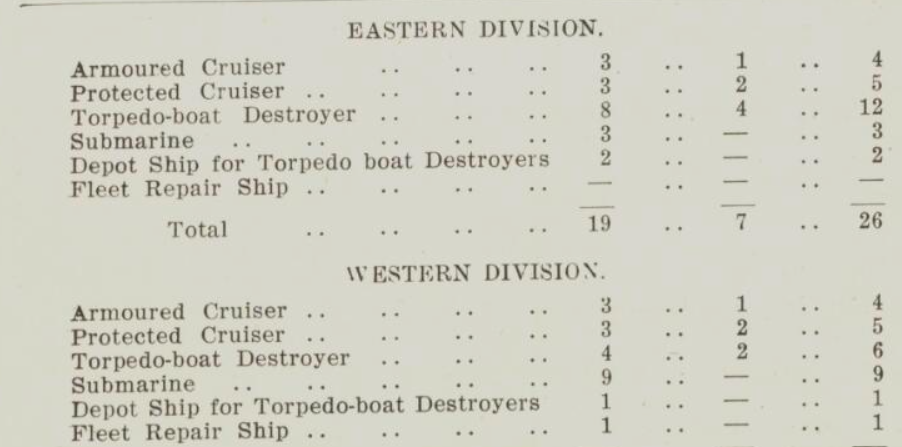
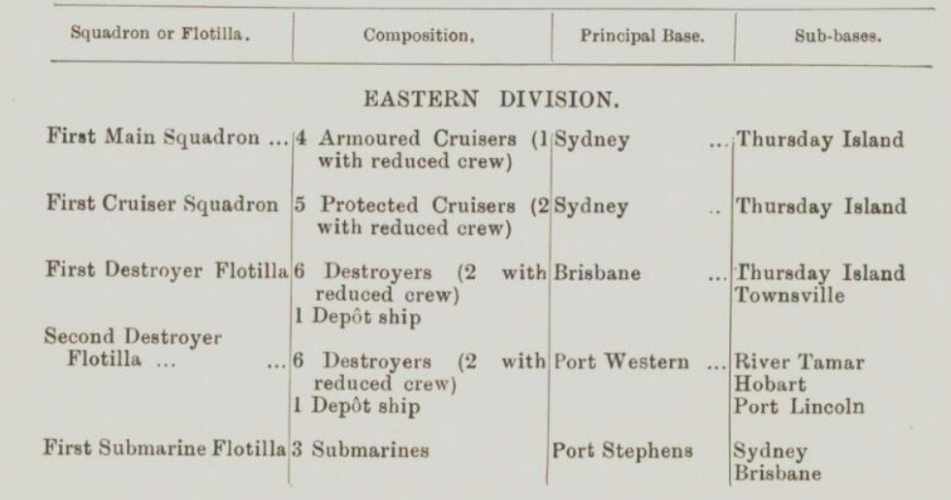
Ive just been reading Admiral Henderson Recommendations 1911 where he states the complete fleet for the RAN should be
  • 8x Armoured/Heavy Cruisers (Maybe have 2 Battlecruisers)
  • 10x Protected/Light Cruisers
  • 18x Destroyers
  • 12x Submarines
  • 3x Depot Ships (For the Destroyers, Would Probably need 2 for the Submarines though)n
  • 1x Fleet Repair Ship (2nd would probably be needed for both oceans)
Would this be more realistic?
1771234761044.png 1771234818535.png
1771234891425.png 1771234954470.png
 
Pdf doc drawn from The Jellicoe Papers about his ‘Empire Tour’

IMPORTANT:
Sorry folks. Although the attached is primarily precisely what was suggested by Jellicoe, the so called South African contribution is a totally made up fleet based on the financial contribution compared to the other Dominions. The opening statement about not visiting due to elections and therefore not making any recommendations is where the original document/report ended. The ‘fleet’ is purely a best case guess by me.
 

Attachments

  • Jellicoe Empire Tour.pdf
    116 KB · Views: 5
Last edited:
I would say in this scenario there would probably would have to be a battlecruiser section instead of combined capital ship. Australia would probablhy have to be apart of the washington naval treaty with tonnage lower than france & Italy.

I could see the US and Japan wanting the Aussie tonnage applied to Britain's. Also, the Japanese would demand more tonnage because of the Australian slice. That leads the US to demand more tonnage in turn as their focus is on the Pacific too.
I don't think so cause Britain was planning to build 4 Battleships and Battlecruisers. you would probably see all ship that where cancelled by WNT built plus the battlecruisers for Australia. Then a pause in capital ship building would be my guess
The operative word is planning. Britain in the 1920's was for all intents, broke. Defense budgets were going to be minimal. There weren't even funds to properly upgrade existing battleships, and retiring some of those for newer ones still leaves the British with the same number. The RN knew what they needed most were numbers, not quality. They needed ships for commerce protection worldwide. That's why they so readily accepted smaller and less capable cruisers that were more than adequate to deal with a commerce raider or U-boat. That was the whole rationale behind the Flower class once the war started. Build a cheap, just adequate, ASW convoy escort in large numbers fast.

Look at the Dido class light cruisers. There weren't enough 5.25" turrets to go around, so some got what amounted to 4.7" twin destroyer mounts instead. Hulls at sea were more important than quality.
 
I could see the US and Japan wanting the Aussie tonnage applied to Britain's.
That was very much their position at the actual Washington Treaty. And don't forget there had been a major spat between the US and Australia* at Versailles in 1919 over whether they got a seat at the high table, with Billy Hughes putting Woodrow-Wilson in his place with the simple statement: "I speak for 60,000 war dead"

* Plus Canada and the Dominions in general.
 
The operative word is planning. Britain in the 1920's was for all intents, broke. Defense budgets were going to be minimal. There weren't even funds to properly upgrade existing battleships, and retiring some of those for newer ones still leaves the British with the same number. The RN knew what they needed most were numbers, not quality
John brown had started building the keel blocks and started to prepare to start laying down G3. This was paused and the cancelled due to the WNT. So if WNT was a few months later, at least 1 G3 would have been laid down. So i dont thunk the operative word is planning. It was the plan till the WNT changed it.
That was very much their position at the actual Washington Treaty. And don't forget there had been a major spat between the US and Australia* at Versailles in 1919 over whether they got a seat at the high table, with Billy Hughes putting Woodrow-Wilson in his place with the simple statement: "I speak for 60,000 war dead"

* Plus Canada and the Dominions in general.
Im suprised billy hughes didnt try to get a seat at the high table at the WNT. He was still prime minster at the time. That has to be my favourite billy hughes moment that quote.
 
We mightn't have spent money on defence, but we didn't have an independent foreign policy either. Low defence spending is the price Britain pays for control, or great influence at least. How much did India or Malaya spend during the period?
 
We mightn't have spent money on defence, but we didn't have an independent foreign policy either. Low defence spending is the price Britain pays for control, or great influence at least. How much did India or Malaya spend during the period?
Dont need to have complete change foreign policy just to one where we jave self reliance and deterent untill btitian is able to reinforce us. Which if they are fighting a european power like in WW2 they might be able to come. At least with this fleet australia might not be able to go 1v1 but it should be able to hold off a lot better than OTL.
Cant really compare a dominion to crown colonies. Ones independent apart of the british crown and the others are controlled by the british
 
I wonder if the 1931 Statute of Westminster has any legal effect on the 1st LNT? Would the 'independent' dominions still count toward British totals for the purposes of navel controls? Not that the SoW would magically give Australia and others the money and motivation to do anything much.
 
I wonder if japan and USA would be alright with Australia operating a couple of 35,000t battlecruisers with 13.5inch main armement. Sothing like a larger tiger capable of going 32+ knots? With 12 to 16 6inch guns in twin turrets as secondaries?
 
I wonder if japan and USA would be alright with Australia operating a couple of 35,000t battlecruisers with 13.5inch main armement. Sothing like a larger tiger capable of going 32+ knots? With 12 to 16 6inch guns in twin turrets as secondaries?
As I speculated, Japan would have a major problem with this. They'd demand more ships in return. The US? I could see the US simply counting the Aussie ships as 'British' and part of the RN's count. Getting equal numbers would be acceptable. I could see the US possibly talking Japan into accepting that they both can fortify their holdings in the Pacific as an alternative.

For the US, that'd be a good deal, even a great deal. The US loved to build massive coast defenses at the time. Fortifying Guam, the Philippines, even Wake and Midway, would have greatly strengthened their position in the Pacific. Consider, for example, in the PI, the potential landing beaches the Japanese used historically were now covered by 6 to 12 6" (155mm) or larger coast defense guns. The landings would have been shot to pieces before they reached the beach. The defenses of Manila Bay would have been stronger with more AA defenses and overhead cover for many of the batteries.

The US could have gone further building seaplane bases and airfields on islands and across the Philippines. Japan on the other hand, couldn't have done much more than they did in turning somewhere like Truk into a weak 'fortress' by comparison.
 
As I speculated, Japan would have a major problem with this. They'd demand more ships in return. The US? I could see the US simply counting the Aussie ships as 'British' and part of the RN's count. Getting equal numbers would be acceptable. I could see the US possibly talking Japan into accepting that they both can fortify their holdings in the Pacific as an alternative.

For the US, that'd be a good deal, even a great deal. The US loved to build massive coast defenses at the time. Fortifying Guam, the Philippines, even Wake and Midway, would have greatly strengthened their position in the Pacific. Consider, for example, in the PI, the potential landing beaches the Japanese used historically were now covered by 6 to 12 6" (155mm) or larger coast defense guns. The landings would have been shot to pieces before they reached the beach. The defenses of Manila Bay would have been stronger with more AA defenses and overhead cover for many of the batteries.

The US could have gone further building seaplane bases and airfields on islands and across the Philippines. Japan on the other hand, couldn't have done much more than they did in turning somewhere like Truk into a weak 'fortress' by comparison.
So Australia is allowed 2 Battlecruiser with 13.5inch main armament and 1x 23000 ton or less carrier. In return the USA and Japan get to fortify there holdings in the pacific. Plus so 1 to 2 extra battkeships and 1 extra carrier.
So the US gets to build a extra 1 or 2 Colorado class BBs and an extra lexington conversion.
While Japan builds a extra Nagto Class BB and an extra Amagi conversion?
Sounds fair enough
 
I could see the US simply counting the Aussie ships as 'British' and part of the RN's count.
Of course they would. Certainly in 1922, nobody internationally was buying the idea that Australia (and Canada, for that matter) were anything more than an extension of the UK.

In much the same way, if the Government of the Philippines declared its intention to acquire major warships, Japan and the United Kingdom would consider them to be an extension of the United States Navy. Admittedly that's economically implausible, but the constitutional relationships have similarities.
Would the 'independent' dominions still count toward British totals for the purposes of navel controls?
The 1935 Anglo-German Naval Agreement explicitly refers to 'the aggregate strength of the British Commonwealth of Nations', which would include the Dominions.

For the purposes of the 1936 Second London Naval Treaty, the Dominions seem to have been treated as subsidiary parts of the British Empire, but that treaty didn't define aggregate limits.
 
I wonder if the 1931 Statute of Westminster has any legal effect on the 1st LNT? Would the 'independent' dominions still count toward British totals for the purposes of navel controls? Not that the SoW would magically give Australia and others the money and motivation to do anything much.
First London Treaty ratified Oct 1930.

The usual legal position AIUI, is put simply, that a nation becoming independent is still bound by the decisions of the previous govt, until such time as it decides to change them. It is not starting with a clean sheet of paper having to agree everything from scratch. So the Statute of Westminster would leave everything unchanged.

Statute of Westminster received Royal Assent on 11 Dec 1931 in Britain. Now the catch. Each Dominion was affected differently by the Statute according to its then existing Constitution. Some, like Australia, needed to incorporate it into its own laws.

Australia didn't adopt it until 1942, but backdated it to 3rd Sept 1939. (Statute of Westminster Adoption Act 1942). That legal position caused a few complications on the outbreak of WW2 as to whether Australia could chart its own course or was bound by the British declaration of war.


Representatives of Canada, Australia, South Africa, New Zealand & India all signed the 1922 Washington Treaty in addition to British representatives. The 1930 London Treaty was an extension of that but only Britain signed on behalf of all the Dominions. AFAIK no one complained. The 1936 London Treaty was signed by representatives from Britain (and for those parts of the Empire not part of the League of Nations) plus Canada, Australia, New Zealand & India.

So historically everyone accepted that for Treaty purposes that Britain & the Dominions were one entity.

Just to show the difference between Dominions, Canada didn't declare war on Germany until 10th Sept 1939, after its Parliament voted for it. South Africa had a change of Prime Minister before declaring war on 6th Sept.

There was no one size fits all. Each Dominion needs considered separately.
 
In that case if Australia is going to make a difference it needs to do so under the Treaty system limits. The RAN should keep the Albatross instead of trading her in for the 3 cruisers and keep the 2 Oberon subs instead of handing hem to the RN. How did the British fare against the LNT destroyer limits?
 
In that case if Australia is going to make a difference it needs to do so under the Treaty system limits. The RAN should keep the Albatross instead of trading her in for the 3 cruisers and keep the 2 Oberon subs instead of handing hem to the RN. How did the British fare against the LNT destroyer limits?
Unless Albatross was converted to a Escort Carrier getting the 3 Cruisers are better assets for the RAN. Keeping the Odin subs should have happened.
I still think if Australia puts its foot down like at versailles (possibly need Canada to do the same aswell) that it can get on the table at WNT. From there its anyone's guess to what happens
 
I still think if Australia puts its foot down like at versailles (possibly need Canada to do the same aswell) that it can get on the table at WNT. From there its anyone's guess to what happens
What's reasonably likely to happen, without a major constitutional change, is that the rest of the world insists that the UK's allowance is reduced to take account of the Dominions.
 
Back
Top Bottom