- Joined
- 25 July 2007
- Messages
- 4,912
- Reaction score
- 5,523
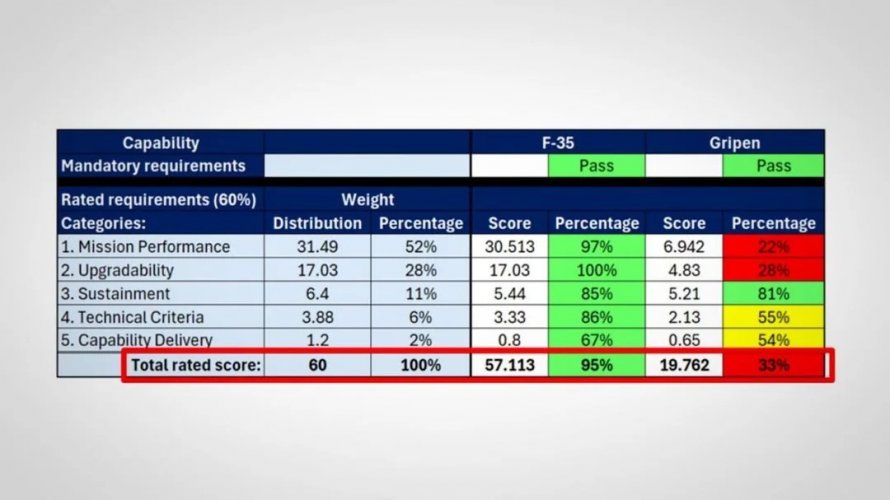
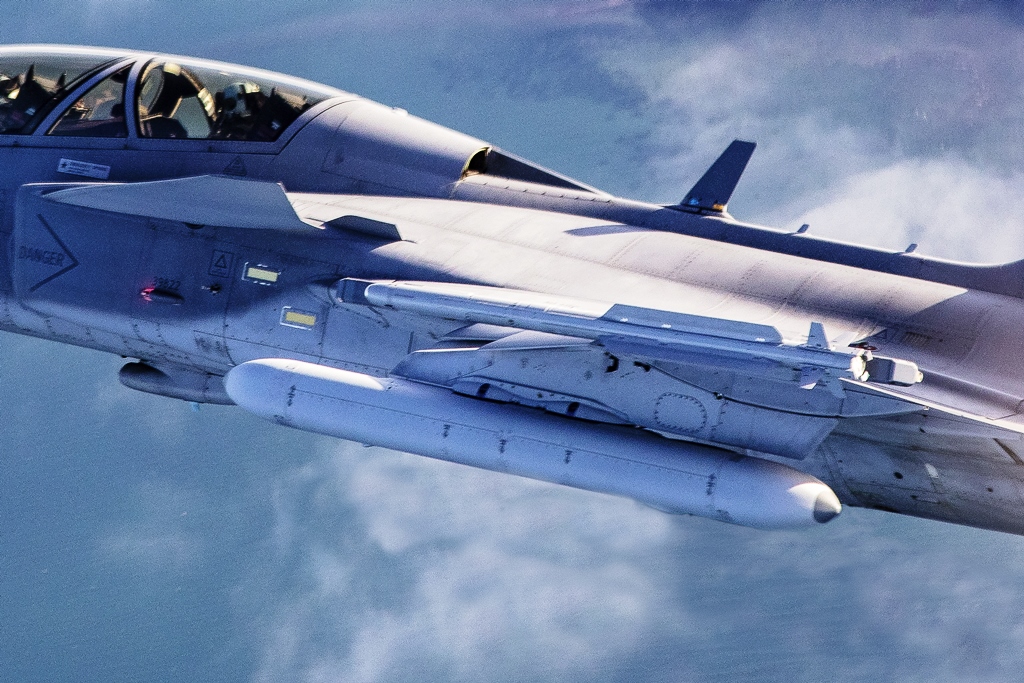
Gripen E for Canada, as part of a mixed fleet with F-35s, probably causes more cost issues due on the additional logistics, despite having a lower operational cost than F-35s. Not sure if NORAD compliance will be pushed but it could add to costs as well. it also doesn't really give content independence either due to parts from the US. But politically.. the general public doesn't really know or care too much. All they will see is "our leaders are sticking it to the US by buying Swedish", and that increases political support.
If it were me, I'd get the FA-50 instead to serve as a lead in fighter trainer to replace the Hawk, and to do light policing, leaving the remaining F/A-18s and F-35s to do the front line work, as well as giving pilots more flying hours. Long term, invest in GCAP if they still want to reduce dependency on the US.
Canada is only committed to 16 paid-for 'CF-35s'. Ottawa just paid for "long-lead items" sufficient for another 14 x airframes ... although that's a long way from fully buying an addition 14 x F-35As.
A mixed type RCAF fighter fleet now seems inevitable. If only 16 'CF-35s' are taken on, it would make sense to employ them in a DACT role (since relying on complete support and software upgrades has become more than a little dodgy).
That would make any 'CF-39E' the frontline RCAF fighter. If the USAF insists that the Gripens are not 'NORAD compliant', suitable upgrades can be stuck on the never-never. (Current Admin insists that they don't "need Canada" or NORAD, anyway.) As for "the general public doesn't really know", remember that applies to US voters in the mid-terms as to Canadian citizens.
Fully agree on the Korean FA-50 for the FLIT role - with similar caveats to your comment about American-controlled components in Gripens. Of course, with the CT-155 Hawks long-gone, RCAF FA-50s would actually be replacing USAF T-38s out of Sheppard AFB in Texas.