Italy is out of line. Being development partners does not entitle them to access Bae IP by right.
I guess perhaps the other partners need the access to UK tech in order to properly develop their own assigned parts. This can happen when each partner is coming from very different technological starting points and some are far ahead in very specific (but critical) areas..

If that’s the case then perhaps the proper solution would be to arrange a license fee where the value of UK tech being transferred to the other partners is determined and those partners pay the fee to get access. That would recognize the unique IP that the UK is bringing in and help reduce the UK’s share of R&D costs.

Alternatively you lock the most sensitive IP inside the Edgewing JV with strict access controls and limitations on how many non-UK engineers can use it, in order to limit the amount of leakage.

This is a big part of what sank FCAS so not a small issue.
 
Last edited:
I see the point H_K, just wondering what will happen to the program if Italy leaves Edgewing?
 

"Even during the capability assessments necessary to decide the division of development work, the UK is reluctant to share its own technical information."

I want to dig deeper into the meaning behind this refusal. At this stage, technical information should merely be about 'what kind of technologies each nation possesses,' and shouldn't involve full-scale disclosure. Normally, the party holding the core technology would be expected to assert themselves, saying, 'We can do this!' Why is it that the UK won't even disclose its capabilities during the assessment phase? Is there some unique circumstance on the British side?
 

"Even during the capability assessments necessary to decide the division of development work, the UK is reluctant to share its own technical information."

I want to dig deeper into the meaning behind this refusal. At this stage, technical information should merely be about 'what kind of technologies each nation possesses,' and shouldn't involve full-scale disclosure. Normally, the party holding the core technology would be expected to assert themselves, saying, 'We can do this!' Why is it that the UK won't even disclose its capabilities during the assessment phase? Is there some unique circumstance on the British side?
Maybe they dont have the stuff they claim?
 
Two possibles.
Yes on one hand this could be a hollow suit, and nothing there. Scary thought because.....

Equally we can also say UK has a history with LO technologies going back to the 50's. So UK might be very sensitive about what is one of the Crown jewels of UK technology
 
Not correct.

Bae in the UK was a major contributor to F-35 STOVL development using its extensive expertise from Harrier and follow on programs and to date has manufactured all F-35 rear fuselages.
BAE Systems North America's work and BAE Systems UK involvment in F-35 manufacturing are completely unrelated.
"The British members of the corporate leadership, me included, get to see the financial results; but many areas of technology, product and programme are not visible to us.... The SSA effectively allows us to operate in the US as an American company, providing the highest levels of assurance and integrity in some of the most sensitive fields of national security provision."
 
BAE Systems North America's work and BAE Systems UK involvment in F-35 manufacturing are completely unrelated.
"The British members of the corporate leadership, me included, get to see the financial results; but many areas of technology, product and programme are not visible to us.... The SSA effectively allows us to operate in the US as an American company, providing the highest levels of assurance and integrity in some of the most sensitive fields of national security provision."

BAE Systems Inc was involved in the electronics of the F-35 (radar warning, targeting support, and self-protection) through the purchasing of Lockheed Martins electronics division in 2000 and continued to acquire US military electronics companies, most recently Ball Aerospace in 2024. That's completely separate to BAE Systems PLC which was involved in the design of the aircraft fuselage, STOVL elements and the software to allow STOVL flight at their Lancashire facility in the UK and today manufactures fuselage elements of the fighter.
 
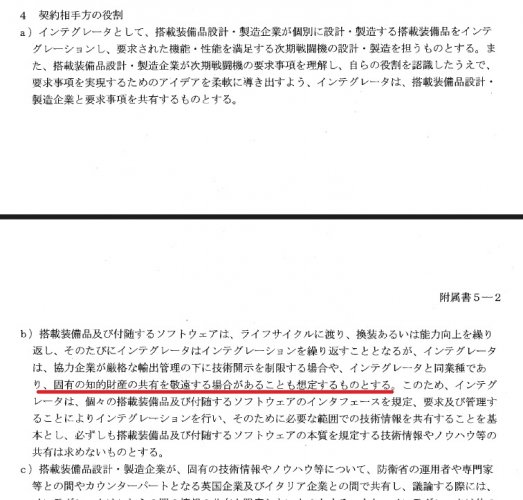
I thought issue is concerned the part like under line, between prime contractor-cooperative companies in UK.
"Prime contractor should assume the possibility that Equipment Designer/Supplier want to avoid sharing proprietary IP and know-how ."(from NGF contract doc. this part is for relation between contractor-cooperative in JPN. ITA, UK company are not included. )


"Even during the capability assessments necessary to decide the division of development work, the UK is reluctant to share its own technical information."
It seems more basic problem.

スクリーンショット 2026-02-01 155353.jpg
 
Last edited:
Time and time again such disputes happen. One would think that the parties involved could do a detailed contract before hand stipulating just what sort of tech transfer will transpire later.
 
Ominous signs for GCAP—UK funding issues and international friction

The Situation (via industry sources):

  • Contract delays might push back the 2035 deployment (thanks to the UK's defense spending review).
  • The UK might literally run out of cash for this within months.
  • Japan and Italy are NOT happy.
The Fallout:
  • The Tories: Shadow Defense Sec is calling this a "Labour blunder," claiming they're picking welfare over defense.
  • Defence Committee Chair: Says the delay sends a "dangerous signal" to our enemies.
  • Francis Tusa: Points out that the UK is seriously trashing its credibility with Japan and Italy right now.
 
2035 as combat ready tatget date had been utterly optimistic anyway. Reality strikes back, sooner or later. And btw, cross communication between equipment is managed through an interface protocol. Other nations don't necessarily need to know all details about the intrinsities of a particular equipment. All they need to know are the interface signals/words being used.
 
The UK and Japanese leaders held a meeting yesterday, and GCAP was part of that conversation. THe end result was to accelerate the program.

probably just political speak, but interesting it was talked about by the leaders of both countries in a positive and moving forward way.

At the outset, Prime Minister TAKAICHI welcomed Prime Minister Starmer’s first visit to Japan, and referring to the concrete cooperation in areas of security and economy, including the Global Combat Air Programme (GCAP) and the Comprehensive and Progressive Agreement for Trans-Pacific Partnership (CPTPP), stated that cooperation between Japan and the UK, as an “Enhanced Global Strategic Partner”, symbolizes the inseparability of the security of the Euro-Atlantic and the Indo-Pacific. In response, Prime Minister Starmer stated that the cooperation between the two countries has progressed remarkably in all fields, and that he would like to work closely with Prime Minister TAKAICHI to further strengthen their bilateral relations. Prime Minister Starmer also invited Prime Minister TAKAICHI to Chequers, (the official country residence of the U.K. Prime Minister).
  1. The two leaders concurred on accelerating the joint development of the next-generation fighter aircraft, under the GCAP. The two leaders also concurred on holding a Foreign and Defence Ministers’ Meeting (“2+2”) within this year.
 
Especially from that particular source. The Telegraph is not a source I would call particularly reliable these days on anything.
Let's be honest, most mainstream media isn't reliable. Specialist outlets at least have to serve their customers.
 
Time and time again such disputes happen. One would think that the parties involved could do a detailed contract before hand stipulating just what sort of tech transfer will transpire later.
The devil is in the detail. I think the Italians recognise this is a good moment to pile on pressure. They want technology paybacks to sell to their electorate, and it costs nothing to try to squeeze out concessions. But in all fairness they weren't the electorate spending billions at the level of the UK through the 1980s, 90s and 00's. As much as I respect them for pushing it's not really as straightforward as "we need the information, and you should play nice".

Did the US give all the crown jewels away on F35? No, for the good of it's industrial base, in respect of it's taxpayers right to ROI, and for the long term good of the program.

Italy has some very strong engineering capabilities and depth (without question), and will make it's own critical contributions to GCAP but that shouldn't force other partners to hand over value that wasn't paid for by them. That's why an integrated program team is in place to orchestrate the systems interactions and make sure that the value in the product(s) is protected and the long term "competitive edge" of the technologies employed is kept safe.
 
BAE Systems North America's work and BAE Systems UK involvment in F-35 manufacturing are completely unrelated.
"The British members of the corporate leadership, me included, get to see the financial results; but many areas of technology, product and programme are not visible to us.... The SSA effectively allows us to operate in the US as an American company, providing the highest levels of assurance and integrity in some of the most sensitive fields of national security provision."

You are getting very confused. As are the folks liking your comment.

You made the statement that implied Bae (UK) had no F-35 derived IP to contribute toward GCAP, and used a quote from a Bae (USA) executive to support your claim.

Yes, BAE (USA) cannot share any F-35 derived technical knowledge with Bae (UK). And therefore with GCAP.

BUT, it is completely incorrect to claim that the only Bae F-35 derived knowledge resides in its US subsidiary.

Bae (UK), as I pointed out earlier, has created F-35 related IP in the UK. That IP is available to GCAP and that IP is part of what the Italians are after.

Get it???
 
I see the point H_K, just wondering what will happen to the program if Italy leaves Edgewing?
A lot of issues with production of all the electronics and radar, Italy is not likely at all to exit the program, this whole thing is likely to be fixed soon and more than likely the info is being overflated, i do not see issues at all with the fact Italy would like for BAE to follow the contract they signed, legally they are required to as the contract dictate, dispite the issues caused by the current italian admin the reality is that this is just a minor inconvenience and nothing substantial at all
 
I did not realise that Italy were contracted to do the radar? They need to get the issues sorted and sorted fast so that Edgewing can proceed without any more problems.
 
I did not realise that Italy were contracted to do the radar? They need to get the issues sorted and sorted fast so that Edgewing can proceed without any more problems.
Leonardo are definitely the lead on radar but it gets confusing because the main fighter radar centre in the UK is Leonardo UK in Glasgow.
So I'm not sure whether the UK or the Italian Leonardo team is the one actually in charge of radar.
 
I would think that would be the UK Leonardo team that is in charge of the radar.
probably a joint work since at the end of the day the UK section is still part of Leonardo but i feel like the bulk of the work is being done by the Leonardo Italy section under SELEX since they worked on CAPTOR-E last time, i belive most of the experience in there will be used for the GCAP radar, if not the first versions featuring CAPTOR itself
 
btw found also this article

As mentioned already by @Flyaway and @zen the telegraph isn't a reliable source when it comes to defence reporting. There is a vein of truth to the story as the plan had previously been to sign a contract by the end of 2025 but I wouldn't go the whole doom and gloom that is being reported there.
 
probably a joint work since at the end of the day the UK section is still part of Leonardo but i feel like the bulk of the work is being done by the Leonardo Italy section under SELEX since they worked on CAPTOR-E last time, i belive most of the experience in there will be used for the GCAP radar, if not the first versions featuring CAPTOR itself

It will be Leonardo UK AND Leonardo in Italy (with Ellettronica)...they're all part of ISANKE. But Leonardo UK's work on Brightadder and ECRS.2 puts them pretty much at the top of the pile for modern radar.
 
Last edited:
I did not realise that Leonardo UK were involved with Brightadder and ECRS.2 Timmymagic.
 
I did not realise that Leonardo UK were involved with Brightadder and ECRS.2 Timmymagic.

Leonardo UK = ex Selex - ex GEC Marconi

Marconi swallowed Ferranti in 1990. Ferranti led the development of the ECR90/Captor radar for the EF building on the Blue Vixen for the Sea Harrier FA.Mk2. Many national companies were swallowed by larger companies, which are today international companies, headquartered somewhere. The former national companies are now part of, often foreign owned, companies, but retain national IP rights. The umbrella company doesn't have insight into every single detail of its national subsidaries. Leonardo UK and IT are still so to speak national companies, like Airbus Germany and Spain for example. Airbus in France has no insight into the Eurofighter for example. But yes permanent renameing and mergers make it difficult to keep track of who does what and where it originates from.
 
Germany will bring the power of its industry. The quality in execution (proved once again with so much clarity with their Northrop/Rheinmetall line) at scale is a direct driver of performances and cost for a Stealth fighter. Germany switching from FCAS to GCAP would be a huge loss for France and Spain.

I fear another decades of craftmanship and snail like production pace.
 
Don't know why Germany opted for the SCAF rather than GCAP in the first place Scott Kenny if that was the case it all seems to be rather strange.
 
View: https://x.com/CiroNappi6/status/2019352729714585952?s=20

This is good news for GCAP, if we can narrow down germany to basically MRO and FACO.

Then sweeten the deal with the ability to triage their own hardware onto it, such as IRST-T and any electronics they want.

For the edgewing members, this limits any veto Germany might have but gets another 120+ orders on board, probably cutting the final unit cost by a good 75-100Million per unit.

Germany can carry on with their cloud and CCA, which they can integrate into GCAP's endpoints.

Win-Win for all, as long as Germany doesn't get any of the crown jewels or able to veto.
 
That is exactly what I was thinking vikmto999, don't let Germany get a veto with the GCAP like we did with the Eurofighter otherwise we will end up with the same problems as we had back then.
 
So Mertz asked Meloni.

Does anyone think this might relate to Italian complaints about UK opening up on it's technology?

But then Mertz is making waves with increasing alignment with Italy within the EU.

All very messy.
 
This is good news for GCAP, if we can narrow down germany to basically MRO and FACO.

Then sweeten the deal with the ability to triage their own hardware onto it, such as IRST-T and any electronics they want.
Why would they take a deal that’s even worse than what was offered for FCAS?

Seems very unlikely that Germany would be satisfied with such a limited role, in particular leaving no R&D opportunity for Airbus DS and Hensoldt, and no workshare for them to supply other GCAP partners and export customers.
 

Similar threads

Back
Top Bottom