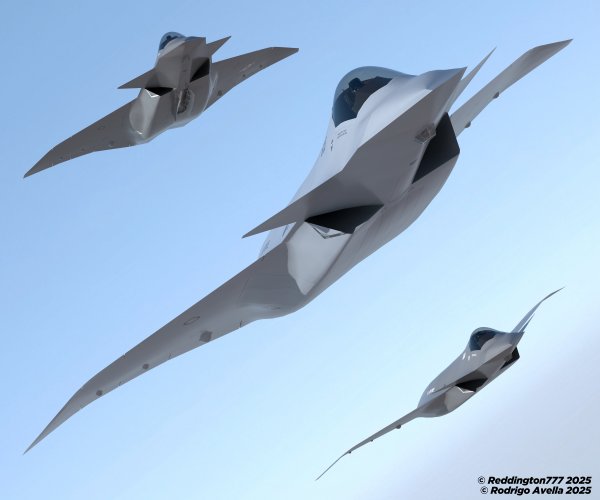
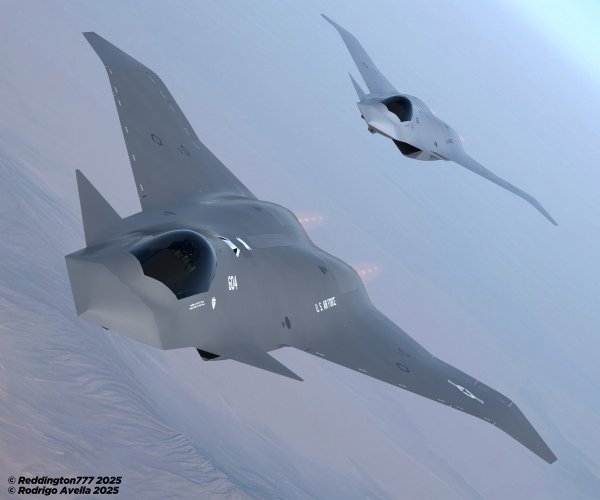
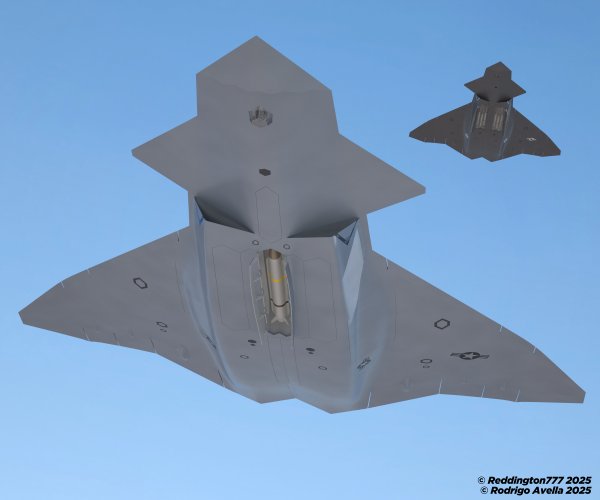
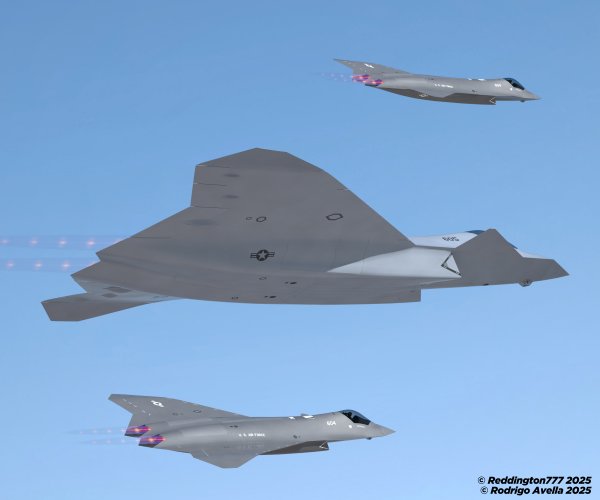
Hi
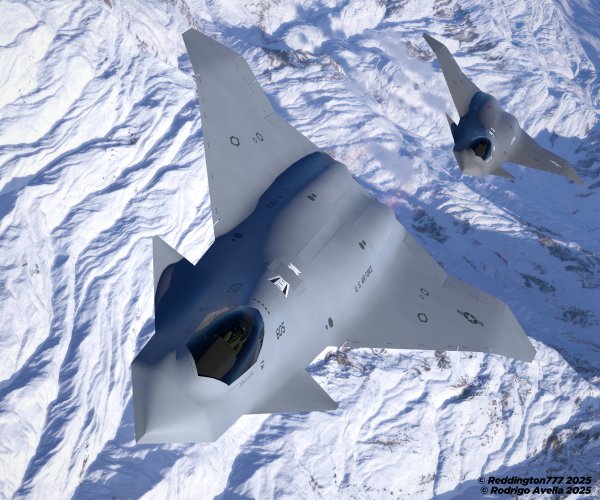
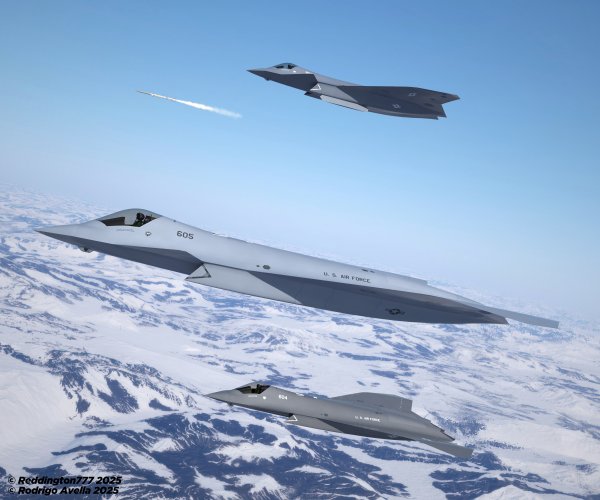
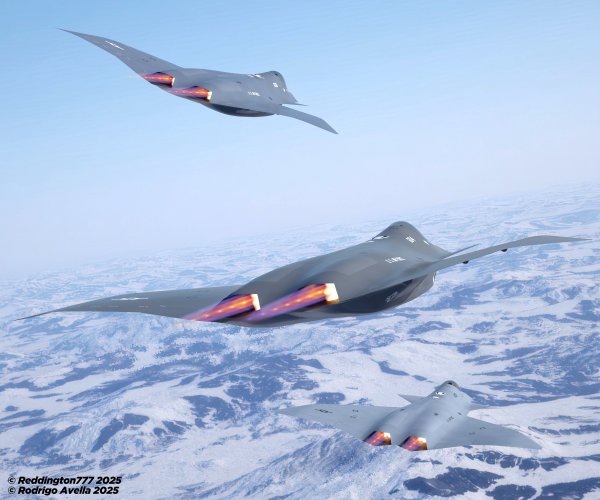
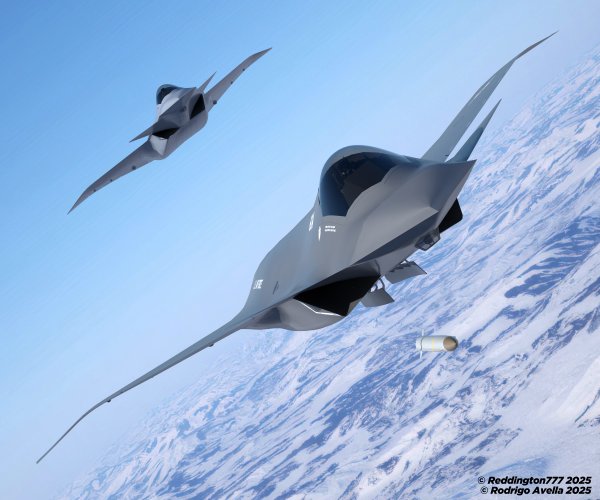
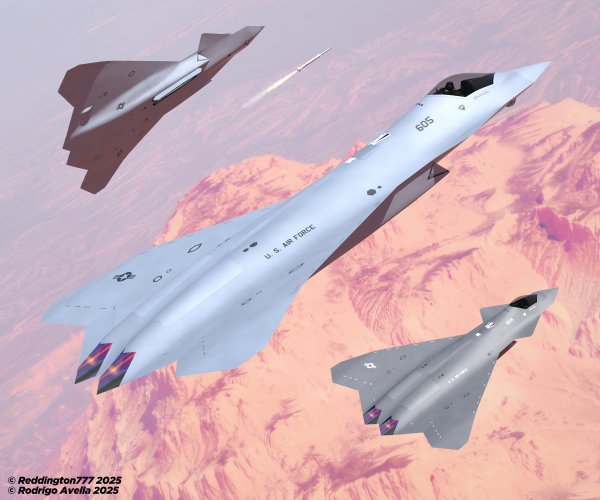
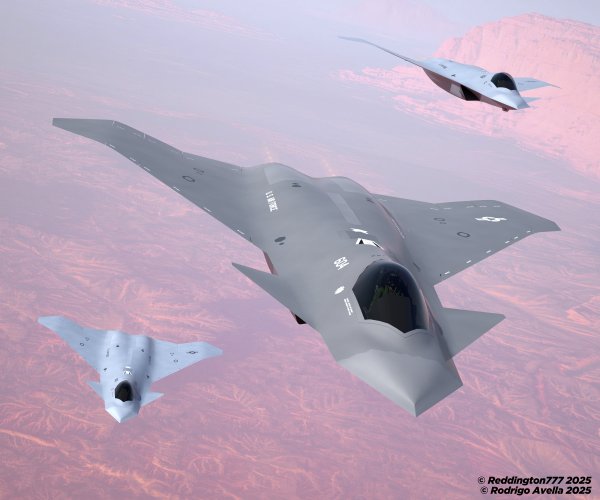
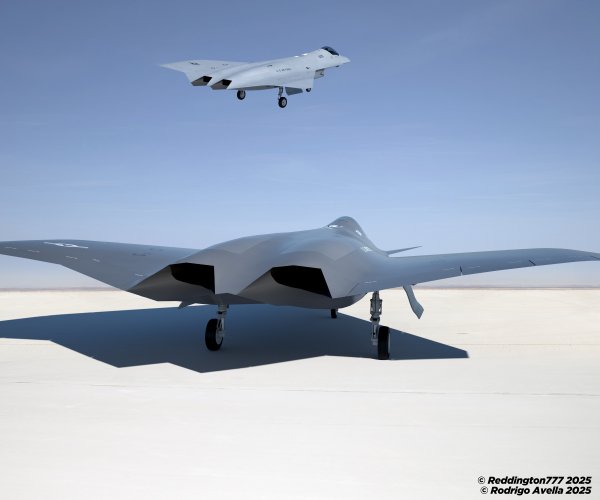
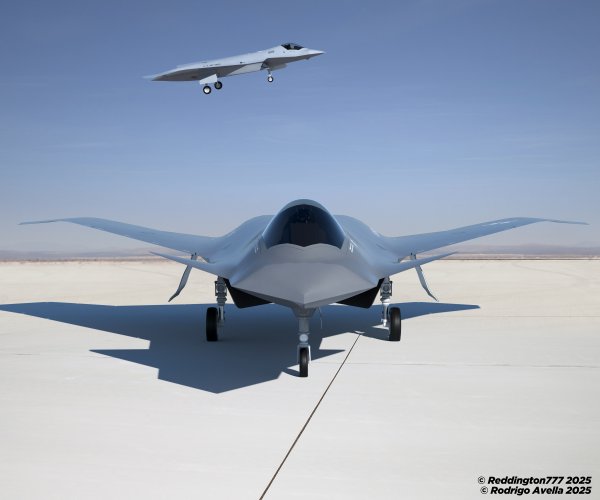
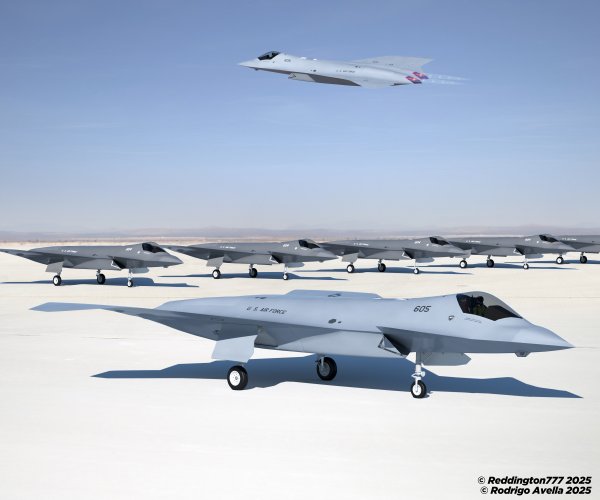
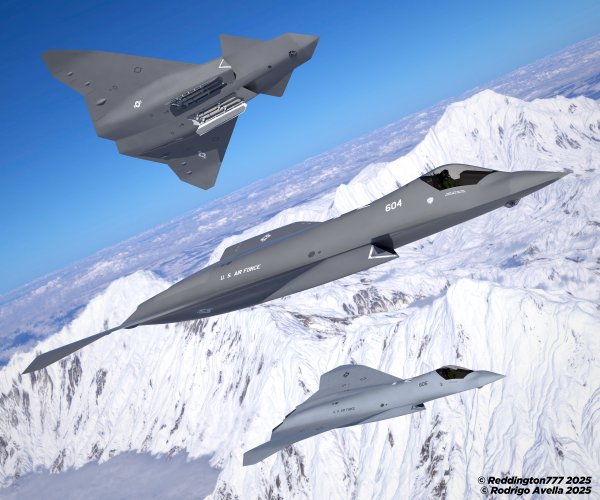
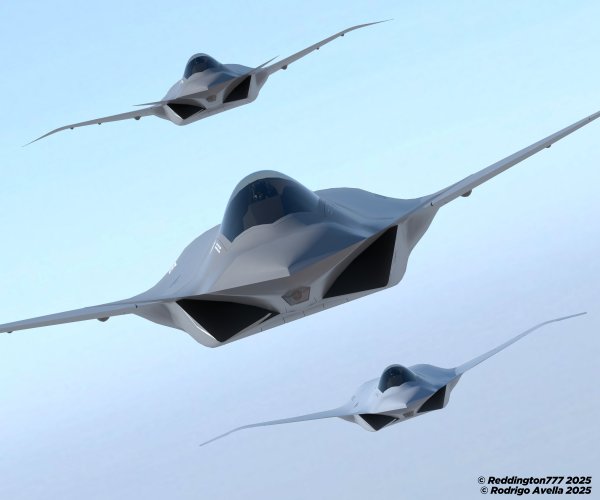
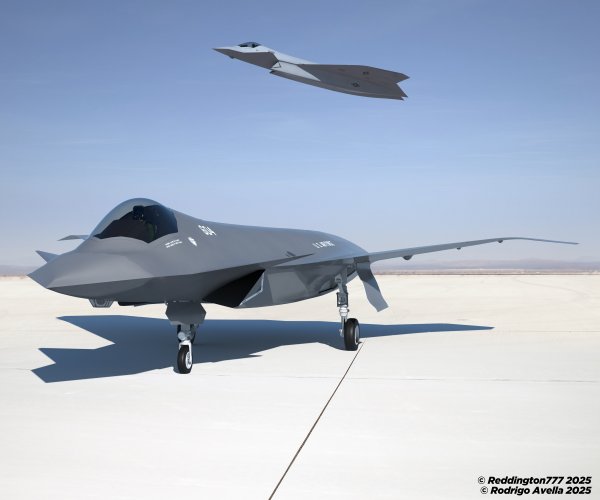
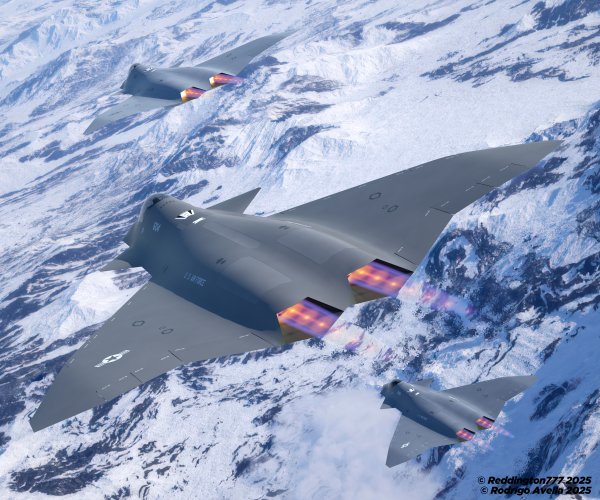
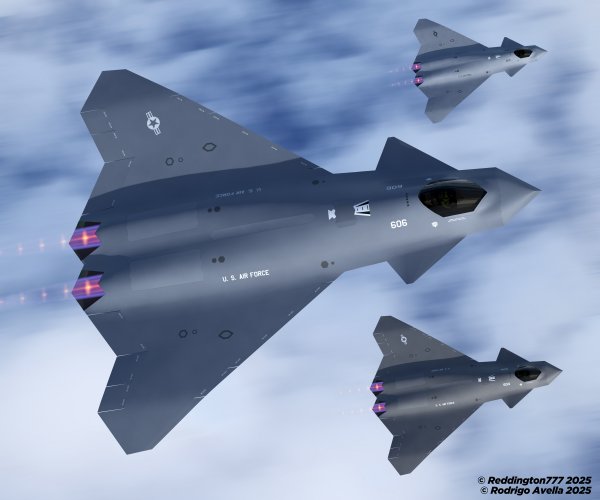
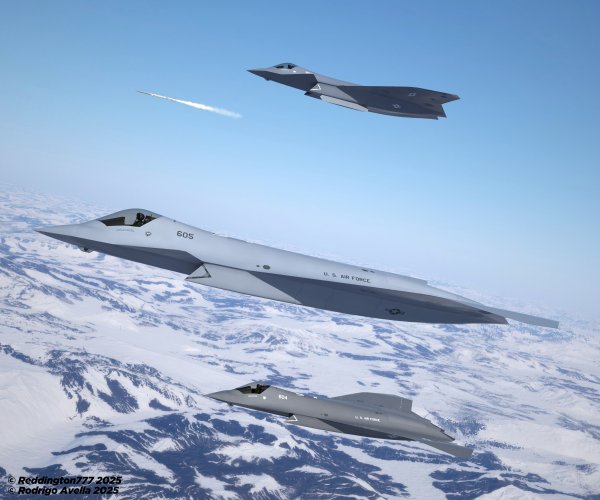
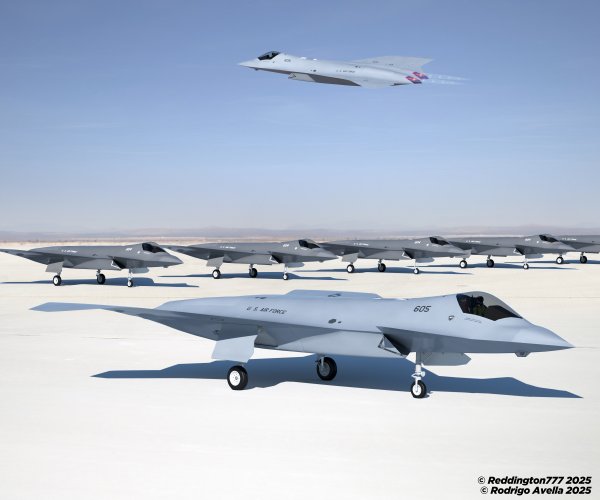
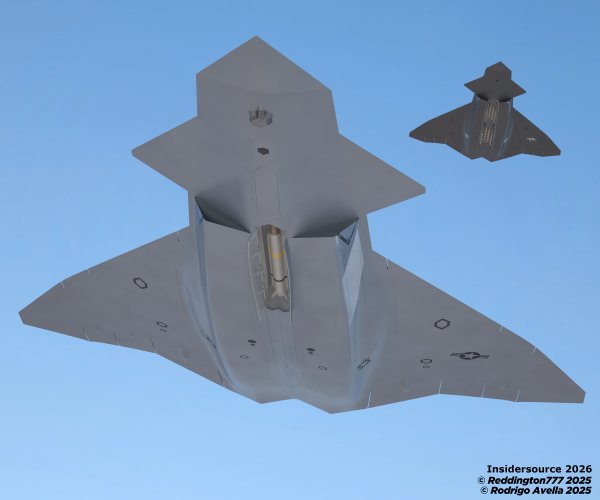
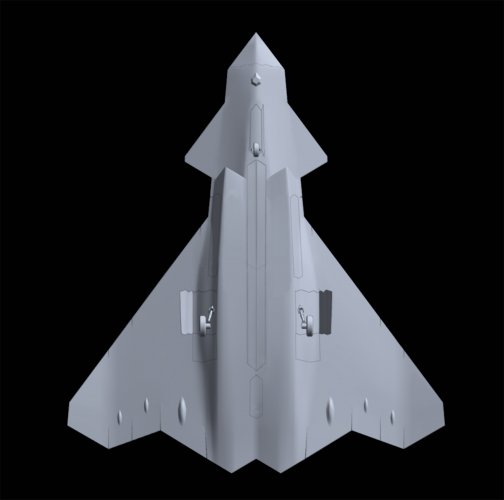
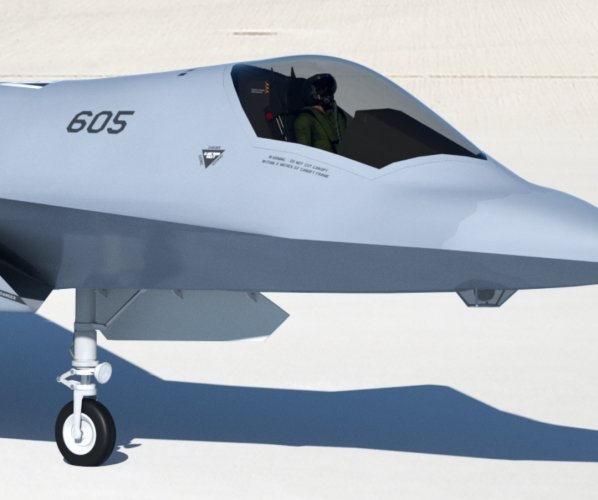
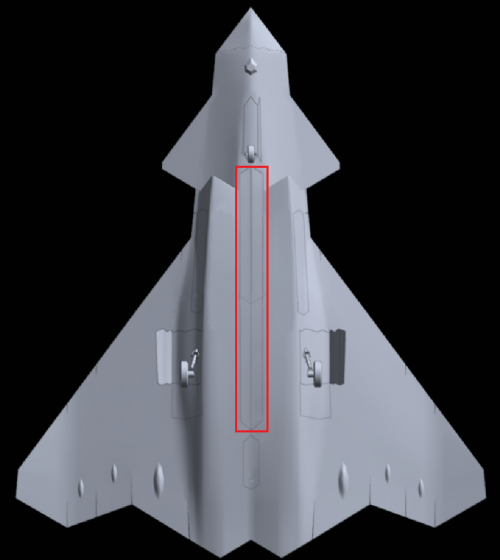
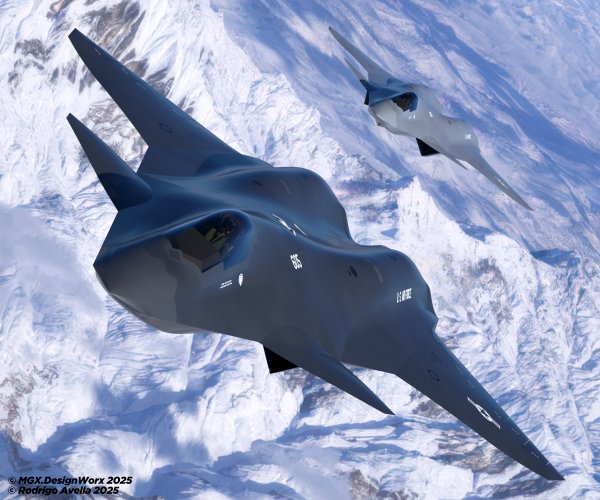
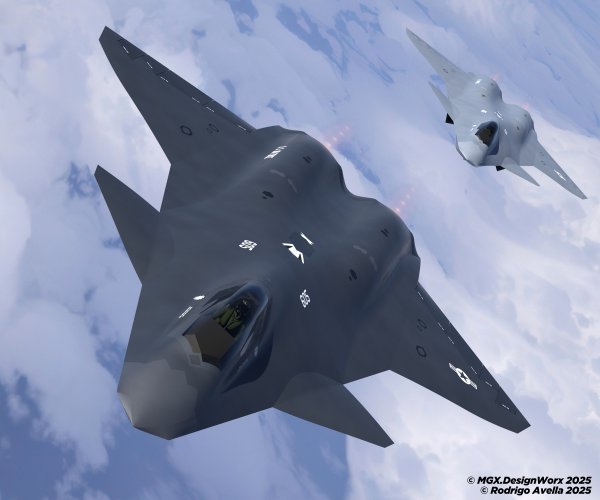
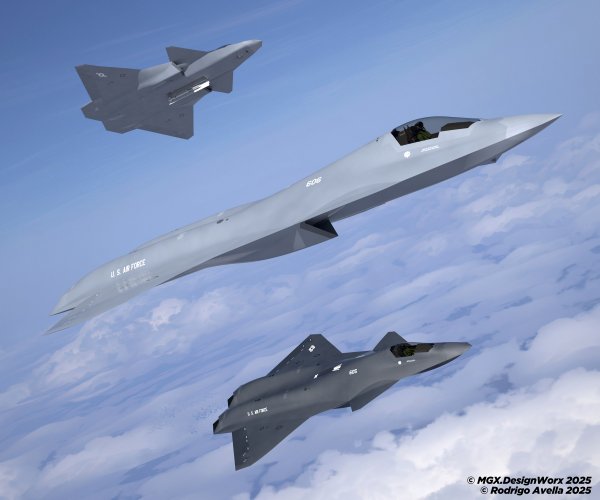
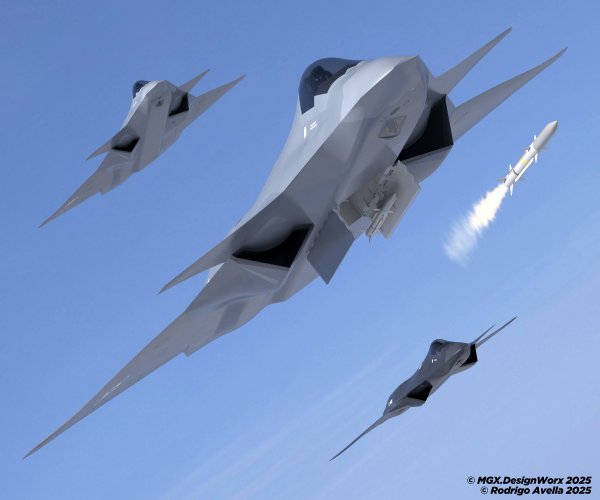
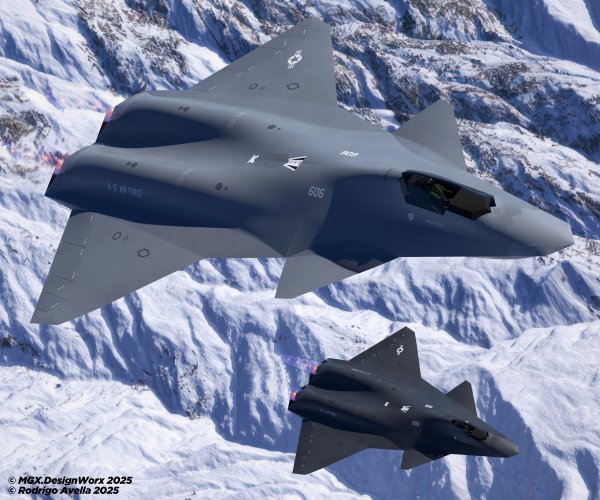
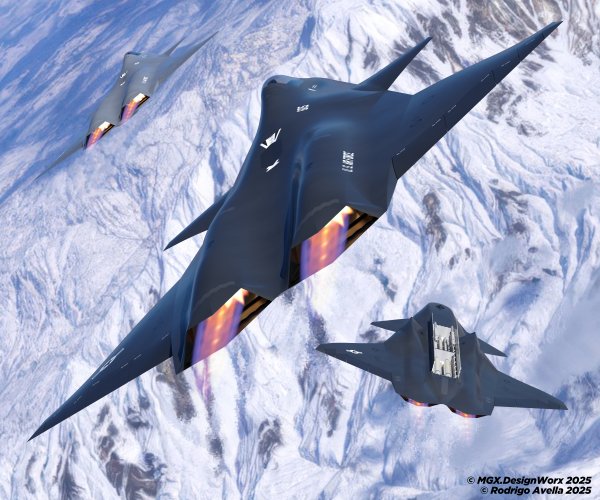
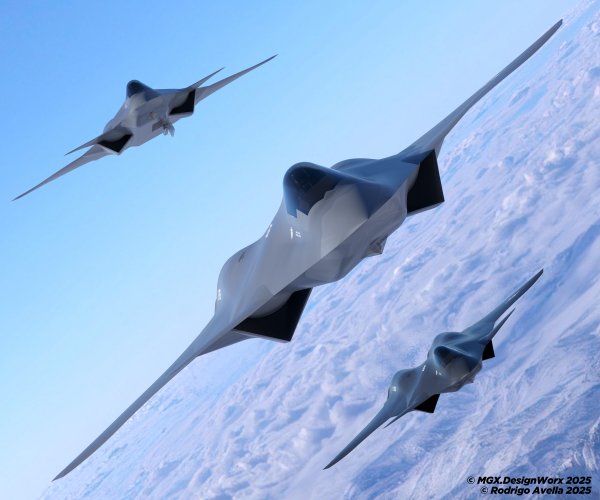
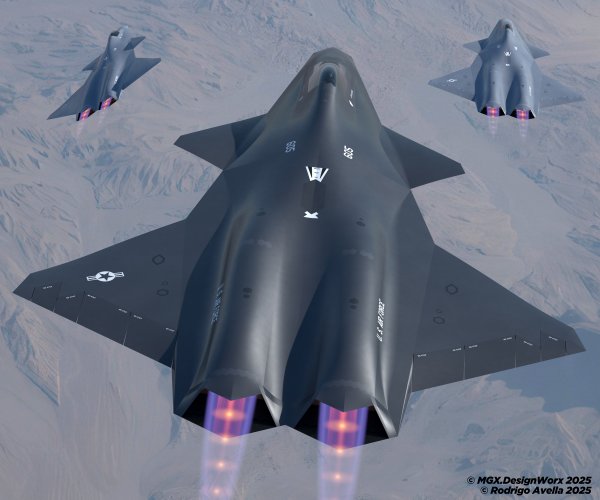
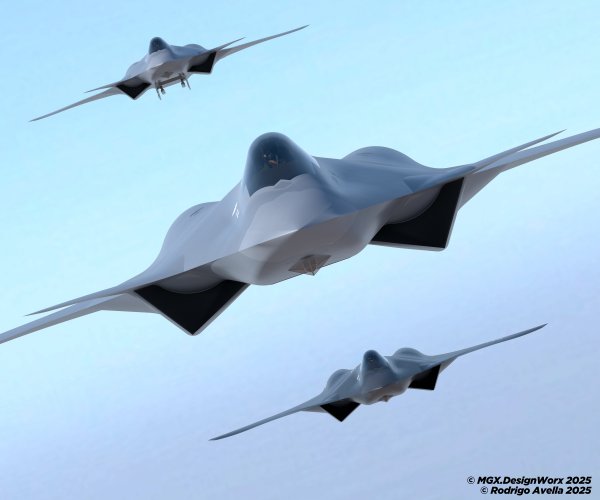
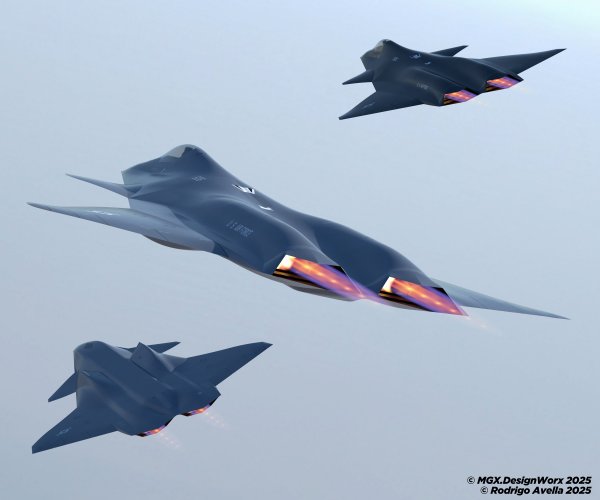
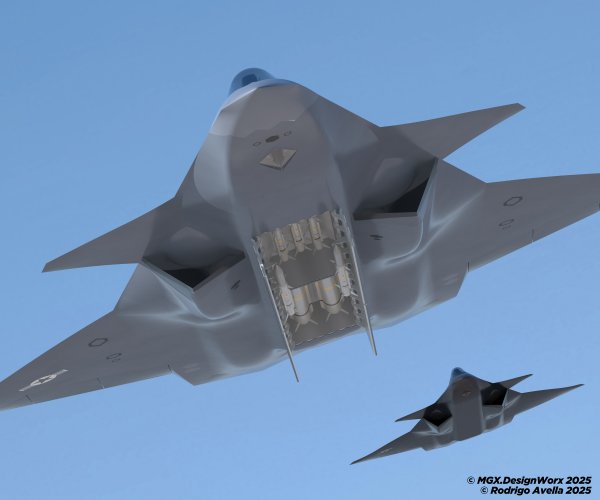
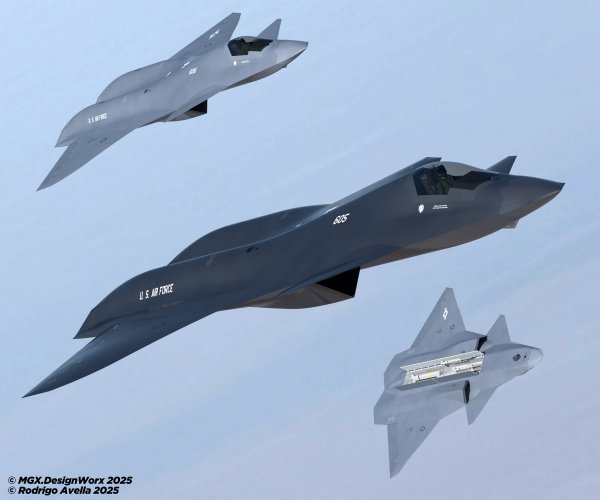
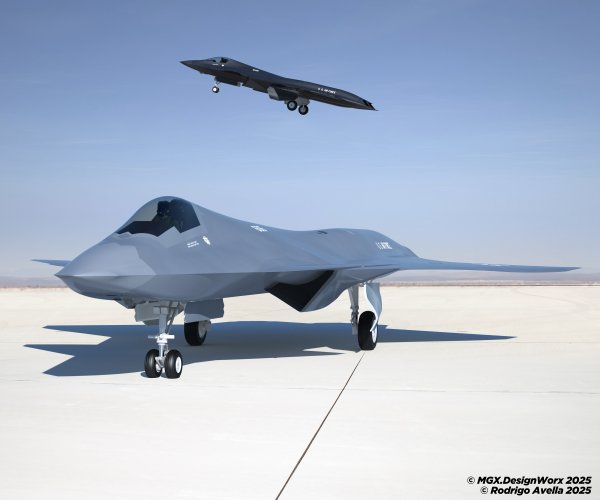
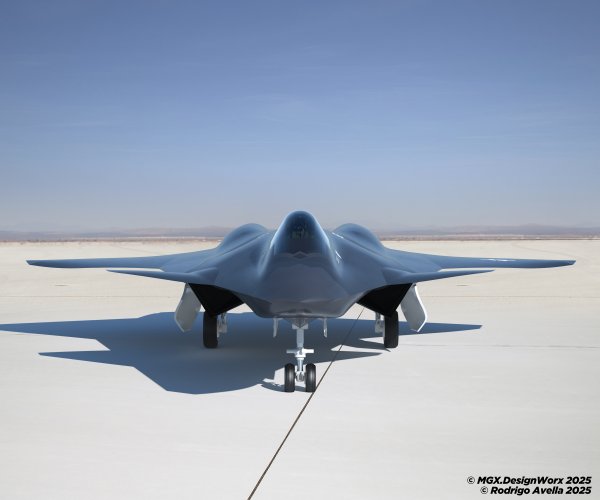
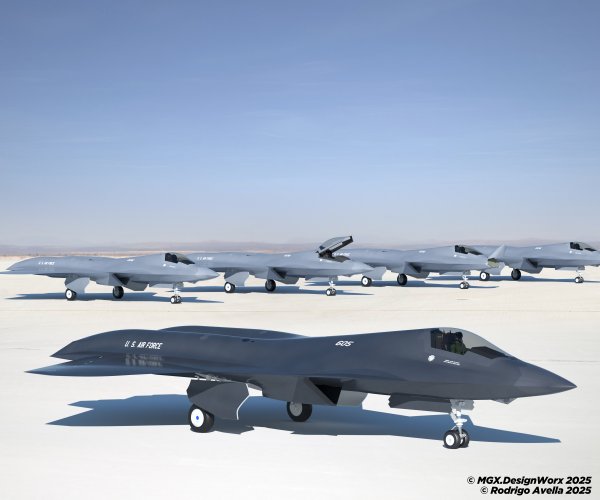
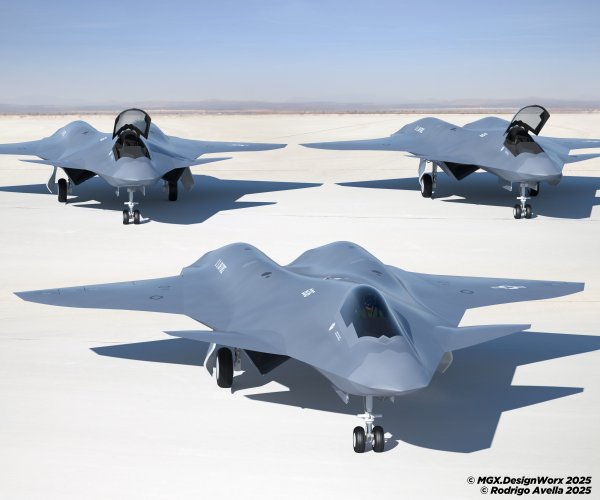
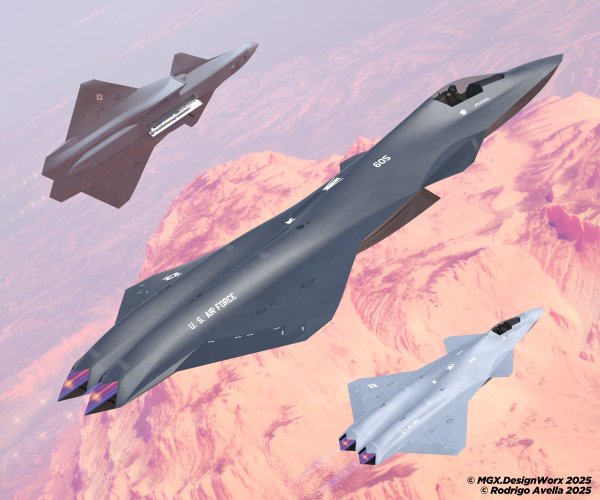
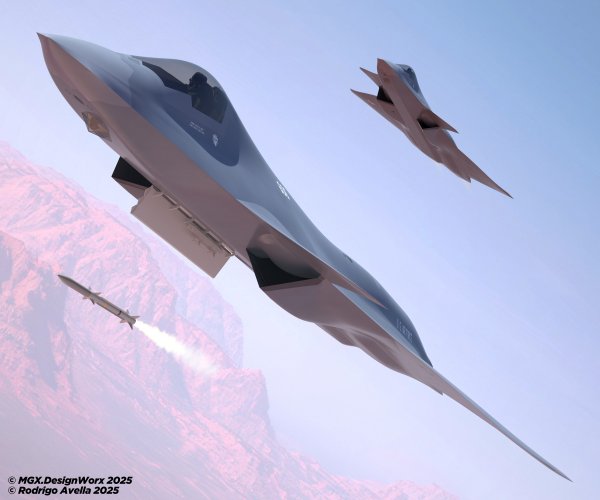
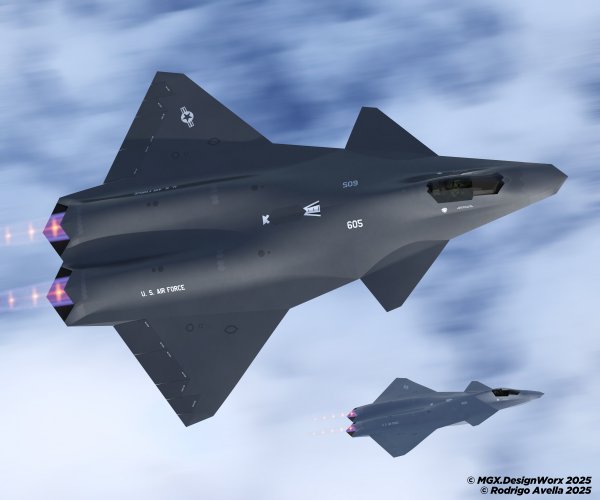
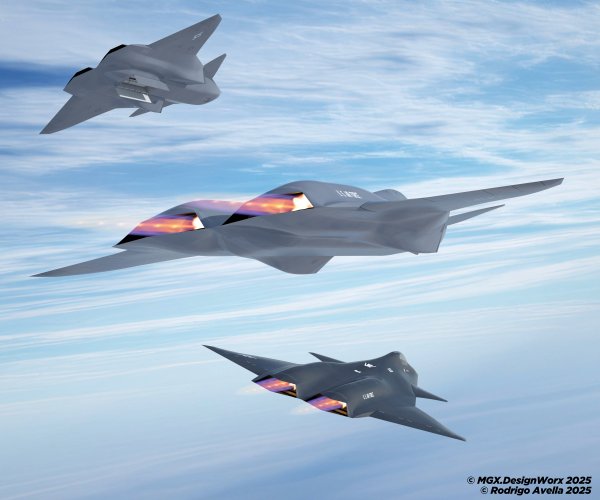
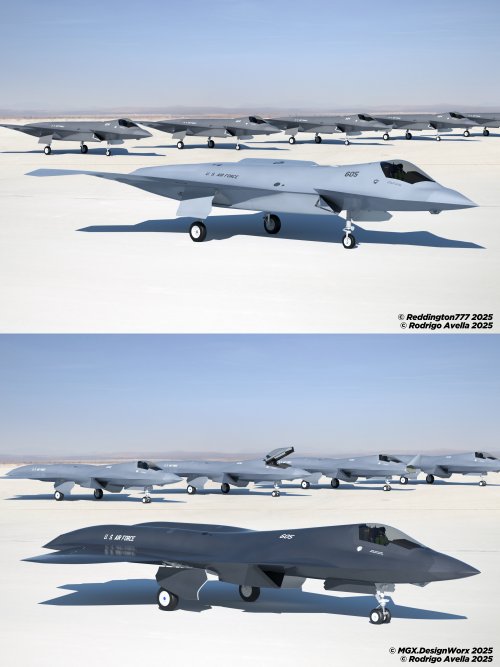
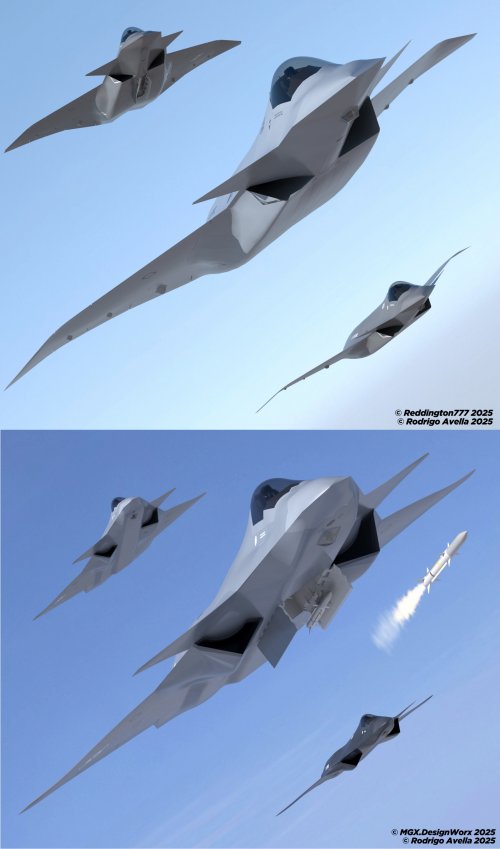
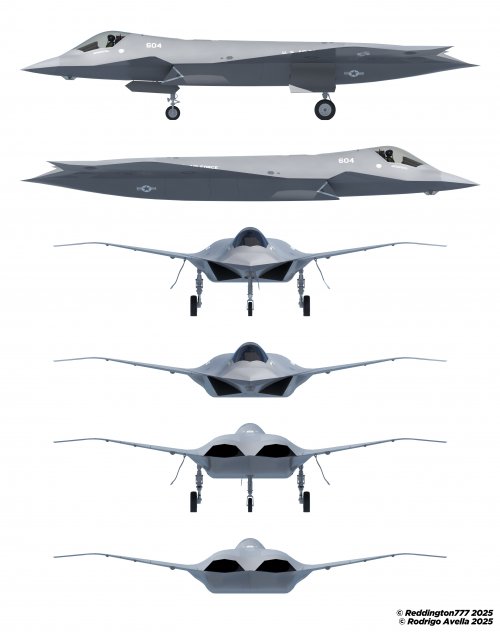
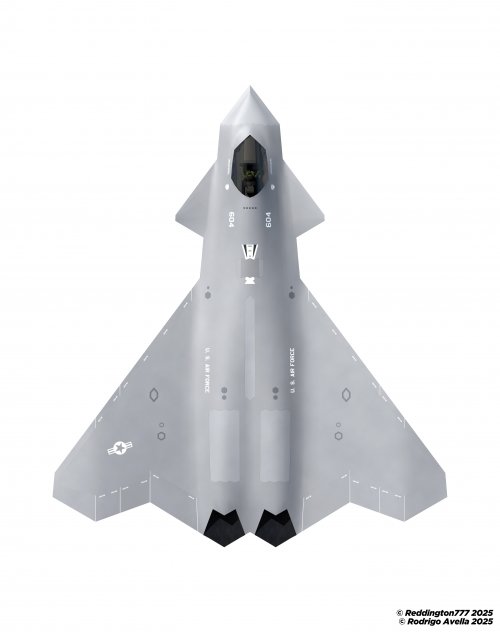
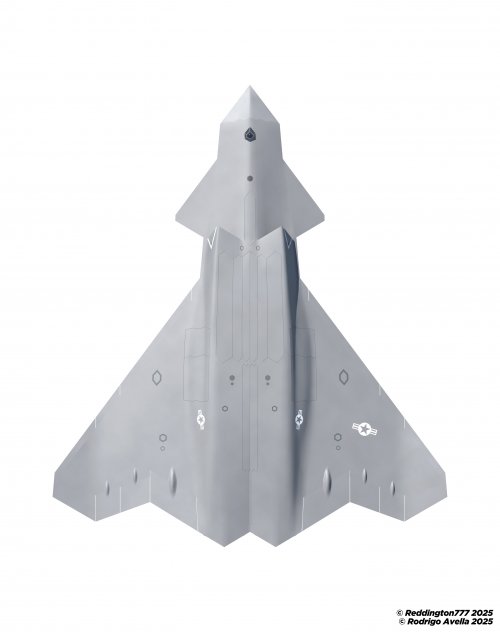
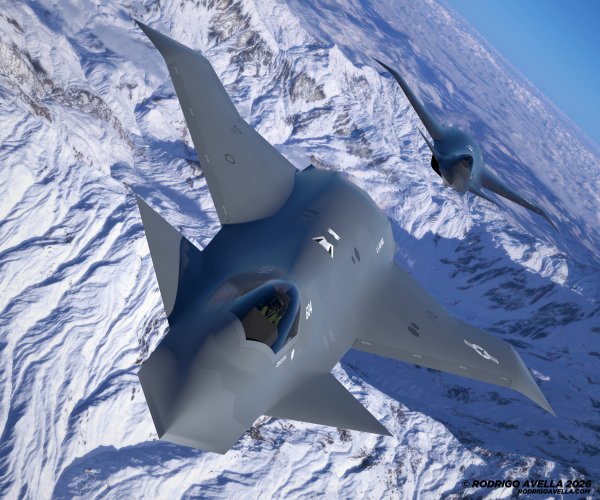
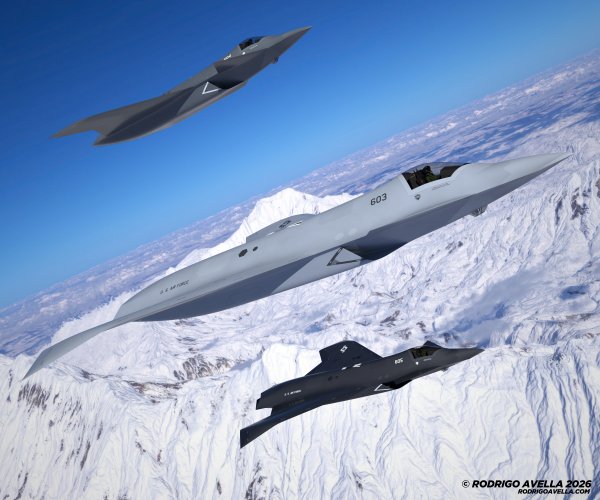
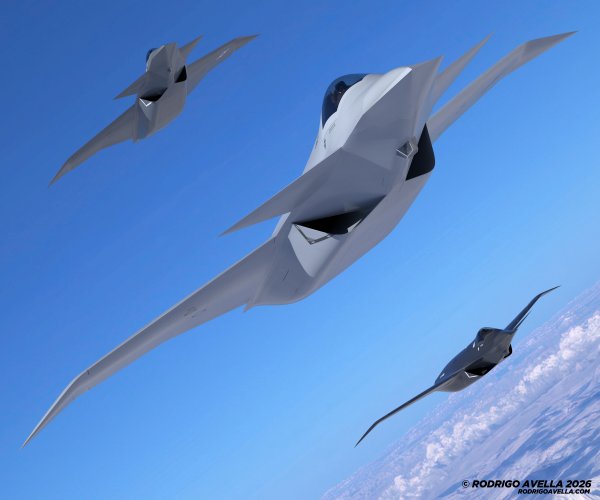
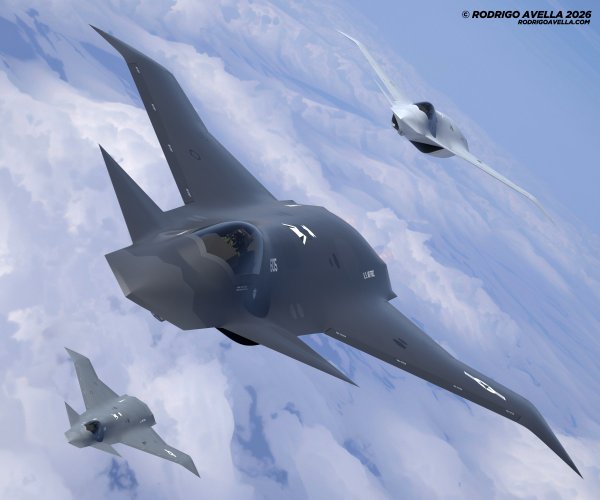
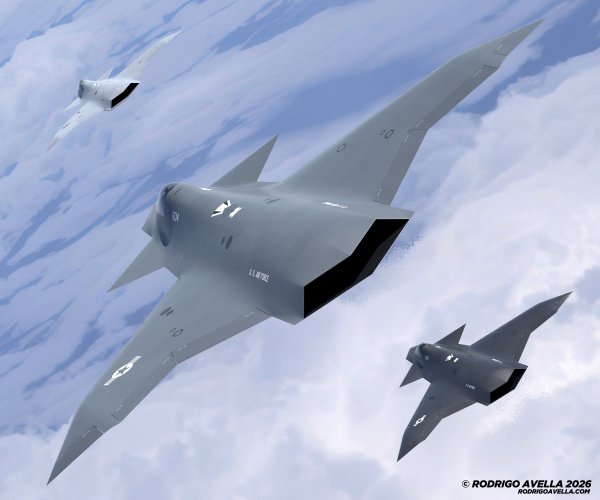
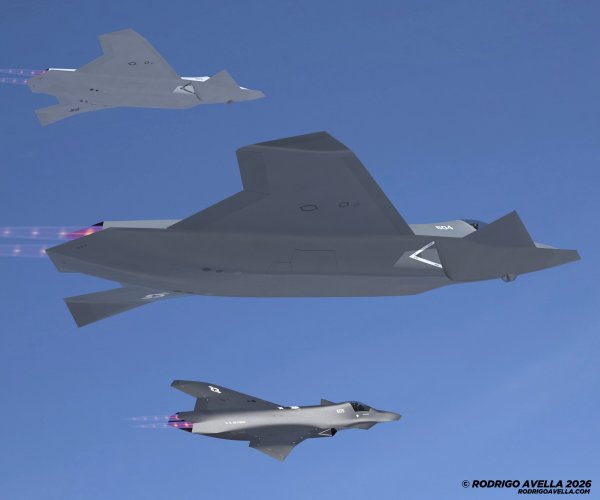
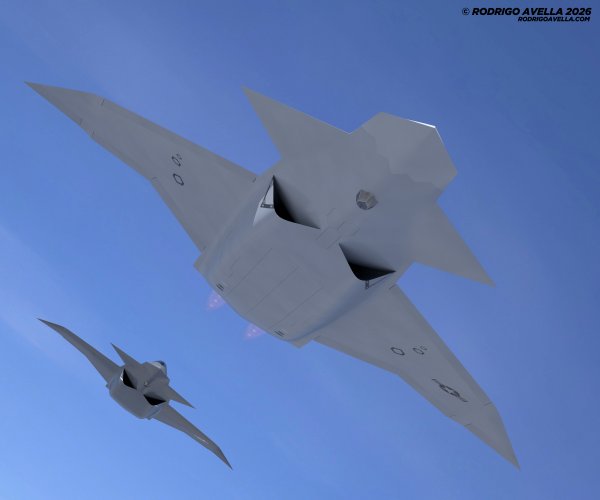
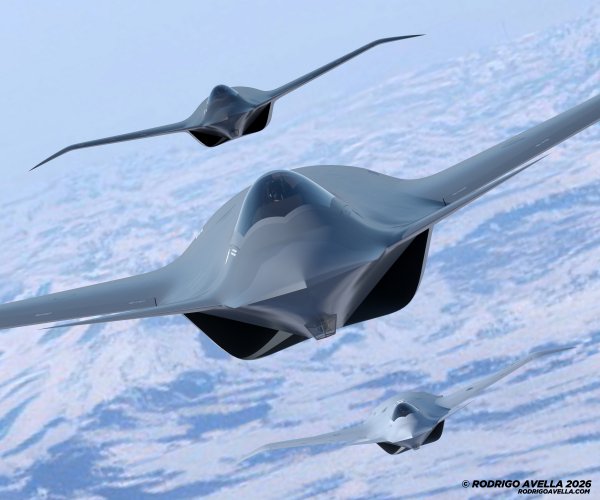
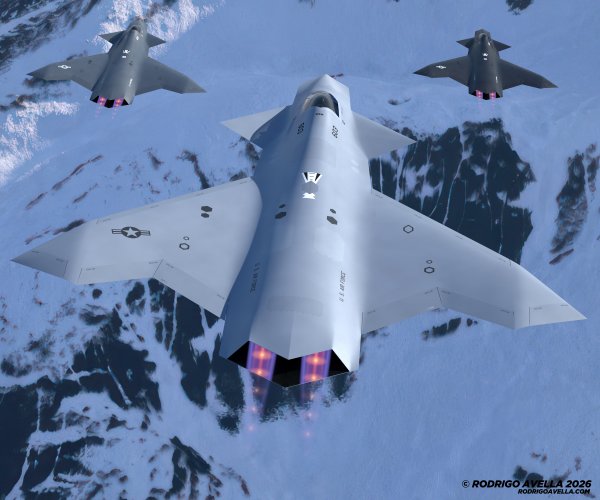
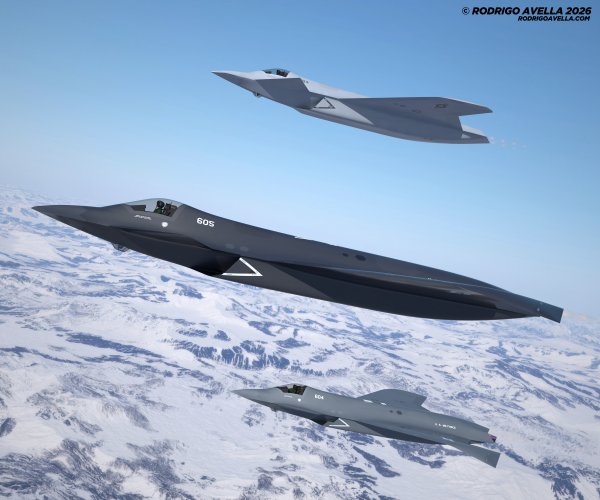
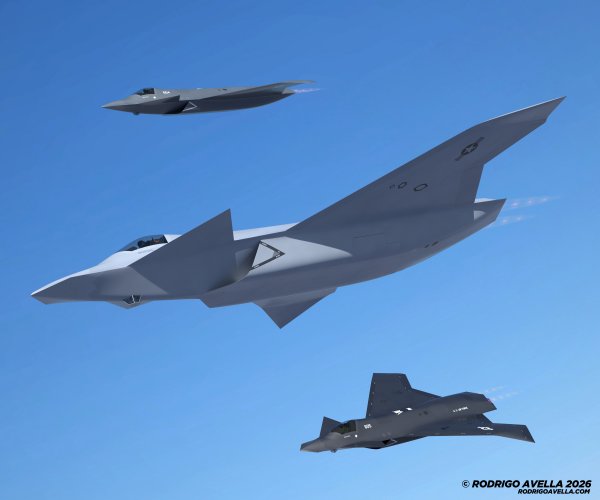
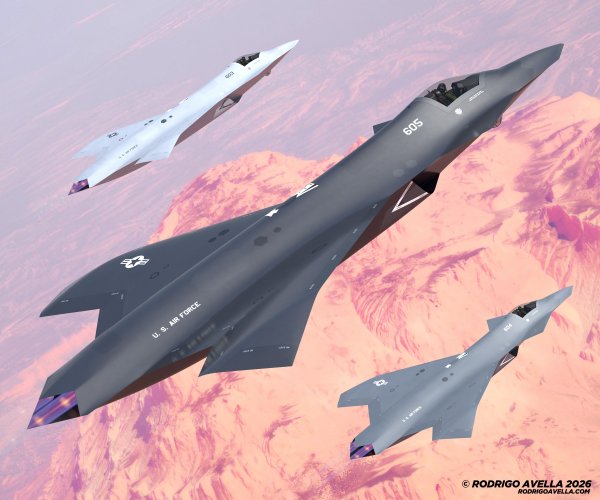
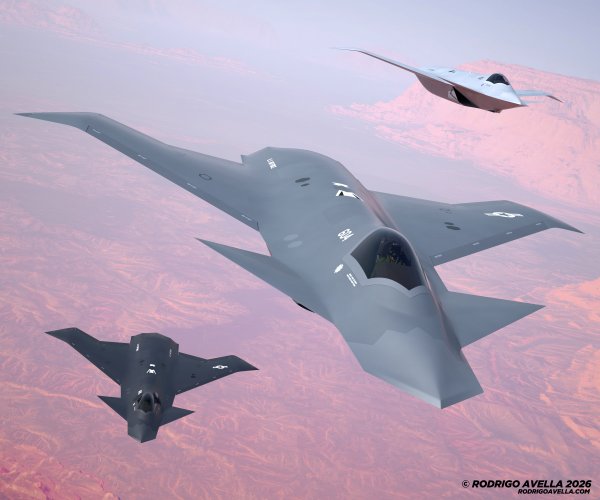
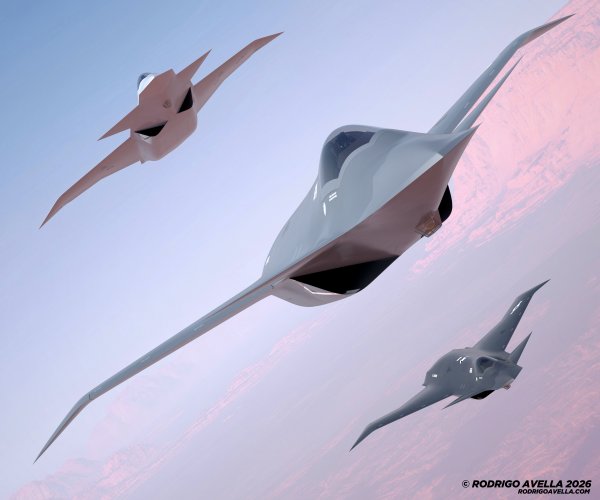
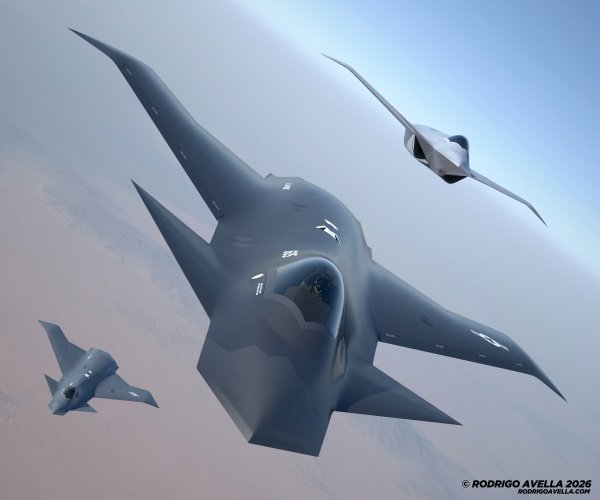
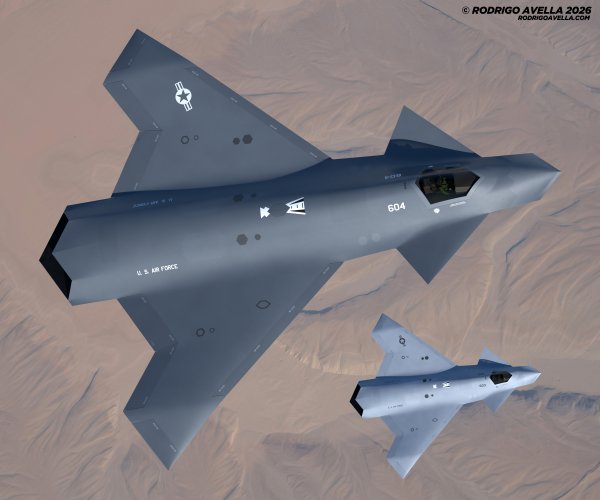
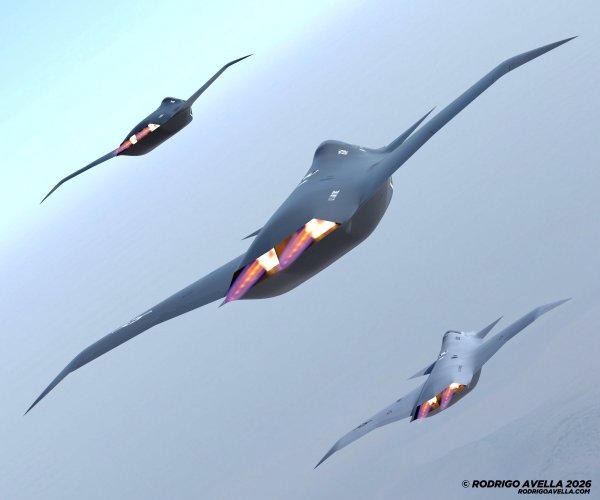
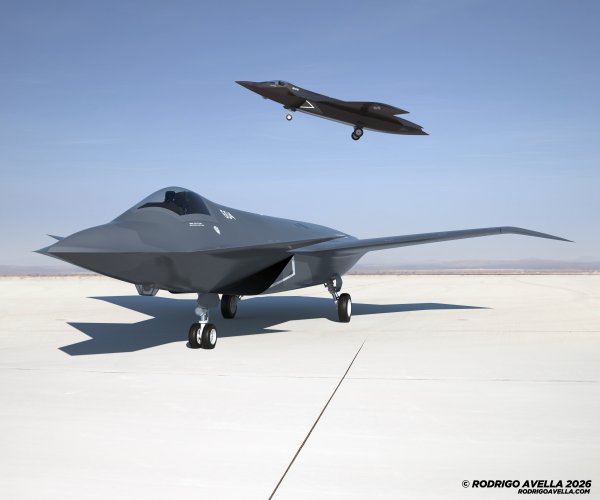
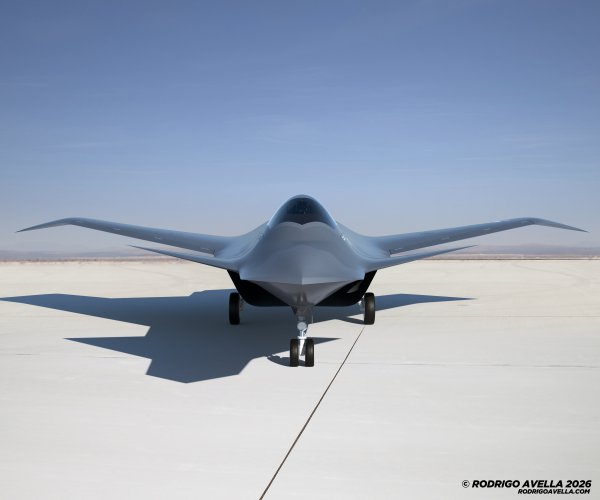
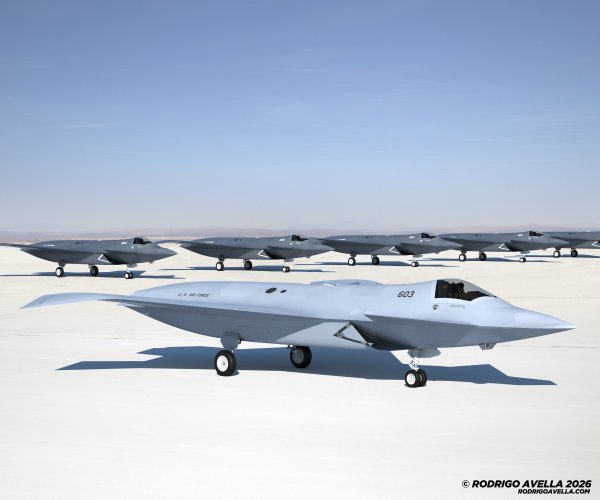
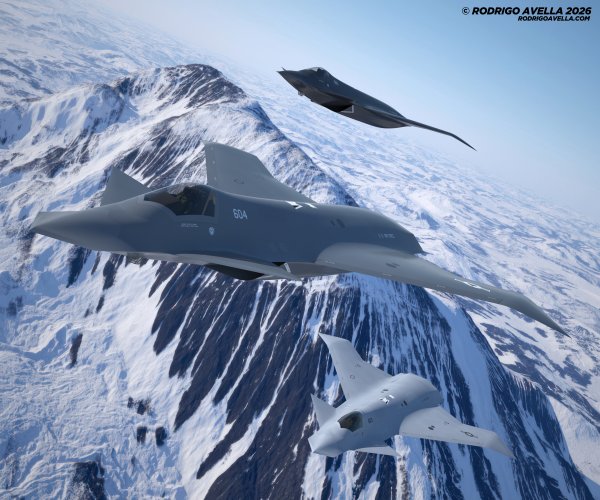
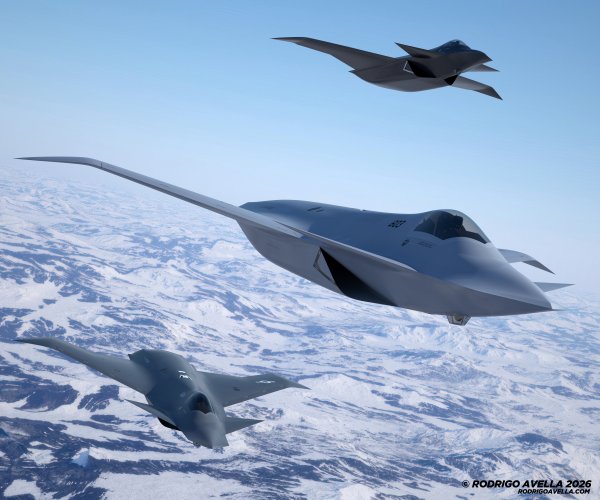
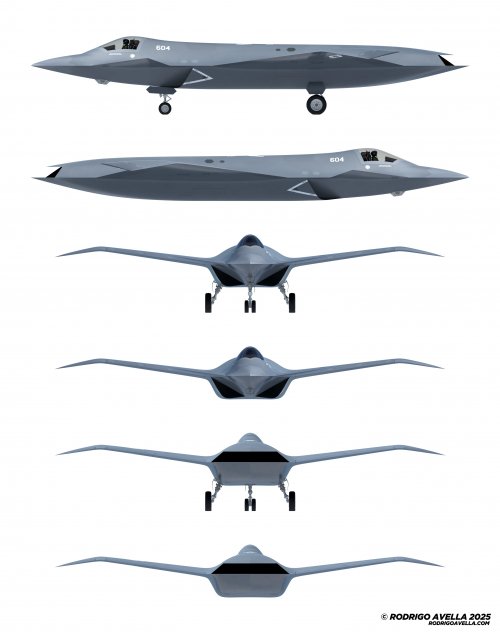
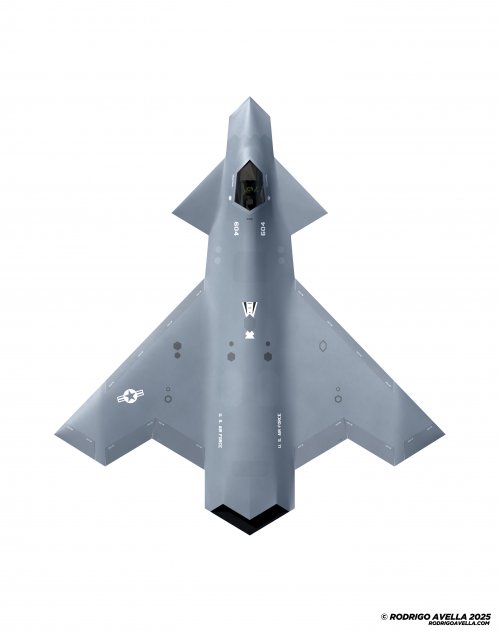
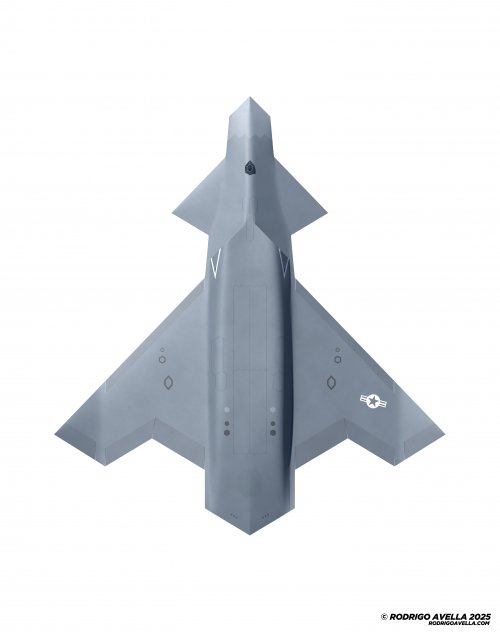
I'm sharing some rendered images of the @Reddington777 model.
I still need to add the views.
I hope you like them, Reddington777.
Best Regards!
I'm impressed! I wish I had your talent. If you want to get me excited, if you could do a nice CGI of a FBW flight control actuator that would be great, just kidding. Excellent work, you may be getting close.
 
Last edited by a moderator:
I'm impressed! I wish I had your talent. If you want to get me excited, if you could do a nice CGI of a FBW flight control actuator that would be great, just kidding. Excellent work, you may be getting close.
Does anyone think the canards may be closer-coupled to the wing leading edge, just curious?
 
@Rodrigo Avella
Wow you really breathed life into them! I love these renders, especially the ghost gray ones. and the decals / panel lines on them look awesome. Also the landing gears look real good! Thank you so much Rodrigo.

These are my favorites. It's gonna be my new desktop background.
View attachment 797820
View attachment 797818
Getting closer!!!
 
I've made a few tweaks
1) Nose gear moved forward
2) Main landing gear retracts rearward into the thick part of the wing.
3) Central weapon bays moved forward and made 20% wider to replicate the Boeing weapon pod.
4) Shallow bays under the intake removed and replaced by two side bays.
5) With the weapon bays moved forward a tail hook for a naval variant is possible.


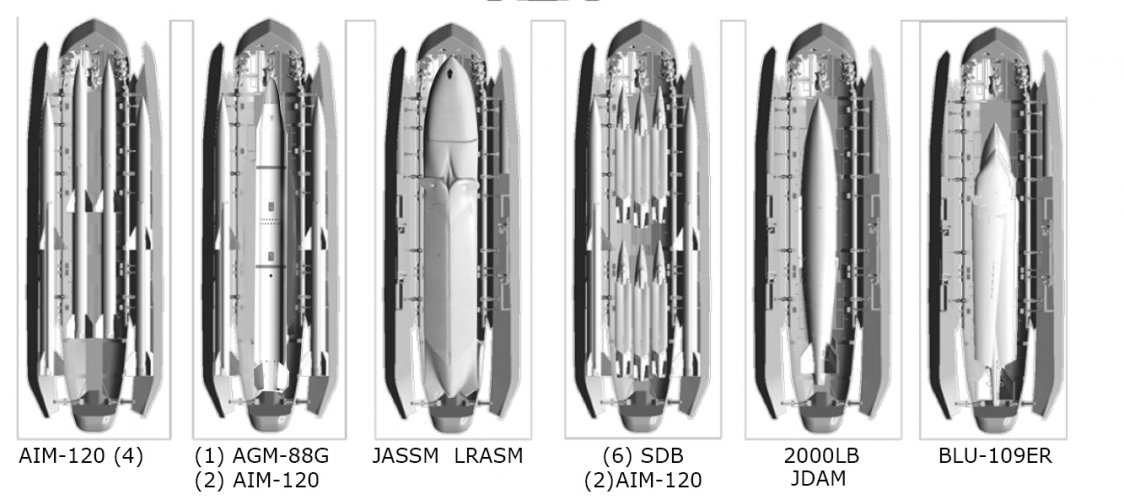
Air-to-air loadout (shown in the image)
8x AMRAAMs in the two tandem main bays
2x missiles in the side bays.

Self escorting strike
12x small diameter bombs in tandem bay.
4x AMRAAMs on the bay doors.
2x missiles in the side bays.

Stand off strike or anti ship
2x JASSM or LRASM
2x missiles in the side bays.

faxx2.jpg
faxx lower.jpg

Boeing's weapon bay pod. Each tandem bay will be sized like this. Approximately 450cm long, 60cm wide and 60cm deep.

WEAPON BAY.jpg

With the AGM-88G and SiAW the rear fins can be placed aft the AMRAAM fins. The side strakes will be higher up and will clear the AMRAAM fins mounted to the door.

This is approximately double the weapon capacity of the F-35C. This is sufficient for F/A-XX. No need for a larger bay.
 
Last edited:
@insidersource
I've made a few tweaks
1) Nose gear moved forward
Why must the gears be adjusted? the bounding problem isn't fro the gears. It's from the engine and intake clearances
3) Central weapon bays moved forward and made 20% wider to replicate the Boeing weapon pod.
Why. That's fundamentally impossible with volume and perspective match.
4) Shallow bays under the intake removed and replaced by two side bays.
Side bays are less volumnious and the area is better used for side looking arrays
5) With the weapon bays moved forward a tail hook for a naval variant is possible.
Why? To entertain your shared navy design? There is a tail hook
Air-to-air loadout (shown in the image)
8x AMRAAMs in the two tandem main bays
2x missiles in the side bays.
The fuselage perspective match is not wide enough for tandem bays between engines. The engines are assumed to be to be 51" in max diameter. Unless volume blows up even more, there's no way to fit 51" engines with tandem bays between engines to make that work.

For the record - this result can most definitely fit 8 AAMs plus 2 side bays. They just won't be put in tandem bays.
 
Why must the gears be adjusted?
You have already mentioned narrow clearance of the wheel when it retracts forward. I've solved the problem for you. It frees up space for side bays.

Why. That's fundamentally impossible with volume and perspective match.
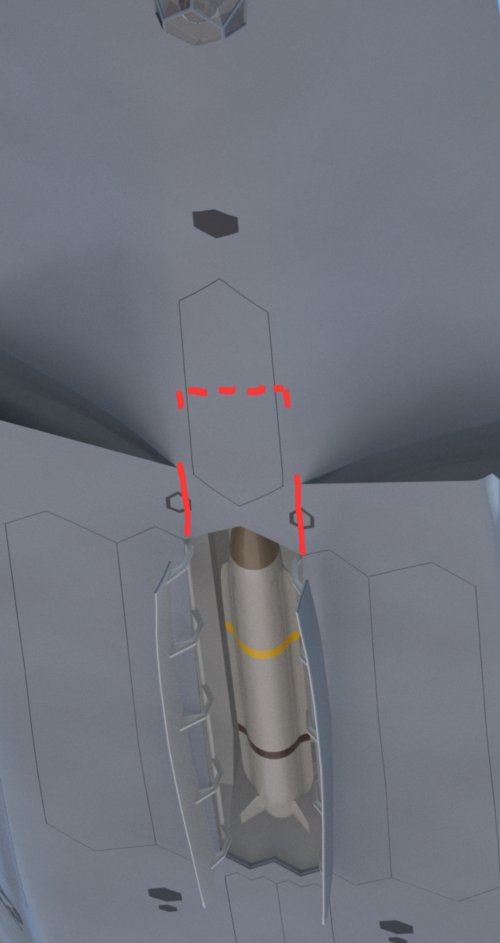
Your renderings clearly show there is space. The nose gear door isn't much narrower than the central weapon bay door. The weapon bay is simply moving forward filling about taking 50% of your nose gear bay. The nose gear bay then moves forward as there's plenty of space between the nose gear and EOTS.

Side bays are less volumnious and the area is better used for side looking arrays
Your side looking arrays posted on the page 31 are tiny and would easily fit in the nose like the side arrays planned for the F-22.

Why? To entertain your shared navy design? There is a tail hook
In the F/A-XX thread you said your rear tandem bay would have to be removed to fit a Navy tail hook. Moving it forward 2 metres allows the second bay and a Navy tail hook.

The fuselage perspective match is not wide enough for tandem bays between engines.The engines are assumed to be to be 51" in max diameter. Unless volume blows up even more, there's no way to fit 51" engines with tandem bays between engines to make that work.
This is because you assumed wrong. The engines won't be 51" in width. This is wider than the F135. The F135 is only 46" in diameter as it has the accessories below the engine. The F135 puts out 43,000lb of thrust with a fairly high bypass ratio. The XA100 and XA101 adaptive engines were F135 sized (48") and had 45,000 +lb of thrust.

The NGAD XA102 and XA103 engines are 35,000-40,000lb thrust class. This means they have to be smaller than the XA100/XA101 engines that are 48" wide.

Bring your engine width down from 51" to 45" and that allows your tandem bays to fit two AIM-120 wide.
 
This is your image showing how the nose gear bay is only slightly narrower than your central weapon bay. I'm moving the weapon bay into the aft half of your nose gear bay. The intakes have to spaced out only a few inches. You can't even tell I spaced out the intakes on my rendering. Only a 5% reduction in width. Screenshot_20260108_180503.jpg


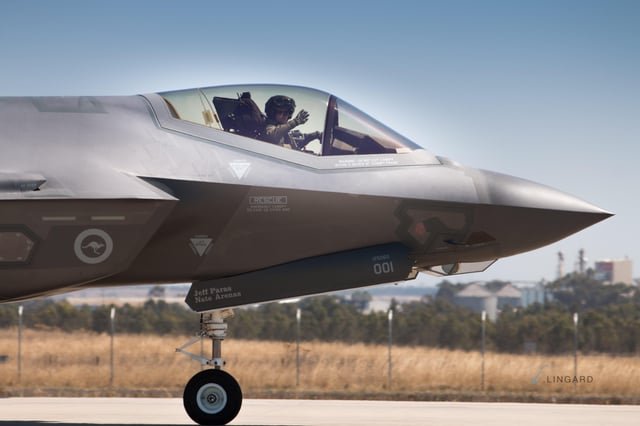
Also don't say your nose gear can't move forward. Here is your design. Screenshot_20260108_180226.jpg

Here is the F-35 below.

638ipkmbxjky.jpg

There is plenty of space for the EOTS and avionics in the F-35. There is no need to have your nose gear so far back. You can defnitely bring your weapon bay forward.
 
I've made a few tweaks
1) Nose gear moved forward
2) Main landing gear retracts rearward into the thick part of the wing.
3) Central weapon bays moved forward and made 20% wider to replicate the Boeing weapon pod.
4) Shallow bays under the intake removed and replaced by two side bays.
5) With the weapon bays moved forward a tail hook for a naval variant is possible.


Air-to-air loadout (shown in the image)
8x AMRAAMs in the two tandem main bays
2x missiles in the side bays.

Self escorting strike
12x small diameter bombs in tandem bay.
4x AMRAAMs on the bay doors.
2x missiles in the side bays.

Stand off strike or anti ship
2x JASSM or LRASM
2x missiles in the side bays.

View attachment 797822
View attachment 797823
And you don't see any structural issues with this massive cavity that runs through the entire airframe?
1767858472161.png
Not to mention the all forgotten cavity flows have come back to bite us in the bum. Higher length to depth ratios leads to much stronger flow forces across the cavity. See Su-57 segmented main bays.
 
You have already mentioned narrow clearance of the wheel when it retracts forward. I've solved the problem for you. It frees up space for side bays.
There's enough space for side bays. The side looking arrays can get erased.
Your renderings clearly show there is space. The nose gear door isn't much narrower than the central weapon bay door. The weapon bay is simply moving forward filling about taking 50% of your nose gear bay. The nose gear bay then moves forward as there's plenty of space between the nose gear and EOTS.
What I mean to say is that the nose gear bay isn't the limiting factor. I can move the wheel bar forward trivially. Beyond the bay and the bay door possibly obstructing and creating turbulent flows being ingested by an engine intake that is low, the wheel bay has literally never been he constraining factor. Even with the current bay, excising the SiAW allows 8 AAMs in the bay without changes. However - if you look at every fighter ever - either the landing gear either doesn't affect the bays because the bays are side by side and not ventral (F-35, F-22, Literally every fighter with side bays and not ventral bays), or they are positioned between the intakes probably so it doesn't create turbulent flows for the intakes (J-XDS), or they are positioned behind the intakes (X-32, F-16).

The constraining factor for the AAM flatter bays is the intake.

The constraining factor for the center SiAW bay is that #1 in order to accomodate more munitions in the bay, the intakes need to be smaller. The intakes literally cannot be smaller on my model. For an engine with an assumed inlet diameter of 43 inches and a max diameter of 51 inches, the intake geometric area relative to the estimated airflow incidence is only 0.644m2 - comparable to the combined geometric area of the F-35 intakes, which have DSI accounted for (sorry, I have no way or know how to calculate the actual capture area). The F-22 was measured 0.68 - 0.7 m2 geometric for an engine inlet area that's smaller by around 2 inches in diameter. That intake behavior may or may not be recoverable by a DSI, but they absolutely cannot be smaller. The inlet shape also cannot be stretched more, as even adding fuselage depth would distort the inlet shape too much and adding width is not feasible due to perspective match. In fact - the inlet has been giving me enough trouble that I'm starting to think about a single ventral inlet again - as crazy as that sounds.

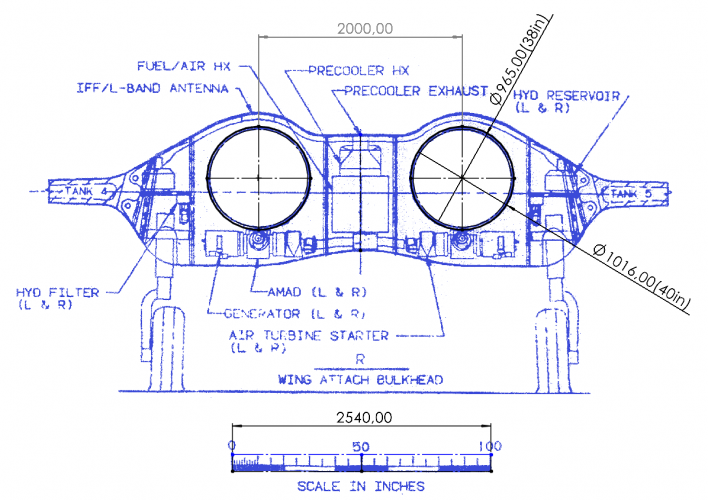
Aft of the weapon bays, the engine clearance to the tandem bay is also prohibitive. I asked in the YF-23 thread - my engine centerline to centerline distance sits at roughly 1900mm - close to the same measurement on the EMD YF-23 and wider than the same estimated distance on the F-22. The available clearance to insert a weapon bay between engines is highly questionable at that engine to engine clearance gap. My rule with regards to this model was that if it was questionable, I'd take the safe option - which is to give up the center bay between the engines and not move centerline bays between the engines.

So to summarize - the problem with weapon bay arrangement is not gear bay or location. It is engine, intake, ducting, structural and available clearances that determine weapon bay arrangement.
Your side looking arrays posted on the page 31 are tiny and would easily fit in the nose like the side arrays planned for the F-22.
I tried that too, but the FoV would be suboptimal for any air superiority fighter. 50-60 degree of upwards bore sight or a 60 - 70 degree downwards bore sight. That means a > 30 degree steering just it look sideways. The side array can maybe be moved to use the chine on the nose as a cover, but that limits the height of the array, which ensures that you have an array good for azimuth beam width but bad for elevation beam width - and ultimately not optimal for supporting weapon tracks against targets at an elevation difference and off boresight to the main array.

The other option is to inset the array at an incidence significantly different from the aircraft skin - which could be possible, but that limits field of view and unrealistically increases frequency selective cover area just to achieve the same FoV and a similarly tiny array as a well placed side array - like on the side fuselage.
In the F/A-XX thread you said your rear tandem bay would have to be removed to fit a Navy tail hook. Moving it forward 2 metres allows the second bay and a Navy tail hook.
It could fit a tail hook, but it already fits an airforce tailhook even with the aft weapon bay. ultimately fitting a navy tailhook makes no sense if this isn't even a navy fighter (which it isn't)
This is because you assumed wrong. The engines won't be 51" in width. This is wider than the F135. The F135 is only 46" in diameter as it has the accessories below the engine. The F135 puts out 43,000lb of thrust with a fairly high bypass ratio. The XA100 and XA101 adaptive engines were F135 sized (48") and had 45,000 +lb of thrust.
NGAP was said to be "scaled down" from AETP, which was suppose to fit in the foot print of the F135. That could mean two different things - either a shorter engine module or a engine smaller in diameter.

F135 outputs 43k max static thrust. I assumed NGAP to have 36 - 40klb thrust, with the baseline being 36k from the F119 and an added thrust due to the 3rd stream, which is what I worked off of. According to a comment left by F119doctor in this thread, I think an overall keep out area of 48 inches in diameter would be assumed for the F119 safely, but the same diameter could not be afforded for the F135, which had components spilling out width wise past 48 inches. I also inquired about how much a 3rd stream would add for adaptive cycling engines and was told 1 - 1.5 inches to the diameter by scott. So working off the F119, a max of 48 inches + 1.5 inches around the entire engine leads to 48 + (1.5 x 2) = 51 inches diameter/keep out zone for the engine module. Given a smaller engine size, the first thing I would change is not the weapons bay. Instead, I would choose to make my packaging tighter and reach a smaller volume.

Keep in mind insider - my rule was to work with a worst possible case and relax those requirements only if things couldn't fit. That's why I chose the 51 inches in diameter.

I would go with a Su-57 engine spacing and tandem bay clearance with the engines, but the Su-57 has a somewhat different design philosophy than what I was modeling. The Su-57 resembles the YF-23 in the sense that each "section of utility" had it's own block of the airframe - and even then the engine bays look closer in distance than the YF-23's. That means that while the engines were encased in the airframe still, the engine bay area doesn't share as much of a wall with the weapons bay as my model would have - as the engines are in it's own shaped and blocked out section of the airframe while the bays are in it's dedicated block of airframe. There's a lot of airflow between those sections to provide cooling whereas in my model, the blended body ensures that the wall shared between the weapon bays and engine hot zones is not constantly awash by air. As a result, I was not comfortable setting the engine bays that close to the hot part of the engine.

The rule was - if I wasn't sure and I had an option, I would go with the safe option. In this case - the safe option is to remove the aft centerline bay.

This ultimately means that, yes, the airframe could be compressed further for volume savings, or it could possibly hold 8 AAMs and side bays, but I chose to avoid that because this model is intended as a baseline for what such a planform could somewhat reasonably achieve - not what my wet dream fighter jet would be.

Finally - I want to add that I also thought I could fit a lot more than I actually could. All you see are screenshots taken of the 3d model, but as soon as you start to work in 3d, with curves, hard geometries and thicknesses, you start to see that what you thought you could fit can't actually be fit.
  1. Like, for example - the radar array I told you about. I initially modeled a 1m2 array for the nose, but after staring at the F-35's APG-81 for a whole night, I realized that the entire array stack usually sits between 6 - 8 inches in thickness, with a minimum of 1 inch distance between the tip of the array elements to the inner mold line of the radome. Given that, I had to drop my array from a 1m2 area down to a 0.65m2 area.
  2. Or for example - the aft gear assembly and gear bays. I thought I could fit the entire main landing gear into the model by simply swinging it upwards, but then when you take a moment to think about what accessory arms the gear needs to swing the gear in the way you want it to swing, you realize that the packaging is extremely tight - in some places less than an inch to the bay wall (though that was ameliorated by moving the engines slightly closer together after giving up the tandem bay between the engines)
  3. Or for example - the distance between the AMRAAMs and the intakes. Sure - they look like they can fit in an orthographic view, but as soon as you start thinking about the bay racks in between, the available adapters for AMRAAMs + whatever munitions you want to carry, the minimum distance available to the outer wall of the intakes, the bloat around the weapon bays, I had to thicken my fuselage and adjust my intakes (possibly to an unrealistic degree given my lack of knowledge in the aerodynamics of ducting) just to leave reasonable space for the missiles, missile to wall clearance, wall thickness, and weapon bay bloat including but not limited to - wiring, door open close mechanisms, door arms, bay cavity flows.
It's easy to look at a 2d drawing and say "that fits". It's much hard to make it actually fit. And it's even harder to cram it in and make it work. And this hasn't accounted for all the systems, clearances, requirements, aerodynamics and thermodynamics that I am not informed enough to model.

 
Last edited:
And you don't see any structural issues with this massive cavity that runs through the entire airframe?
There would be no issues. Look at the Su-30 for example where the engines hang down. There is enough clearance for 8 double stacked AMRAAM between the engines. Now imagine weapon bay doors that run between the nacelles.

My design doesn't need bulkheads to strengthen between the engines just like how the Su-30 does need bracing between the engines.

My weapon bay is approx 24inch deep. This is half of the engine diameter of approx 48inch. There is plenty of structure in the fuselage above the weapon bay.

Su-30.jpg
 
There would be no issues. Look at the Su-30 for example where the engines hang down. There is enough clearance for 8 double stacked AMRAAM between the engines. Now imagine weapon bay doors that run between the nacelles.
With all the caveats I can usually think of, it's easier to fit a bay between the intakes ducts than it is to fit one between the engines.

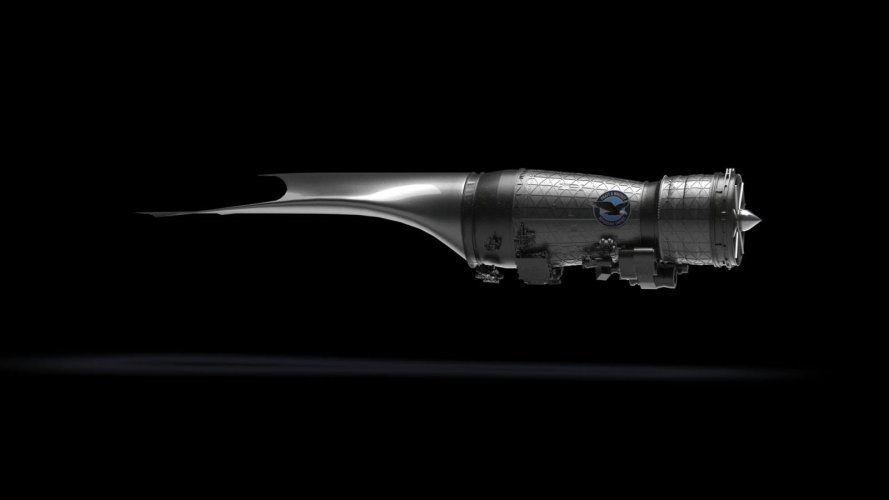
The engine usually has stuff spilling off to the side of it. Reference this released render of what is purportedly the PW - X103.
PW_XA103.jpg
Clearances are allotted on the YF-23 as well for the engine nacelles.
F-23A_crosssection_02.png
Even if you do not take the wide spacing, you should also consider the fact that there are entire bulkheads framing the engine casing that may interfere with weapon bay placement and electronics. Consider the organization of the F-22 for example:
1767862345324.png

You may be able to design one like on the Su-57, but that's not trivial. You pay in the overall width of the fuselage, which, amongst the other two dimensions, width happens to the be the only thing I can't change about the model. And because you pay with a wider fuselage, to achieve the same volume while maintaining the same structural / empty weight as a blended planform, you either need magically lighter materials and design or you need a segmented body like the YF-23 and not a blended body like the F-22.
My design doesn't need bulkheads to strengthen between the engines just like how the Su-30 does need bracing between the engines.
Honestly, I'd love to see your design in 3d form. After I'm done with my F/A-XX model, I'd love to help actualize your ideas in 3d - just so more informed people can show you where yours (and my own) assumptions fall flat. I am also very drunk right now so I'm not sure if I'd be willing to take this up after... say tomorrow morning.
 
Last edited:
As for the engine I've assumed it to be based on the YF120 just 3-4 generations of improvement and about 30% more airflow for +16.2% diameter => 48.8" but adjusting for aiflow cross-section area density increase per decade ~10% puts it back down to 46.2" minimum. I went with 48" nonetheless.
Offcially the F119 is 35klb but as with many the assumption is 39klb. With the expected 3-stream of officially 42 klb, inofficially 47klb.
My calculations say 49klb is needed and the germans say 50klb. Chose your poison.

When I have time I'll make a simple 3D of mine but not anytime soon. I now woulld like to transition toward F/A-XX stuff. We need a new fan art thread for F/A-XX!
 
I admire some knowledgeable forum members patience and politeness... 

Come on, just modify some surplus B-52 (plenty of airframes available), just get the IWB a tad larger (5% is the charm) to pack a whopping 212 AIM-174 (in liquid form, volume is all that matters), replace the four inner engines by four F135 or similar 3,4 or 5 streams engine (just keep adding pipes, simple) for more oooomph, get rid of the four outer engines (weight and cost saving) but keep the outer pylons for beast mode (bonus points for beautiful PR pictures), strap a pointy nose (all fast aircraft have one so it must clearly be sufficient to hit Mach2 or above), spray with some magical ACME stealth paint (Donald Duck had a great one) and voilà! NGAD ready!
Oh, and put a hook (it has been done with smaller airframes so it has to work), make the wings foldable outside of the engines (remember only the inner ones are retained, can't be a coincidence) and BAM: F/A-XX.
I recommend the F/A-52 Battle Duck as a name.

Sorry for this post but it looks like a running joke right now.

I bet this post won't survive for long, but at least I had fun writing it.
 
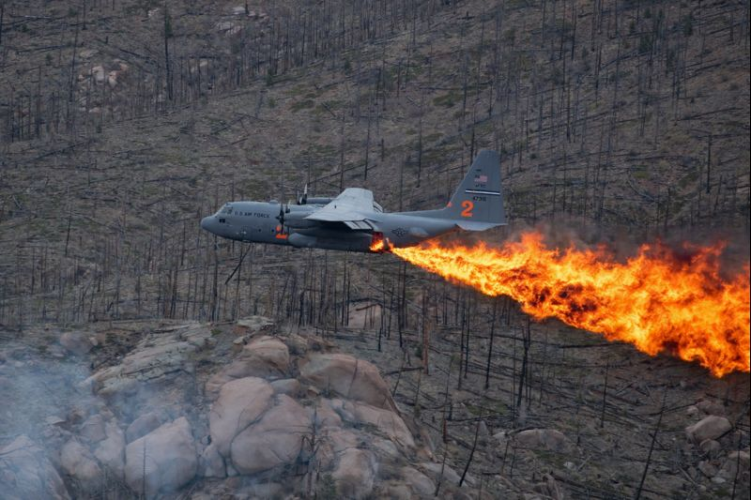
This had me laughing haha why not bring napalm back for ground attack? F/A-XX should just be a firefighting plane loaded with napalm instead of water.


F/A-XX 2026:
View attachment 797903
Burn all of the trees down and you too can prevent forest fires.
 
Does anyone think the canards may be closer-coupled to the wing leading edge, just curious?
Normally no.
A coupled canard is made to energize the air flow OVER the main wing. So the classical arrangement is to put the canard over the wing.
But is F-47 a classical bird ?
 
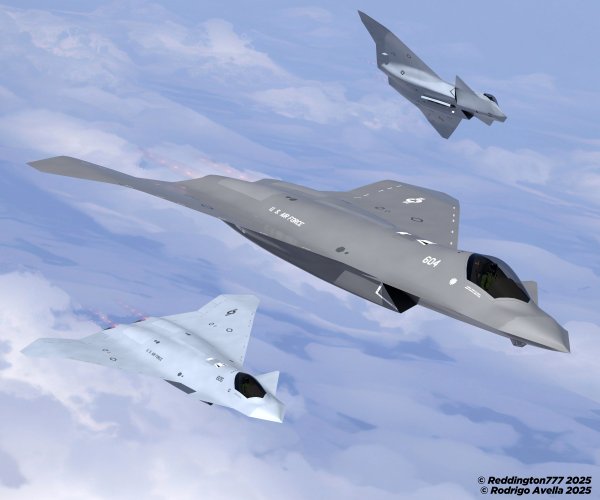
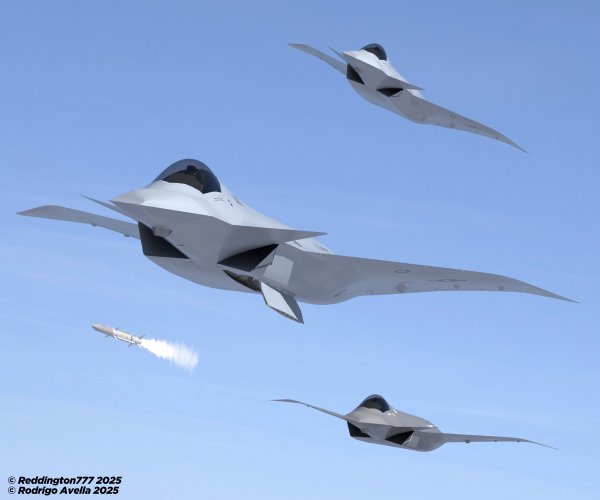
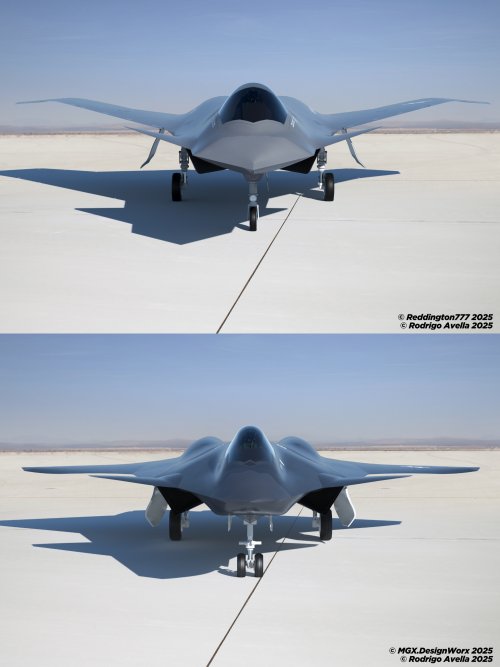
Hi!

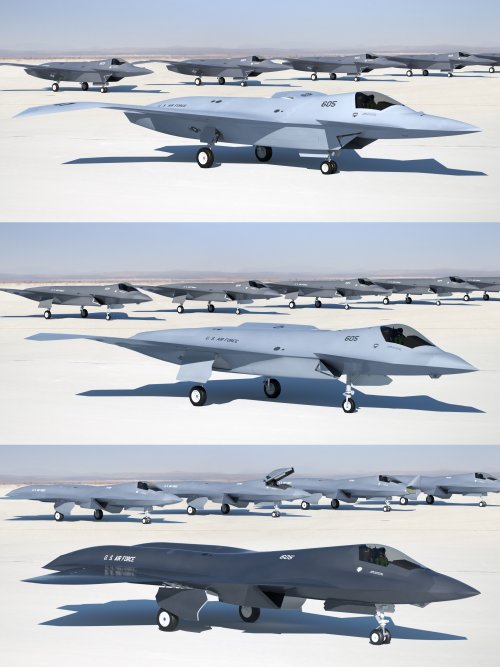
I'm sharing the images of the model by @VTOLicious. I hope you like them, VTOLicious. The level of detail and professionalism in your design is incredible. I wish it were my own design, haha. I hope you're happy with the images.
Wow, I'm speechless! Thank you so much, the renderings look absolutely fantastic!
I will share them on Instagram soon :)
 
What's awesome about @Rodrigo Avella rendering both models, is that they're consequently easily comparable. And while both @Reddington777 and @VTOLicious used the same source material in form of official images, ads, patents, previous tech demonstrators as well as guesstimates with regards to engine and weapons bay dimensions, the two aircraft turned out both very similar and yet very different as well. What made me wonder though and maybe Rodrigo can answer this the best, are they to scale with each other? Because especially on the "runway shots" Reddingtons jet looks quite a bit smaller. Either way great work from all three.
retouch_2026011520194554.jpg

Edit: on the note of size, it occurs to me that your most recent F-47 is even smaller, what are the dimensions like compared to the other two?

(For reference)
retouch_2026011521055520.jpg
 

Attachments

  • retouch_2026011520201524.jpg
    retouch_2026011520201524.jpg
    4.3 MB · Views: 116
  • retouch_2026011520241820.jpg
    retouch_2026011520241820.jpg
    2.3 MB · Views: 115
Last edited:
What's awesome about @Rodrigo Avella rendering both models, is that they're consequently easily comparable. And while both @Reddington777 and @VTOLicious used the same source material in form of official images, ads, patents, previous tech demonstrators as well as guesstimates with regards to engine and weapons bay dimensions, the two aircraft turned out both very similar and yet very different as well. What made me wonder though and maybe Rodrigo can answer this the best, are they to scale with each other? Because especially on the "runway shots" Reddingtons jet looks quite a bit smaller. Either way great work from all three.


Edit: on the note of size, it occurs to me that your most recent F-47 is even smaller, what are the dimensions like compared to the other two?

(For reference)
I believe the version I sent to Rodrigo was still a little longer than my current version.

@VTOLicious on post 1119:
Model 432 internal layout, length 19.5 m, wingspan 14.0 m, volume 77 m³

Length 18.9m, wingspan 16.2m, volume of 87 m³.

Otherwise, I used VTOL's MTOW and thrust assumptions.

Since sending the model to Rodrigo, I've had to make the intakes a little larger (by about 10%), increase the wheel size (34 - 38 inches diameter), readjust the engine spacing to accommodate the larger wheels, lose the aft center bay to allow spacing for the engine - just to make things a little more believable. As much as I tried, I couldn't get the volume down beyond 85 - 86 m³. The perspective match for the shovel nose, the form blending and engine diameter really didn't help the volume.
 
Last edited:
I really like your work and general shape here. Reminds me of a few of my own designs, really nice to see how designs “converge”.
 
Very nice. However, isn’t there supposed to be some level of “bump” in the DSI inlets?
 
Corresponding to this render it looks like.

Who knows - the F-47 official render might just be the Navy demonstrator that Boeing built instead of NGAD. Could explain the canards.
Late reply. The F-47 may be quite tail-heavy so the canards exist to move the center of pressure forwards, towards the nose. They might be able to move a bit but would just be stationary most of the time. At least that's what I think.
 

Similar threads

Back
Top Bottom